Biography Edition: James Dyson's Perseverance and Revolutionary Innovation in the Vacuum Industry
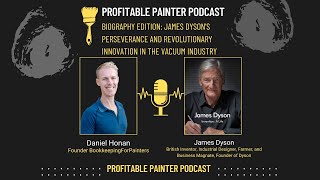
James Dyson spent 15 years building 5,127 prototypes of a bagless vacuum before launching it under his own name in 1993. He learned early that giving away ownership of his ball-barrow invention cost him everything. The video draws three lessons from his memoir: control your IP, differentiate your product, and never stop iterating.
Chapters
I have tried to seek out those young people who can make the world a better place. I have seen what miracles they can achieve. This book is aimed at encouraging them. Some may well become heirs to my heroes— inventors, engineers, and designers who make their appearance in these pages. Like them, they will not find it easy, and they will need oodles of determination and stamina along the way. They will have to run and run hard. Which is how my life story began. That was an excerpt from the book Inventions by James Dyson. James Dyson is the owner of Dyson. He's the 100% owner, and the business is like worth $14 billion. James Dyson, uh, invented the Dyson vacuum cleaner back in the early '90s. Well, he actually invented it in the late '70s, but it took him like 15 years to actually get it on the market, which we'll go through. And it took him 5,127 prototypes to actually get a working model that accomplished what he wanted to accomplish, and it was the world's first bagless vacuum cleaner. So I think there's 3 main lessons we can learn from James Dyson, and we'll cover this as we go through. One is keeping control of your business and your intellectual property. Two is being different. And three is having determination, which you will clearly see as we go through this. So let's start with his early life. His dad died when he was just a kid, and he— his dad was actually had an— was in an occupation he didn't really enjoy, and he was about to start an occupation that he did enjoy. And he died before he had that opportunity from cancer. And here's a quote from the book: That was the last time I saw him. His brave cheerfulness chokes me up every time I recall the scene. It is impossible to imagine my father's emotions as he waved goodbye, knowing that he might be on his way to London to die. 60 years have not softened these memories, nor the sadness that he missed enjoying his 3 children growing up. So I think this had a big impact on James Dyson, his dad dying early before he could do what he wanted, what he loved. And I think James Dyson took that and just pursued what he wanted to do, which we'll see here. Another thing from his early childhood, he was really into running. Here's a quote from the book: Running also taught me to overcome the pain barrier. Whenever— when everyone feels exhausted, you That is the opportunity to accelerate whatever the pain and win the race. Stamina and determination with creativity are needed to overcome seemingly impossible difficulties. So this reminded me of the book Shoe Dog about the founder of Nike, and he was also a runner. But it seems like they kind of both James Dyson and Phil Knight drew the same lesson from running, which is when you're running, you, you hit kind of a wall and you got to push through that wall and get to the, you know, to the, to the other side and complete the race or complete the run. And that's something that both founders had to really push through a lot of pain to get to where they wanted to go. And, uh, and James Dyson basically says like that's the lesson that he took from running, is that he needs to apply this in other portions of his life, especially to business, of being able to push through, have that determination, that stamina to get to where you're trying to go. So he— James goes to school and he studies designing. He's not sure what he wants to do, uh, he has various interests he lands on designing, and then he ends up determining that he wants to be a designer and an engineer, but he doesn't have any engineering background. He didn't go to school for engineering, he just went to school for designing, but he's intrigued by the intersection of design and engineering. And this reminds me of Steve Jobs and Edwin Land. You know, Steve Jobs was obviously, he helped invent personal computers and the iPhone and the iPod, all this technology, but he was really into the design of things, making sure that they were beautiful as well as having that technology piece. And this same thing with Edwin Land, who was the founder of Polaroid, and he was really into obviously the technology of having that instant photo, but he was also pairing that up with the design and making sure that the product actually looked beautiful. So James Dyson seems to be in that same camp where he's really interested in that, and he gets pulled— he has opportunities to work with Jeremy Fry. He actually just calls him up and sees it and basically reaches out to a mentor, and Jeremy Fry was an inventor, an entrepreneur. This reminds me of when Steve Jobs reached out to Bill Hewlett of Hewlett-Packard and got some help when he was a kid, and then was actually ended up working for Hewlett-Packard over the summer. And Steve Jobs, I think, at one point said something to the effect of, don't be afraid to reach out to people. He said that he had never reached out to someone and asked for help and they didn't help him. So I think that's a lesson that we should just learn is don't be free to— afraid to reach out to folks for help because a lot of the times people are very willing to help. James Dyson is working for Jeremy Fry, and here's a few quotes from the book here. Jeremy Fry, more than anyone else, encouraged me to think for myself and to just do it. Another quote: He loathed arrogance in experts, by which he meant those who want you to believe that they know everything about a subject when the inventive mind knows instinctively that there are always further questions to be asked and new discoveries to be made. So, Jeremy Fry doesn't have much respect for the so-called experts. He thinks that you should just invent on your own, just, just try it out, just do it. And figure out things on your own. Don't rely on the experts. And Jeremy Fry takes this and runs with it because, like I said before, he didn't have any engineering background. But he starts working for Jeremy Fry, and they ended up inventing, uh, the Sea-Truck together. Jeremy Fry, you know, he took this— I think James Dyson was like 19 or 20 or so. He let him lead up this invention of the C-truck and run that whole side of the business for Jeremy. And James Dyson invents it and then sells it as well. Here's a quote from the book: I still find myself putting into practice at Dyson some of the same things Jeremy did and, and said when I worked for him half a century ago. He believed in taking on young minds with no experience because this way. He employed those with curious, unsullied, and open minds. So obviously Jeremy hired James when he was young, and this is something that Dyson does later on in his life. He likes to hire young— younger folks that are not sullied by experience. They don't have bad habits. You can just mold them to what you want them to do from the get-go instead of having to break old habits, which I've seen a lot of painting businesses do this. You know, hiring young, you know, college-aged workers and just mold them into what you want them to be, having a good training program. I actually did College Works Painting, that's kind of what they did with us. So this can be a good strategy to take into consideration is actually instead of hiring like the painter that's been around, maybe has some bad habits, they have maybe not a great attitude, Hiring someone young, getting that culture fit, and then training them how to, to, to do the job that you want them to do to the standard you want. All right, so James Dyson works for Jeremy Fry for a while, helps launch the C truck, then he wants to go out on his own. And there's a period in time where he's working in his garden a lot and he is using his wheelbarrow and he's like, this thing is not any good. And this thing sucks. So how can I make this better? And, you know, because he's using a wheelbarrow that had a metal— it was made out of metal, it has a wheel, it has edges that were cutting up against the door if he had to move it, you know, move things through the shed. And things would stick to the bottom of the wheelbarrow, the wheel would get stuck in the dirt. There's all these problems that he was having. He's like, I think I can invent something that's better than this. And so he invents the ballbarrow, where there's ball instead of a wheel, and the, the container portion of the barrow is this plastic type material that when you pour stuff into it like cement, it doesn't stick to it, and instead of like the metal. And so he invents this ballbarrow and he ends up starting a company. There's several other owners in the company and they go, you know, go into business. They are trying to sell it directly to different stores and they hit some limited success, not much. They kind of hit a plateau. There's a lot of infighting between the different owners on what the direction should be. And so James Dyson makes the mistake of putting the patent of the ballbarrow inside of the company instead of keeping the patent under his name. And he also doesn't control the company because there's several other owners. He ends up losing the company and the patent because the patent was in the company. So here's a quote from the book: I was penniless again with no job and no income. I had 3 adorable children, a large mortgage to pay, and nothing to show for the past 5 years of toil. I had also lost my inventions. This was a very low moment and deeply worrying for dear Dee, his wife, and me. It was deeply upsetting too. My confidence took a big blow and it would take some years to regain it. And so this is a— his first business is basically a complete failure. This reminds me of what happened to Walt Disney. His first business, Laugh-O-Grams, he basically loses that and he goes bankrupt. And he also, I believe, lost the characters that he invented as well. So this is a lesson that we need to learn is don't lose your company because you don't have complete— you don't have control over it and don't lose your intellectual property. Now, running a painting business, you might not have a patent, you may have a patent, but— or things that you could patent, but most of the time it's something like a trademark. That's usually the intellectual property that all painting businesses have. They have a trademark with their brand. And you can lose your brand if you don't have it trademarked. And so, you know, you could be in business for 20 years and then all of a sudden you get a cease and desist letter and a lawyer sending you a cease and desist letter and saying, hey, you can't use your name because we, you know, this other company has trademarked it. And if you haven't trademarked it, you don't have an argument against that. So getting a trademark, protecting that intellectual property, super important. Let's learn from the lessons from the founders of the past here. All right, so he leaves that ballbarrow company, but before he had left, he was working in the factory to, to develop the ballbarrow. They're producing those ballbarrows, and they are having an issue where the factory was getting too dirty to function correctly. And so he figured out that the other factories that did similar things would use this cyclone to suck up all the dust. And these cyclones were big, but he was— he got the idea when he was vacuuming his house. He's like trying using one of these Hoover vacuums back in the day and they had a bag in the Hoover vacuum, but the Hoover vacuum kind of sucked. It didn't— well, I guess it did suck, but it wasn't very good, I should say. So the Hoover vacuum would— didn't have much pull on it and then it would get— the bag would get full very quickly and you had to go out and buy another bag. They just weren't very good products. And he was wondering if— he got the idea of maybe if he used the cyclone in the factory, made it smaller, and put it inside of the vacuum, that it would actually function better. So he gets this idea, he actually pitches it to the company, the Ball-Barrel Company, before he leaves, but the board, the other owners, thought it was a stupid idea. They're like, no, if there was a better way to build a vacuum, Hoover would have done it already. So they basically tell him to kick sand. So he gets kicked out of the business and he still has this idea for a cyclone vacuum. And so here's a couple of quotes from the book. Here was a field, the vacuum cleaner industry, where there had been no invention for years. So the market ought to be ripe for something new. For the following 15 years, I lived in debt. This might not sound encouraging to young inventors with an entrepreneurial spirit, yet if you believe you can achieve something, then you have to give the project 100% of your creative energy. You have to believe that you'll get there in the end. So he goes and he's trying to develop a prototype for this vacuum, trying to get the cyclone smaller and to a vacuum. And during this period, you know, he has a family and he doesn't have any income, and he's coming off of the failure of his first business. And so they're basically using, you know, taking out debt to get by. And, you know, it ends up taking like 14, 15 years before he actually gets a prototype that's on the market that that he's making money from. Here's a quote from the book: Craziest of all, during the first 30 years of our marriage, she agreed unselfishly— unselfishly, and so typically of her, talking about his wife— to keep putting her signature to endless bank guarantee forms in front of solicitors, signing away our possessions. If we had defaulted on the bank loans, we would have been evicted from our home. He's just in his shed in his backyard developing these prototypes. He ends up developing 5,127 prototypes over several years until he finally gets a usable prototype that works, does what he wants it to do, and he thinks it's ready to go on the market. Now, next part is getting it to the market. So first he has the idea, okay, I'll license the technology to a company that already has the infrastructure to build this. And I'll just make money off the license. So he's going around to all these different companies and trying to sell the license. And so here's a quote from the book. I learned that none of them was interested in doing something new and different. They were more interested in defending the vacuum cleaner bag market worth more than $500 million at the time. So he's getting a lot of nos. Actually, he's, getting a lot of maybes, but nobody's committing, and he's having a lot of trouble trying to sell this, even though this vacuum that he developed is way better than anything on the market. Companies are kind of stuck with this current industry where you have that bag, because a lot of these companies were making a lot of money from the bags, like selling the bags. You know, instead of just doing a one-time sale where you just sell the vacuum and that's it, you sell the vacuum, then you have the basically recurring revenue of the bag, selling the bags to the consumers as well. So there's a lot of entrenched interest there, but he continues to try to license this to different companies, and there's one he actually gets successfully licensed in Japan. And they start giving him royalties off of that, but they ended up paying him like way less than what he probably should have gotten because their financials were kind of not being done correctly. And so he's just running into issue after issue. He's not really making much money, and he just keeps going and trying to get this licensed. At one point, another company says no, they don't want his license, but then they end up copying his his design from— and in this time he did have a patent that was in his name, but another company still stole the idea. And so he ends up taking them to court and suing them, and it takes years for— in the courts to get this resolved. And at 12 years in, he was about to give up, you know, 12 years of trying to get this vacuum on the market, and he was about to give up. And then finally his lawyer was like, okay, you you know, the company wants to settle. And so that was a huge win. And then he ends up— he decides instead of licensing, I'm just going to build this thing myself and distribute it myself in my own business. And so he actually partners up with Jeremy Fry at one point, but then Jeremy Fry really gets old and he wants to get bought out. So Dyson ends up owning the entire business and then distributing the vacuums and building the factory himself and distributing the vacuum cleaners. And he finally gets the vacuum on the market. It's like 1993. And so it took him like 15 years from when he started developing the vacuum to when he actually got it on the market, which is crazy. The amount of determination that would have taken is just— it's unbelievable, really. And he does go with the name Dyson for the name of his company, and he thought that this would be a good way to differentiate himself from Hoover and the other vacuum companies, because the other vacuum companies had— were like no-name, or like big corporations there was no individual, there's nameless corporations, and he thought if he put his own name on the company and the way he sold the product was just like, hey, I'm an inventor, I invented this new vacuum, this is how it works, I think it's a pretty good product, it took me 5,127 prototypes to get this right, so I think it would be worth it for you to buy, purchase. So he had like a very kind of down-to-earth pitch, and a lot of folks like that. And he started selling a lot of vacuum cleaners from there. He ends up doing several other inventions over the course of his life, and Dyson is still creating inventions. Like, there's an invention where— a hand drying invention— they invented basically the hand dryer that has a blade of air instead of a heated air dryer. Like, instead of putting your hand under like that hair dryer that heats the air and pushes it out, they created like this blade of air that is not heated, so it's more energy efficient and it actually works better because the blade of air just cuts the— like, basically shaves the water off your hand. And they have several other inventions, and he is still 100% owner of the business. And I think there's a lot of 3 key lessons here, like I had mentioned at the top of the episode. One is keeping control of your business and your intellectual property. So, he learned from the first failure of his business where he lost control. Once he started Dyson, he maintained 100% ownership, which is basically unheard of for a billionaire or billionaire, billion-dollar company to still be owned by just one person, which is just kind of crazy. That doesn't happen very often because most of the time these types of companies go public, and so there's a lot of different owners. And so he kept control of his business, and then he also learned the lesson of making sure he was protecting his intellectual property, putting the patents in his name instead of the company's name. And so, the things I think we can learn from here is make sure you keep control of your business, that you are the, you know, at least having 51% of the controlling interest of the business so you can make the decisions, make sure your operating agreement is set up in a way that you have decision-making power in the business, and then also make sure you're protecting your intellectual property, and for painting businesses, that's your trademark. And if you do invent something, make sure you patent it. And the second lesson I think is, you know, be different. Dyson, in his branding, he named the company after himself. He had a very down-to-earth approach, which was very different from all the other vacuum cleaning companies. And his inventions were also very unique to him. He put in a lot of work to get those inventions dialed in and correct and, and valuable. And so that's the second lesson. And the third lesson is determination. Obviously, this— he had a huge amount of determination 14 years, 5,127 prototypes. He was in debt, he was potentially gonna lose his house at certain points with his, you know, and put his family at risk. So he put a lot on the line and he kept going despite all the time it took for him to get this done, which is just crazy how much determination he had to make this work. So if you're ever struggling in your business and you're like, and things aren't working, if you keep going and keep problem solving— because if you think about the way that he did his invention for the 5,127 prototypes, he does what he calls is like the Edison method, which Thomas Edison would try one of his inventions. If it didn't work, he would change one thing and and then try it again, then change another thing, try it again. If it didn't work, change one thing. And so he took that same methodology. And so that's why there were so many prototypes, because if it didn't work the right way, he would change one thing and then try it again. That didn't work, change one thing and try it again. So that iteration over time helped him dial in the thing. And so obviously you might not be inventing things like he is, but you can apply that same idea to processes, you know, refining your processes in your service-based business and your painting business to make sure that they're dialed in and they're producing the results that you want them to produce. All right, overall, I definitely recommend the book Invention by James Dyson. And with that, I'll see you next week.
More from Daniel







What’s REALLY Holding Your Painting Business Back? (Find Your Bottleneck in 5 Minutes)



