Biography Edition: Walt Disney's Resilience, Brand, and Standards
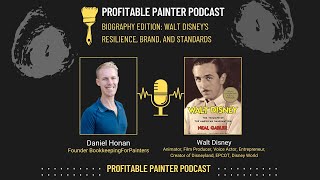
The video is a spoken summary of Neal Gabler’s biography Walt Disney: The Triumph of American Imagination. It traces Disney’s life from a poverty‑stricken, abusive childhood through his early failed studio (Laugh‑O‑Gram), the loss of his Oswald characters, the creation of Mickey Mouse and the breakthrough sound cartoon Steamboat Willie, and the rapid rise of the Disney brand via the Silly Symphonies and the landmark feature Snow White. The narrator highlights Disney’s obsessive focus on quality, his practice of training young animators, and the cult‑like loyalty he cultivated among his staff. The story then follows Disney’s wartime loss of creative control, chronic cash‑flow problems, and his bold pivot to theme‑park design, culminating in the creation of Disneyland—a meticulously detailed, financially risky venture that succeeded thanks to savvy media partnership with ABC. Throughout, the narrator extracts three core lessons: (1) brand‑building through relentless control of image and merchandising, (2) setting ultra‑high standards for employees, and (3) resiliently confronting repeated adversity. The video ends with a recommendation to read the biography for deeper insight.
Chapters
Others, virtually everyone in entertainment, attempt to tap this same reserve. But Disney understood wish fulfillment from the inside, which may be why his own longings connected so powerfully to his audiences. During a peripatetic childhood of material and emotional deprivation, at least as he remembered it, he began drawing and retreating into his own imaginative worlds. That set a pattern. His life would have become an ongoing effort to devise what psychologists call a paracosm, an invented universe that he could control as he could not control reality. From Mickey Mouse through Snow White and the Seven Dwarves, through Disneyland, through Epcot, he kept attempting to remake the world in the image of his own imagination, to certify his place as a force in that world and keep reality from encroaching upon it. To recreate a sense of childhood power that he either had never felt or had lost long ago. Just finished reading Walt Disney: The Triumph of American Imagination by Neal Gabler, and this is, this is a quite a long read, but it was definitely an interesting one. Got a really good in-depth understanding of Walt Disney. And just to jump into things here, Walt Disney was born in 1901. He was born to Elias and Flora Disney, and his, his father was pretty hard on, on Walt and also Roy, his brother Roy. And his father would often beat him and he would make him work all the time. Basically, Elias was not a very successful business person, or he didn't make a lot of money. They were really poor. Elias would like jump from thing to thing, and he would end up failing at it. He tried farming, then he had like a newspaper route that he would make Roy and Walt do for him, and, and then he would often beat them with like a hammer. So it was pretty intense. So Elias was clearly a loser. I'm going to read a quote from the book here. Usually Walt would run to his mother until Elias cooled down, but a reckoning, a big reckoning, came when Walt was 14 and Elias upbraided him for being too insolent, so then ordered him to be— to go to the basement for a beating. Roy pulled Walt aside and told him to resist. Obedient to his father, Walt headed downstairs anyway. Elias followed and yelling and grabbing a hammer to strike him. But this time, impulsively rising to his brother's injunction, Walt stayed his father's hand and removed the hammer. He raised his other arm and I held both of his hands, Walt later recalled, and I just held them there. I was stronger than he was. I just held them and he cried. He said his father never touched him after that. Broken by work, Elias was now defeated, and the family too. Walt had a pretty rough childhood, to say the least, and he has, you know, he picks up drawing and he's like, this is kind of his escape through his childhood. He's drawing and he ends up going into, uh, joining the war effort and war for World War I as a Red Cross member. He actually joins before he turned 18 He— I think he originally wanted to go into the Army, but he couldn't get in. But the Red Cross had more lax standards, so he ends up going into the war effort as a Red Cross member. And you might remember if you listen to the episode on Ray Kroc, they actually met— they crossed paths. Ray Kroc, the founder of McDonald's, and Walt Disney actually crossed paths. They were both in the Red Cross at the time. And Ray Kroc, in his autobiography, mentions that he, he remembers seeing Walt Disney and Ray Kroc and all the guys would go out drinking, and then there'd be this one weird guy who would stay, you know, stay in the barracks and would just draw pictures of cartoons, and they all thought he was weird. That would turn out to be Walt Disney. So that's kind of funny. But anyway, so he does the World War I thing with the Red Cross. He comes back and he wants to get into drawing. His father wants him to go work at a factory, and he's like, no, that's not for me. And his father's upset with him, but he wants to follow his passion and go into advertisement in Kansas City. He has like a very strong belief in himself, and this is a common theme we keep seeing over and over again, is folks that are doing great things, they have like very strong, almost illogical belief in themselves. And he gets his first job and he's like super happy that they're like— he's writing back to his mom like, they're paying me to draw pictures, and he's super happy and he like, he crushes it at his first job drawing pictures. He like never leaves his seat. He's just— to take a break, he just wants to prove himself that he's an outstanding artist and he gets a lot of self-confidence. He already had a lot of self-confidence before he even started the job. Getting the job, he gets even more, and then he's like, I can do this on my own. I can start my own studio. And back in the day, back around this time, I mean, drawing cartoons and animation hadn't even really— it wasn't really a thing. And so, but he wanted to draw pictures and he was fascinated with animation and he wanted to get in that field. He thought it was a good opportunity because there was, you know, ground to be broken there. Animation was completely new. And so he starts his first studio called Laugh-O-Gram Studio, and he's creating these short, short films, these short cartoons, and trying to, you know, sell them to distributors. And by age 20, he basically— his first— this first business fails and he goes bankrupt, and he's like starving. People think he has tuberculosis because he looks so gaunt. And but he— one of the things about Walt Disney is he's like unperturbed by the most devastating of circumstances. He's just always has like a great attitude and very optimistic person. And so he's— he fails, uh, completely bankrupt, and then he's like, okay, well, I'll just try, try it again, and this time I'll do it different, better. He moves to Hollywood And he ends up creating this animation series called Alice's Wonderland, where he takes a live-action video of a little girl and then he does animation around her. And he ends up selling this to a distributor, and that goes well for a little while. He's not making a ton of money. He's still really struggling with the finances. Walt is like terrible with, with finances. Fortunately, his brother Roy is really good with finances. That helps him on out, uh, as you'll see throughout the book or throughout his, his life. But so he's still struggling with finances, but he, he does have this Alice's Wonderland that's going okay. And as that starts to gain momentum, he ends up being betrayed And so I'm gonna, um, one of his, uh, his distributor basically goes around behind him and convinces one of his employees to, to basically betray Walt. And like a bunch of other employees betray him, and they basically take all his characters, and he, he loses all his, all his employees to that distributor. So real quick from the book: when Walt left for the city, for Los Angeles, on March 13th, he had nothing. No Nolan, no character, no contract except one for the Oswalds that he was obligated to animate under the terms of his deal with Mintz. No staff to save for the few who remained, like, remained loyal, like Iwerks. No plan. And perhaps most important of all, no Cartoon Land to provide a haven from the real world. So he, he loses most of his employees, loses the characters that he had developed. And so he has to kind of start from scratch, and that's where he's like traveling back from finding out that he basically lost all the stuff, and he starts designing Mickey Mouse. And he shows it to his wife, and his wife likes the drawing, but initially Walt wanted to call the mouse Mortimer Mouse. And his wife was like, no, that's a terrible name. And he ends up going with Mickey. And this— so this was another lesson that Walt learned, was, you know, be careful who you trust. And here's a quote from the book: He would say that you had to be careful for whom you trusted, that he had learned that you had to control what you had or it would be taken from you, that he had seen how duplicitous duplicity the business world could be, he said he had learned all these lessons and would never forget them. So again, Walt Disney learns with the school of hard knocks. Uh, you know, be careful who you trust, make sure you're setting up your contracts appropriately, that you actually own the things that you're developing. Uh, because he didn't actually have the ownership, it was in the business, not to himself. So the business, um, you know, he lost all the characters he had developed. And then also he, I think, realized how he was treating his team. He didn't have a close connection with his team. And so he— you'll see when he starts his, his, um, his, his Disney company, he'll develop like a cult-like following with his employees. So he really nails that piece down. On his next iteration. So, uh, like I was saying, he's developing Mickey Mouse and he creates this cartoon called Steamboat Willie. And in this cartoon, he successfully innovates a way to synchronize sound with the cartoon. And so it's like the first time this was done successfully. In an impressive way. And so he innovated a way for like the, the, the folks that were playing the music to follow the cartoon by doing it like a bouncy, a bouncing ball on the animation so that they know the, the rhythm on how fast to play things. And so he synchronized that sound really well and it like blew people's minds. People were going crazy over this Steamboat Willie cartoon, and he starts getting distributors to want to work with him to distribute his cartoons. So he does a bunch of Mickey Mouse and Silly Symphonies, and that's going pretty well. And this goes into where he's expanding and innovating, continue to innovate, because people are trying to copy him because You know, like I said, animation was super new and there wasn't a lot of quality animation. And Walt Disney was like, his whole thing was like, like, let's make this excellent. Like, the only competitive edge we can have is by doing this way better than anybody else. And so he's continuing to innovate and make things look even better, and he starts working with his team to increase the, the standards that he has for animators. And so he, he mentioned several times that he likes to hire like young animators and like train them the way that they should animate instead of hiring seasoned animators, because the seasoned animators are, um, they have bad habits and it's hard to break them of the bad habits. And so he, he basically builds a school within his business on training animators. Another focus that Walt Disney has is creating a brand. And here's a quote from the book: But while Walt was recording the Mickeys and soaking up praise, he had another bigger mission in New York, a personal mission. During his first trip, New York trip, when he was pushing Mickey and facing rejection, one distributor picked up a package of Life Saver candies "The public knows Lifesavers," he told Walt. "They don't know you. They don't know your mouse." That made an impression on Walt. As he recalled it years later, he said to himself, "From now on, they're going to know. If they like the picture, they're going to know what his producer's name is." So on his trip, he decided to stage a full-scale assault on the animation industry and establish Walt Disney as its undisputed leader. The lifesavers of animation. So he has a focus on standards for his employees, on creating excellent animation. He wants everyone to know he's like creating this brand for Walt Disney Studios. And then also he ends up getting into merchandising, especially after they release Snow White, which is the first full-length cartoon movie. And Snow White cost an incredible amount of money. Like, Walt put an incredible amount of time and effort with his team to develop Snow White. He wanted to make it as perfect as possible. And after that movie, they made a ton of money on merchandising by selling— I think they sold like 14 million cups with, you know, Snow White on it or something. It's just Crazy. But let me read a quote from the book here. The 9 months after Snow White debuted may have been the best months of Walt Disney's adult life. The picture was an astounding success. In its first week at the Carthay Circle, it grossed $19,000, and its second, $20,000. And by the time it finished its 10-week run, it had grossed just under $180,000. At the Radio City Music Hall in New York, where the lines often stretched down the block. It grossed just over $500,000 after it went into general release in February, and after Walt had reanimated his Shining Prince, it grossed $3.5 million in the United States and Canada alone and returned over $1 million to the studio. By May 1939, with $6.7 million in receipts, it would become the highest-grossing American film to that point. Eventually surpassing the previous record holder, The Singing Fool with Al Jolson, by nearly $2 million. Because of the low ticket prices at the time, and because children, who were significant segment of the film's audience, paid even less, Walt always maintained that Snow White had been seen by more people in this country than any other motion picture. So Snow White debuts, it crushes, and they make a huge amount of money off of the merchandising. So this is a significant high point in Walt Disney's career. And this is also— Steve Jobs refers back to this when he is, is doing Pixar, and before they developed Toy Story, he knew the power of creating characters in a movie like this because he he read history and he realized like Walt Disney, you know, crushed it with Snow White and they're still making money off— Disney was still making, is still making today, they're making money off of Snow White because there's new technology that comes out with the VHS, the DVD, Blu-ray, streaming. It's all, all these new technologies that come out, people buy it again and again and again over time. So Steve Jobs knew that back in the day when they were releasing Toy Story, and that's a lesson that he learned from Walt Disney. So Walt Disney, you know, has huge success with Snow White. Then we get into— and that was around 1939— we get into World War II, and the United States ends up taking over his studio to basically do propaganda on behalf of the United States. And that kind of is a low point for Walt Disney because he loses creative control again, right? That's something that he desperately needed, and he gets really disheartened. He ends up going and talking to Henry Ford at one point because Walt wants to sell part of his business to get some cash flow going, because one of the big struggles that Walt Disney keeps running into is the lack of cash, the lack of liquidity he has in his business. And he's really dependent on the bankers, and he has this contentious relationship with the bankers because he had to take all these loans out for, for all the big projects that he's doing, like Snow White and then later on Disneyland. And he, you know, thinks that maybe I should, you know, issue equity in the business and I can get some financing that way. And so he goes and asks tells Henry Ford like what he's thinking about doing a public offering. And this is what Henry Ford said. Ford was blunt. If you sell any of it, you should sell all of it, he warned. Walt admitted, that kind of left me thinking and wondering for a while, wondering if he had crossed a bridge and could never go back, wondering if he had surrendered ultimate control. So that was something that he struggled with. He wanted to keep ultimate control in his business. Because he was super passionate about keeping that high standard of excellence and keeping that high standard of the brand that he wanted to create. So he, you know, after World War II ends, he gets back control of his studio, but he's kind of disheartened still because he feels like there's a bunch of competitors in the space now, a bunch of different animators. Are copying his techniques, and he doesn't feel the passion anymore. But he ends up thinking that he should start a, a park, and this is the idea of Disneyland. And before this point, there had been no theme parks. Like, the only thing that had existed were like carnivals that were kind of seedy, and they were dirty, and they had kind of a bad reputation. They were, you know, people would go to them, but it wasn't like, you know, they all of them had the same type of rides and they were all kind of dirty. And so when he was telling people that this is what he wanted to do, they thought he was crazy because, you know, this is like a complete departure from doing animations to starting a seedy carnival. It doesn't make any sense. It didn't make any sense. And so, but he had this vision that he wanted to create a park that would, um, that people could go to that would be like a fantasyland. And, uh, so he is obsessed with this idea and he starts working on it and getting his team together and, and he pours an insane amount of money into this. And everyone that, all the outsiders looking in are like saying he's crazy because he's doing everything completely backwards from what the standard model is for like a park or carnival like this. You know, most time you, for these things, you would put it in a place where it had a high amount of foot traffic. You have multiple entrances, you know, you would have a certain amount of, a certain type of rides that you would have in that park. And he basically wasn't doing any of those things. It was in a secluded area. There's one entrance. He wasn't going to do any of the rides that were typical back in those days. He was doing— building everything from scratch. And on top of that, he was also putting an insane amount of detail and expense on everything in there. So it was just a money pit. It was just like, you know, they were designing the railings on a 2-story building and, you know, no one's actually going up into the building. If you've ever been to Disneyland, Disney World, you know, you walk through the the little towns that they have, and you'll look up and see railings on the second story. People were telling him, "Hey, we can make this with cheap material because you can't really, from the ground, you can't really see that high up." And he was like, "No, we're going to use the highest material for every piece of this. We're going to use wrought iron railing," for example. And make it ornate and just really care about every single detail. So it was an insane amount of money, but he gets a, a pretty cool situation with ABC, one of the major networks at the time, and they want to do a documentary and actually pay him to do a documentary about the building of Disneyland. And so this is like free advertising. Not only is it free, it's like he's getting paid to do advertising for his own thing. Which is kind of crazy, but I guess ABC was looking for some programming, and so he got in on that. And so he starts doing this weekly kind of documentary about Disneyland, and it gets, you know, and ABC has a huge amount of viewership, so it's basically half the United States is watching Walt Disney every week talk about Disneyland and get them excited about it. And so when they open up Disneyland It's like a huge success and people love it. And obviously, you know, it's continued on to today and there's Disney World now. So that vision that he had really came into, into existence, much to many people's surprise. So I think there's some key lessons that we can learn from Walt Disney. One of them is brand. Brand is like, it's so important. And Warren Buffett, I think at some point commented on brand in relation to Disney, because if you— he said something to the effect of, you know, if you think of Disney, you have a certain idea in your mind of what that brand is versus, you know, Universal. You know, you probably don't have quite a clear sense of what Universal Studios is versus Disney Studios. So, or Paramount, for example. So the brand of Disney has, you know, some sort of meaning for a lot of people. And he accomplished that, I think, through the amount of control he put over what went out into the world under his brand. And so that's something that I think we can take away in our own businesses is really trying to control of the brand and the perception of what people see in association with your brand and try to cultivate it. And I'm going to read a few quotes from the book. If you want to know the real secret of Walt's success, longtime animator Ward Kimball would say it's that he never tried to make money. He was always trying to make something that he could have fun with or be proud of. And then here's another quote. In numerous ways, Disney struck what may be the very fundament of entertainment: the promise of a perfect world that conforms to our wishes. Here's another quote: Walt Disney seldom dabbled. Everyone who knew him remarked on his intensity. When something intrigued him, he focused himself entirely, as if it were the only thing that mattered. And then here's another quote here: He had founded a school of arts, and nearly 40 years after his death, his name would adorn a concert hall in downtown Los Angeles, financed largely with Disney family money. Yet all of these accumulated contributions paled before a larger one. He demonstrated how one could assert one's will on the world at the very time when everything seemed to be growing beyond control and beyond comprehension. In sum, Walt Disney had been not so much a master of fun or irreverence or innocence or even wholesomeness. He had been a master of order. And that's something that you definitely see when you go to these places like Disneyland or Disney World, uh, you know, even today, the level of detail, um, that has carried on with, you know, the folks in the park to the way things are designed, the level of detail on things. He really set a high standard for, for the things that he put out in terms of animation and theme parks, and everyone has just been copying him for like the last 100 years. The second lesson— so the first lesson was branding. Second lesson is like holding a high standard for your employees, because in order to accomplish this brand, you got to have super high standards for your employees. He, he basically created a cult of employees that were striving towards excellence. And there was actually a chapter in the book called The Cult or something of that nature. So he created a cult of employees that were just innovating and striving to be the best animators in the world. So here's a quote from the book: Part of Walt's secret was that in insisting on quality from individuals of whom it had never been required, he inspired commitment. And so he was always pushing the pace on the animation, you know, from getting sound synchronized with the cartoons to making them more realistic so you could identify more closely with the characters in the cartoon, so it was more emotionally impactful. He was always pushing the standards, pushing his team. Here's a quote from the book: By the mid-1930s, the Disney studio operated like a cult. With a messianic figure inspiring a group of devoted, sometimes frenzied, acolytes. And then here's another quote: at Hyperion, the employees were not just making cartoons to divert or entertain the public, they were disciples on a mission. So that's the second lesson, having a high standard for your employees. And then the third lesson is, uh, tackling adversity or facing up to adversity. You know, he had a huge, huge amount of adversity in his life. He came from a super poor background and he worked his whole childhood. His dad was abusive and, you know, he went into the world very— with a huge belief in himself and he failed immediately. Like at 20 years old, he went bankrupt, but he took that in stride, started another business, started that business, then you know, all his employees were— or most of his employees were stolen from him, and to include the characters that he had developed in that. And so then he started over again, and then he hit success with Mickey Mouse and then Snow White. And then he had the issue with the United States government, you know, taking over his studio for propaganda purposes for World War II, which was needed, but, you know, from his perspective, that sucked, understandably. And then, you know, he had all these competitors basically catch up to him, and he had to overcome that adversity. So it was just a lot of adversity in his life that he continually just, you know, took in stride and did the work to make things happen. So I definitely recommend you take a look at the biography of Walt Disney. Really interesting read, and I think there's some good lessons to get from Walt Disney. And with that, I'll see you next week.
More from Daniel







What’s REALLY Holding Your Painting Business Back? (Find Your Bottleneck in 5 Minutes)



