Blueprint for Millions: Ryan Davis' Secrets to Elevating Home Service Businesses
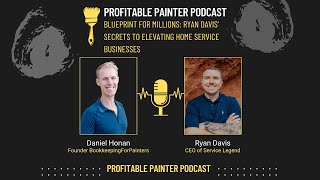
Ryan Davis, CEO of Service Legend and Cardinal Concrete Coatings, reveals why most painting and coating companies fail at converting leads to appointments. He scaled Cardinal to $1.5M in under a year by obsessing over speed-to-lead (under 5 minutes), first-impression staff, and tracking metrics like lead-to-estimate rate and cost per acquisition.
Chapters
Welcome to the Profitable Painter Podcast. The mission of this podcast is simple: to help you navigate the financial and tax aspects of starting, running, and scaling a professional painting business. From the brushes and ladders to the spreadsheets and balance sheets, we've got you covered. But before we dive in, a quick word of caution. While we strive to provide accurate and up-to-date financial and tax information, nothing you hear on this podcast should be considered as financial advice specifically for you or your business. We're here to share general knowledge and experiences, not to replace the tailored advice you get from a professional financial advisor or tax consultant. We strongly recommend you seeking individualized advice before making any significant financial decision.
This is Daniel, the founder of Bookkeeping for Painters, and today I'm here with Ryan Davis. Ryan Davis is the CEO, founder, and home service digital marketing ninja recognized for his exceptional achievements and transformative impact on the industry. As a national speaker, consultant, founder of Service Legend Summit, host of the acclaimed Service Legend Podcast, and his favorite roles as husband, father, and follower of Jesus Christ. Ryan's journey to success is marked by unyielding dedication and a remarkable entrepreneurial spirit. He also established Cardinal Concrete Coatings in August of 2020, a premier brand that achieved $1.5 million in revenue within its first year, and Cardinal's top-line revenue was $2 million in 2022. Residing in captivating landscapes of Arizona with his beloved family, wife Kirsten and two daughters Penelope and Presley, Ryan's life has been a testament to his passion for excellence, mentorship, and his life living one of Service Legends' core values: always be learning. And to continuous growth. I'd like to welcome you to the podcast, Ryan. How you doing, man?
Thank you so much for, for that intro. I know that we, you know, I think we wrote that, but, you know, thank you for that so much. And just for your time, your energy, your effort for allowing me to be here and super excited to talk some shop here today. Yeah.
Awesome. Let's dig into it. So Could you, outside of the bio I just read, is there any other kind of story or journey that you'd like to talk about going back to your beginnings and your entrepreneurial journey?
Yeah. You know, I think one of the really cool things in my career was I had a lot of experience on the technical side or the you know, basically outside of marketing, you know, I've got a lot of experience in home service and, and in construction that has nothing to do with marketing. And I feel like that really helped me early on to relate with the industry and not, not just being a marketer. You know, I feel like there's a lot of marketers out there that have no idea of a home service business, how it operates, the finances. The technicians, the painters, etc. And I feel like that was, you know, just looking back, it was a really cool thing that I want to touch on was, you know, my first experience in home service or construction was when, you know, it was about 7, 7 or 8 years ago. And I'm 30 now. I just turned 30 in May. And so I was pretty young. And prior to that, I, I did all sales and marketing jobs. It was just sales and marketing. And this was my first experience in home service and construction. And I got my first job. I was a commercial estimator for an 8-figure flooring company. So they did, you know, vinyl, carpet, VCT, things like that. And I sat in an office kind of like this, just an empty office, big old screen. I had a, you know, a finish schedule, like blueprint table, and I would just look at finish schedules all day, bid on big projects. and I would talk to, you know, project managers, architects, general contractors, things like that. What was interesting is that, is that company added concrete coatings. And so I started bidding on these FedEx jobs and colleges that were, you know, $100,000, $500,000, up to $1.5, $5 million in bids for urethane cements and flake floors and epoxy and things like this. And that's where I was like, whoa, you know, I kind of like this stuff, you know, this, this, this concrete coating world. It was kind of interesting for me, but I learned a lot in that role around production rates, labor rates, job costing. When you're bidding a job that's $150 grand to FedEx through a GC and you don't get that right, I mean, man, you know, it's, it's, it's not just your job at stake. It's, it's, it's a lot at stake. So you really have to know your numbers and you really have to know people, relationships, communication, you know, suppliers and job rates. And there was a lot of public wages that I had to bid on. So you had to understand that. And so I hated the job at the time. You know, I was like, man, I just hate this job. I'm a talker. I'm an extrovert. I'm in this office. I'm like, what does this have to do with anything I'm going to do in my life? Like, this is just, this is just boring, you know? And so I sought out a company that was local. It was a successful painting company that I knew was successful. They had been in business for 37 years. You know, I like their brand, I like the owner. So I just, you know, I just walked in there and said, hey, I want to, you know, I want to be the sales and marketing manager here. You know, I think I can help your business grow, X, Y, Z. Got hired and I became the sales and marketing manager for that multimillion-dollar painting company. In California. And then just 3 months before I got there, they started a concrete coating division. It just worked out perfectly. I'm like, oh man, I have so much experience with this from a sales relationships networking. I know the space and suppliers. And so it worked out perfect. And but that role, yes, I was doing sales and marketing, but again, that business was in business for 37 years. And so, you know, I got to see a lot, you know, about production, the office scheduling, the finances and proposals and job costing. And, you know, it was a small business and they started that concrete coating division just right before I got there. And so I got to help take that division from just starting. And by the time I left, they were starting their fifth crew and each trailer does about $680,000 to $730,000 a year. So I got to see kind of like startup division to a multimillion-dollar division in just a short period of time. And you got to see a lot of operations, you know, a lot of expenses and financial conversations. And so that's kind of, you know, one of the biggest kind of components, I think, in my career that if I would not have gone through a lot of those experiences, I would not have been able to start Cardinal or really, you know, consult or serve our clients in the way that, you know, just being a marketer, you know, what I've done.
Yeah. Yeah, that's, that's some good experience. Laid a good foundation, it sounds like. Now, what, what, what inspired you to start Service Legend?
Yeah, so that's a great question. So I actually started Service Legend first and then Cardinal later. And I think some of the, the stories out there are rumors of people that they think I started Cardinal first, but I actually started the marketing company first. And so what happened was we were just helping that painting company grow tremendously. I mean, the lead flow, the sales systems I was putting in place, the customer service systems, the follow-up systems, rehash systems, the marketing systems. And I was thinking to myself and I was like, you know, you know, my first thought, Daniel, was I was like, I could start my own painting company. I was like, I could do this. Like, I could do this. And then I realized how much that would have cost versus the marketing company was a little bit lower lower barrier to entry. And so it kind of shifted to, you know what, maybe I can't start this company now, but I can probably help other companies with marketing and sales and all the stuff I'm doing right now because that company didn't even have a CRM, that painting company. So, you know, just implementing a CRM was like, was, you know, was a big deal. And I started to realize, I'm like, man, you know, there's a lot of painting companies that need this, this, this help. And then I have this experience. And then so I came home one day and I'm like, you know, I told my wife, I said, hey, I, you know, I think, I think we could do this for others, other people. And it wasn't, you know, maybe a couple of weeks. And I went and told Steve, who was the owner of that company, Steve Holloway Painting in Bakersfield. And I said, hey, you know, this is what I'm doing. And would you be my first client? And I gave him a proposal right, right, right then and there. I was like, hey, this is what I could do for you. Here's how much it would cost. Signed him up. So he's my first client. Boom. And we just kept crushing it for him. And, and then, but yeah, so that's, you know, that's how it kind of started, I guess, if you will, was kind of that, that little bug of, for me, you know, I had never felt like fulfilled or I had a real purpose with my life from a business standpoint or professional standpoint until that, that, that time I went into the home service space. I was like, man, this is, I kind of think that I could do this for the rest of my life. Like, I think I could be in this space and do these things for this industry and provide for myself. And that's where it kind of started. And then I just fell in love with the industry. I fell in love with marketing for home service and sales. And the first kind of thought was like, I want to be able to help other people here, you know? So that's kind of how it started, if you will.
Yeah, that's awesome. What would you say, like, your typical painting business or concrete, uh, uh, cover a coating business or a painting business? What, what's, what's like their biggest pain point when they reach out to you, um, and from a marketing or a sales perspective? Like, what, what are the, some of the things that are really, um, they really need to fix and that you can help them with?
It's a great question. So from my, from my perspective, and I have a very like bold perspective or honest one because I have a home service company and we'll do multiple 7 figures this year again. And, you know, you know, I've spent maybe 5 hours in that business this year. So, you know, I've got a very real experience opinion. Of like what I think is going on with, with a lot of companies. And then I also have the, you know, the insight of those clients reaching out like you mentioned. So to give you an example, I— we just signed up a client yesterday and they've been in business for 17 years. They're going to do $3 million this year and they want to do $6 million next year. And I was like, interesting. and they just finally signed up yesterday, the paperwork and things like that. And, hearing a lot of stories. So there's like the stories of like their current marketing company and challenges there. And then there's also just the challenges I see within the business in general. So I think, to talk about, you know, the companies that usually come up with, come and sign up with Service Legend that, you know, we hear some horror stories around, it's usually around, account management. So like experience where they're not getting good communication, they don't know what's going on exactly. Uh, like the data, um, and they, and, and an account manager in a marketing company or a coaching company, or just in general should be the person that is the, you know, the middleman, if you will, from the production, the operations, the team to the client. And I'm, and I, and I'm, and I'm here to serve you and be your point of contact and make sure things are executed and things like that, but also making sure that things are communicated to, to the client. So like, what's going on? What's working? What's not working? Here's what we're doing. So that's a big challenge I see in, you know, in the space is there's a lot of disconnect from the painting company to the, to the, the marketing company. And just from a communication standpoint of like, what do we do next? What's not working? It seems, you know, there's a lot of painting companies that want to just hire the marketing company and say, hey, here's, here's $2,000 a month, $3,000 a month, whatever it is. Here's another $5,000 a month in ad spend. You guys figure this out. Get me the leads. Figure things out. When there's a partnership involved and there's communication and we're meeting every week, biweekly, we're going over the lead-to-sale cycle numbers, not just lead cost or like lead or cost per lead, but we're going over here's how many leads you had. How many of those leads turn into an appointment? Okay, that's your appointment cost. How many appointments canceled? Okay, here's your estimate cancel rate. Like, that's important. What is your sales closing rate on your ran appointments, not booked appointments? Okay, got it. What's your average ticket? And then let's talk about your cost per acquisition. Like, what is that? Is that being reduced? Can we pull some of these levers? And so talking about those things versus just How many leads did I get? You know, and you guys figure it out. So that's a big thing is communication. And then on like the company side, some of the things I've seen just in general, and I will talk about this one until it's, it's completely solved and eradicated, if you will. But lead conversion, like I can't tell you, I think one of the biggest ways to reduce your cost per acquisition is obviously sales, right? But it's before that. It's— there's a lead that gets generated, right? And I think most companies think about lead, customer, not lead, estimate, customer. And I think there's a lot of data in there that if that, that if it's measured, it'll get improved. You know, I believe that most business owners that if made aware of a problem, they will want to fix it. And so sometimes it's just our job to just make them aware and say, hey, man, your lead to estimate rate is 32%. You know, it could be 50% or 60% or this or that. So, so I see a lot of really low lead-to-estimate conversion rates and just improper lead management and lead nurturing. And I believe that that's the number one thing that a painting company could do next year is improve their, their, their lead-to-appointment ratio rate. But also that experience in the sales there. So not, not just the number, but ran appointments out of their marketing could lower their cost per acquisition and make them more money than if they got lower cost leads or did better in sales or raised their average take. I think the number one thing they could do is increase their ability to convert more leads into estimates that are highly qualified, that have expectations, that are price conditioned for the salesperson.
Yeah, so basically it sounds like that, that's usually the part in the funnel that, that has the, um, you know, the issue. So it's not necessarily getting the leads, it's not closing the leads, or, you know, closing a prospect. It's really changing the lead to a prospect or getting the lead to schedule an appointment is kind of the issue in the funnel. So you're saying if they can fix that one issue that would really increase their numbers overall because that's kind of the— yeah, the— trying to think of the word, it's not coming to me.
But anyway, it's a, it's a blind spot because I don't, I don't think it's talked about enough, you know, because I think we talk about sales like we talk about in-home sales and then we talk about generating leads. We talk about like— but there's that, there's that one missing component and it's usually like in, in, in professional companies What is this person, right? It's a, it's an office manager, right? It's a lead appointment setter role. It's a customer service representative. It's a CSR. It's a, it's, it's, it's someone like that, right? Like for a bigger company, you know, if you called Gettle, for example, here in Phoenix, worth hundreds and hundreds of millions of dollars, they're going to answer and say, hey, this is Ryan with Gettle. How can I make you happy today? And they're smiling, right? And they bring them through this amazing process, right? Before the, like, the salesperson even gets there. Like, there's this whole experience. Versus, hey, this is Ryan with Ryan's Painting. How can I help you? Like, just that one, like, just, just like little things like that. Customer experience, right? If you're selling a product that's kind of a want product, right? And even if it's a need a little bit, but it, but if it's slightly a want, right? Slightly a want. Cabinets, for example, people don't normally need to refinish their cabinets. They want to do this right. Normally, unless it's like a real estate agent deal or something like that. But normally they want to do this right. And whenever there's a want product or people want to do something where they don't need to, they expect even subconsciously, they expect a better experience versus— so, you know, for example, if you're buying a Honda Civic, versus buying a Bentley, wouldn't you expect a better experience? Of course. Of course we would. Because you're— because you're— because you know you're going to spend some money, you know, you might spend more money than you want to or need to or have to or should. Like, that's in there. And so you just naturally expect a better experience. And so I think— I think when we talk about sales, we talk about leads, we talk about everything else. When we don't talk about the experience, the customer service and, and, and the first impressions, um, and things like that, we miss like a lot of opportunity. A lot of opportunity. Um, and so more appointments mean more revenue because we do not make money from leads, we make money from appointments. And so we should always be trying and solving for if I got 100 leads this month, in my opinion, like, this is just my opinion, but I I believe that 10 to 15% of all leads from any source on any given month are just trash for whatever reason. Like, it's just, it's just going to happen, right? Wrong phone number on accident or on purpose. They're looking for a job. They're out of the service area, out of scope, whatever. Right. Or I'm not ready for 3 months. 10 to 15% of everything, like all of your leads are just going to be in that bucket of what I call trash.
Mm-hmm.
So if you get 100 leads, even if it's 10%, you have 90 leads to convert into an appointment, right? Most companies, if you think about it, are converting 20, 30% of those appointments into, into highly qualified sales appointments. Whereas the more successful companies, right, are converting minimum 50, 60, 70% of their leads into appointments. And then if you can have a 10% or less appointment cancel rate or estimate cancel rate, well, then you have a lot of appointments to make money with, right? Because again, we don't make money from leads, we make money from appointments. So I think it's just a big, big blind spot in a lot of people's, you know, situation.
Yeah, I'm glad you addressed the numbers there. So the typical number you see from the— for the lead to prospect conversion rate is 20 to 30%. But the high-performing—
without like any training or any awareness of this, of this like role or task in the business is usually around that 20 to 30%.
But the leading companies are 60% plus conversion of lead to appointment.
Okay. So, so the appointment cost is much lower. You know, the cost per acquisition is much lower. So even if you have the same sales closing rate, same lead costs, same average ticket, but you're not having as many at-bats, right, for your sales reps. It's either a lead issue or it's a lead conversion issue. It's one of the two, you know.
Yeah. So you kind of mentioned some of the things that you could do to improve that conversion rate. Could you go through some, maybe some other tips to improve that conversion rate outside of, you know, making sure that you're answering the phone with a smile?
Yes. So, um, I always mention answering the phone with a smile, um, or calling with a smile because I believe that mindset is everything first, you know? And so it's like, if, if you answer the phone with the wrong mindset, people are going to know this. They're going to know this. And keep in mind, that this is the funnest time. Most, most of the time, this is a very fun time for somebody, right? Like, it's like buying a new car. It's like, oh man, like, I'm going to probably pay more than I should. Like, I kind of know I'm going to spend $50 more a month than I should. But you know what? I'm going to do it because I got the promotion and I always wanted that car and I couldn't get it last time. And so, like, you know, that's there. So, but just some, you know, some tips, some basic tips here. So number one, the companies that— and so there's two components here. There's, there's calling the lead and then there's people calling you. Right. But we want to get them to the same exact place. Right. But there's different starting points, if you will, different on-ramps. But you get to get them, get them to the same exact place at some point during the call. But like if you reach out to somebody, it's got to be 5 minutes or less. It's got to be 5 minutes or less when it— for an inbound inquiry. During the day. If it's after hours, obviously you can't reach out until the morning from a, from a phone perspective. But you want to get in touch with companies in 5 minutes or less, ideally 3 minutes or less. And you might be hearing this and thinking, there's no way I'm going to be able to do this. And I, and I would challenge you and say, figure it out, right? Figure it out. Because this is where that revenue starts. Like, this is where sales starts. I think a lot of people get confused where this is like a customer service reception, like just answer the phone. Like this is where sales starts right here. Uh, now sales, now I can beg to differ that sales starts way earlier on in marketing, which I think it does, but this is really where it starts from a communication standpoint. Um, and so our, our, our person that answers the phone, um, we call them our director of first impressions. Like they have a real title, you know, back in the day, the '80s, the '90s, even the '70s. Home service companies and even other companies, it used to be prestigious to be like the, like the, like the person that answered the phone, like the person that said, hey, this is Ryan with Cardinal Concrete Coatings. How are you doing today? How can I make you happy today? What's going on? It was an honor and a privilege to be the face of the company, to make first impressions and to live the core values and things like that. These days it's like, can I just find somebody like a VA or can I just find somebody for $19 an hour? Just answer the phone and just convert people and be amazing. Go figure it out. Right? So I think, so I think just from a basic standpoint, like as a painting business owner or concrete coating business owner or other home service company, this is an important role. Like this is probably the most important role at your company. I would beg to differ. It's more important than your salesperson. It's more important than anybody because this is the person that is going to have the opportunity to make a first impression with people that are going to pay you thousands and thousands and thousands of dollars, not just one time, but maybe over the next 10 years. So this person, I want them to make an amazing impression and also be in contact really, really quickly because there's a lot of competition. Right. And so if it's a Facebook ad and they click opt-in, Where do you think they're going? You know, they're going back to Facebook, back to Instagram, over to Google, going to YouTube. They will see ads from other painting companies. It's just a fact. The last time that you had a lead that was generated, that you got in contact with them and they never ever talked to another painting company during that buying cycle, that's, that, that, that was maybe 20 years ago, you know. But right now, they're just assume that they're in contact with another painting company talking about a bid right now. So when we think about it like that, I'd be like all over you, right? Like, hey, Daniel, like, man, thank you so much for this opportunity to just help transform your home and, and, and make this a reality. Hey, how long have you been thinking about this, this, this amazing transformation and investment into your home? Right? Like, Think about it like that. This is a friend. This is someone that you want to serve. Now on that first call, keep in mind, let's go to the next part, is we are booking an appointment here, an estimate. We are not trying to sell the company entirely right now. We're not trying to sell all the services. We're not talking about SDS sheets and TDS sheets, and we're not talking about every single thing ever. We are, um, going through a systematic process to get them to an appointment so that way a salesperson can go actually serve them and solve some problems with them. So I would say that's, that's really important is speed to lead, but also the way that we choose to communicate with them, the tone, the words, the pauses, everything. It's super, super important and it's much different. Keep in mind than any other company that they will ever talk to in your market. And so now we sprinkle on price conditioning, right? Because when they answered and talked to us, it was like this professional experience. Even subconsciously, if it's not conscious at this point, even subconsciously, they're going to assume this will probably cost more money than that guy, how he answered. So there's price conditioning in there. There's expectations in there when you, when you act professional and you talk professional and you are professional. So it's not about just converting more leads. It's also about maybe higher closing rates for the salesperson because they know, like, and trust us better. They have better price conditioning, they have better expectations. There's more clarity. So that will not only produce more estimates and a higher lead-to-estimate rate, which is a lower appointment cost and less cancels on an estimate, but it'll also increase the sales closing rate because you have better people that your sales guy is going to meet with. So there's all these different benefits. And then in addition to that, if you go all the way through, higher likelihood of a review, repeat business, referral business, you name it. Better experience for all the employees going through when you do it like that. Mm-hmm. And it, but it takes a lot of effort, right? So that's a couple tips there. Some other ones that I would sprinkle on just real quick before we move on is having the automations in place. So like having something like drip jobs in place, shout out to Tanner, having that in place. And I feel like having something like drip jobs in place is not a replacement for lead conversion or follow-up, but it's there to assist a really good lead conversion person or system. It'll come right alongside that and just be right in alignment. And your customers are going to feel really, really taken care of. So just a couple of tips.
Yeah, no, that's great stuff. I think I remember seeing some statistics on the speed to lead stuff. Like basically if you wait till the next day to call them, it's the lead is worthless, basically.
Yeah, I think Harvard, Harvard did a study and I believe it was if you wait longer than 5 minutes to call the lead, the likelihood of, of you, of that person turning into a customer goes down by 80%, up to 80%. So I'm like, man, you know, it's crazy if you're calling leads in 6 minutes now, but like, you know, if you're calling leads and an hour, 4 hours, the next day, just know, just know that they are giving their money to somebody else.
It's the fact.
The fact.
Yeah. No, that's good stuff. So I know at Service Legend, you help run ads for folks and you help them with their coaching, their marketing. Do you also, what if somebody is not quite ready to hire like a marketing agency? Are there other ways you serve painting businesses, coding businesses instead of just doing everything for them? Do you have a different service line there for them?
Yeah. So, you know, over the past 4 years, we, we've done the done-for-you services in the agency, like you mentioned, from Facebook ads, Google Ads, LSA, SEO, websites, email marketing, social media management, you name it. We were actually the first ever marketing company for digital marketing company for the concrete coating industry ever. Now, there was probably some companies like Scorpion, ReachLocal, things like that that were taking on some coating companies. But the first ever company that serves the concrete coating industry, and that was in 2019 when we started it. And so we've, we've, we've actually taken 56 companies from six figures to seven figures. That's been documented. And we've worked with hundreds of companies at this point. And so what we decided is— so I would say it was about last summer is when I started to work on this project. And I was looking back at all the companies that we originally worked with, the first 5, 10, 15, 20 companies. And what I noticed is there was, there was some really fast growth. Some really, really, really fast growth. And so I started to kind of analyze like, well, how did that happen exactly? Like, how come some of these companies are growing way faster than maybe the companies we have now? You know, is it the, you know, is it the economy? And companies are still growing, but it was just astronomical. Like there was companies that we would bring in at $20,000 a month and they were doing, you know, $120,000, $150,000 in like 4 months and 5 months and 6 months and 8 months. And I'm like, man, What is going on? So anyways, so I analyzed that and I realized that I had spent a lot of time with those companies early on from a coaching perspective. And I didn't, I didn't charge for coaching. I didn't, I didn't know it was coaching. I didn't really know what coaching was like that 4 years ago. And but it was just sit on a Zoom like this and, you know, every week I did it literally every week or sometimes twice a week. and we would just literally go over lead conversion, lead management, sales, production, all types of offline marketing strategies. You name it. Like, we talked about anything, you know, because we only had, you know, think about it, you know, you got 8 clients, you have a lot of time on your hands. So I was like, all I did was spend more time with them. Um, and I spent so much time as I looked back, and I didn't realize. And so I thought to myself, you know, how can we Um, how can we serve the market? You know, um, you know, I feel like there's a place for agencies, but I also feel there's a place, um, for, um, coaching programs, um, or even training programs. Um, I also see or felt the contracting world going to a place where I saw a lot of contractors in power washing, concrete coatings, painting that were very intelligent. You know, they were not your traditional blue collar guys that were like, I don't want to look at a computer ever. Right. And if you're listening and that's you, there's no knock on you, but it's just a reality, right? That, that there's a lot of home service business owners that want nothing to do with tech and figure it out and whatever. But there's this new wave of contractors that are very tech savvy. You know, they're, they're very, you know, tech intelligent and they're— they, they grew up with cell phones, you know, that were iPhones and things like that. Like, that's, that's a reality now. And I really do feel like there's a place for a coaching training company to teach some of these companies, especially when they're doing, you know, startup to, you know, $30,000, $40,000, $50,000 a month where it doesn't make sense to, you know, pay an agency $2,000, $3,000 a month, spend another $2,000, $3,000, $4,000 a month do that right now. What does make sense is for them to learn how to generate their own leads. And there's a couple platforms where that can be done. Facebook ads. To it, I would say the majority of painting contractors, how to run their own Facebook ads, how to run their own Google ads, how to do their own reactivation campaigns in their CRM, how to do local SEO, which is just how to optimize your Google Business Profile listing. And that would probably be it, you know, because I don't want to teach them how to run, build websites and do technical SEO and citations and backlinks. And I don't think that that's very productive, a few things that literally they could generate unlimited leads for themselves. And I'm like sitting here thinking, let's, let's just, let's just piss off every marketing company ever and let's just teach them how to do it, you know? And then not just that, teach them how to do the sales systems, right? In-home sales, lead conversion, lead management, rehash, follow-up, taking notes, all of those things. And then not just like that, but how to actually do it in the home. Like, how do you like, how do you actually dress? How do you like, what equipment do you have? Like, teach them everything. And then the business systems. So we're, you know, had a coaching client last week where we completely wrote up their vision statement, mission statement, core values. We're doing recruiting for them. So offer letters, job descriptions, job posting on Indeed, teaching them how to use Indeed, how to post on Facebook, how to, how to actually run the business side of it as well. In addition to the sales and marketing. And so that's been really fun because I feel like we can actually help and help execute and implement a little bit more than just the agency where it's just like, you know, a lot of times it's like, hey, here's some money, get the leads figured out. And I'm like, wait, wait, hold on a second. Like, your CRM is not being managed properly. Hey, you— I'm not great at sales. Like, hey, you don't answer the phone. I've listened to all your calls. Like, you don't answer the phone well. So, you know, I feel like it's just an opportunity to add more value. And, and I, I personally get a lot of personal fulfillment out of it because it reminds me of the impact that we made when we first started. It kind of brings me back to that feeling.
So, yeah, no, that's, that's awesome. It's good to know that there's a solution out there because we, you know, I speak to a lot of folks that they don't— they're not quite there where they can spend that you know, $2,000 a month, whatever, for a marketing agency. But there's a lot of low-hanging fruit that they could be doing if they just had the tools available to them. So that sounds like that's a great solution for someone in that situation.
Yeah. And I also, just to add one more thing, is when I was working at Steve Holloway, like, all I did for him, you know, was run ads and do the marketing and things like that, website management, things like that. But, you know, I think about this too. I'm like, man, like, if I knew what I knew now, like, I could have helped this company tremendously. Like, they didn't even— they did not even have a CRM. There was no proposals. It was written. It was like the old style proposals where it was like a two-sided sheet. They were not doing employee reviews, like quarterly reviews. They weren't doing financial meetings monthly. They were not building a culture and they had no core values. Like all of these things. I'm like, man, like, how, like, how were you in business for 40 years? The reason why is because they do great work. They do amazing work. And so that's the only thing they did well, right? For the most part, when it comes to building or growing the business, right? They weren't strategically thinking about everything like what we're talking about here. They were just amazing at painting houses and they could paint it better than anybody in that, in that entire area. But I think back, I'm like, man, that business was doing $2 million a year when I got there. Like, if they implemented some of these things that we're talking about now, like they, they could have easily doubled, tripled that business in that area.
Yeah, yeah, this stuff is, uh, I think a lot of, you know, trades folks, they, they're, they're focused on the product, which that definitely needs to be the central focus because if, you know, that will sell itself, you know, if you provide a good product, you'll get good refer, you know, referrals, and that's Definitely needs to be the focus, but not to the point where you're just ignoring everything else, because that just is like rocket fuel for your business. So yeah, that's a great point. One of the things you mentioned was Cardinal Concrete Coatings. That was a business you started, you know, right after COVID, which is kind of crazy, but you basically took what you had been learning after starting Service Legend And then you kind of applied that to starting the concrete coatings business. Could you talk about like what made you do that? And then, and then how did you so quickly hit $1.5 million?
Yeah. So going back, I originally wanted to start a concrete coating company or painting company first, but I didn't have the resources. I didn't have the know-how, but I wanted to do it. And so when the opportunity presented itself, which was a lot quicker than I thought, but our agency, when we started the agency too, we grew to a 7-figure run rate in like 5 months, 6 months or something like that. Or like, yeah, like 6 months. So the agency grew really quick. And so, you know, we had some resources available there. But then my dad was already retired at the time. And my mom had just retired, like right after I started the agency. So they, they wanted to be a part of it, you know, they wanted to be a part of the home service company. And so those conversations were had. And so, you know, I had the opportunity, I would say, to have some partners in place. So my mom, my dad, and my older brother early on, which allowed me to still run Service Legend while they were running the Cardinal, and I saw an opportunity to where, like, my, my piece of the puzzle was to train them on the business. And so that's what I did is they moved to Arizona with me or they followed. My wife will say, you know, they followed us, you know, so which we're thinking about moving to Dallas. And my wife is like, yeah, they're going to follow us there too, you know. And so we'll see what happens. But, but they moved out here with us and So it made a lot of sense and we were growing these companies. You know, there was, there was quite a few companies early on. I mean, we were in business for 6 months and there was probably at least 7 companies that had come in doing 20, 30, 40 grand a month. And then out of nowhere it's like 100 grand, 80 grand, 120. And I'm just like, and so that fueled that more. I'm like, man, like we could do this. Like we could be doing this right now. Like, what are we talking about? And so we just started it and, um, all we did, man, it was super simple, literally. Um, so there's a couple of things, but number one, all we did from a marketing standpoint was Facebook ads, Google ads, and it was specifically PPC and display. So just some display for some retargeting. Um, but it was mainly, it was just Facebook ads and Google ads. I built the website, the same website I have now. Um, I just updated it a little bit from a design perspective. And then we did SEO on that site immediately. That's all we did from a marketing perspective. And all we spent was $5,000 a month in spend. That's it. And now obviously we increased that spend about 4 months in because 4 months in we started our second crew. So we spent, we increased the spend. But for the first 4 months we spent $5K a month between Facebook and Google. The lead cost was a little bit lower than it is now. You know, inflation has, has taken its, its toll and competition. There's a lot more competition. But that's what we did. And from a practical perspective, I knew what I needed to do, which was I handled the marketing for the marketing company. I taught my mom how to run the office. So my mom was our first office manager. So I taught her how to run the office, how to answer the phone, how to how to convert leads, how to follow up with leads, how to, how to, how to set up the QuickBooks, like, and all those things. Now, she's very intelligent, but I didn't have to, like, teach her from the ground level. But just from a strategy perspective, I taught her the business in the office. I taught my dad in-home sales. He was a teacher growing up, but when, when he was in his 20s, he worked for Zep and sold chemicals. So he knew about sales and then he was a teacher. So he knew how to tell stories and persuade and things like this and serve and communicate. And so I taught him how to do in-home sales. And then, and then I taught, you know, and then I, you know, we hired some, you know, some installers and I set up the business. Basically, I set it up and then they ran it. And I only probably ran sales calls with my dad for the first month, something like that. Now, the key, and I would recommend this for every home service company, like if you can do this one thing, it can help you out so much in the beginning. Is we, we started the business in July 2020. We started selling in July 2020. The first week, our first install was August 12th of 2020. So you're talking, you know, about a month, roughly a month or so after we started selling to when our first install was. And so that was strategic. And so what we did is we told everybody that, you know, like, this is when our first install is available, right? And started booking after that. And so what we were able to do is I believe it was about $47,000 that we were able to sell. Now, this was not cash collected at the time, right? It was because we, because we collected, you know, about 50% of those. So, you know, you're probably talking, you know, we sold about $47,000. So just over $20,000 in cash collected in the first month. But when we started our first install on August 12th, there was like 3.5 weeks of booked jobs. I think it was more than that because we couldn't do the jobs as fast as we do them now. So some of the jobs that would have been 1 day were 2 days. And so in the beginning, so it was, it was longer than it should have been. But, you know, it's about 3.5 weeks or 4.5 weeks of installs, projects on the books that were paid before we even started our first install. And so that allowed us to, you know, recruit some, some guys in the door and give them like, look, like this is— yes, yes, it's a new company, However, look at my experience, look at XYZ, and then also look at the jobs in the books. Here's the calendar. Like, we've already done the, you know, the work and we kept selling and we've never ever really been out. You know, I think there was one time where we were like one week booked out. It was a very scary time. But for the most part, we're always booked out 3, 4 weeks, you know, since then.
So that's awesome. So it's— so you basically set up the business. You know, taught your team how to do each of the roles and then you had $5,000 of ad spend and then you hit $1.5 million within the first year.
Yeah, cash collected. So it was, it was actually in 10 and a half months. So, and it was cash collected. So we actually sold more than that. I think it was like $1.73 or something like that that we sold, but we didn't collect, you know, until the next year. The following year.
Yeah, that's a pretty, that's pretty awesome feat there. What were some of the key things that you learned in that, that quick, you know, scaling to $1.5 million?
Well, you know, we didn't make a ton of money, right? So that was because for me, I was, you know, I was in a place where I, you know, maybe there was some ego there where I was like, man, like, I want to see if I could, because there were some companies that were, you know, I think it was just this conversation around who can get to 7 figures faster, like, or a run rate. And I was just like, like, once I heard that, I'm like, I'm like, I'm going to, I'm going to figure that out and do it the fastest. So I think there was just an excitement of like seeing all these companies grow that we were helping. I had a lot of friends that were, had successful companies, 7, 8 figures. Now I've got some 9-figure friends, but then it was 7, 8, you know, and like the 8-figure guy was like, I was like, oh my gosh, like, you know, you know, and hear stories of like, oh yeah, we did $800 grand our first year. I'm like, you know, being competitive, I'm like, I wonder if I can do $1 million, you know? And so, you know, at first it kind of started with that. And so if I could go back, I wouldn't really be as concerned at doing that, you know, as much as I would be focused on, setting up the foundations correctly, you know, and maybe growing slower with more experience. Right. But when you don't have the experience, you know, my experience was mainly in sales and marketing, right? I mean, I had never really ran a business for that, that long or managed people and recruited and things like that. So I probably slowed down a little bit and focus on, on, on the people more. You know, we turned some people quite a bit because we're moving fast. Um, and so, yeah, I would slow down a little bit and not be as concerned with the top line revenue as much as I would be with the bottom line, you know. Um, also in addition to that, um, like from a system standpoint, I think we were a little bit late to the party with the production or operational like systems and documenting things. Um, because again, we were so good at sales and marketing that it was really easy to look past other things, right? And that's a downfall of being really good at sales and marketing is, is if there is one, right, is usually impulsive. Usually you look over details, right? So, you know, I would say that, that like I would, I would frown upon that, you know, if only focusing on top line revenue and not focusing on, on, on, on, on the other important things because, you know, I'm, I'm, I was sitting here thinking about the first year in business, not thinking about year 4 and 5 and 6 and 7 and, in those things. Now everything's worked out now, but if I could go back, I would do those things. Also, we used a lot of cash to buy stuff like liquid cash, like, you know, so like the grinder that we first bought was like a $22,000 grinder cash, right? A vacuum, $6,000 cash, a generator, $4,000 cash, the trailer, $7,500 cash. And everything was just cash, cash, cash where we probably could have leveraged debt more and kept some of that cash for other things, whether it's reserves or operating capital or use it for marketing or whatever. I think we could have used more debt in the beginning. Now, I'm not saying that people should just go out and get debt, but I'm just saying, like, if you, if you know how to leverage it, like, and you're going to pay your bills and you're going to make some money, like, it's probably should have financed half of the, you know, the stuff that we paid cash for. So I think that's a big deal. And then also credit cards. We— I feel like my wife got really, really good at leveraging credit card strategy, like really good at it. But it took us some time. And so, you know, I wish we'd have established our credit card and just our history, our relationship with bank early on for easy access for other things, you know, So, you know, I would definitely change a few things. And would I have rather done $800 grand with 25% net versus $1.5 with 8% net, 7% net? Yeah, I might. I might have been open to that. Yeah.
No, that's, that's good insight. I mean, it's, it's, it's sexy to say you did $1.5 million, but, you know, it's also, it's probably better to be able to say you did 20%, 30% net instead of hitting a higher revenue. So that's good stuff. And one of the things you mentioned was the use of cash. I think a lot of folks are kind of hesitant to use credit, which, because there's folks like Dave Ramsey talking about personal side debt, which I would generally agree with what Dave Ramsey says with personal debt, not on every point, but when you talk about business debt, I think it's a little bit different discussion. And I think people are unnecessarily afraid of using, you know, debt to your advantage.
It's about— dude, that's an old one right here, huh?
Oh yeah.
This is, this is, this is probably 2000 right here. The Total Money Makeover, a proven plan for financial fitness.
Yeah, yeah, yeah. And I, I just, you know, I think I have to have that conversation at least once a week. I think is, you know, don't be afraid of that. That is a tool. It's not evil or good. It's just you gotta use it in the right way, um, and, and not get burned. I mean, there's definitely something to be said of what Dave Ramsey's advice, uh, But I think when you're running your business, you kind of have to look at it a little bit different. Yeah.
And especially if you're a seasoned business owner, right? Like where you have a history with things like, you know, just for example, like with Cardinal, because we got our second crew in 4 months, right now we have like 4 crews and it's like 5, 5, 5 trucks. We could have 5 crews, but now we have 2 subs as well that we use. But let's say we wanted to start another crew. Right. It's like, well, how much does that cost from an equipment perspective and things like that? Not, not labor, but just how much would it cost us to get the trailer and the grinders and all these different things, like set it up? Okay. Let's just say, for example, it's going to be $30,000. It's like, okay, let's say you got $150 grand in your bank account. It's like, well, do you just want to take $30 grand out of your operating account and say new crew? Or let's say you have a credit card that has an $80,000 limit. And there's $60,000 of available credit, it's like, why not put that $30K on the credit card and pay it off with the, the money that's generated from that new crew? But you got to be disciplined. You got to have some information. You know, you got to have clarity. You got to know your numbers. And you can't just, you know, it's not just, you know, just free money out there. Right. But if you can strategically use the debt, have discipline, and have a plan in place, um, man, it could be much more lucrative than, you know, starting or taking that cash out of the bank, you know.
Yeah, absolutely. All right, well, I want to be cognizant of your time. I appreciate you, uh, being generous with it. Um, can you let us, the audience, know, like, how can they get a hold of you to either get coaching, marketing, done-for-you services, or maybe even, you know, access to the course you mentioned earlier? How would they reach out to you?
Well, right now I am unavailable, so don't— no, I'm just kidding. I'm just joking. You can simply just find me on Facebook. Go to Ryan Davis or Ryan Is Marketing. You can find me on Facebook and Instagram. Shoot me a DM. You can also go to servicelegend.com and you can find— there's a calendar page. You can book some time with me. You could fill out some information. But where I would recommend that you go first is, well, you know, come to me if you'd like, but if you have some questions. But where I'd recommend you go first is we have free available content, which is the Service Legends Facebook group. It's completely free Facebook group. There's, there's, there's podcasts and trainings and different things that are in there. And so I, you know, I'd recommend just going into the Facebook group, check out our podcast. Getting familiar with what we're, what we're doing right now. And yeah, you know, if you guys have any questions or want any help with marketing or sales systems or just want to talk shop about the industry and super happy to do that as well. And, and yeah.
All right.
Awesome.
Thanks, Ryan. I really appreciate your conversation and I hope you have a good one. And to all our listeners, if you want to ask any questions of Ryan, or have any comments on, on the podcast or any ideas for future podcasts, go to Facebook and type in Grow Your Painting Business and ask to join the private group to get access, and we'll definitely love to hear your comments and thoughts. And with that, we'll see you next week.
More from Daniel







What’s REALLY Holding Your Painting Business Back? (Find Your Bottleneck in 5 Minutes)



