Door-to-Door to Dollars: The Art of Painting Profitably
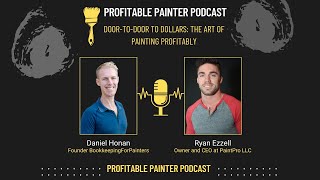
Ryan Eazell built Paint Pro from zero to $1.5M revenue in a year using door-to-door sales. He scales with a hybrid crew model, pays canvassers $100 per appointment, and keeps a 4-6 week production pipeline to avoid overextension.
Chapters
Welcome to the Profitable Painter Podcast. The mission of this podcast is simple: to help you navigate the financial and tax aspects of starting, running, and scaling a professional painting business. From the brushes and ladders to the spreadsheets and balance sheets, we've got you covered. But before we dive in, a quick word of caution. While we strive to provide accurate and up-to-date financial and tax information, nothing you hear on this podcast should be considered as financial advice specifically for you or your business. We're here to share general knowledge and experiences, not to replace the tailored advice you get from a professional financial advisor or tax consultant. We strongly recommend you seeking individualized advice before making any significant financial decision.
Welcome to the Profitable Painter Podcast, the show where painting contractors learn how to boost profits, cut taxes, and build a business that works for them. I'm your host, Daniel Honan, CPA. Former painting business owner and your guide to mastering your numbers and that drive success. So let's go ahead and dive in and make your business more profitable one episode at a time. Today I'm super excited to talk to Ryan Eazell out of Tennessee. He's running an outstanding painting business over there, and I'm really excited to jump into his story. So I'd like to welcome Ryan to the podcast. How's it going, Ryan?
Good, Daniel, how are you?
I'm doing well, doing well. Um, I'm really looking forward to our conversation today. Could you, could you give the listeners an idea of, you know, how you got started in the painting industry and what have been some major milestones along the way?
Yeah, sure. Uh, first off, thanks for having me on. I think this is the most valuable topic out there that's usually not discussed before or in the beginning stages of entrepreneurship. Um, so we got started, um, about 20 months ago, actually. Um, and I had a good corporate job and, um, you know, I just— we were never getting ahead, put it that way, you know. Um, and, you know, I, I always looked around. I've said this before, you know, some people just have that burning desire for entrepreneurship and it's not going to get fulfilled unless, unless you act on it, you know. And that was very much the case for me, um, from when I was a little kid. I was spray painting numbers on curbs, and my dad would go buy things from Sam's and Costco so I could set up on the corner, you know, and sell things. Um, but, you know, just to make a very long story somewhat short, you know, my wife and I went on a trip, and I was looking at everything that what I would imagine an entrepreneur had, had gained over the course of his life— nice lake houses, um, you know, just a little bit more, you know, because they took that risk, you know. And, um, so on the way home from this lake trip, I listened, I consumed everything I possibly could about starting a painting company. And my wife was just like, what are you listening to? Like, you know, it's been hours. And I am just— I'm consumed, you know. My grandfather ran a painting company for 50 years in Nashville. and he was, um, he eventually was off the brush, but, you know, I don't think he took it as big as it could have been, you know. Um, you know, back then it was a lot about, hey, how much can you write off? You know, how much, you know, can you show zero? And, um, that, that's really what just kind of sparked like, hey, if we were going to do something, anything, you know, why not do that? You know, it's somewhat in my blood. All my uncles and, um, you know, distant cousins, and everybody was a painter. So my wife and I, you know, we had a little bit of extra money, about enough to start an LLC, and we were just sitting in the living room one day and just said, all right, let's just do it, let's just try. Uh, Paint Pro was available, um, so we jumped in and we literally started the business. I come from a background of door-to-door. Um, so every day when I got off work, I would just dive into the neighborhood that was closest to my job and just knock. I mean, until I was just exhausted, you know. And, um, you know, looking back on it, man, it was the— oh God, it was just— it was the best thing I ever could have done. Um, you know, it was so fulfilling now looking back. But, you know, and then my wife would get out with me on Saturdays. We'd hire a babysitter and go knock for 3 or 4 hours. And we would stack up, you know, 3 or 4 jobs in a day. And, um, so we did that for as long as we possibly could until, you know, basically, you know, I was a full-time project manager, full-time sales guy, and I had a full-time job, you know. So, you know, one day, you know, my boss found out I had this side job and he brought me into his office and said, hey man, like, look, Go be an entrepreneur. Like, it's, I support you. And so much so that he let me paint his office, 20,000 square foot office. Let me paint his house. Um, it was just an amazing, you know, uh, course of events that had happened. And so, man, I mean, you know, once you take that step, there is a tremendous amount of fear involved. It's like we had that safety net for so long of having this, this salary that sustained us. And, you know, over that course of only 3 months, you know, we made great money. We made enough money to purchase our first home. You know, this was additional income, right? Purchase our first home, remodel our, our first home. And, um, and now it was coming to the point where now this is going to provide for us, you know, for our entire family. My wife and 3 kids. And so we, we did it, man. We jumped in July 4th, actually. That was my Independence Day. And, um, we went in, we started full-fledged, and, um, you know, God just blessed us every step we took. Um, it was just like, man, okay, I think we can do this. So that's kind of how it started. And then milestones, man, I mean We were hitting like $65,000, $85,000 months pretty consistently during that time. But as soon as I jumped into it full-time, you know, put my owner cap on, it's, uh, it's when we started to cross the $100,000 month barriers. And, um, that, that, that, the rest of that year, um, July, I think we hit about $110,000. August, it just kept going up and up and up. And we didn't cross $200K that year, but we were into the $185Ks, $189Ks all the way through really, you know, the most part of that year, even into the winter. And then, so we actually did $1.5 million our first 12 months in business, our first calendar year. And then January, we did, we increased our ad spend. You know, we brought on project managers, additional sales. That's when it started to kind of ramp up. So we did, you know, a little over $200,000 January, a little higher than that in February. Um, and then March, you know, we had a monster. We did like $408,000 in March. And then, you know, April had another really strong month. I think it was, um, almost $400,000, $380,000, something like that. Um, so, you know, it was like milestones are like, man, $100,000 in a month, that's a massive milestone.
Oh yeah.
And then your first million, that's a massive milestone, you know? And then now we've done, uh, we've done, uh, well over $1.5 million just so far this year.
Mm-hmm. So you're, you're on track for what, $2 million this year?
No. Well, you know, it may have been a little lofty. Everyone said we're actually— our goal is $5 million this year. Um, we are, um, we are over $1.5 million with the strong part of the, the year left. We feel, um, I think, you know, I think we can hit, you know, $4 million. I'd be, I'd be surprised if we didn't, you know.
$4 million, and this is the second full year, right?
Uh, we haven't hit 2 years yet, so we're 20 months in business.
Gotcha. So the first year you did $1.5 million, and this year we're looking to hit $4 million. Yep. Okay, that's, that's amazing. So you, uh, you have really accomplished something. I mean, the first year you hit it out of the park, $1.5 million in, in the first 12 months. That's amazing. And then to over— you know, you're projected to over double that in the second year, that is, that is super impressive. And I'm sure there is a whole ton of work and headaches that went into that, those 20 months so far. But I appreciate you sharing. So I'd love to dig into, because you were initially, I love the fact you were door to door initially and you're just grinding it while you're doing you know, you're working full-time, right, in your corporate job. And so you're doing full-time work at your corporate job, and then you were doing door-to-door marketing in your, you know, weekends and evenings, right?
Yeah, yeah.
And, and it sounded like you said that while you were still working, you were doing at one point $65,000 per month. While you were still working full-time. Is that right?
Yep. Yep. Okay, that's right.
I mean, that's, that's, that's really impressive. Uh, so were you do— you would do door knocking? Um, was it when you were doing $65K a month, were you still door knocking and doing the sales and production management and then just subbing out the— to Cruz? Is that, is that kind of what you were doing during that first?
Correct. Yeah. I should also say, you know, pretty much The first, within 2 months of starting the business, as soon as we started to become profitable, we dumped the majority of our, our profits into marketing.
Hmm.
So then it started to pick up and instead of knocking doors every day, cuz we realized that was not sustainable for very long, we started to get, you know, 2 appointments a day, 4 appointments a day, 6, you know, it got to a point where as many as we could book, we would run.
So that, that's super impressive. So you were dumping money, your extra money, into marketing to just grow it, grow it, grow it. So you had that going. Did— where were you putting— obviously you were doing door-to-door, uh, yourself, and it sounded like your wife was helping you as well. Was there anybody else helping with door-to-door in the beginning? And, um, or was it just you two?
Okay. Yeah, it was just— and she only you know, she's— she was mostly at home with our kids. So, um, you know, she went out a couple times, but just those couple of times, it was— she actually has a background in door-to-door as well. It's how we met, actually. So for us, it was fun, you know. It was like, let's go out here and not only provide for our family, but let's get back to our roots, you know.
Yeah, that's awesome. That's, that's super cool. So are you guys still using door-to-door in your company? For marketing or is it, have you switched to a different channel?
Yeah, we do. I would say 90% is through lead generated appointments. Um, anytime it's slow, I tell my guys, like, especially one of them, we brought him on as a door-to-door guy last year. And I mean, he was absolutely crushing it. You know, he was, he was getting, you know, 5, sometimes more appointments a day. And, um, so anytime we're low, if they don't have 2 appointments a day minimum, we'll tell people to go hit around the houses that we're painting currently. And, you know, that's, in my opinion, there's not a stronger appointment or, uh, customer acquisition than that. You know, it's, it's the strongest you can point and say, hey, we're right here, you know, come walk the job with us, see how we do it.
You know, so you're, you're Um, so you have, you still have door-to-door in your, in your culture, it sounds like. Not only do you have people doing it like designated as their position, but you're even your crews, you encourage that. Do you guys like, you do like a referral fee or something if they, if they get a lead that turns into an estimate or something for your crews?
Okay. I mean, we do, we do percentage, like just like we do with sales guys. So Yeah, my project manager just landed a $13,000 job and he's going to get 5% of that on top of his salary. So we encourage, you know, anywhere you are, it doesn't matter. In my opinion, you can throw a rock and find an opportunity in paint. Commercial, residential, you know, it's, it's everywhere.
Yeah.
So you're—
is 5% your typical, uh, fee for someone doing door-to-door, or is that just a special situation you had with your project manager?
Yeah, I pay him, uh, 5%. Any— I would pay anybody 5% that brought me a sale. But, um, our sales reps start at 7%, and then my sales manager actually makes 8%.
Okay.
Of top line.
So, gotcha.
Yeah.
Okay, so your, your door-to-door marketers are getting 5% of leads that convert into sales, and then your salesperson gets 7%, and then you have a sales manager that gets 8% for managing the sales team.
We actually do our door-to-door canvassers that are only doing door-to-door. They actually get $100 per appointment set.
Gotcha.
And there's a whole list of qualifications that come with that. It's not just, hey, we set this appointment. I want name, email, general description of scope. And then it's $100 per appointment set. And those are very strong appointments.
Yeah. So $100 per set appointment. Um, and then no, no bonus for closing or do they get also a bonus for—
okay. I want them solely focused on generating. Okay.
Qualified leads.
Okay.
Got it. And then, um, so $100 per qualified set appointment and, uh, So this is great because a lot of folks are kind of intimidated with door-to-door, and it's— it can be a very inexpensive customer acquisition machine because $100 per qualified lead, I mean, what you might need 3 of those to close the deal. So you might spend $300 per, you know, per job that you book, which is you know, probably 5%, like you're saying, of like an average job size of $6,000. Is that kind of what you think? Like, that's the numbers?
Our average job size is about $7,000. But if you think about it, if I get a Facebook lead, I mean, we spend $15,000 a month on Facebook advertising. So if I get a Facebook lead, it's anywhere from, let's just say, an average of, you know, $300 to $350 or something like that. So to your point, if I can get a $100 lead that's set expecting us, that's a great deal. And also think about it from the canvasser's perspective. Wait, so you can set 20 appointments a week and make $100,000 a year? You know, that's an amazing opportunity for a young guy as well, which I found this, my first canvasser, I found him in the gym. I was like, what are you doing? You work for me now. Come on. And he just went out and just, just, I always say like, dude, enter that state where it's like you just go numb, you know, don't care what anybody says to you. You know, the smart guys don't make money, right? It's the dumb ones that are just dumb enough to go up and knock a door.
Yeah.
And, uh, it's been amazing. You know, this dude made more money than a lot of, you know, parents just out knocking doors.
Yeah, that's awesome. Yeah, it's— you don't have to be, like you said, you don't have to be super smart, but if you can take some abuse, because door knocking, it can definitely be discouraging. You knock on 100 doors and not get anything for a while, but it's just a numbers game. You gotta, you gotta bulldoze through that. And that's awesome that you come from that background. So you're probably able to provide some really good training. And when I talk to folks thinking about door-to-door, a lot of the times they kind of talk themselves out of it where they're like, well, there's neighborhoods that says no soliciting on it. And, you know, or just, you know, I tried it once and it didn't really work for me kind of thing. I feel like a lot of folks sell themselves short on that idea of door-to-door. But it can be super cheap. Like you mentioned, it's way— usually a lot less expensive than Facebook ads. Not to say you shouldn't run Facebook ads, but it's just a very cheap outbound way where you can control it. You can basically say if you have a certain revenue goal, as long as you put enough trained folks doing door-to-door, you can hit that goal. It's just a numbers game. But what would you say to folks? That kind of have some hesitation on implementing door-to-door. Maybe they, they feel like the neighborhoods don't allow it, or, uh, do you have any, any thoughts on, on implementing door-to-door in a painting business?
Yeah, and I mean, Daniel, if you and I were being honest, it's like, um, there's— you're not gonna get the easy road for a long time. Everything is hard. Every single day, everything's hard for a long time when you start a business. So really, if you're not open to really anything, like you haven't earned that right yet. So in my opinion, if you go out and knock doors, first off, there's not a cheaper, uh, customer acquisition cost. I know eventually an owner's time can be $1,500 an hour or something like that. But you're probably not there yet. So first off, I couldn't have started my business without going door to door. I don't know if you've ever heard my story before, but I walked up to a stranger's door, knocked on their door, 5,000 square foot home, paint looked terrible, and I had never painted a home in my life. I had no painters. I knew nothing. I knew less than nothing. Okay. I had been in business for 2 days, knocked on their door. The wife said, oh yeah, yeah. Like we need a painting job. I said, okay, cool. So I gave him a price, $17,500. They called me back the next day and said, yeah, yeah, sounds great. Let's do it. So the other quote they got was probably $30,000, you know, but, and also I went to the guy's office and he said, hey man, I looked you up. You've only been in business for 2 days. You know, I'm like, well, you caught me, you know, but he was an entrepreneur. He gave me the shot. So. In my opinion, dude, if you're in your first year of business, you have not earned the right to be picky or choosy about where you get your leads. And if you go off and tee off— I'm talking savagely, ruthlessly— go through and say, I'm gonna knock on every single door in this neighborhood, I promise you, you're going to get sales. It, it, it's the law of the universe. I've knocked doors for so long And honestly, if you're scared, go at 5:30. You're going to start seeing people come home. You don't even have to knock their door. They're already outside. You know, that's a good place to start at least. But I think anybody who takes the risk and does it for 5 days in a row, you're gonna probably book up for the next month. You know, it's, it's crazy how much you can generate from just knocking on doors. And then, dude, You know, the domino effect. Now you have 5 customers, you say, hey, can you, can you introduce me to your neighbors? And all of a sudden you're doing the whole neighborhood. Yep. It's offensive to me when my sales reps don't go knock the neighbor's doors.
Yeah, no, and it's funny too because a lot of, you know, I, I talk to painting business owners every day, all day long, And one of the things that I'm hearing a lot right now is, oh, the economy is kind of weird this year. And, you know, leads are down and, and stuff like that. But you're, you're kind of proof that, that the economy at large doesn't really matter. It's really the effort that you put in is what you're going to get out of it. Even if the economy is down, you know, your $4 million business is still a drop in the bucket. Compared to the overall paint jobs that are being sold in your area. You know, you're, you're still, you're a large painting company by comparison to the average size. But, you know, there's still, you're probably like 1% market share still, you know, because there's so much painting being involved, like you mentioned, like you could throw a rock and hit somebody that needs a painting job. So the, the idea that because the economy is down, and I'm running a a million-dollar business, that's why my revenue is down. You know, that's probably not a good excuse. It's probably— you got to kind of take a hard look in the mirror and at your team and say, okay, what are we not doing? What do we need to do better to, you know, even though the leads might be down on Facebook or whatever, what can we actively do to put more into it to get more out of it?
I agree completely.
Um, no, no, this is, this is great. And so you, you start out knocking doors, uh, and it's— you, you started so quickly, you got 1.5 in the first year. So I guess, what order did you start outsourcing, get— getting team members to help you? Because that's a very quick growth. So how did you— did you hold on to door knocking and sales, and then you You got subcontractor crews and, uh, first I'd imagine, like, how did that work? How did you build your team so quickly? And what did you go for first? Like what team members?
I did it backwards to what most people do. The first role I hired was a sales role. Uh, and it's only because I had an A-player that was willing to come on board, which is my brother-in-law. Um, he's an absolute stud of a sales guy. We worked together at ADT for years. And, um, so I brought him on board. And so then I became the full-time project manager, office admin, you know, I was basically running the office. He was doing sales. We brought him on in the winter. He made as much as he was making, you know, before, but, um, it wasn't like crazy. Um, and then when summer— when, when actually Before that, January, you know, we had our biggest month ever up to that point in January. And then I brought on an office administrator and she handled all incoming calls, all project managements, uh, well, all PTAs, prior to arrival forms. So color, light color consultations, um, customer preferences and, um, customer colors and stuff like that. And then shortly thereafter, I had a painter that, again, very loyal guy. I promoted him to project manager. So then we had sales, office, project manager. And at this point, I mean, we probably had 5 subcrews and we had accumulated, uh, 5 in-house guys. So we had a bit of a hybrid model. And then, uh, slowly we brought on another sales guy. And, um, you know, at that point it's like when you have a business, you know, I know there's people a lot bigger than me, but when you have a large painting company, um, the subs call you, you know. It's— you stop having to look for subs, you know. They're calling you and texting you every single day. You— they have— they see your ads and all this kind of stuff. And so, um, we grew that way. We have about 15 subcrews that we use now, and each one has their specialties and we use them accordingly. And then we have 12 in-house painters, W-2 guys that we use every single week. And it's nice because the hybrid model allows you, you know, I hate taking jobs under $1,500. I rarely will do it unless it's like 12 and I know the person. Um, but if you deploy a 1 or 2 man crew on a $1,500 job, it's actually quite profitable, you know. Um, it's a much higher profitability margin than, you know, some jobs. And I know it's lower scale, but it's good to have our in-house guys to deploy 1 or 2 at a time for smaller jobs, 2 to 3 day jobs. Um, most of our sub crews, you know, we'll use, we use the same subs every single week. Like clockwork, and they are studs, you know. Um, and then we, we do have an additional office administrator's assistant now who handles— now she does all incoming calls, books all appointments, does all the PTAs. So right now we have 2 sales, project manager, 2 office admin, then we have a media content guy. So he does— he He goes to the jobs before, during, and after, captures content, posts daily, um, and then 12 in-house painters.
Mm-hmm. That's, that's awesome. And you mentioned hiring subs, or at this point they're, they're calling you because, you know, you get to a certain level, you, you prove that you can keep folks busy. So they want to stay busy. So they're reaching, they know who to reach out to. Now, before you got to that point, What were you doing to find and vet subcontractor crews? Because a thing that I hear a lot is, there's nobody out there that wants to work. And I can't find, you know, they might have booked a lot on the sales side, but then they have, you know, 4 months of backlog of work that they need to knock out to actually earn the money. And they, you know, they're having trouble finding good crews that that work. So do you have any— yeah, what's your process, especially towards the beginning where you didn't have, uh, folks just reaching out to you all the time?
So you just talked about the pendulum, right? It's always a pendulum. Either you're low on sales and you got a production a mile away, or you got a production a mile away, you can't find the, um, enough people to do it. That middle ground is is, that's where bliss is, right? But it's very hard to find. And I had a great coach that I started out with and he always said, you have a weekly production amount, right? If you're, if you start, if you slow down past 6 weeks, lower your production amount. 4 weeks, lower your production amount per week so that you always have 4 to 6 weeks out booked. And as soon as you start to book out a little further, if you needed to, You could, you could ramp up production again, but he taught me a great middle ground, which is like, if we're only booked out 3 weeks, I'm going to lower my production that week to maybe, we were at 75,000 production every week. We've recently lowered it down to 50,000 so that we book back up for that 6 weeks, you know? So I would advise anybody to really look at that model where you're not worried about how much can I do in a week? You can't, you can't play that game. It's how long can I stay booked out. It takes the stress off of you, you know. But, um, for the subs, I would like to also clarify it, whether it's customers or home business owners that are listening to this. The only difference between a subcontractor and a W-2 employee, there's a couple of things, but what taxes at the end of the day, how you file. Um, some people say, well, that's not, it's not a, um, It's not an employee, so you don't have control over the situation. That's not correct. And the reason I say that is because at the end of the day, you deal with me. If you have a problem, you deal with me. The labor at the end of it, whether it's W-2 or 1099 subcontractor, that's irrelevant. You know, at the end of the day, I'm the one who is owning whatever issues you have. I think a lot of people fear the 1099 sub model because it feels like they lose control. That's not the case. When you get good subs that rely on you every week, they are exactly like an employee. They will do anything that is required. And also, you pay them based upon receiving payment. So they already know they're not getting paid unless I get paid. So there is no, oh man, I need, I need $1,000 to get me by. Look, that's put me in bad positions before. It's not happening. I get paid when you complete the job and I, and, and And you get paid when I get paid. So the way that I found my first sub after I sold that $17,000 job, I drove around the entire afternoon and found painters that were painting houses. And one of them was actually painting an entire apartment complex. And I found the only guy that could, could communicate with me. And I said, get in the car, come over here and tell me how much you charge me to paint this house. Now it's a lot different. We immediately require, okay, I need your, um, NOI, I need your EIN number at minimum. Um, and that's all because the bigger you get, you, you know, you're the CPA. It's like, if I can't write this money off, I'm paying taxes on it, right? So at this point, I have to be able to prove that I, I I wrote you a check or deposited money into your account. Also too, the, the most basic way to qualify a painter is just ask the simplest question. Hey, send me a couple pictures. Depending on how many pictures they send you is how good they are. Because they start going through their Rolodex, you know, and they're like, oh man, this was a great one, you know. And you can see, man, some of them aren't like perfect pictures. That's how you know they're real too, you know. Yeah, that's a good place to start. And then I always start them on a small job, or, um, even my personal house. Like, you know, I'm always doing stuff around here. I'll have them come over here, and I want to see how they pull up, what equipment they have. That'll tell you everything you need to know. And you can't be emotional. If they pull up to a job and it doesn't look right or feel right, and they're pulling, you know, the Wagner sprayer out from Home Depot for $100, it's like, hang on a second. Let's, let's, we're not going to be able to move forward, you know.
Yeah. So, no, I love it. So it sounds like in the beginning, you were literally kind of like how you got your, your first leads, your door knocking for to get your, your crews, you're literally driving around and finding people who are already doing it and recruiting them actively to, to come work for you.
100%.
Yeah, so that's, again, you were just putting in the hard work. So that's amazing. And then, you know, and you talked about aligning incentives. So with subcontractors, and if you have employees, you still got to do the same thing. But with subcontractors, you know, you align their incentives, you say, hey, you don't get paid until I get paid. So you got to make sure that the customer is happy. And so that kind of aligns their incentives, like they got to make sure everything you put in that sales present, that, that, uh, that estimate, that quote that they got, all those promises that you made or your team made is fulfilled upon by them so that they, that your customer pays you so that they get paid. So it kind of like gets everybody on the same page regardless of how they're being paid, you know.
But you know that, Daniel, that was the hardest lesson that I learned because you try to be buddy-buddy and friends and hey, you know, I know I'm not finishing today, I'm going to finish up Monday, do you mind going ahead and paying me? You get to a point where you are broke. You have broken yourself. So now, just because you're trying to be friends— these people, you know, it's not just the subs, everybody in business, they are there for their benefit. If you don't make yourself the priority, you're never going to last. The hardest lesson I learned was being tough and saying, I'm sorry, I can't do it. I can't do it anymore, you know. So, and man, people can be very persuasive, you know. I gotta pay my painters. I hear it every single week. Oh, come on, give me this. I gotta pay my painters. We're gonna finish up Monday. It's the hardest part about the business is saying, I'm sorry, thinking like a CPA. What the numbers won't let me do that, you know.
Yeah, yeah, you're right. It is tough, you know, to, to stand that ground. And a way that it's helped me and I think other folks is thinking it like you're the person responsible for the business. You're— you need to keep the business running so that everybody else can benefit from the business. People— so your customers benefit from your business, your employees benefit from the business, the subcontractors benefit from the business. So we got to keep the business going because a lot of people depend on it. And if you're basically stealing from the business to meet, you know, one person's, you know, situation, that's not fair to everybody else that depends on the business. So you gotta, you gotta, the business has to come first before any one person's individual need, you know, because everybody else involved with the business depends on it for their paycheck or their service. That, that helps kind of, at least for me, and I think some other folks, like thinking of it that way, it's less about, oh, what am I going to do in this situation? It's really got to put the business first because it supports all these other people, all these other, not only the, the employees and the subcontractors, but the families of those people as well. And your customers, because they also are relying on you to deliver a service that you, that you promised them. So Yeah, it's definitely a tough line to hold, but I think it's definitely something that as a business owner, it sounds like you've definitely, you know, learned this, but I think a lot of folks do need to hear that, that you gotta hold the line and you gotta serve the business because the business is serving everybody else connected to it.
Yep, the trickle-down effect is very real. And if you just start doing it on your level, you'll see, I pay this person, They support their entire family. They go to the— it's just, it blows, you know, you bless one person and it trickles down a thousand times, you know. And also too, just real quick, if you don't put your business first, who is going to? No one else is going to put your business first.
Yeah, great point. Exactly. So Ryan, you've been super generous with your time. Super. I feel like we could keep going for like another 3 hours. But I don't want to steal your time. So do you have any last thoughts for a painting business owner out there that wants to grow like, like you've grown so quickly over the last 20 months? Any, any last words, words of advice that you could give to somebody that's really looking to grow their painting business to the next level before we let you go today?
Yeah, I mean, I had a tough couple of years, you know, many years where, you know, I just, I had a rough run, you know? So I had to, I felt like I was behind a lot. So I did some things that most people probably wouldn't do. I was very drastic. I was all in. I dumped every dollar back into the business, but, um, You know, a lot of people were like, ah, don't shoot for $5 million. You know, it's too big. You're going to break it. Um, I would say you don't have to shoot that big, you know, but I would not limit yourself at all. I think we overestimate what we can get done in a day and underestimate what we can get done in a year. I think you could do anything you It sounds cheesy. After doing what we're doing, I don't feel like there's anything I couldn't do. You know, it's just, it expanded. It's like the rubber band effect. It expanded my mind more than, more than, more than anything. You know, your capacity is really, really wide if you just do it. You know, just stop thinking about doing the thing is not doing it. Planning about doing the thing is not doing it. Doing the thing is the only thing that's really doing it. You know, so I think anybody that's either thinking about it or maybe has done it and wants to go bigger, it's just like, dude, you got this. You got one life to live. You got a certain amount of time to do it. Just go insane and do it, you know?
Yeah, love it. Awesome, Ryan. Really appreciate your time today. I think you just, you, you dumped a whole bunch of value on, on the listeners today, so I really appreciate your time. And for the listeners, with that, we will see you next week.
More from Daniel







What’s REALLY Holding Your Painting Business Back? (Find Your Bottleneck in 5 Minutes)



