Free Painting Contractor App: Patricia McManus Unveils PaintFlow App
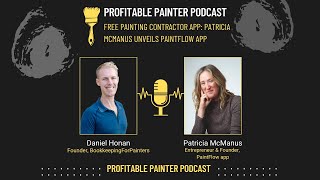
Patricia McManus built PaintFlow, a free app for painting contractors that handles proposals, work orders, change orders, and payments in one place. The app makes money only when clients pay through it, so contractors pay nothing. It's designed for small residential painters and owner-operators drowning in paperwork and scheduling.
Chapters
Welcome to the Profitable Painter Podcast. The mission of this podcast is simple: to help you navigate the financial and tax aspects of starting, running, and scaling a professional painting business. From the brushes and ladders to the spreadsheets and balance sheets, we've got you covered. But before we dive in, a quick word of caution. While we strive to provide accurate and up-to-date financial and tax information, nothing you hear on this podcast should be considered as financial advice specifically for you or your business. We're here to share general knowledge and experiences, not to replace the tailored advice you get from a professional financial advisor or tax consultant. We strongly recommend you seeking individualized advice before making any significant financial decision.
This is Daniel, the founder of Bookkeeping for Painters, and today I'm here with Patricia McManus. Patricia is the creator of PaintFlow, an app that takes proposals to projects and processes payments for free. She is a painter herself and has brought this to the industry in hopes to help other painters present more professional proposals and win more projects. Welcome to the podcast, Patricia. How's it going?
It's awesome. I am so excited to be here. Thank you, Daniel, for having me on the show.
Super happy to, to have you and excited to get into the conversation. Uh, for the listeners, could you kind of give them a background of, of where you're coming from?
Absolutely. Uh, it all started for me— my father was a painter, so it started when I was around 12 that I started following him to job sites in the summer and tagging along to be his gofer and just kind of help him along with, uh, residential painting, primarily exterior. Opened my eyes to how uh, how to make an income really through paint. So when I went on to obtain my BFA in interior design in college, I actually was painting throughout that time too, uh, getting to know more about how to spray houses. It was a new build scenario in the early 2000s, so I really cut my teeth during that boom, um, and ended up after graduating college starting my own painting outfit in Kansas City and running that. So through creating systems and repeatable processes in my own company over the, the past few years, I had this realization that I could help others who might be in the similar scenario that like they didn't inherit a business or they wanted to work residential painting primarily, and they needed a simple tool to start with. So I thought this would be the best way to do it, is to bring it through a native application, Paintflow.
Yeah, yeah, you— so you basically created Paintflow to solve the issues that you kind of had in your own business. And that's where I always like when software is built by folks that are actually had to solve their own problems, you know, and they weren't trying to just collaborate with somebody else because it always seems to work better when they're trying to solve their own problems. So that's awesome. So I guess going through your journey as a painting contractor, what sort of problems were you facing in your business that, you know, that PaintFlow ended up solving for you?
Oh, I, to start just kind of being overwhelmed with field tasks because it's, it's, it's interesting when you're producing or doing paint production. There's so many different variables that come in, whether it be rain, scheduling, people out sick, having to, you know, how am I going to move the 40-foot ladder? And then on top of that, after actively, like, physically going out and expending that type of energy, going back and going, okay, how am I billing for this? How am I collecting payment? How am I keeping track of this? The amount of times that I purchased those cool contractor metal things to hold papers in my car or truck, and then somehow the stuff just never made it in there. I would have calls coming in on ladders, things like that, that You know, you don't know until you're in it and you're literally like, wow, how am I going to manage all of this? So a big step for me was beginning to have organization from an office aspect and, you know, kind of portioning out time in office and in admin work for those processes and systems so I could go and just focus on the task at hand, which was coating something and actually making paint stick. So yeah, I believe these systems and processes that I've got within PaintFlow, just having one place to put everything is huge and it's on my phone and I always have my phone. I love that.
Yeah, so basically it sounds like it's almost like a CRM and then I know another thing that's pretty cool is that it processes payments at, uh, no additional cost. Is that right?
Totally, yes. It's a, uh, it does have a CRM management to it. It's an address book where you can email, text, and call all from within the app, so you're not seeking your contacts, uh, through your personal contact list or thumbing through your text messages anymore. It's a great place to just revert back and go, okay, I'm at this project. I can open up that file within the app, see what the project details are, and call, email, and text through that. As well as, yes, it's a single source of income— sorry, not income— single source of truth between your clients, your crews, and yourself. So Whenever there are changes made, they're happening across both platforms on the proposal and the work order. And yes, you, you can receive online payment without incurring fees and taking away more of your net profit because we have created it to push those processing fees, including credit card processing fees or HCA over to— or sorry, ACH— over to your client directly. So there's a few, those are a few features that we've got. I'd say my favorite that I'm utilizing, which is keeping me far more organized, is managing change orders and having the ability to change order because I feel like we leave a lot of money on the table as painters by, you know, not taking down the details once the project's kicked off and going, hey, you know, anytime something changes, it's either going to cost you money or it needs to cost your, your client money, uh, because you have to recalibrate, you've got to adjust what you're doing, and, um, it's going to cost one way or another. So being able to record those change orders in real time to, uh, show your client like, hey, this is what the change would be, and then also your team through the work order like, hey, this is what's expected of this change order. That those few features are definitely the ones that I am saving so much time and energy with.
Yeah, that's huge. The handover from sales to production is always one you want to make sure you're getting right because, you know, the salesperson, oh yeah, I include that on the proposal, but did it make it over to the work order so the production team actually knows what they're supposed to do? That's like, that's huge. And if you don't have that piece figured out, it's gonna cause a whole bunch of issues.
It does. And it's so huge when you're working with people, like you've got a team maybe of 2 or 3 people, the act of telephone that you play as a manager or owner-operator, it's exhausting, especially if you're behind the brush and leading those crews and kind of maybe training someone or, you know, the things get caught in the minutia. So having that single source of truth that everyone can see really mitigates a lot of issues in the future, and that ounce of prevention is worth a pound of cure, right?
Yeah, that's awesome. And then going back to what you said about passing the fees along to the, your, your customers, so you, you know, the cost of the, the payment processing isn't on you. So if they're doing a bank transfer or a credit card, you can easily pass that cost over to them within the app, which is great because I know a lot of folks have— they don't want to take credit cards because they don't want to have to pay the 3% or whatever that is. So you're able to kind of pass that cost onto the customer really easily. So if they want to use that credit card, they can without it costing you.
Yeah, exactly, Daniel. What makes PaintFlow unique is our, our business model in general, that we are not a subscription model. You could download it for free today and start sending proposals, and our fees and payment processing fees are incorporated into the backend directly to the estimate that you provide your clients. So there's no upfront cost, and once they pay you, our small percentage is routed to us. and their credit card fee and/or ACH fee is taken right there too. And we see it more of as a, a partnership. If you make money, or if you don't make money, we don't make money. If you do make money, we make a little money.
Cool. Yeah, that's awesome. So basically folks can download the app right now, no cost, and start using it fully and start sending, you know, out invoices, tracking projects with the app and communicating. With their clients and there's no cost. And, and, you know, basically PainFlow gets paid by, if your customers use the payment processing for credit cards or whatever, that's, that's how PainFlow makes money, which is, that's awesome. You're transparent with that because a lot of folks don't realize that there's pretty much all apps make money that way, but at least you're transparent. You're definitely transparent with that. And plus you're not even charging a subscription on top of that. So there's no ongoing cost. It's just what you're actually using the app for payment processing. So that's awesome.
Exactly. We've— here in Missouri, I mean, we get ice storms. I mean, it has rained more inches than we can count this spring and things ebb and flow. And I— in the winter, especially sitting on subscriptions, it can be painful. Depending on, especially in residential, I would say, where commercial, you know, you've got projects that are slated to go on no matter what. In residential, it really is up to the customer to feel like they want to spend the money or not. And in the winter when it is just dark and cold and, you know, the seasonality of it really makes it slow down to where That's where I wanted to make this accessible to people who, you know, are just trying to make it, and maybe they can't some months handle a subscription. That is real. Um, so yeah, and the transparency just really comes from this idea of this is a partnership. Uh, I don't expect to make money unless somebody else is making money.
Mhm. No, that's awesome. Yeah. So, so Who would you say most benefits from PaintFlow? Would it be like a residential repaint business owner?
Yes, absolutely. A small business residential repaint company would be great. Someone who has a few teammates, someone who's honestly operating themselves as well, just to keep things straight. It's a great way to communicate and to keep track of things from an admin standpoint. It's like having an office manager that, you know, is just right in your pocket.
Yeah, that's awesome. Cool. So I guess, you know, what would you say? I think we kind of hit on this one, but I'd be curious to see what you say with this question. You know, what makes this application different from other softwares designed for painting contractors?
I would say to begin with, it's going to be that business model where we're not subscription, so that, that barrier of entry is very low. If you're not used to using software, this is a, a great way to come in and start. Uh, we've not made this overly technical for people to use. It's very user-friendly. Um, we have come in with the idea from the beginning, as you said, like, this is my practice. This isn't— I'm not in some office as a software designer developing more softwares. Like, this is the, the practice and system that I've created with experience for years of doing everything from, you know, exterior residential, interior residential to commercial, and really bringing the commercial idea into residential is where I believe this has been influenced as well. So what's going to be different, um, and set us apart is that real attention to detail about how many variables can actually occur on a project where you could have one room where you've got 4 different types of paint that need to be used because you have a ceiling, a wall, trim, doors, and being able to really articulate that visually for clients and to your teammates. I, I feel like this is a tool that is absolutely unique to the, the industry in that way, and I, I I focused on primarily just the best way to keep everything very transparent for both parties from the beginning, because you decrease any type of miscommunication at that point. So it's a, it's a sales tool. It's going to help you make more money because you're going to put yourself out there more professionally and look professional in a way that you're collecting payment, uh, you're in the modern world sending digital proposals. And then it's going to help you with your project management through automations and status changes depending on what part of the journey you are in with sales, as well as that finalizing, sending over your team the work orders and very clearly adding change orders, which kind of adds a little meat to the bone of, of whatever project you've already won.
So Yeah, that's awesome. So I know there's a lot of folks that I've worked with and they're still using paper and they're still, or using spreadsheets or a combination thereof. And because they don't want to pay that subscription fee, you know, every month. And so I think this is like a great opportunity where they can take care of their proposals accepting payment, generating that work order for your team, all in one app that they don't even have to pay a subscription for. So I think that's amazing. Thank you. And so what would folks do to actually get the app? Is this something that they have to go online? Obviously go online, but can they get it from the Play Store or— Absolutely.
They— you can download it right now in the Google Play Store or the Apple Store. There's information on our website as well. We've got downloadable buttons there, paintflowapp.com, and there are YouTube videos available to help get you started, training videos if you'd like to do them at your own leisure. But we're here for training, and signing up for a demonstration is always an option. You can do that on our website as well. Paintflowapp.com. And primarily, we, we're here to help you learn how to use it, uh, to where you're able to take a little bit off your plate to potentially go win more jobs. That's what happened in my company, where all of a sudden, when I had the automations, I had the system, I had the process, it freed me up to be able to go spend time, well, you know, more time, more free time, which is great for everyone. But also it freed me up to go put out, you know, 2, 3 times the amount of estimates, which automatically increased my gross revenue.
Yeah, it's so, that's awesome. So they can get the app right now and also get a demo, you know, with your team on how to use it. So there's really no excuse. I mean, It's free.
Yeah, we're here.
You'll get support on how to use it. It's kind of a no-brainer if you're looking for something to help you generate proposals, communicate with your team with work orders, keep everybody on the same sheet of music, charge your customers. Like, this seems like a pretty straightforward no-brainer. You at least got to try it out.
Yeah.
Okay, cool. Is there anything else that you wanted to share about PaintFlow?
I mean, other than just saying check out, uh, we have a weekly webinar on Wednesdays at 2:30 Eastern Standard Time that you can find on our website as well. And that's going to give you the workings of the app, um, if you're still, you know, wanting to learn more about it in that way. And obviously email us, hit us up on our website for a demo. We're here for it. And I think the idea that we're still pretty young and agile and we're in growth mode means we're happy to have feedback. Like, we're, we're in a stage right now where we really want to put this together with people and hear from our users in a way that we can help make it better for, for you. So you could be a part of, like, you know, the next feature, let's say.
I—
we want to be that. And this is a jumping off part, and we've got future features coming as well. So the more we, we all collectively put our brains together on this, the better it's going to become. And I invite everyone because I would love to hear your feedback.
Awesome. Good stuff. Well, I'll include the links to, to how to get ahold of Paintflow and download it in the show notes. And I really appreciate your time today, Patricia. And with that, we will see you next week.
More from Daniel







What’s REALLY Holding Your Painting Business Back? (Find Your Bottleneck in 5 Minutes)



