From Student Painter to $4M in 3 Years — The Rise of Gabe Elias
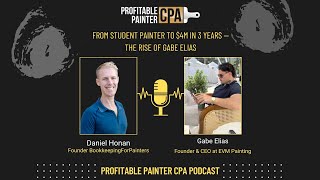
Gabe Elias went from Student Painters intern to $4M in revenue in three years by building a painting crew that hit $200K in his first summer, then expanding into home improvement and general contracting. He talks recruiting through Facebook groups and door-to-door, scaling with systems, and the tradeoffs between growth and operations.
Chapters
Welcome to the Profitable Painter Podcast. The mission of this podcast is simple: to help you navigate the financial and tax aspects of starting, running, and scaling a professional painting business. From the brushes and ladders to the spreadsheets and balance sheets, we've got you covered. But before we dive in, a quick word of caution. While we strive to provide accurate and up-to-date financial and tax information, nothing you hear on this podcast should be considered as financial advice specifically for you or your business. We're here to share general knowledge and experiences, not to replace the tailored advice you get from a professional financial advisor or tax consultant. We strongly recommend you seeking individualized advice before making any significant financial decision.
Welcome to the Profitable Painter Podcast, the show where painting contractors learn how to boost profits, cut taxes, and build a business that works for them. I'm your host, Daniel Honan, CPA, former painting business owner, and your guide to mastering the numbers that drive success. So let's dive in and make your business more profitable one episode at a time. Super excited to talk with Gabe from EVM Home Improvement. Welcome to the podcast, Gabe.
Thank you, Daniel. I appreciate it.
All right. So just to get folks an understanding of where you're coming from, could you let us know, you know, how did you get started in the painting industry and what have been some major milestones along the way?
Yeah, so I started with an internship called Student Painters, right? There's a lot all around the country, Student Painters, College Works, etc. Mine was, you know, called Student Painters. They recruited me my sophomore year of college. I didn't think much of it. I just, you know, I got a cold call email, responded to it. It said like, you know, our average intern makes $10,000 in the summer. I thought, you know, hey, that sounds really good. Why not give it a shot? And the rest is history. You know, I did my first year, was my rookie year, absolutely crushed it. I broke some company sales records, produced my first year about $200,000 in revenue in a 3-month span in the summer. I had to, you know, recruit my own painters, recruit my own marketers, do all that good stuff, right? And mind you, I never to this day or since then never touched a paintbrush in my life. So that was a very large learning experience, learning curve, but I was able to really learn delegation and really use, you know, my network. And I was really good about recruiting and finding the right people to help me, you know, make this happen. So I did that, you know, plenty of podcast episodes of me during that experience with the CEO of the company. There was a couple of newspaper articles published. You know, I'm a 19-year-old, you know, in college feeling like, you know, on top of the world, right? So that was my first year. Second year, I was promoted to be like a regional executive manager where I was able to recruit other college students to, you know, bring on as rookie branch managers and teach them how to run their own painting branch. And I was their mentor and their coach. And so I recruited, you know, 6 people, all personal connections. In fact, I had about half of the training room in New England was recruited by me that year. So it was pretty cool. I think I was able to make a lot of noise with my success and then was able to kind of turn it into a culture thing and get a lot of people bought in. A lot of them were my friends, you know, were my buddies that were able to see what I did that past summer. So did my 2 years there. It was great. I loved it. It made me realize like I'm obsessed with entrepreneurship. made me realize this is what I want to do for the rest of my life, you know, work for myself, build something for myself, and lead, right? And, um, after 2 years of, of doing student painters, that took me to like my senior year of college, and, um, I decided to run up my own business. At the time though, it was kind of just like a side thing because I was getting ready to graduate and kind of get into the corporate world, get a full-time job, but I wanted something on the side to do some extra cash. So it was really just my buddy LJ and I, who is my business partner now, we were like, let's just keep doing some painting jobs on the side and just make some cash that summer. And we did that and just never stopped, never stopped since. So that's how I kind of got into it. Now, EVM is, we're in year 3 of business, right? I'm 25 years old. We're in year 3 of business. We should be doing a few million this year in revenue, should be around $2 million in painting. and another $2 million in the home improvement division as well. So we have two separate divisions. And I recently just purchased and acquired a, a seven-figure construction business out of Boston, Massachusetts as well, which is like general contracting. Recently got my, my CSL license as well. So did my business partner, which is a huge step, you know, to help us scale. And, uh, that's where I'm at now today.
That's amazing. So yeah, appreciate it. Yeah. Uh, I mean, just starting from the top, doing $200K in a summer as a 19-year-old, that is a pretty awesome accomplishment. It might not sound like much to someone who doesn't know what you have to go through because you're going to school full-time and you're having to basically start your business in the spring-ish and you're up to learn all this along with your full-time course load. And then, uh, you're trying, I'm assuming you get cold calling door to door.
Uh, oh yeah. Yeah. Door to door, you know, social media posting in groups. Um, we were fortunate where we, we were given like lawn signs and flyers, things of that nature, you know, from, from the actual, you know, business Student Painters itself. But, um, yeah, like you said, we had to start. While we're in school and try to basically line up jobs in the spring while actively recruiting painters and have everything set in stone for the summer and produce all of that in the summer.
You know?
Yeah. So yeah, no, it was a great learning curve, but I fell in love with the grind and the results and now I'm here.
Yeah. And did you, did you do this sub model or employee model for the student painters?
That was employee model. Yeah. So we had, we were paying hourly, um, you know, lower rates because obviously, you know, we have like 18 to 21-year-olds painting. Um, the customer knows that as well. They know obviously it's a student thing, right? They're going to get more of a budget-friendly price. The quality probably not going to be as professional as a, as a contractor that's been doing this for 30 years. But, um, I think I was able to really sell, you know, the, the company and really have, you know, make the customer kind of fall in love with me and really trust me with the story that I was building. You know, I think they were almost inspired by it and also were like, wow, this kid's crushing it and I trust him and let's give him a shot, you know? And then with that, I just ran with it.
Yeah, that's awesome. I mean, a lot of folks have trouble doing $200K in their first year. Full year, fully dedicated. So the fact that you did it over production over 3 months is really, is really good. So thank you. What I'm sure though, there were some big challenges, especially I did the same thing when I was 18, the College Works painting. So I, I know from my personal experience, it was there were some big challenges that I had to face. I was like, um, but I'd love to hear what, what are some of the, like, the big challenges that you faced in that first summer in the paint?
Yeah, absolutely. Yeah, I think, I mean, organization was a big thing because there's just so much going on, right? You got, you got leads coming in, um, and then you're, you're doing estimates, and then you're doing marketing, and then you have to proactively recruit painters for the near future. So you gotta kind of like time everything. And that was definitely stressful. I mean, thankfully I had a great mentor at the time who helped me a lot. But even then, I think the organization thing was very challenging for me. I was more of like a, you know, get things done when needed type of guy. But this made me really learn the hard way where it's like you can't just forget about a customer, you know? There was one, there's one story I shared this. I have another podcast episode with the CEO of Student Painters. His name is Steve Acorn, great guy, and where I shared my whole rookie experience as well. So if there's any young listeners, you know, tuning into this episode and maybe they're inspired and they want to try some sort of student painters or college painting experience, they can kind of listen to that episode as well, which shares my whole experience. But I remember there was one time, you know, in that first summer where it was actually crazy. We were at a job, definitely some Karens, right? Definitely some crazy customers. They seemed like the coolest people in the world when I sold them, you know, and then a couple months passed by when it was time to actually do the job. It was an absolute nightmare. This project was in Sterling. It was a very heavy prep exterior job, complete color change from like yellow to blue. Needed honestly like 3 coats, you know. And, um, man, I— the job was supposed to take about a week and it turned into like a month and a half. Absolute nightmare. Um, not only did I lose, you know, a couple thousands of dollars, but, um, the, the customer, the husband, you know, started becoming a little hostile, which was pretty crazy. And I'm like, you know, I'm a 19-year-old dude, so, um, started kind of getting aggressive and talking back and I was trying to stand my ground, but long story short, my mentor had to get involved. I was banned from the job site and we had to get a Sherwin-Williams rep out there and do a full inspection of the job to try to explain, Gabe did a good job. But it got so bad to the point where my painters were using art paintbrushes this size. To get in between little tweaks and crevices that you could still see a little bit of yellow because we weren't allowed to spray in student painter. So looking back, I could have probably resolved this a lot quicker by investing in a sprayer, but we weren't trained for it and we weren't supposed to do it. So it was an absolute nightmare. Remember this project, you know, till this day. And then worst thing about it all was, you know, I sold the job, collected the the deposit, but I forgot to get a signature and didn't realize till the problems arise at the job. Somehow forgot to get them to sign a contract. And again, this is 19-year-old me. So I think I learned every lesson in the book on that project. And to this day, I think it still haunts me a little bit.
Yeah, no, I'm same way. I appreciate you sharing it because I know physically Uh, like I just thinking back to my first summer doing college works, like the things that I went through, I'm like, damn, that's like, it, it still bothers me now. And that was literally, I'm, I'm 39 now and that happened when I was 18. So yeah. Uh, decades later at this point and it's still, I'm like, man, similar situation. We had an exterior, um, I can't remember if it was a color change, but basically so much was going on. We had multiple jobs going on simultaneously. I lost a crew. I needed to, but I needed to, I had promised the client that we were going to start their project. So I was like, I need to hire someone quickly. And so I did, but I did not vet properly. And so the guys said that they had painting experience. And I was like, okay, great. So I have a job to start today. So I got them started with the supplies and like some guidance. And then I had to go to a different job site to start another project with another crew. And I came back like 2 hours later. And they were— it was like a brick exterior with, you know, a little bit of siding, but they were leaning their rollers on the brick. Like with paint on it. They're just like leaning it up against and like there's paint all on the brick everywhere. So they were only on that job site for like 2 hours, but they completely just ruined this person's house. And so I was just like spending hours, you know, with wire brushes trying to get— it was just a nightmare.
So But yeah, I have another, I have another funny story. This one's shorter, but I, you know, this job, I was like, this is going to go smooth. You know, it was a perfect little like rectangular, like two-story home, no peaks, no dormers, nothing. The guy was super chill, sold him on the spot, overbid him. You know, I was like, all right, we're going to crank this thing out in like 3 days. And the one thing I didn't do, I perfected everything, the walkthroughs, the setting the right expectation with my team. I got the signature, everything right. The one thing I didn't do was color test, and that's because he knew the exact color he wanted and sent me it. And I was like, you know what, the guy knows this is the color he wants, whatever. I was busy that day, skipped the color test, had my production manager at the time go pick up the paint. And around lunchtime, we painted two sides of the house and he showed— he gets there and he was nice and he almost— he like cracks a joke, but he goes, what the hell? You know, why does my house look like Barney? Because it was like a purple color when he wanted like a navy color. And I'm like, oh my Lord. So we had to repaint those two sides and get the right color, you know? And my painters are, you know, in the corner laughing and I'm ready to kill all of them. They were all my buddies too. I'm like, you guys suck.
Yeah.
You know, because of the Barney joke.
But yeah, it is.
Oh man. There's a, there's a lot. Lots of mistakes made, you know?
Yeah.
Um, but it's, uh, it's how you learn, right? You learn the hard way.
Yeah. Yeah, definitely. It definitely speeds up that process. And you obviously learned a lot because, you know, since then you are now— you have a $2 million painting business, a $2 million home improvement business, and you said you just acquired a million-dollar, um, what was it? What type of business?
Uh, like a general contracting business out of Boston. Yeah, remodeling.
Yeah.
All right, yeah, cool.
So, um, no, that's awesome. So, and you just, you've been running the, uh, EVM painting business for only 3 years, right? And so you've already got it up to $2 million, but it's also actually $4 million because, right, because it's just 2 different divisions within the same company.
Exactly. Yep.
Okay, so, so you grew it from, from nothing to $4 million in 3 years.
Yeah.
Yeah.
Which is pretty crazy. Yeah.
Yeah. So that is huge growth. So congratulations to you doing something right. You learned something from Student Painters, it sounds like.
Yeah. Thank you.
So what would have been some of the major challenges growing so quickly over 3 years? And I guess also just to context, was that growth pretty much like pretty steady in the first, those 3 years, like $1 million, $2 million, $4 million?
I would say the first 2 years it was steady. It was like, you know, it was a good like, uh, double, you know, 100% growth. But from your last— from last year to this year, it's been insane. It's been insane. And, you know, the year's still not over yet. Um, you know, definitely a crazy amount of growth. Um, and yeah, 100%, there's been plenty of challenges. I think, I think the biggest one really is like, is not— oh, it's kind of— it's scheduling. I think the biggest one is scheduling. You know, obviously we're— we have our CRMs, we're very organized, we over-communicate with our customers, but I think a lot of times is like giving a customer a rough, a rough time frame of when we would be able to do the job, right? Like, let's say I, I go sell a job right now, it's interior painting. I let them know, hey, you know, we're booking out to like, uh, February, March time frame right now, and they're okay with it. I sell it on the spot, I collect the deposit, signature, everything's ready to go. What ends up happening is it's easy to get a little unorganized and you tell a little bit too, a few too many customers that same timeframe. And when that timeframe comes, right, you're like, oh snap, you know, we definitely can't do all of these in these two, in these next two months. So again, just an organization standpoint, more with scheduling for me. We don't, we don't have, you know, we don't deal with any struggles with production, which we're thankful for. We have very great crews. We have a lot of guys on our team. I would say it's more scheduling right now, if anything, you know, scheduling, getting jobs done in the timeframe that's promised and also just like not over-promising customers deadlines and also learning to say no, right? Because a lot of jobs are last-minute jobs that, and customers are so clueless, you know, they're like, hey, you know, they're like, I have this $50,000 exterior paint job, but I, you know, I need it started and done, you know, in a week and a half. It's like, Dude, no one's going to be able to help you. And if someone's able to help you, it might be like a one-man crew, two-man crew, you know, under the table crew, and they're going to just absolutely screw the job. You know what I mean?
Yeah.
They don't understand that. So, um, a big thing is learn— a big challenge for me is learning to say no and, and, um, you know, just not over-promising specific time frames for the customers. That's what I would say right now. Um, and I would say that the crazy, the exciting thing too is like, I would say a couple months ago it was lead generation, but we finally tapped into some Facebook ads. You know, we're working with, uh, Lucas Jensen and the Forward Media team, and they've been absolutely crushing it. We've been doing the ads for about 3, 4 months now. And, uh, I mean, just this month our ROI was 7x, you know, what we spent. So it's, it's, uh, It's— I'm starting to realize, like, holy crap, you know, we should probably, like, imagine if I'm— and we're spending like $100 a day, so I'm like, imagine if we spend $1,000 a day, you know. Um, so yeah, those are some of the things I would say. It's more, more in the production side of things and scheduling and kind of just setting proper expectations with customers, not over-promising and then under-delivering. And, um, And just some more organization, right, in the production side of things, prepping jobs ahead of time, you know, rather than last minute. Yeah.
Well, one of the things that seems like you've done well, and you mentioned it before, was that you've never painted before, right? No. At least consistently. Yeah. So, so you've never painted and you've gone from $0 to $4 million. In 3 years. And, uh, so I'm assuming you've been really good at— and you mentioned this before too, when you were recruiting on the painter student painter side.
Yeah.
But, uh, in order to scale a $4 million business, especially a painting business, you need a lot of people. So I'm assuming you're very good at recruiting, finding and recruiting, uh, people to actually work with you. So could you talk more about that?
Yeah, I'll say that is definitely one of our biggest strengths. It's something I've never struggled with really ever. I know a lot of times today, like in today's time and industry, like everyone's like, oh, you know, it's impossible to find good workers. Oh, no one wants to work. You know, more older generation people will throw those sayings around. But luckily we've never struggled with finding, you know, human capital and finding people to work and produce good quality work, at least for painting. How we were able to do that, I mean, I kind of go balls to the wall recruiting when it's needed. You know, it's all over our social media, Facebook, Instagram. I'm on Snapchat, which is something that, you know, most people aren't on, and I have a pretty large audience on there. And even as simple as like a black screen post just saying, looking for some more, you know, painting contractors gets me leads, right? I have a decent following online, so I think that helps with the exposure. But even if I didn't, I would still be spamming all social media, right? Organic social media is just huge. It's so underlooked and undervalued. And I mean, you can do millions in revenue with just literally just organic social media. I'm talking Facebook, Instagram, TikTok, Nextdoor, Snapchat, Facebook groups, which is something I can talk about for hours. You know, this is all organic. So we're putting all those ads out there when needed. And as well as like Indeed, right? We'll slap on some Indeed ads, but fortunately we've never struggled with finding a team. However, we do struggle with that on the home improvement side of things because the entry to skill level is much higher. Right? You can't just hire a laborer to remodel and finish a basement or a bathroom or a kitchen. So that's where it's a little more difficult for us. I'm fortunate that I have my father on the team. He's done construction his whole life. He's our, you know, number one go-to sub for home improvement, pretty much all of our jobs. But we're starting to get to the point where we're so busy that he can't even get he can't even maintain it and be caught up. So now we're trying to expand the home improvement and construction division by finding some reliable vetted contractors. But the tricky part about that is it's not just like painting, right? Exterior painting, interior painting, deck staining, kitchen refinish. That's pretty much it, right? All painting. Home improvement, there's much more variables and a variety of services we offer, right? We build decks. We do bathrooms, we do kitchens, we do basements, right? We frame and finish new construction. So it's like I could have a great bathroom sub who's just on point, but he's not going to be able to do a basement or a deck or frame a 3,000-square-foot house from scratch and finish it. You need a GC sub for that. So that's been the biggest learning curve right now for me. Yeah. And creating systems for that, but not only that, vetting the guys because everyone will say they have experience. You know, I have experience, I have 20 years doing this. And then it's like they don't even know how to, you know, do some simple finish carpentry. It's like, dude, you know, so lately I've been creating some systems for that. It's still easy for us to get the leads, you know, to get subcontractor leads and laborer leads. But, um, much harder to vet them and find reliable sources for the home improvement and contracting side of things, for sure. So been a learning curve this year with that, and I'm trying to kind of figure it out still as I go.
Yeah, well, you said you, you don't have any— you don't— you never struggled with the painting side, but it sounds like you're kind of always recruiting. You have a following And you post frequently on Organic for, for painters. So it sounds like you've never struggled with it, but it's because you're kind of always sort of doing it, or at least cultivating the ability proactively.
Yeah, absolutely. Yeah, proactively. And, you know, um, always, you always got to have some guys on standby, you know what I mean? Um, if you're doing the subcontracting model for the, for the painting industry, which is very common, you know, Even if you just have one crew and they're the best crew and they're just crushing it, you never know. You know, their head guy might get hurt or they might go out of business or they might start getting some of their own work from another contractor. So you got to always have, you know, A-player, you know, you got to always have some different teams, you know, ready to go. I think a big thing too is just the culture that we've been— I've been able to create at EVM and just our branding. We have a very strong brand, you know, everyone that's local to us in the Massachusetts area knows of us, right? They either see the wrapped vans or the wrapped cars, or they see the lawn, they see the hundreds of lawn signs all over the city. We have a bunch of, a bunch of, you know, the actual big signs, you know, downtown Leominster, you know, I'm always getting Snapchats and pictures of people that I don't even know just driving by and just sending our logo or whatnot. So it's almost like we've built this cool thing that people are like, want to be a part of. And if they don't want to be a part of it, they at least want to support it because it just seems cool. And they've seen what I've been able to build since the student painter days. And I think a big reason for that has to do with me documenting all of it. I've been documenting my journey since the student painter days.
Oh, nice.
Without, without realizing that that would build a nice brand or a personal brand, you know. It was kind of just doing it for fun, and then it's pretty cool. People have been following along for about 4, 5 years now. You know, my brother did an estimate yesterday. He does some, some roofing sales for a local roofing contractor, and he also works with us as well, EVM. And he's, he's 19 years old, he's a stud. Um, he did a roofing sale yesterday, and the customer just happened to know me. I have no idea who this guy is. We've never done a single job for him, but he said he's been following me from the beginning. And when customers tend to say that, and when they say that, I know they're talking about the Student Painter days, which is, it's pretty cool. You know, it's pretty cool. Yeah. Wow.
So that's huge. And probably I would guess from what you've said has a big factor on why you're able to scale so quickly is you have that access to talent. that you could easily, um, because a lot— what I see a lot is painting businesses, um, they're trying to do everything, or they, they're— they only have a couple people and they don't— they say they can't find anybody, which, like you alluded to, there's people out there. I mean, there is. Yeah, there's, there's people that want to work. So, uh, but really what it is is they don't want to invest. They don't have a, um, a following like you, but they also don't think that they should have to invest the time or they underestimate how much they do need to invest into recruiting and hiring to actually get, get, get that, those candidates coming in. Um, but what would you, what would you say to somebody maybe who doesn't have a following like you do and they haven't cultivated that over the years? What would you recommend if they are constrained, like their business is not growing because they just don't have enough people. They're booked out for months and they need more of a team, but they feel like they don't know where to start with that. Yeah.
I mean, I would say you got to go all out, right? If that's the biggest problem, you know, I'm sure you're going to have other problems as well, but you need to prioritize that problem, right? Because at the end of the day, you're going to be stagnant if you don't, and you won't be able to scale if you don't have the team. So you got to just do everything in your power to Get more guys, get a better team, right? And that goes from number one, organic social media marketing. Again, there's no reason why you can't be posting daily, putting out ads, Indeed, get creative. Go, go Facebook groups is huge, right? There's thousands and thousands and thousands of Facebook groups with thousands of people in each group. So that's like a secret sauce of mine. And, you know, I feel like I could write a book on that one day. Because it's generated me millions of revenue within the last 5 years. And it's just like, it's organic. It's not, I'm not talking Facebook ads, I'm talking Facebook groups. And you can use that for recruiting. And, you know, I would say even back, back in the Student Painter days when we had to recruit, we would put out little, little flyers and we would go to local high schools, try to do presentations. And if they didn't allow us to do presentations, we would go into local parking lots. Like high school sports games, the gym, right? Like areas where we would feel like we could get some leads and we would put out these little flyers under their windshields. Some people called us pissed off, complaining, but hey, like by all means necessary, right? Like we were doing everything in our power to get help, get the help that's needed. So I feel like a lot of people just fall again in the trap of, oh yeah, no one wants to work today. It's Nowadays, no one wants to work. You know, it's too hard finding good people, but it's like, what, what actions are you actually taking and taking, you know, to find those people? And how much of those actions are you actually doing? You know, are you posting once every 3 weeks? You know, are you, are you just like slapping on an ad and calling it a day? Or are you chasing that and putting in hours daily to, to find, you know, another crew or to find more help? So you gotta want it, you gotta want it enough to make it happen. That's, that's the, the biggest part of it too.
Yeah, that makes sense. And I think one of the things that folks are like, people get that you have this, well, most painting business owners I think get that you have to spend money to get customers, or at least time. Um, but I think they're less aware of the time and money you need to spend to get new employees or new subcontractors. Do you have kind of like a, I don't know, a formula or like how much are you willing to spend to acquire a new painter or new salesperson? Like, do you have like kind of like a rule of thumb or anything like that?
No, that's a good question. Off the top of my head, I don't, in terms of— because we've always been able to recruit organically. We've never had to actually— even when we post on Indeed, we do the free post. We don't boost it or pay for the Indeed ad post. So fortunately, I've never had to spend money to get a team. But I don't imagine it's much differently than spending money to find work, you know, obviously not to that extent, but maybe look at an ad agency and see if they can help, you know, if it's worth the investment. I mean, even if you just do $50 an ad, but instead of a painting ad, right, to acquire a customer, make it a hiring painters now type of thing, right? And kind of follow that same script. I mean, There's agencies out there that I would say the agencies out there are charging about, you know, $2,500 to $5,500 a month, I would say, in this industry. Um, I would say look for the lower side of things, you know, if you're looking for something more budget-friendly, but test it out. And if you're not able to swing that, maybe try it on your own, right? Try to learn ads a little bit, but I don't see a reason why you should do the ads for recruiting if you haven't fully embodied the organic strategy, right? Because social media is just so powerful nowadays. So I wouldn't even recommend, I mean, I will jump into this, but I do, you know, business coaching, consulting for other, you know, home service contractors as well. And I don't, I would never tell one of my guys to go the ad route for recruiting. I just don't think it's needed. You know, again, put out— make flyers, make door hangers, put them out there, right? Um, post in Facebook groups, local groups, go, go to local colleges and see if any kids are, are, are looking to, to get some work, right? Um, email, email coaches, like sport coaches that, that are at local colleges near you, or even high schoolers. I mean, you, you might be able to find a helper who's 19 and you pay him $15 an hour, but he might, he might maybe help you, you know, finish a job 15 hours earlier. Right. It's like you got to want it. But in terms of a certain ad spend and using ads, I've never really, I've never really had to do that for, for recruiting.
Yeah.
Yeah.
Well, it sounds like you're putting a lot of, or you're willing to put a lot of time into it to recruit, which is great. You got to put one of the, one of the two, you got to either put time, money, or combination. To not be afraid to do that. And, uh, yeah, so no, I think that's great. And I think that's, like you said, it's probably one of the big reasons why you've been able to grow so quickly. You just got to be able to do both things. You got to be able to get new customers, but you also be able to get more team members.
And you can't—
absolutely can't neglect the other one. So you got to always be doing both, which can be, you know, kind of a juggling act to make sure you're doing both simultaneously. But, um, it sounds like you got it dialed in for, for that. So I appreciate you sharing some of your tactics there.
Absolutely.
Cool. Um, so we talked about the, uh, some of your challenges were, you know, not overpromising. And you've recently, um, it sounds like over the last year you said you've grown even more than double. Uh, yes. And And that was, is that basically an unlock you found with, with marketing? Like what's going on there?
I would say it's a combination of, of the ads that we, we've, we finally, I finally pulled the trigger to invest in them. But I would also say it's due to the fact of like from year 1 to year 3, we didn't really, year 1, we didn't have a CRM. Right? Year 1, we didn't, uh, we weren't actively marketing. It was more like surviving. Like, it was more the opposite of like, let's try to get some jobs and we'll, we'll, we'll pump them out. But the struggle was finding jobs. And then year 2 and year 3 came along and it's more, it's more reverse, right? The opposite where it's like, damn, we have so many leads coming in. We have so many damn jobs. Like we need to like figure out how to pump this out now, right? Um, so yeah, I think, I think it's a combination of just doubling down on all the marketing, you know, year 1, we would do some marketing here and there, but it wasn't like, it wasn't fully systemized, right? And now in year 3, I mean, we'll do ads, we do, you know, I have an assistant on the team. I have someone managing our social medias, sharing to thousands of Facebook groups a week. Posting 3 to 5 times a day. All of those posts again, get shared to thousands of groups a week. Door knocking, right? As you know, creating a door knocking team, training them, coaching them, coaching them, having them go out. So having multiple streams of lead generation, I think is definitely what made us just like, you know, just blow up. And then of course, I would say also the brand. I think again, going back to it, we have a very strong brand. And I think, I think EVM is very good at making noise. That's the best way to put it. Good noise, right? We're just out there everywhere you go. You see a sign, you see a car, you see a logo, you see a shirt, you know, you see a team member out there at a store, you know, you see newspaper articles, you see the podcast with me. It's like we're not— we're never stopping trying to just like just expand. The, the actual brand, you know. Um, I think that's a big thing. I think that's a big thing is, is making noise, you know, making a lot of noise. And I always made that a goal. It's like, uh, my hometown is Leominster, Mass., and I always since day one was like, I want everyone in Leominster to know who and what EVM is. And like, I want to get to the point where they're annoyed with the fact that everywhere they go they see a damn lawn sign or something. It's like Holy crap, they're just everywhere. Yeah. And I think we're— I think we've been able to do that. That's awesome. Yeah, cool.
Uh, you mentioned door-to-door. What, what percentage approximately of your revenue is generated from door-to-door?
Yeah, this year we didn't do any door-to-door. Year 1 and year 2 we did. I always did, um, and unfortunately that was before we had again, like a CRM and actually cared about metrics. But that was, I would always try to have 3 to 6 door knockers. They were always high schoolers. I would train them up. The key was, you know, at least 1 hour a lead and they would go about 3-hour shifts. So, you know, I would say on a good, um, a good schedule, you know, monthly, um, I was trying to acquire I was happy with 15 to 30 door-to-door knocking leads a month, year 1 and year 2. Um, year 3 we didn't door knock. Um, so year 4, next year, is something that I want to bring that back in and fully really embody it. Um, you know, I see Justin with Trade Launch, a great guy, and he really fully embodies the door-to-door knocking system and incentivizes his guys. And if you really do that, I mean, you can, you can you can get 100 or 200 leads a month with, with like 2 to 4 guys if they're really embodied and they're really trained and you really have some incentives out there for them. And that's something I'd never had, you know, never had the time to do. Um, and I want to do in year 4 because I don't see a reason why we can't generate an extra 50 to 100 leads, you know, hot leads a month with like 2 to 4 door knockers. Yeah.
Yeah. So why did you stop in year 3? I—
we stopped in year 3. We shouldn't have. I would say it was just a lack of system, just a lot going on, a lot of growth happening. We made a lot of investments. Again, we purchased a commercial building that we're turning into our headquarters. We purchased— we acquired a construction business out of Boston. We got a new office before all of that, which I'm in right now. There was a lot of moving parts. Uh, year 3 was pretty freaking hectic, to say the least. We made a lot of investments, and, um, door knocking was kind of just like, you know, it just— I kind of forgot about it.
Yeah, yeah. Then you realize afterwards, like, oh, that actually worked, and we need to do it again.
Yeah, exactly. Cool.
No, that makes sense. And I think a lot, it's a great, like you said, it's a great acquisition channel that I think there's a little bit of a learning curve, but if you can unlock it for yourself and then for your team, I mean, like you said, it can be a money printing machine. So absolutely. Cool. Well, I feel like I could talk to you for another few hours, but I know we're only scheduled for an hour here. I want to give you opportunity to, um, you know, if you have any ask of the audience or any final thoughts on scaling a painting business, you know, to anybody that's listening, you know, the floor is yours.
Yeah, I would just say, you know, my biggest recommendation is, is you got to go all out. You know, it sounds cliché, but you got to want it. If you don't want it enough, you're, you're gonna just half-ass and you're not gonna get to your goals as quick as you should. And then you'll probably fall off, right? Most, most contracting businesses, most businesses in general don't even make it past year 2, never mind year 3. That's a proven statistic. So you gotta want it, right? Um, you gotta expect that there's gonna be a lot of lows and a lot of failures and, and hiccups along the way. Uh, but you have to understand that that's gonna all be learning curves and that's gonna make you, you know, the man you want to be who has the business that, that you want to have, right? Um, and I know there's a lot of, specifically in this industry, you know, there's a lot of gurus out there and pay me to coach you, pay me to consult you, pay me for ads, you know, I'm gonna 3x your business. That's something that I would like to bring awareness to and, and say be careful with that. If you do want help, I would recommend you have at least a foundation built first, right? And there's, I mean, YouTube University, right? There is everything you need is out there for free. Everything you need is out there for free. It's ridiculous. I mean, Google Alex Hormozi and he will literally teach you anything you need to know. Now, don't get me wrong, when you specialize in one thing, it's good to tap into the industry and tap into the well-known guys who coach and consult or do ads. But I think it's important to build your foundation first. And once you build that foundation and you start scaling, once you hit that little, that little climax point where you're like, ah, I don't know what else to do, or I don't know what else I can do to take this to the next level. Or, you know, maybe it's like, ah, I don't feel like I'm using my time wisely. That's when I would recommend investing in a coach or a consultant. And there's plenty of guys in the industry. Again, shameless plug, but I own Elias Consulting. You know, I'm working with Drip Jobs. And I work with a lot of home service businesses. We're not— it is new. I started this year and I plan on scaling it these next couple years. I strictly, strictly serve home service business owners. So it's not just painting. I have a lot of guys that do landscaping. I have some guys that do snow removal. I have electricians, I have plumbers, a lot of mobile automobile detailers. So pretty much any type of service-based business, I'm here to offer and help and actually provide, you know, one-on-one consulting. You know, you get a bunch of modules and courses, you get 24/7 access to me. We have team meetings, all that good stuff. And I'm always happy to even just jump on a quick call for an info strategy and kind of see where your business is at and how I can help you for free as well. you know, and kind of go from there. But I would say again, build your foundation, build the team. Once you feel like you, you're ready to really take it to the 7-figure plus, multiple 7-figure mark, that's when I would recommend, you know, possibly looking into a coach. But if you have the funds and you want to save all that time and, and all the mistakes that we've made, if you have the funds, do it, you know, because you're investing in someone to help you. And not only that, you just spent a good amount of money on someone to help you. So I, I hope that you would fall, follow through and actually be coached and be coachable, you know?
Yeah, for sure. You speed up your learning process by just getting with somebody who has already done it.
Absolutely. Yeah.
Save you a bunch of time. So yeah, that makes a lot of sense.
Absolutely.
Gabe, you've been super generous with your time. I learned a lot. I think, I think this is a super valuable conversation and, uh, If folks want to learn more about you, they go search Elias Consulting. Is that what it is?
Elias Consulting. Yep. Elias Consulting for my coaching, consulting. And if you're a homeowner for some reason listening out there in the Massachusetts area, EVM Home Improvement and Painting will give you a free estimate and take care of your home.
Awesome. I really appreciate your time, Gabe. I feel like we could have gone on for a lot longer, but I appreciate your time. And for the listeners, with that, we will see you next week.
All right, thank you.
More from Daniel







What’s REALLY Holding Your Painting Business Back? (Find Your Bottleneck in 5 Minutes)



