From Wall Street to Wall Paint: A Corporate Finance Professional's Journey
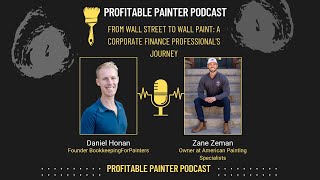
Zane Zeeman left corporate finance to buy a 38-year-old Denver painting company with 75% SBA financing and 20% seller financing. He struggled with digital advertising but found success building referral partnerships with roofers and realtors, and hired a sales consultant to improve estimating and customer matching.
Chapters
Welcome to the Profitable Painter Podcast. The mission of this podcast is simple: to help you navigate the financial and tax aspects of starting, running, and scaling a professional painting business. From the brushes and ladders to the spreadsheets and balance sheets, we've got you covered. But before we dive in, a quick word of caution. While we strive to provide accurate and up-to-date financial and tax information, nothing you hear on this podcast should be considered as financial advice specifically for you or your business. We're here to share general knowledge and experiences, not to replace the tailored advice you get from a professional financial advisor or tax consultant. We strongly recommend you seeking individualized advice before making any significant financial decision.
Welcome to the Profitable Painter Podcast, the show where painting contractors learn how to boost profits, cut taxes, and build a business that works for them. I'm your host, Daniel Honan, CPA and former painting business owner. And your guide to mastering your numbers that drive success. So let's dive in and make your business more profitable one episode at a time. I'm super excited today to talk to Zane Zeeman. Welcome to the podcast, Zane.
Hey, thanks for having me, Daniel.
Now you have a really fascinating story. I think a lot of people are going to get a ton out of this episode. Super excited to jump into things. So could you kind of give folks an idea of where you got started in the painting industry and what have been some major milestones so far?
Yeah, sure. So as you know, a little bit of a unique background. I'm not a painter historically. I come from a corporate finance background. I'm originally from Florida, moved out to Colorado about 4 years ago. Back in 2021, I was working remotely at my corporate finance job and You know, got to the point where working remotely was at once the best thing in my life and then quickly became the worst thing. I was just working alone in my office, living alone, and, um, really not feeling fulfilled about what I was doing. So started to explore kind of alternative options, um, and that's what led me to Cody Sanchez and her entrepreneurship group, which is called Contrarian Thinking, which teaches people how to become owners through acquisition, so buying small businesses. So, uh, I took a business buying course, I started evaluating deals, and eventually stumbled upon a local painting company here in Denver, Colorado, where the seller was getting ready to retire. Um, we went through the acquisition process, and it's been about 15 months now since I acquired the company. So passed my 1-year mark as an owner-operator, and, uh, everything's been going pretty well. It's, it's a totally different world than the corporate life, but, uh, definitely loving it and would do it again.
Yeah, that's, that's a pretty unique story, and it seems to be something that's happening more often now. It's, uh, there's a ton of acquisitions, or at least the, the quantity of acquisitions seem to be going up from from my perspective the last few years. And I think, I think it's probably a combination of factors, but I know private equity is interested in the trades and painting businesses. There just seems to be more interest in acquiring companies and combining them. And, and I think a lot of folks are probably a little bit intimidated with that. I think some folks want to sell, but the idea of buying painting businesses to grow or like to start a company or to grow your own current company, it seems pretty intimidating to most folks. So what, like, how did you get to that place where you're like, yeah, let me, let me go out and just buy a painting business? Like what, what was the, the driving factor there? I know you, you were trying to get out of the corporate finance world? Why, why buy instead of just start your own business?
Yeah, that's a great question. Um, I really just didn't have the appetite to start something from scratch. I didn't want to go from a comfortable, cushiony salary to nothing for a period of time. I, I think some people would look at me and say I'm incredibly risky for buying a business, but to me that was the more risk-averse thing to do, is to buy something that's currently cash flowing. So, and yeah, around, it is becoming more sexy to buy businesses and acquire and get in that way. And I think two things there is it's the, the boomers that are getting ready to retire and don't necessarily have their kids, don't want to take on a trades business. So there's, there's that piece, and then there's also the education piece. There's the Hormozis and the Cody Sanchez of the world that are educating people on that opportunity. So people are just finding out that that's an option and you don't have to start ground zero. You could start with something that's already cash flowing. So that's kind of why I lean to that direction. I don't want to start from scratch and go through that, the growing pains.
Yeah, that makes a lot of sense. And that also with the boomer generation retiring, and, you know, kids these days, they, they get their degree in, you know, social studies or whatever, and they don't want to do trade, they don't want to work with their hands. So now there's probably a bunch of opportunity to buy a bunch of businesses. So that's, I think that's really insightful. And there's probably a lot, a lot more opportunity out there, I would imagine, for folks to buy their competitors as well. And could you, could you talk a little bit about the process of buying a painting business? Because I'm sure that was a, that was tough experience. What did What was that like?
Yeah, it was a tough experience. So from start to finish, I think it took around 5 or 6 months to actually close the deal. Um, and I definitely couldn't have done it on my own. I was lucky enough to have invested in this community, which gave me the support and resources I needed to feel comfortable and confident to go through that process. So just understanding what you need as far as like your deal team. So your attorneys, your, your CPAs, your business brokers, if, if you want to get a like a quantitative analysis on the deal, like there's all these people involved in the transaction. So, yeah, so first it's like figuring out what your deal box is, kind of what you're looking for, what you can afford. Kind of what you just have an appetite for, and then it's building out that team to help you go through the process. And for me, what, what really helped the process go smoothly— and a lot of people in the industry, in this space, the ETA space, spend years analyzing hundreds of deals looking for that kind of diamond in the rough. I was not that way at all. I was eager to jump in and So this is actually one of the first deals I analyzed. And what really helped me go over the finish line was just the relationship that I established with the seller. He was a really good guy, high-integrity individual, and you could see it in his business and his relationship with his crews and his customers. So being able to build that trust throughout the process definitely helped things go smoothly and You know, it never felt hostile or like someone was trying to take advantage of someone else. It was just like an amicable transaction.
Yeah. So it sounds like you, you built a good amount of trust with them. So, and I'm sure that I would guess that would make that process, that transition process a lot easier when you actually trust the person you're buying it from. So there's no like hidden secrets that you don't know about and that kind of thing.
Yeah, definitely. I mean, even with that, it's still an incredibly like challenging and stressful and scary situation. Like if you, if you've ever purchased a home, just imagine that times 10. It's like you talk about signing your life away when you get financing from the SBA and you know, you're really, you're really signing your life away. And it's just a long, long process. So it was pretty intense, but it was made better because of that relationship and trust that we had established and the transparency with the financials and kind of the whole story there.
Yeah, that's, that's definitely true. And I think with, with the— so it sounded like you purchased the business with the help of the SBA loan. What was that process like? Was that a You know, and that is a common tactic, like using an SBA loan to purchase another business. I've seen it many times. How did that process go? Was that like a pretty easy process or was that pretty difficult? You compared it to getting a mortgage. Was it like that except on steroids? Like, how did that work?
Yeah, it's definitely like that on steroids because, you know, you're coming up with the business plan, you're providing your personal P&L for everything, all the assets you own. And then like some SBA lenders might qualify you, others might not. So it's, it's a lot more intricate. And I'd say it's a little bit more subjective. Like it's not just a standardized process. It's like the relationship with the lender comes into factor whether they deem you able to run this business and like having the background knowledge because— so like because I don't have any industry experience and trained in the trades or running a business at all, really, they could have just turned me away strictly for that. But because I was able to kind of apply some of the things I did in the past on my resume and, you know, make that showcase my abilities to do this, even though I didn't have the background, I was able to establish those relationships with the lenders. So it's definitely a little bit more subjective and the, the, just the paperwork, the timeline, it takes a lot longer. It's a lot, just a lot more documentation. So it's pretty intense and there's a lot of different deal structures and creative financing options. So for me, I, I paid 5% for the deal. I got an SBA loan for 75% and did seller financing on the other 20%. But there's a million different ways you could do that, and that's just the way I structured my deal. Worked out well for me. Only 5% out of pocket. It's pretty, pretty small cash investment to get into a cash-flowing business.
I mean, yeah, that's, that's, that's pretty awesome. Like, uh, 5% down, the bank took care of 75%, and then the, the person you were buying it from actually financed the other 25%. And so that's a pretty good deal. So you didn't have a lot of outgoing cash and then you get into the business and it's, you know, already you have those customers, you know, it has a good amount of revenue and profit. So you step in and basically use that money to pay back the interest on the SBA loan and also the the seller their, their piece as well. So, um, that makes a lot of sense. Uh, so you, you complete the transaction, you go through this process of buying the business, and this business is very established. You know, it's been around— was it like 3 decades at this point or something like that?
Yep, 38 years.
Okay, so pretty well-established business, and You, like you mentioned, you don't have a ton of, well, no experience in the trades up to this point. And then so I feel like you would have a pretty good-sized learning curve. How did you go about tackling that? Because that's, you're doing a lot of firsts here, like you bought the business first, running a painting business for the first time. So that seems like just a huge amount of learning to do in such a short amount of time. How did you How did you tackle that? That's just—
Yeah, no doubt it's been a huge learning curve. I would say the two biggest things, one which was totally unexpected, but as I started going through the acquisition process, I started looking up just resources about the industry and stumbled upon some really good painting podcasts. So I was just listening to painting podcasts in my car for a couple of months before I closed the business. And as you know, there's a million coaches out there in the painting industry. So getting the knowledge and information you need is pretty easily accessible to run a painting business. So I started off there, started getting a lot of information from different podcasts, and then part of the contract with the seller was that he would stay on and help me transition for 3 months. So I had hands-on training from the, the previous owner for 3 months. It turned out I only used him for about a month and a half before I said, all right, let me just run, run with this. I need to start doing things my own way. But I had him to learn from, and I still have him to ask questions to whenever, and he's always available for me. So those are the 2 big things that kind of helped me in that massive learning curve.
Yeah, that's, that's huge. Like, and one of the things that seems like you're really good at is you're good at, from, from my perspective, and you can correct me, maybe you're not good at this, but finding the right people to learn from and like quickly learning and finding the right communities because you found this community for purchasing businesses. You leverage that, learn quickly, purchase the business. Didn't know the painting industry, found people that did, learned from them. And then, you know, now you're trying to scale to the next level. So you're finding the right people to learn from. So it seems, it seems like a theme with you is like, find the people who know how to do it already and then just learn from them.
Am I pretty spot on with that observation, Daniel? I would, I would not consider myself exceptionally smart. I don't think I'm like the highest IQ individual in general. I think my superpower is getting myself in the right rooms where I'm typically on the lower end of the, the talent and expertise. So I'm constantly able to learn from people who are smarter than me and kind of just take their experience and learn from it and run with it. So that's kind of what I've been been doing and it's been working for me. So yeah, planning to keep doing that. Yeah.
Well, I think you sell yourself short on the not being intelligent. Doing that in and of itself shows that you are intelligent. But, uh, no, I think that's an, like, an amazing way to go about it is just, there's that saying, try to be the dumbest person in the room.
Yeah.
Basically try to basically associate yourself with smarter people than, than yourself so you can learn from them, which makes a lot of sense. Uh, so. So, okay, you took over the business, you're learning from the owner, he's training you on how to run the business. What are some of the challenges that you faced purchasing this business coming in after 38 years of it being run by somebody else and you're the new kid on the block? Like, what are some of the challenges that you faced over the past year or so?
Yeah, I mean, let's— like, there's been a few instances where my lack of experience has just kind of thrown people off. Like, we started off with 8 pretty, uh, reliable subcontract crews. Two of those relationships didn't stick. One of the guys, I think, just It just didn't sit with him, just getting jobs from someone with little to no experience. But I was able to maintain the other 6, and we all have great relationships, and they're happy. And I mean, so I think that all in all is a pretty good turnout as far as retention with the subcontractors. Um, and then when it comes to One of the things I did last year to kind of introduce myself to our past customer list in the community was I sent out a flyer. It was a picture of me and the previous owner, and I was introducing myself, and it was the seller kind of giving a paragraph on his final words, saying goodbye to his customers and thanking them and everything. So it was like a kind of sentimental, heartfelt letter. And, um, so when I would go to jobs after that for any of the repeat and referral customers, they kind of knew who I was and we could have that conversation. And they're like, oh, you're the guy who, who bought the business from Kevin. And I don't, I don't think it was that much of like a barrier as far as them being able to trust me to still provide a good quality paint job and service. But there is that level of just having to kind of fake it till you make it. Like, I don't know everything about paint or exteriors of homes, so you know, I could, I could speak to as much as I know. And then a lot of the times I just had to be honest and transparent. Like, I actually don't have an answer for you. Let me run this by like my lead foreman. He'll have an answer. He's been doing this for 30 years. Um, so I think just kind of being able to talk the talk in a limited form has been a little bit of a factor, but overall not, not a ton. Of challenges due to the experience discrepancy.
Any other— so it sounds like you're able to basically, again, leverage your team for any gaps that you might have on the technical knowledge of the painting industry. And you've won over the vast majority of your subcontractors. And I know you have set your sights on some aggressive goals for scaling. What would you— do you have like an approach that you're taking that you're implementing to grow the business to the next level?
Yeah. So we had some big lofty goals for 2025. I don't, I don't think I'm going to quite meet them. I still see growth. Year over year, but I don't necessarily see the, the extreme growth that I had hoped for. Um, being that it's a 38-year-old company, we— there hasn't historically been a huge presence of digital marketing. So that was kind of what I was hoping would be that, that lever to turn to generate additional leads. I haven't had a lot of good luck with marketing agencies generating good quality leads. And I'm on my third agency in my first 15 months. So not a, not a great experience there so far. But that was kind of— I was leaning on that, I think, a little too heavy as far as getting me to the next level. So where I'm heading now is really honing in on those past relationships, the, the historical customer based from our, our CRM and touchpoints with our referral partners. So the roofers, the designers, the realtors, um, the property managers, those relationships who have been pretty consistent and just nurturing those a little bit more. Um, so that, that's kind of where we're taking it from a, a marketing strategy right now as we continue to explore the digital space, but not seeing much results kind, kind of resulting to the email marketing. The phone calling, the, the print mail and that stuff. And then, I mean, besides getting leads in the door, it's just building out the team, right? So I just hired my first project consultant, and, um, he's great. He has industry experience, so he could, he could talk the talk even better than I can, which is awesome. And he can, uh, he has experience at Sherwin-Williams and another painting company, so he kind of brings in that next level of expertise as far as understanding what a project needs needs to be successful and how the crew is going to tackle it. So that helps with pricing, and then that'll help us sell more jobs. And then, you know, as those leads generate through our new marketing channels, then him and I will both be running sales for the foreseen future.
Okay, so for— so it sounds like you initially, your initial goal was to blow the business up with social media, like Meta ads, and it didn't work out as, as hoped. And it is a weird thing, like, uh, actually just a couple months ago was speaking to someone else from Denver. He, um, he had gone through several, um, marketing agencies and they cannot get anything going for whatever reason. And he's in the Denver area as well, coincidentally.
Um, So I don't know if it's a Denver thing, but apparently it's super competitive and challenging. So I wouldn't be surprised.
Yeah. And, uh, he just started getting traction recently and I think the, from what I got, I talked to him last month and it was really basically pictures of his family, like him and his daughter and his wife or something like those started gaining traction on his Facebook. Ads. And so he finally cracked it. It was like over a year of, of it not working and him switching between agencies. But yeah, it's just like one of those weird things with social media. Sometimes depending on your market, it like doesn't work. Yeah. And then for some reason it starts working.
So, so people definitely like faces and that video content and personable aspect I think makes a big difference. And you could see that in the results of certain ads. And that's one thing I'm also going to be working on over the next few months is kind of building more of a personal brand. So posting on social media more regularly, taking more video content and that type of thing.
Yeah, it's, it's huge nowadays for, for business owners to, to be social media savvy, which I don't— I personally, I suck at it, but it's I'm envious of the people that are naturally good at that.
Yeah, I'm not great at it either. So that's why I'm hiring someone to help facilitate posting and the content scripting and that type of thing.
Exactly. Get people who are good at it and then have them help you with it. It's another common theme there. So, so you're— it sounds like you're shifting focus from social media Well, still trying to do it, cracking the code there, but mostly working with referral partners is kind of the strategy to grow moving forward. And then you just made that key hire there with your first project manager, it sounds like, right?
Yeah, project consultant, so sales.
Oh, project consultant.
I'm sorry.
Okay. So sales side. Yeah. So do you already have a project manager, or—
I don't have a project manager, but it's a little bit different for our business. I think a lot of people would say hire the project manager first, um, because our subcontractors have a relationship with my company for so long. Yeah, they historically and are used to managing their projects themselves, so most of these crews, um, depending on, you know, the complexity of the job, I'm fully comfortable sending them to do the initial walkthrough and the final walkthrough with the customer. So I'm super lucky to have that.
Yeah, no, that's, that's awesome.
Yeah, so not as urgent of a hire. And one of the lead foremen on one of the crews, I could definitely see myself bringing him into that full-time project manager role in the future.
Nice. Yeah, that's a good place to be where you get really reliable subs that can do their own walkarounds, collecting the check. And so, so, so it buys you extra time on having to hire a production manager and, uh, maybe even just get away with having like an office person just doing some scheduling and not having to get a project manager. So that's awesome. And then, so, and then you just hired your, uh, the salesperson. Mm-hmm. What did you look for? So they were pretty— it sounds like they've already done the job again. You found somebody who's already done the thing and you just have them do it for you. That same thing we keep seeing over and over again.
It's a little bit different there because he doesn't actually have a sales background, but he does have the painting experience so he could talk product. He was a project manager for a couple of years, so he understands how projects go and what they need. So he can definitely talk the talk. He just doesn't have sales experience. And if you looked at a DiSC profile, he's not necessarily the ideal sales personality either. Um, but no, neither am I, so I don't judge against it. And I think he'll do— I think he'll do great.
What's his DiSC profile?
Um, I believe it's a SC and like a CS for, um, what is it, the natural and the adaptive?
Yeah, yeah, yeah.
So it's like SC and CS.
So he's, uh, conscientious, so he'll get— he'll make sure that those estimates are precisely done for the— so the subcontractors will probably be very happy with him because he will ensure that there's enough budget for the projects. So that's a, that's a plus for at least generally for that, that type of person. And then, so, cause that's often like a friction point is we get your salesperson, if they're usually, cause you alluded to this, but like salespeople are more I, more, influencing. Yeah. D. Driven and influential.
Yeah.
Yes. And so, uh, and that can be great, especially for residential repaint, because you have so much volume. If you have a driven person that wants to just, you know, influence a lot of people, that can be an ideal situation from like maybe a sales perspective. But the friction is usually or often if you don't have controls on that person, they'll end up maybe underbidding to close more jobs or something like that, and not be as precise on the handoff to the production side. So things get missed because they're not focused on the details. They're not conscientious. Yeah. Was that a deliberate— it sounds like—
do you—
did you prescreen for— with a DiSC profile before you hired?
Is that how you I actually did his DiSC profile after I already gave him an offer.
Okay.
Yeah, I just wanted to have it during onboarding so we could— one, so I could understand our, how our relationship should go a little bit better. And then two, he could utilize it himself and use it against some of the sales training that we have, one being Contractor Freedom with Jason Phillips. And he uses a lot of the DiSC profile. In his process so he could kind of relate his personality to different customer personalities.
Yeah, that's so in the— that's a, that's an interesting idea there. So actually, I don't— well, so taking his personality profile of CS or SC and relating it to the different types of profiles of who he'll be selling to so he can properly, um, sell them, I guess, on, on the service. That's like a— that's a pretty cool idea. It sounds— is that— am I getting that right?
Yeah, one— and one of the things in the sales training is talking about like matching your customers' like energy and personality and like communication style. So like they're super upbeat and excited, you try to match that. If they're like a little timid, you slow it down for them. And just kind of getting on an equal playing field helps a lot when it comes to sales. Um, but I definitely lean towards the sales culture of like, we're not trying to be those pushy salespeople. Like, sure, there's some objection handling that needs to be done, um, just to make sure like we are fully answering all the questions and concerns of the customer. But there's something I heard recently about like, how do you want to purchase as a purchaser? And I don't want to make a $10,000 decision with someone standing in front of me, so why am I going to try to force that upon someone else? So try to just, uh, you know, build that relationship answer as many questions, provide all the options available, and like make sure that we can establish that trust and show that we are reliable and going to provide a quality job with our past projects and our reviews and our testimonials.
Yeah, that makes a lot of sense. I, I think I, I agree with you there. And you mentioned Alex Hormozi. I think he said something to the effect of You're not like, you're not trying to get them to buy. You're trying to get them, you're trying to help them make a decision. So if you just like reframe it that way, whether it's yes or no, just you're giving them the tools, information to help them make a decision, whether it's, yeah, let's sign up or no, I'm going with someone else so that you can, you're servicing. So that shift like that helped me. It was like, yeah, I'm just helping them make a decision. Uh, and instead of like, I'm trying to get them to sign, you know.
Yeah. And, you know, best case scenario, you're helping them make a decision that they're happy about.
Exactly. That's great. Cool. Well, I, I really appreciate your time today, Zane. Like, this is a super interesting story. I think a lot of folks are going to get a ton of value out of this conversation with purchasing a business. What to look for, what that process looks like going into a new business, some of the challenges there, and some of the things that you face trying to grow the business. I think this has been a great episode. I'd like to open it up to you for any asks of the audience or anything you'd like to say before we wrap things up today.
Cool. Yeah. Thanks, Daniel. I appreciate you having me. Um, like I mentioned in the podcast, looking to build my social media presence, my brand. I'm also open to answering any questions. If anyone wants to reach out, feel free. You can find me on Facebook, Instagram, first and last name Zane Zeeman, and then my business Instagram page, American.painting.specialists.
Awesome. All right, I appreciate it, Zane. Uh, really appreciate the conversation. And with the listeners, we will see you next week.
More from Daniel







What’s REALLY Holding Your Painting Business Back? (Find Your Bottleneck in 5 Minutes)



