From Web Design To Wild Fox: How Micah Built A Lean, Profitable Painting Company
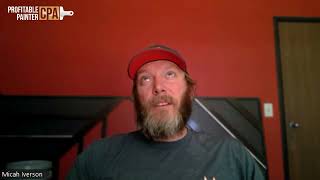
Micah left web design to start Wild Fox Painting in Colorado in 2018, building a lean interior-focused operation with a two-person core team. He uses full-taping, mini-rolling, and strict task specialization to hit $500K revenue annually, tracks weekly metrics, and targets a 38% win rate. He's now scaling exterior work toward $1M revenue.
Chapters
Welcome to the Profitable Painter Podcast. The mission of this podcast is simple: to help you navigate the financial and tax aspects of starting, running, and scaling a professional painting business. From the brushes and ladders to the spreadsheets and balance sheets, we've got you covered. But before we dive in, a quick word of caution. While we strive to provide accurate and up-to-date financial and tax information, nothing you hear on this podcast should be considered as financial advice specifically for you or your business. We're here to share general knowledge and experiences, not to replace the tailored advice you get from a professional financial advisor or tax consultant. We strongly recommend you seeking individualized advice before making any significant financial decision.
Welcome to the Profitable Painter Podcast, the show where painting contractors learn how to boost profits, cut taxes, and build a business that works for them. I'm your host, Daniel Honan, CPA, former painting business owner, and your guide to mastering the numbers that drive success. So let's dive in and make your business more profitable one episode at a time. I'm super excited today to be speaking with Micah out of Colorado. He has a really cool business, Wild Fox Painting. And so I'd like to welcome you to the podcast, Micah. How's it going?
It's great. Thank you. Excited to be here.
Yeah, man. So could you just give listeners an idea of where you're coming from? When did you get started in the painting industry and what's been your journey along the way?
Yes, so, um, I've been painting since I was a kid. My dad owned a, you know, cabinet building shop, so I painted for him, I stained for him, kind of had that hands-on since I was, you know, 5 years old. Um, I think through high school I ended up working with a local painter, so I did a lot of exterior painting through high school and then went into web design. So my background is actually software. And then September 2016— or 2018, excuse me— I went out and started my own painting company again. And, you know, I kind of was sick of the digital world and wanted to get back on the trades, and painting made the most sense. So yeah, September 2018, I— 2 o'clock in the morning, I started the company and had a website up that day, and I've been busy ever since.
So nice, nice. So you were pretty well embedded in the trades from an early age, and then you kind of went and did something completely different. Uh, what drew you back into the, the trades?
Um, I've been working kind of full-time for a company doing, doing design, um, plus freelance on the side as well. And the company kind of got destroyed through a bad article, um, and I just, I kind of lost my job essentially. And so that was kind of, that was the last week of January when that kind of happened, of 2018. And I just, I took 6 months. I'm just like, what do I want to do? I wasn't feeling very creative anymore. I was kind of sick of being a computer all the time. And yeah, literally middle of the night, I was like, you know what, there's a brand new Sherwin-Williams going in down the street. Um, I had a friend that just was looking for a painter. Um, another friend was looking for a painter, and it just kind of all made sense. It was kind of a low startup cost because I was kind of running out of money at that point. So I hadn't found what I wanted to do. I knew I didn't want to work for somebody, so, you know, kind of a— had to be my own company, had to have my hours, and something at low startup cost, low skill, kind of you know, involvement. And yeah, just the next day I just started that company, and kind of one of the best decisions I've made, to be honest. So yeah.
So what, what's the journey like been like since you started the business in 2008? You know, why has it been the best decision that you've made?
Um, it's allowed me to be flexible, right? I mean, you kind of go on your own to have your, your freedom, right? Which you end up working, you know, 68 60 to 80 hours a week instead of 40 like you would with the normal job. But, um, it still gives you that freedom. So I can, you know, if I have to, I could go pick up my kids, or I could take them to a doctor appointment, or I could take a day off if I really need to. Um, but it's just everything that I planned, because I, before I started the company, I, I mapped out exactly what my ideal job was. And so painting fit all of that. And then once I started painting I knew as a solo painter I couldn't take on huge jobs. I knew I didn't want to do exteriors. We've only done the interior up until this year. And so I set these yearly goals, both kind of financial and just growth-wise. I know I don't want to be a huge company necessarily. So each year I just, I set these new goals and I would break them or double them. And, you know, just every year since then I've done that and I've basically broke every record each year as I've been growing. And scaling. I've kind of been scaling slowly on purpose, um, and yeah, looking to kind of take it to that next step this next, next year or two.
No, that's awesome. So I— so before you even started the business, you kind of mapped out what do I like to do and what your ideal job would look like, and starting a painting business was like checking all the boxes there?
Yep. Yeah, it was. Yeah, like low startup cost, it was, you know, low— no education to kind of get up to speed, um, low kind of material expenses. You know, I didn't, I didn't want to go out and buy a bunch of tools and things like that, just stuff that I had. Um, again, back to the freedom, just I could kind of work my own hours, uh, could be my own boss. I knew how to do it immediately. I had a vehicle where I could, you know, haul the stuff that I needed, and I knew I could make money. Um, and from an interior perspective, at that time of the season too. You know, September is pretty late in the season. I knew that exterior was going to be kind of drying up as we get into the winter months. So I just, I knew that, you know, my, my cleanliness and my detail and attention to detail just really, I could really excel in interior and get work right away. And that kind of proved to be almost exactly as I expected it to be. And I didn't want to do exterior. You know, I did exterior when I was younger. You've got HOAs out here, so you have to deal with that. You've got weather, you've got, you know, 40 foot on a ladder and on a hill on gravel. I just, I didn't want to deal, deal with that first of all. Plus just, you know, from a safety perspective, I, you know, I'm kind of feeling too old to be up too high on the ladder anymore and, and be in that, that dangerous of a situation by myself.
Yeah.
Um, so in here just made sense and I could do it year round and just kind of been growing that ever since.
Okay, yeah, makes sense. So you're focusing on interior and cabinets, and I've seen some of your stuff on TikTok with the cabinet refinishing. Yep. And so that's been your kind of your niche is interior, it sounds like.
Yeah, so since I started, yeah, whole thing was interior for sure. Then I was just kind of doing cabinets, but I was doing them in my garage and I just, I didn't feel like I was getting the quality I wanted. Um, my wife was getting upset because I was taking over the garage every other week, right? And so I kind of put cabinets on the side. I'm like, I'm not going to do cabinets again until I can get a warehouse. Um, so we just literally focus on interior jobs only, and only just painting. Like, we're not doing staining, not doing faux finishing, just, you know, straight— we're gonna paint it, it's gonna be done. Um, and it's been that way up until I think 2022 or 2023 is when I got the warehouse. So then we started, you know, really focusing on cabinets and like, okay, what process to do paint cabinets? What's the best paint we can use? Because I want to do high-end cabinet painting. I don't want to just do kind of blow and go, you know, low-end quality cabinet painting. I wanted something that was just really specialized because I got the warehouse so we can take the proper time, we can do the proper prep compared to all my competitors who, you know, they're doing it on site, they're taking over a client's garage. So now, so we did interior, we did cabinets, and then 2024, um, I had a client reach out about some interior doors, and so we painted those quick and got them off. And I realized they're kind of a high profit margin and just they were easy to do in the warehouse. So I started running ads in 2024 for doors, and we ended up doing 600 interior doors last year, um, in the warehouse. So, you know, it's kind of small little niche that I found that really isn't profitable if you do it on site. So, you know, do it by hand or do it in someone's garage, it's it's more effort than it is to actually, you know, to get paid. Whereas if I can take them off, just bring them here, we can do again full prep like we would cabinets. We can do nice spray coats, um, we can patch stuff, keep the dust here. So we did a big push on interior doors last year and we did, yeah, over 600 off-site. And then cabinets were just really kind of rolling and, you know, we had a good cabinet process, interiors. And now this year I finally brought on someone and now we're doing full exterior and commercial work as well. So he manages that whole department and I kind of still personally focus on the interior side. And so we're kind of, kind of ramping up exterior, and we'll really push it next year.
That's awesome. That's, uh, I think that's a— I haven't heard of that niche before, like you're just doing like interior door like refinishing, which kind of makes sense because usually the door is completely like— the front door is like completely different than a lot of the rest of the house. Um, and so, and then, and that's like the focal point too where people want that front door to look really good. And often just making that look really good can just elevate the whole, uh, look of your house.
So it's not even just front doors, it's all, all interior doors, right? So your bedroom doors, which is nice too because, you know, every house has 15 to 30 doors. Yeah, so you can grab them all or grab half of them at a time. I can work on them, you know, at midnight if, you know, if I'm running behind or something. I can, you know, I can do in the warehouse and just do it whenever I have a free moment or spray coat and then go off and do something else. So it's just, it's a nice filler kind of service that just was way more successful than I would have ever imagined it to be. Um, this year has been slower on that. I don't know if my ads just aren't working as well, but it's been fine because we've been busy with elsewhere on other stuff. But it's just kind of a, kind of a cool thing that people— a resident doesn't really think about either. It's like they don't think about doors as being, oh, I could just only paint the doors, right? They think it's either the whole house and the doors, or it's just you know, you don't do the doors at all. So my ads, when people see them, they're like, oh, I guess I could just paint the doors. So I'm kind of pushing like, you know, refresh your white doors, or hey, let's go with an accent color like a black, um, be really bold and do some colorful doors, you know, like teal or brown or orange, you know, something, something different with doors. Because it's kind of a fun— it could be a fun accent throughout your whole house without really spending a lot of money. Um, versus like an accent wall, which is kind of going out, um, which are being replaced by feature walls now, kind of like your wall with the, you know, the boards on the back. Um, so it's, it's just kind of a cool little service that I kind of fell into accidentally.
Yeah, that's, that's really interesting. Um, you mentioned you had yearly goals that you've— every year going back to 2018, you've either exceeded, you broke it or doubled it. But at the same time, you're saying you're trying to scale slowly on purpose. Yeah, that was funny. But can you give us an idea of like where— obviously you started from zero in 2018. Where have you gone in terms of revenue over the last 6, 7 years?
Yes. So my first year My gross is what we can gross in a month now, pretty much. So, you know, we went from basically— is that 12x if you— if that's right? Um, so yeah, if we have a really good month, we're basically grossing what I grossed my entire first year, uh, which is pretty wild. Um, and right now it's, it's really just 2 of us, kind of 2 and a half of us on the interior side. So, you know, we're doing almost half a million dollars each year now. Um, basically 2 and a half, really just 2 people, and now kind of 2 and a half as I'm bringing on a new person to kind of get her up to speed. Um, so to be able to do that with such a small team, yeah, pretty impressive. And yeah, to kind of still meet those goals or exceed those goals is, you know, really, really encouraging. And, you know, it's— I think you need to have those goals. Um, something that really helped me, I think I started that in 20 the 2023, 2024, I started just really tracking each kind of each week and each month as far as revenue and expenses go. So in my Excel document, I have each month laid out and then each week laid out within each of those columns, right? And so week 1, week 2, week 3, week 4— well, if, if my goal is say $40,000 a month, then Come week 2, if I'm $10,000 behind where I think I should be to reach that goal, I know I can try and get more leads, or maybe I price stuff a little bit higher or a little bit lower, you know, maybe I'll go lower to try and win more work. Um, or if I'm ahead of schedule, then, oh, that one bat— you know, that one bathroom, that's what I want painted. I could take that to generate that little bit of extra income. I'm not gonna make a lot of money on it, but it's not gonna be a waste of time. It's gonna help me get to my goal. So by breaking it down kind of per week, I really know where I'm at as far as reaching my goals. Anything above, you know, my, my minimum is just icing on the cake at that point. Yeah. Um, so a lot of people don't really think that way. I think they think more weekly or more monthly. Um, some don't even think, you know, for a year, right? They're just like, oh, what's my end of year numbers? And kind of go on where me, I'm breaking it down almost daily now and even weekly just so I know, okay, here's where I'm at. I can, I need a little bit more work, I need a little bit less work, or I'm okay if I have less work, you know, things like that. And it's just, it really kind of motivates you to, you know, get more work or know that you're okay or, you know, things like that.
So yeah, yeah, that makes a lot of sense. So basically you take the, if you're shooting for $500,000, you break that down into 52 weeks, and so you got to hit, you know, around 9,500 in production per week to, to hit that. But at the same time, you also got to sell 9,500, uh, as well. Do you break— do you also, um, do you have it broken down like how many estimates that you need to be approximately doing to hit that sales goal of $9,500 per, per week as well?
Um, I think probably technically I have that. I don't— I wouldn't say I necessarily go off of that because each— every job is so different. Uh, I have a, I have a kind of a win rate that I focus on more. So, you know, my, my goal win rate is about 38%, um, of the estimates that I do. And right now I'm about 45% for this year, which is kind of, kind of unusual. Um, so I think it's more that way. Um, and again, like, if I know I'm $1,000 behind, you know, I can take that smaller job and it'll get me to that number a little bit closer and, you know, things like that.
So, well, 45% close rate's still really good.
It's really high. Yeah, my first year was like 65%. I'm like, okay, I need to raise my rates a little bit.
So yeah, there you go. Exactly. Yeah, that's, that's a good observation. Um, so you mentioned you have, uh, like 2.5 members on the team, is that right?
Yeah. So I've got my one full-time who he's doing all the commercial side, so that's basically where he focuses. And then I have a full-time, uh, gal who works for me. She's been with me for a few years now. And then One of her friends wanted to come on, kind of learn the trade. So she's been working with us kind of part-time, $10.99 to kind of get her up to speed. And then we'll look at bringing her on full-time, you know, probably next year sometime. And just, yeah, so I'll have two kind of two interior full-time, my one exterior full-time, and then myself. And between the four of us, we, we can do quite a bit of work. Well, and we have subs for our exterior, so we kind of, that's more of a sub model And then I have another— had another full-time person, but she was just in a car accident, so she's out for a while, possibly indefinitely. So kind of have to wave things off. But it was supposed to be about, yeah, kind of an extra full-time person, but we're down a little bit right now.
Gotcha. Okay.
We're kind of going into slow season, so I'm kind of okay with that. We'll just kind of get through slow season, then we'll ramp up again next year.
Okay, so 4 full-time equivalent, essentially?
Yeah.
Yeah.
Okay.
And then you're with those— that 4 folks, um, you can produce half a million dollars about?
Yeah. And that's— and I think next year will be way more than that because we, we kind of got a late start on the exterior side. So we just kind of— we've been doing kind of 1 job a week on the exterior side, where next year I think we'll be more at 3 or 4 a week. So it's really gonna Once we get that system really going and, and advertising properly for that, we'll, we'll probably be closer to a million next year, I would think. So nice, be like, oh, so yeah.
And so do you think, uh, because usually it's like $100,000 per, per painter is kind of like the rough guideline, so you're definitely above that.
I'm way above that, yeah, I would say.
Uh, so do you attribute that efficiency with just because you're laser focused on interior? So you guys are just super efficient with like doing those processes, or is it something else?
I think it's both. I think the fact that we— hey, that we're such a small team, we just have to be efficient. Um, two, yeah, since we for so long we only focus on interiors, we could just really get good at our processes. Whereas if you have a sub team like they have their own, and it's always random. They always have new people coming on. So having a full-time team that works together consistently, we just know who's going to do what, who's better at what, here's how we prep it. Um, and so like, we can— my lead painter and I, we can walk into like a cabinet job and not even talk about it, and just we'll have it prepped in, you know, 3 hours because we just know who's going to do what, how we need to prep it. Um, same with the house. We can just walk into the house and grab the tape and start, start rolling and start going. Um, but yeah, process is, is big. I don't really have an outline necessarily. It's like in a document, but, um, as we scale, we'll have to do that. But, you know, we really focused on, on the detail and like we tape almost everything. So all our woodwork gets taped off, the floors get taped off. Um, it's just, it's faster. I know a lot of painters, you know, on Facebook groups kind of complain about 'Oh, you're not a real painter if you use tape.' Well, if you want to be 10% slower than me and, you know, take longer to do it, that's your problem, not mine. It's, you know, it's a selling point for me to use tape. I can have cleaner lines. Um, it's way faster in my opinion. Yeah, you spend a bit more on paint, but now I can have that $15 an hour person doing a perfect line versus hiring that $40 an hour painter who's going to sit there on the floor and, you know, cut that edge in twice, um, and that ceiling in twice. You know, taping is just way faster. Then you can mini roll it and have it done really quick. Um, so that, that was a huge speed boost once we switched to just taping everything off and using mini rollers, you know, 90% of the areas and large in corners and stuff. And then, and even like door frames, we'll tape off door frames so you can just roll right up that door frame around windowsills. Um, we still kind of cut in the top edge most of the time, but once in a while we'll kind of tape that too. But it's just a little bit harder to tape the top edge, in my opinion. Um, but yeah, the taping has just really made us way more efficient, way more consistent in quality, right? Because we always know it's going to be a straight line, we know it's going to be perfect. And again, I don't have to have that $40-an-hour painter cutting in that edge twice to make a perfect line. I can have, you know, $15-an-hour person like my kids doing it, you know, that kind of thing.
So yeah, no, it makes a lot of sense. And as you mentioned, probably a lot easier to scale that that process than to find, you know, especially, you know, if you can't find that painter that's going to be able to cut, you know, in an amazing way and everything, if you can just have a process that compensates for that, where you can put Joe off the street, train him on the process, and then he can have the same cutting lines without actually having to cut, just using tape. That makes a lot of sense.
And we have highly textured walls out here. I don't know what your guys' walls are like, they're smooth or textured. But so, you know, with an eggshell— or not eggshell, but like an orange peel kind of texture— you're going over that edge 4 or 5 times to get working into that texture and get it good. So if it's a smooth wall, that's one thing, you know, it's a little bit easier to cut that in. But, you know, cutting in that edge by hand on texture is just slow and tedious, especially on new, new texture, because it's just, it's so thick and so dense that it's just, it's almost impossible at a point. So yeah, if you can just roll it, it's way easier to get the paint in there and way faster.
Yeah, that makes sense. The other thing you mentioned was when you, your team goes to the job site, you already, each person knows what they're going to do. So it sounds like you have kind of like you know, Tom does the trim and the doors, or like, do you guys have it task organized like that where the team knows they're doing a certain thing on a house, whatever house it is?
Yeah, I mean, it's kind of unofficial just because, you know, we're so small still. Once we get bigger, we'll have to have more like, you're specifically doing this. But, you know, me and my lead painter, when we, when we're on an interior job, we both prep. So we both know, okay, we'll just kind of be in the middle as far as the prep goes and taping stuff off. Um, she's really good at trim work, so she's, you know, she's a little bit shorter than I am, smaller than I am, so she's easier to sit on the floor, kind of work on that, you know, work on that kind of tedious stuff. So she's really good at trim work. I'm better at brushwork, so I almost— once prep's done, I pretty much just start doing the top edge, um, start cutting that in. And then once she's done with trim, she'll just start rolling the walls or the ceilings or whatever we have, whatever else we have. Um, and then we kind of just meet in the middle and it just, you know, that works with 2 or 3 people because you kind of just, you know, what needs to get done. And, but yeah, as we scale, we'll have to have more kind of, okay, you're going to focus on this, I'm going to focus on that, we'll kind of meet in the middle again. And, and every job is different, right? So, you know, as far as dry time, maybe, maybe they want their master bedroom done that day so they can, you know, kind of have their bedroom back. So now you're— now you got everyone in one room kind of get everything done versus, oh, we'll do trim today, we'll do walls tomorrow, we'll do, you know, so it's just depends on the job. But for the most part, yeah, right now we can pretty much walk in and just, here's what we're doing, here's the rooms we're doing it in, and get to work. So it's pretty quick.
Yeah, well, that, that definitely sounds like it contributes to how you're able to produce, you know, so much revenue for, for the, the small team that you have, is that, you know, you— the process with taping and then it sounds like your, your team knows what they're good at and they, they focus on those things.
And I think that's critical. I think getting people to do the same thing over and over and over, they just get so good at it and they find their own efficiencies versus, yeah, okay, today I'm going to tape, tomorrow I'm going to roll, tomorrow I'm going to brush. Like, let them do one thing for a long time and get good at that. We still want to meet in the middle, but like, get them good at that one thing. And some people kind of naturally like one thing, so let them, let them be good at that, that they like to do. And the other thing too is we're very, very clean and organized, right? So we don't just go around and drop all the trash on the floor and then come back and pick it up at the end. Like, we're always, always throwing stuff away, have a bag of trash kind of all the time. Finish roll of tape, just throw in the trash. You know, a lot, a lot of painters, especially exterior painters, will just, you know, throw it on the ground and end of the job they'll walk around and pick stuff up. Well, it's just, that's not efficient if you're walking that way and you happen to see on it, just grab it, right? So those little efficiencies seem small, but when you multiply it times, you know, 200 jobs a year, 100 jobs a year, that adds up pretty significantly.
Oh yeah, yeah. So you're basically— you're not only niching with your, you know, just doing interior painting, and I know you add cabinets, uh, and the doors thing, but pretty much just doing, you know, interior painting. Because a lot of painters, painting businesses, they're doing pretty much anything. Coatings, interior, exterior, you know, whatever, whatever people need, but you're focused on interior. So that kind of gives you a leg up on efficiency because your team is seeing the same type of projects over and over again. But not only that, you're also breaking down even further where your team members are very good at a specific part of the interior, like the trim or the doors or whatever. Because they're kind of task organized to do that because that's what they're good at. So you're getting like multiple, um, kind of niching, uh, efficiencies there.
Yep. And, um, what was I gonna say? They— most of my team members on the interior have been female too, so I don't know if that's part of it as well. They're just kind of naturally cleaner. They're naturally quieter, you know, even on site, just, you know, they're not playing music everywhere and just kind of organized in a different way. Um, problem, problem with females a lot of times is they're really short, so it kind of pulls me back in on some high stuff. But, um, but I think it's just the clients are happier. I think, you know, if a, if a female painter walks in, they seem to kind of just relax a little bit, right? Um, And even though you could have the nicest man painter, you know, come in and paint, but women— because a lot of times it's, you know, the woman will reach out and then I'll follow up and the man will kind of respond, right? And then you go meet with them in person and that man answers the door and then his— oh, here's my wife, talk to her about the project, right? So it gets handed off to the wife most of the time, right? So to be able to have that kind of female connection between the painter and, you know, the homeowner It seems insignificant, but I've had numerous clients just like, oh, your team was amazing, you know, they were quiet, they were clean, they were professional, um, they were super sweet, right? You don't hear that about a man typically, like, oh, they're so sweet and kind and just, you know, here's a tip, you know. So it's— it makes a big difference. And yeah, women— women painters are great.
So yeah, I think you're on to something there for sure. I— it just makes complete sense, like you're— especially because you're focused on interior, and so you're— you have folks coming into your home, can be a little bit invasive or feel that way. But if, if it's a woman, they're just more— it's less intimidating, you know. It's a bunch of guys like you don't know, you know, it's just gonna feel way different, like, like you're saying. So I think that makes a lot of sense, especially when you're focused on interior. If you can provide that, that just different atmosphere and different experience. And I think that's going to be— that, that's huge. I think a really good insight. And if you can actually scale that model, uh, of an experience, I think that would be huge for your business.
And I think back to the efficiency, the cleaning, the being clean. We're not going through and scraping splatter off the floor for 2 hours at the end of the job like a lot of other painters do. It's like just be clean to start with. Have your hands clean. Like, any painter that has just paint all over their hands all the time and their brushes paint— like, I hate that. Like, why are you so messy? Everything you touch is going to get a smudge on it, or it's going to be a paint on it. So it's just being clean and organized is huge, and no one does that. It's weird to me.
Yeah, no, definitely, definitely makes sense.
Cool.
Well, Uh, so you've been super generous with your time. I really appreciate it, Micah. Um, for folks that are listening, what, what, you know, advice would you have, or any final thoughts or asks of the audience? Um, maybe they're trying to grow their business, maybe they feel like they need to niche down because they're getting pulled in, you know, 20 different directions, and maybe the model that you have sounds Uh, interesting. Any final thoughts on, um, on running a painting business and making it more efficient?
Yeah, I would say especially new companies that are small companies that want to kind of focus on quality, definitely, you know, niche down, focus on kind of that one that you can do a lot of things, but all your marketing should be geared towards one specific thing that you know you can do 100% of the time, every time perfectly. And that's, you know, make that your, your primary focus and see if you can even break that down further, right? Like we did interior painter, painting. Well, we broke that down to interior doors even. So if you can find that small thing that you can just do every time and it's profitable, you know, focus on that, you know, as much as you can from a marketing perspective. Um, and then I think from a, you know, just be clean, be organized, be efficient. Um, and then I guess what I'm looking for personally is I'm kind of to the peak of what I know from scaling a business, right? Like, this is the biggest I've been. This is, you know, everything's running smoothly. But what's that next step? You know, who's that? Who— what's that next hire? So I'm kind of looking for just a mentor in the painting industry or, you know, even kind of any business that's gone to that next level of, okay, now we've got a secretary, now we've got project managers, we've got, you know, what's that next big leap while maintaining quality? So I'm looking for a mentor in that regard if you know anyone like that. Was willing to talk to me. Um, trying to think what else. Yeah, it's kind of about it. Just be good at what you do and respect what you do and respect people's homes. And you don't have to do everything.
So makes a lot of sense. All right, I really appreciate it, Micah.
Appreciate you.
And for the audience and the listeners, with that, we will see you next week.
More from Daniel







What’s REALLY Holding Your Painting Business Back? (Find Your Bottleneck in 5 Minutes)



