Harnessing the Power of EOS for Entrepreneurial Success #EOS #Traction
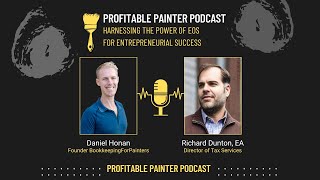
Daniel and Richard break down the Entrepreneurial Operating System from Gino Wickman's Traction, covering six components: Vision, Traction, People, Data, Issues, and Process. They explain how to set long-term goals, run weekly Level-10 meetings, track measurables like sales leads and customer satisfaction, and document core standard operating procedures for painting and service businesses.
Chapters
Welcome to the Profitable Painter Podcast. The mission of this podcast is simple: to help you navigate the financial and tax aspects of starting, running, and scaling a professional painting business. From the brushes and ladders to the spreadsheets and balance sheets, we've got you covered. But before we dive in, a quick word of caution: while we strive to provide accurate and up-to-date financial and tax information, nothing you hear on this podcast should be considered as financial advice specifically for you or your business. We're here to share general knowledge and experiences, not to replace the tailored advice you get from a professional financial advisor or tax consultant. We strongly recommend you seeking individualized advice before making any significant financial decision.
This is Daniel, the founder of Bookkeeping for Painters, and this is Richard, tax director for Bookkeeping for Painters, and we have a gorgeous summer day today. Here in Northern Illinois, it's feeling a little bit more like Central Florida with the heat and the humidity, but we only have to deal with it for a few months. I know, Daniel, you guys get it almost all year round. And alligators. You also have alligators.
So this is true. We had an alligator in our neighborhood a couple of weeks ago.
Really?
So, yeah, the kids are all excited. They want to go run around and find it. And we had to explain to them that alligators will eat them. And they're— and but my son was adamant that he's faster than alligator, and I was— assured him that he was not.
Yeah. So that's something they usually find out pretty fast, and they're usually only wrong about it once. No, I'm glad you're able to protect your family from vicious reptiles who roam the streets of central Florida.
Yeah.
But if you want to protect your company from, from exterior threats, that's a heck of a segue. Uh, we've got a really good episode today. We're going to be talking about the entrepreneur entrepreneurial operating system.
So one of my favorite books is Traction by Gino Wickman, and it was actually at the PCA that was, I was handing this book out to everybody at the PCAs. It had such a profound impact on my business, and I have modeled what we do in our, in our business that, um, and how we serve folks using Traction. And I think it's a great book. It's, it basically provides you like the blueprint on how you should run your business so that you have a good grip on what's going on and how to get everybody moving in the right direction. Towards a common goal.
Yeah, I know, um, I've definitely benefited from it. It's, it's nice because like, you know, you talk about how like kids don't come with a manual and new businesses don't come with a manual. This, this is kind of like a manual for new businesses. It's kind of like the playbook, uh, and I know a lot of businesses have really been able to benefit by implementing this. Uh, this is, this is their Bible, so to speak. And, uh, I don't know, should we talk about the, the well-worn copy of Traction that, that Daniel, you carry with you everywhere you go? It's kind of like your, your baby.
I have it. I have it right now.
Oh my gosh. It's on camera.
Yeah.
I love it. I love it. I think the last time I saw it, it had more, uh, sticky notes popping out of it, but maybe that's just, just me, the way I remember it. But, uh, but no, it's, it's a great, it's a great playbook and it's really made a difference in our business and, and a lot of other businesses too.
Yep. And it's really, so it's made up of 6 components. Like the Entrepreneurial Operating System is 6 components. You have vision, traction, people, data, issues, and process. And those 6 components, you use those to, to get a grip on your business and guide your business in the right direction. So we'll go through then kind of give you a summary. And, and, but I definitely recommend you just pick up the, the copy of Traction and, and read it yourself. It's very, very practical. Like most books like this are kind of theoretical and you have to really think about how you're gonna implement it. This gives you like no nonsense, just here's what you do. And it's very easy to just implement. It tells you like, it gives you templates for all the things, how to run your meetings. It's very practical. It's not a lot of theories in this book.
Yeah, and, and we're not being sponsored by Traction, although we should probably get like Gino Wickman on the phone and say like, hey, you want to come on the podcast? Because, uh, you know, we, we, we love you so much, we want to, we want to spread the good word. Uh, but no, we're not, we're not sponsored, right? It's just something that, that, that we have found, um, very useful in, in our business, and we think that other people could benefit too. So do you Should we, should we knock it out one by one, talk about each of the 6 steps, uh, starting with vision?
Yes. So vision, this is where, where do you want to go? What do you want to take your business in the next 10 years? Like, that's, that's kind of the big picture vision. And this part reminds me of Ted Turner in his autobiography. He, his dad was a business person He actually inherited the business from his dad, and his dad told him that, told Ted Turner, his son, like, always put your goals so high that you can't accomplish them in your own lifetime. Because he, his dad had set goals for himself. He said that I want to have a yacht and I want to, you know, live in the nice neighborhood where all the rich people live. Like, you know, that, that was his goal. Granted, he lived in the Depression, during the Depression, he was super poor. His family was super poor. So that was kind of an ambitious goal, but he started a business and he actually attained that goal pretty early on. He had some good success in the billboard advertising space. And then once he hit that goal, he didn't know what he wanted to do with himself. He like, it's like a car, like a dog that was chasing a car, you know, once they catch the car, they don't know what to do. So he kind of got in that situation and he, so he told his son like, always set your goals so high that you won't be able to achieve it in your life. So this is the place where you're putting those, those big goals and your vision. Obviously try to make 'em somewhat feasible, but don't, don't, don't fall in the trap of having small goals. I think that's all the biographies I've been reading recently. All these people have like super crazy high goals. Um, so this is where you put those goals and your vision, and that's going to kind of, um, be the starting point for everything else that follows.
Gotcha. So you want to know where you want to go and what that end result looks like. And does it help to maybe like write it out on a piece of paper? I mean, I know like, like Turner, you want, you want the yacht, right? You want the, the mansion in the West Hills or whatever the Atlanta version of that is. Um, But yeah, and I, I love what you say about, you know, don't, don't have the trap of small goals. And sometimes I think like our human brains, we're like, oh, if I set small goals, then I'm much less likely to fail. But, but you, you are failing, right? Because you're not reaching your full potential. So have those big, hairy, audacious goals and work towards it. And even if you only make it part of the way, you're still fulfilling your potential and getting as far as, as you can.
Mm-hmm. Good way to put that.
Yep.
All right. So vision, that's, that's the first part. The second part is traction, and this is the how, how are you actually gonna go there? So you, you have your vision of what you wanna accomplish with your business. How do you wanna serve people? And then now you gotta go through like, okay, how are we actually gonna achieve this? And so that's breaking down the goal into bite-sized pieces. You know, maybe you have a 3-year plan, a 1-year plan, and what are all the activities that you have to do to accomplish that, that vision. And, and, and then furthermore, uh, Traction, you know, the Entrepreneurial Operating System, gives you ways to, um, follow up on how those goals are You know, you set your plan and then how do you follow up on those goals with your team? Basically, you have a, a battle rhythm of meetings each week and each quarter and each year, and you're just identifying, solving issues to achieve those, those goals that will help you achieve your vision. That's what you said in the first part. And we're actually going to a, our company, our annual company retreat, which will go through our annual meeting. This coming week in Orlando, Florida. So we're going to, you know, put traction to use at that, at that get-together with the team.
Yeah, I'm looking forward to it. I'm hoping to see some alligators because I hear they wander around. But now we're all really looking forward to reiterating our goals, being reminded of what those are, and then figuring out the roadmap to it. So if the goal is kind of like the destination, then, or the vision is like the destination, then the traction is like the roadmap as to how you're going to get to that destination. And I like how you mentioned, you know, just have like a battle plan of meetings. And we do, we have very intentional, very deliberate meetings at our firm where we, you know, we don't just sit around and chat, but we have specific issues that we're addressing and we're using them, you know, in an effective way so that we can, we can get that traction and, and make our way towards our goal.
Yep. Yeah. Yeah. The, the Traction calls it the level 10 meeting where every, the agenda's set. You have a, you do have a little bit of chitchat in the beginning, I think 2 minutes to kind of make sure you have a warm start to the meeting and then it gets into business from that point forward. And it ties in those— all that meeting ties in all the other things that we're going to talk about here, uh, people, data, issues, process, and vision. So it ties all everything together in those meetings. Uh, so yeah, it's— I think the meetings are very helpful for, um, the team to, to stay on track and, and get things done.
And, and are they called Level 10 meetings because at the end of the meeting we, we actually rank them as So as employees and meeting attenders, we rank the effectiveness and the quality of the meeting on a scale from 1 to 10. And we do a pretty good job. We usually get 10s. But if there's problems with the meetings, that's a good place to find out. And then we can do even better next time.
Yeah, exactly.
I might get one of those little paddles like they have on Dancing with the Stars where they, you know, it's like, it's a 10 for me. No. Yeah, little rhinestones or something.
Yeah, yeah, that'd be beautiful.
Yeah.
Uh, the next piece is people. So the— obviously people, we're in service businesses, painting, painting industries, service business, and you— and people are basically your, your product, right? We're not selling iPhones, you're selling a service that people execute. So getting people, the right people in the right seats, is super important. And so that's a huge component of your painting business. And there's a portion of the book that goes through that, getting the right people in the right seats. And it reminds me of Steve Jobs, because he was always so focused on getting A-players on his team. And he claimed that he had a team of A— completely of A-players at Pixar. And that was the business that turned him into a billionaire. And then at Apple, when he came back the second time, He was really focused on making sure he got as many players on, on his Apple team. And I think we've talked about before the, like the A-player thought experiment that Brad Jacobs talks about in his book, How to Make a Few Billion Dollars. The thought, which is I think I just love this thought experiment. So I probably talk about too much, but basically if you want to identify if someone is an A-player, you can do a thought experiment and, and think, if this person were to walk into my office and tell me that they are quitting, what would be my reaction emotionally to that, that event? And he, he says that if, if you immediately panic and think, oh my gosh, what, what went wrong? How, you know, what am I gonna do? I'm never gonna find a person that can replace this person. That's an A-player. So that would be what you would categorize someone as an A player. Now, if you react internally like, oh, that really sucks. It's gonna be disruptive to our team, but I think we can find somebody to replace them and maybe even somebody better, then that's a B player. And then if the last one is the C player, and if your response internally is, oh, okay, they're quitting. I was gonna fire 'em anyways. That's a C player. So that, I think that's a, a good framework to identify whether you have A, B, or C players on your team. But bottom line for this one, people, getting the right people in the right seats in your organization is super important.
Yeah. And I like how, you know, the book Traction brings out the right seats because you may have someone who's a, who's a good person, who's a good employee, but maybe they're not functioning quite as highly as they could. And it could be because they're in the wrong seat. I mean, not everyone can— I mean, nobody can do everything at an extremely high level. So finding out what people's talents and skills and abilities are and making sure that we're utilizing them in a way that lets their talent shine and best benefits the company might mean switching some roles or doing some mentoring. And a lot of times, you know, you can get people who may be C players or low B players moved up in that ranking, uh, with a little bit of effort. So, uh, it, it's, it's really, I think, like valuing your, your human resource. I hate human res— I hate that term human resources because it sounds so corporate, but you know, your people are your biggest resource. It's valuing them and utilizing them to the best of their ability and finding out, you know, where they're going to flourish.
Yeah, absolutely. All right, so the next component is data, and data is obviously important. You know, we talk about data a lot in our podcast about your financial statements, so that, that's important data that you need to have. But one of the things that Traction really focuses on is the measurables, which are things that are data that you're collecting in your business that isn't necessarily the financials themselves, but are actually things that should be predicting the financials. So your weekly— there's measurables that you set and track on a weekly basis that should predict what's going to happen on your monthly financials, which you would see on your profit and loss and balance sheet. So, uh, the, the common 3 buckets of weekly measurables you might track in your painting business would be your sales metrics. So how many leads did you get each week? How many estimates did you book? How many of those estimates did you change into booked jobs? And then the next bucket might be production-related measurables, like how much, how much did you produce in this, in a particular week? What was the gross profit percentage on each individual job that you closed? Another bucket might be customer satisfaction, like how many Google reviews did you get this week? What was the net promoter score from the customers that filled out your end of project survey? What was that? So those weekly measurables should have, you know, goals for each of them. And then if you're hitting those goals, you should have, you know, really solid financial statements at the end of the month.
I know Wickman really pushes the idea of data-based decision making. Because, you know, we, we might feel that things are going well. We might feel like sales are up, but we don't really know, right? A feeling is, is not a fact. And the only way you're gonna really know if you're getting that traction and, and, you know, moving towards your goals is if you have that data to back it up. And that's gonna help you make better factual decisions that are, that are data-driven. And, and not emotionally driven.
Yeah, super important. Uh, and this is— tracking those things can be a little bit cumbersome to track some of this stuff, but it's, it's critical. And so you have a good picture of where you are, where you need to go, how, how, where are the issues so you can improve things. Which brings us to our next component, which is issues. So an issue is basically something that's not working the way it should be working. Maybe you're not hitting your weekly measurable on a particular— maybe you're not hitting your leads, you know, the amount of leads that you need to have coming in. So that would be an issue. Another issue might be related to people. You don't have a production manager. It's an issue. You know, so these issues are popping up in your business all the time. So you need to be capturing those issues. And then in your weekly meetings that you're having, you're identifying, discussing, and solving those issues because that's, that's what's going to move you forward is identifying, discussing, and solving these issues. And this reminds me of Jeff Bezos. Uh, someone that worked with him said that he would always get super excited when somebody identified an issue because Jeff Bezos thinks of issues, you know, because most of us, I think Naturally, at least I do, when we hear about an issue, it's like you kind of get, oh, something happened. That's kind of get a bad feeling in your stomach and you're like, oh no, I got to deal with something now. But really, as business owners shouldn't feel that way because if you find an issue, that's an opportunity to fix it and, and prevent it from happening in the future, therefore improving the quality of your business. So that's obviously the way that Jeff Bezos, uh, looks at issues, because he just— I think he says that he— an issue is just like an opportunity to create more efficiency and improve the bottom line. So, um, issues is its own component, and it's critical to identify, discuss, and solve those issues and move your business forward.
Yeah, I like the way you know, we kind of changed the paradigm and the way we think about that. You know, because I like myself, I'm a bit of a perfectionist. I want everything to go very smoothly. But the truth is that no one does anything perfectly. There's always going to be room for improvement. So if we're not having any issues, it's probably not that we're not having any issues, we're not identifying any issues. And that's a problem because it means we're doing some things wrong and we're not giving ourselves the opportunity to fix those things and to become more efficient. So I, you know, I, I know like there's some, some pretty cliché, you know, expressions out there like, like, you know, failure is what the, the first attempt at trying or something or learning something like that. Yeah, I know it sounds a little, a little hokey, but it really is true. Like, like finding problems and then being able to figure out how to overcome them and do it even better next time, that can be very exciting. And that's how your business is really gonna become better. Pretending that, that nothing's ever wrong and that everything is always kumbaya, that's, that's not really living in reality, unfortunately.
Yep. And so our last component is process. So We all, all our businesses have processes. The question is, are they documented? So for some of us, that might not be the case, but you do have a process where, you know, how you do— it's just the way you do things. What's your standard operating procedure? What's your process for doing things? And Traction, they, they give you a good framework to, uh, to, to think about your processes, basically. You want to have a set of core processes, around 5 to 7 core processes in a residential repaint business that might be marketing, your marketing process, your sales process, your onboarding process, your production process, your nurturing process, and your reactivation process. It might look something like that. Maybe you have a slightly different set of core processes, but it's something, something along those lines. And within each process. You'll have like how to do certain specific things within that process, but you want to be able to map out your processes, your big, you know, 5 to 7 processes and how do they all work together to, you know, serve your client, provide value. So that's the key. That's another key component of the entrepreneurial operating system is your process because that's going to really be how you're, how you're operating day to day and, and that will help you get to where you need to go for your vision.
Yeah, I struggled sometimes with like how to get my process down on paper, right? Because everything lives up here in my head and I know what I'm doing, but it's really important to, to document it for a couple of reasons. One, so that you have like a touchstone that you can go back to, right? That you're not forgetting anything because we're all human. We all forget things. We're not going off script and, and maybe messing up a process that is proven to work. And then two, you can't do everything in your business. And then, you know, as you're growing and scaling, eventually you're going to have to have somebody else do the things that you're doing. So you want to have that process well documented so that they can get up to speed as fast as possible and produce the same high-quality you know, outcome that you've been doing. One thing that's kind of helped me in documenting my processes is sometimes I'll just go and do what I normally do, whether it's prepping for a meeting or preparing a tax return. You know, as a painter, it might be a sales call or an onboarding process and use a little tape recorder and just record yourself as you're going through it. Say things out loud, and then later on you can go and you can kind of clean it up and put it into an outline. Uh, there's a, there's a neat software, uh, or an app extension that I'm kind of playing around with right now called Scribe, where it does that, um, for your computer. Like it, it records the screen on your computer and it uses AI to put what you're doing into an outline. Um, and then you can kind of clean it up for the process. Uh, but it is really important to get these things down out, out of your head. And onto paper so that you can communicate them to others and that your business isn't, you know, completely relying on what's in your brain, uh, because, because that could be a real weakness.
Absolutely. Yeah, so those are the 6 components: vision, traction, people, data, issues, and process. And this, this book Traction, highly recommend you pick it up, uh, it's been a a huge, huge part of how I run my business, and it's been great, not only my accounting business but also my painting business as well. So definitely recommend you pick up that book. And with that, I'd love to hear your thoughts on if you use Traction in your business, or maybe you're using Scaling Up, or what blueprint are you using to run your business? Love to hear from you. If you go to Facebook and type in Grow Your Painting Business, definitely join in the conversation. Otherwise, we will see you next week.
Yeah, thanks for listening, everyone, and we hope to see you on the next episode.
More from Daniel







What’s REALLY Holding Your Painting Business Back? (Find Your Bottleneck in 5 Minutes)



