How Much Is Your Painting Business Worth?
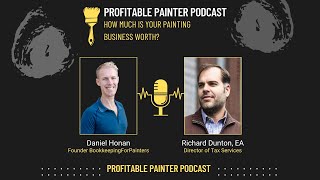
In this episode of the Profitable Painter Podcast, hosts Daniel (founder of Bookkeeping for Painters) and Richard (tax director) discuss how painting business owners can estimate the sale value of their companies, especially those with under $10 million in revenue. They explain that private small businesses typically sell for 1–3 × net profit, while public firms may command much higher multiples. The conversation then outlines eight key factors that influence a buyer’s willingness to pay: (1) owner involvement – lower involvement raises value; (2) clean, audit‑ready financials; (3) repeat customers or recurring contracts; (4) diversified customer acquisition channels; (5) tangible assets such as equipment and vehicles; (6) a strong, independent team; (7) documented, efficient processes; and (8) robust cash flow and profitability, with target benchmarks (≥40 % gross profit, 15 % net profit for non‑owner‑run businesses, 30 % net profit when the owner is heavily involved). They illustrate valuation examples, discuss the impact of risk perception, and advise owners to build these factors not only to increase sale price but also to grow a healthier business. The hosts conclude that if a business reaches a high‑profit, low‑owner‑involvement state, owners may prefer to retain it as a cash‑generating asset rather than sell.
Chapters
Welcome to the Profitable Painter Podcast. The mission of this podcast is simple: to help you navigate the financial and tax aspects of starting, running, and scaling a professional painting business. From the brushes and ladders to the spreadsheets and balance sheets, we've got you covered. But before we dive in, a quick word of caution: while we strive to provide accurate and up-to-date financial and tax information, nothing you hear on this podcast should be considered as financial advice specifically for you or your business. We're here to share general knowledge and experiences, not to replace the tailored advice you get from a professional financial advisor or tax consultant. We strongly recommend you seeking individualized advice before making any significant financial decision.
This is Daniel, the founder of Bookkeeping for Painters, and this is Richard, tax director of Bookkeeping for Painters. And Daniel and I are doing a little something special this week. We are in Savannah, Georgia. Beautiful city, lots of architecture and history, but we are here for the PCA Craftsman Expo that's going on in the month of October.
Yeah, super excited. We are here a little bit early, so we got to check out some of the sights. We were walking around Savannah, really beautiful. We actually went to the— what was it called? The Beehive?
The Savannah Bee Company.
The Savannah Bee Company. Got some honey, so I'm pretty excited about that. I'm a big honey enthusiast.
Right, right. Um, our next company is going to be Beekeeping for Painters, right? No, that's just kind of an inside joke. Um, but yeah, it's, uh, it's been a great time. Gorgeous town, and hoping to see some more sights. But today we're going to be talking about How much can you sell your painting business for? I know, you know, most of us are working hard to grow our businesses, but we always kind of have in mind that eventually one day we might not want to do this anymore. We might want to think about what our exit strategy will be. And so we thought that we could talk a little bit about how you can value your business, the different types of things things that go in towards, you know, figuring out that value and making it worth more, and kind of give you an idea of what your painting business might be worth.
Yeah, this is a common question that folks have, and, you know, I've also thought of this in my own businesses, like, "Man, how much could I sell this for?" It's usually at a point in my business where no one would want to buy it is when I think that question, like, "How much can I get this?" you know, how much can I sell this thing for? It's usually in the low periods. So my opinion on this is it's cool to know how much you could sell your business for, and then we'll go through those. But my personal opinion is, you know, I want to get it to the point where my business is so good that I don't want to sell it and I can just keep it as an asset forever. But everyone's situation is different, and so you might have a different situation than me. So we'll go through from things that I've seen other painting businesses, how they've sold their business and some of my personal experience and just what's out there. So we'll go through, this is mostly suited for businesses under $10 million in revenue. So if you're under $10 million, we'll talk about the numbers related to that. Once you get past the $10 million mark, the numbers kind of change, the numbers get bigger. Like I think Netflix sells for like 40 or 50 times their earnings or something ridiculous. It's crazy numbers when you get into the tens of millions.
Yeah, yeah, well, I mean, companies like Netflix and Amazon, they've got so much speculation behind them that it pushes those PE ratios sky high. Generally speaking, and this is, you know, taken with a grain of salt, publicly traded companies that have publicly available financials that have been audited by a CPA, they tend to trade for about 16 times earnings. If you have a private company, there's more risk involved with a private company. Because the books are not as transparent and there might be things involved that, you know, a buyer might not know. If you can pick up a private company for 7 to 10 times earnings, that tends to be a fairly good investment.
Yeah, so at the level of $10 million and below, the factor that you should kind of expect if you're under $10 million in revenue, is somewhere between 1 to 3 of bottom line net profit. So just as an example, if you had net profit of $100,000 in your business, you know, you should expect to be able to sell it between $100,000 and $300,000. However, there's a whole bunch of caveats to that, so we'll go through some of the factors that would lead a buyer to want to purchase it more or less.
Yeah, I think the first factor we're going to talk about is your level of involvement. And this is where there's a big difference usually between painting businesses that are fairly new and, you know, well-established companies. It has to do with how much work do you have to do in your business each day. If you have a, you know, a cash factory set up where you wake up and you make money and you don't have to do anything because all your systems are in place, all your key people are in place, and you're just able to collect, that's obviously going to be worth more than a business that requires the owner to do a lot of work, um, simply because of the level of involvement there.
Yeah, it— so if you just think about it from the buyer's perspective, they're wanting to get an asset, they're trying to buy an asset. And so most people who— and there are some exceptions with this, but most people are trying to buy an asset. Sometimes if they're trying to buy a really small business, maybe they're just trying to buy a job, but most folks that are looking to buy a business are trying to find an asset. So if they can buy something that they just buy and then they get cash flow from it, that's the ideal situation for most people. People who buy businesses. Now, there might be a different type of buyer that they're looking to just buy a kind of a job where they're willing to purchase a business and then work inside of the business. They might be willing to do that, but they're probably going to be paying less money for that.
Yeah, so I think the bottom line is if you want to get the most for your business, then you need to be able to have it set up where whoever buys it does not need to be strongly involved day to day, that it can almost kind of run in the background on its own with minimal involvement, and that's going to make it more valuable.
Yeah, and the next one is strong financial— a strong finance piece in your business. So basically, do you have books? Do you have bookkeeping being done? Are they audit ready? Because when you're going to sell your business, the buyer is going to have some due diligence period where they're going to dig into your books and make sure things— and maybe even have them audited so that they know that what they're buying is what they're getting. So you want to have a strong set of books and that everything is being done correctly and set up correctly. So you want to have a strong financial component. And you'll also obviously want to be able to provide to potential buyers, you know, your financial statements, because that's kind of the big thing there is how much was the top-line revenue, what's the gross profit, what's the net profit, what kind of liquidity do you have, how much cash in the business, what's the solvency, how much debt do you have. All those questions will be answered through the financials.
Sure, and strong financials increase a company's ability to apply for loans, to get capital, to possibly bring on future shareholders. And you just imagine a potential buyer is going to be much more comfortable with a very clean balance sheet that clearly shows where all the assets are, what the liabilities are, rather than something that feels like it might be missing components. That's going to cause fear, and they're going to be less willing to pay you top dollar for your business.
Yeah, absolutely. So we talked about level of involvement, the finance component. The third thing is repeat customers or recurring revenue. So this is basically when, when someone's buying a business, they want to be able to know that there is more revenue coming in the next month and the next month. So being able to show that you have a set of customers that you regularly reactivate through maybe, you know, you do quarterly reactivation campaigns or to reactivate those customers, those prior customers and get them to buy again from you. Being able to show that is super important when you're selling your business or if you're more in the commercial space with painting, maybe you have a contract set up with your customers and you're doing some sort of regular maintenance or whatever the case may be, you have these contracts in place to show you have regular revenue coming in.
Yeah, sure. If, if a potential buyer sees that you have a contract that guarantees a certain level of income for the next 3 to 5 years, they're— again, they're going to be more willing to give you more money because there's less risk. They're getting this guarantee that even if other things go poorly, there's this contract in place, and that's very valuable. So if you have one of those, don't underestimate its value. Make sure that you get paid for having that contract.
Yeah, so if you are not regularly reactivating your customers and you're looking to sell your business, definitely look into how you can do that because your customer list is— especially for painting businesses that have been around a while, a lot of those customer lists get ignored and they're always just looking for the new customers, but don't ignore those old customers. Reengage with them and get a process started where you're regularly reactivating them. That will get you more revenue in the door and also make your business more sellable. So the next thing we got is how you actually get new customers.
So you talked about reactivating the old customers and keeping those contracts going. Now we're gonna talk about how you get new customers. And, you know, when we think about our advertising and our marketing, we want, you know, 5 different ways to make a dollar so that if something no longer is working as well as it used to, we have backups. We don't want to put all of our eggs in one basket. Daniel, you had a good example of maybe we're doing all of our advertising on Facebook and it's been very successful. What if Facebook shuts down one day? I mean, it might not be likely, but they could change the way the algorithms work. They could change their pricing structure. So it's no longer, you know, a smart idea or no longer competitive. We don't want to be dependent on only one source of marketing. We want to have 5 or 10 different ways to get a customer. And so if we can show a potential buyer that our eggs are not in one basket, that we have redundancies in place, that again drops the level of risk so that they might be willing to pay more.
Yeah, absolutely. So that's item number 4. Item number 5 in terms of ways you can improve the, the sellability of your business is the actual assets that you have in the business. So assets meaning those items, whether they be equipment or vehicles, what are the actual assets that you have in your business. The more assets you have in your business, the more that a potential buyer will actually pay you for it.
Yeah, and when you think about, you know, assets, those are almost like on a dollar-for-dollar basis. If you are valuing your company at, say, 3x profit, but then you're also going to transfer $100,000 of vehicles, equipment, and things like that, then you need to get paid for that $100,000 on top of the 3x that you're getting for the profit. So assets are very valuable. If you have a lot of them, you want to make sure you're getting paid. If you don't have a lot of assets, and there's nothing wrong with that, uh, you know, you'll receive less for the business, your valuation is going to be focused more on its potential to make profit.
Yeah, absolutely. So item number 6 is your team, the team that you have in place. So this is kind of related to your level of involvement, which was the first thing. Obviously, if you're not involved in the business, if you get it to the point where you're not involved in the day-to-day operations, you would presumably have a team in place that is taking care of everything. So The better your team is that's involved in your business, the more likely someone is going to give you more money for it. So having a great team is super important for when you're trying to sell your business.
Right, and you know how hard it is to find people who are reliable, trustworthy, personable, who work well together. That's a major challenge that most painting business owners face. So when you get that team in place, That is a super valuable part of your business. Don't underestimate, you know, just how much that's worth. People are, you know, so a buyer is not going to be able to step in and bring in strangers and have anywhere near the efficiencies and the profitability that a well-oiled team is going to have.
Yeah, and if you think about the buyer you know, if they're buying a business and if you are the business, the painting business owner and you're doing like all the things, a buyer, you know, they're going to pay you a lot less money if you're the key player that's— I'm going to give you a bunch of money and now you're going to leave. It's— you just left them with all this mess to handle. So, but if you have a team in place that there's, you know, and you're coming out of the the business and you're going away, but you still have this outstanding team in place, you know, someone's going to give you a lot more money for a situation like that because they know that things are going to be handled.
Yeah. And along with your team, you also have processes. Processes that you have spent many years developing, figuring out best practices, the most efficient ways of doing things. So that you're cutting down on your admin time, you're cutting down on your labor, you're reducing your waste. These processes are very valuable and it's not something that a buyer can go and pick up off the shelf. It's something that has to be created and cultivated. So again, processes are a very valuable part of your business.
Yeah, absolutely. And this is why— that's why franchises exist. A lot of folks who buy a franchise, they a lot of times are just kind of buying the processes and sometimes, and the branding as well, but processes are a big part of why people invest in franchises, because the franchise gives you, "Hey, here's how to do all the things that we do step by step, so you can take that and run with it." So having a good set of processes in your business will make it a lot more sellable.
Absolutely. And then finally, we want to talk a little bit about cash flow and profitability. So this is really going to come into play when we're figuring out, are we going to be on the, on the 1x side, or are we going to be on the 3x side, or possibly even higher? The number one thing a buyer is going to look at is how much cash does this business make? How profitable is it? They are investing for a reason. They are giving up current dollars to make more future dollars. So they want to make sure those future dollars are going to be there. So Daniel, what do you think are some of the things that we should be focusing on as far as cash flow?
Yeah, I think cash flow, if you're a residential repaint painting company, your cash flow should be pretty dialed in. You should be getting paid pretty frequently. Probably taking a deposit and getting paid after the job's done and the jobs are only taking a week, maybe two. So your cash flow should be really solid, you're making— your bank account is increasing every month. That should be your cash flow situation. Now if you're more on the commercial side of things, your cash flow is probably not as strong. So you'll have to have— if you're trying to sell, you'll have to have strong cash flows either way. So you'll have to kind of figure that out with commercial. You either have to balance it out with residential or have some sort of structure in your business so that you're using, getting working capital somewhere, whether it's you're getting, you know, financing to cover the gap between when you finish the work and when you get paid, you know, 90 days later or whatever the timeframe is for the commercial side. You'll have to have that figured out. And that— and proven, that system proven so that the new buyer coming in is confident that the cash flow is going to keep coming in every month and they don't have to worry about being crunched for cash.
And then profitability being kind of the other side of that, you know, are we hitting our gross profit goals? Are we keeping our overhead low enough so that there is, you know, money available for owner's distributions? That's gonna be something that a buyer is really gonna be looking at, and that's something that we can work on just by becoming more efficient, maybe keeping a closer eye on the numbers, finding those areas we can kind of trim the fat, so to speak. You know, if we're not making our goals, what do we absolutely need to keep and what can we maybe let go, or what can we do cheaper so that we are gonna make those goals?
Yeah. Yeah, and just to go through profitability, the basic numbers you should be hitting, you know, gross profit above average is above 40% gross profit. So that would be, you know, if you can get your gross profit above 40%, that's going to potentially be more attractive to a potential buyer. And then for bottom-line profitability, if you're not involved in the business at all and it's just running without you, The target there would be 15% net profit, so 15% for that situation. If you're involved in the business, if you're the salesperson, let's say you're the salesperson, the operations, and you're also the business owner, you should be closer to 30% net profit or cash flow to owner. So those are some numbers to work with to evaluate your profitability.
Yeah, so I think, you know, these 8 factors, these are really good factors even if we're not trying to sell our business. These are all things that we can work on to make our businesses stronger and help them to grow. But if you are trying to, trying to figure out how you can get the most for your business, these are these 8 things. Maybe we just go over them real quick one more time. The level of involvement How much work you're actually having to do each day? Are your finances audit ready? Are your books in shape? That's going to give easy access to capital. It's going to make buyers feel more comfortable. Do you have repeat customers or contracts in place so that we are ensuring future revenue throughout the years? Number 4 is how are you getting your customers? Do you have many different lines of advertising and marketing, or are you kind of stuck with all of your eggs in one basket? Number 5 is the assets in your business. Those are going to be worth pretty much dollar for dollar. The more assets you have, the more valuable, or the more you should sell your company for. 6 is your team. If you've got a rockstar team that works well together, they are going to be more efficient and they're going to be a lot more attractive for a potential buyer. 7 is your processes. Are you cutting down on your admin time? Are you, you know, keeping your costs low because you've got this down? And then 8 is what is your cash flow and profitability? I kind of like the 8 is last because that really is the bottom line, right? What is your profitability? What is your bottom line? Does the business generate cash? And that's going to be probably the number 1 thing a potential buyer is looking at.
Yeah, and if you get to the point where you are at, like, let's just say you have a $3 million business and you've looked at these 8 things and you're not involved in the business, you've got to the point where you have a sales team, you have production managers, you have a strong finance component that your books are being taken care of, you have regular customers that are buying from you, you get your customers from different places, you don't have all your eggs in one basket, you have assets in the business, you have a great team, great processes, and you're profitable, and you're making strong profits. Let's say you're doing, you know, 10% profitability, net profit on a $3 million business, which would be $300,000 a year. I mean, that's a pretty good situation. I don't know if you actually get your business to that level. Yeah, you might be able to get 3 or maybe even higher, 3 times your— 3 or more times your bottom line profit. But if you're in that situation where you're making all that money and you have such a great business, I don't know, my opinion is, you know, don't sell. Hold that asset and just keep making cash flow off of it. 'Cause the people that are the most wealthy in the world are the ones that have assets that are paying them every day while they sleep. So that's kind of my opinion, but we did want to kind of go through these factors and kind of give you an idea of what you could sell your painting business for if you did want to.
Right, 'cause sometimes things come up that are unfortunate and we don't have a choice, but I agree, Daniel. If you get your business to this point, you're probably not going to want to sell it, or you're not going to want to maybe get out completely. Maybe you choose to take a reduced role in it. But yeah, hold on, hold on to what you've built. You've worked hard to make this, and it was not easy. So don't be, don't be too quick to let that go. And if you do have to let it go, make sure that you get what it's worth. Because it is very valuable and you need to be rewarded for all the effort that you've put into it.
Yeah, absolutely. And we'd love to hear your feedback on this episode. What are your questions? Have you sold your painting business? Are you thinking about selling your painting business? Love to hear your thoughts on that. If you want to go to Facebook and type in Grow Your Painting Business, join the private group and we'd love to hear from you.
Yeah, absolutely. Uh, we appreciate you listening, and we will see you on the next episode.
More from Daniel







What’s REALLY Holding Your Painting Business Back? (Find Your Bottleneck in 5 Minutes)



