Knocking on Success: Lenny Gray's Masterclass in Door-to-Door Sales Strategy for Painting Businesses
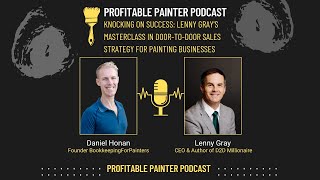
In this episode of the Profitable Painter Podcast, host Daniel (founder of BookkeepingForPainters.com) interviews Lenny Gray, a veteran door‑to‑door sales expert, author, and CEO of Rove Pest Control and Door‑to‑Door Millionaire. The conversation explores why door‑to‑door remains a viable, cash‑efficient customer‑acquisition channel for home‑service businesses, especially painting contractors. Lenny shares his personal journey from a college summer job to building a multi‑million‑dollar pest‑control company, explains the ethical framework and systematic process he teaches, and addresses common objections (no‑solicit signs, perceived intrusiveness, low conversion rates). He outlines compensation structures (setter vs. closer, commission ranges), key performance metrics (qualifying ratio, closing ratio, retention), recruitment and training best practices (the "3 Rs" – Results, Retention, Recruitment), target‑knocking tactics, and practical steps for a painting business to launch a door‑to‑door program. The episode concludes with resources: webinars, free 15‑minute consultations, books, and social‑media channels where listeners can learn more.
Chapters
Welcome to the Profitable Painter Podcast. The mission of this podcast is simple: to help you navigate the financial and tax aspects of starting, running, and scaling a professional painting business. From the brushes and ladders to the spreadsheets and balance sheets, we've got you covered. But before we dive in, a quick word of caution: while we strive to provide accurate and up-to-date financial and tax information, nothing you hear on this podcast should be considered as financial advice specifically for you or your business. We're here to share general knowledge and experiences, not to replace the tailored advice you get from a professional financial advisor or tax consultant. We strongly recommend you seeking individualized advice before making any significant financial decision.
This is Daniel, the founder of BookkeepingForPainters.com, and I'm here with Lenny Gray. Lenny Gray is a legend in door-to-door sales industry. He started selling pest control door-to-door during summers while at college. He has written two books, Door-to-Door Millionaire: Secrets of Making the Sale and More Door-to-Door Millionaire: Next Level Training. He is the CEO of Rove Pest Control and Door-to-Door Millionaire, which helps business owners build successful door-to-door programs and improve sales training. He has worked with startups and companies valued in the billions. Welcome to the podcast, Lenny.
Thank you, Daniel. I'm excited to be here. Let's do it.
Let's do it. Awesome. So you've, you've had an incredible journey. I think you got started with door-to-door in the late '90s, if I'm not mistaken.
Yeah, yeah. So late '90s, I, uh, I'd returned home from a 2-year church mission, and I had a buddy of mine that reached out and wanted me to go door-to-door and sell pest control with him in, uh, in the South. And I, I pretty much thought he was just full of it and that it wasn't real or legit. So I said, hey, why don't you go do it? If it does happen to be the real deal, then, then hit me up and I'll think about it next year. And the next year, and he, he did. He reached out to me as soon as he got home in September that summer and said, hey, I'm managing a team in Birmingham, Alabama. You and your wife got to come with me. And so, uh, you know, that next year he was managing a team in Birmingham. So that's, that's really my start, man. We, my wife and I drove across country in our Nissan Altima and we sold pest control door-to-door in 1998. '88 was, uh, was that first summer.
Wow. And, and so you've been active honing your craft for going on 30 years at this point, and you've written a couple books on it. Um, what, what kind of drove you to, to stay with door-to-door? Because, you know, I've done door-to-door, and I know of other people have done door-to-door, and it's been like one of those things where it's, uh, it's very challenging. It can be very like kind of scary going up to someone's door, not interrupting their day, uh, and it's not very enjoyable. It can be if you start hitting the groove, I guess. Sure. But, you know, uh, it's one of those things, it's like it can get— you get you awesome return on, on your time and, and get you to close sales, but it can be very grueling. So how did, how did you stay in this niche for so long?
Yeah, I don't know if I'm— I'm probably partially crazy, but I also think, you know, it was something— I went to school, I got a degree in broadcast communication, so I was going to be a news anchor. And, you know, I did the whole school thing and realized that, you know, right out of college, I'd get a great job making, you know, $30,000 and work weekends and holidays and live in some small town in the middle of nowhere. And I just kind of thought, man, I'm doing better than that in 4 months just knocking doors and selling door-to-door. So, it was really one of those things where I— and again, I got lucky along the way. I was selling for Orkin Pest Control. They picked me up, their marketing company picked me up as a VP of sales right out of college. And then, after a few years of doing that and kind of traveling all over, training reps, putting together their systems and processes for door-to-door, I started my own company in 2003. And I just, you know, I love the idea of the opportunity that door-to-door brings people that think, "Man, why isn't my phone ringing? Why am I not making sales? How can we grow our business?" Like, door-to-door has been there, like you said, going on 3 decades for me, but it's been there and it'll continue to be there. And it just, it's another arrow in the quiver that a lot of business owners don't realize is there, or they think, "I don't know how to do that, and there's no information out there." So, that's really my goal right now and why I've written these books and do podcasts and webinars and things is I want to get as much information out there. About the good in door-to-door and how to really do it and do it successfully and do it the right way.
Yeah, that's, that's awesome. It's definitely needed. And I think one of the things we can try to do today is break the belief that door-to-door is not— wouldn't be good for a painting business to do, because there's, from what I've seen, not a lot of folks in the painting industry do it. Some definitely do, and they have teams of cold callers doing door-to-door But there's a lot of folks that just don't even consider it. They're very dependent on paid leads, Facebook ads, direct mail, which are all— they all have their place. Not to say that you shouldn't be doing those things, but, you know, I feel like door-to-door is like one of those things you can always fall back on where if you don't have any money, you know, you're— if you— your cash flow is super tight, you can always go jump in a neighborhood and start knocking on doors and generating generating sales. So I guess, what are, what are some typical, um, objections that you've heard that why they shouldn't do door-to-door, why it won't work for them, and what you've kind of seen work since you've helped implement this so many times with other businesses?
Yeah, I've, I've been consulting since I put my first book out, so we're, we're over 10 years now. And I've consulted, you name the vertical in the home service industry and even outside of home service, insurance, fintech. I mean, there's a lot of different industries that are trying to incorporate door-to-door, even B2B. It's really the same processes, but they're trying to incorporate that into their business to again find another revenue stream. Because we all know, as a business owner myself with my pest control companies, pay-per-click's going up. Advertising in general is going up. And so door-to-door has always, to me, been that guarantee where, you know, we pay reps— at least our reps that aren't year-round full-time, but maybe our summer sales crew— I mean, we pay them 100% commissions. So we pay them a lot because door-to-door is difficult, but it's, it's not something where we don't see a return on our investment, which is the great thing about door-to-door, is I've never in my, you know, since running a business myself for 21 years, I've never gone and taken a step back through door-to-door. It's always been an increase as long as you have a good service to back it up and all those types of things. Of course, that's important as well. But I just, I think that business owners are just so unaware of where do I get information about door-to-door? Like, like it's not really out there. Nobody put it out there. And if you haven't heard of my books or, you know, the D2D Millionaire brand and the YouTube channels and the social media stuff, then yeah, it is really difficult not just to get content, but really good content, like content that works. That, that was a motivation for me to write my books is I knew of a lot of reps back in the day when I started that were what I felt like lying, cheating, and stealing their way to making a lot of money. And I just went, that you don't have to do that. Like, there's actually an ethical, honest way to go about doing door-to-door, and it's a framework and a system that I built. And so I wrote about it, I talk about it a lot, I do a lot of coaching and helping business owners build these, these successful door-to-door programs so that they know that they've done it the right way, because that, that's super important to me.
Yeah, there's a lot of things there I want to touch. So the first one I'm going to go is just to reiterate what you said, which the payment structure of, you know, obviously you, if you're a business owner, you could go out and if you're, you know, doing under a million in revenue or maybe under $500,000 revenue, maybe it makes sense for you to be doing it. But, you know, getting your team involved, uh, and then paying them 100% commission, meaning that you don't have to pay them by the hour to do this, just say like, hey, I'll give you 2.5% or 5% of whatever I close. So that saves your cash flow, and then you don't pay them until you get the deposit from the work. So that's huge because every other marketing— I mean, pretty much everyone I can think of right now, if you do direct mail, Facebook ads, paid leads, you have to pay money out. You have to have that cash flow. Upfront, whereas door-to-door you don't necessarily have to. You can structure in a way that you don't— are not paying any money until you are paid, which is, which is great for cash.
Yeah. And in fact, so when I started my pest control company, when, you know, I'd left Orkin, uh, I mean, it was literally— there was two of us. There was my business partner who he'd do the servicing and I'd do the selling. And we each invested a few thousand dollars to buy a truck and some equipment and that. And it was 6 days a week for about 5, 5 and a half months. I was knocking doors and he was, you know, following me up and doing the work. And it was just the two of us. And that first year I put on— and again, keep in mind, we've got to realize how many years ago this was. But, you know, this, this was about, again, 21 years ago. We started in 2003 and I put on just under half a million dollars of business where if you, if you convert that into today's money, it's about $850,000, which again, that, that got us started. I didn't get paid commissions on those because I was a founder. I was doing it, you know, for the greater good to build our business. But that's how powerful the right door-to-door process could be for somebody maybe who is just starting out or who wants to ramp up their revenue a half a million dollars, a million dollars plus. It's, it's getting these door-to-door reps to go in and create that urgency, create— the other thing that door-to-door does a lot of people don't talk about is it creates efficiencies within your business. I mean, think about if you can do a couple appointments a day or, you know, a few a week and you're on the same street doing them or generally the same zip code versus these mailers or, you know, uh, click ads and that. You can get things from all over the place. Well, now we can consolidate our routing, which, which saves us on travel time and, you know, windshield time, fuel costs, you know, wear and tear on trucks, that kind of thing.
Yeah, and that's a good point too, because you can kind of— if you do an analysis of where you live and what neighborhoods you want to target, especially for painting businesses, there's probably a few neighborhoods that you want to target. Like, that's my ideal client. Like, that's the kind of houses that we like to paint, it fits into our processes really well, or maybe, you know, it's whatever makes sense.
You—
there's probably certain neighborhoods and you can just send your whole call team to that neighborhood and then you're just doing work and everything is right there, like you said. So that's a, that's a really good point.
Um, and I'll add one other thing to that too, Daniel, is, is the thing about door-to-door as well that I love with the paint industry, because I've got clients of mine that are in the paint industry that you know, I'm coaching and helping them develop door-to-door programs, is I do— I can say it's what we call target knocking, where you can walk down a street. Now, you can't see if the inside of their house needs paint, but you can see if the exterior does, and you can see that. So, I can see that for a window washing company. I can see if the windows are dirty. I can see that from the sidewalk, or maybe I can see if they need a new garage door. What I can't see, I can't see if they need— the inside of the house needs paint. I can't see if their house needs to be cleaned inside. You know, there's some home services that you just— you've got to knock on the door to find out, but you can almost target knock and spot knock these homes that, that at least look like the exterior of the home could, could use a little freshening up with a new paint job. So I— that's what I love about the paint industry and other industries is, is you can actually just from the street, you don't have to spend a lot of time hoping and wishing that maybe somebody was thinking about it, but, but you can actually go in and target knock these, these homes that have a need.
Yeah. And the other thing you mentioned earlier was I think people have an aversion just generally like door-to-door sales. That's kind of like, ooh, that seems kind of like in-your-face type of sales. Like maybe Grant Cardone, he has a kind of a tough sales approach, but that doesn't necessarily have to be the way you go about door-to-door. So Could you kind of expand on that idea?
Yeah, and there, you know, and I can't take away from these other successful people that have done it the way that they've wanted to do it. It's really just not my style. So, you know, I'm an average guy. I grew up in a very average neighborhood. My dad was a police officer, my mom owned a small, you know, house cleaning company. Um, shoot, if we would have wanted pest control back in the day, you know, when I was growing up, we probably couldn't afford it, you know, a month another monthly expense type of thing. And so I feel like I'm, I'm just a very normal average Joe type of person who's developed a process and a system that really works. And it's worked for decades now, where I've trained reps who have no business knocking on doors, but I teach them exactly what to say, when to say it, and how to say it. And that's so important. And that's, I think, where a lot of that fear comes from when people are like, there's no way I'm knocking on a door, because you just don't know what to say. And if you can follow a script or a framework, and you can't make it sound like it's scripted, right, and be robotic about it, but if you can just learn and practice, you know, the framework that I teach, it can happen. There's not a lot of people out there who are willing that I can't make them able, you know, to be successful in door-to-door. But it does take the willing, you know, somebody who's willing. It takes that willingness to do it. But if you learn how to do it and you do it the right way, again, you're, you're just following a path that, that is replicable, that everybody can, can do what I teach. Not everybody can do these, you know, guys that are out there selling and, and preaching, and you're just like, it blows you off your, your chair. You're like, holy cow, they are so smooth and slick, and I could never be like that. Well, I can't either, but, but I, I've learned a process, and I've learned a framework, and I, I can do that. And that's what I taught myself over the years. And you know, of doing door-to-door, the thousands of approaches, the hundreds of thousands of doors I've knocked and talked to people. Like, I know what to say and when to say it and how to say it. And that's the magic of door-to-door.
Yeah. Are there any other— I'm just trying to think through when I— because when I bring door-to-door up with folks as an option for marketing, some of the objections that I get, one of the ones that comes to my mind is Oh, all the neighborhoods that I want to target have, you know, no soliciting. Um, you know, and are there, are there ways around— and I don't— not to say we should be advocating people to, uh, break the law or break regulations, but, um, is there— are there ways around this or things that you're just— is it just simply just don't target those neighborhoods? There's another one probably down the street that that you can target.
Yeah, my first piece of advice, and I write about this in my second book, uh, More Door-to-Door Millionaire, I write about if somebody does not feel comfortable, if they— if you're walking up to a house and you see a big no soliciting sign and your heart gives way and you're like, oh my gosh, then this is going to be impossible and I'm going to offend somebody, you just don't knock it. I mean, that's the first rule of thumb. If you don't feel comfortable doing it, just don't do it. Um, so a couple weeks ago I was out knocking doors, uh, for a company that I was doing a pilot program for And I started to see a couple of signs. It wasn't just the no soliciting signs. I feel comfortable knocking on those, and I can talk about why and what I do. But I would see, you know, baby sleeping, don't knock, don't ring the doorbell. And I've got a 2-year-old, and so I know nap time is so important. And so I was like, I'm not knocking on that door. There's no way I'm going to upset a mom because I know my wife would be upset if our 2-year-old got woke up in the middle of the day. So, so that one got me. So if you're out there wondering, you know, how do you get reps to not contact you, the baby sleeping, don't ring or knock. Worked for me anyway. I avoided that. But, um, but when I see a no soliciting sign, that, that doesn't bother me because I've been doing door-to-door long enough to where I just call out what it is. I mean, I call the sign out and depends on the service or, you know, what I'm, what I'm doing. If I'm setting appointments, if I'm not really selling anything, maybe I'm a setter versus a closer. If I'm closing something, trying to do closes on the spot, it's pretty simple to say, hey there, you know, my name is Lenny, I'm just a paint guy. I noticed your no soliciting sign. Hey, I just want to let you know what I'm doing for your neighbors in the neighborhood. And maybe you just give a brief explanation of why you're there, and what you're trying to do is see if that person qualifies by, you know, asking them maybe some questions or having them inquire of you some certain things. Then you know if you've got a chance there. But if somebody's like, yeah man, I know you see the no soliciting, I'm not interested— like, I'm not pushing that, you know, that's just not my style. I'm not going to say, oh, you're going to regret this. I'm not going to be, you know, say something foolish like that. I'm just going to say, hey, no problem, sorry to bother you, you know, hope you have a nice day, you know. Take care. And I'm off to the next door. So I'm just very careful not to offend people. I don't want to be, you know, an intruder. Really, as I write about in my first book, Door-to-Door Millionaire, I write about this idea of just being a messenger of good news. Like, hey, I'm just here to deliver a message to you, what my company's doing that might benefit you and your household. That's really it. And take it or leave it. Trust me, I've heard a lot more nos. As successful as I am in door-to-door, and I probably, you know, sold just as many as anybody else, I've probably heard more nos than anybody else as well. And that's okay. You know, it's— we're not trying to do the impossible. We're just trying to speak to people who we can qualify and who have a legitimate interest in what we're selling.
Mm-hmm. I think that's great. Just like, hey, we're— I just want to let you know we're in the neighborhood. We're actually painting the Johnsons' house right down the road. So I just want to let you know that we're here. And by the way, we do provide free estimates, you know, you know, so not selling anything. It's actually free. So That's, I think that could be a really good way to kind of not break the rules, but also make sure the word's getting out there. So that's awesome. I guess another objection, just kind of thinking through that I've heard before is the numbers, like how many doors do you actually have to knock on to start seeing results? You know, because I feel like some people try it and they're like, ah, yeah, I didn't get any. I didn't get any, uh, sales closed. And it was like, well, how many did you— how many doors did you knock on?
Uh, 3. I talked to 3 people and they all said no. I'm horrible at this, right?
Right.
Yeah, no, that's a great question. So, and I think it's important to frame this up a little bit too, to say I would, I would never track, or at least I do not track, and I don't have my reps track, how many doors are knocked To me, that, that's an extra step because if some— if I'm not talking to a decision maker or a homeowner, then I, I'm not selling anybody. So, I could knock on 5,000 doors and have 2 people answer and that would just be horrible, right? I have what I call the 3-door rule where if I've knocked on 3 doors and nobody's answered, that 4th door, I 100% have to talk to somebody. And so, if that means I have to jog down the street because I see somebody washing their car in the front yard or their garage door is open, I mean, I'm going to do whatever it takes to talk to somebody at least at every fourth door, if not every door, if I, you know, kind of spot knock through a neighborhood just where it looks like there's signs of life. And that's so important to me because this job of going door-to-door, it gets insanely boring and unfruitful if you're not talking to decision makers. That's, that's the only way we make money in door-to-door. And so I'm always more inclined to log area and measure how many people have I talked to. Out of those people I talked to, what's my qualifying ratio? How many people have I qualified who show legitimate buying signs? And then out of the people I qualify, what's my closing ratio? How many of those people have I sold? And then what's my retention on those accounts? You know, there's two types of retentions we track. It's pre, pre-getting a service and then post-getting a service. If you're selling something that's, you know, long, like maybe some kind of recurring service. If you're doing just a paint job for somebody, it's— I would track the one measurement, that first one. I sell somebody, I close them, and then making sure they actually receive the service. What does that look like? So those are the variables to me. Those are the most important ones. Everything else, there's a lot of other things that can be tracked for different industries, but, but those four things are the most important. How many decision makers am I talking to? How many of those have I qualified?
Out of the—
those that I've qualified, how many am I closing? And of those that I've closed, how many actually receive service?
So in your process, it sounds like you're, when you're knocking on the door, you're not trying to just talk to, because let's just say a husband and wife, you know, a family live there and it's a husband and wife, you want to try to get two legs, like, you know, not just talk to the, the husband, you want to also try to get the wife. Are you doing that right there at the door? Or is that something where you're, you're scheduling an estimate to ensure that both are there for the estimate? Or does it just matter on the company and what they're trying to accomplish?
Yeah, to a certain extent, the variables in that are, number one, what's, what's the price point, right? If I'm selling something, my average ticket is in the thousands of dollars. There's probably not going to be a ton of homes that, you know, the one spouse is going to make that decision with the other without talking to the other, without the consent. If it's a few hundred dollars, it's different, right? But I'm always asking before I go too far into my pitch, I'm going to find out if I'm speaking to the decision maker or not the decision maker, or somebody who would decide with somebody else, right? The— their spouse, their boyfriend, their girlfriend, their roommate, whatever, whatever it is, right? So, before I get too far into things, if somebody shows interest, I'm going to say something as simple as, so, is painting— you know, getting the house painted— is that more your department? Is it your husband's department? Or is it something you'd probably decide on together? And if I have a spouse that comes back and says "oh, this is 100% my department. I deal with this stuff." Well, okay, then I got the green light to proceed. But I'm almost hoping that they tell me, "oh, it's something we decide on together," because I've lost way too many sales, and I had to learn the hard way that if I give a bid to somebody and they go ahead and say, you know, they say, "okay, well, let me talk to my spouse about it," well, I guarantee you that spouse gets home from work, they've had a long day, they're tired, they're worn out, and then the wife says, "oh honey, by the way, this handsome, you know, young man came to our door and he wants to paint paint the house and he's offering a really good deal. Well, the husband is going to ask one question and one question only, and he's going to say, "How much is that?" And I guarantee you, the wife isn't going to value build. The wife isn't going to be able to present how you would present what you're going to do and how you're going to do it. And she's going to say, "Oh, it's $5,500." And the husband's going to say, "Nope. Sorry. Not interested." And that's the story. Again, I had to learn that the hard way where it's like, why in the world am I revealing price to not the person who makes the sole decision? Or if it's, it's a couple that makes the decision, I've got to get in front of both of them while I do that. So I'm going to set a return appointment. If somebody's like, yeah, we kind of talk about this together, fantastic. That's how it works in my house too, I might say, right? My wife and I like to talk about, you know, purchase decisions and that type of thing. So let me do this. When would be a good time to come back and talk to your husband? I can come back later tonight or even tomorrow. What would be better? And now, I'm going to dictate when I come back as well. And that's probably a topic for another day. But now, I'm basically trying to get in front of both of the decision-makers instead of just winging a prayer and hope I sign them up and that that husband's had a good day at work and the wife does a good job value building and all those things that just never happen anyway. Now, I'm still controlling the situation.
Yeah.
Yeah.
That makes sense.
Okay.
Let's say I'm a painting business owner and I, I'm doing $1 million in revenue and I'm heavily reliant on paid ads, pay-per-click, direct mail, don't have any kind of door-to-door. I maybe have some yard signs that I place out in front of the projects that I'm doing, doing residential repaint. What steps should that painting business owner take to, to starting a program in their business for, for door-to-door sales?
So the first thing that I would recommend doing is educating yourself on what a program looks like. And that goes to what does it look like to recruit? What does it look like to hire? What does it look like to compensate? What does it look like to train? Like all of those things. The great thing is, Daniel, is I host a regular webinar about monthly, and I share that information. And I basically go, you know, Door-to-Door 101. And, you know, I get people from all sorts of industries every month, and it's great. You know, we kind of— I kind of teach what I've learned in 25, 26 years of doing door-to-door, and then at least give somebody a framework to go, you know what, that, that's actually going to fit, I'm interested in that. Or maybe it's like, there's no way we're going to be able to do that, and that's fine. You know, you know, whatever, whatever comes of it, at least there's an opportunity to learn about that. I also On my website, I also offer a free consultation call that people can schedule 15 minutes with me, and, and I can— we can just do a Q&A, you know, if you don't want to jump in the webinar, you want to do both, whatever. But I'll talk to business owners and just kind of walk them through some of the questions they have, more the high-level stuff, to where, you know what, in some instances it doesn't make sense for somebody to do door-to-door, but in others it totally does. And, and how do you know unless you talk to somebody that's done it and, and, you know, help people in the home service and specifically the paint industry, you know, itself.
Yeah, that's good. And we'll put the links to the website in the notes for the podcast. Going back to what you mentioned, compensation for, you know, folks that are doing door-to-door. Do you— because I've heard, you know, doing somewhere between 2.5% of the sale and 5% of the sale from the painting industry. For leads that someone closes. And sometimes it's the salesperson that's doing the cold calling, but sometimes folks are actually separating, like they have their marketers, their cold callers who are going door to door and just getting like the estimate scheduled for a salesperson to come by later and actually doing the estimate. But it seems like the number is somewhere between 2.5% to 5% of whatever the the job ends up being, if it's closed, they get a commission of that. Is that— have you seen different types of compensation for those door-to-door marketers?
Yeah, it's really all over the board, and a lot of it has to do with what the margins are and who's doing most of the heavy lifting. So, if we're talking about just setting appointments and not really giving bids, and it's more of a, you know, that setter role, that's pretty easy money. And I'd say you're probably spot on with your, you know, a few percentage points here and there for something like that as somebody who's just basically generating a lead. But if you've got somebody that's, that's a, you know, one and one and done, they can go in start to finish, close out a deal, they can, you know, they can bid it out, they can get signatures, they can schedule it. If you've got somebody like that, you know, to me, that, that's somebody who should, who should earn a pretty handsome commission. Oh yeah, you know, because they can do it all. So you kind of have to determine, are you doing a setter-closer model? Are you doing just a closer model? What, what does that look like? And then, yeah, what are the margins? You know, every company is a little bit different, every vertical in the home service is a little different, but we kind of have to figure what, what, what are we paying already in traditional marketing? What are we paying, you know, to get a job? What is, what is the, the, you know, the, the customer acquisition costs look like for, for that? And then we just kind of have to make, make it make sense in, in the pest control industry. And then based on what you can compensate or what you're willing to compensate now it kind of gives you an idea of what kind of level of sales rep you're going to be interviewing and hiring as well. Because we have to look at this and say, you know, if they're paid out on, on a monthly— if they can close a deal every other day or 4 a week, or, you know, whatever those metrics show, and this is their commission, now we know, is this somebody who's going to be, you know, making $50,000 a year? Is it somebody who could make $150,000 a year, $250,000 a year? And so we just have to look at that, you know, company to company and go, you know, this makes sense to pay out this much in the event we, you know, we want to pay for a rock star, or maybe we just want to pay for somebody to set some leads and, and we, we want to take more of a slow, you know, dip into the pool rather than just jump all in with, with both feet.
That makes sense. So yeah, if it— so it sounds like if it's just a setter, a couple percentage points, you know, maybe 2-3 percentage points And then if they're setting and closing, you're obviously going to be making way more, probably somewhere around 10 to maybe even 15% depending on the situation. Um, okay, that definitely makes sense.
And setters, you probably want to incentivize with, you know, some type of an hourly as well, and maybe you give them a trial run for 2 or 3 weeks to see how many appointments they can set. And so it's a little bit of a a little bit, I'll say, of a riskier, you know, opportunity to, to pay a setter because they're not necessarily closing any leads, but they're just setting appointments. So you give them that guarantee for 2 or 3 weeks, and, and then maybe you can, you know, if they, they show that they're worthy of, of the position and they're setting quality appointments, well, now you can start to look to compensate them, you know, maybe a little heavier on the commission side and less on the hourly side. So there's, there's just kind of that balance between hourly and commissions and And yeah, it's just, it's the tightrope we walk as business owners sometimes.
Yeah, that's great stuff. So, so it sounds like to, to get the program started, you know, you want to understand what type of system you're going to be running. Are you going to have like just set, like groups of setters that go out into canvas a neighborhood that are setting appointments for your salespeople, or are you going to have like a hybrid setter and a salesperson going into neighborhoods and trying to set and also close that same person. So you got to kind of figure out what type of system you're going to have in your business. Then you're going to figure out what, how you're going to compensate those folks so that you're aligning their, their incentives with what you want to accomplish. Um, are there— and then obviously there's the, the processes piece, like the scripts and putting together what are they going to say when they go to the door. Are there any other components that folks should be thinking about?
That's a pretty good summary. Yeah. You have to find the demographic of person you're looking for. You have to find out what it's going to take to, you know, to recruit that person, to bring them on board, to get them trained. Well, I mean, to me, the secret in all of this is the right training. I will tell you, I've seen so many companies. You put the blood, sweat and tears into the recruiting and hiring. And then you have mediocre at best training, and then you have reps that go out and they don't taste success early and they leave after a week. And it's like all that effort and time you put in is wasted. I, I feel like of all the components of putting together a successful door-to-door program, having the right training is the most important because I call it the 3 Rs. So if you, if you think about it, if, if you hire somebody and they get results right away, if they— if that first R is the results, so they had good training, they're getting results Well, now they're going to be retained, and now when they're retained, they're actually going to tell their buddies about their job. So now they're going to help you recruit. And so if you get results, it's going to help with retention, which is going to help, uh, you know, get, get you, uh, your recruits that you need to go out and just keep that cycle of reps going. So if you can figure out that— again, I think the first piece is let's get the right training in, in place so the minute you hire that first rep, you're ready to, to teach them the way that they, they need to be, or the things they need to do to be successful. And that, that, that is the most important thing in my book of what you can do.
Yeah, that makes a lot of sense. Yeah, because cold or door-to-door cold calling, whatever you call it, it's, it can be very demoralizing if you're knocking on doors, you don't have the tools in your tool belt to appropriately handle objections, have the right type of pitch, you're going to get demoralized very quickly. So if you don't have that training, it's, it's going to be only— you can only take so much abuse, basically. Yeah, it can be pretty difficult.
You have to have the right perspective too, right? Like, like, if you think about it, most door-to-door programs, you're doing pretty dang good if you're closing 3% of the people you talk to. So that means you get 97 nos to, to maybe a hand or a few yeses. But in some industries, it's under 3%. In some, it's under 1%. So as long as you have realistic expectations for your reps too, now you know, okay, if I've got a 2% chance to close somebody and my goal is to talk to 50 potential buyers a day, well, now, now I know, yeah, I might— if I get a sale a day, I'm doing pretty dang good. Or maybe it's 200 to 1, right? It really just depends on, on the industry and that. But it's, it's really low, you know. I will tell you, uh, there's also, you know, door-to-door marketing campaigns that, that we've set up for other companies as well that have a higher, uh, I guess, conversion ratio, but a lower commission payout. Because it's almost like there's this fine line of— if it's super easy to do door-to-door, which there's not a lot of that, but if it is super easy to do door-to-door, you're probably not going to get paid as much. The more difficult the job is, the higher the compensation goes. I mean, it's like, you know, people always complain about professional athletes and what kind of money they make, but there's only so many human beings on the planet that can play professional sports. And it's like, because they've got this skill set that's just so dynamic and so wonderful, and people will pay to see it. Well, door-to-door is similar to that. There's not a whole lot of people that are— that can be great at door-to-door. But when you find the great ones, that's why the compensation has to, to match that ability, because not everybody can go out and, and be successful at door-to-door at a high level. A lot of people can be successful able at a mediocre to, you know, average level. Like, if with the right training, like, again, if somebody's willing, we can make them able. But to get up to that status of just big-time producer, then, you know, you probably have to pay a little bit more to keep that person on, on the books and happy.
Yeah, that's great stuff. Since you've worked with, you know, many different painting, painting businesses, what are some nuances or things that you've seen work for painting businesses employing the door-to-door marketing strategy?
Yeah, you know, I've seen the door-to-door marketing work pretty well, uh, in terms of somebody just knocking on a door and introducing themselves and, and maybe offering some type of a free, you know, service, some type of a free— whether it's an evaluation, or maybe they're doing— if you want to get aggressive with it, and hey, we're doing a free, you know, room paint, you know, if you've thought about painting a room, we're doing it for free. And that's just to anchor yourself to get you in that door, do a great job, provide great customer service, and then somebody goes, wow, actually we need to get this, this, this, this, and this done, right? There's a little bit of a, um, a risk in that, but at the same time, depending on how aggressive you want to be, how, how, how much flexibility you have in your schedule, there's opportunities to do that, to offer something, to actually prove to somebody. And maybe it's painting their garage door, I don't know, you know, there could be simple things that, that you do to have them go, wow, yeah, actually these guys were really good to work with. I really liked, you know, their staff, you know, were super friendly and, you know, everything else. You can build that rapport with somebody sometimes by just offering something on the house. And that would be more of, you know, something that's more of a setter type of a thing that they did. And then you get into, you know, more high-level stuff. If you get the right group, you get the right person, well, now we can go close deals right on the spot. We can give free bids you know, that type of thing where you're offering something to, to at least bid out some kind of a exterior, interior paint job for them.
Yeah, that's great. I know some folks do like Painter for a Day, um, to, to their— to reactivate their customer list. But that, that also might be a, a thing to, to offer to, to kind of get exposure in the neighborhood, especially if you're starting out. I think that's a great idea. And then, then you can get that yard sign in their yard and then you get more visibility. And yeah, especially if you're getting started in a neighborhood, that might be a good foot in to do some free services. Then you can say, then you can start saying, you know, without lying that, hey, I'm working down the street with, for the Johnsons. So you get your foot in the door in that neighborhood and then you can start using that to build visibility and referrals. So I think that's 100%.
Yep, 100%.
Couldn't agree more. That's, that's a great way to look at it.
Cool. All right, awesome, Lenny. I really appreciate your time. Is there anything that you'd like to, um, how can folks get a hold of you or attend that, uh, get a hold of some of your resources? I know you have a couple books out that discuss this topic in great length. How should folks get a hold of you?
Yeah, I'm pretty easily accessible nowadays on any social media platform. Just search up my name, whether it's on LinkedIn or Facebook, Instagram, the YouTube channel. Like I mentioned, it's D2D Millionaire. Our YouTube channel has hundreds of free videos and things. So if you want a bunch of free stuff, social media is the place to go. If you want to put a little investment into it, my books, again, you can get those on Amazon. I highly recommend not just, you know, following along and reading the books, but if you can get the Audible version as well. I self-narrate both books, and that's super important for people to hear how it's supposed to sound. Yeah. And even though I interviewed several, you know, professional voiceovers to do the books, they just didn't understand the, the language of door-to-door. So I self-narrated those, and I think those are great, you know, low investment to kind of get familiar with that. As I mentioned before, I've got this free webinar coming up, um, here on April 16th. I believe it's at Noon Mountain, I want to say. But to register for that, you just go to my website. It's lennygray.com/webinar, or you can just go to lennygray.com and jump on there and, and set up a call with me. I do free 15-minute consultation calls for people that just have higher-level questions for their business they want to talk about, maybe not in a webinar format. So yeah, I, I'm literally— I'm, I'm everywhere and, and trying to spread the good word about door-to-door. And, and again, not that it works for everybody, and I'd be the first person to tell somebody if if I didn't think door-to-door would work for them. So, but at least you, you have, you can make an informed decision by having somebody who's very transparent in an industry that doesn't have a lot of transparency. So that's, that's really what, uh, what I'm all about.
Awesome.
Thank you so much, Lenny. Really appreciate your time. Definitely check out Lenny's books on Amazon or check out his website, lennygray.com/webinar, which will include these links in the description. And with that, we will see you next week.
More from Daniel







What’s REALLY Holding Your Painting Business Back? (Find Your Bottleneck in 5 Minutes)



