Mastering Debt for Business Growth and Financial Success
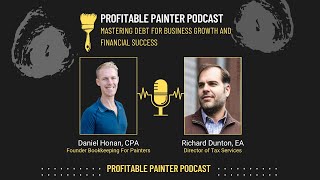
Daniel from Bookkeeping for Painters and tax director Richard break down good debt (mortgages, business loans) versus bad debt (credit cards, unnecessary purchases). They outline a five-step plan: stop accumulating debt, use the debt-snowball method, speed repayment with side income, rebuild credit strategically, then take on productive debt only when your business gross profit is three times your customer acquisition cost.
Chapters
Welcome to the Profitable Painter Podcast. The mission of this podcast is simple: to help you navigate the financial and tax aspects of starting, running, and scaling a professional painting business. From the brushes and ladders to the spreadsheets and balance sheets, we've got you covered. But before we dive in, a quick word of caution. While we strive to provide accurate and up-to-date financial and tax information, nothing you hear on this podcast should be considered as financial advice specifically for you or your business. We're here to share general knowledge and experiences, not to replace the tailored advice you get from a professional financial advisor or tax consultant. We strongly recommend you seeking individualized advice before making any significant financial decision.
This is Daniel, the founder of Bookkeeping for Painters, and this is Richard, tax director. You know, Daniel, I think especially around the time this podcast is being released, we are heading into a presidential election and it's on everyone's mind. And I think one of the big topics that always comes up is like the national debt and just, you know, how much money does this country owe to its creditors? Is it a good thing? Is it a bad thing? You know, I promise I'm not going to get into a political podcast. But, you know, that's not just on like the national level. It's also on a very personal level. And I thought maybe today we could talk a little bit about the difference between good debt and bad debt. You know, what is the right amount of debt? And if we find ourselves that, you know, in a situation where we have a lot of like bad debt or regressive debt, you know, what can we do to get ourselves out of that situation and start using it, you know, as a tool for us to build wealth? And then maybe, you know, the government can listen to the podcast and figure out their problems as well.
Yeah, yeah, $35 trillion in debt. Yes, definitely. And yeah, yeah, um, no, I'm excited to dive into the topic.
Yeah, no, I mean, hey, look, if we can help people make more money in their painting businesses and solve the world's problems, I I mean, two birds, one stone. Let's do it. Yeah. So, you know, I mentioned, you know, good debt versus bad debt. And I understand that there are different schools of thought on this. There are some very intelligent and successful financial advisors who will say that all debt is bad debt. They might feel that debt is simply too dangerous to be utilized properly. You know, I personally, I take a little bit more of a moderate viewpoint on that. I certainly agree that there is such a thing as bad debt, regressive debt that can make you broke. But I also believe that if used properly and carefully, debt can be a tool that helps us build wealth. And now, you know, when we kind of separate those out, you know, Bad debt is things like credit card debt, especially if it's high-interest-rate credit cards and the debt was used to purchase things that we don't really need, right? So, you know, a Hawaiian vacation with a 30% interest rate, that's not, that's not debt that's going to make you wealthy in the future. On the other hand, debt that allows us to buy a home, that's going to appreciate in value and more importantly, give us a place to raise our family and to live our life, that in my opinion can be good debt. So, you know, another example of good debt, you know, money that we use to fund and build our business, money that we borrow to buy a rental property that's going to generate us income. These are examples of good debt. But if we have credit card debt, if we have expensive auto loans, how do you know we need to get rid of this bad debt before we can start, you know, building on debt that's going to make us money? So I thought we could talk about maybe like 5 different steps in how to, how to work this. You know, number 1, if we've got bad debt, we don't want to get in the hole any further. Now, you know, some folks will say, okay, first thing we got to do is, is get out our scissors and do a little plastic surgery, right? We're going to cut up those credit cards. And if you need to do that, cut up the credit cards because we're going to put them on pause for a while. We might bring them back in the future once we get out of the hole. But at the very least, for now, we're going to put them on pause. If it helps to cut them up, do it. You can also go onto your online account and suspend the card for a temporary period. We don't want to make things worse. So we've, we've stopped the bleeding. We've, you know, triaged the situation and we're not going to make it any worse. And then we want to make sure that we're paying at a minimum our minimum payments on these cards. Why is that so important? Well, if you don't make the minimum payments each month, then the credit cards start to go into collections and it really impacts your credit score. And yes, I do think having a good credit score is important, and that is one of the goals in this is to, you know, rebuild that. So stop the spending. Make the minimum payments. And then the third aspect of this first step is to build that emergency fund. Uh, Dave Ramsey is very famous for encouraging emergency funds for good reason, and he usually recommends at least $1,000. Uh, I think that's a great place to start. If you can't do $1,000, start with $500. If you need a little bit more, Maybe we do $2,000 or $3,000, but having, you know, an emergency fund in savings will prevent us from heading back to credit in case of, you know, an unforeseen occurrence, right? The car gets a flat tire, you need that car to get to work, use your emergency fund instead of being tempted to go back to the credit cards. All right. So that's step 1, manage the debt you have and build that emergency fund. Step 2, we're going to want to start making some serious progress towards our debt. Uh, another great Dave Ramsey suggestion is the debt snowball concept. Uh, you've probably heard of it, but I'm going to go ahead and just reiterate it if you haven't. Uh, the idea behind the debt snowball is just like a real snowball, you start out small And as it starts rolling, it builds and builds and gains speed and momentum. So to apply that to your debts, you're going to list out all of the debts you have, the amount that you owe, and optionally the interest rate on them. Oh, and the minimum payment. I recommend listing them from smallest to largest amount. You're going to start with the smallest amount and you're going to put whatever extra money you have each month towards that small amount. Once that credit card is paid off, you're going to take its minimum payment plus your extra and you're going to move it to the next smallest amount. And once that card's paid off, you're going to move it to the third smallest amount. And by the time you get to that really big balance that you've been dreading, you're going to have so much momentum from this snowball that you'll be able to make short work of it. Now, some folks recommend, instead of listing them from smallest to largest amounts, that you list them from highest interest rate to lowest interest rate. And as an accountant, I totally understand the logic behind that. You're like, why pay more interest than you have to? Personally, I think, and, and this is what Dave Ramsey would recommend as well, the mental encouragement you get from paying off that small debt first is probably going to be more valuable to you than the few dollars you might save on paying off a highest interest rate first. Uh, this is kind of a behavioral issue, right? It's, it's more of, um, you know, a behavior thing than a math problem. So if we can encourage ourselves and get some of those quick wins right off the bat, that's going to help us to make sure that we continue the snowball because that's the ultimate goal, right? We need to see this thing through to the end. And so whatever help we can get from having some of those small, quick wins, those reasons to celebrate— and you should celebrate paying off a credit card. You know, maybe, maybe not anything too extravagant because we're trying to get out of debt. But, you know, pizza night, movie night, maybe, maybe something like that. Keep that mental encouragement going and get those debts knocked out. We've got a great spreadsheet that we use with our clients who are looking to get out of debt that helps track everything. And you put in the amount that you've got each month that you're able to pay. And it helps you see how many months it's going to take for you to get out of debt completely. So, you know, definitely recommend tracking it because, because what's that famous quote, Daniel? Things that are measured make progress.
Things that are measured are improved. Yeah.
Yeah. Okay. Thank you. Yeah, I love that. I love that quote. So, yeah, measuring your progress, you're going to see improvements. So that's the debt snowball. All right, step 3, let's take it up a notch. Uh, obviously the more money you can put towards the snowball, the faster you're going to get out of debt. So is it possible, at least temporarily, to create an additional revenue stream to help you get out of debt faster? Um, you're already working hard in your business. Uh, would it be possible to do something maybe on the weekends? Some folks have been successful in selling things around the house at garage sales, putting them up on eBay. You might take it to the next level and actually do like an Amazon reseller account where you're able to purchase things wholesale and sell them on eBay or Amazon at a profit. Some folks might spend a portion of their weekend driving for Uber or Lyft. Just to generate a little bit more income.
Any—
anything you could add to that snowball is going to, you know, increase your progress and get that debt knocked out that much quicker.
Another idea, Elias Disney, which is Walt Disney's dad. When he was a kid, he had Walt Disney do newspaper routes, pulled him out of school, had him do newspaper routes and earn money. For the family. Walt didn't get to keep any of the money. It would all go to the family to pay off debts. So that's another option. Pull your kids out of school and put them to work.
Well, I mean, and then look what it did for Walt.
I mean, yeah, right.
Like, along with the— yeah. I think it's fair to say that that, along with the other emotional and mental abuse that Walt suffered from his father, really helped him become the man he was and, uh, you know, create the happiest place without it.
Yeah, we wouldn't have Mickey Mouse without it. So it's a win.
Yeah, I mean, tortured artists are the most successful. So if you, if you want to abuse your children to help you get out of debt faster and, and That, that's Daniel's suggestion. But, but yeah, you know, maybe your spouse can help out or, or getting the family involved. And we've talked about hiring your kids in your business as a tax strategy. But I think that's, that might be something different. We'll edit that part out. All right. Once, once we've done what we can there. Okay. Now, now we're really making progress on the debt snowball. So what do you do now that you have gotten these, you know, credit cards paid off? Do we chop them up? Do we— do we never use them again? This is where I'm going to differ a little bit from like Dave Ramsey and some other financial gurus. I think it's important to go ahead and keep those credit cards, keep them open, but we're going to use them very strategically. We are going to have a few purchases each month, and we're gonna pay off those purchases immediately. The reason being is that we want to build our credit score. If we have a lot of credit card debt, our score is probably taking a hit. So showing and demonstrating that we can use credit responsibly, that we're gonna pay it off, is gonna help us build that score. And that's going to be really important so that when we turn around to use our credit to make money, we've got the ability to do so. What about credit card offers? Should we go and apply for new offers? Probably not. Having too much open credit can actually hurt our score. So having, you know, a handful of cards that we are comfortable with, and that we pay off every month is going to be using our credit responsibly. So when you go to the store and, man, inevitably any time you go to a department store, they're going to say, hey, would you like to save 10% by opening a new credit card? You know, the answer is probably going to be no thanks. I've got my credit managed because having too many open lines of credit is not good. All right. So we've We've paid off the debt, we've built our credit score. Now we're going to be able to utilize good debt for wealth building. This is what we talked about at the outset. Maybe we have determined that an influx of cash could really help us grow our business. Now I mentioned that we've determined that because it's, it's not an axiom where more money equals more profits. If you have things churning and things are set up right where extra money would help you put more trucks on the road, help you service more customers, help you increase your advertising, and you know that you're going to get a return on that investment, then a business loan for that purpose makes sense. But, you know, if we have problems in our business, just throwing cash at them is not going to be the answer. So, you know, before you go out and you get that SBA loan, make sure that you've got a good use for that money. So that's like throwing gasoline on a fire, right? That could be one. Yeah.
I'm sorry. This is just a point that I see happen a lot where folks get more and more debt on the business. And they're not solving the underlying profitability issue. We had, we did an episode on gross profit to CAC ratio, which your gross profit to CAC ratio should be like a 3 to 1 ratio. So meaning like your gross profit as a percentage of revenue, if it's like at 45%, let's say your customer acquisition cost should be 15% or less. Customer acquisition costs again. As a recap, is marketing costs plus sales costs.
So it should—
your customer acquisition cost should be 1/3 of your gross profit. So if you are not hitting that, that gross, that gross profit to CAC ratio, 3 to 1 or better, you know, 3 to 1, maybe it's 4 to 1. If it's not 3 to 1 or better, then you probably shouldn't be getting a bunch of debt to fill in the gaps with your cash because there's there's something wrong with your business model. You're not pricing enough, you're not efficient enough, or both. And so adding more debt on top of that is not a good idea. You need to fix the underlying profitability business model of, of what's going on in your business.
Yeah, I appreciate that, Daniel. That's a really good point. Yeah, more money is not always the solution to the problem. Some other options for utilizing good debt. How about rental real estate? You know, real estate. Well, again, the right kind of real estate in the right area. We, we're going to research this. We're going to find a property that is appreciating in value and that can command a good rent. And then we can use some of our cash for a down payment and get a mortgage to help us leverage a little bit of cash into a very valuable property that's going to generate more cash than it costs to own. Right. So our, our renters are paying off our mortgage. They're paying off the expenses the whole time the property is appreciating. That's a wonderful use of, of debt for building wealth. Anyway, is there any, anything wrong with using debt to, you know, have a home? To raise your family or to have a modest car, right? You need a car to get back and forth to work. You want to be able to live your life. And there's nothing wrong with that, right? Like, just being smart about it, you know, not, you know, settling for super high interest rates or buying way more car than you need, buying way more house than you need. You've heard the expression of being house poor, right? They look like they're a millionaire from the road, but you know, inside they really don't have anything. You know, these are all these can all be good uses of debt.
So just kind of add one thing on, on the buying a home right now, it seems like, and I'm not an expert on this, FYI, but just looking at the situation with the housing prices, they seem high. Not an expert, but, uh, they seem like they're pretty high right now. And, uh, I was— there's this video I watched from Grant Cardone, who presumably is a real estate expert. He's made a lot of money in it. So he was saying, you know, all the baby boomers, they're going to be dying off the next 30 years, and so there's going to be a whole bunch of supply coming into the market, uh, And, and the, the birth rate's kind of low right now in the United States, so there's not a lot of people filling in, coming in behind the baby boomers. So the, the population isn't really growing substantially. So you got a bunch of people dying, not a lot of people, you know, filling those shoes. So there should be a lot of supply coming into the, the housing market in the coming decades. So prices should be coming down. So with the high interest rates and the high prices going on right now, probably not the best time to buy if you, if you can hold off. Um, and that's coming from someone who's not super, you know, I'm not like a super expert on this, uh, topic, but that just seems like— I'm open to open, uh, changing my mind on this topic, but that's what it just seems like from my perspective.
Yeah, there's definitely been a supply issue. You know, I've, I've heard that, that, that it is changing, right? Like, like it used to for the longest time, the sellers would have all the power. The buyers are starting to get more power now. Things are definitely changing. Prices are coming down. I think we're probably going to see interest rates start to lower in the next few years. But again, we're not, uh, we're, we're not financial advisors here, uh, but yeah, I mean, buy a home, like, like have a, have a canvas for, for living your life and, and a house that you like, but just, you know, be smart about it, right? We, we, we don't all need a McMansion, uh, to be happy, uh, so just kind of in conclusion, um, it's, you know, it's, it's not it's not debt itself that hurts us. It's regressive debt. It's credit card debt. It's debt for things that we don't really need that can really put us into poverty and keep us there if we're not careful. There's a great quote that I thought was hilarious. It says, uh, if you think nobody cares about you, just try missing a few car payments. And all of a sudden your phone will be ringing off the hook, right? Yeah. That's the kind of debt that gets us down. Productive debt that builds us wealth is a super powerful and useful tool. But like any powerful tool, it can be dangerous if we're not responsible with it. So, you know, everyone's results may vary. We may have a personality where cutting up all of our credit cards and never using debt again is really the best thing for us. And I respect that, you know, knowing yourself and what you need to do. But I think for a lot of people, you can find a happy medium there.
Well said.
So, yeah. Well, thank you. I was going to say, you know, for the folks listening, if you have suggestions on getting out of debt or thoughts on, you know, how you use debt in your business and you'd like to share them with us, you can go to our Facebook group, Grow Your Painting Business. We'd love to hear your comments and your thoughts, and you can also make suggestions for new episodes. So if you didn't enjoy this one, let me know what you'd like— what you would like to hear.
All right, with that, we'll see you next week.
More from Daniel







What’s REALLY Holding Your Painting Business Back? (Find Your Bottleneck in 5 Minutes)



