Maximize Your Advertising Budget for Optimal Client Growth in Painting with Matt Thibeau
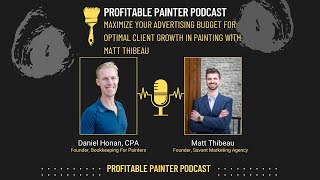
Matt Thibeau, owner of Savant Marketing Agency, explains how painters should structure Facebook and Google ads for growth. He says 50% of Facebook leads should get estimates and 30% of those should close, yielding roughly 10-15% overall conversion. He warns against single-creative campaigns and recommends frequent refreshes using before-and-after photos or selfie-style videos.
Chapters
This is Daniel, the founder of Bookkeeping for Painters, and today I'm here with Matt Thiebaud. Matt Thiebaud is the owner and founder of Savant Marketing Agency, a lead generation company that's focused on helping residential painters become a household name and fill their calendars with ideal prospects using social media advertising. Welcome to the podcast, Matt.
Hey Daniel, how's it going? Thanks for having me. I'm excited to chat with you.
Yeah, I'm super excited to jump into today's topic. Before we get into the core of like the importance of marketing, your marketing funnel, Facebook ads, all that good stuff, could you kind of give the listeners a peek into your background and what made you do what you do today?
Yeah, for sure. Yeah. So I mean, grew up like always being interested in marketing. My grandfather, I'm Italian, so we call him Nono, but he was a contractor. So from like a really young age, I was always like exposed to like home renovations and that, but didn't really do it myself or get into it until when I was on a mountain biking trip with my dad. He introduced me to one of his good friends and his name was Steve, and I never met someone who was like super successful before. But when I was on this mountain biking trip, I met Steve and I just asked him because I just noticed like he had a nice car. He just like spoke differently. He just carried himself differently. and, uh, I just asked him, I said, what do you do? And he's like, oh, I'm a marketing consultant. Like, I work with companies and we help them grow. I was like, oh, like, you know, I'm, I'm really interested in marketing. And I had like a little bit of like little businesses here and there that were not really serious or anything like that. And I was like, you know, I'd love to work with you. And he was like, okay, I mean, sure. And so I just said like, I'll work for you for free. Like, I just wanna be around you and learn from you. Um, and so Steve was actually doing marketing for industrial, like, construction-type companies. And so I had the background with my nono and kind of understanding some of that too. So I worked with him for a year, um, just learned like a ton. And then at the end of that year there, he was kind of like, hey man, like, you can go off and do your own thing. Like, I think that, like, this is really what you want to do, you know. So I went off on my own, and that's kind of the start of it. And because I was working with Steve and the construction world was kind of what I understood at the time anyway. I just kind of ran with it and we always got really good results with construction. So here and there I tried other niches and other types of clients, but we always just came back to construction and painting specifically because it just— we just do it the best.
That's awesome. So you— I love your story because you work for free just to learn the trade, the marketing side of things, and, uh, And to really build that expertise with someone who knew, knew what they were doing. So that's, and you put a year in just grinding it. That's, that's crazy.
And I was just excited to work with him because I think like, I just wanted to be around him. And when you see someone doing what you want to do, you're like, okay, this is, this is it. You know, this is what I want to do. And so yeah, it was a good experience for sure.
Awesome.
Cool.
Well, let's, let's, uh, dig into the core of the topic we were talking about today, which is, you know, why does marketing matter? I think everyone probably has like an idea, like, yeah, for sure marketing matters. Um, but let's dig into like the importance of creating a marketing funnel. So what, first of all, what is a marketing funnel and why should we care?
Yeah, for sure. Yeah. So I would say that, um, a marketing funnel is basically like, if you picture what a funnel looks like, right, it's kind of like big at the top and then it'll slowly kind of, you know, get smaller at the bottom. And so basically what a marketing funnel is, is a process that you can use to basically cast a wide net to get as many people as possible to raise their hand and say, hey, I'm kind of interested in learning more about this painting thing that you do, and then bring them through a process to the point where they finally receive an estimate, and then you can close them, like, close them as a client to work with, right? Um, I would say that like marketing really matters too, because I think that, you know, for a lot of painters, maybe they, they're at a point where like they're a one-man show, or maybe they got like one or two helpers type thing, like a pretty small operation. And when you're running a small operation like that, you can kind of like get by by just getting along with like word of mouth and these types of things. But as soon as you start trying to get enough scale, or you're trying to really like position your company as like maybe, you know, a higher-end type of painter because you're sick and tired of working with bad clients, then that's where marketing can really come in, right? And so, um, that's really the, the importance of a marketing funnel, I would say, is that it can also just— it can allow for scale, but then also what it can do is it can get you to a position too where you can kind of be a little bit choosy as well because I think a lot of painters get themselves into the trap of like, if they're hurting for work and then a good job comes by, they're in like scarcity mode. And then people can really feel that in their energy when they're going in for the pitch. Whereas if you have a really great marketing funnel in place, then you have a lot of appointments and leads coming through so that you can actually be like, you know what, for this estimate, I'm going to charge a little bit more and just see what happens. And that's something that I think is like a game changer for a lot of painters.
Yeah, definitely. When you, you don't feel the pressure that you absolutely have to close this to put, you know, food on the table, you can, you know, make sure that your pricing is dialed in so you actually make money. Because I know a lot of folks, uh, fall into the trap of just pricing too low, and then they, they literally just don't make any money, which is not good. You know, being super busy and not making money is not good. So having, having the luxury of having a marketing system behind you that gives you plenty of leads so you can have a 30 or 40% close rate and be perfectly okay because you have the margins built in your pricing. That makes complete sense.
The other thing too is having a great marketing funnel can actually help you on the operational side because I can't tell you how many times too I'll be talking to a painter and then we're talking about marketing and they're like, Yeah, you know, I also do handyman work, like I do a little bit of flooring here and there and like that kind of stuff. And I'm like, but if you really could choose, what would you want to be taking on? They're like, oh, just painting. Like, I just want to do painting. I'm like, so why are you doing all this other stuff? And they're like, because I just need to fill the gaps because like I don't want to lose my guys and I need to keep the calendar full. And so what a lot of painters don't realize though is by doing that, you're trying to keep the calendar full. So you're booking out like these kind of random, weird small jobs and like side jobs, like handyman stuff. But it's actually overwhelming some of your operations too, because now your guys have to scramble and like figure out these new systems and you're taking on like strange jobs that are maybe a little bit like not quite what you want. So it delays you. I've seen a lot of times where people will do handyman work and this stuff to supplement the income, but that actually starts hurting the painting side of things and like creating more problems. So, you know, when you're in the situation where you can just get painting jobs too, then that can mitigate that as well.
That is an excellent point. Like folks, you know, chasing, chasing squirrels everywhere. Like if you just focus on one thing, you know, painting or even like a sub-niche within painting, like just doing cabinet refinishing, for example. Yeah. You can have a whole business around that. There are businesses out there that do just cabinet refinishing and they're doing multimillions. In, in one, one city. Which reminds me, I was just talking to somebody last week about this. They focus right now, their business is cabinet refinishing, and they're doing like $200,000 or $300,000 a year. And they were like, I think we're gonna have to add more services because there's not a market in— they're living in a very big city. So there's no reason why they couldn't stop there, why they need to stop at 300. They did not saturate the market at $300,000 per year, but they were actually truly thinking that they had. So I think people really underestimate the market where they think, oh, I have to start doing interior work even though I want to focus on exterior because I've— the market's saturated and they're doing like a few hundred thousand dollars a year in Cincinnati or some something, you know, right, uh, large, uh, city. So, um, that's an excellent point. Like really focusing in on your marketing will help your production because you can get really good at cabinet refinishing or whatever you're focusing on. And it just makes things so much easier to sell because you become known as like the cabinet refinishing person. And then your production gets so dialed in because you're just doing cabinet refinishing and your, your, your team isn't scrambling around like you said. trying to figure out how to do this other random job. So it's, it is like when people find that niche, it's just, it's everything starts clicking like magic.
100%.
So I know a lot of folks when they get to, um, when they're starting up and they are, you know, getting a lot of word of mouth and they want to, maybe they're doing $300,000, maybe $500,000, but they really want to grow their business. They start looking at Facebook ads. And Google Ads, uh, what, what should they, what should they do? Should they do Facebook Ads? Should they Google, do Google Ads? What's the difference? What, what can you provide in guidance on for folks like that?
For sure. So yeah, so, um, I'll kind of break down the difference between Google and Facebook so someone can understand it mentally. So Facebook is definitely like a, um, it's a, it's a lower learning curve. So like I would recommend if someone's like, if I'm going to do this myself, if they're trying to figure that out, like Facebook is definitely like a much less of a learning curve than doing Google Ads. It also tends to be a little bit cheaper too because there's a lot more competition on Google because of the, of how qualified those leads are. I'll talk about that in just a sec. So Facebook Ads, you don't need a website to run Facebook ads because you could run it straight to like lead forms or like messages and stuff. So you don't even need a website to do it. The leads on Facebook are going to be cheaper. The, the kind of the cons of Facebook is that people who are like on Facebook and seeing those ads, they haven't necessarily asked to actually see those ads. So you will find that the quality of Facebook leads compared to Google is, is not going to be like on par with Google. So like Google leads are going to be very qualified most of the time because people are searching in through Google like best painter near me. They have something called buyer intent. So they're actually like looking for someone to solve a problem for them. Whereas on Facebook, you don't get that as much. And so oftentimes, you know, painters will be like, oh, like Facebook just brings a lot of tire kickers. They're not necessarily tire kickers though. They're actually just people who are a little bit earlier in the buying cycle. So when they're comparing that to Google, people at the— in coming from Google, they've done all the research. Like now they've done everything, they've looked at all the, like all the details and now they're just like, who am I hiring to do this? So they're at the bottom of the funnel. So we would call them hot leads, you know, Facebook, you get that as well depending too on like your content strategy and we'll talk about that in a sec. But Facebook, they're typically earlier in the buying cycle. So you need to nurture them a little bit more and have a better, appointment setting process to bring them through that sales process. Whereas Google, they're going to be a lot more qualified. Now the issue with Google though is that there's a lot more competition on there because every painter wants those Google leads. And then the second is that because of that, they're going to be more expensive. And so if someone's like looking to start off with advertising, they've never done it before, I would say you should probably start with Facebook because your odds of success are much higher, whereas on Google it's going to take longer to crack that puzzle. If you do crack it, then the lead flow— like, the leads and the lead flow you're going to get, those are really great leads, but it's difficult to crack it because everyone wants to crack it and it's expensive to crack and figure it out, you know what I mean? So that's kind of the breakdown, the difference there.
Yeah, so Google Google Ads are kind of the long-term play, Facebook Ads, if you, you know, getting leads now. And then I like the description of the buying cycle. Like, and if you just, if I just reflect on the way I purchase things, if I see, you know, an ad on Facebook, it like, you know, of something that's, oh yeah, I kind of want, to get my house painted, but I haven't really looked into it, you know, seriously yet. Like, I haven't been Googling painting companies, but I'll— I guess, uh, we kind of do need some painting, so then this company looks cool, so I'll go ahead and sign up for, you know, this free estimate. So it's kind of like there's probably some sort of need there, but their pain isn't— the pain threshold isn't super high. Like, it's not like, oh, we really need to get our house painted right now. Because by the time you get to that point, you're searching on Google and like trying to find somebody like, I need to handle this now before the holidays or whatever the case is. So that makes sense. So it's, with that said, like, what is, what's a good lead? So when you have those Facebook ads come in or Facebook lead or Facebook ad leads come in, What is a good lead-to-prospect conversion ratio? You know, what percentage ballpark should folks be, you know, converting into actual scheduled estimates? You know, because like for the Google, like you said, the Google search is probably super high percentage are going to schedule an estimate, you know, probably 80, 90% or something, but the Facebook, uh, the Facebook ad leads are probably not going to be converting to estimates, um, as, as easily. What's a good, like, target? Do you have, like, a good target percentage for that?
Yeah, that's a great question. So with our clients, we have, like, a minimum baseline that we want to hit, like KPIs, key performance indicator. So we have, like, a minimum that we want them to hit. Any more than that is, like, you're doing above average. So what we look for is we want to see a minimum of 50% of the leads receive an estimate. So 50% of them should receive an estimate that in— what we recommend is an in-person estimate, you know, so this isn't like you're emailing off the estimate. With Facebook leads, if you can meet with them in person, very, very good. That's going to help like a lot. And then of those estimates, we want to see at least 30% close. So that's kind of like the general baseline. Um, obviously it depends on like a couple variables, but you know, if you're good at sales, then that 30% is going to be a lot higher. And if you're really good at appointment setting, it would be more of like 60 to 70% of those receive an estimate. But those are kind of like the baseline numbers.
Yeah, so basically for every, uh, you should be converting your Facebook ads leads about 15% of them to customers approximately, you know, maybe a little bit lower because maybe some people cancel their appointments or something. But so 10 to 15%. So basically, if you have, you know, 100 Facebook ad leads, you should be getting about 10 new customers. Yeah, 10 to 15.
That would, yeah, that would be like, that would be average. Yeah. Cool. Yeah.
So that's, that's good to know. Cause you know, having the expectation of how many, cause if you're used to people searching you on Google, yeah. Then versus Facebook, it's just a whole different thing.
Yeah. Like if, if someone comes to us and they're like only done, you know, referrals and they're only like a referral-based business and they're like, I want to start advertising. That's kind of like what we preface it with is I'll let them know, I'll say like, hey, FYI, like this is kind of, you know, 50% of the leads that come through like are not even going to receive an estimate. The other 50% will. So in their mind, sometimes like when we're doing our review, they'll be like a little bit shocked of how, you know, sometimes they'll get a call from someone who will be like, oh yeah, like I'm just kind of curious and blah, blah, blah, you know. And so sometimes for them, like that's like a really big deal, but The thing is, with Facebook ads, you just need to know the numbers. It's a numbers game and you just need to follow the process and have like a good sales process in place and a great CRM. And then like, exactly, you're getting like 15 to 18% of those leads closed.
Mm-hmm. Yeah, that makes sense. So what are some common, like, Facebook ad mistakes?
Yeah, yeah. So some common mistakes that a lot of, um, painting contractors will make, a couple different mistakes. So I would say the first mistake is that they'll just take like one ad, like they'll Photoshop one picture on like Canva or something like that, put up that ad and just like run that and, and that's it. And they'll just think like, I made the ad, I'm gonna set it and forget it. There's kind of this like weird belief for some reason that like marketing agencies just set it and forget it. Like on Facebook, that is like by far the opposite of what you want to do. So on Facebook, you want to constantly be renewing those ads and adding like new content because the way that the Facebook algorithm works is every single time you add like some new creative, it's called like an image or something new there, Facebook kind of wants to give you a bit of a dopamine hit. Like when you create a new piece of content and you put that out, they want you to get a result because they want you to keep advertising. And so it will do what it can with that new piece of content to hit that to people it thinks are most likely that will convert. So number one mistake is like just making one ad and then you set that and then you just run it like for months on end, you know? And I'll tell you right now, like ads that look like ads work like they don't work because if you're like Photoshopping like some stock image or something like that and then you're putting like 10% off, you know, like those type, those types of that, that doesn't really work anymore. Stuff like stock images doesn't work at all. People want to see really original photos. So if you can show like original pictures of your work, like before and after pictures, or you could show some pictures of like your crew working, like action shots we call them. Those work really well because people want to see who is behind the scenes of this company. And like right now, what's working the absolute best on Facebook are these like video selfies where you just take your phone, you just say like, hey, my name is Daniel. Like, this is what we do. You know, right now we're helping homeowners in this area. Like, I'd love to help you. You can just request a quote. It's the reason it's working is just because people want to see like another person when they connect with another person, not like a faceless company, you know? So those are some mistakes I would say, and that's kind of what to do instead. I would say that those are like kind of the main ones.
That makes sense. So basically switch out your creative because you take advantage of Facebook, you know, rewarding you for, you know, putting money, you know, giving them money. So they want to give you a reward for that. And then your creative needs to be engaging and not like just some stock photo. It needs to be ideally a selfie, like where you're at a job site, like showing folks your work. It's really working right now, it sounds like.
Yeah, super engaging. And you want to show like your face and who you are behind the scenes. People love that. Another thing too is like sometimes— so that's what we were talking about there is like creative fatigue, right? So someone runs one picture forever, So that would be creative fatigue is like one of the mistakes. The other mistake would be audience fatigue. So sometimes we get clients who say like, I only want to target like this very specific area, like 100,000 people or something. Well, eventually what's going to happen is that you're just going to run out of people who would be interested in the service. So you might run that ad for a bit and then like get some bites and like some clients from that. But eventually what's going to happen is you're going to run out of a pool of people who could be interested in painting And then you're just going to see that you're going to be spending a lot more per lead. So the other mistake is like you want to make sure that you're targeting the— a decent enough size of people that can actually sustain like 30 leads a month, 40 leads a month, or something like that. Because if you're doing too small, then you won't be able to actually sustain what your business needs, you know.
So what would be a— if you're looking to get say 40 leads a month, which would be around 6 jobs using the 15%. Um, what sort of audience size should they be like?
I would say like, I, yeah, I would say like ideally a million, like a million, uh, people, like population. Um, 500, like on the lower end, that's kind of the range that I recommend.
Okay.
And then if you want to do like a super sneaky kind of ninja move, and you want to really make sure that Facebook, you know, is targeting the right type of people, you could actually go into your CRM and get a list of all the people that you've worked with that have been like great clients, and you can upload that list to Facebook and then say, get me more people like this. So then Facebook will actually be like, okay, now I have the data, I'm going to go find more people like this. So that is a really cool trick that You know, is like basically giving Facebook the data and saying like, here you go.
That's awesome. So that's called a lookalike audience, right?
Yeah, exactly.
So download your current customer list, the folks that you love working with, and upload on Facebook to create a lookalike audience. And Facebook does its magic in the backend to find you more folks like that. That's, yeah, that's a good, that's a good one.
Okay.
And from what I understand, a lot of A lot of the, uh, the magic happens with the Facebook algorithms, like, you know, the lookalike audience, but also, you know, when you put your, your ad in there, you know, Facebook is looking for, uh, folks that will connect with that ad. So, you know, cause they want you to, to keep spending money on, you know, on their platform. So a lot of that work is, is done on the backend with those algorithms. From what I understand.
Yeah, exactly. Um, like a surefire thing too, that if you see some of your ads are declining, the way the algorithm works is you could literally duplicate one of your ads and relaunch it, and that will actually give it a little bit of a boost because it's a new ad, and Facebook will be like, oh, this is a new ad, like they're doing something new, let's give them a little reward, and it will actually try like a little bit harder to find So that's something you could do that will give it like a little bit of a boost. If it doesn't give it a boost, then that means that you have some deeper issues of like the creative or the audience or some of that stuff. Mm-hmm.
Yeah.
Cool.
That's interesting. All right. Uh, so we talked about Facebook ads, some common mistakes and what to do instead. What about Google Ads? If we're going for the long-term play, uh, what are some common mistakes?
Yeah, so for Google Ads, if you're going to run Google Ads, you need to run them to what I call, uh, what's called a landing page. So if you're going to run ads on Google, you don't want to send it to a generic website that has like a bunch of different options for someone to go. So like, you know, there's social media links and like all these different decisions to make on this site. If you're going to spend money to send people somewhere like a page, you want to make sure it's called— it's a landing page. And what a landing page is, is just a really simple one-page site. It could be like an extension of your existing website, but it's just one page. And the only thing to do on there is request an estimate. So you would want to show like really specific pictures to what you're running ads for on Google. So let's say you're running ads on Google for like exterior painting, then you would definitely want to show like on that landing page pictures of exterior painting jobs, like before and after pictures and you know, testimonials of people saying like, hey, like they did the exterior of my home. Because the landing page, you're going to see it's going to get— it's more specific and there's less decisions to make on it. So the less decisions that someone has to make, the more likely they are to actually make a decision. So using a landing page is like a super powerful way to just get better results on Google Ads if you're running them to just a generic website. So that's like one thing that a lot of people make the mistake of is just running it to a generic site. The other mistake that a lot of people will make is they'll have something called a negative word list. So they'll have like a bajillion keywords of like all these painting keywords, but Google also has a negative word list, which is basically a list of words that just say to Google like, hey, don't show my ads for these words, right? So these would be words like DIY or like affordable or like, you know, for painting, like if someone types in Mona Lisa painting, that could trigger your ads if you don't have the term Mona Lisa in your negative word list, right? So now you're spending all this money on like BS clicks for like Mona Lisa or like, you know, house painter jobs, like someone looking to like for a job, etc. So you want to make sure that all those negative word lists are filled up with all these words that you don't want to spend money on because oftentimes we'll go in for an audit in someone's Google account and we just see that they're spending all of this money on like just a ton of BS clicks, you know. So that's a big one for sure. That's a big one. And then I would say the last one, the last mistake is not having something called click fraud protection on the account. So if you don't know what click fraud is, is basically Google Ads, you're charged every single time that someone clicks on the ad. And so theoretically, that means that someone could just like sit down and just click your ad all day every day and just basically spend money on your account and they're not even a real prospect, obviously. Or it could be a competitor, it could be like bot traffic. And now with AI, like there's even like negative SEO agencies, unfortunately, like people who hire agencies to like sabotage someone. All this crap. So like, oh my gosh, yeah, it's completely terrible. So basically what you want to make sure is you have something called click fraud protection on the Google Ads account. What this is, is a software that can actually detect these clicks within a certain time frame from an IP address and it'll see like, wow, this IP address has clicked this ad like this many times within an hour, that's suspicious, and it'll actually block the IP address. It'll do the same for like bots and AI. So it's a very powerful tool to have and it will save you thousands of dollars just by having this tool on your Google Ads account. Now Google will say like, oh yeah, we have click fraud figured out, like, you know, our AI is able to detect that and it does it. But I've tested between their AI and then using these tools and I find that the tools still work much, much better. So there's a bunch of different click fraud tools, like one's called ClickSeize, another one called like PPC Shield. There's a bunch. So if you just Google like click fraud tool, you'll see them there. But if you're going to run Google Ads, you definitely need to use that because you're going to waste a lot of money on a lot of BS if you don't.
That's great advice. I definitely see folks just kind of putting paying Google every month for Google Ads, but they're not going in and they don't have click fraud. They're not actively managing it. So you're probably just writing Google a check every month for no reason, just paying them money, which is terrible, but it's probably the truth for a lot of folks. I know I've fell victim to this as well, just like setting up some Google Ads I did the first mistake setting up Google Ads to the website, not having a landing page where, you know, you set it to your website. It's just like, what are they supposed to do? They just— there's all these links to click on. Yeah, but you probably want them to schedule an estimate in this case for your painting business. So having a landing page that, you know, has a bunch of social proof, and then here's where you click to schedule an estimate with us. And then, um, And then having those negative keywords so you're not getting— I've had this happen too. I've made all these mistakes having people reach out, reaching out to you for a job, you know, but it's like, it's not what we're trying to do there. And then the click fraud thing. Yeah. So I didn't realize that there's negative SEO companies that are like, you hire them to take down your competitor.
Yeah, I've seen it for sure. We had a client who told us, who told us, he was like, yeah, I was like targeted by a negative SEO company. And he's like, it was because it was like, like a competitor or something. And like we did an audit on, we're not an SEO agency. So we did like an audit on it. We using like an SEO tool though. And we could see that he was hit with like a bunch of like really bad backlinks. And then all of his Google ads were just like hit, we looked at the IP address that was hit from and it was all coming from like Finland. Yeah, it was not good. So anyway, it's crazy world out there. Wow. Yeah.
All right. So definitely look into the click fraud stuff so you can protect yourself from that. Okay, cool. Awesome. Well, this was, this was really, I learned a lot from, from this. Matt, I really appreciate you sharing your knowledge on Facebook ads, Google ads. And, uh, the importance of a marketing funnel. Um, where else can folks learn more about what you do?
Yeah, they can follow me on Facebook, um, Matt Thibault. I also have a YouTube channel, Matt Thibault, as well. And then if you want to check out our site and like speak to us or just check out, you know, our content and community and podcasts, just go to savantmarketingagency.com and you can check that out.
Savantagency.com. So I'll include the link in the, uh, show notes. I really appreciate your time today, Matt. Uh, any last thoughts to the audience before I let you go today?
No, I think we covered everything pretty good. Just thanks a lot for having me on the show, man.
Absolutely. Have a good one.
Cheers.
More from Daniel







What’s REALLY Holding Your Painting Business Back? (Find Your Bottleneck in 5 Minutes)



