Paint, Profit, and People: The Growth Formula
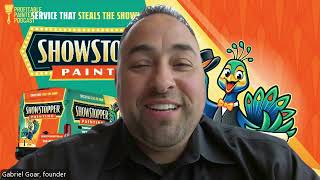
Gabriel Gore built a Virginia painting company from zero experience in 2006 to $4.6 million revenue by enforcing strict processes, replacing staff who won't scale, and charging 30-50% above competitors through value-stacking guarantees. He runs 13 full-time employees, 65 subcontractors across four locations, and targets $6 million with a 14% net profit margin.
Chapters
Welcome to the Profitable Painter Podcast. The mission of this podcast is simple: to help you navigate the financial and tax aspects of starting, running, and scaling a professional painting business. From the brushes and ladders to the spreadsheets and balance sheets, we've got you covered. But before we dive in, a quick word of caution. While we strive to provide accurate and up-to-date financial and tax information, nothing you hear on this podcast should be considered as financial advice specifically for you or your business. We're here to share general knowledge and experiences, not to replace the tailored advice. Welcome to the Profitable Painter Podcast, the show where painting contractors learn how to boost profits, cut taxes, and build a business that works for them. I'm your host, Daniel Honan, CPA and former painting business owner, and your guide to mastering the numbers that drive success. So let's dive in and make your business more profitable one episode at a time. Today I'm super excited to have Gabriel Gore here. He has an amazing business up in Virginia and he's here today today to discuss that. Welcome to the podcast, Gabriel. How's it going?
Going great, Daniel, man. Thank you so much for having me on here. Really appreciate it. And, uh, just, uh, just thankful to be here and be able to tell our story and talk with you. It's an honor.
Yes, I'm excited. I know you got some big things going up there, and I'd love to dive in. And, uh, if you— just to give the audience context to where you're coming from, if you could just talk about how did you get started in the painting industry, what's been your— what's been your journey, and what have been some major milestones along the way?
Yeah, you'll— you'll probably— because I like to talk, I ramble on, so if, uh, if you need to cut me short, feel free to cut me short. And if you need— you'll probably need to remind me of those follow-up questions too. But I love telling, uh, how we started because I think that, um, for, for the most part, um Everybody in our industry, most of them start around the same type of way. Mine might have a little tweak here or there, but we're all looking for some freedom and to be able to do things the way that we see fit. So to start with mine, I was working at my church, worked there for 4 years, and the pastor said to me one day, he said, hey, we need to take a little bit of a break here. And the church wasn't financially doing the best. And so I said, no problem. He said, how about we go a year, and at the end of the year you come back and we'll see if this is something that we can continue to do. And so then he asked me, sitting in his office, he said, what are you gonna do for the year? And I said, I don't know, I'll start a painting company. And that's literally how it started. He chuckled, my youth pastor chuckled when he first heard about it, my old youth pastor. He said, you don't even like painting when we have to paint around the church and you're gonna start a painting company? I really didn't, uh, what it came down to was I didn't really, uh, want to go somewhere and have somebody pour investment and time into me teaching me something, uh, because I was certain that I was going to go back and work for the church at the end of that year. And that didn't end up happening. And so we're in our 19th year right now, and I've been doing it ever since. So I had no past experience. I'd never done anything professionally. When I started the company, I didn't even know there was different size of roller naps. So it was very— in fact, I remember the day I was actually contracted to do some painting at the church, and a lady came in. I was painting cinder block. I was painting each line around the cinder block because my roller cover wouldn't go into the divot in there where the mortar lines are. And she came in, she said, you know, they sell different size roller naps for that. So I was educated, uh, by different pieces. A lot of, a lot of Sherwin-Williams, a lot of time sitting inside of a Sherwin-Williams asking the business owner or the, uh, the managers, uh, what goes where, how to do it, listening to other contractors. But it was very much so like, hey man, I'm gonna, I'm gonna start this and we'll see what happens. I passed out, uh, 500 flyers. Got my first job from a lady named Lydia, and she gave me $860 to paint her living room and a hallway and a bedroom. And I thought that I was on the top of the world, man. It was quite crazy. It was a lot of money compared to what I was getting paid at the church. And she gave me a 50% deposit. So that's how I went and bought my first paintbrush and roller handle. I didn't buy any tools until I had my first job.
That's awesome. So what's the timeline here? When did you get started?
Yeah, so we started the company in 2006, and, um, and then that's all, that's all I've done ever since. We never got into any other thing besides, uh, painting. I know when people start to hit a certain milestone, they start to get into other stuff. We've always just wanted to stick with just painting. And, uh, so 2006 is when all this all this went down. And, um, we've been growing every year since. We've never— we've had 2 plateau years where we had the, uh, a fractional increase, but we've never had a down year. And just try to do something new every single year and, uh, and just keep on, keep on grinding it out. So it's been, it's been, it's been a fun journey, and I really enjoy, uh, the painting industry. I mean, it has its things where it's like, man, that's a little challenging to get over, but it's a, uh It's a great industry to be in with a lot of need. And so it's fun. And if it encourages anybody listening to this podcast, like, you don't have to have a ton of experience. You don't have to be the star player on a team right now and then go start your own. You could literally do this from scratch. And nowadays there's so many easy ways to advertise that, you know, it would— it's a lot, in my opinion, it's a lot easier to start a painting company now than it was, uh, almost 20 years ago. So go get it. If you're thinking about it, go, just go do it. It's a great time. It gives you great freedom and, and, um, um, uh, to be able to do what you want to for yourself or for your family, all that kind of stuff. And you know, Daniel, you, you did one.
Yeah, absolutely. And I, I love, I love the story. And 20, almost 20 years at this point And you basically started with no knowledge. You're just starting from scratch, as you said. So what does it look like now? Like, where are you at now almost 20 years in? Like revenue, locations, team, what does that look like?
Yeah, so currently we have 3 locations. We started in Virginia Beach and now our office is in Norfolk. So those city, those cities touch each other. Probably need to cut that part out, Daniel. I just dropped the S-bomb there. Yeah. Um, both cities touch each other. And so, uh, Norfolk, and then, uh, about 4 or 5 years ago, we started our Williamsburg location. And at the beginning of this year, we started Richmond. Uh, Richmond was much slower of a start. We've actually done a little bit of pullback there, uh, to be able to relaunch again. And we've just learned that going into a new market The first two markets were very similar and it was very easy to kind of mimic what we do there. We get into the third market, it's about an hour and 45 minutes away from the first market and about an hour from the second market, and it's completely different. The competition is different. A lot of national franchises in that Richmond market that aren't present in the other two markets. And so advertising and different things that we do we need to tweak differently. It's not hitting the same way that it was. So anybody who's looking to expand into different markets, take your location, maybe do 2, 3, 4, 5 of them, just really look at it and go in it very strategically and make sure that you got enough money to do it. But it's a— getting that third one up was much harder than the second, and I was under the impression that it was going to be easier. Because your systems and processes are already dialed in. And then to find out that that third one was harder because of other dynamics that I didn't anticipate. So always a learning curve there. We currently have 13 full-time employees. It's mainly office staff and management staff. We run a hub-and-spoke type of model. So all of our calls come into our hub, and then it's distributed from there to each one of the locations. As far as like the estimates and stuff go, each location has a manager that manages that location, then they have service team members that service the job. So they're the managers going out to the projects, making sure everything looks good and we're doing exactly what we told the clients and all that kind of stuff. And then we have a— we're a subcontractor model. So every, every, all the actual labor is being subcontracted out and then under extreme management from our team who's constantly on the jobs, checking on those and making sure that the client's happy. And, and that's really the balance that we have found with, with the subcontractor model is making sure that you have somebody there that is taking care of the client and the contractor's not the one trying to do all that. We also schedule everything. We collect the payments. All of that kind of stuff. So, um, we don't even want our subs talking to the clients. We'll talk to the clients. We just want the subs there to do the work. So we've got— our last count was like 65 individual, um, painters that actually go out and, uh, do the painting on these different, um, teams. Um, as far as revenue goes, uh, last year we did $4.6 million. Uh, we're— the goal for this year is $6 million. Um, so we passed that $3 million threshold that is, is really hard for a lot of, uh, companies because the dynamics change at that and the management structures change and a lot of stuff to dial in there. Not saying that we have it dialed in, we're still figuring it out for sure. But, uh, it's been fun to see, um, see the growth happen and, and the teams line up in the way that they have.
That's awesome. Uh, so yeah, 3 locations, um, goal $6 million this year, which is amazing. Uh, like you said, you, you passed that $3 million threshold, which seems to be a glass ceiling for a lot of painting businesses, have trouble scaling past that level.
Yeah, my mentor, my mentor, uh, Brandon Dawson, he, uh, he talks about that, um, being the $3 million. You know, I think the stats, the actual stats are like 92% of small businesses will never get past the $3 million or will hit it and go back down. And the reason why is because that's the, what he calls the breakpoint of process creation and making sure your teams actually follow the processes. And that's typically where the average person, um, levels out with their leadership. It's very hard to break through because then you've got to have management structure that comes through, uh, that can mimic what you want as the owner. And so process creation and the process follow-through is extremely hard, um, once you get— once you break past that. And he calls that the, um, That's the, that's that threshold, the breaking point there. So it's hard. And statistically, you know, when you, when you start listening to people, a lot of them hit that mark and it's not easy. It's a grind. And we, we remember the year when we hit that and it was like, man, to get to the next thing and even to get to this $6 million that we're pushing for right now, like to go from $4.6 to $6 million is it's, it's a grind. And the processes as you continue to go have to get better, have to get more refined and your team actually has to listen to them and do them and you gotta hold your team accountable. So. It's, um, it's hard, but it was fun.
Could you tell me more about the year that you broke $3 million? Like, how much— what did it take? What were the things that were broken or that needed to be fixed to get you past that, that line?
So for us, honestly, uh, fortunately— and we all experienced this during COVID— but our breakthrough happened during COVID And so the money was easier to come across. And, um, as I'm going through these lists of businesses that are up for sale, because were purchasing businesses, uh, right? Like, you see where they hit the $3 million on their financials and then it went back down after COVID. So it, for me and for us and for a lot of people, it was actually less— it was easier to hit the $3 million, uh, if the maintaining of that $3 million. And so it's like, what extra things do you have to do? And again, that comes down to the process creation. So making sure that your team is taken care of but fully bought in and holding people accountable. You know, getting to $3 million, you could have team members on your team where you've said, uh, hey, I need you to do this. And then they didn't do it. And then, um, you go back to them, hey, I need you to do this. And you can kind of get frustrated and you can kind of walk them through it. Or even as a business owner, you might be able to just push really hard and get through it. But to maintain the $3 million and grow from there, you need to make sure that the team is aligned, that they see the future, but then also the fact that they're willing to grind the future out with you and that they're held accountable to it. So now it's like when somebody doesn't do something, it's like, look, you were asked to do this. It's part of your KPI or your metric. You didn't do it. I've, I've gotta write you up. And you have, as a business owner, you have to be willing to get rid of even people who got you to the $3 million, right? You've gotta be willing to get, get rid of them if they're not willing to be the people that are gonna get you to the $4 million and to the $5 million. And that's one of the hardest things even as a human being to do is like, because you feel like, okay, this person really helped me out and together we grew this to the $3 million. But as a business owner, you have to understand like, you keep growing. And so, because you keep growing, your revenue grows, but your revenue taps out if your people aren't additionally growing or you're finding the talent that's needed to continue to grow it. And so, it really could, because the painting jobs are easier to find. They're easy— they're easier to sell now than they were 20 years ago, right? Like, uh, the branding aspect, all of that stuff is actually easier and can be done quicker than it could many years ago. Um, it really just constantly comes down to the people. And so you kind of gotta live by the, uh, the people who got you here might not be the people who get you to the next level. And as much as you want it for them, they have to want it for themselves. And if they're not the ones that go, I'll take that extra appointment I'll grind it out, I'll sell that extra job, I'll do those things that need to get done. Or they don't have the, um, the mental aptitude to get you there, or the leadership skills to get you there, or even the fact that they can't follow the simple instructions that you have. Um, you can find people that'll get you to a million, then 2 million, then 3 million, but they might not be the same people to get you to the next levels. And you just got to be okay with it. For them and for you, it doesn't mean they're bad people. It just means that in order to hit the next level, everybody has to keep growing. I, I don't really like quoting 50 Cent, but his manager one time, uh, his manager one time, they said, how did you— how have you maintained all of these businesses? Like, you guys grew up together, you don't have a business background. And he said, I just learned it because I knew that I needed to learn it to help him get to the next level, right? And so that was somebody who was growing alongside And that's why they have so many businesses. So if you find people that'll grow alongside of you, you know, they, they will be the people that will get you to those, the next level, cuz people are the great multiplier.
So it sounds like to get above $3 million and stay there, it's all, it all comes down to people.
For sure. I mean, there are some, there are some owners that can grind it out, Daniel, and they, they're the guys that like, if they're wanting to work 60, 70 hours a week, you could do that. As the owner, because what you're actually doing is you're actually filling in all the areas that your team is falling short, uh, and you're not willing to get rid of them because you like them or because they got you, they helped get you here. Um, but that's, that's when business owners start to experience that burnout, is like they're— and then that what they do is they actually scale back and they go back to the $1.5, $2 million benchmark or lower where it's like, I can do this myself. I can make more money doing this myself, right? I don't need everybody. But it's like, if you align yourself with the right people, you can break through it and continue to break through all the other breakpoints.
A couple things you mentioned was, one is accountability and keeping your team aligned with what you want them to do. What, what are some specific things that you had to implement that really you feel really drove that those, those folks to grow with you, or, um, or you had to get rid of them and get new people in that helps you stay above $3 million?
I think one of the easiest things was just creating the core values. Again, my mentor Brandon Dawson, uh, he said like you've got to have these core values. And I've always heard get a mission statement, get a vision statement, get core values, but I never did it. I literally never did it. And when we got our core values, we specifically went and go, what do we want to be for others? And what do we want to be for each other? Right. And then we, we put those into core values and our core values. Excuse me. Our core values are harmony, extraordinary, determined, harmony, extraordinary, determined, trustworthy, accountable. And I should know, I should know them all. I know. Let me try it again. It's trustworthy, harmony, extraordinary, accountable, results-oriented, and determined. And we do it and we call it THREADD. That's our acronym. So I was trying to figure that out. And so with that, there's so many different little things inside of there. For instance, if a client doesn't feel like one of my managers is trustworthy, or if one of my, uh, my leads doesn't think that a manager is trustworthy, like, that's a conversation we have to have with them. And what does it look like to be trustworthy or accountable, right? We've given you a task, you didn't do it, you failed on the accountability. And then we hire, fire, and retain based on those core values, and you cannot violate that It doesn't matter who it is. If somebody becomes untrustworthy at any time in their career with my company, they will be let go. There's no exceptions. There's no gray areas. You were untrustworthy. We've got to let you go. And it doesn't matter the type of performer that you are, because once you start violating your own core values, you, you ruin the foundation of who you are. And those core values were set up for us to be able to be that way to clients and us to be able to be that way with each other. And so holding each other accountable to that is a major part. And then you just gotta, you gotta love your people. You got to do things for them that, um, that other people don't do for them. You gotta— I know I, I love the Lord, uh, Jesus is the center of my life. And, uh, so I— we have a team meeting every single morning, and, uh, I ask them if there's something that they would like me to pray with them about. And, and I, I just got to pray with, um, one of our office ladies, uh, whose brother's going through a hard time. And so Things like that, loving them, treating them right, taking care of them. Um, you know, the Bible makes it pretty simple: do unto others as you would have them do unto you. And so we try to examine it from that lens and make sure that we're taking care of the team, because once the team feels valued, um, they will help take you to the next level, you know. But, uh, a lot of guys are— they're yellers. They yell at people. They're, uh, you know, they get emotionally attached and My, my mentor Brandon Dawson says, uh, high emotion equals low intelligence. So if you find yourself in a high emotional situation, it's because you lack the intelligence that you need for that. And so you get loud and you start yelling. It's just not the way to be with the team. So the team— you need the team and the team needs you, and you just got to understand that and work through it.
So core values, it sounds like huge because that is helping you hire, recruit, retain, and the end or fire your, the folks that you're working with. What are some things that you're, I imagine during your hiring process, you're probably asking questions and probing folks to see if they align with the core values, which that makes sense. How do you continually keep the core values in the, in the forefront when you're, when they're actually employees?
Yeah, I love that. So the core values, the mission statement, the vision statement are all part of, uh, most of our morning routines. Uh, so for instance, um, our— we have a morning meeting every single day at 10:30 Monday through Friday with the whole entire team. Uh, it's virtual. We all get on there. Each location shares wins. People get to share wins. Uh, so you start off with the wins and just kind of get through this, like, look, look great, what great we're doing, right? Like, we read a review all of that kind of stuff so that it encourages the team because a lot of the times the team hears the negative or a job didn't work out the way that we wanted it to work out and their mind starts slipping negative. So it's a constant reminder of we're doing way more good by far than we have maybe a client that leaves us a 3-star review or something like that. And then inside of that encouraging the team, we ask We ask people at random, uh, what's our mission statement? And we expect everybody to know it by heart. We ask them, what's our vision statement? When we go into our mission statement, our mission statement is that we honor the Lord through the way we drastically transform people's experience with traditional contractors. So once somebody quotes that, we ask somebody else, like, what, what's one way that you've drastically transformed people's experience? And, um, and so give them that time to kind of talk about that. Then our vision statement is, um, is to be the largest independently owned painting company in the nation. And the reason why we say that is not to be the largest, even though that's in the words. Our job and what we talk about after our vision statement is we want to build an orphanage. We wanna house 300 kids and 50 staff members and house, feed, clothe, and educate them in a third world country. Like, that's our heart, that's our big goal, that's our passion. And so we talk about that every day. And then the core values, we ask somebody to list off the core values by heart. They list them off and then I ask them, what's one core value that really stuck out to you last week in your dealings? And they might say like, I had to be determined because I really needed to get through this project, or the client thought that we said this and so I had to build trust with them and be more trustworthy or extraordinary. And so, you've got to talk about it to make sure that it's constantly in the DNA of the culture of your business. If you make it and you put it up on a wall, it's just never gonna, it's just never gonna be what you want it to be until you're asking for specific examples for them to give you on how they exercised those things in their life.
Yeah, I love it. Every day doing a quick huddle to go through the core values and the vision and the mission of the company to keep it as a reminder. So that's awesome. And that makes a lot of sense.
Yeah, it's got— it's— I mean, it's got to be that you, you got to constantly drill it. You know, you don't, you don't tell your wife one time that you love her and then put it up on, uh, on the wall, 'I love you.' You know, it's every day, it's constant. And even still, there's times where she needs to be reaffirmed, uh, of that. And this is no different.
Yeah. So going back to the original question, you know, what are you doing to keep your team, uh, you know, on the level that they need to be to, to get you over $3 million and also stay over $3 million? And you mentioned, you know, core values and having that vision, mission. Is there anything else that you felt that was really key to, to accomplishing that?
Uh, I think everything rises and falls on marketing and sales, right? I think you got to market your team really, really good, and you better train your sales guys, uh, to do it, you know. Um, we're the highest priced, uh, in our market by far. Uh, in many cases, 30 to 50% higher is what we hear all the time, uh, which tells me two things. It tells me that the other guys have room where they can increase their prices 30 to 50% and, uh, be up there competing with us, uh, or just under us, however they want to do it. Uh, but then you also have to have a sales team that can actually sell that and add value and show the value to the homeowner, um, of what we bring to the table. And, uh, and those are, those are big things. You'll never grow if you're not marketing it correctly and your team's not able to sell, sell it correctly. So you got to make sure that your sales team is, um, has daily targets, um, for themselves and for their team. You got to make sure that they do daily training. Um, we do Cardone University, uh, which is a Grant Cardone, um, platform. Absolutely love it. I brought one of our— when we first started, brought one of our, um, guys who was a painter and then became a salesman for us, uh, brought him from a 27% close rate, which is barely under average, um, um, all the way up to 56%. So he closed— and, and this is every year we raise our prices 10%, right? So it's just getting more and more expensive, and he is still— and he's not even our, our highest closer, but getting him a daily training regimen. Uh, we do role plays with our sales team where they role play situations. If somebody told them no, they go in it with another sales team member, they go back and forth and try to figure out what did I do wrong, what could I have said, where did I lose them, uh, that type of stuff. And so training your sales team is absolutely massive, and, and getting them the proper training, paying for that pays for itself, um, over and over and over again. And then you got to make sure that you market it correctly, and that gets harder and harder every single year, gets more expensive every single year. But you gotta make sure you do the basics, all the— like wrapping your vehicles, uh, yard signs, um, that type of stuff. Email marketing, free things, really make sure that those are a big deal. And then keeping track of any type of paid stuff, it— you got to make sure that you have a return that you want to get. And if you're not getting that, pull out of that marketing. If you are getting that, see if you could dump a little bit more money and maintain that until you've maxed that out. But should every year you should go into looking for something new that you're going to do in your marketing and, and do that until you can't spend any more money on that and make sure it's returning your returning you the return that you need. Yeah.
So it sounds like you're, you're charging 30 to 50% higher than the folks around you, the other painting businesses around you. And you're able to do that because you're showing value through the sales process and your sales team is highly trained. You're doing daily training with them, role-playing and using resources like Cardone University. What are your gross profit margins looking like with that sort of, you know, what you're charging there?
Yeah, so last calendar— last calendar year, our, uh— now look, I always forget which one's gross and which one's net, and that's why guys like you come in, Daniel, and my financial guys, they tell me this. Uh, I know that last year, after everything was said and done, every bill was paid for, we had a 14% profit. Now I don't know if you're asking that on the gross— was— I think the gross is what comes before all of that deductions, isn't that Right.
Yeah. So gross profit would be—
that's the net.
Yeah.
Yeah. So the gross, I don't even, I don't, I'm not sure what the gross is. I know we give our, um, our sub crews right now, we give them 41%, uh, of the job. We keep the rest and then we've got all of our management and marketing and all that kind of stuff out of their 41%. They take, um, they take, um, they pay for the material. And again, most models do 50/50. Um, we used to do 50/50, then we went to 45/50. It's at— it's only at 41 because we constantly are raising our prices, and, um, and we just realized we're losing a lot more margin. Um, our teams aren't asking for more. They're happy with the 41, uh, percent because it's still more than they're getting from a company who's giving them 50 or 60% of the job but charging 50% less. So the math doesn't— it it just doesn't work out. And so we're constantly beating other, like, franchise companies. Their people are coming to us, um, even though when you look at it on the surface, you're like, 41%? I wouldn't advise— I wouldn't advise 41%, uh, for anybody unless your, your jobs are much higher, uh, priced than, than everybody else. If you're right there with everybody, you should probably stick to that 50/50 model, right? But it works out well for us, and it works out well for the for the crews.
Yeah, no, and that makes sense. I mean, usually the general rule of thumb is 50% gross profit margin, but that's for, you know, painting businesses maybe around a million. But as you grow and your sales process becomes stronger, you're able to charge higher prices and you build that reputation. You know, I know you got hundreds of Google reviews and so when you have that reputation, that strong sales process, you'll be able to charge higher prices. And so you should benefit from that, those higher prices. It makes complete sense that your gross profit margin is somewhere around 59%, which is amazing. But also, you know, you've been in business for 20 years, so we wouldn't— obviously someone that's just getting in business for the last couple years, you know, probably won't be able to hit a 59% gross profit margin. But um, it's definitely attainable if you work at it and build that reputation that you have. So that makes complete sense from my perspective, for sure.
And, you know, I encourage every business owner I talk to, I encourage to, um, to increase their prices. Like, it— the— just the fact that you're trading your labor for something doesn't mean that the— that the, uh, that your area or the people in your area get to dictate what your worth is. And you'll never know what your worth is until you constantly are raising the prices. I talked to a guy the other day, super frustrated business owner that I coach and help out. He's super frustrated. And I said, if you were to cut your price, or if you were to increase your prices 100%, what's your result? And he was like, oh, you know, he came up with some stuff. And I was like, the result is, is that you get to do— you get the same revenue as next year if 50% of your clients stay and 50% go. You get the same revenue, but you have to work 50% less. And it was kind of an eye-opener for him. And so I challenge anybody listening to this, just constantly raise your prices until the market tells you no. We've been raising our prices 10% every year since 2010, and we have never, um, you know, we get a lot of nos on price, but we've never dipped in revenue, right?
And it sounds— you get a lot of nos, but you also— your, your close rates sound like they stay pretty high even though you, you are constantly raising your prices. And that goes back to daily training, role-playing, that thing that you're doing every day to make sure your salespeople are top-notch and that are showing that value through the sales process. So could you give some examples of how your sales team is showing value and, and before the customer signs the dotted line, what are they doing that's building that trust, showing that value to get the the prospect to sign up?
Fantastic question. And a lot of this is going to come down to— I know people are like, oh, sales is one thing, marketing's another. They're— they are one in the same. The sales guy needs to go there and get you to sign on the dotted line, but he's gonna have a lot easier of a, of a chance to get that if you looked at your marketing as a sales avenue as well. So for instance, one of the things we did, and I read a book by Dan Kennedy who's an a fabulous author, just got so many books, he's so good at what he does. But he talks about selling yourself before you even get to the client, before they even give you a call. And it's things like, one of the things we offer is a 100% money-back guarantee. And we've had to use that twice since 2010. And, but it's the value. So when somebody goes, I need to wait for my, my wife or my husband to be here to make this decision. Well, you have a 100% money-back guarantee. If at any time you want to cancel this project, even before it starts, we could do that. And so you're disarming them during the sales process. You're disarming them through the whole process because people are afraid of that a contractor might take their money and run. But if you have something like that, if you've set up something like that in your company, You can add the prices and increase your prices, and you can, uh, give it easier to your sales team to do. Not that they have an easy job because it's never easy, but you're setting them up for success with that. One of the other things we do is like free color consultations. Um, we do, uh, we do free lifetime supply of touch-up paint. So if a client needs more paint, we send it, we send it to them. We have Sherwin-Williams or Benjamin Moore deliver it right to their door. So adding things that work for you as a business owner that don't really take away from, from the amount of money that you're going to bring home from your profit, but add value to the client. For instance, we have a 15-year labor and material warranty on all interior, right? That everybody in our area has 3 years. That's the max that we've seen in our area. Average is about 2. So when a client, when, when somebody goes, you guys are a lot higher priced, we take that price, $10,000, we divide it by 15 years and we show them, this is how much you're paying for a year, uh, with us, cuz it's covered for 15 years. This is how much you're paying for these guys cuz they're only doing 2 years, $10,000. It's costing you $5,000 a year versus $1,000 a year. So those are the things that you show the client that add the value to them um, where they logically look at it and go, hey, there's a reason why Kia came onto the market and took it by storm, because they're telling you like, your, your vehicle's warrantied for 100,000 miles, you know. And you deal with somebody who's like, yeah, my Dodge went out at 35,000 miles, my transmission blew up, it was out of warranty. And all of a sudden you see how that— those types of things can play into how you add value as a business owner, uh, even in the painting industry. And it doesn't have to cost you a bunch of your profit.
Yeah, that's incredible. 15-year warranty on labor and material. That's the highest that I've ever heard it. That's pretty cool.
Yeah, I mean, once again though, it's easier to sell when you've got those things for them to be able to take care of them.
Right, you got the money-back guarantee, free color consults, free lifetime supply of paint. And then the warranty on top of that. So that's all you're just value stacking to make it as much of a no-brainer as possible for— and I'm sure on top of that, I'm sure you have— well, I know you have hundreds of Google reviews and then probably before and after pictures and testimonials and all this stuff to really just— yeah.
One of the things when we were, when we were a young company, Again, I never— I don't know how other companies work. I've never been a part of another painting company or really another construction company. I worked at Kmart for 6 months, then my church for 4 years, and I started a company. So I don't have this work experience that I can go off of how this was done at another company, just questions that I ask people. But one of the things I thought when I was maybe 6 or 8 months into the business, maybe a year, I thought, don't people want to see business licenses and references and my Google reviews? And all this kind of stuff. So I used to just get these, the manila envelopes from like Office Max, and I would print up those pages and I would put them in there. And I used to bring a little printer with me and a computer and I would do your proposal and I would print it up and I would put it in there and I would sit down with you and I would go over that. And I'll never forget the first man that looked at me and he said, I've been getting work done on this house for 26 years and nobody has ever showed me a list of references. Nobody has ever showed me their business license. And I just thought it was just what everybody did. So even little things like that add value and it costs you pennies. So if you're not, if you're just sending somebody an email, you're losing all the value that you can build in there. Give them a list of your references, give it to them in paper. People love it when they— people like paper. I mean, you send it to them on an email, it's just gonna get lost and they'll probably delete it and they'll never read it. But you show it to them on paper, Here's references, call any of those. Here are my Google reviews. Here's my Better Business Bureau review. Here is a copy of my insurance, call them and make sure that it's valid. You know, all of that kind of stuff and anything else that you can think of is— are things as well that cost you almost nothing that you add value to yourself when you show it to somebody. Awesome.
Yeah, that makes a lot of sense and it's straightforward. And that, that's a great way to set yourself apart. Like you said, do in-person, in-home consultations and show all the proof so that it's a no-brainer to sign up with you.
So we all do that when we go to buy stuff, but for some reason, painters, especially when we go to sell something, we think that, oh, I could just write it on the back of a business card and, and walk out of there. And you're just, you're hurting yourself. Just hurt yourself.
Awesome. Well, Gabriel, I— this was an awesome conversation. I feel like I could go on for the next couple hours just asking you more questions, but I want to be, you know, respectful of your time. Do you have any last thoughts for painting business owners out there on improving their business, maybe growing and staying beyond $3 million in revenue? Whatever you got, do you have any last thoughts for the audience?
Uh, really just comes down to love your people, man. I mean, that's really, that's really the thing. Just make sure that they feel valued, make sure that they feel heard. You're not going to be a perfect leader. There's going to be people who complain. I heard the other day, uh, somebody said the leader is always the hero or the villain. You're either going to be the guy that saves the day or you're going to be the villain, and sometimes you're both of it in the same day. But just know that you're doing this for yourself, but you're doing this for them. And, uh, and be unreasonable when it comes down to what you want out of, out of your company. It's your company, uh, but love them and coach them and, and help them along as best as you can. But treat them right, cast the vision, and, uh, and you, you'll get there. The Bible says where there is no vision, the people perish. And so you got to cast that vision for your team, where we're going and what's in it for them. What kind of position could they have in the future? And, uh, and then it'll help you attract, uh, really good people, which will help you grow a really great business.
Amazing. Thank you so much, Gabriel. And for our listeners, with that, we will see you next week.
More from Daniel







What’s REALLY Holding Your Painting Business Back? (Find Your Bottleneck in 5 Minutes)



