Painting Profits: How Performance Pay Can Transform Your Business
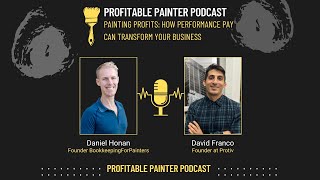
David Franco, co-founder of Protiv, explains how performance pay bonuses for beating labor budgets can transform painting contractors. His clients saw 4-7% net profit increases, cut over-budget projects from 42% to 8% in 120 days, and gave workers an average 18% pay raise. The software integrates with QuickBooks Time and Jobber, but success requires weekly budget talks and real cultural commitment.
Chapters
Welcome to the Profitable Painter Podcast. The mission of this podcast is simple: to help you navigate the financial and tax aspects of starting, running, and scaling a professional painting business. From the brushes and ladders to the spreadsheets and balance sheets, we've got you covered. But before we dive in, a quick word of caution: while we strive to provide accurate and up-to-date financial and tax information, nothing you hear on this podcast should be considered as financial advice specifically for you or your business. We're here to share general knowledge and experiences, not to replace the tailored advice you get from a professional financial advisor or tax consultant. We strongly recommend you seeking individualized advice before making any significant financial decision.
All right, this is Daniel, the founder of Bookkeeping for Painters, and today I'm here with David Franco, who is a co-founder over at Protiv. So I'm super excited to have him on the podcast today. We're going to be talking about all things in regards to performance pay. How's it going, David?
Going great. Thanks for having me.
Yeah, absolutely. Can you describe what you do for listeners?
Yeah, yeah. So Prodiv is a worker incentive software that allows you to provide monetary incentives to hourly workers for beating your labor budgets. Really focus on the idea, if I give your painter, if your worker, your painters a budget of 100 hours and they beat the hours, let's say they get it down to 80 hours, now they've made a potential kind of bonus of 20 hours that you can kind of split with the workers and also redistribute them Um, you know, really focused on creating alignment with, with companies and their hourly workers. Yeah.
Yeah. It's, and it's an awesome software. Uh, I know I work with several of my clients that use Prodive and they're just raving about it. We just got back from a conference, uh, that me and you were at that, uh, Brandon Lewis's APPC conference and Several folks presented on how they've implemented incentive program, some using ProTiv. And so it's definitely an awesome software. So I'm super excited to dig into that. Before we get into that, could you tell me a little bit about your background? Like, where did you, where did you come up with this idea and kind of where did you get your start from?
Yeah, so I, you know, I've been in the painting industry since I was a kid, kind of doing helper work for a long time. And then when I got into college, I joined a kind of— I also was part of a painting company, and I ended up running a residential house painting company in my 20s, managing, you know, just crew of painters, and I learned performance pay there and how impactful it could be. You know, I eventually sold, you know, sold that business and moved into multifamily painting and renovations, and that business was scaling really quite, quite a bit. I went from like 15 employees to 150 employees And I always thought that the hourly pay market system was just broken. You know, as a contractor, I get paid by the job, then I have to turn around and pay people by the hour. And I just felt like that incentive, that there's just a misalignment there. So there had to be a better way. So, you know, I, you know, you know, I used to do like a very— I learned from a painting company I used to work for early in my career. They had like an incentive program, you know, so I took whatever I learned at that current job. They did it on a very janky software, but I implemented that similar system in my company, but I built software to kind of reinforce that thesis. Like if I can take a budget and present it to my workers, you know, they're just, they'll stop thinking about how many hours I can work on a given week or a given day, and they'll start more focused on like, what can I get done? And that creates a win-win environment for the worker and for the company, right? So they can share in the profits. You know, the single most impactful thing that I did in my business is increase worker engagement. 'cause it has a trickle-down effect. If my workers are more engaged, they're communicating better, their teamwork is up, right? If they're much more productive and they're more engaged, then I'm spending less on management per dollar and my OpEx expenses are down, right? So it's such a vital thing to get alignment from your workforce And then, and, you know, and once I've nailed that in my own company, I was like, you know what, there are a lot of other companies that can use this type of software because it didn't exist in the marketplace. So then I took Prodive and I made it into a software company and now we have thousands and thousands of workers all over the country using it.
Yeah, that's an awesome story. And I think a lot of folks might discount the power of incentives. I think Charlie Munger said something like, you get what you incentivize. He was—
Show me who said that. I love that quote where he says, show me the incentive, I'll show you the output. Right. You know, and it's funny, it's so true, especially in hourly market. A lot of these guys want to make more money. Unfortunately, in the last 25 years, their income has kind of flatlined in relative to inflation. Right. So that's like, you know, any, you know, right now, like just any way to give them disposable income is going to make a dramatic impact. But as contractors, we don't just want to take that from profit, right? So why don't you figure out how to take disposable, give them disposable income by getting them to change their behavior and come and the lift comes from their ability to take more ownership on the job.
Right. And it also makes it easier for like management of pay because instead of like, hey, can I get a raise? You know, questions that you might get all the time, you can kind of just point to the incentive program like, hey, if you want to make more money by the hour, you know, just be more efficient, basically.
Exactly. How do you get them to want to think differently, right? How do you get them to start thinking about like, could we do this better? Could we communicate better, right? Could we, you know, instead of leaving the shop at 7:45, leave the shop at 7:30, right? Get out the door like, early. Like, those are the things that you can only do, and it starts with the incentive, right? I do want to point out, like, this is, you know, Proto is a great tool, and like, and pay performance, a great tool, you know, to kind of start an incentive. But it also, like, it opens the idea of like, how do I improve my culture, right? Because it has to be in parallel to communication. And competition and reinforcing, you know, recognition and accountability, right? That is the most powerful thing that what implementing a paper performance solution, it's about improving the culture of the business more than anything.
Yeah, and just from my own experience, making any kind of change, but especially a big change like this can be, difficult. Have you seen best practices either from implementing a performance pay in your own business or from what you've seen other folks do on kind of ways to— the best ways or some ways to implement that culture change?
Totally. So first off, I think it's important that, you know, when you're implementing a pay, like an incentive program, you want to do the least amount create the least amount of friction, right? And by doing that is create the, you know, things that don't need to change, you shouldn't change, right? So for us, you know, we implemented, we help companies integrate to their existing software. So we integrate with all these different time and attendance solutions, whether it be QuickBooks Time or Jobber, We have about 12 right now. We're adding about 2 to 3 a month. And so integrating directly, and we also have a file import as well. So we want to keep them doing what they're doing, right? And the second thing is like not changing their wage, right? That's important. Like don't make it, don't make it, don't create, you know, there should be no reason they won't buy in, right? But saying that, hey, We're not going to change the wage. All we're going to do is if you beat the budgets, now you have this opportunity to earn a bonus. So keep it really, really simple. Nothing too complicated. It should be very obvious. That's one. Number two is start communicating now about the budgets. Talk about what's going on. There should be a weekly meeting or a touchpoint with the team with the crew around like the overall performance. So if you're doing that now, even before you start implementing a pay performance, is only going to add and benefit you because you're already talking about the budgets. You're already talking about debriefs. They're now they're going to be incentivized to communicate with in a weekly meeting and a touchpoint. I think those are some of the most, you know, by having some kind of touchpoint or weekly meeting, integrating with your existing software, And then keeping it really like basic, I think that's the easiest way to kind of get this off the ground fairly quickly.
Yeah, that's, those are some great recommendations. The, so basically start competing, start communicating about it now. You know, you talked about having a budget for each project so that the implied task there is make sure you're using production rates to bid your jobs that generate budgeted hours for each project. So there's tools out there like PaintScout. I did a podcast with John Bryant, the CEO of PaintScout, which we talked about in depth about that. So if you're listening and you don't know what production rates are, definitely listen to that. So get those production rates to generate the work order that have the budgeted hours and start like, like you just said, David, start communicating with your team about that, you know, each week. And then the other thing you said was make it easy. So not changing, you know, most folks in the painting space for our track, hourly tracking, they're using QuickBooks Time and ClockShark and BusyBusy, which all those time trackers integrate with ProTIV that plug right in for the incentive program. And then so you're not really changing their workflow, you're just kind of making it easy to implement. They're just getting an opportunity to make that bonus. So that's awesome.
Exactly.
So, uh, can you go through some of the, um, the features of how Prodive actually works? Because I think a lot of folks, they maybe looked at performance pay in the past, or that maybe they've tried it, uh, or they're doing it now. They, they often— I've seen folks use spreadsheets which, you know, have the formulas kind of plugged in there on, and they're tracking the job costing for each project, which it can work. It's just, it has some limitations. Can you go through why this is different than something like a spreadsheet?
Yeah. So, you know, one of the things that we are, that some key features is we want to make it automated as possible for you guys. So first off, like, let's say you're using PaintScout and QuickBooks Time, right? So every single time a job goes from a quote to a work order in PaintScout, we are able to bring that over and create the budget, right? Could be— the budget could be created by the number of hours on the project or a percentage of the contract price. Let's say you want to say 30% of every dollar becomes the budget in ProTip. So automatically gets synced up right there. And then on top of that, if you're using, you know, QuickBooks Time, we, you know, when as your workers are clocking into those job IDs, right? We then pair that job ID with the job ID that's coming in from Pain Scout, right? And by doing that, we're merging the budget and the time to now allow us to see how they're performing on, you know, automatically. And then every day your workers are given a text notified on all the jobs they worked on the previous day and how many hours they have remaining on each budget. By providing some kind of notice, they can then every day have a scoreboard to really see how they're performing and where and what do they need to kind of pivot to if they're slightly going over budget or they're going over our budget on certain jobs. They have that kind of notice right away. From there, we have an app that they can access all the data. Right. I think a really good program, when you come— when, when we think about a good incentive program, it comes down to a couple of key features. Number one, it has to be really simple that we discuss, right? So on the app, you're going to be able to see like, this is my budget, this is how many hours we've already consumed on the budget, this is how much is left, right? You can explain that in 20 seconds and 90% of employees are going to get it. The second piece that's super important is transparency. And this is actually how using spreadsheets really fails because, you know, workers want to believe in the numbers. They need to believe. If they don't trust in the numbers, they won't, you know, they won't buy in, right? But by having a software that's on their phone, they can physically see what's been, how much money they made, how much money they have kept, coming on, how much is over budget, how much is not. It creates that buy-in, you know. And then the next piece of it for us, another feature is quality control, right? So you're gonna be able to kind of manage what jobs get approved when they're done, right? Or when you get paid by the customer. And that is actually what generates the bonus, okay? And all those bonuses sit on a statement. So every, let's say, semi-monthly or monthly, they get to see which jobs they earned bonus and which jobs they didn't. We have various different options as well to make it even simpler for you guys, for our customers. One thing we have is the ability to actually merge over-budget jobs and bonus jobs. So if you had 10 jobs and 7 of them actually made profit and 3 of them didn't, I mean, sorry, bonus, we're able to show that on the statement to offset it from those jobs. So it does. So they take the wins and the losses if you want. Okay. We also have a way, let's say you pay out the bonus 100% and, you know, and then a month later there's a callback. We're able to track the cost on that job and then roll that callback cost to the next statement to to kind of pay back from the next, from future bonuses. Okay, so, so then, so, you know, when we talk about good bonus program, we have, you know, making it simple, transparent, right, is number 2. And number 3 is frequency. Okay, frequency, paying them in a cadence that they mean something. If you're paying bonuses every quarter, every year, it's— they can't connect to that job and they don't, you know, you're not going to get the level of engagement that you want, right? And the last piece is super important. It has to be a win-win for everybody, right? If you're paying out a bunch of bonuses and then you're not seeing, you know, any results, right? You're not seeing an increase in your bottom line, increased production rates, then what's the point, right? And vice versa, if they're really pulling, you know, pushing themselves and they're changing the behavior, but they're not actually getting rewarded, guess what? They're, they're going to stop doing it, right? So it has to be a win-win, uh, to a successful pay performance program.
Yeah, that's— you covered so much there, so there's so much to talk about. So first of all, like, making it simple, like if you said if you're using Pain Scout in like QuickBooks Time or ClockShark or BusyBusy, whatever, it will— you connect it to ProTip, connect your Pain Scout to ProTip, it's going to pull in your, your budgeted hours. And then when they start logging their time in QuickBooks Time or BusyBusy, ClockShark, whatever, you click connect that to ProTip, that will link up the work order and the budget hours and the actual hours that they're clocking against. And so that, that, that, that right there, that takes out a lot of administrative hassle with tracking. And so, um, if you've ever run a performance-based system trying to do it in a spreadsheet, it can be kind of crazy. So that, that one thing right there, that's, that's really awesome and amazing just to make things so much more simple. Exactly. Yeah. And then, so I know PaintScout is one, Jobber is another one that does this, right? Where you can actually connect it straight in.
Yeah. So Estimate Rocket, we have a way to do that. We have a way to do it with monday.com. There's a lot of, you know, we use Zapier to do kind of to pull in for some of them. We have a direct integration with Jobber. You know, most of them. But if it's just pulling in the one job, we have various different ways to do that to kind of make it a seamless connection.
Okay, awesome. And then the next thing you talked about is the transparency. So like, I know basically the employee will have an app on their phone. And so when they go on the job site, they can just look at the, you know, where they are on the job and kind of check in to see How much time do they have to, and how much of an hourly rate can they get? You know, what do they need to hit to, you know, to get a certain hourly rate, right? That's something they can just check on their phone at any point in time. Exactly.
Yes. And they physically get to see how they're doing on the job because it's scoreboard, right? To see where you at, how much money you can make, like, it's such a vital part of this. And that, you know, puts less pressure on the company to provide these like spreadsheet reports, right? You know, where you don't want to show other people's wages, for example, like in this product, you're able to hide people's wages. They can see only their stuff, but they can see overall how the overall budget is performing. But they see on, on, on their level, they could say, hey, I'm making $25 an hour. And now with this bonus, I'm now making $29 an hour, right? And how that projects for the future, you know, uh, which is key.
That's awesome. And then, um, the other thing was, you know, at the end of a pay cycle, it'll basically give you, hey, here's like the bonuses earned, and then that can just be taken for payroll purposes and, and paid out according, according to like a report that you can pull right from Proactive.
You pull a report and you show how many, how much you want to pay per, uh, in bonuses that gets pushed to the next paycheck.
And, and, and like you said, you, you can have a quality control, you know, even though they might've gone under on the budget, but maybe like a production manager QC's the work and was like, well, we had too many touch-ups or something. So they didn't qualify. So you can kind of approve or disapprove the performance pay.
Exactly, exactly. But keep in mind, if they go back, they just eat into their bonus, right? So it's, it's, it's, it's a, it's, it's just— I love to call this a quality assurance bonus because right now as a company, we don't have— we're not incentivizing. Most companies are not incentivized anything when you pay them just by the hour, right? So now, now you have a tool that would say like, if, you know, it costs them money, right, to, you know, to do poor work, right? As contractors, I always look at it this way, you know, when I was running my construction company, it's like, how do I get my workers to think that my budget is their money? If you can do that, you're winning.
Yeah, that's a great way to think about it.
Yep.
And then another common question when implementing performance pay overall is what you kind of mentioned, which was, you know, I pay out a bonus and then I get a callback like a week or two later that, hey, you missed a spot or whatever. And so you have to send the team back over there, but you already pay them, you know, all the bonus out for that. So it sounds like you have some sort of recapture bonus, you can recapture that bonus on their next payout.
Exactly, exactly. You can, you can recapture the bonus and basically take that cost and reallocate it to their next page, their next statement, right? So that offsets against the other bonuses.
That's amazing. Well, what are some of the results that you've seen either implementing in your own business or helping, you know, I've I know you work with scores of other painting businesses.
Yeah. I mean, we, you know, when implemented, you know, and like I said, ProDiv is just a tool, you know, to kind of really allow you to make this a lot easier and create buy-in, right? It also, when paired with really great communication, you know, the results are astounding. We've seen painting companies, you know, reduce their overall kind of net, like increase their overall net profit between, you know, 4 and 7%, you know. I've had companies that in 120 days went from 40, you know, went from, you know, going over budget on 42% of all their projects down to 8%. right? Um, you know, we on average right now, our workers are seeing about an 18% increase in their pay. So not only are companies making more money, but on top of that also, um, you know, workers are driving, you know, making a lot more money, right? And, and, and how the— and that impact has a trickle-down effect on recruiting on culture. It's harder for people to leave when they're making a lot more money, right? Your talent pool. So there's some great things when you really tap into getting the workers just to care more and be more engaged.
Yeah, that's awesome. And those are huge numbers, by the way. Maybe it doesn't sound, it might not sound like, oh, 4 to 7% increase. Percentage points. Like, if 7% of a million-dollar business would be, you know, $70,000, so you're basically increasing your net income by $70,000. And, you know, a painting business, if owned by a single owner, that's a $70,000— you made $70,000 more this year, you know, new discretionary earnings. So that's huge.
Yeah. And that's, you know, like, it is not uncommon that people are able to lower their overall labor costs for over 10%, you know? So like that is very common. And on top of that, if your team is working 15, 20, 25% more efficiently, you know, if you're backfilled with jobs, that means you can do 25% more revenue, you know? Which some of my companies, they're seasonal, they have seen a, you know, with— they have hard time finding labor in their particular markets. It, uh, it, you know, they just care about the revenue. They're able to increase their revenue by 15% in a given year. That is super impactful to their bottom line.
Yeah, absolutely. That's awesome. Um, what are some common mistakes that maybe you've seen or maybe you teach yourself trying to implement a performance-based system that we can help folks avoid?
So it is a commitment, right? Meaning that, you know, if you, if you want to just use our software, turn it on and think it's going to work, it's not right. You all, you, it has to be a commitment and it's not a lot of commitment. It's more like a commitment to communication. That this is part of the culture. You're going to talk about it every week. You're going to diagnose any issues you might face, right? Because what pay for performance does, it shines a light on the business and any business problems that you might have, they're going to be more prevalent, right? Because now your workers are going to say something. For example, if you have a logistics issue that you never get the materials on time, there, and the workers are sitting around sometimes. Guess what? Prior, maybe the workers didn't say anything because they're getting paid by the hour. There was just no incentive. But now that their pockets are going to be affected, they're going to say, hey, I can't beat these budgets because the manager never has the materials here. Like, I never have the right equipment. I never— so now it's like, whoa, I have to make— they put more pressure on the organization. If your salespeople are not writing clear scopes Guess what? You know, the workers are going to say something because like, how are they going to do if there's like, like change orders that are, you know, that it's like the, like a particular salesperson is constantly over budget, you know, it's constantly underbidding jobs and not clear. Guess what? Workers are going to say something, right? But you have to be committed to kind of attacking those problems head on and communicating with the team and collaborating. right? And if you take that approach, you take that approach, you, you know, some pick it up slower than others. It always works, right? You might have— and certain people that aren't in it, you're gonna have to make decisions that they need to be let go. You know, they, they are not— if they're— if you, you want to be an organization of, of excellence and performance, you know, you have to make that decision. Um, and, and I think Hey, if you take that step, it makes such a drastic impact that it outweighs the time committed to this. Well, outweigh, you know, it's so minuscule compared to kind of the opportunity of improvement of your business and the profit and just the culture. It makes your, you know, as a contractor, you know, if your people care more, that means you're going to have a lot more time on your hands. You don't have to babysit people, right? And it's just, it's impactful. So yeah, so hands down, look, the software will make it easier. I can implement this in 30 minutes with you, right? It's a super simple concept conceptually. It's just, it's your ability to kind of want to put time here and make it a priority. Yeah.
So I think the takeaway here is don't try to implement this in the middle of the summer at the height of production because it's going to like expose all your weaknesses simultaneously and get everybody like, it's like going from you had a single owner to everyone's now a partial owner and they're like really bought into like getting more money. So they're pointing out all the flaws in your system.
Even if you do implement it in the heat of summer, we can implement it with one crew and that makes it super easy, right? And then make it, and then you can implement, once you start with one crew, just make sure that that one crew is on it. And then that actually is really kind of cool because if they are making bonuses, what you want is it's almost like, it's like advertisement to the rest of the organization. Oh wow, I want to be part of that. I want to be part of that. And then once you get that kind of like talk and communication, you've won. Because all they're saying is like, boss, I want to be part of a program that allows me to beat your budgets. You know, and, and, and that's, uh, that's super powerful.
Yeah, that's a good idea. Start with one crew, your best crew ideally, and have them succeed.
And yeah, yeah, show that, show that they— people can beat your budgets. And it, uh, it's, it's super impactful.
Good stuff. All right, well, What, what can folks do to learn more about Protiv?
Yeah, so go to protiv.com and we can get you signed up for a demo and get you scheduled to get started. We offer a free trial, you know, it's a 30-day free trial with, you know, some test pro pays as well. And that's it, right? We get And one of our representatives will reach out and get you, get you going.
Yeah. And this is kind of a no-brainer. I mean, I have several clients that work with you guys that, that have the employee model and they're seeing great results. So it's really, uh, if you're struggling to come up with incentives, definitely check out Protiv. And get started with this. And it's also good, you know, because the governments, state governments and federal governments are looking at the subcontractor model, you know, it's coming under more scrutiny. So if you're thinking of switching over to the employee model, this is a great platform to kind of have the same mentality of paying subs, 'Cause, you know, usually subs get paid like a flat rate, you know, and this is a way to kind of do the same thing in compliance with, you know, paying people properly through payroll. So it's kind of a good trade-off there.
Totally.
Awesome. Any parting thoughts on performance payroll or anything that we haven't covered so far?
No, I mean, I think that that's great. I think Um, I think that— I think, I think the most important thing when considering a pay-for-performance system is, is like, how important is your culture to you, right? And I'm not saying that you can't have a bad culture— a good culture with, without pay-for-performance, but if your people are really overperforming in your business, like, how do I share in the wealth here, you know. And I think that, you know, aligning incentives is, is such a valuable thing for the organization. So yeah, awesome.
Thanks, David. I really appreciate you joining us today and, and sharing your wisdom on pay for performance. And if you would like to ask any questions about performance pay or ask David about ProTiv, if you go to Facebook, type in Grow Your Painting Business, feel free to plug in your questions into the group and love to hear from you. Otherwise, we will see you next week.
Awesome.
More from Daniel







What’s REALLY Holding Your Painting Business Back? (Find Your Bottleneck in 5 Minutes)



