PMM Podcast - Daniel Honan - “Profitable Painter CPA – Sneak Preview of Paint Profits Live 2025!”
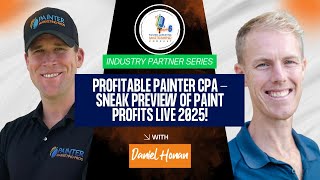
Daniel Honan, CPA at Profitable Painter CPA, breaks down the GAPS framework he uses with 400+ painting companies. The biggest bottleneck is policy constraints: labor and material markup, cash-conversion-cycle timing, and compensation structures that don't tank profitability. He's speaking at Paint Profits Live 2025 on August 28.
Chapters
Welcome to the Painter Marketing Mastermind Podcast, the show created to help painting company owners build a thriving painting business that does well over $1 million in annual revenue. I'm your host, Brandon Pierpont, founder of Painter Marketing Pros and creator of the popular PCA educational series Learn Do Grow: Marketing for Painters. In each episode, I'll be sharing proven tips, strategies, and processes from leading experts in the industry on how they found success in their painting business. We will be interviewing owners of the most successful painting companies in North America and learning from their experiences.
In this episode of the Industry Partner Series of the Painter Marketing Mastermind Podcast, we host guest Daniel Honan of Profitable Painter CPA. As a CPA who specializes in the painting industry, Daniel has helped over 400 painting business owners with revenues ranging from $0 to $20 million over the last 9+ years understand their numbers and save big in tax. Bookkeeping for Painters, now rebranded to Profitable Painter CPA, was founded in 2016 by Daniel Honan, a painting business owner who understood firsthand how frustrating financial services can be. Passionate about using his extensive accounting and customer service experience To support other painting business owners in their journey towards growth, Daniel's goal is to help painting businesses know their numbers and what they mean, save big in tax, and streamline and automate their business processes. Daniel will be running a presentation titled How to Unlock Growth Bottlenecks While Avoiding Financial Guesswork at Paint Profits Live 2025 on Thursday, August 28th, and we're going to talk with him today about that presentation. What's going on, man?
Hey, what's going on? It's, I mean, it's, it's Thursday, so that means that, uh, I'm very drained right now. I do jiu-jitsu on Thursday morning, so, uh, I'm, I'm here, but you know, I'm, I'm a little drained right now, to be honest.
Well, 10% of, uh, of Daniel's brain is still far more than 100% of most people's brain, so I'll take it, man. Yeah. Yeah.
It's one of the downsides of doing jiu-jitsu, especially my, uh, my professor keeps pairing me up with a 300-pound blue belt and he's more than twice my weight and he's just crushing me. So I just feel my soul leave my body every time we grapple and then I cry for 30 minutes in the shower afterwards. Um, yeah, so I'm here.
Either your instructor likes you and is pushing you or dislikes you and just having a good day.
Yeah.
Yeah. Cool, man. Well, excited to have you on the show. Excited to have you at this event. So a little bit of background for everyone listening. You've probably all seen the posts and all the content going out there. Very excited. We have Paint Profits Live 2025. It's running on Thursday, August 28th. It will be running from 9:00 AM to 6:00 PM Eastern time. It's an event that is absolutely free to you, the listener.
You can tune in.
It's going to be phenomenal content. We're going to have over 20, uh, leading experts in the painting industry divulging all kinds of crazy information for you, absolutely for free. You'll have the opportunity to ask questions, um, from all of our speakers. We're going to have some killer panels and it is free. You can go to paint profitslive.com to sign up. It shouldn't be free for you, but it is, uh, thanks to our sponsors, thanks to the, the industry experts that are donating their time, uh, to come and contribute to this event, one of which is Daniel. So Daniel, I'm super excited for your presentation, man. You are— I want to, want to put it out there so people, if they can only come for some of the day, I want to make sure they come for yours. Uh, Daniel will be presenting from 2:55 to 3:40. Uh, so 2:55 to 3:40, how to unlock growth bottlenecks while avoiding financial guesswork. Again, paintprofitslive.com, August 28th. What are you going to be talking about, man?
So I'm gonna be diving into one of the frameworks that I use in our CPA firm to understand what painting business— what their bottleneck is in their business. And so there's 3 primary ones that we've identified. Uh, so I'll be diving into each of those 3 so you can identify what's holding you back from growing to the next level, and then what, what are some things you can do to unlock that and get to the next level.
So you're going to be diving into those bottlenecks?
Yes.
Using the framework that you use at Profitable Painter CPA?
Yep, that's exactly right. I love it, dude.
So I think that the framework Right. The framework, mental frame. That's something I'm actually working on in my personal life. In addition to my business life, I think it's so— I think we think we have to make these decisions or figure out these business problems or, you know, kind of make it all work while looking piecemeal at one problem at a time and not necessarily having a mental frame or process through which we go through. And what I've found is I've built Paid Marketing Pros over time is the more systematized I can approach either operations or sales or finances, finance obviously being a through line through all of it, the more effective it is. So I love the fact that you're, you're not saying, hey, I have these, these tactics I'm going to show you or these strategies I'm going to show you, but I'm going to actually show you the framework that we've used with over 400 companies because that's awesome, right? Frameworks are super powerful.
Yeah. Every day I'm working with painting business owners, seeing the same things over and over again. And so I've just kind of distilled a few different frameworks to kind of, because I have a team as well. So like communicating it to my team, like, hey, here's what to look for. And when you see X, do Y. So it helps my team, but obviously it also helps the painting business owner, which is key there. But yeah, it's like the 3 main things that we typically see that hold folks back is generating customers is the number one. We call it the GAPS framework, by the way. So it's G-A-P-S. So it stands for— it's a— was it a backronym, right? And it stands for things. Yeah, it's a backronym. Okay.
Okay.
So G for generating customers, A for aligning Labor with demand, meaning do you have enough people to, to produce the work? P is for policy constraint, and then S is scale to the next level. So once you fix one of those, it's always one of the three, and then once you fix that, then you want to scale to the next constraint. So that's the S. Yep. So, uh, the most common one we see is actually not the first two, because I think the first two people A is, yeah, I need more customers. Yeah. So that makes sense, right? I can't grow my business because I don't have enough customers. A is I don't have enough people to produce the work. Those two are pretty like intuitive. I think most people get that. But actually the most common constraint we see is the P, which is the policy constraint. And this is basically referring to pricing and cash flow. And also compensation too. So pricing, cash flow and compensation.
So yeah, I'm, I'm super excited to dive into all these things in your presentation. I think the— yeah, like you said, it's always, hey, we need more leads, we need more customers, or hey, we can't find enough help. I can't, can't find enough help. And I think businesses, I think, again, looking at it systemically, there's something else there, right? And, and I like the fact that, that you're focusing on that third thing. So yeah, I'm super motivated for that. One of the things I like about you, Daniel, is that you're always leveling yourself up too. So I'm going to just drop this, might embarrass you, hopefully it doesn't. But Alex Hormozi, I talk about him all the time on the, on the podcast because I'm a big fan, but he recently had a book, $100 Million Money Models. He had a book launch. Broke the Guinness Book of World Records. What was the, what was the number one? Was it Barack Obama at 1.4 million?
I don't know. I don't know what it was before that.
I think it was. So I, it was like, he was talking about how 9 of the, the 10, um, world records for most number of nonfiction books sold within 24 hours were, I think, by, for, by politicians.
Yeah.
Right. And so I was like, Michelle Obama, I mean, you know, kind of a politician, right? Barack Obama, George Bush, Clinton, like it just on and on it went. But so he did this book launch, $100 Million Money Models. He had 113,000, I think, people tune in at— I think that the peak was around that. I'm sure he had quite a few more over time. And then he ended up selling, I believe, 2.8 million within 24 hours. And now he might be like over 4. I don't know, just Basically doubled the world record. And I'm looking at this, I'm texting with Daniel Song, 'cause Daniel and I are, are good friends. And I see Daniel's beautiful face behind Mr. Hermosi. And I'm like, Daniel, how did you, how'd you swing that? I'm over here watching YouTube like some kind of chump. And it's 'cause Daniel's in invested into Alex's program and leveled up and worked directly with him on actually how to help painting company owners, actually how to find these constraints. I don't know anyone else who's, who's invested into themselves the way Daniel has, and it shows with the product. It shows with, with Profitable Painter CPA. So I figured you'd be embarrassed, but it was— I thought it was very cool that you were on the screen in front of 100,000+ people. And I think it's important for people to know when we're talking about they should— I mean, gosh, this is free. We're not even talking about money, but investing their time, investing anything into leveling themselves up. That you're very much practicing what you preach.
Yeah, yeah. My, my DMs were going crazy. I didn't think it was going to be like that, but everybody, all the clients were recognizing me. People I hadn't heard from in years were like texting me and stuff. I was like, geez, I don't think it would be this serious. But yeah, it was cool. But yeah, I definitely spent a lot of money on I spend a lot of money on education and training. Last year, we spent well over 6— I spent well over 6 figures just on myself, not to mention the team. So yeah, it's— but it's well worth it. Just the things that you can learn to speed up because it's all about speeding up the time in which you can implement. Because you could, you could learn these things on your own if you've kind of through trial and error, which I did for a long time myself. But it costs you a lot of time. So it's, it's if you can pay somebody just to teach you and guide you through it, it just speeds up your implementation. So you can, you can get to work a lot faster, get results a lot quicker.
Yeah, 100%. I'm pretty sure you being in the background, I think that's actually why Alex was able to break the world record.
Yeah, that's what I was kind of thinking. But, you know, he kept kind of looking at you, you know.
I think it was, if nothing else, I think it was like a moral support thing. Like, Daniel's here. Yeah, I'm nervous. There's so many people, but my friend, like, I'm okay.
Yeah, I had the same kind of feeling. But, you know, you got to give Alex some credit.
I mean, but yeah, a little bit. Sure, sure. Cool, man. So I want to— I want to get back to the event. So we're talking about speeding, speeding up your timeframe. Anyone who listens to this podcast is already somebody who invests into self-education in some way, shape, or form. Maybe they're driving and listening, maybe doing whatever and listening, but they're taking the time to not listen to music, but actually better themselves and educate themselves. So I think if you're hearing this, you have Daniel here who obviously invests very heavily into himself. Who's been running this company, working with over 400 painting companies over, over— basically, I'm just going to call it a decade. Maybe we're a couple months short. Daniel's is one of those CPA type guys. He's going to be real specific with the numbers. I'll just call it a decade. And he's going to go on and he's going to talk about what he sees with over 400 different painting companies, the consistent issues that he sees and how to fix them in a 45-minute talk. Sign me up, right? So Make sure paintprofitslive.com that you get registered if you're not registered yet so that you can listen to Daniel's talk because it's going to be epic.
Do it.
Yeah. So you talked about GAPS, said it's a— what did you say? Backronym?
Oh yes, it's a backronym. I'm pretty sure that's right. Basically, it spells something, but it's It also is an acronym for things.
Yeah, yeah, I'd pull out my dictionary and read you the definition, but yeah, I mean, I'm not that smart, so goes to show your 10% has already exceeded my 100%. Um, all right, but the backronym— so we have generating customers, acquiring labor, a lot—
well Aligning labor with demand. Yeah.
Aligning labor with demand. Uh, scaling.
The, it would be G-A-P. So P for policy. Policy or behavior constraint. Yeah.
You don't spell gaps G-A-S-P?
No, I, I mean, you, I guess you could. It just people, it might be cause some confusion. All right.
We're getting there and then scale to the next level. Yeah. Okay, so you had started talking about P being a place where you consistently see issues for people. I don't— now, Daniel, I want to preface this. I don't want you to give the whole presentation. Yeah, I don't want to give it because even— and people listening might think, well, why doesn't Brandon— he just wants people to show up to the event. Number one, that's true. I do want you to show up to the event. Number two, if Daniel goes and lays all the information right now, what you can't do is then ask Daniel questions. So again, you come to this event, there's going to be Q&A because you're going to hear something. I can promise you that you're going to wonder, well, how exactly do I apply this in this specific situation of my business, right? Or I have this one thing, it seems like an anomaly. I feel like I'm a special snowflake, but you're not. Uh, you are. Your mommy loves you. I love you. But your business problems are common no matter how odd they may feel to you. Um, and I want you to have the opportunity to ask Daniel questions. So with that caveat, let's talk about P.
Yeah, so these are basically the things that the painting business owner is doing that usually unknowingly, that, uh, they're screwing up their business in one way or another. Where like, classic example is pricing. Usually for folks that know, I'm meeting pricing too high.
They're always pricing too high. Oh yeah, that is sarcasm for people.
Is—
please don't—
definitely pricing, pricing too low. Sure. Yeah, um, that's especially for painting businesses under $500K in revenue. It's usually they're not pricing enough or pricing high enough and not understanding how to mark up their labor and materials. Just the other— just actually this, uh, this morning um, just talked to a painting business owner and his— we're looking at his gross profit, it was like 35%. And I was like, hey, how are you, how are you arriving at the price to charge the customer? He's like, I take my labor and I double it and that's my charge rate. And so, okay, that makes sense. And then he was, then he was like, um, now I was like, so what about for materials? What are you doing there? He's like, I just whatever Sherwin-Williams charges me or is going to charge me. That's why I just add it to the proposal. So, okay, bottom line, you're not marking up materials. So that is a, that's your problem. If you're shooting for a 50% gross profit margin, but you're not marking up materials, you're only marking up labor 100%, then you're not going to get a 50% gross profit margin. So just, just understanding the basic math is often, it's easy, you know, It's easy to say shoot for 50% gross profit margin, but oftentimes for whatever reason in practice, a lot of folks are not just doing it correctly, so they're not hitting the numbers that they think they're hitting. Yeah, so that's like a big, a big policy issue is their pricing. And then the other ones are like regards to cash management, you know, the biggest thing you need in your company is cash. Like, you don't really need anything else. But if you don't have cash in the business, then you're going to go out of business very quickly because you, you can't do anything without cash. So oftentimes people will come, come to us, they'll have definitely a lot of other issues. But their big constraint is that they don't have any cash in the bank. They're like, you know, a few hundred dollars or, you know, a few thousand dollars. And that is, that's not sustainable. You have to have cash. And I think the knee-jerk reaction is, oh, I need to go to the loan, go to the bank and get a loan, which can be an option in some cases. But there's a lot of different things you can do before getting to that point to improve the cash. And it's not just raising your prices, by the way. Which obviously will help with cash, but there's many things you can do before then. Because if you think about raising your prices, if you raise your prices today, you're not going to see the results of that if you're booked out for any length of time. You know, most folks are booked out a few weeks at least. You're not going to start seeing the benefit of that until, you know, a month or two down the road. So, but there's things you can do right now that can improve your cash flow significantly without getting a loan. And so, and these can be policies that you implement in your business to improve that cash flow. So that's another huge one is cash flow management. So pricing, cash flow management. And then the third one is compensation to team. So another huge issue is maybe their pricing correctly, but they're just overcompensating their team, whether that's their painters or their salesperson or their production manager. They're just paying them too much money. And that's, you know, draining their, their profit. And so just dialing that in, having, you know, compensation plans that you can put together for those different roles, that's going to motivate them to hit your goals. but also get compensated in a fair way. Um, so that's another big piece to the policy constraint is fixing your, your compensation strategies.
So one of the cool things about doing a, a pre-event podcast is I know you're gonna share this, I know you're gonna share a lot of other stuff, but I won't have the opportunity to ask you questions, right? The audience will. I guess if I had a question, I could maybe interject. Um, But now I can dive into some of this stuff with you now that you've teased out some of this information. So with the— let's talk about the compensation to the team, because I think that's really interesting psychologically. Why do you think— and I've heard this as well, and I think I've struggled with it myself— overpaying people, especially early, you know, people who are early on who you feel are really critical to the business? Why do you think that happens? Why do you think— why do you think that entrepreneurs oftentimes overpay their team versus, you know, maybe they underpay them, right? Because they're, because they're wanting to make more money. Why would, why would overpaying be the typical error?
Yeah, that's a great question. And I think it's undervaluing yourself as the business owner, your role as a business owner, where you're, you're, you're starting a business. And I think people— I think Jason, Jason Phillips talks about this a lot, is there's so much risk that you're taking on starting a business, like risk that most people are not even aware of, the risks that they're taking. But you're liable to get sued by your customers. I mean, you got insurance like workers' comp, you have your tax, the IRS could come after you. There's just so many things, you know, one of your vehicles could, you know, get in a wreck. Like there's so many risks out there. That as a business owner, you're taking on all those risks, but you don't think— you're not aware of them or discount them. And so when you're looking to compensate your team, you're like, well, I'm getting, you know, if it's a $10,000 project, wow, $10,000. I'm getting $10,000. I got to pay my team. I want to give them a good chunk. You know, I want to recognize them because they're key to this. But they're discounting how all the risks that they took on to, to get that $10,000 project and for it to go successfully. If it goes wrong, who's going to fix it, right? It's going to be the business owner, not the employees. So, yeah, I think it's a great question. It reminds me of my, my dad, actually. He's, he's, uh, he's in retirement. He, he did like 20 years Special Forces and he was a cop for after that for years. But he wants to start a business now. And, uh, he was, he was telling me, it was like a coaching business. And he was telling me how much he was gonna pay his coaches. He was, he was gonna give them, uh, it was some ridiculous percentage of how much he was gonna charge. It was like, it was more than 50%. I can't remember exactly. He was gonna pay them like 60% of, of the cost of the course. I was like, Dad, you're not gonna have any money left. To do any kind of marketing or cover your overhead costs or have profit. It's just you can't do that. That's not going to be good. So maybe pay him a third.
Yeah.
Of the, of the, of the course cost. But similar for, for, you know, painting businesses, about a third. If you have painters, they should be getting about a third of the project, roughly.
Yeah, I think I like to look at it as the stock market. So for anyone who's invested or or looked into that, you know, the riskier a stock is, the higher the, the anticipated return needs to be because you could also lose all your money. And so a really commonplace example of that would be cryptocurrencies, you know, Bitcoin or something like that. Obviously those things are highly volatile. NFTs, things like that, highly volatile. And so they can increase by absurd amounts. And that's why you're buying them. You're hoping it's basically at some point it becomes like gambling. Lottery ticket, but you could also lose all your money. And you compare that to a blue chip stock like, you know, Microsoft or Apple or, or one of these major companies, and you're, you're not gonna 10x your money. It's just, it's not even possible given their market valuation. But you're also probably not going to lose all your money tomorrow either. A business is going to be a little bit closer to kind of that cryptocurrency market than it is a blue chip stock, especially a small company, because there's so many like you said, lawsuits. And those lawsuits, by the way, can come from employees too. Doesn't just come from— can come from customers. You mentioned getting in a car accident, could come from a third party. I can get— you can get hit all kinds of ways. And then there are just operational issues, right? The economy. Oh, we end up in, in war tomorrow, right? All of a sudden, no, nobody's painting their houses now. Now demand dries up. So there's so many occupational hazards that you take on when you start and grow a business. And you do need to be compensated for those things. I think— I believe another issue is, like you said, they're so integral to the team. They say, hey, you know, they made this project happen. I want to give them a good chunk of the $10,000. I think entrepreneurs, we work hard. And when we have other people who come alongside us and work hard also, we want to treat them really, really well because we know— we know what hard work is. We value it. And somebody who comes along on our journey where we maybe started the battle alone and now they come and get in the trenches alongside us, we want to take super good care of them. Uh, and I think, so I think there's, there's a, um, kind of a, uh, like almost a, an over-reliance on that, kind of taking too good care of them where you almost start to lose calibrations, kind of like a, like a child. You want them to be happy, so you just keep giving them stuff versus, okay, there needs to kind of be a line in the sand. You have to take care of the business because ultimately, let's say you have more employees, that's how you actually retain the employees that you have. Because if you go out of business, everybody, everybody's not doing that well. So I think that I just want to kind of dive into that because I'm certainly not going to get the opportunity to ask you during your presentation.
Yeah. Yeah, that's the thing. I think some folks need to think about the business first instead of the employee first. I know a lot of this is maybe an evil man, Daniel. Yeah, causing some drama here with this statement, but You know, some people say put the employees first. The issue with that, and not to say like, don't treat your employees well, of course. But the problem is, you really have to have the business be healthy, because it's like the— when you fly in an airplane, you're supposed to put the mask on, on yourself first before you help other people. Same idea, like the business needs to be healthy. And so, because it feeds everybody else, it's putting them oxygen masks on everybody else, right? But you got to take care of the business first, because it's taking care of everybody, not just your team, but also your, your customers too. And not just your team, but your team's family. So your business has to come first. And so that's, I think, a mindset change for some people. Sure. And, and this actually came up this morning, um, again, uh, the business owner was really struggling with cash and like we were like looking for all the strategies, pulling them all out, and, and one of them was, hey, let's decrease the frequency at which you're paying your employees because right now you're paying them every single week, uh, and, and if it was up to the employee, they would want to be paid at the end of every hour, right? They want to get paid as frequently as possible. Um, as the business owner, you're— you as managing the cash in the business, you want to pay out as, as, um, as infrequent as possible. The reason why is because the longer you can hold on to your cash, the better your cash balance, cash position is going to be. That's the whole game with cash, is get paid faster slow down payments to others. That's the whole game. So if you can pay your employees biweekly instead of weekly, that's going to improve your cash position. And that, that doesn't sound like a, a huge shift, but getting another 7 days to collect money from customers so you can make payroll can be a huge difference. Even just a couple days, that, that, that could be the difference between making payroll and not making payroll.
Sure. And I know I've heard you speak about this at other presentations, so I'm excited to hear you speak about, about it and what you bring to the table on this one. But now this cash conversion cycle, you do a really good job illustrating how significant that is, even moving into materials and utilizing credit cards, not irresponsibly. So when you think about utilizing credit cards, we think about putting money, you know, on cars that we don't have and maybe can't pay back. That's not what we're talking about here. By utilizing credit cards effectively at 0% interest and ultimately using that to make more money and just fuel the business growth and grow faster. So that stuff compounds when you're— when you're a small company, it might seem kind of minor, although it may be even more important for you at that point, given the potential cash crunch that you could face. But as you get bigger and the dollars get bigger, it becomes pretty substantial. So having a better cash conversion cycle in your business So appreciate you sharing that, Daniel. The pricing. So too low, too low pricing. Is that just head trash or what is that? That must be tough, right? You work with over 400 companies. They, they hire you to basically equip them for financial success. I don't think any of us are in this game to lose money or to make very little money because it's, it's a stressful, hard game. Running and growing your own company. So they come to you like, hey Daniel, I want to make money, I want to do— I want to keep my money, I want to scale my business. You're going to help me do all these things, uh, in the Profitable Painter CPA, and I've heard great things about you, so I'm here. And then you have to have what I would assume would be kind of a difficult conversation when you say, hey, your prices are too low.
Yeah, yeah, uh, It, I think people know, like they have an indication. I mean, because their bank account is not where it wants to be. And, you know, sometimes it's not the pricing, but often it is. Sometimes it's, you know, just cash management or other things. But yeah, but when we take a look at the finances, we'll definitely, you know, figure it out. Okay, it is pricing or it isn't. Go through this whole process of figuring it out. But if it, if it turns out that it is pricing, you know, it's basically dialing in, dialing in that pricing using production rates is usually the gold standard as far as budgeting how much time it's going to take and then making sure you're doing the math, the markup correctly. So the vast majority of people that we work with You know, once we show them the proof on their financials, like, hey, you know, we walk through everything with them. It's a pretty easy sell, I guess, to say like, hey, it's the pricing because they kind of see the evidence through the numbers because we give them— that's the first thing we do when we work with somebody is give them clarity on their numbers so they clearly understand what's going wrong because that's the first thing. You can't really solve a problem if you don't know what's going on. So That's what we try to do within the first 30 days, whether it means— because sometimes we have to go back and clean up a bunch of months and then compare it once we get all their books all straightened out and clean, compare that to industry benchmark. We benchmark all our painting businesses that we work with. And so we can, you know, based off the size of the business, what you should be hitting on the different margins to say, okay, this is good, this is not good. And we'll be able to hone in on with a few additional questions on what is, what is the actual problem? You know, is it, is it pricing? Is it something else? And once we do that, folks are pretty open to it because we show them the evidence. Like, this is just, this is just math and numbers. So don't get mad at me. Uh, just get mad at, you know, physics, I guess. Um, Yeah. So, and then from there, it's just coming up with a plan on how do we, how do we fix this, which sometimes it's, you know, because a lot of times the people that are underpricing are also booked out a pretty good amount.
You know, I'm booked out for 6 months. Yeah, I don't need your marketing. I'm booked out for half a year.
Yeah.
So many problems with that statement.
Yeah. And Tara O'Reilly has the rule of 3. Tara Riley from the Academy for Professional Painting Contractors. She has the rule of 3, which I think is really helpful, which means basically you should be getting to speed to lead within 3 minutes. You should be getting out to give an estimate to somebody who requests one within 3 days. You should be producing work within 3 weeks. So if you're booked out, really, if you're booked out over 3 weeks, you're, you might be You, that's not the ideal situation because that isn't, if it's booked out too far, it's not really, um, things could go wrong, plans could change, you could lose that job. So you want to be on top of that. So I say all that to say like, um, something very wise that I just forgot, uh, completely lost train of thought.
It happens.
Oh man, what was it? So if you're okay, that's what it was. So if you're undercharging, oftentimes they're booked out pretty far, like 6+ weeks. So if you raise your prices, because you need to, because you're undercharging, you'll, you know, usually start getting less jobs, right? But you're already pretty far booked out. So we don't want to be doing work for free. You know, being busy to be busy, we want to make profit, right? So if we just increase the prices, that will give you time. You'll have some buffer because you have a large pipeline already. And then you can use that time to improve your sales process, because you'll need to have a stronger sales process to support the higher prices that you just increased, right? So, you know, taking a look at your, your set rate, the 3-minute speed to lead, take a look at your your presentation process, in-home consultations, you know, and then your follow-up process, and all the things that go into your sales process. So that's, that's not a terrible— so it's a completely solvable situation. If you're underpricing, and you're booked out a lot, raise your prices, then work on your sales process so that then you can command those higher sales, those higher prices. And then scale to the next constraint, basically.
Yeah. So I like how I talked about it being a difficult conversation with the price and you basically said, you know, it's an easy sell because it's just math and you're going to lay it out. So that's what you guys are going to get if you come and you listen to Daniel's presentation. He's going to lay out a framework, as he said, a framework for success that's going to help you pass these 3 primary bottlenecks that he sees painting companies run into. It's, it's math, it's, it's a structure. I mean, running a business, growing a business can feel so chaotic and confusing. And hey, I'm working so hard, I'm landing so many jobs, why is my bank account not bigger? Why, why am I having XYZ with employee or whatever I'm having? Or how much should I pay myself? Or how much should I pay this person? Daniel's going to cover all that. So if you're serious about scaling your business, even if you feel pretty comfortable with your financials right now, if you're going to grow, those financials are going to become more complicated. Your org chart's going to grow. You're going to have more people on your team. If you move from residential to commercial, guess what? A lot more complicated. So Daniel has the answers to all this stuff. I go to a lot of PCA events. I speak at a lot of events. Daniel's speaking at all those events alongside me, right? And there's a— in his presentation is always— I mean, I'm not going to say it's ranked higher than mine. I can't say that, Daniel. Um, we will just say it is always ranked very near the top. And we won't say if it's at the top, we'll just say very near the top. People like what Daniel has to say because it helps their businesses. So show up to this. You're doing yourself a disservice, your company a disservice, your family a disservice if you don't show up. Because why wouldn't you take this free advice from a CPA who's been working in this space for a decade, 9+ years, and worked with over 400 painting companies? Go to paintprofitslive.com, register. To listen to Daniel speak, and then he'll have an offer as well. So I don't know what his offer is going to be, but he's going to have some, some cool, something cool for you guys if you come and listen to him live.
Yeah, I'm super excited to, uh, to announce the offer. Um, I think, you know, it's, it's, it's definitely, definitely going to be worth it to stick around. For my part, um, I'm gonna give a bunch of cool stuff to people that do, so I'm excited for that.
Amazing. Daniel, as we wrap this up, uh, the, the date is rapidly approaching. I'm excited for your presentation. Is there anything else you want to add, uh, to this episode for our listeners?
I would just say, uh, sign up. Was it paintprofits—
paintprofitslive.com?
Paintprofitslive.com.
You're on it. You're on that page, just so you know. You, you could, you could even, you could even go there yourself and look at it one day if you want to.
Yeah, I'm going to right after this. Yeah, definitely. Yeah. Sign up if you haven't already and stick around for my presentation. It's definitely going to be worth it. So I'm looking forward to it, man. I'm super excited for it.
Let's do this. Thank you, Daniel. Appreciate you as always, man. Thanks for sharing everything you did, brother. Can't wait for your presentation.
Absolutely. Glad to be here. Thank you again for the invitation.
If you want to learn more about the topics we discussed in this podcast and how you can use them to grow your painting business, Visit paintermarketingpros.com/podcast for free training, as well as the ability to schedule a personalized strategy session for your painting company. Again, that URL is paintermarketingpros.com/podcast.
Hey there, painting company owners. If you enjoyed today's episode, make sure you go ahead and hit that subscribe button. Give us your feedback. Let us know how we did. And also, if you're interested in taking your painting business to the next level, Make sure you visit the Painter Marketing Pros website at paintermarketingpros.com to learn more about our services. You can also reach out to me directly by emailing me at brandon@paintermarketingpros.com and I can give you personalized advice on growing your painting business. Until next time, keep growing!
More from Daniel







What’s REALLY Holding Your Painting Business Back? (Find Your Bottleneck in 5 Minutes)



