Processes Unpacked: Building a Strong Painting Business Foundation
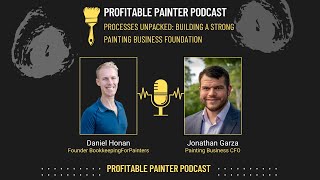
In this episode of the Profitable Painter Podcast, Daniel (founder of Bookkeeping for Painters) and Jonathan (advisor) discuss why documented processes are essential for scaling a painting business. They explain that every business already has informal processes, but to grow and delegate, owners must capture them in clear, step‑by‑step formats. They recommend starting by identifying core processes—HR, marketing, sales, operations (interior, exterior, cabinet), customer retention, and accounting—then breaking each into roughly ten actionable steps. For each step they suggest creating a how‑to guide that combines a Loom video, a transcript, and written instructions, all stored in a Google Doc or similar repository. The hosts stress delegating ownership of processes to managers or outsourced specialists (e.g., accountants) and establishing a routine for keeping the documentation up to date. They also address common challenges such as employee resistance to change and how documented processes can be used to train new hires faster, measure performance, and reduce onboarding time. Practical tips include using Loom for quick video capture, hiring virtual assistants to format transcripts, and leveraging the "Grow Your Painting Business" Facebook group for community support.
Chapters
Welcome to the Profitable Painter Podcast. The mission of this podcast is simple: to help you navigate the financial and tax aspects of starting, running, and scaling a professional painting business. From the brushes and ladders to the spreadsheets and balance sheets, we've got you covered. But before we dive in, a quick word of caution: while we strive to provide accurate and up-to-date financial and tax information, nothing you hear on this podcast should be considered as financial advice specifically for you or your business. We're here to share general knowledge and experiences, not to replace the tailored advice you get from a professional financial advisor or tax consultant. We strongly recommend you seeking individualized advice before making any significant financial decision. This is Daniel, the founder of Bookkeeping for Painters.
This is Jonathan, advisor with Bookkeeping for Painters.
How's it going today, Jonathan?
Pretty good, Daniel. How are you doing?
Doing well. Doing well. Today we are talking about processes. So this is a big topic for any business, but even for painting businesses, and especially for painting businesses, especially the ones that we've worked with in the past. If you want to grow your business to any level that, that will require someone else besides yourself working in it, you, you need to have processes. And so today we're going to go through what the heck are processes, why do you need them, some steps that will help you develop your processes, and then how you can actually deploy your processes in your business, and then some tips on keeping your processes updated. So to start things off, let's kind of talk about what processes are and why do you need them. What do you think, Jonathan?
Well, you know, the, the thing with processes is you already got them, right? So if you're already in business, if you're doing anything, you've already got a process. It's the way you do things. It's the way you answer a call from a client, the way you start your sales process, the way you follow up with them, the way you send invoices. All of those are processes, right? So the great news is, is you've already got them. The question is, Does anybody else know how to do it, or is it all in your head?
Yeah, that's funny. Talking to some painting business owner recently, you know, I asked, you know, what was your process for estimating? And he just, you know, points at his head. And, you know, so that's good if you know how to do it, but if you want to grow your business, you got to have it documented. So someone else can come in and help you out. I've had some experience doing this a few different times in a painting business and also in my bookkeeping business in a former life. A couple years ago, I, I got out of the military, but during my time in the military, I had to deploy a few times, and two of those times I had businesses, so I had to actually make sure that I had well-documented processes going into that deployment because I was gonna be taken out of the, taken out of the game. And I had to have other people run my business. So having well-documented processes is key to getting other folks to help you in your business.
Yeah, absolutely. And, you know, I've, Some of the background that I've had, we've had situations where it wasn't necessarily we were leaving the business and needed someone else to run it, but even just the aspect of, you know, we didn't have processes documented well enough and employees that came in created their own, which creates, you know, there's, there's lack of uniformity between different jobs and how different employees are doing things. But also at the same time, when, we had a great employee who left, we lost all those processes with them. And so, you know, that was a huge impact in our business because we went from great productivity, great efficiency to pretty much starting over. And so, you know, that was a huge wake-up call in terms of documenting processes moving forward.
Yeah. And I think that also kind of alludes to a point, you know, before you start bringing people on, you need to have, processes documented because you don't want to, you know, try to throw people at a process problem is what you'll hear some folks say. So having some initial processes in place, it doesn't have to be too crazy, and we will go into how you could do this, but just having some initial framework of how you do things. So when someone comes in, they have somewhere to start with, something to work with. To get started. And so I think that's a good transition to talk about, okay, what are, what, what are the steps to actually developing processes? And so let's, let me kind of define a little bit more clear what, what a process would be. So typically, one way to think about this, and, and if you're interested in reading about this, I definitely reference, or would push you over to, uh, Traction. Traction is a book by Gino Wickman. It is an awesome book. I highly recommend for any painting, painting business owner or business owner generally. And it goes through, it has a whole chapter on processes. But what this book recommends basically is identifying your core processes. So your core processes for a painting business might be something like your HR process. So how do you recruit, interview, and bring on new workers. Your sale— your marketing process, which would be how do you get leads and qualify leads. And then your sales process, how do you convince prospects to sign up for your service. And then you have your, your operations process, and your operations process might be split into 1 to 3 processes. So maybe you do interior painting, exterior painting, and cabinets. So each of those service lines would have a process, exterior painting process, interior painting process, cabinet refinishing process. And then you might have a customer retention process. How do you make sure that you are reactivating your customers, you know, every year and keeping them engaged and buying from you? And then finally, your accounting process. How are you making sure that your Recording all the transactions and getting the information out of your business so it helps you make decisions. So those are 8 processes I just listed. They will probably work for a lot of painting businesses. So that, but that's the first step and you, your processes might be a little bit different. But you will, first step is to identify those, those core processes. Then the next step is once you've got your you know, 8 to 10 processes, you want to kind of just list out what are the steps of, of each of those. And you don't have to start with all of these. You could focus in on, if you're just getting started, maybe just picking out the, the process that you want to delegate. You know, maybe you're a painting business owner that's between $500,000 and $1 million, and you're trying to hire your production manager. And so you may maybe want to focus on documenting your operations process, or maybe you have interior, exterior, and cabinet refinishing. So focusing on those 3 processes, getting those documented so that you can, before you hire your production manager, you can point them towards, hey, here's how we do interior painting, or here's how we do exterior painting, et cetera. So you want to take a process. So let's take you know, interior painting. What are the steps for each process? It might be step 1, get the colors from the client, you know, uh, step 2 is schedule them for production, step 3, do a pre-walkaround with the customer. Yeah, kind of like that, something like that. Doesn't have to be those steps exactly, obviously, but however you do things from onboarding them for interior painting to going to the job, actually completing the painting, clean, doing the cleanup, doing the final walk around, collecting payment, and finishing the job. So what does that whole process look like for you, for your business? So it should, those steps should be about, about 10 steps or so. Don't get too caught into the weeds, kind of keep it simple, about, about 10 steps for each process. So interior painting will have about 10 steps, exterior painting will have about 10 steps, etc. And then within that you'll have how-to guides. And this is where the— you fill in the details for how do you do each step of the process. And so this might be video, this might be written instructions, might be a checklist of things. Or it— and ideally it would be all 3 of those things together in one package. So let's just take the example of the step number 1, get the client's colors, right? So you just need to provide, you know, you could turn on a Loom or something like that and record on and just talk about how you would get colors from a client or do a screen share using Loom on how you would request that from the customer and where do the colors go, where do you put them in a certain spreadsheet or whatever the case is. So those are just some ideas, is identify your core processes, develop the steps to the core processes, to each of the core processes, and then have a how-to guide for each step within the process on how to complete that step. You have any thoughts on that, Jonathan?
Yeah, no, I think that's really good. I think, you know, So you threw a lot out there with all the core processes, and then of course everything's got processes underneath that, right? And so, um, you know, you talked about having some written instructions, some video, and I think those are great examples. What would you recommend to, to the listener right now who's just thinking, oh my gosh, that's gonna take me, I'd have to sit down for weeks to go through all my process. So, um, you know, and then it, it may not, it may change. So what would you recommend to, to that listener?
Right. Yeah. I think the first step is, is one, you gotta identify what is your, what is your need right now? Where are you in your business? So I gave the example of maybe you need to hire a production manager. So maybe you need to focus on, and let's say you, you specialize in exterior painting, so you need to make sure your exterior painting process is dialed in. Just have it documented, map out those 10 steps. What, you know, from the client signing the contract to collecting the final payment for that exterior painting process. And then once you kind of have those 10 steps, I would just, I would just start out, I would just turn on Loom and then just either do a screen share for like the technical, like how to send, you know, what emails to send, or maybe it's just you talking through your process. But I would use Loom, which if you go to loom.com, it's just a video software. You can click record, it will record your face or your screen or both. And I would just talk through your process and just like you're explaining it to somebody. And then from there, Loom actually has the ability to develop, to generate a transcript of what you said. And so that will give you written a written transcript of your process. So you'll have a video and then you'll have your written instructions. You might have to format it to make it make a little bit more sense, but you know, it's a good start. And so you might be able to do that, you know, if you just sit down and just think of someone said, hey, what's the process for you painting, you know, an exterior house starting from when they sign your proposal to when they do the final payment? You probably know off the top of your head what that process looks like. You could explain it, and that's exactly what you would do. Just press record on Loom and do that, and now you have a video explanation. And you can splice that into smaller videos if it gets a little long. And then you'll have some written instructions as well. But that's kind of where I would start, is just kind of get it recorded, and then once you have it in video format, you, you now can give your new employee who needs, you know, your new production manager, you can give them a set of videos on, on how to do whatever process.
Yeah, I think that's great. And, you know, I think, you know, for a lot of, for a lot of us, it's even just an aspect of sitting down in front of a computer, right? But this could be done, a Loom video could be done while you're driving. You don't even have to necessarily be looking at it, especially for the owner who is already doing it and they're in, in the business so much where, you know, when you're driving from job to job, just, you know, turn on the voice recorder or something like that. Ideally, like you said, Loom, that creates a transcript because you can give that to an admin, you know, a virtual assistant or someone else to be able to take that and document that into the written instruction as well. But, you know, bare minimum, even just recording something on your phone so you've got some kind of video documenting that process. I think that's great.
Yeah, that's a good point too. You know, you don't, as long as you have it recorded, Loom might be able to generate a transcript, but you can just give that to somebody on, you can hire someone on Upwork to get like a virtual assistant to make it formatted and, you know, put your video and the text all in maybe one Google Doc. And make it a little bit easier to read and go through and pay them like, you know, $10 an hour or something to do that for you. And, you know, all you had to do was just hit record on a Loom video and talk about your, how you do things for however long it takes you to go through that. So I think those are some good ways to start and you don't have to get too fancy with using additional software to have your processes. If you have Google Workspace with your business, you know, using something like Google Docs, just having a video embedded in a Google Doc with some written instructions below it, that will be, you know, in a folder system that you can point your new workers to or your current team to. I think that works just as good as any software.
Yeah, you know, and I think another way for, for some of those, uh, and I think you've talked about this before, but the aspect of delegating some of those core processes that you're not necessarily involved with, um, you know, talk a little bit about how, you know, someone could, for example, outsource the accounting piece of it, right?
I mean, you know, we, we said, you know, you might have somewhere between 8 and 10 processes in your business, whether it's marketing, you know, interior painting, HR, accounting, you have all these different processes. And what you don't want to have, which, which you don't want to happen is you have all these process processes, but then you're the one that's responsible for keeping everything updated. Because that's, you know, your processes are going to change as you, as you grow. As you get new software, as things change, things are always going to change. So your processes are always going to be in a state of flux. So you need to leverage your team to help you update those processes. So you, going back to the example of the production manager, once you hire that production manager, you then give him the, you know, the exterior painting process, the interior painting process, the cabinet refinishing process. And say, hey, you're now in charge of these processes and I expect you to update these as we make changes and keep this updated with the written instructions, maybe adding a video if needed. And you delegate the responsibility of updating the processes to him. And then you can be like the approver if needed. And then for things like accounting, you know, you can have Obviously, Booking for Painters, we help folks with their accounting systems all the time. You can outsource that, you could bring somebody in, but bottom line is you want to have a team or a person that can help you, you know, develop processes because you might not have the expertise to develop an accounting process, which is completely expected. You probably didn't go into the start a painting business to develop processes for accounting. Completely understandable. But whatever the case is, you know, delegating those different processes to different team members so you're not solely responsible for updating everything all the time.
Yeah, that's great. That is great. You know, I think the other thing is, like you said, you know, it's constantly changing, constantly evolving. I think, you know, having someone be the owner of the process after you've kind of deployed it But this is also a really good tool to kind of measure employees and contractors with, you know, performance. You know, a lot of times we say their performance is not where we want it to be. But, you know, without documented processes, what I've seen and experienced is that sometimes it's not an aspect of maybe the employee or the contractor isn't performing well, but maybe the process isn't ideal either. So, you know, the— one thing that you can look at is, is the process ideal? Is it working for other employees? And if so, then how can we help this one employee to, to kind of match the performance of others? But it also gives you kind of a test just to make sure that they're following the processes correctly as well. So that's another advantage from an employee perspective of processes.
Yes. And one of the things to When you're talking, it kind of made me think of the challenge of always maintaining your processes because it's never ending. You know, it's not like you do your processes once and then you're done, you know, because you're going to evolve and grow and it's going to change. So you're going to have to keep updated, which is why you delegate the responsibility. But as you make those changes, you know, sometimes your team, most of the times the team is going to have some resistance. They're going to be resistant to change. And so I would just really go into this expecting when you make changes, as you grow, you make changes to those processes that you're going to face resistance. But one of the ways you can kind of get through that period of resistance quicker is if you do have it, documented, those how-to guides documented ahead of time going into that. So it makes the learning curve shorter and folks are a little bit more accepting. You might still face resistance, but at least it'll probably be accepted a little bit quicker and you'll get through that period of change a bit easier and hopefully become more efficient with that new change.
Yeah, absolutely. And a great example of that is, you know, if you've ever taken a course or any kind of training where someone put that package together versus trying to learn it yourself, you know, if you're trying to learn guitar or even learn how to paint and you're just having to figure it out as you go versus taking some kind of a class or having an instructor, you know, that's the difference right there between the person who's got a really well-documented process for their employees versus the company that doesn't. And that's, that's real dollars right there. I mean, when you talk about an employee coming in and being up and productive in a matter of, you know, a month or two versus 6 months to full productivity, when you start looking at the dollars of that productivity of the employee coming in, taking them that long to get to 100%, that's real money right there.
Yeah, that's a good point. Again, like for folks, especially who you're looking to make it that new hire, make sure you have something, some sort of documented process to, to point your, your new, new person to so that they have something to, to fall back on when you're not there over their shoulder. Because hopefully the whole purpose of getting someone new on the team is is that they're freeing you up, you know, obviously you're going to do some training with them one-on-one, I'm sure, or someone will do some one-on-one training. But when you're not there, you want them to have some sort of resource to fall back on. And the less time they have to go back and ask questions to you or whoever, you know, that's going to speed up their efficiency and it's going to save all, yeah, like you said, change, uh, 2 months to 6 months, you know, of that onboarding process. So you can really cut down a lot of, a lot of time wasted by having some documented processes in place. All right, well, I think we covered this topic pretty well. I'd love to hear your thoughts on implementing processes in your painting business. What have you done in your, your pro— in your business that has been successful when Deploying processes. Let us know your questions. Maybe you're struggling through, you know, trying to implement processes in your business. Let us know what process you're working on, what hire you're trying to make, what software you use to document processes. Let us know your questions. If you go to Facebook, the Facebook group, look up Grow Your Painting Business, you can look that up on Facebook and request access and we'll gladly let you join the, the, uh, the group and, uh, post your questions in there. Love to hear from you. And with that, we will see you next week.
More from Daniel







What’s REALLY Holding Your Painting Business Back? (Find Your Bottleneck in 5 Minutes)



