Recruiting, Vetting & Retaining Elite Subcontractors in the Painting Industry with Dimitri Ivanchuk
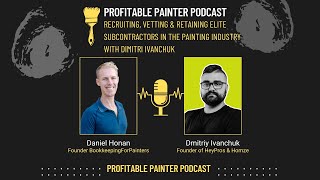
Dimitri Ivanchuk, founder of HeyPros, walks through how painting companies find and keep quality subcontractors. He scouts subs at supplier parking lots and contractor Facebook groups, vets them with a field visit and office meeting, then uses software to manage work orders and compliance. Homezy scaled to $6-7M revenue by aligning production with sales.
Chapters
Welcome to the Profitable Painter Podcast. The mission of this podcast is simple: to help you navigate the financial and tax aspects of starting, running, and scaling a professional painting business. From the brushes and ladders to the spreadsheets and balance sheets, we've got you covered. But before we dive in, a quick word of caution. While we strive to provide accurate and up-to-date financial and tax information, nothing you hear on this podcast should be considered as financial advice specifically for you or your business. We're here to share general knowledge and experiences, not to replace the tailored advice you get from a professional financial advisor or tax consultant. We strongly recommend you seeking individualized advice before making any significant financial decision.
This is Daniel, the founder of Bookkeeping for Painters, and today I'm here with Dmitry Ivanchuk. Dmitry is the founder of HeyPros, a subcontractor management software, and founder of Homezy, a residential flooring and painting company. Welcome back to the podcast, Dmitry. How's it going?
It's going well. Oh, it's going well. Um, really happy to be back on.
Yeah, I'm glad to have you back. And today I think a great topic we could cover is finding and keeping great subcontractors. You know, right now we're in the midst of summer and hopefully folks listening are super busy. And one of the big issues that comes up is getting people. Not just any person, but great people. And I was just reading a biography by Steve Jobs and that, that was kind of like what he saw his main role of, role as getting, recruiting and finding the greatest people, getting those A-players on your team. And so this is like a super important topic, especially for smaller businesses because you're, you know, you're. Team has a lot of face time with your customers because you're— we're service-based businesses. So this is, I think, a really great topic. I'm excited to jump into it.
Yeah, me too. I think that this is definitely an important subject, especially in the heat of the summer when there's a lot of jobs that most companies are juggling. And you're right, even the smallest painting companies should really prioritize and learn how to find, vet, and keep the right subcontractors because it really is what helps you scale your business. I think that without this component and without mastering the ability to do this, you're never really going to be able to scale as aggressively as you want, especially when you're ready to, right? When you get a bunch of jobs in the middle of July or August and you need to get them fulfilled and you don't have the infrastructure or the people to do it. So we're really excited to talk about this.
Yeah. And I think you're the perfect person to discuss this because I know in your business you vetted like hundreds of subs. And so I think you have some good ideas on finding subs and vetting them, retaining them. So let's get into it.
Yeah, definitely. Yeah, definitely think that the kind of journey that we've taken over the last couple of years with our company, with HeyPros and with Homezy, has definitely helped provide me with a lot of valuable experience. I mean, at one point we vetted and found almost 500 brand new subcontractors in like a year. So definitely had a lot of experience there with the with a lot of great ones, and I think we just got lucky where majority of the ones we found were great, and obviously some weren't. But yeah, definitely want to talk about those 3 things: finding subcontractors, vetting them, and then keeping them, right? Would love to start with finding subcontractors. This is always a question that we get so often, probably a couple times a week I get this question. How do you find great subs? And sometimes people ask looking for like a high-tech or a really easy solution. And I mean, I'm going to break it to a lot of you people, but the best way to find subcontractors, great ones, is doing it manually. And I'm going to share how, but this has just been proven to be the best way is to go out there and find them in the right places. I'll offer a couple of tech solutions or easy solutions on finding subcontractors, but those cost a lot and they don't always prove to be as fruitful as just the tried and true way. So I mean, majority of the subcontractors that we found initially for our business was just visiting supplier parking lots. And what do I mean by that? Just Sherwin-Williams, Benjamin Moore, all of the painters are out there. Usually the best days to do this we found is Monday, Tuesday, and possibly Wednesday, usually not Thursday or Friday because if they're starting a job, they're usually starting in the beginning of the week. They're usually picking up the paint the first couple of days of the week. And I mean, opening time, if it's 6:00 AM or 7:00 AM, 6:00 to 9:00 AM, 7:00 to 10:00 AM, that's the best time. If you come after 10:00 AM, you're really missing out, missing opportunities. So showing up pretty early. And just, you could even tell your little Sherwin-Williams rep or Benjamin Moore staff members that, hey, we're a local business. We buy from you all the time. We're looking for extra subcontractors. Do you mind if we just spend a day in the morning out in the store or in the parking lot? We can give out free coffee and donuts. We can go to Starbucks and buy one of those containers of coffee and maybe a box of donuts. Do you mind if I just hang out in the parking lot and ask subcontractors if they're looking for more work? Out of the dozens and dozens of times we've went out and done this, never been rejected and have never been told, no, don't do this, right? We have a relationship with our local stores. They don't mind us doing this. And most often they'll actually give us a couple business cards right off the bat. Like, oh, hey, this guy keeps coming in here. He's an independent kind of craftsman. He's an independent painter, has a couple of people under him here, give him a call. So they're already giving us some free recommendations to start it off. But really showing up, spending a couple of hours there in the morning. And the reason why this works is because we all know that in the morning rush, there's a 20-30 minute wait sometimes to pick up the paint if they didn't come in advance. And so they're coming in and they're waiting for their paint and they're just sitting in their vans or just standing around and talking on their phones. It's a perfect time to just approach them. And typically we just use this script. We just go, hey, we're a local business, or we say our company name. Hey, we're, we do a bunch of painting, residential painting jobs here in the Portland or Seattle area. And we're looking to find some more quality painters. You mind if I ask you guys for your contact number and send you a couple work orders that we have coming up? Maybe you'll be interested to take a look at them. Most often it's a 90% conversion rate. They go, yeah, sure. Of course. We're not discussing pricing. We're not discussing types of jobs here. We're just going for volume. We're trying to get some contact numbers and then we're going to put them into the next stage of our vetting process, right? So we keep repeating this and over the course of 3 hours, we'll easily get at least 10 potential subcontractors, right? In one morning, you can get easily 10. And then from then on, you move them to the next stage of really getting to know them a little bit better. But for most small businesses, getting 10 brand new subcontractors potential is more than enough, right? So that's the first step. If you really are, here's a little bonus tip I wrote down for myself. If you really do have a job that you need to get filled, say next week, and you're doing this a week in advance, here's a little bonus tip. I would push it to move to the next stage of the vetting process right then and there. And we've done this a lot as well. And we get pretty good conversion on this. We say, hey, we actually do have a job next week. It's this type of job, would you be interested in potentially doing it? If they say yes, you go, great. Would you mind if we visited you on the current job you're doing? And especially since it's summer, it's exterior jobs. Most often they don't mind if you just do a drive-by on the street or say, hey, hey, can we visit your job site? We want to make sure we're hiring— our company has a reputation. We want to make sure we're hiring the best crew. Can you text me the address? I'll drop by here in a couple of hours when you start. I just want to ask, you a couple of questions, see kind of what kind of project you're working on. And most often we've very rarely been turned down by subcontractors that are interested in working with us. They'll usually be like, for sure, stop by, we'll chat real quick. You'll take a look at the type of job we're doing. Maybe we're halfway through it. Maybe we did the prep work. Most good contractors are very proud of their work and they would love for you to see it and Essentially, that's, that's kind of your part 1 of the vetting process, right? And then another thing I have written down for myself here is the best, the best teams that we were able to find were the 2 to 4 person crews. We really asked them pretty early on, what does your crew look like? Because if, if we're talking to a crew lead that's managing 4 or 5 crews or 3, 4 crews or one of those kind of aggregators of subcontractors, We didn't have the best experience with those. We're really looking for the one-man, two-person, three-person crews, the guys that are out there, definitely a subcontractor picking up paint for a job, not just someone that's running big groups, right? So that's the tried and true. I shared the number one best way that we've been able to get hundreds of subcontractors, very quality guys, and some of which we've been working with for 3+ years at this point. Now, what's the, what's the second version? The second way is Facebook groups. I do not think that businesses are utilizing Facebook groups as well as they should. If you live in one of the top 5 major metro areas in the United States, or even top 30 or 40, I guarantee you there's Facebook groups in your city for home service companies, construction company owners. That have thousands of members. Most people just don't go and look for them. All you have to do is go on Facebook, type in your city name or your metropolitan area name, and type in like, um, uh, your city contractors. So in our case, Portland, Portland, Oregon's like 27th or 28th, I think, largest metro area in the US. And by typing in Portland contractors, uh, I was able to find 4 groups that we're all part of. That have 4,000 to 6,000 members. And if you go into these groups, you'll see some posts that other construction companies are making. And it's literally the post— I'm reading one here. It says, we have a lot of projects coming up through the rest of the year. I need to expand our subcontractor group in these trades in order to keep up with our schedule. If you're a reliable subcontractor or you know someone that's a reliable subcontractor, please DM me with your info. This was posted 6 days ago in the Portland Contractor Group. It got 82 comments with 82 recommendations of different subcontractors in the particular trades he listed. So that's such a low-hanging fruit that a lot of people are not realizing you can get recommended people. These aren't just people you randomly walked up to like in a parking lot. These are people recommending people, which I mean, you don't know these people, but it already carries a little bit more weight than, than, than just random. So those are, those are quite literally the two ways that we found almost 100% of our subcontractors. Third way is asking for referrals. So just ask your existing subcontractors, do you know anybody else? We've got a lot of work. We've been keeping you busy. We want to grow and expand. Do you know anybody else that would fit? For our team. This is a tricky one because sometimes you run into the subs that just don't want to share, so they want to keep you proprietary to themselves, so they might not share. But we found majority of painters are great and they'll share some of their friends' contact info because painters know painters. So if you want another great painter, ask one of your great painters for a recommendation and they'll know who's good. So that's kind of the third easy way. And then there are some tech solutions like Toolbelt or VivaHR or WiseHire. You guys can look them up. I'm not going to go into detail on them, but those will require you to pay and still go through the vetting process. So I typically don't recommend them right off the bat. I think you should do the first 3 things, but yeah, that's how to find great subs. What do you think, Daniel?
I think that's awesome. Uh, I like for the parking lot, the first one you went through, it's basically like how you get customers, right? You get your lead first. If you're doing cold calling, you knock on the doors, you get the lead, you get the name and the number. Hey, would you like a free estimate for painting services?
Uh, we're going—
we're doing work down the street, just like to get your name and number and we'll schedule a free estimate for you. So you're just getting that name and number from them. You're not trying to jump the gun and do an estimate right there unless they're really super into it. So it's kind of the same idea where you're going in the parking lot, hey, can I buy you some coffee? And let's talk about, we're a local painting company, just looking for some folks to help us with some extra work that we have. And would you be interested in a work order and just getting that, that, that lead basically. And I'm, I'm guessing that you guys had a regular calendar that you were doing this on a weekly or biweekly basis to, to get these new subcontractor leads coming in and then, you know, develop them, developing them into like prospects, like you're sending them work orders and you're having that conversation. Yeah. Am I right? So, so you're, you're exactly, you basically had like a, your marketing calendar where you're getting customers and you had your marketing slide, like recruiting calendar to, you know, keep up with the demand. So you're, you're getting your, your sales calendar going, but you're also, you had your production slash recruiting calendar that you were keeping up with the demand of things. So yeah, exactly. Yeah. So this is, this is awesome. Yeah. The Facebook group thing, that's so easy.
Literally so easy. I was just saying like, it's literally so easy. You don't even have to be an extroverted person. You just have to kind of bite the bullet and make yourself go out there once a month or once every few weeks for a couple of hours. And you're going to get more, more potential, like more potential great guys than you know what to do with. Um, uh, and you get to see them face to face, right? They're not just calling into your business and saying they want, they want work. 'Cause nobody likes, nobody likes that. 'Cause it's kind of a weird, weird way. I always think like someone's calling you, it's almost like maybe they're a bad— I almost never wanted to hire someone that was calling me asking for work because it's like, well, why, why don't you have enough work in this busy season? I prefer to go find them myself while they're picking up paint, knowing that they're probably busy because they're probably a great contractor and most often they still have availability. Even if they're busy, they still have availability or they're always hungry for more. They're always hungry for more. And so they're always exploring opportunities. That's my take on it.
No, that—
Yeah, you're right.
It's—
Yeah, it's not— That makes sense. It's not hard.
Yeah, that makes sense. So once you're, uh, you're getting all these leads, like subcontractor leads, um, the next step is super important because you don't want to just work with anybody. Like you're saying, like, stop by the job site, kind of vet them out. But did you have any more, um, uh, processes that you had in place to further vet the subcontractors to make sure that you're getting that A-team on your team?
Yeah, yeah, of course. Vetting process is very important. And one thing I would say is it's really crucial that you have a system for vetting contractors that is the same every single time. What do I mean by that? It's like hiring employees or really hiring anybody, hiring subs or hiring employees. You don't know who the great ones or the bad ones are, uh, first until you try them, but also you can get really good at knowing who the great, good and bad ones are by having a consistent system of how you vet all of them. If you meet with 10 contractors and you do the same exact process with each of the 10, by the 10th one, you're going to realize that certain people stand out for the positive attributes and some people stand out for the negatives. If you kind of take a lackluster fake it till you make it approach to vetting and you just kind of go without an agenda, without a process, without, without like the questions you want to ask or without the things you want to look at, you're going to confuse yourself and you're not going to have a stick to tell that, hey, this guy, this guy all like right off the bat wowed me because in the first 3 categories that I have a consistent way of checking, he, he already outperformed everyone else. Right? So unless you, unless you have that consistent system and I'll kind of walk through ours. Ours was a 2-step, 2-meeting process. It was a 2-step, like 2-meeting process. First one is our non-negotiable was we asked to visit them on an active job site and we waited until they had one. It was really important for our business that we went to see them in their place of work before we gave them a job. We asked them to invite us over when they had a vacant job they were doing or an exterior that we didn't have to intrude on the homeowner. But we always made it a priority that we really wanted to meet them in person where they were working. And what were we looking at? We looked at the following things and we gave them a rating on it. First, we took a glance at the job site cleanliness and organization. Does it look like it's a mess or does it look like they've got— they more or less are keeping the place clean, right? We took a quick glance and this is difficult with painters, but we took a quick glance at their van. I know, I know it's not always organized, but is it at least— are they at least keeping stuff contained, right? Are they— is it splattered with paint? Is it just completely messed up and really dirty? Because that just represents a poor image, right? Next, we looked at kind of the attire they were wearing and not so much, not so much are they waiting, wearing painter's clothes, but Is there— are there— are there paint— are there painter clothes all splattered with paint? Because that just probably means they might not be very careful, right? Usually a high-quality painter will be careful enough to where it's not splattering paint on himself as much as a rookie would. So we're really paying attention to that, right? Like, are they just completely not put together? Next, we're taking a closer look at their prep job, just making some glances at the things that are important to us for our company. And you know this because you know the situations you run into with your customers consistently. So you know what the top 3 or 4 areas are that are really important for your business. And so you can glance at those and make sure you write those down for yourself and kind of rate them on a 1 through 5 on each one of those categories real quick. You could do it on your phone. And then the last thing that we look at is who is on the job site. That's a big one, right? Who's on the job site? Is it just them? Is it a couple of people? We ask them, hey, who are these people? This your crew? Can you introduce us? What are their names? Are these your subs? Are these your employees? Do you have a rotation of them? How big is your crew, right? We really want to know who's there. And then during that, after we took a glance at the job site, we ask them a couple of questions. We ask them particularly about the job first. We go, what did you or what will you do for prep work on a job like this, right? Prep work's usually the most important aspect. So we're asking them, what did you do or what will you do? And we kind of let them walk, walk us through and we're really just aligning what they're saying with, is this what our business, are, are these the processes we already follow in our business? Are they, are they hitting kind of the things that we already promise our clients? And we're making a note of that. We ask them, when are you going to finish the job, right? We, we can see the job and we can see how many people are on the job site. So we can pretty easily guess that, hey, this, this is going to be another 2, 3 days with the amount of people you have here. I want to know what, what he's going to say. Is he saying we're finishing today or tomorrow, or is he saying it's going to take him another week or two, right? Like really just gauging his, their timeliness. And then we always love to ask what paint do you prefer to use and why, right? On this particular job, we want to know what their preferences are. We want to know what they like to use, what works better for them, and see if there's an alignment there already. It's not a super crucial one, but if there's alignment and they're already using certain paints that we prefer to recommend to our customers, then it just makes it easier for us knowing that they're familiar with the thickness of the paint or any other particular manufacturer specifications on it. And then lastly, we're just asking any technical questions that are important to us, right? Again, those prep questions or there's those questions that we run into with our customers often and we know that it's problem area for us, so we're asking those. So that's, that's the first step of the onboarding process. The first meeting is we're trying to meet them on their job site. Um, yeah, this is, this is a good— anything you want to add there?
Yeah, this is good stuff because it's basically like a job interview where you get to catch them when they're doing their job and you get to vet them as they're doing their job. So this is— and it's free to you outside of your time. Like, it doesn't— you don't have to set up a charity paint or something and, and have them come in and, you know, pay them to do something. They're already working. You come in, it's free to you, just costs a little bit of your time. And then you go through your checklist of cleanliness, who's on the job site, what, what are you guys painting, when is it going to be finished, what are your paint preferences, what are your and then ask some technical questions. You just have that checklist of things to go through, and then you got that, put in your subcontractor lead database and move on from there. So yeah, this is excellent.
Yeah, exactly. And the last step of this is if they do not impress you in the field, don't move on with this crew to step number 2, right? The reason why you're going and finding 10+ leads or 20 leads is because, you know, like you're not trying to hire all 10 crews or all 20 crews. You're getting those so that you have enough to vet. You really are looking for the best. Hopefully most of the businesses listening to this, most of the painting companies listening to this actually care about quality and want to scale their businesses the right way. So you're not trying to hire every crew that you meet. You're, you're trying to hire the best that fit with your company. So if they're not impressing you or hitting the check marks in the field, don't move on to step 2, right? Just stop right there and don't, don't move forward with them.
What would be the percentage that you would typically see? Like if you had 10 folks that you vetted, what, what percentage would end up moving to the next stage here?
Uh, I mean, if, if you have out of 10, 3 or 4 that are moving on to the next stage, that, that seems about average. I, I say there, there were times when we had 5 out of 10 that we would, we would, uh, we would kind of move forward with. But really, if you can get one-third, I think that's a really good use of your time. If you just spend 10, 20 minutes with them out in the field, if, if you go, let, let's say time commitment. If you go on Monday from 6 to 9 AM and find 10 leads, and then Tuesday through Thursday, you just spend drive around town and spend 20 minutes with each crew, and by that are moving on to step 2, I consider that a win for most small businesses because you're already kind of starting the next step with the right foot. You know, you kind of have a little bit of confidence. So I don't think it's time wasted at all. I think it's a very good use of time, and 30 to 40% is really great. Yeah. Yeah. So I want to quickly talk about kind of step 2 of our vetting process, which was scheduling an in-office meeting. And we just invite them into the office and we say it's for 3 things. We want them to sign a subcontractor agreement. We want to— we want them to bring in these 3, 4 compliance documents and we want to go through our processes and job rules with them. And we set that meeting and I know, I know I'm not the first one to say this. A lot of people say this, but don't remind them of the appointment, set the appointment, tell them when to show up and then don't send them reminders. You want to see if they're punctual, right? You're testing them on their punctuality. Are they going to show up on time and are they going to actually remember to show up and bring all the documents that they, they said they were going to bring? So that's, that's kind of another little test, but you're checking for their punctuality during the meeting and then You're really checking their attention to detail. If they're a good quality subcontractor, they have their compliance documents. This isn't their first rodeo. They probably know how to contact their insurance agent and get everything that you're requiring by that first meeting. It shouldn't be very difficult for them. And so you're expecting them to bring what you ask them to by that first meeting. And then kind of the last step of that meeting is it's really your opportunity to give them your processes, your job rules, and kind of your non-negotiables. This is your opportunity to say, hey, our business uses this software to, for example, if a business was using HEY Pros for managing their subcontractors, this is the place where we would tell them, hey, we use HEY Pros to manage our subcontractors. We're going to invite you into our system. We're going to here upload all of your compliance documents in here and they're going to be managed in here. And then Here is how you're going to be receiving work orders from us when we have them, right? You're going to be opening up this app and you're going to be seeing these work orders in this format. And here's how we want you to act on this. We want you to bid on them or we want you to tell us you're interested. We're going to award them to you. And then here's how our change order process schedule changes and our billing happens, right? So we're kind of familiarizing them with our process. We're giving them a little bit of a guide through this is how our business works. And we're kind of prefacing it with saying, we're gonna try you on 1 or 2 jobs. We're gonna start you small. And then when you've proven to us after 1 or 2 jobs that you're trustworthy and we be like, we're working with you, we're gonna start giving you more and more jobs as they become available, right? So that second meeting is more of that kind of final interview stage where we're getting everything sorted out and giving them the go ahead to begin working with us.
If you had 3 or 4 that you scheduled to come to the office, how many actually showed up and passed that test?
I would say at that point, most often either the majority or the greater majority. If they've already invited us to the job site and they were really punctual, if they were a great crew, the only red flag at the end is they show up to the office late or don't show up at all. Or they're refusing to sign a subcontractor agreement. Those are some of the red flags I watch out for. But other than that, if you did everything according to your system before, majority of the time everyone is kind of moving on to the next stage of going through the process, job rules, and letting them start using our software in this case for getting some work orders from us. Yeah, but I would say you should be shooting for half or more. after that second meeting to be actually taking jobs from you. Doesn't necessarily mean that after you do a couple of jobs with them, you're going to be loving them either. Like, they're still in a relationship to build there. And, um, it's difficult, but it's fruitful, right? I think in a week's time, you can definitely set your business up with some great subcontractor crews, and you're never going to know if they're going to be a good fit for your business until you try them. So there is a risk there's a risk component here and you have to be willing to kind of take that risk. Um, and I'm, I'm sharing kind of the, the, the details and what you should do to try to avoid some of that risk by doing, uh, some homework before you bring them on your team.
Yeah, no, I like it because you're getting the compliance piece. Well, and you're testing them, see if they're showing up and they have their stuff squared away. You're getting the compliance piece taken care of with the W-9 subcontractor agreement. And then going through the processes, and I know you have your guys on HeyPros, which everyone who has any amount of subcontractors should be on HeyPros because it's an excellent software that helps you manage all the things with subcontractors. So you take them through that, how things work on the app, and then let them know the job rules. So I think that's straightforward process, makes a lot of sense. So once we vet them, we get them on their first job site. How do we, how do we retain them? Because in a lot of folks, you would get a sub and then they do a job or two and then you lose them because they're, you get shiny object syndrome and they're doing something else on their own. How do we keep them, keep them around? Yeah.
Uh, that, I love this next part of the conversation. If you did your due diligence, you obviously want to try the subcontractor out and you want to hopefully start building a great relationship with them, right? Good subcontractors love to get work from your business and they love to operate in a way that provides them money, work, and causes them less headaches, which usually results in you having less headaches. So how do you, how do you keep great subs? Well, let's talk about how real, real quick, how do you, how do most businesses end up losing subs? I found that the, the way that most subs are lost is really two ways. First way is your work orders are inaccurate or you're not, you're breaking trust right off the bat with them. You're not, you're not revealing everything you need to be revealing. You're not transparent with them on the work orders. You're not, you're not explaining to them what the job is that you're giving to them, and you ruin that relationship potentially by just being— this is obviously there's other reasons why the sub would leave. That's their fault. But from the business's side, if you're not creating good work orders for them, that's kind of the first way to lose a potentially great sub right off the bat. If they're working with other companies already that are providing them with very detailed pictures, project reports, and a way for them to accept those work orders easily, and, and know that what they're showing up on the job site kind of coincides with the work order. That's, that's how you keep them, right? If you don't do that, you might lose them. And the second kind of reason why most, uh, people will lose subcontractors is, um, it's difficult for you as a business owner, or if you're a project manager listening to this, sometimes it's difficult to maintain a relationship with, uh, a bunch of guys at the same time. Especially if, um, your subcontractors should be working with other businesses and you might catch your subcontractor at a time where, uh, they have some family issues or they're on vacation or they are just slammed with work with a different company on a big project or something. And you might try to give them a job a couple weeks in a row and they kind of say that they're too busy or reject you and you might kind of, they might fall at the bottom of your list or slowly fall off of your contact list entirely. And what I found causes the most loss of great subcontractors is when a subcontractor just gets too busy for a little, for a season. Oftentimes businesses will discount them or just, it's a human thing, just forget about the fact that the subcontractor is still in their database, still a great guy and still vetted and ready to go. So they might stop offering them jobs and and kind of lose them that way. So how do you not do that, right? So first step is you always obviously want to set proper expectations. That's the best way to have a long-lasting relationship. That starts with accurate work orders. You want to have a template of work orders or a system of how you create work orders that is as accurate as possible. And this is just, this plays in your favor too. If you want a certain amount of coats on this job, you should put that on the work order, right? You don't want to leave anything out in the open that can then be argued about. So if you want good set expectations, create accurate work orders and create a list of clear job rules. We have a job rule attachment on every single job and it says the rules on arrival time. It's a window. We're giving them a window, but we're saying, hey, this is our typical arrival time. If you're not going to be arriving between 8 and 11 AM, you, or 10 AM, you have to notify us a day in advance or the morning of telling us so we can notify the homeowner, right? Here, here's just a rule that we have. And then in those job rules, we also have description on how do you communicate with homeowners and what you should or shouldn't say, right? What's, what are you allowed to and not allowed to say? We're not trying to complicate it. We're, we're being very simple with just a couple bullet points. And then we're also giving them best practices on what we want them to do on certain stuff. It is just run into the same exact problem over and over and over again and just forget to put it in their kind of work order. So they'll run into the same subcontractor crew doing something a little bit differently than their business promises the customer, such as I don't know, using a particular method for patching or texturing on drywall and they just will refuse to put that in the work order or communicate that with a subcontractor or give it to them in writing and their customers, they'll keep running into this once a month with new customers and they will not try to solve it by putting it in their rules or talking to the subcontractors and asking why this keeps happening. So just kind of remembering to put best practices and if your business prefers things done a certain way, having that conversation with the subcontractor saying, this is how we do it, and this is why we would like you to do it this way, and that kind of alleviates any potential problems. Second thing, already talked about it, but open communication. You have to give feedback, both positive and criticism. Giving that is just really important. Won't talk too much about that, but last thing is processes, how you, you keep the contractors, with working with your businesses is processes that prevent you from forgetting about them or processes that help you to communicate with them.
Right?
And so this is, this is kind of where we believe that HEY Pros is the solution to that. Being able to send multiple contractors work orders constantly, keeping top-of-mind awareness and having a method of frequent communication that's standardized. Having everyone communicate inside the work order, all kind of in one group chat and having that saved. Good, like proper communication, good consistent daily reminders and messaging, and then, and kind of having a system with barriers that help the contractor know that this is how we do business, this is how we don't do business, right? And so really, expectations to non-negotiable processes that you very deliberately explain to your contractors on the first meeting and then continue to explain to them. That's how you build trust. You're getting into a repetitive motion with these guys and you're paying them fairly. That's an important component. But believe it or not, there's a lot of times when contractors would step up work and for me, for us, for a less price in the wintertime out of their own initiative because we had such a great relationship and they know that they're low on work. We don't have as many projects and they're kind of meeting us halfway, helping us, telling us that we should quote maybe a little bit less to our customers. They're willing to work for a little bit less over the winter because they want to keep working with us. And they're, they're, the systems are keeping them, the trust and the relationship we have, the open communication is helping them kind of want to work with us and meeting us halfway, knowing that if they offer that, we're not going to go ahead and take advantage of that 3 months down the road when it's busy again. So that's, that's just kind of a couple, couple points on that.
Yeah, it makes perfect sense. I mean, a lot of times when we talk about building trust, we're usually talking about customers or prospects, but building trust. I think it was Charlie Munger who said something to the effect of trust is the magical component that makes the business world work. Like it keeps everything together, but having, you know, and trust is basically the quality of interaction times the quantity of interactions. So you have your quality interactions where you have those clear work orders, clear expectations, clear communication, and multiply that over several jobs. The— you're going to build trust with your subcontractor. Like, man, these guys are squared away. I trust that they're going to give me, you know, a straightforward project where I know exactly what I need to do. There's not going to be any kind of miscommunication where things are going to go crazy. And so they'll, like you said, they'll likely take your job even if it's a little bit lower. If they have another opportunity, at least they know working with you, because the trust that you've built, quality and quantity of interactions that you've had with them, that they can depend on, on you guys to, to have that clear communication. So it makes perfect sense. But, you know, I think a lot of folks focus on trying to build trust in the sales process, but they forget. We also got to build trust with our team and having those deliberate processes will definitely help.
Yeah, I love talking processes with subcontractors. I think that's the key. I think one of the biggest keys to scaling is production processes. Sales processes are important, but if your production processes can match your sales processes, man, there's no stopping. That business, right? It's exactly how, I mean, I shared before, but Homesy, the painting flooring company we started, was able to go from essentially zero in 2021 to this year, we should be above $6 million or $7 million in revenue in just a few years, right? That's just all sales processes and production processes married together, right? You can marry those two good in your business at both, um, there's really no stopping you.
Yep, exactly. Yeah, and there's— I've seen a lot of painting businesses, they'll get the sales one, marketing and sales process down, but then they don't have the production as tight, uh, as tight. And so their sales go up, but then they ended up, you know, crashing because they don't have any, you know, enough subcrews to keep churning out the work. They have production issues. So you got to have both. Um, also, well, you've been super generous with your time. Uh, how can folks learn more about HayPros or how can they get a hold of you?
Yeah. Uh, uh, definitely visit our website, haypros.com. Um, you guys can, uh, book a demo with us, or if you want to reach out to me directly, my email is dimitri@heypros.com. You guys can find me there, and I would love to book a call with anybody that wants to learn more. Awesome.
Yeah, this was an awesome podcast. Are there any final thoughts that you have for the listeners here?
Not really, but I do want to kind of say something. I'm working very hard on a little in-depth guide to subcontractor management that's going to be free on our website for anybody to download here, and hopefully I can get it finished by July. A lot of this information is going to be in there as well as a bunch of other resources on the different subjects. So watch out for that on our website. It's going to be a free resource that anybody can download and I'll try to itemize everything that I shared today, plus, plus probably a lot more stuff. Um, so yeah, we're working on that here shortly.
That sounds awesome. All right. If it's half as good as this podcast was, I'm sure it's, uh, it's going to be awesome. So good stuff. Well, uh, appreciate your time. And with that, we'll see you next week.
More from Daniel







What’s REALLY Holding Your Painting Business Back? (Find Your Bottleneck in 5 Minutes)



