Reputation as Revenue: Oscar Wimshurst's Guide to Customer Trust & Strategic Review Mgt for Painters
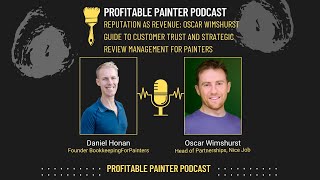
In this episode of the Profitable Painter Podcast, host Daniel (founder of Bookkeeping for Painters) interviews Oscar Wimshurst, Head of Partnerships at NiceJob, about how painting contractors can turn reputation into revenue. Oscar shares his personal journey from investment banking in London to partnership work at NiceJob in Vancouver, explaining why he left the corporate world for software that helps small service businesses. The conversation dives deep into the impact of online reviews: how they affect Google’s 3‑pack visibility, the three ranking factors (relevance, distance, prominence), and the dramatic click‑through advantage of being in the map pack (≈45% vs 8%). Oscar addresses the fear of bad reviews, emphasizing volume over perfection, the importance of public responses, and how handling negative feedback can actually strengthen trust. He then outlines a concrete, automated review‑capture SOP – a four‑step sequence (immediate text after job completion plus three follow‑up emails) and the value of multi‑step follow‑ups, noting that the first text and the final follow‑up are the highest‑performing touches. Automation via NiceJob (or similar tools) is presented as essential for scalability. The discussion moves to referrals, contrasting them with reviews, highlighting their high‑quality but low‑volume nature, and recommending a six‑month nurture cadence, incentive ideas (gift cards vs service discounts), and the need for tracking mechanisms. Oscar explains how to embed reviews into organic marketing: syncing live review widgets to websites, repurposing 5‑star reviews as social‑media content, using review language in ad copy, and even displaying reviews on yard signs, trucks, and apparel. He introduces a visual‑review tactic – attaching before‑and‑after photos from CompanyCam to review requests – which boosts response rates and rating scores. Finally, Oscar provides practical next steps: NiceJob’s pricing ($75/month), a 14‑day free trial that can import the last six months of customers, and special discounts for PCA members, along with his contact information.
Chapters
Welcome to the Profitable Painter Podcast. The mission of this podcast is simple: to help you navigate the financial and tax aspects of starting, running, and scaling a professional painting business. From the brushes and ladders to the spreadsheets and balance sheets, we've got you covered. But before we dive in, a quick word of caution. While we strive to provide accurate and up-to-date financial and tax information, nothing you hear on this podcast should be considered as financial advice specifically for you or your business. We're here to share general knowledge and experiences, not to replace the tailored advice you get from a professional financial advisor or tax consultant. We strongly recommend you seeking individualized advice before making any significant financial decision.
This is Daniel, the founder of Bookkeeping for Painters, and today I'm here with Oscar Wimhurst. Oscar is the head of partnerships at NiceJob, the reputation marketing platform that helps painters win Reviews 4 times faster. A reformed investment banker, Oscar now loves helping small businesses grow and get the reputation they deserve. Welcome to the podcast, Oscar. How's it going?
It's going really well. Thanks, Daniel. Awesome.
So can you tell me about your journey from starting in investment banking to working at NiceJobs? How did that come about?
Yeah. It kind of coincides with a move from the UK to Canada. So, um, I'm English, people may have worked that out by now, but I, um, post-university, I worked for 6 or 7 years in, in London, in the City. And so I was, um, in kind of investment management. So I was working with ultra-high net worth individuals, institutions, kind of managing their investments, helping them save tax, that sort of stuff. And it was, you know, a suit and tie, um, commuting into the city every day kind of job. And having done that for a number of years, my, um, girlfriend, now wife, and I made the decision that we wanted to kind of move abroad and have, uh, try a different life somewhere else. And so we moved to Canada. I now live in Vancouver, BC, and my kind of one aim when we moved here work-wise was to not wear a suit. And, um, so I was kind of really interested in, in getting into the kind of software space and ended up taking a, a, a job, Daniel, with a company you might be familiar with, but Bench Accounting up here in, in Vancouver. So like a bookkeeping software company. And I was working in partnerships there and I loved, I just loved the difference of working with, you know, small businesses and contractors versus working with the ultra-high net worth and just the level of fulfillment you get from providing us a tool or a service that dramatically impacts somebody's day-to-day life versus maybe saving them a few million dollars in tax or whatever. So that was kind of how I made that switch. And then my wife Sarah is actually working at Nicejob in the product team for a number of years. She started back in 2019 and a couple of years ago just let me know that they were looking to kind of build out their partnerships function and recommended that I speak to the guy that was, you know, the VP of partnerships for the group. And initially I thought it was a terrible idea, us kind of working under the same roof for the same company, but had the conversation anyway. And every time I, every time I spoke to somebody from NiceJob, I really liked the mission that they were, that they were on, the people they were trying to help, the problems they were trying to solve. So I ended up taking the role and, and it's, haven't looked back. It's been great.
That's awesome. So I'm excited about this topic today. You know, we're talking about reviews, referrals, reputation management, organic marketing. Yeah, I'm super excited to get into things. It kind of reminds me of, I just finished reading Poor Charlie's Almanac. He goes into all the different tendencies that we have and humans have in their brains. One of them is social proof tendency. Like if you see social proof, that makes you more likely you're going to buy because you want to, you know, follow what everyone else is doing. And also you have the incentive-caused bias. You know, if you have an incentive to do something, you're more likely, you know, going to do it. And these, these tendencies we can leverage to our, to our benefit in our businesses by kind of, you know, getting that key into that lock and unlocking those, those tendencies, using them to our advantage, which gets into the reviews, the referrals, that sort of thing. Yep. And so I guess we could start with reviews. Let's talk about the power of online reviews. How have you seen online reviews change painting businesses' growth, and what impact have it— has that had on clients' businesses?
Yeah, it's pretty huge. I think my first exposure to it, really, outside of checking reviews in my own life for anything that I ever buy, My first exposure to it was when I was a college student and I would, I had a kind of a door-to-door sales job. I would come over, fly over to the US in my summer breaks and sell books door-to-door. And one of the kind of core tenets that we were taught by one of the senior guys in the company is that, hey, people, the reason people buy is they like you, they like your product, and they like the fact that other people are buying it. Often that third piece of the puzzle is like, can be the biggest element there. That exactly what you're talking about, that social proof, that added trust, that evidence that people like the service, like the product, are working with you can have. And, you know, years later now, all the marketing data tells us the story. You know, we know that 9 out of 10 people begin their their search for service on Google. We know that that same 90% of people probably trust the voice of the customer and reviews way more than they trust any ad copy or any sales copy or anything that a salesperson might tell them about the service over the phone. So, so we know that these things matter just in terms of businesses being chosen, um, even just to pick up the phone and call them. But what's interesting is, is how reviews really, the role that they play in actually having painters show up where they need to show up. You know, it's, it's all very well being chosen because your reviews are good, but how do you actually get found in the first place? And the interesting thing about reviews is that they help you show up without having to spend, you know, the thousands and thousands of dollars that you might feel like you need to spend in order to be competitive. Um, where this is most important is what's known as the Google 3-pack, the map pack. People kind of call it different things, but that kind of little Google Maps square that shows up at the top of a Google search about 95% of the time when you're searching for a local service. Um, the 3 things that power those— usually there's 3 companies that show, and maybe like a local service ad, like a sponsored company that's in there. And what powers somebody's appearance in that list is 3 things: relevance, distance, and prominence. Now, relevance and distance, you know, distance you can't really do much about. Either they're in your area or they're not. Relevance, you can do stuff about that. Have you got all the right service tags on your business profile? You know, are you correctly displaying what you do as a company? But the third one, that prominence piece, is a big factor, and that's Google trying to figure out how well known is this business, you know, how prominent are they, how much work are they doing in the community, people— do people like the work? And the only way they can really figure that out is ratings and reviews. And so that's maybe like a one thing that people are getting to understand now. A lot of painters are, are just figuring out that reviews are having a big role in them actually showing up in the first place. And if you get in that map pack, the the results are amazing. When you talk about click-through rates, you know, people actually clicking on that business and going checking them out, it's something like 45% in the map pack versus 8% if you're not in it. So some— it's not these days, it's not even enough to showing up on the first page of Google. You actually have to show up in that map pack to really make a difference. So that's the first kind of— those are the two things I think where reviews just simply having a huge impact. One is helping people be found and the other one is helping them be chosen.
Yeah, that, that's huge. I was actually just talking to Brandon Pierpont of Painter Marketing Pros about this, and his recommendation, if you're a painting business that's under a million, you know, definitely focus on getting those reviews because like you said, you can get in that map pack and, you know, just face— focus on the basics, having that review capture process. That you're always getting more and more reviews. One of the things that when I talk to folks about this topic, one of the hesitations that often comes up is, you know, especially with using automation, if you're using automation like an automated follow-up to get a review, is, uh, what, what if I get a bad review? Or like, there's a, a, you know, a hesitancy there where Should I send this out? Because I think they were okay with our, what we did, but maybe not. But maybe I'm gonna get a bad review. What's your take on bad reviews?
Yeah, it's a fascinating topic. Like, we could do a podcast just on that, Daniel. But just quickly on Brandon's point, I think he's bang right. You know, I think if you're thinking about your marketing approach in general, it's important to kind of walk before you can run. And there really is no point going crazy and starting to spend, you know, thousands on ads if you haven't got the reviews and the reputation to back it up. You know, you're just going to get frustrated with your marketing company because you're spending all this money, people are coming to find you, but they're going with your competitor because they've got a better reputation. So, and then on the flip side, if you're over a million and you're working with a marketing company, by having a really great review strategy, you're just going to improve your overall return. You're going to, you're you're gonna get more bang for your buck with your marketing dollars just by focusing on that one piece of the puzzle. So yeah, it's super important part of your overall kind of marketing stack if you were to look at it that way. But yeah, to get to your question on bad reviews, I think it's, part of it is a bit of a kind of, part of it is almost a kind of philosophy shift and a mindset shift for business owners. And the tricky thing is I think it's hard, you know, if you've invested a lot of emotional energy and physical energy into building and growing this business, and the thought of somebody not appreciating what you're doing, or using a public forum to kind of say something negative about your business, can be a really stressful thing to worry about. But, um, I would say, as you look at it, volume is always more important than to an extent. Like, I'm not saying you should just go and just go mad and have a 3-star rating with 5,000 reviews. That's, that's not going to be good. But the volume and the, and the frequency of reviews here is, is the important piece of the puzzle in helping with these things that we just mentioned. And if you have a 4.7 or 4.8-star rating with 250 reviews, often you're going to look like a much more authentic business than somebody that has 30 reviews that are perfect 5-star rating. Everybody knows that people running small businesses are always gonna run into those people that you just can't please and you try your hardest. Maybe it's some misaligned expectations, maybe it's somebody asking something that you just, you could never do and you try your best to make them happy, but you just can't and they're unreasonable. These people exist. And if you start thinking about real reviews as a, as a public, as a public forum for people to trust your business, then you kind of start worrying less, I think, about those bad reviews. Because what matters is not that the review was left, it was how, how was it dealt with. And often those bad reviews and how people respond to them give you, give the consumer a much better insight into that company that at the end of the day allows them to feel good about picking up the phone and calling them. You know, if you see somebody that left a bad review and the business owner responded personally saying, hey, I'm sorry you had this experience. We really want to make this right. Feel free to call me at this number and we'll make it better. That's an incredibly powerful thing to see and it's a chance for you as a business owner to display how much you care about your customers, to give a demonstration of your customer service in a public space. And then if you get the consumer that came back and they left a little like— some people say, hey, would you mind deleting that review if they figure it out? I think the best thing to do is go back and leave a little edit at the bottom saying, hey, just to add to this, I got in touch with the business owner. He was awesome. I'm in a much better spot. You know, that's— I would say that's like a 6-star review. You know, it's super, super powerful. I was at the PCA Expo, Daniel, with you guys, and I had a guy called Brian come up to me. I think he said I could use this. He said I could use this story, so I'm going to use it. He works for Riggins Painting. And he said, hey, I had a customer about 2 months ago. She was very open with me and she said, the only reason I called you guys is because I read your bad reviews. And so people are used to it. They know that it's out there. It's not gonna turn people off like one bad review. What matters is your response and how you deal with them.
Yeah, I think that's, that's key. That's a, that's a great point. Because if you just like, if I just reflect on how I use reviews, you know, when I'm looking at whether it's purchasing a book on Amazon or a service or going to a restaurant, I look at the bad reviews, you know, and if it does look weird, if someone's like just 5-star, you know, and it's just like, okay, that's kind of weird. You almost like suspect something like is going on there. Are these just bots like reviewing them? But then, you know, so you look, I look at the the bad reviews and kind of look at the business owner's response or the reasoning that that person had for giving a bad review. Because like you said, there are crazy people out there, as we all know. So I think other people know that too. So they are somewhat understanding if you're going to get a bad review. And especially if you can, like you said, demonstrate your customer service process on full display by responding to them quickly, and getting it solved and all that stuff.
Yeah, and people know that nobody's perfect, you know, I think that's, that's what it boils down to. And I don't think people are expecting perfection. And I think that part of me thinks, you know, hey, if I'm a consumer and I'm looking at a business, I want to know that if something goes wrong, if somebody makes a mistake or if there's, you know, some kind of unavoidable mishap, I want to know, I want to feel comfortable that this business is going to deal with that well. And they have, and they take care of the customer and they want to make things right. Because at the end of the day, it all boils down to that issue of trust. You know, the whole point of these reviews is that they're going to try and get somebody from somebody that's just surfing and browsing your Google Business Profile or your website to somebody that's going to pick up the phone and take an action. And anything you can do to increase that trust is gonna, is gonna help you. And if, if there's a nagging doubt at the back of somebody's mind because they're looking at this business that's been around for 15 years and they've only ever had 5-star reviews, that all it takes is that little nagging doubt or that little like, um, that, that kind of negative, um, effect to that trust factor that they might just not, they might just not pick up the phone.
That's good. So, so now we know why we should be trying to get reviews. What process should we be using, or what processes have you seen other painting businesses use in order to make sure that their business is constantly getting reviews, whether that's 5-star or maybe 4-star or maybe 1-star? What process should, uh, that you've seen be most successful in painting businesses?
Yeah, and I would, I would, I would, to lead into this, I would say that sometimes the best, the best defense against bad reviews is a good offense and is getting, you know, for every, every one bad review you get, you get 100 good reviews or something like that. And the only way you do that is by having that constant review engine. Um, a couple of thoughts about how to do it well. I think the first thing is, you know, is SOPs. You know, we hear about SOPs for all the walks of life on the production side of running a painting business, but you should really think about an SOP for getting reviews. And the reason, the reason I say that is that it needs to be something that isn't a manual process. You know, you're not expecting a, uh, you know, you don't want to have something where you're just telling techs like, hey, or telling painters, hey, we, you know, we need to go out and get more reviews. And then some of them are good at it, some of them are bad at it, It's an easy thing to drop. It's an awkward conversation. It needs to be something that's built into your process. That would be the first place I would start. And the easiest way to make it something that's built in is just by automating it. And whether that's Nicejob, whether that's a similar software, or whether that's something that you do yourself, that would be step one is like, how do I, how do I build in an automated process to either to getting a text or an email out or something like that to my customer? That way it becomes something that you don't have to worry about, particularly if you're a business owner. You don't have to say, right, at the end of every day, I need to send out 3 text messages to customers, or I need to go through all the different customers I had this week and get things out. It's just, it's unrealistic. It's not scalable. And it's gonna have worse effects than if you just automated. And then the second thing is, how am I following up? You know, I, when I go and speak, like when I was down at the PCA, I think the biggest takeaway that I want people to kind of leave with is what's my follow-up process? Because people want to help you out, they're just busy. And I think a lot of painters get frustrated because they know that reviews matter. They ask their customers to leave a review, the customer says, yep, I'll definitely do that. And then, you know, they check a week later and it hasn't happened. And then that's, then they kind of get into the mindset of, oh, well, you know, it doesn't work for me. My customers just don't leave reviews. And that's, that's a, that's a very kind of piece of negative self-talk that I hear quite frequently. But the chances are, if they just followed up, it would be a completely different picture. To give you an insight into that, Nicejob has a 4-step process to get reviews from customers. We send a text message after the completion of a job, and then we have 3 follow-up emails. And if you were to look at the performance of those individual steps, 1 through 4, the first text message is always the best performing one. And the reason that— the reason for that is you're asking at the right time. Like, timing matters with these things. You know, somebody's just come in, they've seen their brand new painted kitchen, they're like, oh, this is awesome. And they get a text right then asking for a review. You've got a lot of momentum on your side. But after that, the next best performing step is the fourth one. And so it's kind of just shows the value of that follow-up. And these— and that just shows me that these people are on your side. You're not bugging them. They don't get annoyed with you. You know, we've got 30,000 home service professionals on Nicejob, and, and that, and that data across the performance of those steps is, is consistent across the piece. It just shows us the value of having that process. And that's— and it comes back to the automation piece and why that's so important, because I talk to painters and say, hey, how many of you have got time to follow up 4 times with every single customer? And then I'm going to say, Oscar, not in your life. But if you can automate that process and build that in so you don't have to think about it, that's when— that's when you really start doing some damage with, with getting reviews.
Yeah, yeah, that's, that's really interesting that the It makes sense that the first request would be the most responded to, but the fourth one is the second most, not the second or third one. That's interesting that it worked out. It works out like that.
Yeah, it's amazing. And I often look at accounts like I was looking at one, actually. Yeah. So we work with guys from A1 Painting, A1 Painting Plus. I don't know if it's— I forget the exact name, but I met them down at PCA. I think it's Lacey. And they actually have a 5-step process. They've added another, they've added another message onto their Nice Job campaign that happens 30 days after the 4th one. And it's crazy how many they've added, another 200 reviews just from that, just from that step alone. And so I just think about all the painters that are just leaving reviews on the table just because they're not building a stronger follow-up process. You know, if you're just, if you're just doing one message, great. Like, at least it's a start. That's better than just not asking. And at least you have that automation and you're doing something. But I kind of, I promise people that are listening that if you have the ability somehow to build in a multi-step follow-up process, you're going to be amazed at the results you get.
Yeah, no, that's, that's really good. One of the things that I've heard, the hesitancy with automating this is, you know, they might be afraid, oh, I'm annoying people, which you kind of addressed that we kind of saw through the data that you're not really annoying people. They just haven't got to it yet. They're busy. But does NiceJob have a way to realize when someone has actually gave that review, it's not gonna keep reminding them to give that review, right? It can actually—
Yeah, we do. Yeah, we do. And I think that's kind of our secret sauce, if you will. It's this ability to, is the ability to match your customers up with the names, you know, of people that are leaving the reviews so that we're only following up with the people that haven't left it. Now I would say the caveat to that is it's not, it can never be 100% because occasionally you'll see that somebody leaves a review and they use like some, they spell their name wrong or they, you know, use a random initial instead of their name. So, you know, occasionally the odd person kind of falls through the net, but by and large, it's, it's the reason that we can build this amazingly robust campaign is because we have the ability to only follow up with the people that that need reminders. Yeah, that's crucial.
Yeah, that's awesome.
Okay, cool.
So I'd like to try to dig into referrals because referrals are huge. I mean, getting referrals and your— if you can get your business to grow off of referrals, that's just money in your pocket. So you don't have to go out and pay for Facebook ads, you don't have to pay for direct mail, you don't have to go door knocking. You, if you're, you know, if you can get your referrals up high enough, that, that's, that's where you want to be, right? So what, what have you seen work with painting businesses as far as getting referrals?
The first thing I would say is that, um, just in the comparison of reviews versus referrals, I think referrals have this amazing reputation because You know, they're super hot leads. People don't often have to work hard to close them. But often the downside to referrals is it's often a one-to-one relationship. You know, one customer makes, maybe you're lucky and they make 2 or 3 referrals, but often they might just refer you to somebody else they know that needs it. The power of reviews is that there's a limitless number of people that can see that review and it almost acts like a referral in and of itself out there in the market. So I think that's an interesting thing to kind of, to, to look at those two things and for people to really kind of refocus on where am I gonna direct most of my energy? I would probably direct most of my energy towards reviews. But that being said, referrals, I think the difference with referrals is that it's difficult to kind of pinpoint that exact moment because often people don't know somebody off the top of their head right there and then that, that is looking for somebody. And what you really need to, to build into your referral strategy is, is consistency over a longer period of time. And so where in order to get a review, you might look at a time horizon of 2 weeks to build a campaign. Whereas if you want to enroll somebody into a referrals campaign, so with the NiceJob referrals product, ours runs over, over 6 months. And I think that kind of, that cadence of nudging people and reminding them, but over a much longer time horizon is much more effective than just bombarding them in the short instance, particularly with kind of projects like painting where it doesn't come around too often that somebody's looking to do a painting project. So that's one thing. The other piece—
Sorry, go ahead. I was gonna say that makes sense because you might have an outstanding experience with, with somebody and completely, yeah, I'd refer you. But, you know, I, I don't— right now I don't know anybody that's getting their house painted, so I wouldn't be able to give a referral even if I wanted to.
Yeah.
So, you know, but over the next 6 months, maybe even a year, maybe that will, that'll come up. Be like, oh yeah, I know somebody.
Exactly. And it's just, it's just about staying top of mind. It's just about It's just about making sure that you're touching them enough times over a longer period so that when something does come up, they know who to think of. And the other thing you can think about is just using incentives in your referral, like making sure you're letting people know that if you do do this, you know, either there's a, there's a gift card in it for them, there's a discount off a future service, or there's something that you can offer where you can, where you can incentivize that referral. Kind of coming back to that, you know, the Poor Charlie's Almanac piece about You know, if somebody knows there's something in them for them, they're more likely to remember to do it, and they're more likely to think of you over, over a competition. So I would say that again with referrals, a lot of the same principles apply. The more you can automate it, I would say asking for referrals for painters is even more of an awkward conversation than, than asking for reviews because you're kind of asking somebody to tap into their personal network and to kind of almost put themselves on the line vouching for this other person. So again, the more you can take yourself and your own kind of personal embarrassment out of that situation and hand it over to a prebuilt campaign, the more, the more, the more success you're going to have. And the other thing I would say is the importance of having some mechanism to track your referrals. So having some way of knowing where the lead came from and who they came from. So that way you can follow through on any of those promises you've made of incentives or things like that. And that way you can also give a more dedicated sales funnel to that lead that came through. You know, you can drop the name of the person that referred them. You can use that project as an example in your— when you're going through your estimates or whatever. So yeah, so tracking effectively, tracking referrals is really important. Yeah.
Are there any particular incentives that you've seen work exceptionally well for doing a referral program, like whether it's a discount on future services or, you know, just cash, or is there any particular one that you've seen work particularly well?
I think it depends on service line, right? I think if you are lucky to be in a, if you're lucky to be in a space where you have a lot of repeat business, like exterior cleaning, for example, it's much easier for you to offer those future service discounts. I think in painting, where somebody may not have— they might not be looking at an exterior repaint for another 5 years or something, it's difficult to build up the same level excitement with a future discount. So I would be veering towards gift cards or some sort of tangible physical gift. I think The nice thing about a gift over a discount is that you can really look and touch and feel it, and it is likely to have knock-on effects of turning that person to even more of a vocal supporter of your business. So I would kind of be looking down those lines if I was a painter, but I can't say that I've seen— I want to add the caveat that this is just me thinking off the top of my head. It's not based on any science.
Yeah. So we talked about reviews, referrals. How do we, how do we tie these things into our overall organic marketing strategy? What can we do to, to, to really make ourselves shine in our communities and, and to get our organic marketing going by leveraging those two things, referrals and reviews?
Yeah, I think it's the difference between being passive in your approach and being kind of proactive and on the front foot. And I think if you have an intentional strategy towards review generation, you will see, you know, you will see improvements and you will see benefits just from some of the stuff we talked about earlier. You know, you'll start showing up more, your phone's going to ring more. But like you're talking about, you know, there are, there is way more that you can do to actually put the customer's voice at the front and center of your marketing approach. That, and we know based on the data, it's gonna land with consumers and it's gonna help you. The first couple of things you can think about is how am I using my reviews on my website? How am I using my reviews on my social media? Those are two kind of really easy places to start. Social media is one where I know that painters are encouraged whenever they go to some sort of marketing, whenever they hear a marketer talk about the importance of being on social media and being present. And it doesn't matter if it's good, you know, you just have to do things the whole time. And I think that can be daunting and intimidating because you have to be constantly thinking of content. Well, the good news is that A 5-star review is super easy content that you don't have to do anything to. You just have to blast it out there and people love to look at it. It's, um, it's free, easy, and performs really well content-wise. On your, on your website, when it comes to your website, I think there's really easy ways that you can sync your reviews automatically to your website and you can, that just has an immediate impact on the trust factor. You know, if I go to a painter's website and I read a bunch of testimonials that are just written in the same copy as the website and it's done in the same style and they're permanently written on there, again, those things are ringing in my mind. I've been like, is— does this person exist? Did they just type it up? You know, it's all slightly unbelievable. But if they are, if you have some kind of widget on there that is linking, you know, a live stream of your reviews as and when they're coming in, so you can see that, hey, this review is left on Google 2 days ago, it completely transforms that believability from that website. So, and there are free tools out— sorry, go ahead.
I was gonna say, and I think Nicejob has a widget where you can actually just plug that in to your website.
There you go. I was gonna, I was gonna talk about free tools, but yes, it's all included in the, in, in the Nicejob product. So, um, Nicejob has a number of different widgets that we, that we do put on there, um, and you know they have an amazing impact on the conversion rate of that website. So, so how many people, how many visitors are actually turning into leads? That's what we look at. But over and above those two things, Daniel, I think there's an amazing opportunity to, to kind of leverage your reputation or what people are saying in your advertising strategy. So you, are you looking through your reviews and are you seeing what do people like? If I know that people in my area like the fact that I'm on time. Am I talking about that in my paid ads? If I know that people really like the fact that I'm knowledgeable, am I saying, you know, the most knowledgeable painter in Vancouver or something? These are really easy ways that you can have a kind of holistic approach to your marketing using the voice of the customer. And, and then if you want to go over and above that, you know, there's loads you can do. You can put it— you can put reviews on your yard signs, on your truck wraps, on your t-shirts. You know, you can get creative with it, But I think it's really, it comes from that philosophical change of how am I shifting from ad copy that I'm writing into marketing copy that my customers are writing.
Yeah, yeah. And I really like the, the idea of coming through your, your reviews and seeing the voice of your customer, like you said, and also just using their, the 5-star reviews as easy content, like social media, like you said, We, we keep hearing over and over again, we gotta keep posting on social media, and that's just like such an easy thing, low-hanging fruit. That's amazing, because who doesn't want to show off the 5-star review? And people are interested, like you said. So yeah, I think that's great.
Cool.
Are there any other things that you would recommend paint business owners to consider, whether it be referrals, reviews? Organic marketing, anything that we haven't covered so far?
I would say, I'd say, I'd say one thing that's particular to painters that I think is a good way to take, like, if you're doing reviews already, a good way to take it to the next stage is thinking about how you, how you can make those reviews visual. Are you attaching photos of the work you did to those reviews. A really, really great thing you can do is actually when you're sending review invites out to people, why not just attach a photo of the finished product and just remind people of what you did, particularly in those follow-up messages? Um, that's been proven to have an impact on a) the number of people that leave the review, but also b) the overall, the overall rating impact that I have. People are much more likely to leave those great reviews if they're just reminded of the awesome work that you did. One thing that Nicejob's recently built is we've built an integration into CompanyCam, the project management software that has a kind of inbuilt review, the photo capture tool. And we kind of, we're a month into having this integration and it's amazing to see, you know, we have painters that are taking before and after photos on CompanyCam, syncing them automatically to Nicejob. and then when that review invite goes out via Nicejob, the customer sees a before and after photo. And that's just like a really, really cool thing that you can, you can build into your approach and then think about that from the backend or the marketing side when that gets turned into a social post and everybody else is seeing the work that you did along with the review that you did. If somebody is going onto your website and they're seeing a bunch of before and after photos with attached reviews of happy customers, it's like you're just taking your review strategy from kind of a 2 to a 7, you know, overnight. So I think that would be something I would add for sure.
Oh yeah, that's awesome. A CompanyCam integration pulling in those pictures and it's the before and after are incorporated into those automated follow-ups like, hey, we did your— here's what we did just as a reminder, like to get a review from you. That's awesome. That's super, that's super cool. Cool. Well, awesome, Oscar. I really appreciate your time. How can folks learn more about NiceJob and how can they get a hold of you?
Yeah, I mean, I would say on NiceJob, check us out, Google NiceJob, read our reviews. That'll tell you everything you need to know. Our website is get.nicejob.com. And everything that you need to see is on there. Um, my email is Oscar at Oscar@NiceJob.com, really easy to remember. I would say if you're a PCA member, we are a national business partner of the PCA, so there are, um, there are discounts available to PCA members to try NiceJob. Um, even still, you know, we have a 14-day free trial that everybody gets just to try out the software and give it a go. Um, the nice thing about that free trial is it's not just you kicking around having a look at things. We can take your last 6 months of customers and run a campaign out to all of them. So we have people that can get 20, 30 reviews just in the first 2 weeks of using Nicejob, which is, which is nice when it's completely for free. Um, after that, if people are interested, um, Nicejob is $75 a month. So again, you talk about something that really doesn't break the bank for something that is a pretty foundational part of your marketing approach. You know, if If you can generate 100 to 200 new reviews a year that bring in a whole bunch of business, NiceJob is very quickly going to pay for itself. So, so yeah, I'd love to talk to anyone. Feel free to reach out. I'd love to chat.
Amazing. Awesome. Thank you, Oscar. Really appreciate your time. And for those listening, we will talk to you next week.
Thank you, Daniel.
More from Daniel







What’s REALLY Holding Your Painting Business Back? (Find Your Bottleneck in 5 Minutes)



