Revolutionize Your Contracting Business: Harnessing Success Mindset with Tom Reber
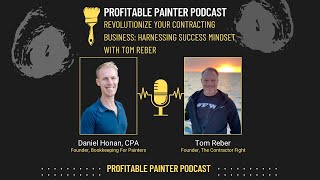
In this interview‑style podcast, Daniel (founder of Bookkeeping for Painters) talks with Tom Reber (founder of The Contractor Fight) about how painting and home‑improvement contractors can transform their businesses by changing their mindset, pricing, estimating, sales processes, and team culture. Tom introduces the T‑BAR framework (Thoughts → Beliefs → Actions → Results) and explains how early‑life stories shape limiting beliefs about money. He shares a recession‑era case study where he doubled prices, trusted the math, and grew profit despite fewer jobs. The conversation then shifts to common gross‑profit problems, the importance of accurate production rates, and a step‑by‑step method for estimating work. Tom outlines his five‑step Shin‑Fu pre‑qualification system (Motive, Money, Bracketing, Truth, Influencers/BS‑meter) and shows how it shortens sales cycles, raises average job size, and improves the effective sales rate. He also stresses collaborative culture for setting production rates, the power of “unexpected intentional touches” (personalized follow‑ups with past clients), and the need for consistent branding and content creation. Practical resources (thecontractorfight.com/cheap) and actionable take‑aways are provided throughout, aimed at helping contractors break out of mediocrity and build profitable, high‑impact businesses.
Chapters
This is Daniel, the founder of Bookkeeping for Painters, and today I'm here with Tom Reber. Tom Reber is the visionary founder of The Contractor Fight, a powerful movement and training platform that has empowered hundreds of thousands of home improvement contractors to elevate every aspect of their lives and businesses through transformative coaching. Tom helps contractors crush mediocrity and build thriving, high-impact businesses. The Contractor Fight community provides contractors with essential education, camaraderie, and encouragement as they tackle their next level of success. With a journey as unique as his approach, Tom has worn many hats. He's been an HGTV host, campus minister, successful contractor, painting contractor, and proud United States Marine. Tom's podcast, The Contractor Fight, and Contractor Fight TV on YouTube deliver hard-hitting advice actionable strategies, and inspiration to help contractors take their business to the top. The Contractor Fight has become the premier coaching program for serious contractors committed to achieving their highest potential. Welcome to the podcast, Tom.
Thanks so much for having me. Appreciate you.
I'm super excited about today's, uh, podcast. Um, you know, I was just telling you beforehand, I've seen you around for years and I've learned a lot from what you've put out into the world. And so I'm excited about this, uh, this conversation today, diving into sales, marketing, mindset, all that good stuff. So thanks again for coming and joining me today.
Awesome. It's always good to get around a bunch of painters. And, uh, since I, I come from that world and grew up in a— with an uncle who was a painting contractor, grew up working for him and stuff, and And I'm excited to see— I'm assuming you'll be at the expo this year with PCA. That's, that's in my backyard here in Colorado Springs. So that'll, that'll be good as well. I don't have to travel this year. It'll be nice.
Yeah, that's— it's going to be great. I'm excited to head over to Colorado this year. This past year was in Orlando, so I'm in Orlando. I didn't have to travel, so now I have to pay my dues and travel across the country. But it's a good place to travel. I'm excited to do some skiing over there.
Absolutely. Yep. And we're going next week up to Breckenridge for a few days.
So nice.
Yeah, man. That's awesome. Thanks for having me. I appreciate it.
Absolutely. I, I'd like to dive into mindset. Yeah. I think this is a topic that a lot of people think is like voodoo or like mindset. What do, what do I gotta, you know, which I kind of, to be honest, I thought that too, you know, starting out in my entrepreneurial journey, I was, It's like, what are people talking about here with mindset? But I've learned over the years that it's, you know, you got some self-limiting beliefs and that really determines on, on what actually happens in your business. What's your approach to, to mindset?
Oh, boy. Yeah. Well, you know, I— we're all wired a certain way. We all have influences growing up and, and, you know, these influences with around us and, and that we're around, they, they feed stories into us, and pretty soon those stories become, uh, you know, we just show up each day and they're on autopilot, right? You know, so for instance, I grew up where I heard like making money was for other people, not for Reapers. Like that was just a phrase in the house. Or, you know, rich people, you know, were, um they probably ripped somebody off, stepped on somebody's back to get there and stuff. These were just the things. And so, you know what we, you know, you know, you know, all the sayings, you know, what you focus on improves and stuff. Well, if that's what you're focused on, if that's your mindset all the time, then you're putting a roadblock in your way of being more successful, at least in the financial area. And, and I think, you know, for me, you know, just to kind of get to the point on this, you know, in the contractor fight, we've adopted a a little phrase we call T-BAR, T-B-A-R, that, that I kind of stumbled upon through the years just in my own experience that, you know, your thoughts become your beliefs and your beliefs, you know, produce actions and those actions get you results. And most of our thoughts, you know, depending on what magazine you read or scientist you follow or whatever, you know, we have 60,000 to 90,000 thoughts a day. They say that about 90% of them are on autopilot from the day before. Many of them are subconscious and a lot of them are negative. And so because we're just on autopilot and so, you know, one of the places that we start all the time is you got to wake up every day and tell yourself the right stories about success, you know, like, okay, fine. I grew up in a family that never made money, but doesn't mean that I can't make money, right? I'm, you know, one of the things I tell myself, I've been telling myself this every day for years. I write it down, I say it out loud. Uh, it's kind of hokey, but I literally just tell myself over and over that I'm a magnet for money and— money and success. And the more you take control of your thoughts, those thoughts become your beliefs. And so, like, for instance, you know, I'll just— you know, painting contractors, like, um, a lot of guys are like, oh, I can't find anyone to work. Right? Nobody wants to work. Well, if that's the story that you're telling yourself, you're conditioning yourself to see evidence for that all around you. And so you have to— you have to— you want to change your life, you want to change your bank account, have more success, you have to start with changing the stories that you tell yourself. And I'm not a woo-woo guy. I'm not, you know, you know, into meditation and stuff like that. But I can tell you, man, when I'm when I'm focused on things like gratitude, when I'm focused on opportunity, when I'm focused on, you know, like, hey, nobody wants to work. Well, reframe that into, all right, I'm in Colorado Springs. There's 500,000 people here. I know there's at least 3 people that would love to work for my company and have a great career. Like, it's a different reframe. Doesn't mean it won't be difficult. Doesn't mean you're not going to go through some people, but You know, if the more you tell yourself something, the more you believe it, and then your actions reflect that, you know, another big thing, you know, you're bookkeeping for painters, you know, so you're talking money with people all the time. You know, if you tell yourself over and over that people are cheap or you can't raise your prices, you believe it, then you don't take the action that you need to take to save your business, you know, and then you end up being on this hamster wheel your whole career, busting your tail, serving hundreds of clients a year and wondering why you're the one standing there with nothing left in the wallet, you know? And it's because You fundamentally don't believe you're worth it. You don't believe it's out there, and you're not taking the actions to raise your prices, get more efficient, take the actions that you need to get the results that you want.
It makes a lot of sense that we're basically telling ourselves stories and we, we have to take control of those stories and help have them work for us instead of just whatever we were kind of programmed when we were a kid, you know, and our parents told us we're this or we're that, or other people are telling us what we are. Basically, we need to take control of our own stories, our own thoughts, and craft them to accomplish our goals. And it— I've been reading a lot of biographies this year, and that is like a common theme with all, like, Napoleon, Jeff Bezos, uh, all these guys. They always have this self-belief early on. I mean, not, not when they're already rich, but like from a kid, they always have this crazy self-belief in themselves and what they can accomplish, and people see that in them. And it's basically, it sounds like you're saying that's kind of what we need to do for ourselves is kind of take control, control those stories and control what we're thinking about and how we're thinking about it so that we can improve our lives.
Yeah. The foundation of all this, it's, it's really about controlling the things we have control over, not being a victim to the circumstances. So, you know, back in the recession in '08, you know, our painting company outside of Chicago, we, you know, it was like we were doing, you know, 300-something jobs a year. And it was— it felt like it was overnight that the phone stopped ringing. It totally dried up. You know, I know a lot of your listeners were probably in business then and can relate to this. Like, it was humming along and then all of a sudden was like, wham! And it was really tough. And the knee-jerk reaction of a lot of our competitors, and even ours to some degree, was, oh, we got to cut our prices to get work, and all this other stuff. And, um, and I remember, um, and this is probably right around the time that I really started to get into some of this mindset stuff, and, and really those things I shared about earlier where how much they matter. I made a choice. I just said, you know, there's ups and downs in the economy all the time and people are always winning no matter what's going on in the economy. And so let's find a way to win. You know, it's just new field conditions. You know, I was a high school football coach for 17 years and, you know, if it rains and there's 6 inches of mud on the field, you both got to play in it and find a way to execute and win, you know? And I think it's no different in business that field conditions will change. And, and so I reframed everything and I asked a question of my business partner. I just said, hey, how can we make this the best thing that's ever happened to our company? Like, literally, that's how I reframed it. And there were two big things that came from, from that. And we ended up, you know, long story short, we, we were actually on less work. We were more profitable through the recession. Some of the moves that we made with compensation and taking care of our guys and, um, the way we marketed, the way we priced. But we, um, the two biggest lessons I learned— how to be a better leader, and I learned how to market when things were tough and I didn't have the budget that I used to have. And that's where I got introduced into like content and inbound marketing and those types of things, and writing blogs and creating the content, which is, you know, been the foundation for pretty much everything I've done ever since. And it all came because of that necessity in that moment of having to figure it out and refusing to be a victim. And while everyone was cutting their prices, I, I'll never forget this. I, my business partner, we had our, our weekly meeting. Him and I were, were hanging out and we had, I want to say it was like the last week in November, maybe right into the first week of December. We had like zero, we had our guys were working on, on a couple projects, and those were the only jobs that we had, and we had like nothing in front of it. And I came back in the next week, literally in one week, I booked 6 weeks of work for our whole— all of our teams. And he's like, what the heck did you do? And I said, I said, I raised our prices. And he just looked at me. And I said, because I was doing the math, I was like, You know, I'm sure you educate your people on this all the time, but like, guys, if you're— you have your overhead, right? And you're cutting your prices and your gross profits lower, you actually have to do more work to recover your overhead. So I went the opposite. I was like, I damn near doubled our hourly rates during the recession, sold a lot less work, but we recovered overhead and made money. With less leads and less sales because I trusted the math. And that's a big thing I've learned, kind of a mindset thing, is that math is not emotional. Math doesn't care what you feel about it. It's the facts. And that's one of the things I love about the numbers of a business. They don't lie. And so that was the move that I had to make. And I think knowing that and having confidence in my numbers created a confidence in me when I was selling that this is what the price has to be. And, and I believe that, you know, that, that energy that we put out, the frequency we operate, the confidence we have or the insecurity, whatever it might be, those things are contagious. They— and people feel that stuff. And, and so really learned a lot about just the power of knowing your numbers and what it takes to not even make a profit, but damn near break even in your business and And that was a huge lesson that, that, you know, I'll never forget. But yeah, we— I booked like that, like the next 6 weeks or something within one week's period. Just I was calling past customers. I was kicking up, you know, we've all done it, beating the bushes, new leads that came in. Like I was Johnny-on-the-spot with them and, and super confident in the way I approach things. And so we actually damn near doubled our prices and And so I share all that because that was the story I chose to tell myself instead of the story of, hey, we better just hunker down and get through this recession and all that other garbage that a lot of people were doing. So yeah, change your story and, and take the actions necessary. Trust the process and you're going to win on the other end.
Yeah, I'm glad you brought up pricing. Because when I do an initial financial review with someone just comes on board and we're looking at their numbers to see, give them clarity on their situation, because a lot of times they're, they don't have clarity on their numbers. So we try to make sure we give that to them when they first come on board. And 8 or 9 times out of 10, it's a gross profit issue and is usually tied to pricing. Like they're just not pricing enough. They're not pricing high enough. Sometimes it's they're compensating too much, but Often it's, you know, you're— they're just undervaluing what they're, you know, they're trying to be the lowest cost or they're, you know, just not pricing. They don't know their margins, what they need to hit. Like the average gross profit's like 40%. Folks are coming to us and they're hitting only 35% and they're— because they're not marking up, you know, materials or labor sufficiently to to hit like a 45% or 50% gross profit margin. And oftentimes, you know, we'll give them the numbers like, hey, here's what's happening. And it looks— and we'll walk them through there, ask them how are they pricing, how are they arriving at the price that their customers are charging their customer. And then we'll say, okay, well, this is the reason you're not charging enough because you're not marking up your materials enough or your labor enough or whatever it is, whatever it is. But oftentimes it seems like it's almost like a an emotional change that they need to make because when they're faced with, okay, that this is black and white, the numbers, and these numbers don't work, and you're— unless you change this, you're going to keep struggling with profitability. But there's like a, a mental thing that they have to overcome that, um, in order to, to get over that hump.
Well, most, most painting contractors who are selling are selling in the manner in which they buy. So, for instance, if you plug in your numbers into your little handy-dandy app that you use to price your work and it spits out $15,000, all right, most people, if they're not aware of this, they think to themselves, oh my God, that's a lot of money. I wouldn't spend that money. And that's the story they tell themselves. And so what you're doing is you're projecting your own mindset crap onto your prospects. You don't know what their situation is. You don't know what a lot of money is to them. Right. And so, you know, I— that's one of the first things that we fix when we work with people is just that mindset around pricing and money and value. And I mean, if I, if I'm in a room of 100 painters and I have them all write down how much is a lot of money, there's going to be 100 different answers. And so you can't do— you can't do the mind reading thing. You know, people, Somebody said to me years ago, it's not my job to find their money, right? It's my job to provide value, fix their problem, solve their issue, add value to them, and it's up to them to decide if they want to spend the money on it. It's not about, you know, it's not about twisting people's arms to buy or anything like that. And, you know, a lot of this comes down to targeting and the right ideal clients and all those things as well. Sometimes it is just, they, I mean, if a painter's listening to this, I guarantee they've heard through the years, we would go with you in a heartbeat. It's literally, we don't have the money to pay for you. You're like, we trust you. Think you do a great job. You got great reviews, great reputation. We literally truly don't have the budget for it. And I get that and I respect that and that's fine. But I think a lot of painters shoot themselves in the foot because they're selling in the manner in which they buy. and that's, that's usually never a good thing for a salesperson.
Yeah. So basically they are not their ideal customer, right? They should. Yeah.
So, you know, unless, unless they're rolling in dough and they're making half a million a year themselves in their pocket and stuff. And it, it's funny cuz I, um, um, when I started making more money through the years, every level I've gotten to, I've actually gotten better at sales because I don't have that story rolling around in my mind, you know? And one of the things we teach in The Fight all the time is you have to market like your next meal depends on it. You have to sell like you're independently wealthy and you don't need the money. And that energy that that creates— and it's not an arrogance, it's just like you're not reeking of desperation to get the sale because you know, you, you make enough money, you know, in our world, you know, our starting point for people is, you know, if it costs you a buck, charge at least 2 so that you're selling it at least a 50% gross profit. And, you know, if you can produce it at 50, that's great. We all know things happen on the site and, you know, whatever it is. But, you know, if you're selling at a 35 and then shit goes wrong on the job, now you're you're not making anything. And so, you know, number one, it gives a buffer. Number two, um, you know, it allows you to deliver a better experience to your clients. You know, you, you've heard all the complaints through the years with contractors like, oh, they started the job, they got a deposit, they were here a couple days and then they disappeared. Well, they disappeared because they have cash flow issues and they had to start another job to get a deposit, and then they get on that roller coaster. Um, and that's you know, generally speaking, because they're not charging enough to begin with. Um, and, and I, I don't think it's just about what they're charging, like, per hour. You know, if somebody's like, oh, I charge $75 a man hour, $100 a man hour, I don't care, whatever it is, um, sometimes you're inappropriately priced because you don't have your production rates dialed in. So, you know, when I when I started, when I partnered with my partner many years ago, we went out and bid a job together. And I want to say our prices were within, call it $500, right? It was, it was pretty close. He had twice the man-hours I had, you know, so it's like we had to get on the same page, you know, And, and this was before we even learned what production rates were and all that. We were just kind of licking our finger up to the wind and going, which way is the wind blowing? This is how long I think the room's going to take. By the time we dialed it in, you know, like if we're just painting, you know, smooth drywall, couple coats, there's no excessive patching. It's just remove the switch plates, spackle a couple holes, you know, to coat the walls. We were 100 square feet an hour. For 2 coats under normal conditions. And then we would add from there, you know, so 12 by 12 room, 8-foot-high ceilings, 384 square feet. That was a 4-hour room. You walk in at 8, you're done with the room at noon. And so, so I think pricing is not just about what you're charging, but it's also your production rates as well.
Yeah. Yes, I definitely agree. And I find that a lot of folks have heard that phrase before, production rates, but they often don't know what it means or, or how to implement it. Could you just give the, the basics of production rates?
So estimating is, I believe, part art and part science. So the science is, um, you know, if I, if I have one wall in front of me, let's just— every, every painter can do this in their head. You have a 12x12 room, so one of the walls is 12 feet wide, 8 feet high. Okay, what— I always screw up my multiplication with 12. Uh, what is it, 96 square feet? I think something like that. Call it 100, right? So that one wall, I think it's 96.
12 by— 12 by 8, 96.
Yeah, 96. All right, I got it right.
Yeah.
All right, so if I go 96 divided by 100, That's 0.96 hours to paint the wall 2 times. So it's 1 hour to paint the wall. That, that's the science of it. Okay. Now, depending on the skill of your team, you know, and those types of things, yours may be higher or lower, right? Yeah. But for us, we just, you know, that, that's what we arrived at doing, you know, thousands of projects through the years. And so we would go in and so our software or however we calculated stuff would, would be set at 100 square feet an hour, you know, so we'd shoot the dimensions into it and it would spit out the man-hours. And then the art of it comes in where maybe there's a drywall seam that's popped, right? And that's where literally you're like, yeah, I think it's an hour, right? Uh, or maybe there's a, um, uh, you have to do extra protection on the flooring or whatever it might be. Just, you know, you're, you're going to add more time. Like, I'm in Colorado. I moved from the Chicago area to Colorado a decade ago. And out here we have texture everywhere on the walls. We didn't have that in the Midwest. And so when we have a white ceiling and a color on the walls, they actually, we actually caulk the gap so that you get a sharp line. Well, you have to add a little time for that. You know, so that's the art of estimating. Or if you're just going off of like square footage, if I'm going, maybe you got a two-story foyer and there's a medallion thing or a recessed tray in the middle of the ceiling, 20 feet in the air, that's only 50 square feet. Well, I'm not going to charge 20 minutes to paint the thing because it's going to take me 2 hours to get up and down. You know what I mean? So that's where the art of estimating comes in. And then So a lot of that is like, and if you're just starting with production rates in the, in the beginning, just assign times that you think it's going to take and then do an after-action report, do a debrief, do a job costing analysis on the end of the job going, okay, how long do these things take? And these are conversations you could be having with your crew leaders. Uh, we always used to have, when we were getting into this, we, we would have, we'd have fun. We'd put a picture on our, up on the wall, on the screen in our crew leader meetings. And, uh, and I would just go, all right, everyone get their pen and paper out. And, uh, the first time I did it, it was just an— it was an exterior, it was like the right side of a house. And I said, how many hours, how many gallons? And at the time, I think we had 5 or 6 crew leaders there, and we had 5 or 6 different hours. We had everything from, from half a day to 16 man-hours to all over the board because we hadn't coached them and trained them how to think on these things. And then by the time I left that company, we, we had it dialed in where we were all within a couple hours or, you know, an hour or two, you know, because we're all on the same page of how, how we got our production rates dialed in. And we would have conversations, you know, I— and this is— I want to say this because I see a lot of contractors have like an adversarial approach to that with their teams. Like the team always points at the estimator, says, you never give us enough hours. The estimator is a sales guy, owner, whatever, is always looking at the crew going, you guys are dragging ass and you're not moving fast enough. And it's like you're bumping heads all the time. I like to think of it like an airplane. You got sales and you got the operations. And, you know, there's always little slight adjustments when you're in the air flying an airplane. The wings are always moving a little and there should be some conversation and some give and take. And, and we— and I want to credit my partner Bruce for this because he ran our operations. He did a great job of creating an environment and a culture where it wasn't an us versus them. And so he'd sit down, you know, a few times a year with the team and we'd go over all the production rates like, hey, where are we heavy? Where are we light? And I'll never forget, I had one of my crew leaders, his name's Jose. He's got his own business now. Great guy, pulls me aside one day and he says, hey, um, I've noticed on the last few jobs you're not giving us enough time for baseboards. And I said, okay. Um, and this is where his maturity really kicked in. He says, but what I've noticed is you're giving us about 15 more minutes than we need per door. And I said, cool. I opened up my software, I removed 15 minutes from the doors, I adjusted it, threw it towards the baseboards. Problem solved because we had a great relationship with that because— and that, that's the leadership part of this too, of being a business owner is you got to create an environment where everybody feels like they're winning, you know, and like our crews are out there busting their tails. They're working hard. They're in the sun. They're, you know, climbing up high and, you know, sanding and all these other things. You know, we got to do our part to make it a place that they want to come to work and they could feel like they're winning every day too.
Yeah, that makes a lot of sense. And building that culture around the production rate seems to be the key because, you know, as business owners, we probably tend to, okay, this is what we got to do, let's just implement it. Like, and changing things in the business can be difficult. And then, and if we're not doing that collaborative approach at getting buy-in from your team, you might hit a wall, uh, and it might not work out. So I love how you you brought your team in, got feedback from all of them on the production rates and adjusted things as you go to kind of dial those things in. So that makes a lot of sense. What is, you know, over the years I've worked with some folks that I've also worked with you and sometimes I would bring up Shinfu or the approach Yeah. Could you, could you dive into your approach for, for sales to give people a sense of, of what your approach is for that?
Yeah. So the— I had an old mentor friend who used to say customers don't go to customer school, right? They don't know how to be a customer for us and we have to educate them. We have to put them on our process. Otherwise we're going to be on their process and the client process is jacked up. Up. And, you know, they're, they're doing what, you know, all the, you know, the TV shows are telling them, and the, you know, other lead gen sites. And so you should go get 17 bids for the project and all this other garbage. And, and so they just, they think it's a cattle call, and they just invite contractors out. Everyone goes through the house, and they write up their bids, and you submit them, and then you take your little hat off and you look up to the sky and you hope they'll pick you and, oh, please pick me, the little peasant painter, you know, and this and that. That's not selling. That's just order taking and, you know, throwing things out. We are not in the proposal writing business. I want to say that again for the people in the back that didn't hear it. You are not in the proposal writing business. Okay, you were in the check cashing business. You were in business to make money and lots of it so that you can provide a great life for you and your family, your employees and your clients, and a great experience and all these different things. And so the greatest thing that we have, most important thing we have is our time. We can't work on our business. We can't train our people. We can't invest in the marketing or network and do all the things that we have to do as a business owner if we're running around meeting with all these people that will never be our client no matter what. So a decade or so ago, we created a prequalification process called the Shin Fu. It's named after one of my old business partners, Steve Schinhoser. And it's basically a short conversation before you get in your truck and you run out there. You know, we get you to send some pictures over or we'll pull them up on Zillow. It's a 5-step process. Step 1 is all about the motive, like what's important to you here? You know, if you could wave a magic wand over this experience, what would it look like? And most of the time it's things that are outside of the paint job. I mean, I don't know. I love talking to a group of painters here because you guys get my analogies. Like I had a, I had a woman many years ago that I asked her, I said, hey, what's the worst thing that can happen on this project? And she looked at me. She's like, nobody's ever asked me that before. And I said, well, I'm just curious. I just want to make sure we get this right for you because I know it's important. And she's like, well, my father-in-law lives with us and he has emphysema. And we had a lot of drywall repair to do and sanding and skim coating and stuff. And so we were able to work that into the bid where, you know, we put up a bunch of zip walls and we had ventilation and, you know, all those different things. And none of the other contractors asked her anything. That was the most important thing was don't kill my father-in-law. Okay. So I had another woman. I, I asked her a similar question. I said, what would make this the best experience for you? And she kind of looked at me and I rephrased it. I said, what I usually— we all have our go-to questions. One of mine for getting motive is really their reasons for buying and not ours. That's what motive is, is she— I said, I said, what's the worst thing that could happen? And she said, if you wake my babies up, I'll kill you all. And, and she wasn't laughing. And I said, tell me more. And basically they were, they were a few months old. They were twins. They never slept at night. They only slept from like 1 to 2:30 every day, like clockwork. And we were doing an exterior and I said, hey, that, that's good to know. I mean, this, this woman, bloodshot eyes, tired mom, you know, we've all seen her, right? That woman. Maybe you're married to her right now and you're going through it, but whatever it's. And so I just said, you know, I said, hey, would, would it make sense if we just adjusted our start time back an hour and a half? We'd take lunch an hour and a half later, or whenever the kids go down for the nap, we'll take our lunch and we'll actually go offsite. We'll go down the street to the park. We'll have lunch. You text the crew leader when the kids wake up and we'll come back. She's like, you would do that? And I said, of course. and I sold the job for like 3 times more than everybody else bid it at because I understood her motive. Okay, so that's, that's motive crash course. The next step is, is the money. Like, let's get on the same page with the money. Once you get somebody's motive, then it's time to transition. And I usually do this by asking permission. I'll be like, hey, Daniel, you know, I think I'm— I'll recite back to them the things they told me that were important to them, like, don't kill my father-in-law, don't wake up my babies, or it has to be done by this certain time because there's this party or whatever it might be. Or our movers are coming and we need it painted before our furniture gets here. Like, hey, just so I get this right, this is important. This is more blah, blah, blah. They're going to say, yeah, that's right. And I'm going to say, hey, would it be okay if I talked about what this might look like financially for you? You always want to ask permission and they're going to say yes. Or sometimes they go, oh, I didn't know you could do that. I thought you had to come out, look at it. I said, well, you know, based on what you told me or the pictures you sent or whatever, I can get you a range. And then I'm going to paint two different pictures, and it's called bracketing. And just for time's sake, I'll just be like, you know, if we're going to paint, paint the exterior, I'm going to say, hey, listen, we can come in here, we can wash it, we can use the highest grade materials, we can go to town. Like there's average prep and then there's like turbo prep, right? Where it's replacing wood, you know, whatever it might be. I'm painting a massive picture. That's going to be— and I'm going to say, you know, something like that all in, you might be looking at, you know, $30,000, maybe $25,000 for that. Or we could come out, just paint everything with one color, a solid product, 2-year warranty, blah, blah, blah. And that maybe you're looking, you know, $20,000, maybe down to $17,000, somewhere in there. And then, then I ask, which of those conversations does it make sense for us to have? You will get their budget 100% of the time if you bracket like that. Okay, do not bracket, do not talk money unless you have motive because it'll backfire on you. It's— we don't have time to go into that today. But then once I get, you know, sometimes they're going to be like, oh well, you know, both of those ranges aren't going to work because we got 4 other bids and they're half your price. And I'm like, yeah, I hear that from time to time. What would you like to do next? And sometimes they say, you know, you can leave or, you know, get off the phone and go pound sand. By the way, this is all done in a 10 to 15 minute phone call. And now I've just saved myself the windshield time, the yard time, the house time, typing crap up, following up for 3 weeks while they're going into witness protection after they got your price, you know, and all this other garbage. And so you want to talk money, just make sure you're on the same page. Step 3, we call the truth. That's basically to protect everybody. Like, hey, if I get out there and I see every— anything on a site visit you know, that's not going to allow me to do it within the budget that we discussed, I'm just going to call a timeout. Because if you go out there, if you don't do step 3, if I go out and they think it's a $10,000 project, you go out and see a site condition or a level of prep or access or something, and now it's $15,000. Now you're, now you're a typical sleazy salesperson that's baiting and switching them, right? So you want to cover that. Step 4 is influencers, like making sure everyone's on board so that you don't get the old, You know, I got to check with my CPA and make sure it's okay that we paint my house and my spouse and all this stuff. You're going to cover that before you ever set foot on their property. And then step 5 is, you know, uh, I don't personally use it a whole lot, but it's called the BS meter. It's a consultation fee, um, where if I think somebody's full of crap and they're just using me and shopping me around, or if it's really far away or something, I'm going to charge, you know, sometimes a $500 consultation fee that's credited towards the job, or $150 or something. Just to really, you know, um, you know, that's why it's called the BS meter. Like, you know, because I want to know that when I go out to the property, I'm going out there to pick up a deposit check. And so when, when you work this, and we have a whole belt system like martial arts, green belts all the way up to several degree black belts based on the number of role plays you do. And the more of these sales role plays you do, the more better you get at shinfu, the more money you make. And what you'll see A lot of, a lot of guys don't like this, but bear with me. You will— a lot of people actually see that their closing rate will go down, but their average job size goes up, their gross profit goes up, and they make a lot more money. And they're saving about 50% on average of their time estimating. Okay, so now you have your time freed up to train your people, to go to that networking thing. To hang out with your family at night instead of typing a bid up until 11 at night and then negotiating with yourself for 3 hours before you hit send. Okay, so, and for us, this is all about we got to stop stealing time, money, and memories from our families. And you got to get what you're worth. And it does us no good to go out and meet with somebody that is never going to be your client. And there's people all the time that, you know, we get DMs and stuff all the time that, You know, you know, you got to— I always make fun. I'm a painter. We're all painters here. I love you guys. I'm just going to preface this with that, that I love you. I'm in your corner. But you people, we— let me just say, we have a tendency to complicate everything. Painter— I work with GCs and landscape and every industry in the contractor fight. Painters are the biggest pain in the ass when it comes to this sales process because you think you got You got to go rub your nipples on a wall to give a price. Okay? And it's like, I got to go rub the wall and look at it. No, you can look at a damn picture. You can get a rough budget. You could go out, firm it up. As long as you're in the range you both agreed to on the phone, they're going to sign the contract. Okay? So quit being your biggest own biggest enemy here and trust the process. All right? Because back to the confidence piece in selling, when you take control of the sales process and you're not doing it like everyone else, you differentiate yourself. Okay. And that builds confidence with the right clients that you want, not the people that you don't want, not the tire kickers.
Awesome. Now, I appreciate you running through that, that qualification process. I'll definitely take that trade of a lower close rate for more money, more time. I'll take that. I'll take that trade every time.
So Well, we have, we have a guy who's a painter in our group, and I didn't ask him permission to tell the story, so I won't tell you his name. He's on the East Coast. He does about $2 million a year. He personally sells every project himself. He's got a great team. He has over 1,200 leads a year, 5% of them from his desk on 15-minute phone calls. Wow. Now you firm it up with a site visit because you gotta go out and put eyes on it and make sure everything's cool, but you tee it up properly. So, so, and real quick here, I'm, I'm a numbers guy. We've surveyed our, our Battleground Group, our, it's a, our big coaching group that we have in the fight. And, the last survey across all industries, the average contractor spends about 4 hours on a bid. Okay, now obviously it depends where you live. If you're in like a metro area and traffic's worse and— but I'm just saying on average drive time, you know, field the lead, drive time, walk around and tap dance for them and tell them how great you are and all that crap. And the typical sales process, it rarely works. Then you type everything up, then you send it, then you got to drive back to where you were, then you're following up. And I, again, I know some of you guys are closing on the spot and that's great. I'm just saying on average here it's a 4-hour process. So let's just be generous and say it's 3 hours. All right. If you have 50 hours or 50 leads a month coming in at 3 hours a pop, that's 150 hours. Okay. 150 hours that you're spending in a, in a process that doesn't serve you. Okay. So those 150 hours times, you know, 12 months is 18 divided by 40 hours a week. That's 45 weeks a year you're spending in the estimating process. And we have a metric that we track, we call it your effective sales rate. So it's what did you sell contracts this week divided by how much time you spent in the sales process. So if you go out and you have a $20,000 week and it took you, you know, you know, 30 hours, that's $660, $666. Okay. Well, you cut that, you cut that in half by using this process and prequalifying properly. And there's a lot on the front end with your marketing that tees this up that we don't we can, we can go in if you want to, but to make it easier. But we're looking, I'm looking at people that are selling $20,000 in a week and they're, they're doing it in an hour and a half. You know, they're taking 10 sales calls, getting on the phone for 10 to 15 minutes a crack. They're closing 2 deals and they're only driving. So you're saving the gas, you're saving your time. Okay. Your effective sales rate is higher. Okay, so I, I like to know for every hour I spend in the sales process, what am I making? Okay, um, and like I said, we're not in the proposal writing business, um, and, and I think when painters can get that through their heads, um, they're, they're going to enjoy life and everything else a little more.
Amazing. Awesome. Uh, what How can folks learn more about The Contractor Fight, what you do, what you and your team do, and, and, uh, where, where should folks go and learn more?
Yeah, well, anywhere online. Contractor Fight, you know, podcast, YouTube, all that stuff. But, um, I got a— if you guys want a tool on how to get started with this sales prequal stuff, you go to thecontractorfight.com/cheap. CH-E-A-P. And the whole idea is getting rid of the cheap tire-kicking prospects, weeding them out so that you can spend your time on the people that are going to pay you. So we have a, we have a cool resource there at thecontractorfight.com/cheap.
Awesome. We'll put that link in the show notes. Any last thoughts or asks for the audience before I let you go, Tom?
Well, if you're working with Daniel, listen to him. He knows, he knows the numbers. You know, number one, you listen to this show for a reason. You want to make more money. I told you before we hit record that I love how you went with the niche of just painting companies because, you know, you're— it's kind of like if you have a knee problem, you'd rather go to a knee specialist than a general practitioner, right? And so you're that knee surgeon for painters. And so, I would definitely make sure that you got your books dialed in and your job costing and stuff. And then I guess on the other end is don't forget to have fun. You know, I've been reminded recently just about the power of enthusiasm in the sales process. And, you know, you're not out there to beg for work. You're out there to solve a problem. And when you go out there and you're excited to meet somebody's needs, solve their problem, and you're creating an alliance with them and you're enthusiastic, that is contagious. People want to work with confident, enthusiastic people. And, you know, and then I think the last thing, obviously, you know, I said we didn't have time to get into it, but you got to, you got to invest in building your brand. If you're not creating content, you're not educating people, you're not building relationships, you're really missing out. I've, in my early days of my career, I cost myself so much money because I didn't take marketing seriously. And, and I have a tip for everyone that'll make you money if you do this. All right. I'll end with this. I know you asked for one closing thought, but I have a bunch here because this shit works. We call it an unexpected intentional touch. So what I want you guys to do, if you're listening to this, is open up your cell phone when this is done, and I want you to pull up a past client. And this is not a bulk message. This is an individualized message. It's, it's great if you could do it in video. At the very least, do it in text. But if Daniel, if I painted your exterior last year or something, I'm going to pull it up. I'm going to go, hey, Daniel, it's Tom with Simplify Painting. And we did the exterior last year. I was just thinking about you. When you get a minute, hit me back and let me know how it's looking. Okay. Takes a few seconds. Do 3 of those a day. Maybe you text one. Hey, Joe, it's Sam with ABC Painting. Just thinking about the deck we did for you a few months ago. I just want to make sure it's holding up well. When you get a minute, hit me back. If you do, we— and we track this stuff in our group. You do 3 of those a day, every working day of the year. Okay. Every salesperson of yours should be doing this, by the way. But let's say you're the only salesperson. That is, that's about 800 of these touches a year. We found that about on average, 5% of them turn into work annually. So that's 40 more jobs a year times your average job size. Maybe they moved, maybe their neighbor was just talking about some— I will tell you this, most days people will not reply. If they do, it'll be like a thumbs up. Hey, looks great. Thanks for checking in. And that's it. This isn't a pitch. It's literally, I care about you. How is the project looking? Or, hey, I know we, we got everything ready for the party a couple of months ago. I just, you know, wanted to check in. How's the paint job looking? And by the way, how was the party? Okay, you're just being a human being. And that— I've got people in the group that, that sell $1 million a year additional just by doing that. Okay. So and it's free. It's, it's marketing. Okay. You're your past client list, your database is a freaking goldmine if you care for it and you take and you nurture it and you stay in touch. And if you notice earlier, I said this is not a mass email, it's not a mass text, it's individual. I'm using their name. If I'm doing it via video, I'm looking into the lens of the camera so that our eyes are connected and I'm not pitching. I'm not, hey, wanted to check in and see if you had any projects for us. It's literally Just, hey, how are things looking? I was doing a workshop for a large painting company on the East Coast last year. I had all their salespeople in the room do it while I was in the middle of the workshop. And within about an hour, the owner of the company was sitting in the back of the room and he started chuckling. And I said, what's going on back there? And he goes, you know, that thing you had us do? He says, I've been texting back and forth with this past customer. I just sold a $50,000 project. Like literally over, over text while we were doing this. And then before I got on my plane the next day to leave, he texted me again and he's like, you're not going to believe this. Remember so-and-so in the room? I said, yeah. He says, he, he just sold a $30,000 project, you know, from the message, those, because I had him send 3 while we were sitting there that day. Took him 5 minutes to send 3 messages and they sold $80,000 within 24 hours. Okay, so guys, You— this has everything to do with being the mindset of a hunter, not a waiter. Don't be a little baby bird, you know, waiting for the Google gods to give you a worm, you know, and all this other stuff. You got to go out and hunt and be proactive and assertive, care for people. And I promise you, you will blow your business up.
Amazing last thought. That takes the award, I think. But yeah, if you're looking to turbocharge your marketing, your sales process, get your mindset right, definitely reach out to The Contractor Fight. I'll put the link for thecontractorfight.com/cheap in the, uh, the notes. I really appreciate your time today, Tom, and, uh, for the folks listening, we will see you next week.
More from Daniel







What’s REALLY Holding Your Painting Business Back? (Find Your Bottleneck in 5 Minutes)



