The Story of Dripjobs with Tanner Mullen
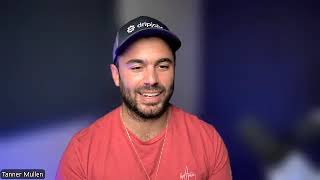
In this episode of the Profitable Painter Podcast, host Daniel Honan interviews Tanner Mullen, a third‑generation painter who founded the painting‑specific CRM DripJobs and authored the book 31 Days of Value. Tanner recounts his personal journey from helping his father’s struggling painting business in 2016, through the challenges of his father’s addiction, to building a team and learning the trade. He explains how he discovered the importance of "speed to lead" in home‑service sales, leveraged HomeAdvisor leads, and built early automations using Zapier and ActiveCampaign. These experiments evolved into a service called Trade Thrive, which helped dozens of painters automate their workflows. Recognizing the limits of third‑party tools, Tanner invested six figures to develop a custom CRM—DripJobs—designed with pre‑built automations for lead nurturing, scheduling, proposals, and production management. He also shares his hiring philosophy, treating candidate pipelines like sales funnels, and emphasizes the value of A‑players. Throughout, Tanner stresses a service‑first mindset, faith‑driven risk‑taking, and practical advice from his book. The conversation closes with calls to action for listeners to try DripJobs, read 31 Days of Value, and adopt a risk‑embracing, automation‑focused approach to growing a painting business.
Chapters
Welcome to the Profitable Painter Podcast, the show where painting contractors learn how to boost profits, cut taxes, and build a business that works for them. I'm your host, Daniel Honan, CPA, former painting business owner, and your guide to mastering the numbers that drive success. So let's dive in and make your business more profitable one episode at a time. Super excited today to have Tanner Mullen on the podcast. This has been a long time coming. I'm super excited to have you on the podcast today, Tanner. How's it going?
Oh, it's going great. And for those of you listening on audio, that was not a recording. He pretty much memorized that intro, and that was very impressive, my friend. So I'm glad I got to see that. You know, some people just play the recording and then they intro the guest. So Good on you for being authentic.
Yeah, I appreciate that, uh, Tanner. And I think most folks have probably heard of you at this point, but there's, there's some new folks out there that might not have. So can you give the listeners just a rundown of who you are, what you do, what value you've provided to the world?
Um, yeah, well, my name's Tanner. Um, I am a third-generation painting contractor. Um, and I'd say I'm the first one to actually figure out how to run a business. So, um, I'm a first-generation painting business owner. Um, started the business in 2016. My story is really started off helping my dad. Um, I used to paint with him on the weekends. I just wanted to save money for an Xbox, and he'd pay me $60 to prep and help him out on the jobs. So that was my intro to the painting world. Um, never thought I'd make it a career, as many of us probably didn't. Um, and yeah, those were the days. And I remember as a kid, 12, 13 years old, waking up real early, you know, I'd get handed 4 rolls of tape, tape off all the trim. Um, and I enjoyed it. I thought it was just interesting work and it was always for good people. people that we, the same type of people we serve today. I just still love that feeling of going into someone's intimate space and changing the way they see their own home. Love the business, love the industry. And there was a time period in my life where I thought I would go corporate and I worked really hard and I was in banking after car sales and insurance. And I wanted to, I wanted to run a branch. I wanted to climb the corporate ladder. I thought that was the best way to get what I wanted in life. And my mother passes away and she was kind of like the back office admin for my solo painter dad. And it just sent him in a spiral. And there's so many stories like this of just mom and dad running the business and chaos when it comes to the paperwork. So, you know, he just would paint and bring the money home to mom. And after she passed away, he just kind of gave up and fell into an addiction and kind of spiraled. And then from that point, I said, well, I have a choice to make. Either I continue to go up this corporate ladder and, you know, fill my bucket in terms of what the world sees, or I can reverse course and go back home and live with my dad and my younger sister and start a painting business. And listen, I wasn't naive. I knew that there was money to be made, but I didn't know how to paint. And it really wasn't a long-term plan. I just, I wanted to help my dad. That was kind of the goal. I wanted to help him get off of drugs. And I felt the best way to do that would be to put his hands back to work and help him find his purpose again. It was just a calling, really. Did I know it would turn into what it now has become? Not at all.
Yeah. And I appreciate you sharing that story. And that is actually how the book starts out. You just recently released a book, 31 Days of Value, which I started a few days ago. And yeah, that, that story that you mentioned with your mother passing away and your you going back to help your dad and your sister who was still living with your dad at the time, about 14 years old, I think, and, um, figuring out kind of your why of why you were starting the painting business, uh, you know, day one, because 31 Days of Value kind of break it up. I like how you structure this book. I hadn't seen that before where you kind of like, uh, take people through each day story around that too.
But yeah, it's, it's that, that was a big part of it.
Yeah. Um, and you, you talk about how in your painting business, figuring out, finding your why, sort of, and versus just kind of, uh, because you, you, you take an approach of serving people versus, you know, uh, which is more of a growth mindset versus just, oh, I need to, I need to get money mindset.
Yeah.
And when did you realize that in your life? Was that early on or was that later on? Like, how did you come to that realization?
Yeah, I mean, it's interesting that you dissected that, and that's— I was hoping that would happen when I wrote it. But really, I mean, the goal for me early on was to make as much money as possible, right? So when you come from poverty, you know, your whole view outlook in life is I've got to make money in order to— it wasn't really to be happy. It was to avoid chaos, right? Because it certainly wasn't easy at home growing up. So for me, it was more like, okay, I'm going to work as hard as I can. And I didn't have a family, right? And I wasn't really in the mindset to take care of my mom and dad at the time, right? I wasn't really— I was young. I was like 17, 18. So once I started to get my hands on some money, and especially when I sold cars, that environment really, to be honest with you, it puts like kerosene on a fire and that fire being your ego. Because everyone around you is money focused and what are they buying, what car are they driving, right? So I kind of just got intoxicated by that mindset of me and trying to prove people wrong. And I remember getting a car that was brand new when I had less than $1,000 to my name and, you know, posting it on social media and feeling like, you know, trying to be cool. But then again, it's like, well, if you really look, I don't even know how I'm going to pay this car payment, you know? So like things like that. And I'm so glad I went through those things so I can see what's really important. Even at the bank, you know, it was more about me. It was just, you know, how far can I go? I'm breaking sales records. I was really good at what I did. And it's tempting to just think about yourself. But what's interesting is, is the moment I just gave all that up and turned to God, you know, I said, look, you know, I don't need any of this stuff. I don't need the accolades. I was even— I was getting so many awards that it was getting embarrassing. I kind of shifted my mindset at that bank because I they kept calling my name. And I was like, I wasn't really happy. I just knew that my dad and my sister were struggling at home. So I just turned around and I just left. And it was probably shocking to some people because they were all striving for what I had. And to see someone leave to just go start a painting business, and it certainly wasn't cool back then. It was just, I didn't even know anyone else doing it. I knew one other person actually, and that was, he still paints to this day and he used to come into the bank And I also believe that was a sign too, because I saw it in him and I said, oh wow. And we would talk about painting and, but it certainly wasn't as cool as, as I think it's become. Um, so that was also a challenge. I didn't have a Facebook group to lean on or a network or I did have Eric Barstow's course though. That was cool. Um, I think everybody and their mother has come across something from that, that man, which I had a chance to tell him, which was really neat. I said, hey man, you had a big part in my journey. But I think his course gave me a lot of hope because I certainly wasn't a painter. Okay, let's be honest here. I can paint, but I certainly wasn't going to go from corporate salesperson to get paint on me, right? So my mindset was I was going to sell the jobs and my dad was going to do the painting. And that's kind of what we had planned on, but it definitely didn't work out that way. But to answer your question, man, that's where it started. It was like my business was born from— I wasn't really looking to capitalize financially. I was really just trying to save my dad's life. That was it. So everything from that point on, even to this day, I look for the route that has the most impact instead of the route that you know, gives me the most money.
Yeah, no, that, that was, that was really powerful. And, um, so 2016 you started the painting business with your dad, and take us from there. Like, what, what happened with the painting business? And I know obviously you own Drip Drops now. Like, what, how did all this come to—
Yeah, that's it. That's a big leap. So 2016, I go back Uh, first job we do is for one of my high school football coaches. And how funny is this? This week, after almost 10 years, he reached back out for an estimate on the outside of his house. And I just felt that moment of, wow, that's crazy. You know, like 10 years ago I was in his house and he had given me an opportunity to paint, um, I think it was 3 bedrooms and a bathroom and I didn't know what I was doing. So I relied heavily on my dad and I haven't lived with my dad in years because I went away to college. So this is like my first week back. So I lived about an hour away from college. So I went back to his house with my sister at the time. And this was like a true restart, right? You know, this is like, I went to college, I felt the feeling of being independent. I was doing my thing, making good money. But again, I just had to lean on that impact and we found a job, right? So this was the first job and it was so bad, man. I underestimated how bad my dad's drug addiction was because I don't know if anyone listening to this has someone that they know that has battled addiction, but they're really good at hiding it. Very good manipulators. And I just kind of was naive to it. And come to find out, you know, we in the morning, we're hot off the start, you know, I'm not seeing anything that's weird or anything out of my dad. But then by 11 o'clock, I come downstairs to check on him to see if he needs anything because he was painting a little bathroom downstairs and he's hunched over, like falling asleep, nodding out. And at that moment, dude, I was like, I don't know what's going on, right? So this, this, this embarrassment started to like fill me up in anger, you know. And I'm like, man, I quit my job and I thought you were on point. Like, I thought, you know. And as I've matured and understand how addiction works, his body was going through a withdrawal and, uh, and he had, he had physical needs that needed to be taken care of. And that pattern, uh, continued for, man, at least a year of just helping him manage that in some way. We would— I would wake up at 5 in the morning to take him to a methadone clinic, uh, before the work got started so he could make it through the day. That was, that was my first, uh, and I've never told anyone that, but I feel like it kind of lines with how severe it was, um, early, early on. So yeah, that's how it all started really. And you know, not to make this a somber episode here, but he is sober and he's thriving. He's a contributing grandfather to his grandkids. And again, man, at that point in time, just, there was no light at the end of the tunnel. So what's great about that was, is I had to kind of fire him, as you would imagine, um, for a good amount of time. So, and I had to take it over. So I had to literally, you know, start from scratch. I rallied a couple kids that I knew from high school, um, that wanted to paint with me. So it was me and a few others that I had rallied around and said, hey, I'm selling these jobs. And I learned from scratch. I watched, uh, Chris Berry's videos, Idaho Painter. Got to see him and thank him, uh, in Colorado when I went up there. And, uh, I mean, I remember there was one time I was sitting in the front lawn of an exterior. I didn't know how to turn the paint sprayer on to prime it. And I'm sitting on the front yard looking at YouTube. Trying to watch a video of how to turn on a Graco and prime it properly and get it ready to spray. Because my dad had been doing that up until the point I let him go. So there's just some things, man, that I had to learn. But in retrospect, man, it's just made me a better leader and really instilled a passion for me for the industry as a whole to help others.
Yeah. That's incredible. So you making that one decision to, to go back home, um, it seems like it probably had a pretty big impact on your dad's life and the trajectory of it, where now he's— thankfully he's, you know, sober and, and everything. So that's—
oh, there's no doubt he'd be dead. There's no doubt. Yeah, man, it was— and it was one of those God things, man. Same thing with my sister, just using the painting business as a vehicle to serve others. And I think even to this day, man, there's so much opportunity in my painting business that I still run to this day that I see where we can impact the lives of the team and even some customers. I had a lady the other day, she lost her husband and he was always the one that did the painting. And I saw this in the notes and I had our supervisor call her directly. And for, for many reasons, but one of which to just instill confidence that, hey, listen, you know, we, we know what happened and we're the right choice, you know. Um, I have like a— I want to protect her in some way. Yeah, yeah. So things like that, they come up. And again, man, it's all about serving.
Yeah. Um, so 2016, you you start the business, you had to fire your dad so he can take care of himself. And so now you're, and you got some of your, your buddies from, from high school and everything to, to hire as painters to help you produce the work. So were we like 2017 now or?
Yeah, this is about 2017, midway through the year. I'm probably about 7, 8 months in. I'm starting to get some momentum. I've committed to this thing. I'm like, okay, I think this is what I want to do because I'm making money. You know, I'm like, okay. I can do this. You know, I liked being my own boss. I can't deny that, right? Coming from corporate, you're 9 to 5 in a cubicle. So there was a lot of pluses in that time period for me. And the game really changed when I got a good painter. His name was Louie. And Louie was a real painter, man. And for me, I was like, you know, throwing these jobs together and dealing with a lot of mistakes and touch-ups and that was the hard part, man. It's just the quality wasn't there. I'm the type of person, even in drip jobs, like I don't sell junk. I can't, like it's not in me, right? So I knew I had to, but it came with the price of me fixing everything. And there was a lot of time where I would be the last one on the job. So I mean, that was the big thing, man, was for me is just making sure that the quality was there. So the game changed around that time, man. I had a guy that could stain. I had a guy that could do the difficult work and teach our team how to paint the right way. So we had a lot of on-the-job training, including myself, to get a proper product out, which was, you know, which was a big shift. And then from that point, I realized that I needed more leads. I was slowly buying HomeAdvisor leads at the time. And this is from my background in car sales, insurance, where I knew I needed leads. I mean, that was a no-brainer. So HomeAdvisor was easy for me because it was like, okay, well, if I just pay these people, they're going to send me customers that are wanting paint jobs right now. And that was huge. And I knew speed to lead was also important. Call them right away. So I would always be the first one to call. And this is kind of what pivoted me into understanding how valuable automations were for home service business because I'd be painting and these leads would come in and I'm seeing $75, $85, sometimes $120 for these leads. And I'd call them, I'd stop what I was doing, right? Call them, no answer. So it's like, okay, now I have that stress in the back of my head. I gotta capitalize on that lead cost. Call again, no answer. Text message. Oh, okay, I got a response. Okay, well, that's good. So cool. Email, got a response there. But when you get 4, 5, 6, 7, 10, 12, 15 leads, trying to keep track of each lead at each stage of where that specific lead is, it's impossible. So that put me on the automation journey that is now DripJobs.
Yeah. One thing I want to come back to that. One thing you mentioned before was that one, one key hire, hiring Louie. And this is something you talk about in your book, is, you know, getting a key person in, in your business can make the world of difference. And you actually have like a deliberate process for hiring somebody and bringing them on, and you, you kind of treat it like this, your sales process, where you kind of have that speed to lead concept for candidates where you're, when they come into your candidate pipeline, you're, you're doing the same type of thing where your speed to lead to them or speed to candidate to give them kind of like a great experience going through your hiring process so that they want to work with you. Obviously, you're also vetting them as well for culture and skill. Too, but you're, you're giving that, uh, professional— that professionalism so that they're excited to work with you and bringing that enthusiasm into your business. That was, that was something I thought that was really cool in the book. You're, you're going through these tactics on how to improve your sales process or your, your hiring process, and of course your sales process too, but your hiring process, recruiting process, uh, which I think a lot of folks miss where they understand that they need to have a strong sales process, but you also need to have the same strong hiring process. And it might even be more important because, you know, getting that key person, that key A-player, and can make it the world of difference in your business.
Oh, it's everything. The battle is won at the, at the draft, man. Yeah, it really is. I mean, the battle's won. I mean, and it's the same thing in sports as it is in businesses. You know, you got to have a couple A players. You really do. And it's either that or if you're the only A player, it's really hard to win. You need people that hold their own and some if you want to scale a business. And for me, it's like I want to, I pounce on applicants that show that they have interest in our company. I don't treat them like I don't need them. Um, I want, I think momentum is really important in business. I think there's a big difference between someone applying today and getting a phone call right away than 3 weeks from now. I don't know what can change in 3 weeks, but I know that if I'm an applicant, I apply and within an hour I get a phone call and an email, and then the next day I get a phone interview. There for that, I get an in-person interview, I'm probably going to feel desired by that company. And I think anybody would enjoy that feeling of being wanted. And I think that's so unique and rare that we can actually capitalize on that and showcase that and be bold enough to do that. That's how my leadership style is. It's like, I need your help. Not sugarcoating it. Need you. You know, if we're going to do this and I have a bunch of guys right now that are still riding that same momentum because they know that we value them and they equally value the company and that creates loyalty, you know, so yeah, that's a big part and the same thing with a lead, right? So that, you know, I want my, I want every lead to feel like they're the most important lead. You know, I want every lead that comes in to Premium Painting to feel like they are the only lead that we Got, and I think we should look at that. We should say, okay, well, if we didn't have a lead come in for 2 weeks and we got a lead, how would we treat that said lead? And we'd probably do what? We'd probably call them 3 times a day, text them 3 times a day, and email them 3 times a day. And we'd say, hey, we're here for you. We're your guy. So I found a way to automate that. And, um, and that's made a big difference in, in, in our growth and, you know, our systems.
Yeah.
Yeah.
I think, uh, there's like a stat. There's like the, the average job seeker is on the market for 14 days. So if your hiring process takes longer than 14 days, you might lose whoever you're trying to hire.
Makes sense.
Yeah. So, um, Speed is super important, not only in sales process, but also in the hiring process. So you were saying on, you know, you're getting leads from HomeAdvisor, Angie, and getting these leads coming in, speed to lead, super important. And you started thinking about automation and how you could automate this because just being a slave to your phone is not good. So what happened there? Was this kind of when you started thinking about drip jobs or? How did that, how did that work?
Yeah, so, so I had to build it first. So one night, real late, 2 AM, I start putting together automations. I'm like, okay, I, I, I learned what a webhook was and I didn't even know that you can integrate things with HomeAdvisor. But once I saw that, and this was before AI, so peak level resourcefulness here. Once I, once I knew that they offer a webhook, they don't make it easy. It's not like, hey, connect. HomeAdvisor to your CRM. They've never done that. I don't know why. But you have to go through this department and you email them and you can have your leads posted to a webhook. So I said, here's the webhook, send my leads to this. And in Zapier, I was able to take that data and send it to a program called ActiveCampaign. And you probably know what that is. Very common popular software for email marketing. So I would send it to ActiveCampaign. Well, what does it do once it's in there? Well, I had an email sequence built instantly, and then an hour later, 4 hours later, and then the next day, the next day, the next day, the next day. And it would be an email with my logo, and it would say, hey, we're excited to get you on the schedule for an estimate. Please reply if you want us to meet with you. Okay. So that was my first iteration. So I set it live and I kid you not, I'm talking the next morning I had a lead come in and it was while I was sleeping. It was like, I think it was like 1 AM. Okay. Next morning. Right. Because I was tired night before. So I went to bed early. Lead comes in and I get a reply. Okay. And it was awesome. It was like, yes. You know, like, okay, well, we need more information. Right. But it was really cool because that lead would have been possibly lost. I mean, you think about it, someone's like up late at night, just like me, getting stuff done. The next morning's like a different world, right? Like my emotional intensity is gone. And like, if we look at human behavior, like I'm looking at a sauna right now and I got this guy who's trying to sell it to me. And I think Friday I was like, I want to buy the sauna. Okay. It's expensive. Like, more than I'd like to spend on anything, but it's a really good quality product. Okay. He says, when do you want me to call? I'm like, all right, well, I don't feel like talking right now. So I told him Monday, right? So there's 3 days. Now I'm doubting the purchase. Now I'm like, I don't know if I want to buy. If he would have got me on the phone Friday, I probably would have gave him the credit card. Like, but time kills all deals. And this is such an important psychological concept for how leads work, because in most cases, those leads are attracted emotionally, and emotional intensity tends to decline after time.
Yeah, I think some of their stats out there is like, in the first 3 minutes, the value of a lead goes down by 50% or something like that.
It's insane. It's literally just drastic. So I started to pick up on this, and I'm like, okay, so now obviously a week or two goes by, and I'm like, wait a minute. Why don't I just look up a scheduler and put a link in the email? So I did it. I put a You Can Book Me link in there to save the step of me having to reply and go back and forth. And guess what? Would you believe it that it worked? So now I'm getting leads booked and I also had an issue. Well, what happens when they book? They're still getting the follow-ups. So I had to come up with an automation to remove them from that sequence once they booked. So I had to connect You Can Book Me to Zapier and have that communicate so it can remove that lead and all sorts of stuff. So I just, I just nerded out on all this. And next thing you know, I get on Instagram and I start sharing my journey, right? So it's right when Instagram Stories came out where you can get like 500 views, like when it first first came out. So I started sharing and following anybody with painter in their Instagram username. And what's awesome about painters is everyone puts painter in their Instagram username, so it made it easy to connect with other painters. And I was just sharing my automations and what I'm doing and giving advice and a lot of the stuff I do now, just not as much on Instagram. Um, and if— come to find out, there were some other painters that needed the same thing built. So here, here I go. Building out these automations for these painters to help communicate with their leads. And I named that company Trade Thrive at the time.
What was this, 2018?
That was 2018. Yeah. Okay. Yep. 2018. So at one point I had 50 companies that I had set up with these automations at various stages. But a problem happened is they kept asking me to connect it to all these different tools to do proposals and invoicing and payments. As they should have because it was kind of messy. And that's what prompted me to begin the process of building out a custom solution, which is now Drip Jobs. Nice.
Yeah, that's funny. So in— because I was running a painting business while I was doing Bookkeeping for Painters, which is the former— what I called Profitable Painter CPA before. Um, when we started in 2016, I started running a painting business in 2017 or '18, and I was doing the same thing, like putting all these Zaps together and, uh, you know, to automate things because I was running bookkeeping for painters, but I was also in the military, so I was deploying. And so I wanted to automate as much as I could. Uh, so just hearing you, like, I was doing similar things. Um, in 2018, uh, and, um, I, I started helping other folks too, like, but I did it after you, uh, did like 2019 or so. But, um, it's just interesting to the parallels there. So you, you had 50, 50 painting businesses that you're building automations for, and then is it 2018 you started thinking about like creating a CRM, or was it—
actually, yeah, I mean So I never had, at first it wasn't like, hey, I'm going to build a custom solution. I reached out to this company that had something similar and I asked them if I can white label it because they had proposals, invoicing, and scheduling. And I was like, hey, can I white label this? So I can call it Trade Thrive so I could plug in my workflow to it and sell it. You know, like, so, because everyone wants to create an app. Right? Like everybody understands, but dude, once you get under the hood of an app and you start looking at the price of what one costs to get made and the upkeep and the maintenance, it scares a lot of people away. Like, and I understand that fully because it's not easy. It's one of the hardest things you could do. Um, I got to talking with them and I liked them. They were good guys. I was like, okay, these guys seem good and they have developers, you know, and They were like, look, you know, you want too many changes. We can give you a price. And what we'll do is we will make you something custom that fits your needs. Well, they didn't really know that I had been thinking about it for a long time. So when I had the opportunity to tell them what I wanted, I freaking gave them a 50-page document outlining screenshots and this and this and this and this and this of everything that, you know, I had one shot at it. So I was like, you know. So they come back with a price that was, I'll just say above 6 figures to get it done. And this is right at COVID. This is like, man, I say COVID what? COVID probably started really getting crazy around like March. So this was like July of 2019. And they sent me this bill and it's a lot. And I go to my wife and I say, look, I think this is going to work. I do. I really do. I was like, you know, you got to trust me on this. And begrudgingly at first she did. And I went all in. I was like, all right. So here I am not knowing a lick about true software development. You could show me a line of code. I wouldn't know anything about it. I trusted these guys to render me the first version of Drip Jobs. And I'm just writing checks. So now we're doing paint jobs and literally almost every dollar I made that year went to the development of the first version of Drip Jobs. It took a year to get a user actually using it.
Wow. That's, that's, that's pretty impressive.
I mean, it was not—
you took a lot of risks there and, and big risks, you know, have potentially big payoffs. And obviously that, that did happen. And that's kudos to you for having the belief because obviously there was a big need. Um, in retrospect, it's clear. I don't— and, and I think, you know, thinking back to that, those years, um, I definitely saw the need too, uh, but I didn't, I didn't take the risk you did. Uh, yeah. And, uh, what, what made you so sure, like, to, to invest over 6 figures in, into that concept?
I mean, I think like anything, man, you have to bet on yourself. I knew that I had the vision, right? I, I'm a big vision guy. I can see it in my head. Um, now of course that doesn't come with a guarantee, but God got me to that point, man. I can't take credit for anything really, man. I, I wish I had a good answer for you, bro, but I just have faith, you know. I, I— the intent was pure. It was, I wasn't trying to be a multi-billionaire. I was just trying to help the people that I served. I love helping. I love seeing people's face illuminate when their problem is solved. Right? And somehow God put me in this position to be the customer. There's no other CRM founders that I know of that are a painting business owner. I think the Paint Scout guy might be. But is he?
Yeah, yeah, he's, uh, he is. Yeah, so it's very— well, well, it goes— Paint Scout is, uh, but Paint Scout is more of an estimating software. Your Drip Drop is more like a CRM. Uh, so there's definitely—
it goes to show, right? Like, I think that's also why they've done well is because he's the customer, right? And, and I think that was— I, I had the validation of the— because the being a painting business owner and knowing the value of what this thing would be if I had it in my hands. You know, but I don't think anyone was doing automations at the time. And I knew how popular lead gen was becoming, right? Because I also tried to be a marketer too at one point. I was going to do Facebook ads for painting contractors. I even had a couple of clients. Like I was starting to get serious into it, but that wasn't my passion. My passion was systems, optimizations, drilling into Zapier and creating workflows. So yeah, man, I mean, at the end of the day, like that's kind of what it was. It was obviously a lot of faith, you know, God to give me that opportunity to serve a lot of people. But more importantly, well, not more importantly than that, but also just knowing, like it's almost like you just know it because it just like you probably did, right? You're just probably like, this is a need, man. You know, the automations, these guys are busy. They're the— painters are the best customers because they're very busy and they get a lot of, they get a lot of, uh, they get a lot of customers or leads, you know. So just easy problem to solve, but the execution was the biggest gray area for me. It's like, I don't know code. I don't even know, you know, here's one of the interesting things, Daniel. Um, in today's world, you know, you have Figma, you can mock up these designs, you can I mean, you can create things before they exist and you spend $100,000+ on them. I didn't even have any mockups of what our app was going to be. I just said, I want this, this, this, and this. And I'm building it off of PicMonkey at the time, kind of like a Canva. And I don't know anything about design. So, you know, again, just not being afraid for it to be imperfect. If you saw the first version of Drip Jobs, even I kind of cringe at it a little bit, but at that time I was just so happy to get something out that worked, you know?
Yeah. No, Drip Jobs definitely, it's, I love it because it's, uh, for painting business owners that want like an out of the box, something that just works and it does, has all the prebuilt automations for speed to lead, nurturing before the estimate and after the estimate. and then also accepting the proposal, electronic signature. Um, and then it has it all built in with managing it, like the sales piece into production management and managing the—
here's the thing, Dan, check this out. So you can appreciate this because you've done automations, right? So in any other CRM, and you might know this, I don't know if you have experience building this specific one. Any other CRM, you have to create the contact and then you have to find the contact and create a deal in your automation. We just made it to where when you send that contact over, it creates the deal. That automation in and of itself is worth whatever it is that you have to pay because of how long it takes to do that in any other CRM. And there's a lot of other automations that I've built that are just in there. One of my favorites is the booking form. Booking form gets filled out, contact gets created, text message goes out, email goes out, card gets created, an estimate requested, appointment request gets created automatically. And now you have a customer that's primed and ready to go for their appointment. So from the rooftops, I'm always screaming, you know, learn how Drip Jobs works because there's so many automations that are, you know, built in.
Yeah, it's out of the box. I mean, like, you don't have to know anything about automation. You just know that it's a thing and you just—
it's a thing. That's how you play, you know. It's like, it's like Tesla, man. You, you don't really need to know how the freaking car drives from point A to point B. That's not the value. The value is it just works. That's the value.
Yeah. So you're 2020-ish, um, you go on and what, what, and you're still running your painting business, right? Like you're, you're still doing, doing that, but you're also now starting a software company too, right?
Yeah. Well, I mean, I was in limbo, man. It was, it kind of sucked at first because I was begging for updates, right? But they had other customers. So I don't know how much development time they were allocating DripJobs when they were building it, but Every Friday I'd look for that email and some Fridays I didn't get an update. I went through 2 project managers, which was hard. So I was just running my painting business, sending money. And then one day I get back and they're like, okay, it's ready to look at. Right. And they got it up. They got like a screen up. And I just remember I brought my wife in like, look, look, it's working. You know? And it was like the sales pipeline. Like that was it. And at the time, dude, the sales pipeline had Every stage in it, it wasn't, we didn't separate them between sales and jobs. So here's the interesting part. So they send it to me and they billed me for that. And then I look at it and I'm like, hmm, I'm going to change that to make it to where the jobs pipeline is a separate thing. Right. Well, they got to bill me for that. And it's like, it was this constant. I had to really become an efficient product manager of Drip Jobs and I didn't even know it.
right?
Because I couldn't see it. I couldn't see, I'd have to, I couldn't just say, hey, build this to see if I like it. I had to know what I needed and then tell them to build it knowing that I can't go back without paying more money, more money. It's like building a house and then having a ton of change orders. And it's like, they're raking in the cash. You're not getting anywhere. It's slowing the project down. So I had to be certain in my kind of outline of how I wanted this app to go and just be, you know, be willing to, I mean, you should see it. I have emails of like, they wanted to charge me to read my emails because they were so long describing everything I wanted in perfect detail of how everything was supposed to work. They hated me, you know, but hey, I had to, you got to do what you got to do. You got to, you got to take what you want.
Charging you to read their emails. That's, that's funny. Cool. Well, we have a few minutes left. I want to be cognizant of the time here. Where, where can folks learn more about— well, one, you have your book that's coming out or that's came out, sorry, The 31 Days of Value, which I definitely highly recommend. I haven't finished it, but the, the pieces that I've read, I mean, it's very You know, finding your why, we talked about that. But there's also a lot of practical stuff like cash flow plays, which I liked, or just how to deal with certain situations that you get into, very tactical, which was cool. And, you know, we talked about the hiring piece, like a lot of, a lot of good stuff is in this book. So I definitely recommend it. And if folks want to learn more about Drip Jobs, what can they do?
Yeah, I mean, the easiest thing you could do is sign up, right? I mean, that's going to be the best way to learn about it. But it's dripjobs.com. But more importantly, take us up on the free training. You know, I try to weave Impact into everything I do. We have yet to charge for a setup session. That's something that's important to me. I don't want anyone to feel that they have to pay to learn our software. So I think, you know, take us up on that. You know, we want to be a partner in your growth. And, um, man, I just, I think if you're not automating anything, you don't really know what you're missing out on. You just think that what it's, it's almost like, think of it like this, painting with a paintbrush and a roller and not ever like seeing a sprayer. And then when you see a sprayer and you see how fast you can get things done, once you see it, you're like, oh, I can do a lot. You know, that's the best analogy I can give you. So if you're not automating anything in your business right now, I'd love for you to be a customer of ours so we can, we can bring you to the water.
Yeah, absolutely. And I work with about 200 painting businesses and we took a look at, we track all the CRMs everyone uses and over 50% of folks that we work with use drip jobs.
That's amazing.
That's cool. Yeah, it's, it's definitely the number one CRM from, from folks that we work with.
And those are good people. I know you work with good people.
So if you, if you don't have a CRM, definitely check out, uh, DripJobs, especially if you have a painting business. But, you know, even if you have a closely related trade, uh, I know you guys work with some folks on, in the, in those areas too.
Yeah. Oh yes. Yes, we do. Yeah. We are not, We have painting-specific features, but we serve anyone that works in someone's home.
Awesome. Well, I really appreciate your time today, Tanner. Any last thoughts or anything before we let you go today?
Yeah, take a risk. If you're listening to this, you might be hesitant about maybe even hiring Daniel, right? You maybe watch the guy's podcast and you think you can do your own books. you know, you know, don't let money be your God, you know, look inward, you know, make the investment. You're going to do one of two things. You're either going to learn or it's going to pay off. That's it. Those are the only two outcomes in business. The worst outcome, and I believe that's the failure outcome, is when you fail to take action and fail to make the decision. Or you fail to make the decision because you're scared of losing money. And that's what most successful business owners are really good at is they make decisions. They make the investment. They try it. They learn. They iterate. They make another one and boom, they hit. So develop that mindset. It might even be like that with you thinking about drip jobs. You might say, well, I don't want to learn a new software. I'm not really up with technology. Well, got to take that risk. You know, got to take that risk. There's a reward on the other side. So. That's my, my final piece of advice to anyone watching this.
Wise words. I appreciate it, Tanner.
Thanks, Daniel. Appreciate you, buddy. Appreciate the time.
More from Daniel







What’s REALLY Holding Your Painting Business Back? (Find Your Bottleneck in 5 Minutes)



