The Tech Touch: Chris Kiefer's Journey to Digital Marketing Mastery in the Painting Business
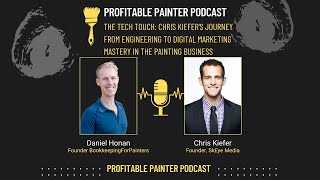
Chris Kiefer, an engineer who built Boolean Review software for painting contractors, explains how personalized review requests with crew photos and service keywords turned Webfoot Painting into the highest-rated painter in the U.S. He argues AI is like electrification, shrinking hour-long tasks to minutes, and warns against automations without a clean data foundation.
Chapters
Welcome to the Profitable Painter Podcast. The mission of this podcast is simple: to help you navigate the financial and tax aspects of starting, running, and scaling a professional painting business. From the brushes and ladders to the spreadsheets and balance sheets, we've got you covered. But before we dive in, a quick word of caution: while we strive to provide accurate and up-to-date financial and tax information, nothing you hear on this podcast should be considered as financial advice specifically for you or your business. We're here to share general knowledge and experiences, not to replace the tailored advice you get from a professional financial advisor or tax consultant. We strongly recommend you seeking individualized advice before making any significant financial decision.
This is Daniel, the founder of Bookkeeping for Painters, and today I'm here with Chris Keefer. Chris Keefer is an engineer, entrepreneur, and thought leader. In 2013, he founded Sky Media, a top medical marketing and branding agency, followed by the launch of Boolean Review, the highest converting Google review software in the market. And in 2022, created Boolean Automation, a consulting arm that helps residential and commercial painting companies implement no-code automation solutions. He is also the host of Pursuit of Purpose, a celebrated podcast that interviews successful entrepreneurs and inspirational people worldwide. How's it going, Chris? Welcome to the podcast.
Yeah, thank you so much, Daniel. I'm looking forward to today's conversation. Thanks for having me on.
Absolutely. Glad to have you here. So when did you— when did your entrepreneurial journey begin and what took you down that path?
Yeah. So I, I feel like from an early age, I always— I had friends. My parents were both teachers. But I had friends whose parents were, you know, business people. And I, I was always— I've always been intrigued by leadership. And I, from— I just was like, I feel like I want to start a business, I want to have a business, but I didn't know what it was. And at the same time, I also loved, um, when I was a kid, Lego. I mean, I still do secretly love Legos, K'Nex, uh, building, you know, uh, just building stuff. And so my whole life people had told me, oh, you're going to be and you're going to be an engineer, you're going to be an engineer, you're going to be an engineer. I got an engineering degree, went into the real world as an engineer, and very quickly was like, I don't— this is like— I just didn't like it. So there's more of a story there, but jumping to the end, I basically left that job and started a media company at the time, um, and I had never taken a business class, but I just felt like as a 23-year-old, like, I wanted to try my hand at business before, you know, I got married and had kids and, and like had more responsibility. So basically that was the beginning of like jumping into the deep end and learning how to swim. And that was 10 years ago. And yeah, ever since, I mean, I've learned a lot along the way. I took a break from the entrepreneurial world, which at the time I thought was like permanent. I felt like I was a failure. In the, in the marketing world and went in to take a marketing job as a marketing director for a painting company. And then that was like, again, looking back, realizing like, wow, this is that like my— the way that my life has played out of getting my hands dirty and working and building a media company, a marketing company for 6 years, and then leaving that and then going and working as a marketing director. And then leaving that role and now doing what I do today is just like this perfect mixture of skills. I still think like an engineer. I'm very nerdy. I love technology. And in my current seat as the owner of Boolean and doing— we basically have the Boolean review software, which we could talk about if you want, or the Boolean automation services, which again is just like I love tech, and I think I want to help robots take over all the parts of our lives that we don't like. Um, my personal mission is to champion the relentless pursuit of purpose. Um, and that's my podcast, is how I, um, I explore that and talk to people. But I'm just a— I would say I'm a, a pretty intentional person that loves deeper conversations, and I really don't think that people should be doing tasks that computers are capable of doing. We shouldn't— the computers should free us up to do what we love doing, which is solving more problems, talking to people, hanging out with our family, going fishing, or, or whatever.
Yeah. What inspired you to create that company focused on, uh, Google reviews, like, specifically?
Yeah, yeah. So I, um, was a— this marketing company, Sky Media, that I had built. We were just your typical, like, millennial digital marketing company that we would, you know, we'd help with websites. And it started with videos, and then people were like, oh, this video is cool, like, our website's old, could you make us a new website? And we were like, uh, yeah, we could do that. And they're like, what about Google Ads or Facebook Ads? And it just kept growing. And then it was this one, um, dentist was like— an oral surgeon actually— had said, hey, I want to get more reviews, could you help me do that? And so it was very panic initially. We built this, uh, this little like mini— it's— I don't even know if I would have called it a software in the early, early days, but we built this thing and it started getting Google reviews for him. And then we were like, well, maybe instead of just using email, what if we texted people as well? And then we're like, well, let's add pictures. And then it just slowly evolved into a more robust app. Then we started selling it to other dentists and That I would say is a lesson I learned in business, is when you— first of all, like, it's hard to just like invent a product from scratch, but it's very easy to look in the world around you and say, I see a bunch of different pain points that people are having, and answering like, what am I most suited to solve for people? So that's what I feel like I did, like, unintentionally, was like, hey, someone needs reviews, I think I could solve that. I solved it, it worked great, but it was a manual process. And because of the medical space and HIPAA laws and how locked down APIs are for, um, just medical software, we weren't ever able to integrate. And this is my second big takeaway, is looking back, I had this amazing software and it truly was like high converting, really great for a number of different reasons, But in the dental space, it was— it required a physical behavior change of the employees in the business because we couldn't integrate with these softwares that the, the practice management systems that the painters or the dentists were using. And so foolishly, as an entrepreneur, I was like, well, I guess they can't get this off the ground. Like, we, we had 50 dentists using it, and it was like some nice passive income, but it was just like beating my head into the wall, like trying to get people to sign up, and then they find out that their people have to manually type in phone numbers and emails of their patients, and it just was a hard sell. Zip forward to, I was like, you know what, I'm gonna stop like trying to make this work. It's clearly not working. And I took a marketing job as a, a director for this painting company. And it was at that job, at that painting company role, 2 months into my job, I asked the owners, hey, could I connect my software to like— and they're like, you have a software? Like, what? Like, you're doing— this didn't come up in the interview. And I was like, well, it's for dentists and I made this thing, but I feel like it would work. And this other reputation software that we were using was terrible. And it wasn't like— we had the business literally had 60 reviews, 67 reviews after 15 years of painting. And they were like an $8 million, $9 million company. And so I plugged in my software and it was like Overnight, this flood— like, we were getting reviews daily. And in the matter of like 2 years, they surpassed 700, then 750. And then all of a sudden, all these other painting companies started asking like, hey, what are you guys doing for reviews? How did you get so many reviews? And it literally— it was just like this organic thing that had been created because I wanted to solve a problem. I did. I tried to sell it to dentists, couldn't integrate. And then I I literally like gave up. I was like, well, I'm just going to go take a marketing director job. And it wasn't until I was in that role and then saw the results that I was like, whoa, this is crazy. And so that company is called Webfoot. You can look them up online, Webfoot Painting. They are now the highest rated painting company in the entire, in the entire country based on Google reviews for quantity and quality. They have over 1,000, and they had 67 about 3 years ago. And it's like, it's unbelievable. Like, uh, I couldn't have orchestrated it, um, I couldn't have planned for that to happen. But since then, there's now, you know, we have many, many painters in particular that use the software, and then that we've started to branch out into other home service spaces to use that as well.
Yeah, that's awesome. So it sounds like you didn't have to deal with the HIPAA rules, so it pulls it in from the CRM automatically and basically pulls like their email and phone number and follows up with them to get Google reviews? Is that kind of how it works?
Yeah, so, um, I, I am a— I don't know if you are familiar with Gary Vaynerchuk, but I am a believer in everything in my life that there's no secret sauce. Um, ideas are— the, the phrase that Gary Vee says is, ideas are shit, execution is the game. And so I, uh, free— like, I give away all my knowledge. I try and— I have a YouTube channel just sharing everything that I know about automation and trying to teach people. And, uh, So yeah, as far as— I'll tell you exactly what we do with the review software. We integrate deeply into the, the CRM, the project. Ideally it's a project management software because there's typically the crews that worked on it. We can get the estimator, the receptionist, like anyone that the person interacted with, we include in that review request. And then, um, we encourage, based on the services that the company offers, our requests that go out to painting companies includes the names of the people that that person interacted with. And then it also encourages them to use keywords like, you know, residential painting or interior or kitchen cabinets, things like that. Because a lot of people don't realize this because they're so focused on getting quantity of reviews. They don't realize that the quality of what is in the review content is actually just as, if not more important than getting a lot of them. If you get a bunch of stars that say thumbs up, we love these guys. That is not nearly the same impact that a review that says Susan was so nice from the first time I called the business. John was very informative on my estimate. I got my kitchen cabinets painted. They look amazing. You know, like diving into all that rich information and mentioning the services. If you go on to Google right now and you type in, you know, pepperoni pizza, You're going to see like pizza shops that show up that have customers reviewing pepperoni pizza in their reviews. And everything that you read about that business is going to be showing you reviews of other people that mentioned pepperoni. And it's the same thing in painting.
Mm-hmm. Yeah, that's, that's really interesting. So, so the, the software actually kind of incorporates the staff name to the folks. This, and also it sounds like maybe the services that they provided as well to have like a recommended review. Is that what it's doing is kind of like giving a recommended, hey, you know, it would be great if you give us a Google review. I know you worked with Sally and got your interior painted, so here's a recommended review. Is that kind of what it's doing or is it?
Yeah, very close. And, and we also include headshots of whoever the crew leader was. So the whole thing is like, I literally, I, I architected this entire thing when I— and this was, I did this for painters and for dentists. And then when I got into the painting industry, I was like, oh, this is even better because now I can get even more information from the CRM system, whereas I couldn't do that in the, in the dental world. And so what we're literally bringing in is we personalize everything. So it's coming from the, you know, the crew leader's email or the sales rep's email, depending on who like the lead person is that takes point with this customer. So ideally it's someone that you've communicated with often back and forth. One of the biggest problems with review softwares— actually, I'll say this is a couple of key things here. One is most people, when they connect one of these like big name reputation management— and I won't mention any, but there's dozens and dozens and dozens of reputation management softwares. I don't know of any that are targeting the home service space like we are. And we're trying to craft every single aspect of this with one primary goal in mind. Well, I would say two. One is how easy can we make this for the homeowner to leave a review? It's like the old adage, like, don't make it hard for your customers to give you money. The same thing, like, don't make it hard for your customers to give you positive feedback because most of your customers love you and it can't take minutes. It needs to take seconds to do it. So first of all, that means that we've thought of like who should be sending this. So it's the person that I have a relationship with that is— it's not coming from like admin or like the owner of the company that I never met. It's like, hey, my name's Chris, I just painted your house, would you mind leaving me some feedback? And then you give some instruction, right? So that's the first thing. The other thing is, um, this is an interesting topic. Are you familiar with ReviewGates?
Review gates. Is that, is that, is that like screening folks before you send them a review request? Yeah, yeah.
So that is a terrible, terrible idea to, to have those. The interesting thing is that from a marketing side, if I'm a sales rep of a software that's trying to sell you my, my feature of a review gate, it sounds amazing. Hey, by the way, Daniel, if you ever have someone that wasn't happy we're going to ask them on a scale from 1 to 5, did you enjoy working with us? And then if they say 4 or 5, then we send them to Google, as if it's like some, you know, like secret that people don't realize what you're doing. But in reality, all that you're doing is doing like a review that someone's filling out, and they'll write in some feedback, and they've already exerted all that energy to leave your review. And by the way, you're lengthening the amount of time it's taking them to actually leave a review. And, and then they have to go to Google afterwards to leave the review that you wanted in the first place. And every time someone asks us about this, I ask them, have you used a software like this in the past? And if they have, they say yep. And it makes them feel really good because there's some security that bad reviews aren't getting out onto the web. And then I ask them, how many times in the last year have you actually had someone leave you a negative review that came into your internal system? And generally the answer is like, uh, never or once. So then the question just becomes like, so you're making thousands of your customers, or hundreds depending on the size of your business, jump through all these extra hoops because you're afraid of one person that might leave you a bad review. And, and like, you just— and not only that, you're also the— there's an attrition of people that are willing to go through multiple steps. So maybe instead of 20 reviews, getting posted online. Now you're down to 16 or 15 because some people are like, oh, what the heck, I'm not— I don't have time for this. And then there's also like just loading times. Like, how often do you click on a button and it takes, you know, 10 seconds for it to pull up the preliminary page and then another 10 seconds to pull up the Google page? It's just like you're losing people by, by doing that. So that's one thing that we are very bullish. We have one customer who said, I am— I know that I'm getting a lower conversion on Google reviews and I would like to have this feature, the ReviewGate. And so they knowingly went in, they did it. After a few months, we were like, okay, can you trust us and let us show you you're not going to start getting a bunch of bad reviews? And we, we turned that off. And ever— I mean, it's more reviews beats out the fear of like, what if I get a bad one? Because a bad review from a bad customer is a good review. Like, everybody can read a bad review and realize that the person that's leaving the review is either crazy or they're complaining about price or some— like, something that literally is like, that's a great thing to get a 1-star review on, you know what I mean?
Yeah. And, and some would argue it's an opportunity to show your customer service and respond in a respectful way and, and kind of show, you know, how you take those situations and try to turn them around. So it's kind of— some would say it's an opportunity to showcase your customer service on the internet, basically.
Yeah. And I like to always think back to yourself, just like ask yourself, have you ever left a 1-star review for a business before?
Yeah, never.
So yeah, I have. And I'll tell you, the one time that I did, it was because we went to this restaurant that claimed to be a family-friendly restaurant. We have 4 little kids. We had a newborn at the time and we went in and my wife like had to change a diaper. We go in the bathroom and there was no changing table. So she's like on the floor in the bathroom and I like tried to tell the server and they're like, oh yeah, you know, the owner, blah, whatever. And it's like the server's job isn't to like go tell the owner, hey, someone wants a changing table. So I left a 1-star review for this restaurant that said Hey, you know, we love coming to your restaurant. You guys have great food. You claim that you're a family-friendly restaurant and you don't have a changing table for a family. Like, it would be great if you guys could do that. And I even linked like, here's a changing table that you can buy on Amazon for $150. And if you— once you do this, please let me know because we'd be happy to come back in and change our review to experience your, you know, newly upgraded facilities for a newborn, you know.
Yeah.
And what do you know, they, they eventually put the thing in. We went back to the restaurant and I changed my review. It's like, I'm not doing it. It's like, how else? I think business owners need to think about Google reviews as it's just like a direct line to get feedback to the person that needs to hear it. And again, for normal people, they're not doing it to like destroy your reputation or ruin you. They're just trying to say like, hey, I'm not happy and I'm like this. We've been through the ringer a couple of times. Can somebody just call me that actually cares and wants to resolve my issue? And so again, there's ways to do that. But and we're experimenting with some awesome stuff with AI responding to reviews and alerting the owner, texting people saying, hey, so-and-so just left a bad review so the owner can call that person, you know, within an hour of a 1-star review coming in. You want to talk about like wowing people. It's not like this. Be having a successful home service business is not about being perfect. It's about recovery. Like, you're going to make mistakes. How fast can you recover and then deliver that second time? And people are like, I had a problem, I voiced my frustration, and then they were amazing. And how much better is a review like that? That was like, yeah, I was mad because they got paint on my door. They came out the next day and replaced my door, or they fixed it, or whatever. And it's like, that's a great company.
Yeah, yeah, that's a, that's a, a really interesting perspective. And, uh, you know, I was kind of— before you kind of laid out the argument there, I would— if you would have asked me of it, I would have said that it would have been prudent to have a review gate, you know, to— but I like the way you put it, like getting that volume and then allowing the opportunity to showcase your customer service, you know. Yeah.
And I got a couple other things on that, and that is there was a study that was done, and this is true for Amazon as well. I want you to— this is just the thought experiment, and this is the thought experiment— is proves the study, which I'll tell you in a second. But if you go on to Amazon and you're looking at, um, two t-shirts Okay, or pick a random product, and one of the t-shirts has 10,000 reviews. 10,000, all 5 stars. And again, we're saying thousands because on Amazon generally there's more. For a painting company, let's say it's 100, 200, whatever. All 5-star reviews, not a single negative review, versus another t-shirt that's got, you know, 5,000, 7,000, somewhere in the, in the realm of the same and has, you know, a 4.8 average and, uh, has equivalent— whether it's more or less, they're like, okay, it's about the same, you know. Which one do you trust more?
Yeah, the, the 4.8 looks more legit because it's hard to imagine, you know, perfection— 5,000 people being all on the same page, right?
And it's just like— and that's exactly— it's like, what kind of bot or system are they using to get rid of bad reviews or, you know, it's so like I honestly think that one of the biggest shifts that needs to happen in the home service world is understanding that people aren't working with you because you're perfect. They're working with you because of your customer service. And what better way to show that than to have a lot of reviews? Because this other key thing, I'm not saying that you want a 1-star review if you've got 15 reviews, that's bad. But if you've got a couple hundred reviews, I expect you to have— like, I ran into a sour— like, 3 sour people on the way to the grocery store, you know what I mean? Like, we— there are people all around us that are crazy and unhappy about services, and you're telling me that you've worked with 500 people and not a single person was even mad about your pricing, or like the way that someone looked, or like— I just feel like the idea of like we have to have perfection is just holding you back, and you really need to focus on Like, it's all feedback is a learning opportunity. And most of the people, like, if you're, if you're a painter listening to this podcast, I can already guarantee you that you have a good business. The painters that are terrible painters, they're not trying to improve their bookkeeping and automating processes and working on coaching people. Like, you have a good business. You need to trust your people and just start making it easy for people to give you positive feedback.
Yeah. Yeah, I think that's a great point. Cool. Well, pivoting a little bit away from Google Reviews, the other thing that Boolean, that you, that you mentioned that you guys do is helping folks with their automation, like automating their processes and their systems. And in the past year, there's been a huge influx of AI as well, which I imagine would impact the ability and capability of automation. Can you elaborate how AI, what impact AI has on, you know, the potential for automation either now or in the future and how that can benefit small business owners?
Yeah. So there's a popular business coach and strategist, Dan Sullivan. Have you heard of Dan Sullivan? He's written a couple popular books like 10x Is Easier Than 2x. Who knows?
Yeah, yeah.
Um, so Dan Sullivan on a podcast recently said something that like just was— it's like when you have that belief in your mind and you had never been able to quite articulate it. Well, he said that AI is just electrification and it's an efficiency tool. So like AI is just going to make every role, every job in the world is going to be affected by AI. It is. It's just like saying no or like plugging your ears or saying like, oh, it's not going to affect us. We're painters. Like, are they going to paint our house for us? Like, that's 100 years away from now. It's like we're not talking about that, but it is going to affect emails, phone calls, communication, data entry, analysis of the business. Um, drafting like marketing strategy. Like, it's going to affect so many different things, but the way that it's going to affect is it's going to take an hour-long task and turn it into a 5-minute task, or a 15-minute task and turn it into a 60-second task. Like, if you are not paying attention to AI, I would, I would caution you, or if you've never— this is a little bit of a tangent, but I would say I went to a TEDx talk about 2 months ago. And one, two of the speakers out of the 11 speakers that spoke, two of the speakers talked about AI. One of them was Hap Klopp, who is the founder of North Face, and he's now 85 years old or something like that. And he's on stage talking about AI and how AI is going to, like, we're all going to have a personal assistant that's basically like an AI bot. And he was just trying to get everybody to see different possibilities that this could be used. And he asked the audience, out of this 600 people, raise your hand if you have ever used or interacted with, uh, ChatGPT or a similar tool like that. And this is where I was like, oh my goodness, how many people do you think raised their hand out of 600?
I guess the audience, I'm assuming these, these are not entrepreneurs, so I would, you know, because I think entrepreneurs, like, I would imagine that'd be a very high percentage. But if it's just like normal folks that are not kind of tied into that community, it might be, I would say, under 50%, which—
Yeah. So I love how you're analytical approach this. This is— we're going to be good friends. So yes, I was thinking, okay, who's in the room? Who comes to TEDx talks? Right. So it was like, I don't know the answer, but I was thinking similarly to you, like, okay, I'm an entrepreneur. I use ChatGPT like 10 times a day. Like I'm using it more than I use Google. I just, everything. I'm like, I wonder if it can help me with this. It's like, I'm just trying to learn. There was maybe 30 people that raised their hand in the entire place. And I was just like, and this was 2 months ago. So maybe after that talk, they all went home and then made an account. But still I was like, this has been like, ChatGPT came out, the OpenAI came out, you know, 4 or 5 years ago, but ChatGPT came out in November of '22. So it's been out for like a year and all these people are just like thinking it's another crypto, like, oh, it's just, this is just a flash in the pan, it's going to go away. And like, I'm telling you, like, it's not going anywhere. And the punchline to what Dan Sullivan said was in 10 years, there's going to be two types of businesses, the businesses that are using AI in their business and the businesses going out of business. And I feel like I completely agree with it. And when you start to play around with it, the more that you start to use the random scenarios for it, it's just a time-saving tool. That's all that it is. It's like it can— I mean, I could go into— I, I'd be curious to know what random examples or things have you been like, oh, did you know you could do it for this? Like, every— the people that are using AI, I love hearing these random instances that are like, it's just literally like it took this— would it take me 3 hours and it got me— got it done in 10 minutes, you know?
Yeah, yeah. Um, I use ChatGPT pretty frequently, every day. Um, and a lot of it's for, you know, marketing type, you know, emails, that sort of thing. Um, I've tried it with data analysis a little bit, trying to figure out how we could use AI for data analysis as well. And then just playing around with it, like having it come up with stories with my kids, like, you know, give ChatGPT my kids' names and then have it come up with some ridiculous story. So for entertainment, just, yeah, just random things.
Have you used the, uh, the data analyzer tool where you just upload a spreadsheet, a CSV file, and let it work?
Yeah, that was the, the new upgrade, right, for ChatGPT-4? Yeah, uh, I have a little bit, um, when it first came out, and it, it kind of reads it and gives you a lot of like, hey, this is what it is, and you have to kind of really dig into it. Uh, but yes, I have messed with that and It can now search Bing, which is kind of cool. But yeah, it's hard to— and then also look at images, which is crazy. But yeah, there's so much capability there. It's hard to, especially for, I think for a lot of folks listening, like as a painting business owner, how can I actually use that in my business? I think a lot of folks have that kind of thought?
Well, I will tell you, this is just a— my— The Pursuit of Purpose podcast. If you're interested in AI, I have a 10-part series that will be coming out. I don't know when this episode's going to get published, but in Q1 of 2024, I'll have this series out. One of the guys I'm interviewing is an expert, and he's an expert in what I would say is making this attainable and tangible for like the average business owner. So really simplifying it down and turning this into like Okay, here's 7 ways that today you can start using this to save yourself time or have people in your business save yourself time. So, um, when I— when that comes out, that's one thing I would say. But, um, as far as, uh, the— like how this is going to impact things, back to this broader question of like what, what I think is more interesting to take note of is that AI is Um, it's making the act of developing software much more easy, and there are more and more softwares getting created all the time to solve very particular purposes, right? One thing that I had looked up was the number of softwares that was being developed, um, and how that's changed over time. And I wish I had the statistic, but it's the, the trend is what's important, but basically on the App Store alone, there was some, it was an ungodly amount, like hundreds and hundreds and hundreds of apps. It might've been thousands. I don't want to over-exaggerate, but hundreds of apps are being developed every single day, like published new apps that have never existed before, just on the App Store on iOS. So what I take that to mean is like, okay, that's, we're just talking about the App Store. How many other things are getting developed. And this is like in 2019, this was the, the metric. Now that ChatGPT has come out, I've listened to podcasts on how it's changing developers' jobs and how much faster they're able to go and iterate through things. So my belief is that softwares are going to be built to solve very niche things like analysis, forecasting, even estimating. Like I'm a big fan of PaintScout. That's a great estimating tool. To me, I feel like it doesn't seem out of the ordinary that you could just take a picture of your house soon and based on, you know, a huge database of other things and a bunch of like just the analysis that you can do to be able to say, we think that it's going to be between this and this to paint the house and, you know, it's going to get more and more accurate. And then you could have a particular company that just takes pictures of all the houses that they work on and they put in the square footage of the house and the, like, all the details. Like, it's not— we like to think that stuff is more, you know, complicated than it is, or that there's more to our job than there is, but it's all just like we're making decisions inside of our heads that other people or computers can be taught if you systemize those things, and it's going to be able to do that much more quickly and faster than you can. And so I would say from the big, big picture, in order to leverage all of these apps that are going to be coming out— and I don't even know what the apps are, I just know that when you start to pay attention to what is happening and how rapidly AI— and, and again, ChatGPT is the main one, but Google— I just saw a video from Google's new tool called Gemini. Look that up, there's a 30-minute overview Gemini is able to take in audio, video, and, and written word, and it's able to take— like, you can just like talk to it and have a conversation. And the stuff that is happening in this Gemini unveiling video is like 100 times more mind-blowing than ChatGPT. So all I'm saying is like, start looking under the, you know, under the covers and just start to see like what's happening. And that's where I would say I— my belief right now is that AI is going to completely transform many, many roles, including roles of painters and/or painting businesses. I don't think that AI is going to affect the guy that's, you know, putting the paint on the house for some time. But the rest of your business is going to be massively impacted. And it comes down to 3 things, in my opinion. You need clean data in your business for ROI on marketing because you can, you can iterate and, and experiment more quickly when you're using AI for reporting and analysis and A/B testing and all that stuff. The second thing is so you can do more with less. So you don't need, you know, 5 employees when you can do it with 2. And then the third thing is enabling, like, when the new software, the new tech comes out, if you have clean systems and structure in your business, you'll be able to add on these additional automation or additional tools much more easily because you've built a foundation that can take and just like adapt and add new things. Some businesses that I talk to, they've got some data over in this app, some data in this app, some data down here. And in order to run a report, they've got to extract CSV files from 3 different things, consolidate it, put it into an Excel sheet, like, that's terrible. Like, that— you have to have a source of truth that has all the information for your painting project in one location, and that's what software and AI will be able to work with. Does that make sense?
Yeah, absolutely. I mean, a lot of folks that we work with, they are not there yet. So, uh, they want to be there, but they might have, you know, several different apps where they'll have some data in their CRM, some data in their estimating software, some data in their QuickBooks Online, it's not talking to each other, then there's no central database that has all the information together. So what would you recommend to someone who, who's in that situation where they might have several pieces of software, but there's no, you know, part of it's in their CRM, part of it's in their production management software, part of it's in their QuickBooks Online? Do they need to have like another piece of like a database set up, um, in that, that is like this setup, and then that's like the source of truth that, that you said? Or like, what, or that should they ask, like, assign one of those things to be the source of truth? How should that work?
Yeah, so I would say, uh, depending on— it's going to vary for every, every, um, business, but I would say there's 3 things to, to run an efficient operation from a tech side. You need to have 3 aspects. The first is a database tool. So making sure that you have all of your information in one area, and there's lots of them. My personal favorite is Airtable, but you can use whatever you want. Like Smartsheets is an older one, not a big fan. Um, it's a more dated system, but a lot of people use it. And if you're curious why Smartsheets not good, um, it has to do with relational databases, which we could talk about in another episode. But that's the first thing is you need a database tool. The second thing that you need is automation tools. Some database tools have some automation capabilities, but Zapier, Make, those are the two popular ones that everybody knows about. That's going to simplify the integrating of the apps. But your database, the, in the automation tools, and then the third thing that you need is an interface to use the database tool. So, um, you still are going to need other applications in your business. I actually am not a fan of trying to consolidate down to the one software that does it all, because just like the saying goes, when you're the master— or when you're the jack of all trades, you're the master of none. I think you should find the master of one and integrate it with the rest of your other master of one apps, and then make sure they're all talking together. And then that database tool is like your source of truth, where you can go to one place and see every single piece of information about a business in one spot. And that is like, might be mind-boggling to people, but I— we have built for, for customers databases that have 500 properties for a single project. And the reason that in the past people have steered away from that is because if you're doing this in Google Sheets or Excel, that's really freaking overwhelming to have 500 columns, and that doesn't sound logical. But the reason that you need to find a tool that is built for this is because there is that much data for a given project. But when your resource coordinator or your receptionist is interfacing with that tool, you need to give them the simplified-down view of what is important for their job so they can work quickly. And don't— like, no one needs to look at the database except for the person working on it. Everybody should have their, like, you know, control system of like When I'm scheduling jobs, this is what I'm going to see. When I'm a crew leader, like, we've built apps, uh, interfaces, and, uh, I'm a big fan of like, whenever possible, let's go no-code. So built apps that crew leaders can have on their phone that's referencing the database of, of that, of like the projects, and it's allowing the crew leader just to see and only edit the things that he needs to edit. But when he does, it updates the source of truth so that when your controller is running an analysis you have that information there. Like, you have all the information in one place, and it could have been updated minutes ago by what the crew leader did in the field. Like, the idea of having it have to flow through or have other people export, import stuff— not a, not a recipe for success.
Yeah, and I think it's a good point that, that you said. Like, a lot of folks, I feel like, are trying to find one thing or that's gonna solve all their issues, one software or have some software built to their specifications or whatever. But like you said earlier, there's gonna be so much, there already is so many apps coming out all the time, but there's gonna, gonna be even more with the AI revolution. And so you're gonna, you're gonna wanna, you know, take advantage of those new apps coming out. And so if you're, if you're reliant on one software trying to do everything, you're going to be kind of limited. So, uh, I think that's kind of something that I see often is someone's always looking for kind of one solution to solve all their problems.
Yeah, and I have a couple thoughts on that. And by the way, I can run, uh, about 20 minutes long. I don't know if you have a hard stop, but I'm— I have the flexibility if you want to, and you can cut this out, but, um, it's up to you. Um, one thing I want to say on app selection, so when you're trying to decide what softwares to use in your business, this is the thought process that I go through when— if a client wants us to do this for them, or that anybody can do. And that is, step number 1: does the software that you're looking at— first of all, do you like the features? Is the usability or something— is that good, right? Obviously, if it's terrible, throw it out. You wouldn't use it. But if it has features or interface that you're like, man, this is cool, we could really use this, Great. So you check the first box. Second thing is, does it integrate with Zapier? If it doesn't, that's okay. But the third thing, does it integrate with Make? It doesn't integrate with Make, we're not looking too good. But the final one, that would be the, the nail in the coffin, is does it have an open API? And if it does not have— if, if the first answer is yes and any one— or sorry, you don't— if all three of those, those next ones are no, do run away from that software as fast as you can because you are setting yourself up for a literal, like, barrier to data flowing in your business. And I cannot— like, I can't tell you how many softwares I have looked at and people have been like, oh, well, we love this tool, like, this is the best estimating tool ever, or whatever, or project management. And you go in and look It's like, I don't know what these companies are thinking, but you're literally just like handcuffed to whatever that, that development team has time to develop. And most of these companies are very small and they've got 3 to 5 developers. And it's like, how long do you think it's going to take them to get around to improving that one little feature that you're requesting? And it's just getting thrown into the backlog of the other 400 requests that people have. Versus like, uh, you take a company like PaintScout. They're a tool for estimating just for painters, and they have developers that are just trying to solve estimating, and that's it. And I would say, like, again, it's just like— it, to me, it's so logical. But like, if, if the software is not prioritizing its ability to talk to other softwares that software is going to be dying. Like, it— I don't know how it's going to be able to be valuable in the near future because everybody is niching down. Like, the example would be Boolean, the review software that we made. 10 years ago, if you said that you could have a software business that just does reviews, and not only that, but just in home service, like, that's a pretty narrow niche. And there we just keep going deeper and deeper and deeper, to the point now back to AI, we're saying all this information that we know about the project, let's just have ChatGPT write a draft review for the customer and feed in the image from CompanyCam so it reads the image and then spit out, here's a review that you could leave if it looks good. And what do you know, it looks exactly like what I would have written, and we just saved the business, the company, the customer even more time. So it's like that level of optimization exists, and it's— the depth is there for everything, for accounting, for estimating, for project management, for CRM, for marketing, for reporting. Like, there's all these things that need optimization. And so I'm just a huge believer in find the tools, because there's going to be a set of them, and make sure that they check those boxes that I said. Um, and if they check more than one, that's great. But, um, yeah, you— they have— they have to integrate. If they don't integrate, that's bad news.
Yeah, yeah. And I think PaintScout, like you said, is a great example because their, their Zapier integration is really robust. They have a lot of actions and triggers that, that, uh, make it really easy to integrate with your CRM, with QuickBooks Online, whatever, whatever company can.
I still— I hope that John or Bryce listens to this from PaintScout because I've still been putting pressure on them that I'd love to see an open API from PaintScout to just free up some other things for the more advanced users. But I talk with them all the time. I love the guys over at PaintScout, and, uh, I like that they're innovating and it keeps getting better. But yeah, I just think, um, they're, they're a fantastic example of going deeper and deeper into the well as opposed to trying to start digging new wells.
All right, so, so we, we talked about, you know, getting your database set up, um, with a source of truth in your business. So you can go one place to find out any kind of information using no-code automation like Zapier or Make to connect all the things together. Are there any other things that folks should be doing or trends they should be aware of, prepared for with this fast-moving AI and automation train that we're seeing?
Yeah, I would say the biggest thing that, and this is coming from now doing over 30 discovery calls in the last 18 months with other painting companies, there's a temptation because these are no-code tools to just say, hey, you know, Sarah's pretty smart, she likes technical stuff, maybe she can just start connecting things together with Zapier. And there's a— it's, it's a, it's kind of, it's hard to, or this could come across the wrong way, but there's more to, um, you know, being a designer than like knowing how to use Canva, you know what I mean?
Mhm.
Like there's more to, um, driving a car than like understanding like the gas pedal and like steering and like, there's just like at the surface level, you can look at something and be like, I can do that. But there's always more strategy and intentionality behind the, the thing, whatever it is we're talking about. And the danger that can happen with, uh, companies that just jump into these tools without a plan— first of all, I'm not opposed to like getting your feet wet and just like getting your hands dirty, start building stuff. But the moment that it gets into— and it's a slippery slope because you can automate like sending some information from this this when the job is won, or when a deal is sent, we want to create an invoice, whatever the thing is. Like, there's— those are easy. But the thing that people fail to do is create a data blueprint, which is what I call it, of making a plan of how data exists and how it needs to move around in your business. And if you jump into these tools before you have a blueprint, to me it seems like the most ludicrous thing that you could possibly do. But that's because I'm in it every day. So I'll use an analogy. If you— like, who in their wildest dreams would ever start building a house without blueprints? If you did that, you'd have like, you know, you'd start building, your drywaller comes up and he's, you know, drywalling out the house, and then the electrician shows up, it's like, wait, I can't even access the studs now, like, what are you doing? And they're like, wait, we're putting on a second floor and the foundation's not even been laid. It's just like insanity. Like, you need to have how many bedrooms you're going to have, who's working in those bedrooms, who's sleeping there, where are the faucets and water, like, where does all of the intakes and outtakes and all that stuff need to be? You have to have a plan. And then that's like, that's again, the analogy is picking the softwares and all that stuff. But even before you pick the softwares, you have to know what data you're using and how that data is going to evolve and exist inside your business. So that is like, I can't stress that enough, that there's the temptation to just go plug this in. And I want to clarify that you will get that dopamine hit of like, hey, we just saved ourselves 10 minutes. You might even like optimize a good portion of the process, but the danger is that you then build a house halfway and you're going to put the second story on, and because you never built the foundation, You now have people working inside that house, which are your employees. They're depending on all the automations that you've built. And the only way to improve your system is to scrap the whole thing. But how are you going to do that? Because you have core processes that are functioning, like used, being used in your business, and then you're in a real world of hurt because, you know, you, you didn't have a plan when you started and then you're like, I sunk so much money and time into this. Do we just live with it? Do we keep tacking on more duct tape? And I've seen some pretty duct taped together Zapier systems. So there's a pretty like never-ending, you know, route that you can go down. But yeah, I would say talk to someone like you, come talk to us like this is— we literally work in automation all day with painters and I just think that's my biggest section. The other thing I would say is If this is intriguing, that's our YouTube channel, Boolean Automation. I'm literally trying to put out as many secrets, so to speak, like I said earlier, about what we do, because I'm a firm believer that I can tell everybody exactly how we do what we do today because next year it's going to be different. And so, um, we're just going to try and keep up with the technology wave as it goes and bring as many people along for the ride that want to.
Yeah, that's awesome. One of the things that I've seen, you know, you have a painting business that they maybe they have several different softwares and they're doing a lot of manual data entry. They want to change, they want to get streamlined and automated, but then they have folks in the organization that are used to doing the data entry and they kind of get afraid, oh, 'If we automate it, I'm not going to have a job anymore,' or something like that. What would you say to the painting business owner or to their team to kind of alleviate those, those—
the fear of losing your job?
Yeah, basically.
Yeah. Yeah. I would say this actually came up. I'll tell another story. At Webfoot, we had a resource coordinator and we were talking about, you know, hey, walk me through, uh, what you do and show me. So she's sharing her screen and going and copying this piece of data here and all that stuff, and I'm thinking to myself like, okay, we could automate that, that's, that's easy, okay, we could do that, that makes sense. Going through all this stuff and she finishes, and I was like, I feel like the only thing that we can't automate was, you know, this one particular process, but I'm pretty sure all the other stuff we could. And she was like, are you serious? And I was like, yeah, what's— like, I'm thinking like, that's sweet, like we just bought back so much time. But she's thinking from the employee perspective. Yeah, she literally— because the owner wasn't there, she was like, Chris, if you do that, like, I won't have a job. Like, I literally copy and paste stuff all day. And I was like, okay, this is like a little crazy. Like, I don't know why you're like confiding in me, but I was like, I won't say her name, but I was like, you realize that there's a lot of other problems and things that are happening in this business. She's just like in tunnel vision on like her job.
Yeah.
And I was like, plus it— what we weren't ever— you're never going to be able to eliminate like 100%. There needs to be some eyes on it. But I said like, you process, you know, $9 million in revenue this year with another person. What if you personally could process $12 or $14 or $15 million in revenue? Do you think they'd be able to pay you a little bit more? You know, or like, what if you could talk to customers more often on the phone because all this other stuff wasn't— was getting done for you? And she's like, oh yeah, I do. You know, I never have time to make my phone calls. Exactly. You know, it's like there's other pieces that you need to deploy your talent to. But that question is a great one because oftentimes people come to us and say like, hey, we're trying to justify the cost of automating all these processes and how many people are we going to be able to fire? Yeah, like, whoa, I don't like— first of all, you need your people to implement the technology and the automation. So if you don't paint the vision of how your company is going to grow and how people are going to be deployed to do more interesting projects, make the company more profitable. They're going to start telling themselves their own stories. And that's when you end up in a situation like what you're talking about. And in this situation with this one coworker of mine, I was like, look, I can tell you, like, there's so many things that I'm aware of just after going through this process that we're dropping the ball on. And it all generally, like, revolves around communicating with the customer, being personable on the phone, And, and the last thing I would say is that I think that if you really think about it, there's a great way of like, is the task that you're doing right now adding to the value that the customer is experiencing, right? Like talking and communicating and texting the customer, that's increasing the value of working with us because they like to be in the know. You copying their email address to the fourth software because they're not talking to each other they don't care. It has literally no effect on their project. That's what you have computers do. And then you focus your employees to be like, how do we make an even better experience so that we're spending more time with our customers and talking to them and making them feel heard and listened to and educating them instead of all this data stuff that literally, like, people don't understand what it takes to paint a house, especially with, like, invoicing and all that stuff. And that's the part that they don't really care how you do it. And you'd be better off as a business to make sure all that's automated and then deploy your people to do the human stuff.
Yeah, that's an excellent point. All right. Well, I appreciate your generosity with your time. And how can folks get a hold of you or learn more about Boolean?
Yeah. So I am recommending to everybody, obviously I'm on LinkedIn. Uh, you can also go to my website, chriskiefer.com. So that's C-H-R-I-S-K-I-E-F-E-R.com. Um, and that's like, that's the, the Chris Kiefer website is just the home of everything that I'm involved in. So my podcast, the Boolean Automation Services, the review software, and the YouTube channel. Um, so you'll be able to find all of it from there. But, um, yeah, if you're if you— like I said, I'm just a big believer in— I'm super glad that we were able to connect with you, Daniel. It seems like we have very similar mindsets and thoughts in this space. And, um, yeah, I just feel like, uh, there's so much opportunity, and there's— I come from the place of abundance that I'm trying to give away as much value as I possibly can. And I know that because of that, I'll have a good reputation, and there'll be plenty of people that want to work with us. And, um, yeah, I'm just gonna stay on that technology wave and try and be on the cutting edge of what's being developed and worked on so we can keep making processes better and come up with new uses for the cool apps that are getting made.
Awesome. Appreciate your time, Chris. And, uh, for the listeners, we'll see you next week.
More from Daniel







What’s REALLY Holding Your Painting Business Back? (Find Your Bottleneck in 5 Minutes)



