Transform Leads into Loyal Customers: Expert Facebook Ad Strategies for Painting Businesses
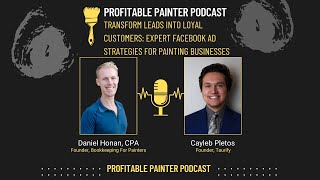
Caleb Pletos of Tarify explains how painting contractors can use Facebook and Instagram ads to generate leads. He shares concrete benchmarks: aim for $40-$60 cost-per-lead, respond to leads fast, and spend 5-10% of revenue on ads. Owner-on-camera videos and project walkthroughs work best.
Chapters
This is Daniel, the founder of Bookkeeping for Painters, and today I'm here with Caleb Pletos. Caleb Pletos is the founder of Tarify. Tarify is a marketing agency that specializes in generating leads and setting appointments for painting businesses. Caleb and his team service painting businesses across the US, Canada, and even as far away as Australia. He also runs the Tarify YouTube channel with over 100 videos featuring industry, industry guests, tips and tricks, and Facebook Ad Secrets. He also runs the Tarify Show podcast. Welcome to the podcast, Caleb. How's it going?
Thank you, Daniel. It's a pleasure, man. I appreciate you and everyone for having me on here, guys. I, you know, we prepared a good one for you today. I want to value bomb you with as much as possible here. I don't want anyone walking away thinking I didn't get anything from that.
I'm excited. Let's get into it. Um, so first of all, how did you start providing, uh, marketing to painting businesses? That's very niche. Like how did you get into this?
It's a funny story. So I actually used to be in your shoes. I used to be an accountant. Uh, I went to school for accounting. I, I, I always wanted to kind of run my own business. I, I did kind of have the, the entrepreneurial bug. Um, and I thought that accounting was one of the smartest ways I could do that. Cause I was like, all right, Listen, if I'm going to learn anything, I think these are— this is probably the most valuable business skill that I can learn. After that, I went to go work at a firm and God bless you guys, you guys are awesome, but it just wasn't for me. I was not a good fit and I knew that and my employer knew that as well. While, you know, while I was kind of working at the firm, the first 6 months or so, it just I had this YouTube channel where it was my own YouTube channel. I've been working on it for a couple of years and I would post a lot of videos about, you know, just my life, like little vlogs and things like that. And I'm a big car guy. I love cars. I grew up in the Detroit area. My dad worked for General Motors. Everybody I know works for like Ford or GM or whatever. So I would go to like car shows and I would take pictures and make videos of all these different cars and things like that. So I kind of learned from that how to get comfortable on camera. I kind of learned, okay, like how to talk about stuff, how to edit, how to film and stuff like that. So I kind of was this like automotive content creator. Okay. And then in, you know, I was like, all right, so I know I have these skills. I know I have these, these skills that I can kind of be an accountant, but it just— the accountant world wasn't for me. So at the beginning of, of 2022, actually, this would be more actually more like the end of 2022. I started my agency. Now, I didn't know exactly that it was going to be painting companies at first that I would service, but I was like, all right, listen, I have all these skills of like editing, filming content, stuff like that. Like, these are valuable skills. I'm just using them for myself right now so I can kind of sell these to businesses and ended up using that, you know, using those skills to market for different types of businesses. They were like local businesses and things like that. I was generating leads for them. And, uh, I, at first when I started the agency, it was a grind. I had to reach out to like 3,500 people just to get my very first client. Um, so that was, that was pretty, pretty tough. Um, but my second client ever, was a painting company and we were running Facebook ads for him and we started doing pretty solid. And then from that I was like, okay, you know, I want to start making videos, YouTube videos about what we are doing. So I kind of walked through. I said, hey, this is the name of the company was First Choice Painting and Renovating. And I was like, hey, this is what we're doing for this client. This is where we saw success. This is where we failed. This is the problem that we had. This is how we solved it. And I just tried to be as open and honest as possible. And I was like, hey, listen, this is everything we did. If you want to, if you want us to do this for you too, you know, here's a link below. You can book a call and we can talk about that. That was, that kind of started on YouTube a couple years ago. And then from that, other painters started reaching out and I was like, okay, like there's obviously a need here. And if you look up like how to run Facebook ads for a painting company, like we were in like some of the top videos. So I started noticing that that was very valuable. And then at the time, we were still working with, we were working with about 50% painters, and then the other 50% was like other companies, maybe like automotive detailers or other sort of local businesses. And then at a certain point, we're just like, alright, we want to be really freaking good. So we got to focus on one thing. And I'm like, I'm sure you know it as well. Like, if you want to be the best, you got to focus at a certain thing. And that's where we said, okay, you know, it's, it's best if we focus on working with painting companies. And that's what we're good at. That's what we specialize in. And that's kind of how we ended up here. So that is the, that's the long story short about what happened.
That's really cool. I love how you shared the journey and were completely transparent, you know, working with that initial painting business that you worked with and like, and basically gave upfront value on here's what we've tried, here's what works, here's what doesn't work. That's really cool.
Yeah, I, I, I think so. There was, okay, so one of the best marketers out there, Gary Vaynerchuk, uh, he has this kind of saying that's document, don't create. Uh, and, and that's kind of what I just tried to do. And I, and I, I feel that it came off very transparent, very honest. And I just said, hey, listen, this is what we did. This is, this is this is if it worked, this is if it didn't work. And honestly, like, as, as somebody in, in my shoes as a marketer, like, this stuff changes all the time, man. Platforms come out with new rules, new things come out. So like, you really have to always be testing new things. Like this morning I had like a 2-hour meeting with one of our media buyers and we were just like testing new things for a certain client to try to get them better results. You always gotta be kind of on the cutting edge of what's happening or else it's very easy to fall behind.
Yeah, it's crazy how often these like Meta, Facebook, Instagram, Google, how often they're changing the rules and what makes sense or what doesn't, what works, what doesn't work. It's, I mean, it's ridiculous. Like you almost need, you need an expert to really guide you through what works and what doesn't work. Speaking of, you know, Facebook and Instagram, if someone's never run Facebook and Instagram ads, what should they kind of expect? Like, what sort of mindset should they have going into trying this out? Because I know a lot of painters that I've worked with, you know, a lot of times they have referrals, they get, you know, word of mouth going, which is great. That's the best type of marketing, word of mouth. But to really grow, you know, a lot of times it takes some outbound type of marketing strategy and Facebook and Instagram are great vehicles. But if you don't have the right mindset, I think it can be a challenge to transition from word of mouth to referrals. So what, do you have any thoughts on preparing to make that jump?
Yeah, so that is a phenomenal question. And I think it's something that everybody should really kind of think about. When they're making this jump. So let's say that like somebody that's in kind of a good spot for this would be you're making around, you know, $200,000 to $300,000 a year in your painting business. You've got a good, a good amount of referrals. And yes, like you said, like referrals are, that's the cream of the crop. Those are the best. There's probably not gonna be a better lead source than like somebody else holding their hand saying, hey, this is my guy. This is exactly what you want. That is phenomenal. And that's gonna help you grow your business. However, um, unfortunately, like you kind of are just waiting for that to happen. Uh, it's not like you're actively searching out people or actively, you know, running ads or other things like that. So you can only grow as fast as the referrals come in. And also if you run outbound channels, like, you know, Facebook, Instagram, Google, stuff like that, you are You're getting in front of these people that you wouldn't normally get in front of, and those can then turn into more referrals. So it kind of feeds the system. Um, in terms of mindset, let me say it like this. Okay. The leads that you're going to get from social media are not going to be as good as referrals. I'm just going to say that it's the honest truth. They're not going to be as good as referrals. You have to think of this like dating, okay? Like you're dating, you know, let's say you, you know, you see this cute girl, maybe, maybe you're going to the gym and she works at the counter at the gym. Think of that girl as a lead, okay? You're not gonna walk up to that girl and ask her to marry you right away because she'd be freaked out and she'd be like, who the heck are you? You're scaring me. And then she's gonna run away screaming, okay? However, you know, what you might do is you might, you know, smile at her one day. Next day you might wave. Maybe you'll ask for her name the next day following that. And then eventually you'll ask for her phone number, take her out on a date, so on, so on. And then maybe down the line you'll get married. But you can't just walk up to somebody and ask them to marry you. That's weird. And you're going to get outcast for that. That's the same thing as marketing. Okay. Um, I think a lot of people kind of expect to get a lead and then immediately close that lead on the spot, like over text because they came in from Facebook or Google. Like there needs to be a good lead nurture process in order to actually turn those leads into, you know, sales. So I know that's kind of a funny example, but like the, like the parallels are really there and I think it really kind of, kind of drives that home. Like, I mean, when you think about it like that, you're like, oh yeah, like that'd be really weird, right?
Yeah.
But some people, they come into marketing and they expect, you know, somebody who sent them a message on Facebook to like agree to a $5,000, $10,000 job over 3 text messages. Like, you got to go to their place, you got to shake their hand. You may have to send them emails. They may have to see, you know, the social proof about your company and they may have to be followed up on. And then that person will close. It's not just like an automatic thing. Without a good, a good nurture process in place and without a good sales process in place. That's why, like, our very first step for all the clients that we bring on is we got to get organized and there's got to be a good way to manage these leads because if there's not, you're kind of just wasting your money. That's why we hook all of our clients up with DripJobs, one of our partners, a phenomenal system to manage those leads. Help follow up with those leads and track what's going on. I mean, obviously you are a prime example of this. Like, you got to track what's going on or else you have no idea, like, what's happening. That's where the good CRM comes in place and that system comes in place, using those tools to actually track those leads and nurture them along the line. Yeah. So think about this like dating, you know, don't just walk up to a prospect and ask them to marry you. That, you know, nurture them. That's, that's, that's my pitch. Does that kind of make sense? Yeah.
No, I love the analogy. It's hilarious.
Yeah. But it's like when you, when you think about it, you're like, oh yeah, like that would be super weird. But, uh, honestly, like that's, I think that's what a lot of people sort of expect, which is like, you know, because they've just been working off of referrals, which is phenomenal. Like referrals are great, but, uh, you know, it's just, the leads sort of have to be handled a little bit differently. So just expect that when you're coming into it.
Yeah. One of the big complaints that I see sometimes, I'll get it to one of the clients that I work with, or I'll see it on social media, uh, complaining about Facebook ads being like, oh, I'm getting a bunch of bad leads on Facebook. And you kind of touched on this, on, you know, the leads that you're getting from Facebook aren't going to be like referrals. But could you, could you dive into that like a little bit more on expectations of, of what sort of leads are you actually getting on Facebook? And what really, what you should, what should you be expecting when you're getting Facebook ad leads?
Yeah, of course. So the, the cons of Facebook ads, and I'll be like totally transparent about this, the cons compared to like Google or something else is that the leads aren't as high of intent. But the big pro to that is that you're getting a lot of people that you wouldn't normally get. You're not just throwing your hands up and waiting for them to reach out like you are on Google or on your website or something like that. Um, you know, you're not just waiting for referrals to roll in. You're getting leads every single day in the door. So, uh, it's very easy that Facebook leads can become your top, your top lead producer, uh, for the people that are coming in. Now that's like, that's where we see a lot of kind of misunderstanding is where people kind of expect them to be the same as referrals and things like that. And don't get me wrong, there's a lot of things that we can do to help improve the quality of leads, uh, making sure that you're showing in the right neighborhoods. Like we don't want to be showing ads to people who just straight up can't afford your services. Uh, we want them to have the money for a $5,000, $10,000 cabinet job. That's, that's number one. Number two is we can kind of disqualify people on the way. So like, uh, let's say for example, we put like a question in one of the forms that says, hey, you know, what's your project timeline? If they say, I'm looking to get something done in 2 years, we may say, hey, probably not the best fit to work together right now. Um, or the, we'll get into this a little later, but like our appointment setters, once those leads come in. We call those leads and we qualify them over the phone. So like, this is something that we work out with each business owner, maybe the radius that, that they're, uh, that, that they operate in, or if they have maybe like a job minimum. Well, we may say to the prospect, you know, hey, you know, looks like you're, you're, you're getting this done, so on and so forth. We'll have a little bit of a conversation and then, you know, hey, just to let you know, our job minimum is $750 or $1,000 or whatever. Like, is that okay? And then that, that's a nice way to say that, okay, yeah, like that's fine before we book the estimate to help kind of pre-qualify that person. Um, but what we noticed is that the, the, the, the bad lead issue, uh, there's a lot, there's a lot of different reasons that that could come about. Um, one of them is, is because of lead management. That's the exact reason why we started calling the leads for our clients. And we started offering appointment setting because we noticed that a lot of our clients were— they were getting leads on Facebook. They were calling them like 2 or 3 days later, and then they would come back to us and say, hey, these leads suck. I talked to them and they said they don't remember me. And I was like, oh, like, that's terrible. What happened? And then, you know, I come to find out they called them like 3 days later and I'm like, dude, of course they don't remember you. Like, you like speed the lead is incredibly important. Like, you got to call these people within 5 minutes. And if you're the business owner and you're hopping around from job to job, you're doing this and that, like, it's probably unrealistic to think that you can just drop everything and call the lead right then and there. What if you're in an estimate or what if, what if you're doing something like, you know, they just didn't have the time. So that's why we started offering it for them. Um, it's kind of a nice middle ground to like, if you don't have a full-time in-office admin, uh, you know, our appointment setters are working 14 hours a day. 7 days a week. So like, we're there when a lead comes in.
Yeah, yeah, that's, that's key. I, I just last week I had a consult for a newer client. We're doing some budgeting for 2025.
Yeah.
And he was— he hadn't done Facebook ads before, but he wanted to add that because he wanted to grow to $500,000. And so he was like, I'm gonna budget $50,000 for Facebook leads, Facebook ads. To get leads from there. I was like, okay, great. And, and he had a marketing firm that he had just signed up with, and I was like, okay, so how are you going to deal with the leads, uh, when they come in? How, how are those being set? You know, how are those getting scheduled on the, your estimate calendar? And he wasn't sure. He didn't have a plan. And I was like, is the marketing company doing that for you? Because it's not always a given that a marketing company is going to set appointments for you. So, uh, that was some homework he had. But so I think this is like a super key thing to know about Facebook is those, like you said, when those leads come in from Facebook, it's speed to lead. You have to have a really good process if you're going to do it in your business, really good process to handle those leads, or, um, work with someone like you that just handles that for you and sets the appointments for you. So I think that's like really key and I love that you are handling that for the folks that you work with.
So it, it also kind of helps us do a better job for them as well because the, I'll tell you like, you know, to, I know you didn't ask for a marketing agency therapy session here, but I'm gonna give you one today. Uh, that one of the most challenging parts about being in like our shoes is that we don't always know what's going on. On the other end. If a client isn't tracking their CRM and they're not telling us what's going on, uh, we have no idea if those leads are turning into appointments, if they're making money, how much money they're making. So because we have more control over that, I can listen to every single phone call and gauge how interested the prospect is, if this is a good fit, you know, so on and so forth. Um, And that allows us to do better advertising because we can, we're also making those phone calls so that we can kind of understand more about what's going on.
Yeah, that makes sense. Yeah. What are some, could you talk to me a little bit about ads, Facebook ads themselves? Like what makes a good ad? What makes a bad ad? Like what, what I've, I've heard different strategies out there. What have you seen that's worked?
Yeah, of course. So let me tell you this, like if you are running Facebook ads, if you're doing this for yourself, um, you probably gotta test some different ads. You know, it's probably not what you wanna hear, but you can't just set it and forget it. Uh, your ads eventually, as people see them a lot, will tend to die out. With that being said, the best ads that we normally see are with the business owner in the ad and some sort of video. So a video of the business owner talking about what they do, maybe walking around a job that they completed or talking about their services. I want you to, when you're thinking about the ads that you are putting out on Facebook, I want you to think of it in the shoes of your prospect. Okay? Talk about the type of things that your ideal prospect wants to hear. Your ideal prospect probably doesn't want the cheapest guy out there. They probably want somebody who does great quality work, who they can trust, who's honest, who, uh, has a great crew that's, that they know is gonna take care of them. They want a good, easy experience, and so on and so on. Like, uh, in your ads, you should be talking about the things that appeal to your ideal prospect. If you say, you know, hey, this is Joe's Painting, we are the cheapest people in town, you know, we smoke cigarettes inside your house and blah, blah, blah. Like, you're probably going to get poor quality leads if that's what you're putting out there. You're going to get the people who don't care about that. They just want like the cheapest thing possible. And those are probably not going to be your ideal clients. So with that being said, you get out what you put into it. If you put out great quality ads, you're going to attract better quality people.
That makes sense. And it seems like, I guess, could you talk to me about this, this, this phrase, local painting celebrity?
Yeah. So in addition, so one of the great things about Facebook ads is that you can, you can really kind of tell your story and you can relate to people. What we try to do for all of our clients is get them on camera as much as possible. Now, now, like what we do is we get like the actual video of them talking. We do all the editing, we cut it up, we make it look nice, all the captions. But like if we get like that, just that video from them, that works wonders. So the reason why is because if you, uh, you know, let, let's say you run Daniel's Painting, okay? And you are all over your local area. Hey, this is Daniel. This is what we do. I'm your neighbor. I'm a family man. You know, I X, Y, and Z. People get to know you and then they start to like you. So when you show up to their house and shake your hand or shake their hand, you're not just some random guy from the painting company. You're Daniel, the guy from the ad that they've seen plenty of times that they know, and that helps them trust you a little bit more. So it kind of builds up your authority before you even step into their door. Mm-hmm.
And do you recommend, because we had talked about what Gary Vanderchuk recommends, is to document. Do you kind of have the same recommendation for painting businesses that they need to make a habit of kind of documenting their process of painting houses and using that to kind of, uh, help out their marketing strategy?
Yeah, so there's kind of 3 main videos that we start all of our clients off with. The first one is going to be a little bit more general. Hi, I'm Caleb. Uh, we operate, or I operate Caleb's Painting. We do work in Macomb County, Michigan, and we do interior, exterior cabinetry. Um, and then just, we prioritize high-quality work. We're licensed, insured, just kind of a more of a little bit more of a general ad. That's, that's number one. Number two would be some sort of like project walkthrough, ideally showing like a before and after. So, um, and, and if you can even like tell a little bit of a story, story with it, like just a quick little story, it doesn't need to be anything crazy, but like, like for example, you know, hey, uh, we're here at Susan's house. She has this really bad, uh, problem with her exterior. Uh, some of her wood is starting to crack and get moldy and the exterior paint is chipping. This is what it looks like. And then, you know, fast forward to the after. Hey, uh, you know, this is, we're back at Susan's house here. 'Look at how beautiful her house looks. We cleaned all of this up. She's very happy. She's going to have people over for the holidays and she's very excited to show off her new home.' Doesn't need to be this like long story, but like painting is obviously very visual. Showing the before and after is like, that's another good one too. Number 3 is going to be like our third kind of recommendation is some sort of like testimonial-heavy add. So if you can get like one of your prospects to say like, hey, I worked with Caleb and his team, they did a phenomenal job on my home. They, you know, my exterior was really old and outdated and now it looks great. I like my house so much more now or whatever. Whatever somebody else says about you is like 10 times more valuable what you say. Like, obviously you're going to say great things about your business because you own it. But if somebody else says it, like just like in a Google review or something like that, it just holds a lot more weight.
Makes sense. So this next part, the next question is going to be my favorite part of the podcast. Not that this has been bad so far, it's been great. Yeah, but I'd love to talk about the metrics. Like, what metrics do you like to track for, for Facebook or Meta ads generally? And what should we focus on? Because there's so much data that you can look at? Like, what do we really need to focus on? And if you could give some benchmarks, that would be awesome.
Yeah. So I try to keep this as simple as possible when we're looking at metrics. The number one most important thing is how much money you're actually bringing in from the ads. The click-through rate, cost per lead, all that stuff, none of it matters unless you're actually bringing money in from the ads. So that's, that's number one. That's at the top of the pyramid. Um, with that being said, at first, if you are starting off brand new with advertising, you're probably not gonna be at like a 10% or 5% cost of marketing. Uh, you're probably gonna be more like 15, maybe even 20. But over time, your advertising cost should be between 5 and 10% of your business. So for example, if you make $100,000 a month, you should be spending $5,000 to $10,000 a month. On some sort of marketing. That's, that's kind of like the first big one. Um, next up is going to be kind of like the, the appointments and then cost per lead, stuff like that. Um, appointments on Facebook and Instagram, every about 1 out of every 3 leads should become an estimate. So if 100 leads come in, some people might not be a good fit. Some people might, you know, be out of your service area, but out of 100 leads, you should go to about 30 estimates from that. So that's a 30% set rate on Google. It'll be a little higher, about 70 or 80. Um, in terms of cost per lead, I'd say $50 on average is a good thing to shoot for. It's going to depend on your market, who your competitors are, but anywhere between like $40 and $60, you're kind of in the right spot here. With that being said, there's one more that I think is important. It is the— if you look on Facebook in the Facebook Ads Manager, there's this, there's this metric called link click-through rate. That means that people are clicking on your ads and they're going to where you want them to go. So that means your creatives, your copy, they like it enough to kind of get to that next step. Maybe that next step is filling out a form, sending you a message, going to your landing page, whatever that next step is. Um, that link click-through rate should be above 1%. That means that if you show the ads to 100 people, uh, one or more people make it to that next step. That's kind of like the first kind of top of funnel metric. Um, I don't want to get into like anything else cuz that'll just kind of muddy the waters, but those are the simple ones to kind of look at.
Okay, so to recap, revenue from ads. So just what you're getting from, from those Facebook ads. What jobs are you closing? What is the dollar amount of revenue you're getting from those Facebook ad efforts? And you said, so that's number one, then trying to get, if you're just starting out, a 15%, 15 to 20% marketing costs as a percentage of revenue that you from, from Facebook. But trying to get that down to 5, 5 or 10% ideally. Uh, and then appointments that are coming in, or I'm sorry, leads that are coming in, you're setting at least 1 out of 3. So around a 33% set rate, like actually taking the lead and putting it on your calendar. If you're getting 1 out of 3 leads on the calendar, you are good. And then, uh, Then the click-through rate for the— basically showing the ads, looking at the click-through rate of your ad, making sure that it's above 1% to ensure that the, you know, the ad is effective. There was one other thing I'm missing. What was the other metric? Cost per lead.
Yeah, cost per lead. I'd say about $40 to $60 cost per lead. That's okay. That's, that's average.
Yeah. Okay.
So if, if you're listening to this like on the road or something, um, you know, I, I know this is kind of a lot of numbers here, but just to, just to kind of summarize, like at first, if you are spending, if you're spending $2 on ads and you're getting back $10 in jobs, then that's good. But you want to get to a point where you're spending $1 on ads and getting back $10, but it's not gonna, it's not gonna be like off the cuff.
Yeah. And I guess if you, let's say you're spending $3 and you're getting only $10, and what is the, what are the first things that you would look at to kind of troubleshoot what's going wrong? Should I immediately fire my marketing company?
So I think, so, so, so here's what I'll say. Uh, I think you need to have a good, open, honest conversation with your marketing company so that they can help you. Like they are here to help you and work you through these problems. And realistically, it is a partnership. You can be the, you can be the best salesperson in the world, but if they're not getting you leads, then you're not making any money or vice versa. If they're getting you the best leads in the world, but you can't close anything, then you're not going to be making money or happy either. So I think you should have a, if you're in that situation where you're not making money, it's important to have a good, open, honest conversation with your agency to figure out what the heck is going on. Um, the 3 main things that at least if we ever have that conversation, 3 main things that we look at are, are the leads coming in? Are they like actually good leads coming in? Are those leads turning into appointments? And then are those getting closed? If, if a bunch of leads are coming in, a bunch of appointments are getting set, but they're just not getting closed, then okay, let's, let's learn about that. Is, does the sales team need a little bit more training? Are, you know, like, like what's going on there? Is this a sales issue or vice versa? Maybe, uh, we're getting leads in, but on the phone, like we're only booking like 5% of those leads. Okay. What's going on here? Like, do the setters need to be trained? Do we need to loosen up our restrictions a little bit? Uh, you know, we look at each number in the funnel and to kind of pinpoint where the issue may be. That's, that's basically like if you're not, If you are not hitting the numbers that you want and you are not hitting good numbers, the best thing I can tell you is to look at your CRM, look at, look at your metrics. Okay. Like, where do the problems lie? Am I not getting enough estimates? Am I not closing enough estimates? Am I not getting enough leads? Like, where is the actual issue? And then from there you can further— usually it's one of three things. It's either leads, set, or sales. Like, usually there's not many other things. It could be where the problem is. So once you see where that problem actually is, then you can kind of dive deeper into solving it.
That makes sense.
Yeah.
So basically look at, am I getting leads? Are those leads turning into estimates? And then are those estimates turning into booked jobs? And if there's a, one of those things isn't working too well, if you can fix that thing, then it might solve your issue. Sounds like, yeah.
So like, for example, if you are get— if you're getting a good amount of leads and you're getting, you know, you're closing a good amount of them, but you're just not setting enough appointments, if you can just fix that number, like if you can set 5% more appointments by maybe hiring a setter or training, you know, your admin a little bit better, then just having better speed to lead, like that helps all of your other numbers like tremendously. Like just fixing one of those variables, like really cranks up the volume on everything else.
Nice.
Cool.
Do you have any other tactics, tips, strategies for Facebook for painting business owners that we haven't talked about so far?
For the most part, I think we've kind of gone over a lot of the Facebook, Instagram tactics and things like that. I guess the last kind of thing that I will say is paid advertising, you know, Facebook, Instagram, Google, all this stuff. It only works as good as you work it. So you got to give it a good solid try. You know, it's— if you're starting this brand new, it's going to take a little while to learn how to do it and all that type of stuff. If you're not hiring somebody else to do it, just a lot of people have this shiny object syndrome and, oh, I need to hop to Angie's or I need to hop to Google or I need to hop to this or that. Like, Everything works, you just got to put in the time to make it work.
Yeah, yeah, great advice. I think definitely I'm guilty of that myself, you know, I'll try this for a while, hop over, let's try this other marketing channel, how's that, how's that work? But you're not just getting, you're not getting any traction in the meantime and like wasting your time. So yeah, that's, that's great advice. So where can folks learn more about what you do over there at Tarify? What, what do folks need to do?
Yeah. So the first thing I'd recommend is go check out the YouTube channel. We have a ton of free content, free value where we walk you through exactly what we do, how we do it, you know, our successes, our failures. I even posted a video probably about 2, 3 weeks ago now about like all the things that we've changed based on the feedback that we got from our clients. So like if you just want to learn a little bit more about what we do, that's a great spot. And if you want to kind of learn a little bit more about working with us specifically where we can run all your ads for you, set those appointments so that you and your sales team can, you know, have more people to visit so that you can guys, you guys can close more deals, then I would check out our website, just www.torify.com and all of our stuff's there. You can book a call. I will personally, uh, meet with you and kind of discuss what your needs might be, uh, so we can kind of take you to the next level and help scale.
Awesome. Thank you so much, Caleb. This was amazing. I think you definitely delivered on your promise of delivering some amazing value. So, uh, I really appreciate your time. And with that, we will see you next week.
Thank you.
More from Daniel







What’s REALLY Holding Your Painting Business Back? (Find Your Bottleneck in 5 Minutes)



