Unleashing Superpowers: Streamlining Your Painting Business with Technology and Automation
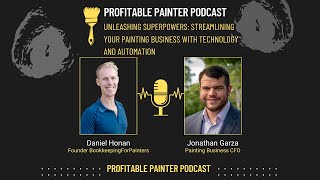
In this episode of the Profitable Painter Podcast, Daniel (founder of Bookkeeping for Painters) and Jonathan (advisor) discuss how painting contractors can leverage technology and automation to generate more leads, close more jobs, and improve customer satisfaction. Daniel shares his personal experience of automating his own painting and bookkeeping businesses while deployed overseas, framing the conversation around seven core business processes: marketing, sales, onboarding, production, review capture, customer reactivation, and worker onboarding. For each process they outline practical, low‑cost tools and workflow patterns—Gmail filters and Zapier for rapid lead response, retargeting pixels (Rollworks) for ad recapture, handwritten.com or Postalytics for direct‑mail thank‑you cards, scheduler integrations (Calendly, Acuity, YouCanBookMe), proposal platforms (PainScout, DripJobs) linked to QuickBooks for automatic invoicing, Google Forms for color collection, Net Promoter Score surveys for post‑job feedback, A2P 10DLC‑compliant mass‑text campaigns for reactivating past customers, and HR/payroll platforms like Gusto for employee and subcontractor onboarding. Throughout the discussion they stress speed to lead, the value of personal touches (handwritten cards), the importance of systematic follow‑ups, and how automation reduces reliance on manual effort, enabling owners to scale and even increase business resale value. The episode ends with a call to join their Facebook group to share additional tech ideas.
Chapters
Welcome to the Profitable Painter Podcast. The mission of this podcast is simple: to help you navigate the financial and tax aspects of starting, running, and scaling a professional painting business. From the brushes and ladders to the spreadsheets and balance sheets, we've got you covered. But before we dive in, a quick word of caution: while we strive to provide accurate and up-to-date financial and tax information, nothing you hear on this podcast should be considered as financial advice specifically for you or your business. We're here to share general knowledge and experiences, not to replace the tailored advice you get from a professional financial advisor or tax consultant. We strongly recommend you seeking individualized advice before making any significant financial decision. This is Daniel, the founder of Bookkeeping for Painters.
And this is Jonathan, advisor with Bookkeeping for Painters.
How's it going today, Jonathan?
Good, good, good. How are you doing, Daniel?
Doing well. I'm excited about today's topic. We're talking about streamlining your processes. How can you— how you can use technology automation to get more leads, close more work, make customers happier.
That's, that's an awesome topic, right? That's, that's the key. That's a great thing for any kind of business. So it's exciting topic. I'm excited to dive into it.
Yeah. And I'm kind of passionate about this because I, you know, back in— was it 2020? I deployed overseas. Actually, it's 2019, um, deployed. And then during COVID I was, I was actually deployed overseas for the military. And I had a painting business and also had an accounting business, and I had to really streamline my processes. One, because I was leaving, I was not going to be involved in those businesses. I had to entrust others to, to do it, but I didn't want to— I wanted to kind of automate as much as I could so I didn't have to rely as much on people. I can at least automate a lot of it. So I, especially for the painting business, kind of did a lot of automation to, to kind of get the most out of technology. And so going through that process and, and basically having that business run while I was overseas, um, I credit a lot of the, the success that I had of being able to do that, not be there, being across the world, to, uh, leveraging technology. So it's something that I am kind of super interested in and I'm happy to share with others. So, uh, the way I look at this is I kind of look at the different types of processes you have in your business. So you have your marketing process, you have your sales process. Your onboarding process, your production process, your review capture process, like getting reviews from your customers. Then you have your customer reactivation process. How do you get repeat customers? And then you might have some HR processes in there as well. Within each of those processes, there's different, you know, things you might want to look at using automation or technology to kind of streamline that process. So I'm just going to go through some different things I've seen that have worked well for not only my, my painting business, but helping others employ this in their painting businesses. So I've worked with scores of other painting businesses, helping them input this, this automation, which is part of what we do at Bookkeeping for Painters, helping them input different pieces of automation into their business to get more leads, close more work, and make their customers happier.
So yeah, and this, this is, uh, you know, it seems like it's such a trendy topic right now, uh, with AI automation, all the different, uh, buzzwords that are going around. But, you know, sounds like you've been at this for many years now, and so, uh, I imagine you've seen a lot of change even, and a lot more to come. So Yeah. Yeah.
Yeah, definitely. And I think we'll have to do a whole separate podcast on AI. There's some exciting things that have come out obviously recently, but even more exciting things coming out soon. So I'm gonna, we're gonna mostly talk about automation for this one, but yeah, AI is definitely a big, a big one as well. That's bringing a lot of things you can do in your business, but to kick things off, we'll go through the first process here, which is marketing. There's a couple things we'll touch on here. So first idea is rapid response or speed to lead, some people call it. But basically the idea is like when you have a lead come in from maybe it's Painter's Choice, CraftJack, Thumbtack, AngelsList, or, you know, someone fills out your website. Contact form or something, basically there's like a shot clock that is turned on. And the more time that goes on, goes by and you haven't responded, the less valuable that lead is. So having a, some, this is like a perfect place for automation to jump in. You know, 78% of businesses, 78% of business goes to the first responder. So when folks are looking for an estimate, you know, they are most likely to go with the person who picks up the phone first or, you know, responds to them on whatever platform they're, you know, reaching out on.
That makes sense. I mean, people are busy. We always think, hey, our work will stand out amongst all our competitors. But in reality, it's the first person that responds to the need. Oftentimes the one who's getting in the door first. So yeah, wow. But 78%, that's huge.
Yeah. Didn't you have— I know you worked on the real estate side. Didn't you have an anecdote on this topic?
Yeah, we in the real estate space, we always told realtors that it was 5 minutes. If you did not respond in 5 minutes or less, essentially that lead was probably being contacted by someone else. So, you know, you had to get on there and it didn't really matter what time of the day that was. And, you know, that's the thing with, with customers. You never know if they're gonna fill out that form at 2 o'clock in the morning or at 9 AM on Monday when you can actually call them back or text them, right? So I think that's where automation can really be helpful, provide that, that immediate feedback that the customer is looking for. And if they're not expecting it, then you just won huge points. But, you know, if they are expecting it, you're not doing it, then you lost big time. So what are some strategies they can use to kind of get that rapid response?
Yeah, so to go through one, let's just take the folks that use paid leads. So you're maybe using Painter's Choice, Craft Jack, Thumbtack, basically any of those paid leads that they send you an email when you have a lead come in. What you can do is to get to respond to those automatically is set up a filter in your Gmail so that every time that, that lead comes in, that, that email is labeled with a Gmail label. Let's say you're using Gmail. Most folks are. So it's labeled like, hey, this is a lead. And then you can use something called Zapier. Now, Zapier, we're going to refer to several times throughout this podcast. Zapier is basically, it's automation software that is kind of like the duct tape for your apps. It takes information from one app and pushes it to another. So for example, this would be taking information from Gmail and pushing it over to a a texting app or CRM to send a text or to send an email. So Zapier, you can use Zapier to basically, when that lead comes in for Gmail, you push that information into Zapier. Zapier parses out the email of the lead or maybe the phone number of the lead and then shoots that information over to a texting app, maybe ClickSend or maybe a CRM to send out an email or a text message to that lead as soon as they come in and just say, hey, so you're interested in getting a painting project done. You can go to this link here to schedule an estimate with me, or, you know, or give them the next steps, whatever, if you need to qualify them first. So that way that you are responding within seconds of getting that lead. And, and that can really help you, you know, get more— get those leads converted to prospects, basically get them on your schedule for an estimate.
I like that. The, uh, the Zapier for the win, right? The duct tape between all the systems. Because I think that's, you know, a lot of business owners, regardless of the industry, but, you know, you spend so much time trying to research what the right system is, and you spend so much agonizing time trying to find the right CRM or the right, you know, communication platform. And the reality is not all of them are perfect for everything. And so you found ways here to automate and kind of bring it all together without relying on one system that may update tomorrow and suddenly change everything that you were doing.
Yeah. Yeah, it's definitely— there's— it's tough to find a CRM that's going to do all the things that you want to happen. So right now, from what my experience, from what I've seen, you're gonna have to piece together things to accomplish what you want to accomplish in most cases. So it's kind of the nature of the beast. But the next marketing idea, you know, how to kind of improve your marketing process using technology is something called retargeting. And retargeting is basically when someone goes to your website and then they don't do what you want them to do, which is likely scheduling an estimate. And then they, you know, they go somewhere else. You can retarget them and everyone experiences this on a daily basis. But, you know, you go, you go, you're shopping for, maybe you want to buy some new shoes, go to a shoe website, and then all of a sudden there's shoe ads everywhere. When you're in Facebook or searching on Google, there's like ads everywhere about that same website so that you're being retargeted. So you can do that in your own business pretty cheaply. This is a very inexpensive thing you can do. It's just not a lot of people are aware of it. But basically you would put a, what's called a pixel on your website. It's just a little bit of code. Put it in the header of your website. And rollworks.com is something that you can look into that does this. Rollworks.com, they'll give you the pixel, put it in your header of your website, and then you can just design some ads or have your admin person put together some simple display ads. And then when folks go to your website, they don't schedule an estimate, then they'll start seeing your ads everywhere. And website visitors who were retargeted with display ads are 70% more likely to schedule an estimate because the other statistic I'll throw out there is 98% of people don't schedule an estimate the first time they go to your website. So it behooves you to look at that retargeting strategy. And again, just to emphasize, This can be done very cheaply, you know, especially you're probably not having a ton of website traffic as a painting business. People are going to your website are probably legitimately looking at getting some painting work done. So you definitely want to retarget them. So this doesn't have to be too expensive. It's pretty cheap, probably one of the cheaper marketing things you can do that can give you a really good return on investment. Wow.
Yeah, that's awesome. And I, you know, you talk about stats. I heard a statistic at one point where it takes, uh, sometimes it takes a person saying no. Uh, you hear that all the time, right? People will say no up to 7 times. Um, but a lot of people think of that as like a physical no. Well, sometimes that's just a no right in that moment. Um, and so they might see an ad for painting, get to your website, The first one was a yes, maybe it was technically a no because they really do much, but they got to your website, didn't schedule anything because that was not the right moment, not the exact time where they were just saying no, not yet, but they didn't go anywhere else. And by retargeting them every time they see that ad that they don't click on it, it's technically a no until eventually they do say yes. So, you know, that's, that's one way to kind of even, I mean, Really what we're talking about is automating the sales process of that no, no, no, no, and then finally, okay, yes. So think about how many times the salesperson sometimes calls us and we never want to say no initially until it finally sounds good. So yeah, I think that's, that's a great strategy.
Yeah, I think someone smarter than me said no is basically not yet. That's, that's what that means. Yeah.
Yep.
So, so that's the market. There's a couple ideas for your, you know, using technology to improve your marketing process. Obviously, there's definitely more things in there. We'll leave it at those two. Let's, let's take a look at the sales process. What can you do in your sales process to improve that using technology? So I think the, you know, these days most CRMs have the ability to do like a a post-positioning email series or sometimes a pre-positioning, basically meaning before the estimate and after the estimate, some sort of follow-up series via email. Some also can do text messages, you know, before and after the estimate to kind of warm the prospect up to your company, what your processes are, what your people, what you're about. So that, you know, show them some social proof and you can automate that stuff using a lot of CRMs before and after the estimate. But what a lot of them don't have is direct mail and just reflecting like, you know, when I was, you know, basically in college or high school, I just think about like, how little email I received compared to now. You know, I have like, probably embarrassingly, probably tens of thousands of emails I have never opened. It's just ridiculous amount of email that I have. But I like never get an email. Whereas, you know, 20 years ago, it was the, you know, it was the reverse. You'd get much mail all the time, but You know, very rarely would I get an email. So I think that's an opportunity for painting businesses to kind of really— a way to really stand out, especially if your customer is getting multiple estimates, is if you have like a really nice postcard, big postcard that you send out before the estimate, or a handwritten thank you card after the estimate. Pretty much no one else, very, very few painting businesses are doing that. And that's going to really show your value in your sales process and increase your close rate. So, uh, because no one's getting, you know, handwritten thank you cards or, uh, or, uh, direct mail. And thanks to automation, you can actually automate you know, this, this piece as well.
Yeah, and the hand— the handwriting machines have gotten a lot better. I remember, uh, was it 10 years ago, sometimes you'd get those, the mail cards, and they would look handwritten, or they were made to look handwritten, and you could tell. And everyone was putting a light on it to see if they could see the reflection of the pen. But I mean, these are actually written by pen now. So, you know, those are machines that are doing a fantastic job at automating this and actually being handwritten.
Right. Yep. And, and just to, so for the handwritten ones, like you said, it's, they literally have these robots that take, hold a pen and put pen to paper and they, they, you know, write the card. And the, the one that I, there's several out there, but one of 'em is handwritten.com, written spelled with a Y instead of an I. But they have the robots that, that handwrite those, those cards. And they have different styles too. So you, I always choose like the one that has the worst handwriting, you know, that looks more like mine basically. I have terrible handwriting, but you know, so it doesn't look all fancy or anything. It's just like, looks like some, you know, some fourth grader wrote it basically. So I always choose those and those look pretty, pretty good. It's pen to paper and it's like not consistent and kind of, it's legible, but It looks like, you know, an actual person wrote it. But handwritten.com integrates with Zapier, so you can basically, if let's just say you just to use an example, maybe use You Can Book Me or Calendly or Acuity or one of those schedulers on for your estimates. You can basically set up a Zap so that when that appointment starts, or ends, you can trigger it to send off a thank you card in Zapier so that you tell to take the information from the scheduler and send it over to Handwritten to send out a thank you card. And that's a simple zap that you could do that, that will, you know, a handwritten card is like $3, $4, which is not much money considering, you know, you're probably bidding on projects that are worth $10,000.
Yeah.
Similar.
And it's all doing things that really are just taking your customer experience and just putting it that much above everyone else and possibly every other service provider they've ever used in the past. So, you know, that $3 may turn into a third or fourth referral off of one customer. So huge.
Yep. And if you don't like the idea of handwritten cards written by robots, you could do something like Postalytics.com. So that's, uh, uh, Postalytics.com. If you just Google that, basically you can design like a, a direct mail piece, like a postcard, a big postcard, and, and send and have that sent off in the same kind of way that I just described, like, uh, with a Zap. And because that does integrate with Zapier and have that sent off, or you could do both, you know, send one before and one after the estimate. So those are ideas on how you could improve your sales process with technology. So the next one we talked about is your onboarding process. So your onboarding process is basically when your prospect signs that proposal, what, you know, because I think there's some sort of statistic about, you know, when your prospect signs up and becomes a customer, within the first 72 hours, they kind of make up their mind on whether they made the right decision or not. There's some kind of stat like that where it's basically like, are they going to have buyer's remorse? They kind of, you know, get that within the first 72 hours. So you definitely want to reinforce that feeling that they made the right choice with you, you know, when they sign up with you. So one way you can do this is by using automation. Obviously, you can use the direct mail idea from the sales process. You could do a thank you note here, you know, for example, when they sign the proposal, Zapier sends a handwritten thank you card, or just having like a an onboarding process that's set up so that right when they sign that proposal, they get the next steps email with, you know, an invoice for the deposit that you charge. Say you charge a 40% deposit, there's an invoice right already, you know, created. So it just makes you look more professional, like you have your stuff together, you have a process for this, you've done this before, right? Instill some confidence that, you know, you have a next step email that says, hey, thanks for signing up. You know, here are the next steps for signing, you know, in your project. First step is please pay your deposit invoice. Second step, please provide your colors. And maybe you have some just using Google Forms or something like that for them to fill out their colors. And then step 3, you know, our production manager is gonna reach out to you next week to schedule you on the calendar. So you can have basically a next steps email that's sent out automatically once that proposal is signed. Again, either using Zapier, like if you have a Pain Scout proposal that's out, use Zapier to create that next steps email sent out from your Gmail account or something like that. But it kind of like shows, okay, they're on top of things, they have a process. And, you know, also creating that deposit invoice automatically, one, is it's going to look— make you look more professional, but also two, it's going to— you're going to get paid faster, which is great for your cash flow. So I know Pain Scout has an integration with QuickBooks Online where you can basically set it up to do an auto invoice. you know, basically create it in QuickBooks Online, or you can use Zapier to create the invoice in QuickBooks Online and actually send it to the customer automatically right when they sign your PaintScout proposal, you know. And I think DripJobs has a similar thing where they basically can pay the, you know, sign the proposal in DripJobs, and then they can pay in DripJobs as well. So Definitely look at that process. It's going to just make you look more professional if you have a good onboarding process because that is a crucial period to just show professionalism and reinforce that win that you have with your new customer.
Yeah, I like the, you know, and we haven't even talked about it, but the flip side of this too, you know, all this is customer, but then when the customer responds, not having to go check to see did they respond, but even having some automation on the back end that Tells your team, which gets into the scheduling and everything else. And I know that you've done a lot of the scheduling aspect in terms of getting them on, you know, Google Calendars and various different platforms for scheduling.
Yeah, absolutely. You know, using these different points in your process, like when the proposal is signed, using automation to notify your team that you know, so that they can start their onboarding process that they need to do. So maybe you have an internal Slack that you work with your team on, or whatever the communication system is, some sending some sort of automated message like, hey, we have new, new customer sign up, please, you know, start the onboarding process for this new person, or add them to the production calendar, or whatever it is. So you can do some automated notifications to your team, which can just improve efficiency.
Yeah, definitely. I mean, I, I could geek out on this, but I mean, I'm thinking of all the different ways of, you know, one form returned back from the customer and all the channels that it could go to, you know, possibly even all the way down to sending an email to Sherwin-Williams with the paint order based on all the information. So that you don't even have to touch it. The paint's already at the store being ready for them to pick up or deliver even.
Yeah, yeah, you can definitely get into the weeds for sure. Yeah, there's a lot, a lot of efficiencies to be gained if you have your process nailed down. So the next, one more thing on onboarding, just another idea to throw out. I mentioned it briefly, but having a standard color form, an interior color form and an exterior color form, maybe using a Google Form. That's an idea to easily capture colors and have it stored in a standard Google Sheet so that you can easily order paint and then also push that over to your crews as an idea to capture colors. 'Cause I know getting colors from customers can be difficult. And so trying to make that process as easy as possible for them, like, hey, here, go to this link, fill out your colors here, you know, and here's some resources for, you know, choosing colors. You know, Sherwin-Williams has some resources like Colors by the Decade and, you know, provide all those helpful links in that next steps email with how to provide those colors. Can be very helpful to expedite the process of getting those colors. The next process we'll kind of look at is production. So production is usually a lot of it's about scheduling. So I think just in this one is just having a scheduler really can be, is super important when that works. I know Drift Jobs has scheduling software in there or just having Google Calendar. I mean, getting something that works, Google Calendar can work fine. There's plenty of folks I know run $1 million plus businesses using Google Calendar as their production calendar. So, you know, having something that works. The next kind of process that I look at is like review capture. So once the project's completed, How are you getting feedback from the customer? Because you want to be getting that constant feedback from your customers. One, so you know, this is especially important as you grow, you know, how is your team performing? How can you improve? And then also getting those Google reviews is super important to growing your business, getting that repeat work, getting word of mouth going. So that review capture process is super important, and that can be automated, you know, to a point. So, you know, once the check is collected, once the job's closed out, you can have like an automatic text that goes out or an automatic email or both that just says, you know, sends out a net promoter score question, which is Net Promoter Score is basically that one question that says, how likely are you to refer us to friends and family? And it has a 1 through 10, 10 being highly likely, 1 being, you know, not at all likely. And so that NPS, that's a proven system that you can use to evaluate how your business is performing. Basically, if someone gives you a 9 or a 10, that means that they're a promoter. They're going to give you positive word of mouth. If they give you anything below a 9 or a 7 or 8, they're basically passive. They're not going to be giving word of mouth, good word of mouth or bad word of mouth. And if it's like a 6 or lower, that's a negative word of mouth. So you don't want that one. But yeah, send out an NPS automatic like text or email or message, you know, say, how likely are you to refers to friends and family. And then they give you that score, which you can use that score for bonuses, you know, pay incentives with your team and use it to track as a company metric as well. And then you can also use that number to determine whether you should send a follow-up. Hey, can you rate us on Google? You know, give us a Google review. 'Cause obviously you don't want to send a Google review request to someone who thought you did terrible, right? You would, I would imagine, want to troubleshoot that and fix that issue before you send them a Google review request. So yeah, that's an idea, is basically sending out an NPS to see after the job's done automatic, and then they respond, and then you can send them a Google review, which can be automated. as well as a follow-up. But, uh, um, yeah, that's a critical process that needs to be dialed in.
Yeah, well, and getting to them and even talking to them and asking those questions before they go to Facebook or Google and post that negative review, um, for those that are not happy, you know, that gives them an opportunity to kind of tell you about it, and hopefully you can get back to them before they go out and fix the problem and then turn them into a happy customer. So yeah, that's a, that's a huge, huge item right there.
Yep, absolutely. All right, so after the job's done, you know, the next process is the customer reactivation. So, you know, there's— I was just on a call yesterday, I think, and there's a business owner, he was— he has a list of like a couple thousand people, um, that he wasn't consistently reaching out to them to get them, you know, booked for, for new work. So some, some— a lot of painting business owners, they've been in business for years, they have a gold mine of, of, uh, of, of potential new customers or repeat customers, but they they kind of just sit on it. They don't really do anything with it. And so, yeah, if you're listening and you have a list of hundreds or thousands of customers, definitely really consider having a deliberate customer reactivation program. And you can, you can, you can definitely automate a portion of this, soon to be all of it using AI. But right now it's, right now is still, I think, requires a little bit of manual task there. But basically, just to get, go through some of the reasons why you, what you should definitely consider this. Let's say, and this is something we do at Bookkeeping for Painters, we do customer reactivation. And so I see these numbers pretty frequently. And basically what we see is we do text message reactivation where we send out a text message to your list that has like a simple offer that says, hey, this is Daniel from ABC Painting. This week we're running a 10% off any exterior painting project. Would you like a voucher? Would you like, would you like to take advantage of this offer? You know, something simple like that. So you send out that text message to your, to your list. And what we typically see is about a 1% response rate. So if you have 1,000 people on your list and you send that message out, you'll, you'll likely get 10 estimates out of that. So 1%. Um, so 10 estimates, usually with prior customers, you're going to have a higher close rate. So you'll probably book, you know, 4 or 5 of those. The sense of folks are already familiar with you. Let's just say you booked 4 and you have average job size of $10,000. So that's $40,000 in sales that you just, you just got because you reactivated, did a reactivation program, and it probably took you a couple hours to do. So that's, that's a, a big one right there. And you can use there's, there's, if you just, there's many text-based apps that you can do mass texting. If you just Google, there's plenty out there that you can basically load up your list of, uh, you just need the first name and the text and the phone number, and, um, you can, you can get started. The one thing that you'll, you'll now have to face is the A2P requirement. There's like this, uh, new, uh, requirement by the phone carriers that require you to register with them. So that's a little hurdle that you'll have to— you just have to do it once to just register with the phone carriers to send out mass text messages. But that A2P 10DLC requirement, it doesn't take too long to get through that. Once you do that, you can do mass text to folks, assuming that, you know, you have permission to do that, which assuming these are prior customers, you probably do. So that's definitely a piece to look at. Leveraging technology to get more customers reactivated.
Yeah, and I think you, you hinted at— I mean, it was a perfect statement, a gold mine. Um, so, you know, whether that's 100, um, thousands or, you know, or tens of thousands of customers, uh, depending on how old your business is, you know, that's— if you think about what the value of a business is, a lot of times it is the, the clients that are coming in, but It is that past client as well, and especially with all these other things we've talked about, you know, making those customers happy, you know, that experience, they want that again if it was a good one to begin with. So definitely would likely reach back out to you provided they know about you and remember. And so all of these strategies really kind of line up with reminding the customer about you and about your services so that you're top of mind when they do need the those services.
Yes, absolutely. And a good point on the, on the resale value. Like, if you ever want to sell your business, being able to prove that you have a customer list that regularly, that you is reactivated and you have kind of a recurring revenue off of that, if you can show that, um, that makes your business a lot more profitable if you have a customer base that you regularly reactivate, you know, 4% of it each year to result in X amount of sales, that's going to make your business a lot more profitable than, you know, not doing that.
So yeah, and, and it's the beauty of this is it's done through automation. So any, any new business owner can step right in and it's no longer tied to the business owner as regardless of what market you're in, you know, the larger markets it's not so much, but, you know, the smaller markets that oftentimes it's based on who knows who and therefore, oh, I knew the business owner, uh, and that's why, uh, you continue to get that business. But, you know, these are automated processes, so it kind of takes you out of that and makes it so that it's the business standalone as opposed to just being you and who you know and you reaching out to them every single time. So yeah, big, big value increases for business for sure.
Yep. All right. And coming to the last, the last process we'll talk about, which is onboarding workers. So for employees, this one can be well handled by just having a good payroll software that, or HR software that you use. One that I frequently recommend is Gusto. They have a good onboarding process that you can use in that system, but there's plenty out there that you could use for employees. For subs, I mean, you can also use Gusto for subs as well, subcontractors, but it doesn't quite cover you completely, I think, because I mean, it can cover you completely, but often there's a piece missing, which is the insurance piece, getting the insurance documents from your subs. So you might need to have a deliberate process there. So just to throw out an idea here, if you're using a scheduler, let's say you're using Acuity or You Can Book Me or Calendly, a lot of these, they have a— you can build those embedded forms where they have to fill out their name, their phone number, their other information to schedule with you. Now you could use that one of those schedulers to require them to fill this out to schedule a subcontractor interview with you, and then in that form require that they upload their W-9 and their insurance, or at least their insurance, and get a hold of that general liability insurance even before you interview with them. So, you know, and then maybe have that form dump out into a Google Drive that that you have for your workers' comp audits. So it's just easy, you have all your insurance documentations in a single Google Drive folder. So just, just think about how you can kind of get that documentation up front from, from subcontractors. One, because you don't want to be on the hook for having to pay someone's taxes because you didn't get a W-9 from them, or you don't want to have to cover their insurance for workers' comp because you didn't get their workers' comp insurance proof.
So getting that documentation from subs up front is super important, and it's a good test, right, to make sure that, um, you know, they can respond and do a great job with your customers. Uh, they can handle those little bit of, of administrative tasks up front, then, um, you know, that's a pretty good sign as opposed to a red flag.
Yeah, exactly. All right, I think, I think that's about it, uh, with this podcast. Hopefully that gave some, some ideas on how you can use technology in your painting business to help you get more leads, close more work, make customers happier. Um, and I'd love to hear about, um, the ways that you're using technology in your, your painting business. Feel free to Go to Facebook, type in Grow Your Painting Business, and join the, the conversation. Join the group. Love to hear any ideas that you have and how you're improving your painting business. And with that, we'll see you next week.
More from Daniel







What’s REALLY Holding Your Painting Business Back? (Find Your Bottleneck in 5 Minutes)



