Unlocking Facebook's Potential for Organic Growth in Your Painting Business with Katie Simons
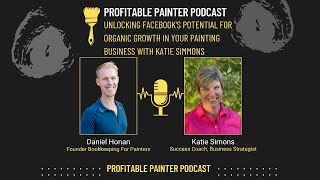
In this podcast episode, Daniel, founder of Bookkeeping for Painters, interviews success coach and business strategist Katie Simons about leveraging organic Facebook to generate leads for painting contractors. Katie explains how she transitioned from using Facebook personally to helping paint businesses grow through tailored software, CRMs, and marketing tools. The conversation covers the importance of providing value first via video Reels and Stories, following an 80/20 content split (80% personal/value, 20% direct business), and using the platform’s algorithmic preferences for video and story formats. They differentiate Reels (short, engaging videos) from Stories (24‑hour posts suitable for before‑and‑after showcases) and discuss tactics to convert viewers into customers, such as prompting comments to hit at least 12 within the first 30 minutes to boost organic reach. Katie highlights the advantage of converting a personal profile to a professional profile, which offers follower counts, post metrics, and limited ad capabilities without the cost of a business page. Consistency, selecting five content buckets, and using metrics to refine strategy are emphasized. The episode concludes with a promotion for the upcoming 7‑day Lead Surge Summit (August 13) featuring industry experts, with registration at www.justpivot.com/registration, and a final encouragement to treat Facebook experimentation like scientific testing.
Chapters
This is Daniel, the founder of Bookkeeping for Painters, and today I'm here with Katie Simmons. Katie Simmons is a success coach and business strategist. She helps modern paint contractors with streamlining processes and technology so that they can get more leads, grow and sustain business operations, all while enjoying the ride. She is known for seamlessly blending people, processes, and software within Uh, mid-sized companies, and Katie has mastered the art of software implementation, business transformation with any business landscape. So what does this have to do with painting? Well, here's the scoop. Katie has leveraged her know-how to catapult her friend's painting business into success by integrating tailored software solutions. So think CRMs, invoicing, marketing tools, and the result, his operations streamlined, his business scaled, and his revenue soared. And she fell in love with the painting industry as a result of the work and has now made it a full-time job to share her knowledge with others. Welcome to the podcast, Katie.
Thanks, Daniel. Thank you for having me.
Absolutely. I'm excited to get into today's topic, which is generating leads with Facebook or organic Facebook. So organic social media. And this has been like a, a really hot topic recently. In the masterminds that I've been joining, like people using Facebook in an organic way instead of just doing paid leads.
Yeah.
Facebook in an organic way to get leads. So this is an exciting topic.
Yeah, no, it's, it's really interesting to watch how people behave and act on, on Facebook. At first glance, I had always used it and known to use it as a way for staying in contact with friends and family and what's going on in my life and my son's life. But when you really start to watch the reels that are on Facebook and you really read different posts, you can start to see that people are selling. They are selling in lots of different ways and lots of different industries. And there's a magic about creating organic Facebook leads through your, your contacts. You don't have to be all salesy and weird. But, you know, putting a post out that's asking questions to people, that's known as an engagement post or a two-step post because you're getting information, information back, getting people to interact with you by, by giving them knowledge, right? What are paints that somebody should be going and looking at at their paint store, right? Why is, why is one paint brand better than the other? And what should they be taking a look at and asking and why? What tools should they be buying so they're not wasting money? When you start to give people that information, you're giving them value and you're starting to build that, build that like, know, and trust. And people buy based off of relationships that they have and that like, know, and trust. Yeah.
Yeah. It's funny when you first start talking about Facebook and basically Facebook's like a tool to promote your business. Reminded me of the quote from Ted Turner. Early to bed, early to rise, work like hell, and advertise. Yeah, but the, uh, it seems like Facebook is— some— somebody was telling me this, I can't remember who, but it seems like the algorithm has changed over the last year or so, um, to make it more advantageous for like small businesses to promote themselves with their personal profiles, like on, on Facebook. And, uh, like you mentioned, Reels, like doing Reels and stuff like that. That's like been really helpful for a lot of folks. And like you're saying, like creating value for people upfront and becoming like a, someone in your community that's like an expert in XYZ cabinets, whether, you know, cabinets, interior painting, exterior painting, being like the go-to resource, you know, can really set yourself apart and then when they think, oh, I need to get this done, you like come to mind because they saw you on Facebook, you know, doing a reel on, on helping them out in some way. So I think this is like a really powerful idea.
It is, you know, and the reels video is, is hot. People like to watch videos because they're easy to consume information. And so the algorithm in Facebook is right now prioritizing videos, which are your Reels. Um, from there they prioritize stories, and you put your story out there. You can put 3 stories out there at 3 different times during the day, and they stay up for a 24-hour period. So the more you're putting yourself out there, the more people are, are seeing you, right? And it's not just I generally like to follow the 80/20 rule, right? Is 80% of your videos and your posts on Facebook should really be about you as a, as a person and your business as an individual entity, right? 20% of your posts and your videos should be about your business. So that really adds up to like 2 to 3 posts a month on your business. Other than that, people start to see you kind of as a salesy weirdo, right? It's like, oh my God, I get it. You're a painter. I get it. But what else can you give them? You know, there's, like I said, there's tips. There's asking questions to create engagement and conversation because Facebook is all about connecting. You have the ability to share, you know, share something that you, you did over the weekend so that people know that you're a human being and that you like to have fun, that you're not always heads down working and painting, right? It's not a 24/7 operation, that you actually are enjoying life.
Yeah, you mentioned there's stories and then there's reels. What's the the difference and how can— what should we be doing with Reels versus Stories? Should it be similar content, different? What should we be trying to accomplish with those two?
With the difference?
Yeah.
The difference between the— well, the Reel is a video, right? So you're recording yourself with your phone. You can add different elements to your videos when you go and add them, but for the most part, you're recording yourself doing something. It could be a how-to, it can be a show and tell of, hey, here's a before and after. Stories are kind of like regular Facebook posts, right? You can— it's a, it's a single format that you use and you create, but the difference is, is that a story stays up for a 24-hour period. Right? So when they log into Facebook, you see up at the top, you'll see people's stories, and you can click on it and you can bring it up and see and read the information. You can add music to it. You can add content in terms of, you know, words. It can be motivational. So you can do a motivational post. You could, you know, do a, a, a story that is about a project, a before and after, and then have a link that actually takes them to your website so that you, you know, now you're making it more, more engaging. You're sending traffic down to your website to a landing page to check you out in case they need, you know, painting services.
Yeah, that makes sense. So stories would be great for before and afters, which By the way, like having a painting business and social media, it's like perfect because the, you're the, the service of painting someone's house and getting like the before and the after is like such a powerful thing. You can instantly see like, oh wow, that house looks so much better after they painted it, you know? So it can be like very impactful and stories, it sounds like it would be a good venue for that. Like, and you're hopefully taking pictures already. It's just a matter of posting them into a story so that next time your neighbors log into Facebook, they'll see that before and after in their stories. And so if you're producing a couple jobs a week, you're, you know, a lot of opportunity to get those eyeballs from your neighbors. And then reels would be like, so you went to the job site to show like a common misconception about prep work on a house and you're like, or something like that. It's more kind of interactive, or not interactive, but like explanatory, doing like a short 1-minute explanatory on something. Okay.
Yep. That's really the difference between the two.
Okay, cool. So the initial thing, we want to be providing value, like with the reels, with the stories. Are we, um, in getting our awareness, like we're increasing the awareness of that we're on social media, that we're doing this with our lives and providing this value. How do we like reap the rewards from that? Is just organically people start reaching out or is there sometimes we like do some sort of post like to encourage people to sign up for a free estimate or like run promotions or something? Like how do we. Turn those folks that are watching our content into actual customers.
So the way the Facebook algorithm is, is working, when you, when you do an actual Facebook post, you need to and want to get at least 12 comments within the first 30 minutes of it being posted. Because what happens is, is when the algorithm sees a post go up and people are commenting on it, and it could be, let's say, Daniel, you and I comment back and forth, right? 6 times. You're creating a conversation. And now Face— the Facebook algorithm says, oh, there's a good conversation going on here. We need to make other people aware of it. So what then starts to happen is your post is now showing up in other people's feeds. So whether it's your followers or your actual friends, your posts are now starting to show up in other people's feeds. So one way that I have taken advantage of understanding the, the algorithm for, for posts and getting those 12 comments in within the first 30 minutes is grabbing friends and having them, you know, they know when we're posting, they know the time that we're going to post. And then, um, the painters that we work with, we comment, you know, back and, back and forth. And now I've gotten my 12 comments, and it's the post now been boosted, or your video's now been boosted. So now it's going to start showing up. That's, that's how you get that organic traffic without having it to be, be paid. The other way, Facebook pages, um, the business page, it's, it's pay to play. So I see a lot of painting businesses out there that have gorgeous business pages. But unless you're running ads or getting people, pushing people to that page, your business page is never gonna be seen. So the other option that Facebook has put in there, and you had mentioned earlier in the podcast about being able to run more on your personal, your personal page. There's actually another option. If you don't want to pay for a business page to be seen, there is a setting in, in Facebook that you can change to a professional, um, profile. And that's taking your personal Facebook page, changing it to the professional. And you can tell up in the top of Facebook the different people who have changed to a professional a professional profile because the professional profile will show the number of followers and the number of people following you. Okay, so those are two different, two different numbers. You can't see that when it's just your regular Facebook profile. It just shows the total number of friends that you have. So the reason that Facebook put together a professional profile is for those in-between people, right? People who have a business or are doing some sort of consulting but don't want to do the professional— the, the business paid ads. It's, it's functioning more off of the personal profile settings, but setting you apart so that you can gradually move into having a huge following that can then take advantage of your, your business profile.
So a lot of good stuff there. So the 12 comments within 30 minutes to boost your, your personal posts.
Yep.
Uh, for, or to get organic traffic, like as, um, similar to like a paid ad basically.
Yep.
So if you collaborate with your team and with your, your friends, getting those 12 initial posts will help your, your posts get a lot of traction. So that's really, I'd never heard of that before. That's really cool. And then your business page, if you have a business page, unless you're running ads, it's not really getting much reach to—
it's getting zero reach. Yeah.
And then, and then if you are using your personal Facebook account, you can use the professional profile, which that allows for you to see followers, like see who's following who's following you or allow people to follow you. Is that kind of the main benefit is that people can follow you instead of just, you know, friending you and then they'll be able to see your posts?
Yeah, it is one of the benefits. The other benefit is that the professional profile also starts to give you some of the abilities that your business profile does. The difference is, is that Facebook is treating it as essentially a personal profile page, even with a professional setting. So when you change it to the professional setting on your profile, your personal profile, you will start to see that you get options for, for posts to run ads if you choose to, to take a, take a post and you can run an ad on it if you want. The other really cool thing is you can start to see metrics on your Facebook posts that you can't see when you have a personal profile. So metrics that you can see is your reach, the total number of, of reach that your post went to. You can also take a look at the number of, of comments that people have, have made or reactions. And so when you start to look at that over time, what you can see through the metrics, um, on the per— on the per— the pro— the professional profile, you can start to see what things do your— what posts and videos do your people like, right? What are they gravitating more to and, and why? And maybe they're gravitating to a completely different post that you never even even thought was going to be popular. And you want to do more of those, right? Because if you're, you're feeding your audience— and I think that's the one of the biggest mind shifts to kind of take a look at is on Facebook and generating leads is maybe not looking at it as generating leads and how to generate leads, but that you're creating an audience, right? And you're creating an audience to educate.
Yeah. So it sounds like the professional profile is you getting the best of both worlds where you're getting some of the capability of a business profile, but you're still keeping the same reach as a, as a personal Facebook page.
Yep. Yep.
Cool. That's awesome. Well, uh, do you have any other like tips that what else should we be doing to, to try to increase that organic traffic from Facebook?
The other tips that I have is being consistent. If you're gonna start to post out on Facebook in creating an audience for your, your business, you need to post consistently. So whether that's 3 days, 4 days, 7 days a week, you need to be consistent on it. The second tip that I would recommend is to pick 5 5 categories or 5 different types of, of posts that you're going to do on a regular basis. So that could be an engagement post, it could be a product spotlight or a how-to video, um, within your business. It could be a before and after, um, but pick what your, your 5 category buckets are gonna be and stick to those. And then if you switch to the professional profile, you can start to then see through the metrics which posts and videos are resonating with your audience and, and then tweak from there. Nice. Cool.
Awesome. Well, this has been super informative. I, um, I'm learning and taking notes myself here. So, uh, awesome. I know, I know we have the Lead Surge Summit coming up on August 13th. Can you kind of tell me a little bit more about what's coming up in that summit?
Absolutely. So I put together a summit or bootcamp, as some might refer to it. It's essentially a 7-day training series. Each training session is about 45 minutes to, to an hour. Um, I reached out to a number of industry experts, one you, you being one of them, Daniel, um, to come and, and speak. And the reason why I felt that it was necessary and wanted to pull together a, a free training event was the fact that I've been reading and going through a lot of different painting Facebook groups, and there's just a lot of questions. There's a lot of questions on pricing. There's a lot of questions on how, how should I approach my, my invoice? How do I make that offer to customers? And so I thought, what a better way than to pull together people in the industry that I personally know who are extremely caring and passionate about the industry to come and share, share knowledge to help. And so that's really what the series is about. I have invited yourself because you guys do such an amazing job with, with bookkeeping. Ryan Stacy from Tritus, who is also a Facebook expert and video extraordinaire, is also going to be coming and speaking. And educating, and he's really excited about it as well. Brandon Pierpont, who is known as the marketing guru within the painting industry, is super excited to come and share his best tips for marketing strategies for the rest of this year and into 2025 as well. So I'm, I'm really excited for it. I think it's going to provide a lot of value, and I can't wait for it to come up.
Yeah, it's an awesome lineup. I mean, not so much me, but the other folks that are going. Yeah, definitely. I'm excited about it. So where do folks— we'll include the link, but if someone's listening, where can they go to sign up for the summit?
So to sign up for the summit, you'll want to go to Well, use the link that's going to be in the comments, but it's www.justpivot.com/registration.
Awesome. Good stuff. Well, I appreciate your time today, Katie. Is there any last thoughts or anything else that you'd like to throw out there before we let you go today?
You know, I really appreciate you having me on here. And I would say my— the only last advice I would provide out there is to not be afraid to go out and, and test and be, be a scientist when it comes to Facebook or getting out into the market to reach more customers and conversations. Be a scientist, figure out what works best for you and, and why and be able to answer that. And then you'll be able to repeat and repeat and bring more people on.
Awesome. Cool. I appreciate your time today, Katie. And with that, we will see you all next week.
More from Daniel







What’s REALLY Holding Your Painting Business Back? (Find Your Bottleneck in 5 Minutes)



