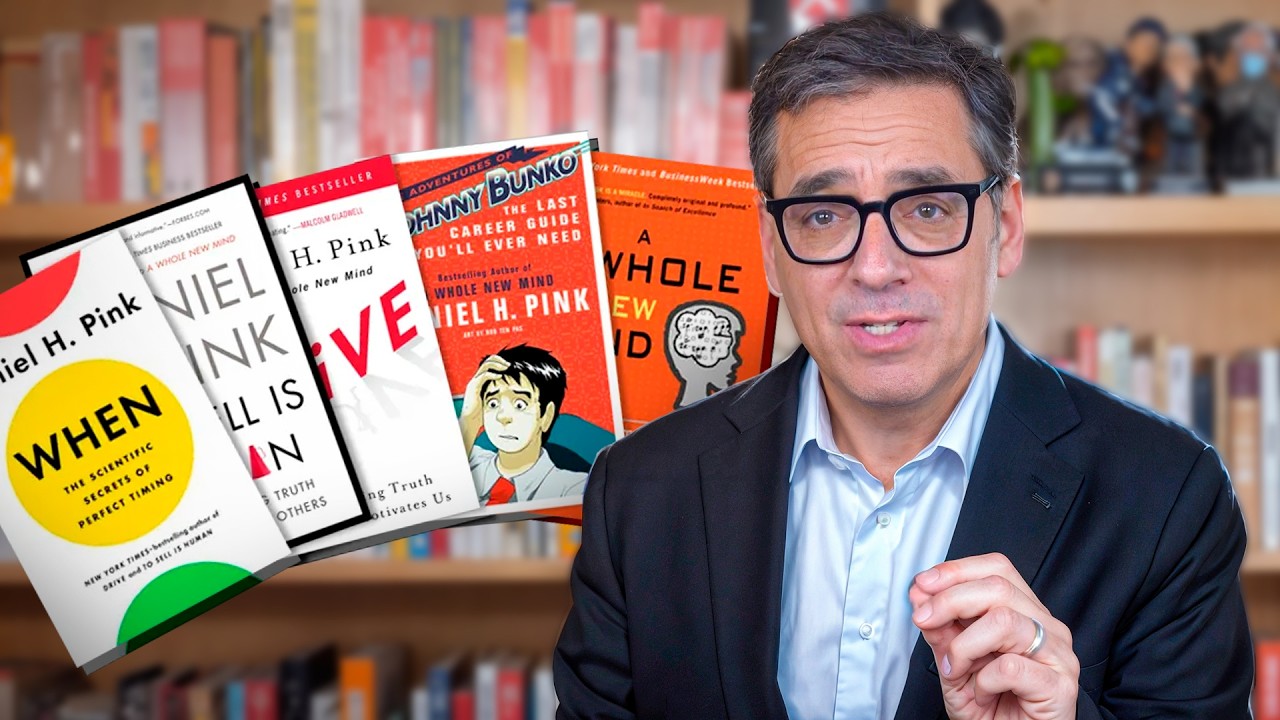
In this instructional video, a seasoned writer who has crafted speeches for a U.S. Vice President, written hundreds of magazine and newspaper pieces, and authored seven nonfiction best‑sellers shares six concrete habits that have helped him produce finished work. He begins by describing the solitary, slow, and often discouraging nature of writing, then outlines each rule: (1) show up at a desk every day regardless of motivation, treating writing like a job to build momentum; (2) commit to a minimum daily word count (he uses 500 words) before doing anything else, emphasizing consistency over intensity; (3) use physical movement—walking around the house, up stairs, or outside—to break mental blocks; (4) read the text aloud (or have someone else read it) to expose gaps between intention and execution; (5) view writing as a social promise to readers, honoring the time and money they invest and seeking feedback from others; and (6) adapt the rules to one’s own process, discarding what doesn’t work. He reinforces each point with personal anecdotes, quantitative details (e.g., a 70,000‑word book takes about 140 days at 500 words per day), and vivid metaphors, concluding with a call to action for viewers to start writing.
Chapters
I've been a writer my entire adult life, whether writing speeches for the Vice President of the United States, hundreds of articles for magazines or newspapers, or 7 nonfiction books. Writing is tough. It's lonely. It's slow. Half the time it feels like it's never going to work. But every once in a while it does. The words click. The paragraph flows. And for one brief shining moment you think, wow, I'm creating something no one else has ever produced. It's amazing. So, for all you writers out there, and all of you who would like to be, I want to share my 6 rules for writing. Things I've learned over the years that actually, genuinely help. Let's go. Number 1: Show up every day. Get to work even when you don't feel like writing. Especially when you don't feel like writing. Because here's the dirty little secret: writing when you want to write? That's easy. Writing when you don't want to write? That's the challenge. But more important, that's where the good stuff happens. For me, when I have something to write, that means showing up to my office at 8:30 AM. I don't bring my phone with me. I don't check email. I don't play Wordle. I don't watch ESPN highlights. I get to work. If I waited until I was inspired to write, I would never write a word. So I go to my desk every day, no matter what. Because momentum matters. And regaining momentum takes 3 times as much energy as sustaining momentum. Look it up. It's a law of literary physics. I treat writing like a job. I arrive each morning with my lunch pail and I lay a few bricks. Then I show up the next day and the next day and the next day, and before long, I've built something. Here's a cardinal rule of exercise, writing, and life itself: consistency beats intensity. What holds most people back isn't talent. It's that they don't do the steady, regular work. So show up every day. Number 2: Give yourself a word count. Okay, you're showing up to write every day. Now give yourself a number. For me, that means at least 500 words. I do that first before I do anything else. Again, no email, no errands, no reorganizing my sock drawer. 500 words minimum first thing and nothing else. After that, I can do whatever I want. Before that, I've got only one goal. They don't have to be great words. I can fix them later, but they have to be enough words. Now, for some people, 500 words is a breeze, but not me. I'm a very slow writer. Some days, most days, it takes me several hours. But the key is that I don't do anything else until I hit that number. And then I do it the next day and the next day. And the next day, and the next day, and you know what? Pretty soon, the pages pile up. My books are usually about 70,000 words. That's 140 days. Work 6 days a week, and that's about half a year. Like I said before, consistency beats intensity. Number 3: Move. When I'm stuck, when a sentence won't land or a transition feels clunky, I get up and walk. Sometimes just around my house, Sometimes up and down the stairs like I've lost something, sometimes out the door and around the neighborhood. And here's the weird part. That's often when the solution shows up. There's something about physical movement that unlocks mental progress. The act of walking, especially without your phone, gives your brain just enough distraction to stop gripping the problem so tightly. And that's when the insight slips in. Writing is like walking, and walking is like writing. Both are slow and steady. Step by step by step. Seriously, most writers I know are walkaholics because movement clears the mind. It shakes the sentences loose. Walking, someone once said, is thinking at 3 miles per hour. That's why moving is essential to your writing. Number 4: Hear your words. Seriously, out loud, with a real voice, to your actual face. Here's why. Writing lives on the page, but reading lives in the ear. Hearing your words forces you to confront what's actually there. Not what you meant to say, not what you thought you said, but what's on the page. And often the gap between intention and execution is where the real work happens. Sometimes I read aloud to myself. Sometimes I read into a voice recorder and play it back. But I also go further, a lot further. For every book I've written, my wife has read every word of every chapter out loud while I listened. And I've read every word to her out loud while she listened. We've done this with every chapter, every section, every sentence. And amazingly, we've been married for almost 30 years. When you hear work aloud, you understand the flaws in new ways. The stumbles. The unintentional repetition. The overly long sentences you thought were genius but actually sound like a man falling down a staircase made of commas. So find someone— your partner, your friend, a fellow writer, your dog if it's well trained— and read your work aloud. Or have them read it to you. It's humbling. It's illuminating. It's essential. Number 5: Writing feels solitary, But it's also social. You're not just typing into the void. You're making a promise to readers. I can't stress this enough. For everything that I write— a newspaper column, a long article, a longer book— I ask myself, what promise am I making to the reader? Then I try to honor that promise. Here's another way I think about it. If someone buys a book of mine, it'll cost them $20. And if they actually read it, that'll take, say, 9 hours. $20? In 9 hours? For me, that's a huge honor and a huge responsibility. I need to make a clear promise that you're gonna learn something amazing, you're gonna be entertained in a new way, you're gonna have your life transformed, and then I have to deliver. Here's another way that writing is social. Don't hide what you're working on. Talk about it with other people. Do they look bored? Do they look excited? Do they kick back or lean in? And listen carefully to their response. I like it when people tell me, that's interesting. I like it more when people say, that's interesting, have you thought about X, Y, or Z? And I like it most when people say, that can't be true, tell me more. And finally, number 6: These rules work for me, but your mileage may vary. If something I said helps you write more or better, fantastic. If not, ditch it. The real goal is to figure out your process and then keep showing up for it. Writing is weird and wonderful and often excruciating. But if you take it seriously and are willing to do the work, you'll be amazed at what you can create. So show up, write every day, hit your word count, move your body, hear your words, keep your promise, and build your own way of working. Now stop watching videos and go write something.