CBS Mornings: Daniel Pink on the power and value of regret
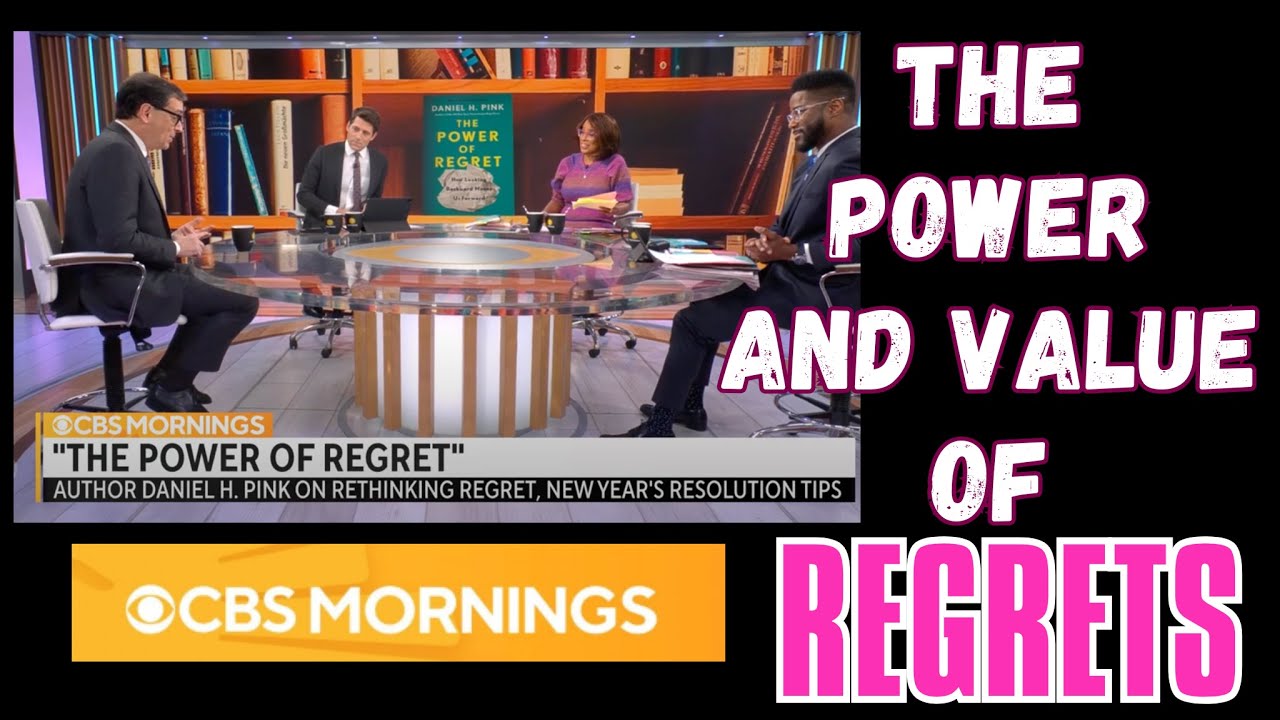
Daniel Pink argues regret is misunderstood. His research identifies four types: Foundation, Boldness, Moral, and Connection. Most long-term regret comes from inaction, not mistakes, and can fuel better decisions ahead.
Chapters
New York Times bestselling author Daniel H. Pink says regrets should not be ignored. His latest book is The Power of Regret: How Looking Backward Moves Us Forward. Pink writes this: It is healthy and universal, an integral part of being human. Regrets is also valuable, can lift us up. So says Daniel Pink. Daniel Pink joins us at the table. It's good to see you.
Thanks for having me.
Hello, Mr. Pink. You said it's the most misunderstood emotion. You said it can give us hope and make us better, and a lot of people went, huh? What you talking about, Willis? So how do you explain that?
Well, regret is one of the most common emotions that human beings have. It's that sinking, terrible feeling that we get when we look backward and say, ah, if only I had done this, today would be better. It is as common as any emotion that human beings experience. Everybody has regrets. The only people who don't have regrets, even though a lot of us say, I don't have any regrets, I never look backward, the only people who truly don't have regrets are 5-year-olds because their brains haven't developed enough.
Yes.
People with certain kinds of neurodegenerative diseases and sociopaths. Everybody else has regrets.
But you also break it down—
Yeah.
Excuse me, Tony, I just wanna hit the 4 categories very quickly 'cause I think that'll be a good foundation for the conversation.
Sure.
4 categories quickly. Foundation is what?
Foundation regrets are regrets that people have about small decisions early that accumulate to bad consequences later. I spent too much and saved too little, now I'm broke.
Boldness.
I didn't take a chance. I was at a juncture in my life, I could play it safe or I could take the chance. I didn't ask somebody out on a date, I didn't start the business, I didn't do something big and bold.
Ooh, moral.
I had a choice in life. I could take the low road or take the high road. I took the low road, I bullied, I cheated on my spouse, and now I regret it.
You said it's the smallest regret, but it's also the most painful. Connection.
It's about reaching out to people we care about. So I have an old friend. Wow, I haven't talked to him for a few years. I should really reach out. No, it's gonna be awkward. He's not gonna care. So I wait a few more years and sometimes it's too late. Yeah.
Here's the thing. People don't like the emotion of regret. They don't like the feeling and so they avoid it. When people avoid it and they're not in touch with this, what do they lose?
They lose incredible benefits. We know from 50 years of social science that if we confront our regrets, don't ignore them, but also don't wallow in them, it can help us become better negotiators, better problem solvers, better strategists, better thinkers, find more meaning in life. I mean, we have 50 years of science showing us that if we treat our regrets as signals, as information, it makes us better. So this— so it's there for a reason, Tony. Like, there's a reason, you know, regret feels terrible and yet it's universal.
I'm with you. I wonder if I wallow or if I confront. What's the line between the two?
Right. That is a fine line. You write that the most common regrets in 2021: family, partners, education, career, finance. Health, friends, and other. But you also suggest making a list of your old regrets.
This is the time of the year for it.
Yeah, absolutely, because one of the best ways to make New Year's resolutions is to think about your old year regret. And so what I would suggest is this is a moment right now where we're looking back on the year. So we can look back on the year and say, oh, if only I had done that, if only I had done that. And we can say, no, no, no, no, no, no, no, I don't want to be negative. Or you can say, wow, I feel bad about that. Find one thing that you wish you had done, one thing you wish you hadn't done, and use that as the foundation of your New Year's resolution.
You know, oftentimes there's some parallels that happen with my old career and the career I'm in now, and it reminds me of playing football. You come off a game, you lose, you don't play well.
Yeah.
You create a game plan for your next opponent. You're saying, know what your mistakes were. Our next opponent is 2023. So you go into that year with a game plan. Knowing your strengths and weaknesses. Maximize your strengths, minimize your weaknesses.
It's like reviewing the game tape.
Exactly, I was gonna say, I was gonna see you and raise you. It's about watching the game film. You don't say in professional sports or any kind of high-performance endeavor, I don't look back at my performance. You look back on your performance and you don't say, oh, I stink, I'm terrible, the worst person ever. Or you also don't blind yourself to it. You say, whoa, I could learn something from this.
You also talk about couldas and shouldas, and I think this is very relatable. What's the difference, coulda and shoulda?
Well, couldas are regrets that we have about sort of how we fell short of opportunities, all right? Oh, I coulda started a business. I coulda asked out Marlene 20 years ago.
Marlene.
Shouldas. She could be watching now. Shouldas are about our obligations. I shoulda been kinder to my brother. I should have—
But shouldas you can fix. Couldas you can't fix.
That's hugely important. And it's, uh, we can fix our shouldas. The other thing is that one of the things that sticks with people, Gayle, are regrets of inaction. Regrets of action are far less common than regrets of inaction.
I so get that.
What we regret over time is what we didn't do.
I get that.
Especially things about reaching out to people we care about and, and being bold, taking that jump.
So that's where the no regrets slogan actually works, if it encourages action.
If it encourages action, sort of, I'm trying to avoid big regrets in the future.
Which inaction could lead to.
Right, exactly, exactly. But what some people do with the no regrets philosophy is they say, I don't have any regrets right now because I always wanna be positive and I never wanna look backward. And that's not a recipe for a good life.
Do men and women have different regrets, generally speaking?
Some.
Do men have more such regrets than women have such regrets?
Men tend to have more regrets about career. Women have more regrets about family.
About men. Yeah, about men.
I mean, there's also, this is not, this is not, I'll tell you, this is not my research, but there is research out there. It's in a footnote in the book. Probably should have put it in the main text that shows essentially that there are differences in sexual regrets. So that, to make it, to oversimplify, but not by much, women regret the people they slept with. Men regret the people they didn't sleep with.
Ah, what regrets do you have, Daniel, 18?
Well—
Speak into the microphone.
Well, now since Marlene and my wife are likely watching, I'm gonna, I have regrets, Gayle, really about kindness. Earlier in my life, when I was a younger guy, I was never a bully. And I've collected—
But you were mean?
You know what? I was mean through inaction. It was strange that I was in situations where people were not being treated well. They were being left out. They were being excluded. And I knew it was wrong. And I didn't do anything. And that has bugged me for 10 years, 20 years.
Yeaah.
Now— Yeaah.
The question is, what do I do with that?
Yeah.
What do you do with that? Write a book.
Yeah, but you put it out there and someone is listening. What does the H stand for in Daniel H. Pink?
Howard.
Howard. All right. Daniel Howard Pink, we thank you. We thank you. The Power of Regret is on sale now wherever you like to buy your books.








