Driving Employee Engagement Daniel Pink
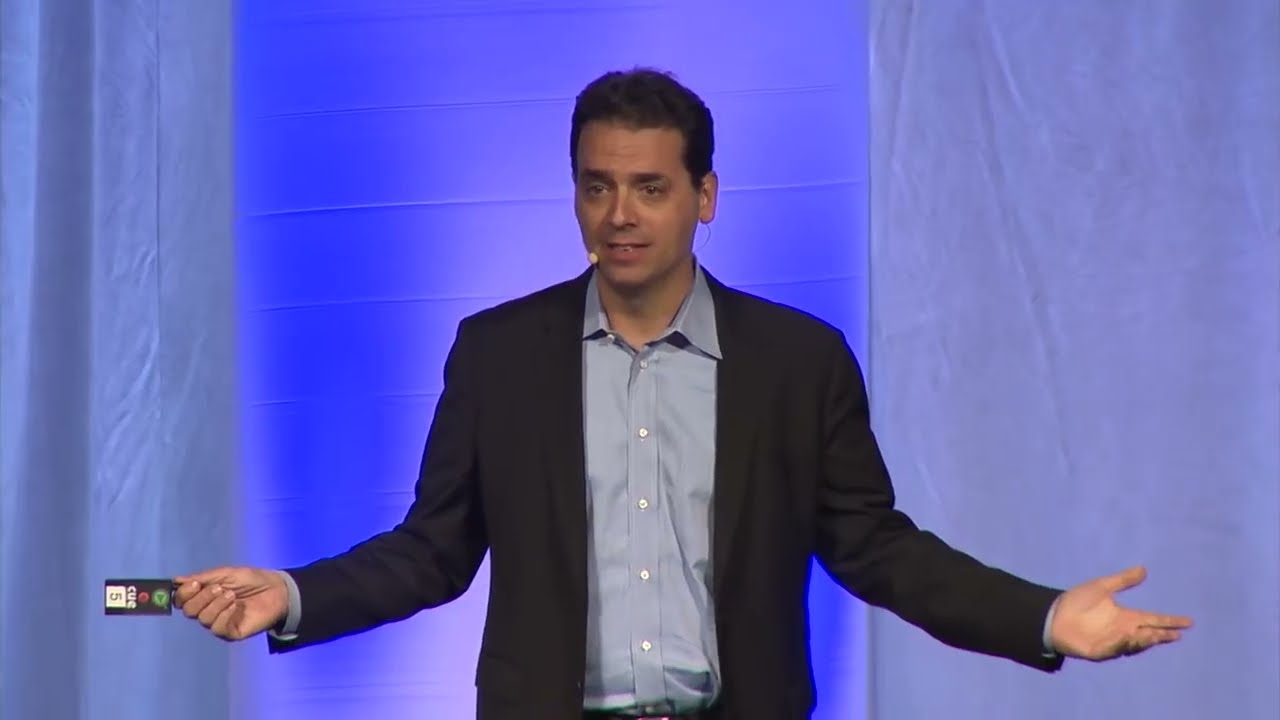
Daniel Pink argues that 70% of American workers are disengaged because companies still use 19th-century management built on if-then rewards, which fail for complex work. He identifies autonomy, mastery, and purpose as true motivators, with autonomy as the key. Companies like Atlassian, Zappos, and Intuit prove that self-direction over time, task, team, and technique drives both engagement and performance.
Chapters
Take a look at this article from the Wall Street Journal. There it is. Just from about 6 weeks ago. The state of the American workplace is— Meh. Meh. And what it showed is some data saying that 52% of all full-time workers are not involved in, enthusiastic, or committed to their work. And that's the good news, because another 18% are actively disengaged. All right, so let's add that up. That means 70% of people in the American workforce are not engaged. What is going on here? I think I have a sense of what's going on here, and I think it's a problem of technology. I think it's a technological problem. And let me tell you what I mean by that. In order to understand this, we have to take get a backdrop here. And that backdrop is 50 years of social science studying motivation. For the last half century, social scientists all over the world have taken a very hard-headed, analytical, empirical look at what motivates people on the job. And we don't have time to talk about it in all of its nuance, so what I want to do is give you 50 years of— give you one takeaway, give you 50 years of this research, and I want to summarize it in 12 words. That's pretty efficient, all right? 50 years of social science in 12 words. So here we go. This is going to be the backdrop to understand the technological problem we have that underlies the state of the workplace being meh. Is that how you say it? Meh? Meh? Meh? What is it? Meh? Let's all say it. Meh. Ooh, it's an ugly word. All right. So let's talk about what scientists know about motivation. There's a certain kind of motivator that we use in organizations. We use a lot of motivators. but this is our mainstay motivator. I call it an if-then motivator. If you do this, then you get that. If you do this, then you get that. An if-then motivator, a controlling contingent motivator. If you do this, then you get that. Here's what 50 years of social science tells us. I'm going to summarize it in 12 words. If-then motivators are— Great! Great for simple and short-term tasks. They work really well. They're really effective. They're great for simple and short-term tasks, but— They're not so great for complex and long-term tasks. Do that again. Great for simple and short-term, not so great for complex and long-term. That's 50 years of social science in 12 words. Let's unpack that just a little bit. Why are if-then rewards great for simple and short-term tasks? Who has an instinct? This is the interactive part. Immediate. Immediate. All right, here we go. So let me— I'll be a little bit more directive here. Do we like rewards? Yes. Yeah, a little or a lot? A lot. A lot. We freaking love rewards, right? They get our attention. They get our attention in the way that Joseph and Emily were talking about, in the way that our brain works. We love rewards. They get our attention. They get us to focus. They get us to concentrate. They get us to zero right ahead. If you were to offer me or you or anybody $500 to do something relatively simple and straightforward? You got 'em! They're going to focus on the task like this. Zeroed in, focused straight ahead, know exactly what to do. That's a very, very good frame of mind. That locked-in focus frame of mind is a very good frame of mind if you know precisely what to do. It's a very good frame of mind for tasks that are algorithmic. Algorithmic, meaning you're following an algorithm, you're following a recipe. You're following a set of rules to a logical conclusion. 50 years of social science tells us that if-then rewards are great for simple and short-term work. They get us to focus, barrel straight ahead, get the job done. It could be following that algorithm with your body: turn the same screw the same way on an assembly line. It could be following that algorithm with your brain: add up these columns of figures, process this paper. But for simple and short-term work, If-then rewards are really, really effective. But they are not so great for complex and long-term tasks. Why? Let's go back to the question. Do we like rewards? Yes. A little or a lot? A lot. We freaking love rewards. They get our attention. They get us to focus. So you offer somebody that contingent reward, if you do this, then you get that, for something complex, or creative or conceptual with a long time horizon, and you know what happens? Whoa, I love rewards! You focus in on the task. That's a very good frame of mind if you know precisely what to do, but what if you're trying to do something no one's ever done before? What if you're trying to solve a non-obvious problem? What if you don't even know the question that you're being asked? What if you have a very long time horizon? It's not that effective. For conceptual and creative work, what you want to do is you want to have a more expansive role. You want to be able to take something from over there and something from over there and combine it and turn it upside down. And so if-then rewards, not all rewards, don't work for complex and long-term tasks for the same reason that they're great for simple and short-term tasks. Let's say that again. If-then rewards, great for simple and short-term, not so great for complex and long-term. And here's the problem. Here's the problem. Think about your day-to-day work, no matter what you do. How much of your work is simple, algorithmic, know exactly what to do, easy to carry out? Not that much. How much of it is complex, complicated, conceptual? What we have here is a set of motivators, not all motivators, but these if-then motivators, that are great for 19th-century work, pretty good for 20th-century work, but just out of steam for 21st-century work. So what we need to do is we need to update the way that we motivate people, and I think that that helps explain this rather staggering level: 70% of the workplace, 70% of the American workforce is not engaged in what they're doing. I think that helps us explain what's going on. So let's talk about how we can do better, and let's try to crack this technological problem. So let's talk— turn the corner. We know that if-then rewards are great for simple and short-term and not so great for complex and long-term. What works better for the complicated conceptual work that you and the people at your companies are doing? Let's start here. Fact: money is a motivator. Research shows the power, and Crucial Confrontations and Crucial Conversations talk a lot about intrinsic motivation. I'm going to talk a little bit about some of these intrinsic motivators, some of these internal motivators. But don't get the wrong idea, all right? Don't get the wrong idea. Oh my gosh, this is great news if I'm a CEO. What it means is that if these intrinsic motivators are the pathway to high performance, what this means is I can scrimp on people's pay and recompensate them in units of bliss. Incredible. Bad idea. Bad idea. Let's go to this. Fact: money is a motivator. Fact: money is a motivator. And all of you are smart. You're teachers, you're trainers, you're smart, astute people. You know the literature, and you know that's a fact. Because I wrote FACT right there in capital letters at the top. But this— I came in— I live and work in Washington, D.C. I should point out that this is something that we in Washington, D.C. refer to as a true fact. Okay? We've got facts in Washington, and then we have true facts. And this is a true fact. This is really the case. In brief, here's what it shows. You want motivation? You want people to be engaged? You've got to pay them enough. Human beings in general, human beings in the workplace in particular, are exquisitely attuned to the norm of fairness. You violate the norm of fairness, you're toast. What does that mean? If you've got 2 people doing comparable work, and one's getting paid less than the other for doing the exact same work, and that person finds out, you've got a big motivation problem. If people in your company are getting paid X, and at a similar company in the same labor market doing similar kinds of work, they're getting paid X plus 20%, you've got a motivation problem, because it's not fair. So there's a paradox here. Money matters a lot, but one of the best uses of money as a motivator is to pay people enough to take the issue of money off the table. Pay people enough to take the issue of money off the table. We have this notion that if we raise the salience of money, people will do better at their jobs. But what the research shows pretty clearly is that that's true, if people know exactly what to do, if they're doing algorithmic work. But if you're doing more creative, conceptual work, what do you want people focused on? The work. The work. And how do you get them focused on the work? Make sure they're not focused on the money. Pay people enough to take the issue of money off the table. Once you do that, it turns out there are 3 enduring motivators, and one of them is the key to cracking this technological problem with engagement. 3 enduring motivators: autonomy, mastery and purpose. Autonomy, mastery, and purpose. I want to talk about autonomy because it's going to allow us to crack the technological problem behind these staggering levels of disengagement. Because to understand autonomy, we have to understand this word right here: management. Management. It should always be said like that: management. We take this word too seriously. We take this word too seriously. We think that management is something that's always been here, right? Something that emanated from nature, something that was given to us by God. No, it's not. Management— let's take it off of its pedestal and let's think about what it really is, because it's going to allow us to crack this problem. Management is just a technology. It's a technology for organizing people into productive capacities. It's a technology from the 1850s. We don't use that many 1850s technologies today, do we? Most of you— any of you have a wireless device? Yes. Okay. How many of it is— for how many of you is your wireless device a telegraph? Okay? An 18— we've upgraded our technologies. Here's the thing. Management hasn't always been here. It's a technology. It's morally neutral. It's a brilliant technology. It's one of the greatest technologies humankind has ever invented, but it's a technology with a singular purpose. It's a technology designed to get compliance. It's a technology designed to get compliance, to get people to do what you want them to do the way you want them to do it. We still need compliance in our organizations, in part, but more and more we need Engagement. And here's the thing: management is not a technology that gets you engagement. It's a technology designed to get compliance. Even if you sand off the rough edges, even if you oil the gears, management is still a technology designed to get compliance. If you really want engagement, the technology is self-direction. That's how human beings engage. That's how you engage. That's how the people you love engage. If you're truly engaged in something, you get there under your own steam. And so the reason— take a look at this. Here are these— here is another chart on engagement. And basically what it shows is that for the last— basically for this entire century, we've had levels of disengagement in the workplace hovering around 80%. That's unbelievable. 80%. We have 18% in 2012 of people saying that they're engaged in their job. That's a problem. But it's a problem, it's a technological problem. The technological problem is we're using the wrong technology. You cannot manage people into engagement. The technology for engagement is self-direction. That's how you as individuals engage. That's how the people that you love engage. So if you really want engagement, rather than compliance, you've got to use a different technology, the technology of self-direction. And what that means is you've got to look for ways to give people greater amounts of autonomy over the various aspects of their job: over their time, when they do what they do; over their task, what they actually do; over their team, who they do it with; and over their technique. When people have a little bit more sovereignty over these aspects of their work, they do better. Because that's how human beings engage. Now, if you're skeptical of this, and I find that a lot of managers are skeptical of this, there are— there's no— I mean, I'm all for healthy skepticism. That, oh no, no, self-direction can't be the technology for engagement. Try this question. Try this question at the ice cream social this afternoon. Sounds pretty cool. You get plenty of glucose in your system too, so you can think straight. Ask somebody, hey, describe the best boss you ever had. Describe the best boss you ever had. Very rarely will you hear people describe the best boss they ever had like this. Oh, the best boss I ever had, she was amazing. She was amazing. She breathed down my neck the whole time. She told me exactly what to do and precisely how to do it. She was unbelievably, almost pathologically controlling, and as a consequence, I was utterly compliant. It was the best working relationship of my life. Ask this question, and we've been asking this question, and it goes really to the heart of what Joseph was talking about with regard to accountability. If you ask this question, tell me about the best boss you ever had, you invariably hear this: high standards and autonomy. High standards and autonomy, because that's how people engage. So let's talk about some ways that companies are doing it. I'm going to rip through, give you a— I'm going to give you a half dozen examples of things that are going on. We're going to go through really quickly, and then we'll wrap up. Let's take Zappos. Zappos has call centers. Zappos is an online shoe company. Zappos has call centers. Call centers are one of the worst jobs in the United States of America. They have an annual turnover rate— average annual turnover rate in American call centers is about 100%. Basically full turnover on average each year. They're terrible jobs. You're tethered to a headset. A call comes in, beep. You type something into your computer. to try to dispatch the caller as quickly as possible. You know, read your script, dispatch the caller. Calls are almost always timed, calls are almost always monitored, calls are almost always recorded. Zappos says, we're going to do it differently. They hire people, give them a few weeks of training, they station them at their desks, and they put them at grown-up desks rather than the little hamstery cubicles that most call centers use. And they say, when a call comes in, here's your job: solve the customer's problem. That's it. Do it your way. We're not going to record your calls. We're not going to time your calls. We're not going to monitor your calls. What we are going to do is we're going to be maniacal about getting feedback from our customers. We're going to make sure our customers are happy. Zappos comes out of nowhere to have one of the highest customer service ratings of any company in any industry in North America. Customer service ratings that rival the Four Seasons Hotels. It's an online shoe company in Nevada. How does it do this? It starts with a different premise. If you start with the premise that people want to shirk, that they can't be trusted, and therefore need to be controlled, that leads you down one path. If you start with the opposite premise, that people want to do good work, that they want to contribute, that leads you down another path, not only nicer but demonstrably more effective. Let's think about certain grocery businesses. Let's talk about giving people autonomy over their team. Look to a high-end grocer like Whole Foods or Wegmans. The produce manager will hire people to come and work in the produce department, but that person will stay in the produce department for 30 days. Whether that person stays a 31st day, whether that person stays a 31st day, is up to everybody else. Company hires the talent, but the talent has a say in who's on the team. Giving people some sovereignty over their team increases engagement. Let's give you another example, a really awesome example here. Atlassian. It's an Australian software company, and they do something really cool. Once a quarter, on Thursday afternoons, they say to their software developers, for the next 24 hours, go work on anything you want, as long as it's not part of your regular job. Do it the way you want, do it with whomever you want, do whatever you want. The only thing we ask is that you show what you've created to the rest of the company, On Friday afternoon, in this fun freewheeling meeting— they call these things FedEx Days, because you have to deliver something overnight. I should say they called them FedEx Days because about a year ago they got a cease and desist letter from FedEx. So they now call it Ship It Days. But regardless of what you call it, it turns out that this one day of intense, undiluted autonomy has led to a whole array of fixes for existing software, ideas for new products, improvements to internal processes that had otherwise never emerged. This is exactly what Joseph is saying in another context. Accountability is the fruit. Accountability is the fruit. If you give people autonomy, if people are allowed to do great things, all right, it's a totally different premise. It's not saying, hey, if you do something groovy here at Atlassian, I'll give you a carrot. It's saying, we hire good people, Good people want to do good things. One way to help good people do good things is to get out of their way for a day. Accountability is the fruit of autonomy. One more example. Let's talk about another software company, Intuit. Great company, makers of TurboTax and Quicken and all that kind of groovy software. They face some challenges that all software companies face. It used to be people would buy software on platters, install it in their machines. People don't do that anymore. Now they want a downloadable onto their machines, an executable. Big transition. But then what happens now? Intuit starts hearing from its customers saying, I would love to have Quicken on my Android phone. I would love to have TurboTax on my iPad. Maybe not love. I would like to have TurboTax on my iPad. They've got to make this sophisticated software available for— Mobile devices. How do you do that? Well, Intuit has had since its inception, almost since its inception, something called 10% time, where employee engineers can spend 10% of their time working on whatever they want. Again, it sounds all Summer of Love, you know, let it follow your bliss, but let's— it's more hardheaded than that. It's more— it's exactly what Joseph was saying. It sounds superficially soft, but it's very hardheaded, because the companies that they're not signing away the intellectual property rights to what's created during that 10% time. So here's what the head of innovation at Intuit told me. After our CEO declared mobile was key to our strategy, none of our business units were able to change direction on a dime, but our employees using 10% time created 7 mobile apps before any other formally funded mobile projects even got started. Autonomy and accountability are not at odds with each other. Accountability is the fruit of autonomy and self-direction. One more example, okay, just to give you the spectrum of things. The powerful and influential Columbia Credit Union in Vancouver, Washington. There's a young woman there, Jen Scheffner, she's about 28 years old. She runs the customer service department. They have 6 people who answer the phones from credit union members. Jen says to her boss, Boss! I want to have a FedEx Day. Her boss says, no. She says, okay, I'll do something else. And so what she says, she says to her— has a meeting of her 6 people, and she says, you guys have not fully autonomous jobs because you have to be at the phones for a certain amount of time. You have to answer these calls. I'm going to give you some discretion over how you answer the calls, but I want to do something else. One hour every week, I'd like you to leave the phones, go somewhere else, think about a better way to run this place. Think about something we aren't doing for our members that we should be doing for our members. Think about something we can do to improve service in this operation. Go somewhere else. I'll cover your phones during that hour. She calls it a genius hour. One hour a week carved out for purely autonomous work. All of a sudden, this little customer service department is coming up with all these great ideas. And innovations. Self-direction. If we want engagement, if we want to cure this engagement problem, we have to use the correct technology, and the technology is self-direction. Now, there's some other things that lead to enduring motivation. Mastery, getting better at something that matters. Purpose. I'm going to talk about purpose this afternoon. There's some really, really amazing research and cool stuff there. But I want to end on this. I want to end on this point about autonomy and self-direction, self-direction as the pathway to accountability to great work. Because when you say this, inevitably you're going to have some people who respond like this. Sentences that begin with some people. You know what I'm talking about. The only thing more insidious than sentences that begin with those people are sentences that begin with some people. Some people. Some people just aren't motivated, Dan. Some people just can't handle autonomy, Dan. Some people actually want to be controlled, Dan. And I just think that's wrong. Not wrong morally, I just think it's an inaccurate depiction of who human beings are. Why do I say that? Number one, I've never heard anybody say that about themselves. I can't handle autonomy. I need to be controlled. It's always about someone else. But the other reason, I think it goes to the heart of a lot of what's going on here at VitalSmarts, which is this. The other reason I say this is because I'm a father. I got 3 kids. I've seen babies before. I defy you. We are not wired to be passive and inert. That is not the human condition. And if you don't believe me about that, go out there. I defy you. I challenge you. Go out there. Go out somewhere and bring me a 2-year-old who is not active and engaged. Go out there and find me a 4-year-old who is passive and inert. You won't be able to do that. Why? Because being active and engaged and self-direction is who we are. That is the default setting when the product ships from the factory, right? That's what's checked. And so if people aren't motivated or feel— or are acting in ways that are passive, that make them passive and inert, I'm convinced that's learned behavior. That's not the essence of who they are. That's the legacy of organizations and schools using the wrong technology. So my call to you is to do this: think about those kids, and think about the people in your organizations, the people you're training, as grown-up versions of those kids, as inherently active and engaged. And I think if we do that, we start from that premise, You know what I think we can do? I think we can grow this economy. I think we can build organizations that work. And I think at some level, we can allow everybody to live up to his or her God-given potential. Thanks for your time. Thank you.








