Timing Is a Skill (And You’ve Been Using It Wrong)
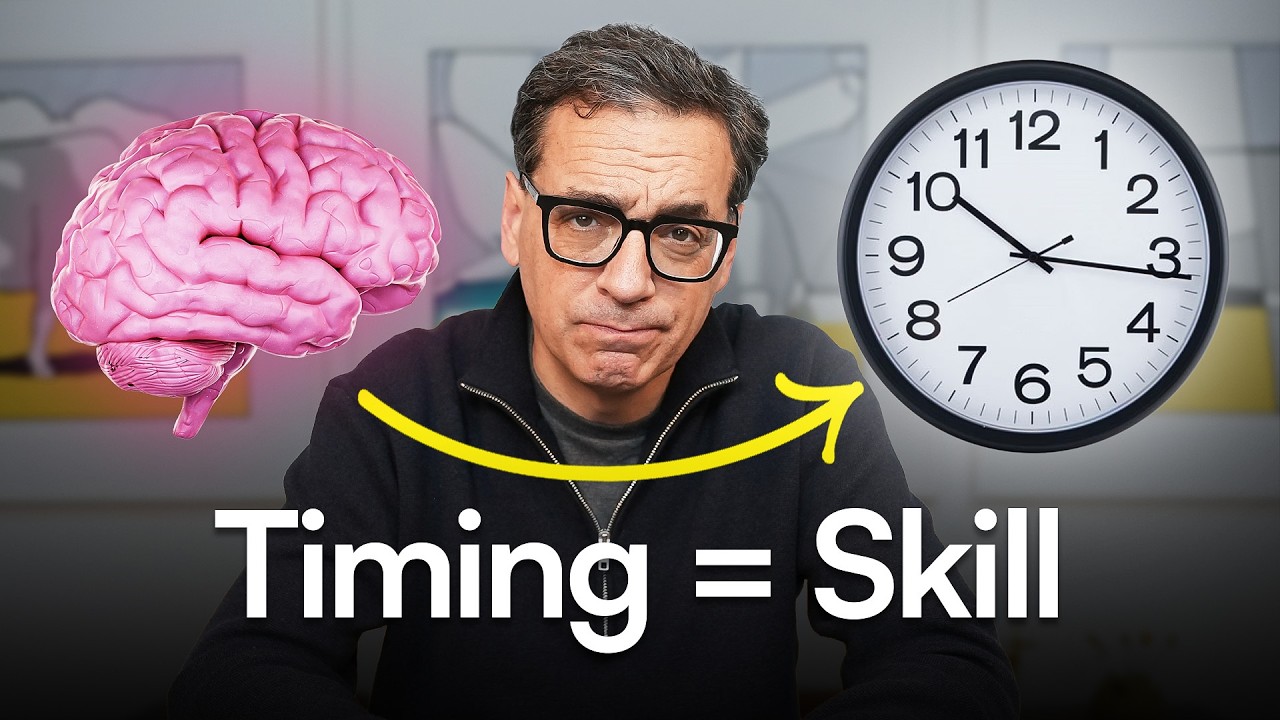
Daniel Pink shares six research-backed timing strategies: schedule medical appointments in the morning, not afternoon, when error rates are lower. Wait 60-90 minutes after waking to drink coffee. Use shower temperature to signal sleep or alertness. Morning workouts build habits; evening ones peak performance. A 2-3 PM nap with optional pre-nap coffee prevents grogginess. Temporal landmarks like New Year's or Mondays trigger the "fresh-start effect," making new habits stick.
Chapters
When should you schedule a doctor's appointment? When should you drink your first cup of coffee? And when should you exercise? These are questions we often overlook, but if you get them wrong, you could lose focus, waste energy, or even die. In this video, I'll show you 6 research-based timing secrets to help you work smarter, feel better, and maybe even stay alive. Starting with— When should you schedule medical appointments? This one's not a close call, folks. Don't schedule any medical procedure or important doctor appointment in the afternoon. Period, full stop. Stay away from afternoons. They are the Bermuda Triangle of healthcare. The evidence is overwhelming. Anesthesia errors are 4 times more likely at 3 PM than at 9 AM. Doctors doing colonoscopies find fewer cancerous growths in afternoon procedures than in morning ones, even for the exact same people. Handwashing, the first line of defense against infections, goes way down in hospitals during the afternoon. Doctors are less likely suggest vaccines in afternoon appointments, and more likely to prescribe unnecessary antibiotics and dangerous opioids. What's going on? Most people, including super talented and dedicated doctors and nurses, are more vigilant early in the day than later in the day. You might think your brainpower stays steady all day. It doesn't. Your mental sharpness rises and falls, and knowing when those peaks and dips happen in yourself and in others can make a world of difference. So routine visits, say a teeth cleaning, I'll schedule those in the afternoon. But for anything in which I want the healthcare professional to be ultra alert, vigilant, and at the top of her game, I'll wait till a morning slot opens up. I would never, never schedule a significant surgery or medical procedure or doctor visit in the afternoon. Neither should you. The next 2 tips are also about health, and they might surprise you. When should you drink your first cup of coffee? I know some of you aren't going to like this one, and I'll be honest, I don't always follow this rule myself, but the evidence is pretty clear. Don't drink coffee first thing in the morning. You're better off waiting about 60 to 90 minutes after you wake up before taking that first sip of java. That will give you more bang for your caffeine buck and might even give you a slight boost the rest of the day. The reason is cortisol. That's the hormone our body produces to make us alert. Cortisol starts rising after we wake up and peaks about 30 to 45 minutes later. Introducing caffeine too early can mess with that natural process, inhibiting the cortisol and slowing your ability to wake up. Caffeine also slows your ability to clear out adenosine, which it needs to do every morning to prevent sleepiness. So let your body do its thing. Wait for those cortisol levels to go back down. about an hour after you wake up, and then give yourself a caffeine jolt. What should you do instead during that pre-coffee period? Drink a big glass of water. Go for a walk. Get some movement. Absorb some natural light. And if you're feeling really ambitious, write in your journal or read 20 pages of a book. Should you also take a shower? Well, that's the next tip, and it's way too often overlooked. Number 3, when should you take a shower? The answer? It depends on what you want. If you're having trouble sleeping, try showering at night. The reason is counterintuitive. A warm shower helps your body cool down. When you leave the warmth, the drop in core temperature signals your circadian system that it's time to sleep, just like it did for our ancestors when the sun went down and the air cooled. Research shows that showering 1 to 2 hours before bed can help you fall asleep faster and sleep more deeply. Now, if your goal is energy and alertness, flip it. Take a somewhat colder shower in the morning. The jolt tells your body to retain heat, jump-starting your internal systems and boosting mood and focus. But here's the real key: whatever you choose, keep it consistent. Your body uses routines like showering as cues to wake up or wind down. In short, the best time to shower is when it helps you the most. Just stick with what you decide. The next one can be the difference in how much fat you burn. Number 4. When should you exercise? The science offers a clear way to make the decision. If your goal is to lose weight, boost mood, or build a habit, go with a morning workout. You'll burn more fat, up to 20% more, since your body taps stored energy. Plus, morning cardio can lift your mood for the whole day, and sticking to a routine is easier when you get it done first thing and avoid the inevitable interruptions later in the day. But if you're aiming to perform at your best, avoid injury, or actually enjoy the workout, afternoon or evening is your That's when body temperature peaks. Muscles are warm and elastic, and lung function is strongest. You'll sprint faster, lift more, and reduce your risk of injury. Believe it or not, a disproportionate number of world records in sprinting and swimming occur in the 4 PM to 7 PM time slot. This also happens to be when I exercise. Not because I'm setting any world records, but for another reason. Because my body temperature is hitting its highest point at this time, I'm literally more warmed up, and exercise feels easier and more enjoyable. Bottom line, morning is for discipline and fat burning. Evening is for peak performance and lower effort. And once again, whatever you choose, be consistent. Steady routines and regular time-based cues help us forge good habits. Number 5, when should you take a nap? I used to be anti-nap. When I took naps, I'd always wake up feeling both groggy and ashamed of myself. But I realized that I was doing it wrong. The Mayo Clinic recommends napping between 2 PM and 3 PM, right when most people hit a trough of energy and vigilance. But the real trick is the length. Aim for a nap between 10 and 20 minutes. Naps longer than that can trigger sleep inertia, that sluggish oatmeal-in-your-brain feeling that's hard to shake. Want to turbocharge your nap? Try this: drink a cup of coffee right before lying down. Seriously, down that coffee, set your phone timer for 25 minutes, It'll take, say, 7 or 8 minutes until you fall asleep, so when the timer goes off, you'll have napped for maybe 17 minutes or so. Perfect! But here's the bonus. Caffeine takes about 25 minutes to kick in, so just as you're waking up from that nap, the caffeine will hit your bloodstream and give you an extra boost. That will sharpen your focus, lift your mood, and clear your mental windshield for the rest of the day. And this coffee nap is the scientifically ideal nap, and it has a great name. It's called— Coffee nap. A nappuccino. Once you try it, you'll wonder why you ever powered through the afternoon without one. One last tip, and here we'll widen our focus beyond a single day. When should you start a new project? A few years ago, researchers at Wharton came up with one of the most important breakthroughs in the science of timing. They call it the fresh start effect. Certain dates act like psychological reset buttons. They help you mentally separate your old self from your new self, making it easier to change. Obvious ones include New Year's Day, your birthday, and the first day of spring. But there are others: the first day of the month, Mondays— there are 52 of those— the day after a vacation, your kid's first day of school, your work anniversary. Each one can be a strategic launchpad and increase your chances of carrying out the behavior that you want. So use these moments to begin something meaningful: training for a race, quitting a bad habit, starting a creative project. Bonus tip: Pick a fresh start date in advance and treat it like a deadline. New chapter, clean slate, now go. People say timing is everything, but they're wrong. Everything is timing, and it can give you a hidden edge. Learn to use it and the clock stops being your enemy and starts becoming your unfair advantage. Remember these tips: Don't schedule any important medical matters in the afternoon. Wait about 60 minutes before you drink your first cup of coffee in the morning. Shower in the morning if you need help waking up. Shower in the evening if you need help falling asleep. Exercise in the morning if you want to burn more fat. Exercise in the evening if you want to be at your peak performance. And when should you take a nap? In the middle of the afternoon when you're at your worst, and do it by deploying the Nappuccino. And the final one is, when should you start a new big project? You're gonna have a higher chance of success if you do it on a fresh start date. The first day of the month, the first day of a quarter, your birthday. Something memorable that's a temporal landmark. If you want more brain-boosting tips, check out my video, 21 Life-Changing Books Summarized in 18 Minutes. If I hadn't read these books, I guarantee I'd be a lot worse off.








