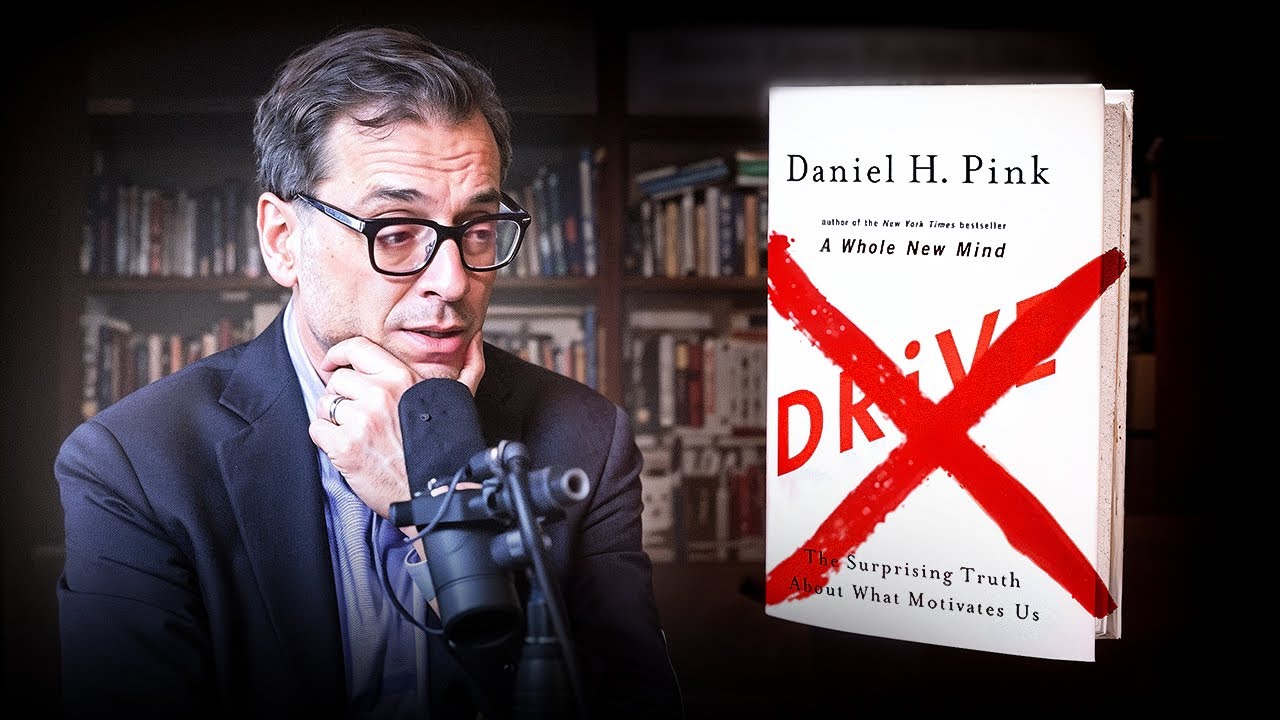
Daniel Pink revisits his thinking on purpose, separating capital P Purpose from small p purpose. A Harvard study found that when cafeteria cooks saw the customers eating their food, satisfaction rose 10 percent. Small acts of contribution matter more than world-changing missions.
Chapters
Let me tell you about purpose, though, because— and forgive me, I might owe you some money because I didn't get it quite right in that book Drive. What I've discovered since is that purpose is not one thing, it's two things. So one kind of purpose is capital P Purpose, large P Purpose, and that is what you're talking about. I'm feeding the hungry, I am solving the climate crisis, whatever. And there's no doubt in the research that that can be a very powerful motivator, that people who are animated by that kind of purpose do Good work. That's, that's very, very clear. But day to day, it's hard to get that every single day. This is what I missed. There's a second kind of purpose that I call small p purpose, and that's just making a contribution, right? Capital P purpose is making a difference. Small p purpose is making a contribution. Did you help a teammate get the product out the door? Did you help this customer resolve its problem? There's a great piece of research, I love this, out of Harvard Business School where they had a cafeteria in Boston. And in the cafeteria, you know, the customers went through the line in the cafeteria, Putting food on their trays and being served food. But the people cooking the food were in the back. You couldn't see them. They— the cooks couldn't see the customers and the customers couldn't see the cooks. So these researchers rigged up an iPad, just like the one you have in front of you, that allowed the cooks to see the customers. But what they were measuring, the dependent variable, was not whether the cooks were satisfied with their jobs when they saw the customers. They were measuring the customer evaluation of the food. Mm-hmm. And so the question they were asking is, when the cooks can see the customers, does the quality of the food change? Customer ratings of the food change? And the answer was yes. Customer satisfaction went up 10% when the cooks could see the customers, even though the customers couldn't see the cooks. Really? Yeah. So that's what I'm talking about here. So those cooks back there, they're not feeding the hungry. I mean, people are hungry because it's lunchtime in Boston, but they're not feeding people who are destitute. What's going on here? That cook Looks at somebody moving through the line and says, whoa, wait a second, another human being is going to eat my cheese omelet. So wow, I know why I'm doing what I'm doing. It's not changing the world, but it's affecting one person's life. So I'm going to up my cheese omelet game 10%. Mm-hmm. And, and I think that, that, that small p purpose is extraordinarily important. And so again, purpose is not one thing, it's two things.