Bruce Politano Reveals How He Hit $10 Million in Credit Repair (Part 1)
In this interview, Credit Repair Cloud Millionaires Club member Bruce Politano recounts his 14‑year journey from a debt‑relief law firm employee to the founder of Credit Repair Junkies, a company that earned the $10 million award and was listed on the Inc. 5000 twice. He explains how an FBI raid on his former employer spurred him to start an ethical credit‑repair business, how he grew his first company to over 7,000 active clients primarily through lender referrals, and why the burnout from serving consumers led him to sell that business and launch a credit‑repair outsourcing operation serving nearly 1,000 CROs. Politano shares hard‑earned lessons about building solid systems, avoiding being the “dancing monkey” (the sole face of the brand), and creating a brand that can scale without his constant personal involvement. He offers concrete marketing advice—develop a proven offer before spending on ads, treat ads as gasoline for a controlled fire, craft a unique selling proposition, and niche down to a “bullseye” audience. He contrasts the chaotic, trial‑and‑error phase of reaching the first $100 K with the more systematic scaling from $100 K to $1 M, emphasizing the importance of cloning successful processes. Finally, he advocates hiring from day one, even while the founder still knows every operational detail, to free the CEO to focus on high‑impact activities. The conversation is peppered with anecdotes, practical tactics, and a philosophy that impact should outweigh income once financial security is achieved.
Chapters
There's just so many people out there that need help. There's so many people out there that are being scammed by these companies that don't know what they're doing. Because I wanted to be a breath of fresh air to real people who need real help, I told myself I was going to go and I was going to help as many people as I possibly could. When you make the impact, the income follows. By the second time, it wasn't about the income for me anymore. I had made the income. This time it was all about impact. I'm going to focus on the success stories.
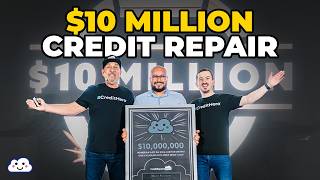
Hey, credit heroes, what does it take to build a $10 million credit repair business? Not a $1 million business, not a $5 million business $10 million. Our guest today is a Credit Repair Cloud Millionaires Club member, and he's just received our $10 million award at Credit Repair Expo. He is the founder of Credit Repair Junkies, which made the Inc. 5000 two years in a row. He runs the largest credit repair outsourcing operation in the industry. He has his own podcast, he has a book, and he coaches entrepreneurs one-on-one. So please welcome back to the Bruce Paletano.
Hey Bruce, welcome. Daniel, how you doing? Keenan, good to be with you guys tonight.
Good to be with you. We last saw you a couple weeks ago at Credit Repair Expo.
Oh, and it feels like a lifetime ago already.
I'm finally over my exhaustion from that event. It was amazing though, wasn't it?
It was much needed, let's put it that way. You guys did a phenomenal job putting that event together. Um, it was great to see old friends, it was great to meet new friends, and, um, you know, just to be rubbing shoulders with other like-minded individuals in our industry, nothing beats that. So thank you guys so much for putting that event together. It shows that you guys truly care for the industry.
We do. We do. And I want to start out with a huge congratulations. You just became the first person in Credit Repair Cloud history to receive the $10 million award. What does that mean to you?
I don't think I have words yet, Daniel. It is a humbling— it's a humbling moment. To be recognized for something like that. It's one thing, obviously I know that I've hit that milestone in my business, my family knows, but to really just put it out there was something I was kind of honestly a bit hesitant about. You know, I didn't know if I wanted, not the attention, but just, I'm not that kind of guy that I want to flash this stuff, right? But I wanted to show that it's possible, right? So if somebody can see that one person can do it, then anyone else can do it too. So that's what really motivated me to want to say, you know what, I'll go for it. I'll apply for the award. It wasn't really even for me. It was because I wanted everyone else in the industry to know what is possible when you really build your credit repair business the right way. So what it means to me is really just, man, like, I'm humbled that God allowed me the opportunity to make the impact that I've made, you know, in the industry over the last— since 2012. Right. It's been a long time. So to be recognized for something like that, I really appreciate the recognition from Credit Repair Cloud. And it does mean a lot. So thank you, guys.
Take us through the road, the road to $10 million. Not the highlight reel, but the real version.
The real version. All right. Yeah, let's, let's start at the beginning. That's where every— all stories begin, right? When I came into the credit repair industry, my story is a little bit different than most. Most people, they get into the credit repair industry because they, they're the first client themselves, right? They suffer with bad credit and maybe they try paying the company some ton of money and they didn't get any results. They're like, I'm gonna do it myself. That's not my story. Um, my story was a bit different. I used to work for a debt relief law firm down here in, in South Florida. And part of the services that this debt relief, uh, law firm did was offer credit repair once the clients were done with the debt relief services. And when I started working there, I was one of 4 people, and when I left, I was one of 400. And my job there was to hire and train every single person who came into that company. Well, one day, um, I casually found out that the company was charging their clients all this money and not doing any work at all. Wow. Complaints started coming in and it was just— it was a really, really bad time. And I just— I felt something was off. I couldn't lay my head down on my pillow at night and go to sleep knowing that I was hiring and training people to come work for this scam company. Within 2 weeks after I left, the FBI raided them. So I left at the perfect time, to say the least, you know, so that gut feeling, that innate feeling that we sometimes have, that sixth sense, Good idea to listen to it every now and then. And I'm so glad that I did because that was February of 2012. And here we are today, 14 years later. But I decided to start my own credit repair company because I didn't want to deal with all of the compliance and the extra legalities that are around the debt relief world, right? Debt settlement and consolidation. There's just so many laws and so many other hoops that you have to jump through. I figured credit repair was going to be a little easier to navigate, so I started a credit repair company. And little did I know where it will take me. I had no idea what I was doing when I first started, right? I mean, I worked for somebody else. I knew what dispute letters were, but did I really know much of anything at all? Not really. So I obsessed over it. I got really, really curious. I started reading all the books that I could find. I started, you know, got the Fair Credit Reporting Act and dug into it and the Fair Debt Collection Practices Act and the Truth in Lending Act and the Fair Credit Billing Act and RESPA and all these laws that kind of made credit repair possible. And I discovered I was passionate for it. Now, mind you, I hate reading. I didn't graduate high school. Um, barely made it, you know, to, to start my own business. But here I found myself so passionate about this, the service of fixing credit. And I learned real quickly that a lot of people needed help. And my, my deal was, I don't know how to market. Like I've never done this before. So I wonder if there's anyone that has my client, that already knows who my client is. And I decided to go deep into the real estate space because I had bought a house and I knew that to buy a house, they looked at my credit. So I was like, okay, well, who do I know in real estate? And I started just calling my realtor friends. Everybody knows a realtor or two, right? And from there, you know, within 5 years I had grown this business, you know, my first credit repair business to over 7,000 active clients just off of lender referrals alone. That was my one single and only strategy. It was shaking hands and kissing babies from lenders. And from there I got burnt out. I had grown this, this massive company. Um, and I decided that I didn't wanna work with consumers anymore. I was tired of, not cuz they're bad people, um, but just it's problems after problems after problems. My credit, my credit, my bad credit. Just so much, not negativity, but there wasn't much. The success was great, right? But we know we can only do so much. The clients have to participate in their own rescue. And a lot of the clients don't wanna participate in their own rescue. So that part of it was burning me out. It was great. One, we sent a client back to the lender and they bought the house. And we have thousands of stories like that. Um, but that wasn't a majority, right? The majority, they didn't actually follow through. The majority still paid their bills late. The majority still maxed out their credit cards. And no matter how hard we tried to help them, they weren't helping themselves. And that's the part that burned me out. And I was like, I'm done, I'm done. I don't want to work with consumers anymore. Um, I found a tremendous amount of success running my own credit repair company. I now want to help others because I see how many other people are struggling to run their own credit repair company. So I sold that business and told myself that I'm done with consumers. I want to work with business owners. I want to find other credit repair companies that are in the early stages or struggling to grow. And I want to pour what I have into them and teach them the strategies that I use to grow my business, to help them grow theirs as well, while simultaneously being able to provide services to them. Right. I got a business to run, so I can't just teach people. I got to help them with more than just teaching. And that's how we started our outsourcing company back in 2016. 2016. And now we're outsourcing for, I think, 962 credit repair companies. It's a lot— tens and tens of thousands of dispute letters every single month that we're processing. But this was back in 2016 where we started outsourcing, and I quickly realized that the only thing worse than dealing with credit repair consumers was dealing with credit repair companies who weren't educated on how to run their business. Um, it almost felt like the blind leading the blind. Right. Like I have— I start this credit repair company because I want to help people fix credit, but I don't know how to run a company and they don't know how to fix their credit. So it was this chaos and I had to do more than just provide outsourcing services. I had to now start educating those CROs. I had to start teaching them what credit repair really is, how it really works, not the things that they see on YouTube, right? Not the things that they see their favorite influencer talking about on TikTok. A real credit repair company. So I got passionate in educating other CROs on the right way to run their business and their operations and do disputes and fix credit and how to charge and how to do all this other stuff, how to market. And here we are today, still doing that. 3 months after I sold my company, I still had a lot of people blowing me up. All those lender referrals, they didn't want to work with the person who, who, who took over, who I sold the company to. They wanted to work with me. Because I had built the relationship. And that's what I, what I quickly realized is that I was the business. And I told myself I wasn't going to make that mistake again. I'm not going to be the business this time around. So out of sheer necessity, I started a second credit repair company helping consumers again, just because I had so many of my old partners still reaching out, still trying to refer business to us. And I was like, all right, I'm going to do it again. But this time I'm going to put a lid on it, right? I don't want to make it this massive thing. Well, we're pushing 6,000 active clients again now, and I just couldn't look back, you know, like there's just so many people out there that need help. There's so many people out there that are being scammed by these companies that don't know what they're doing. So because I wanted to be a breath of fresh air to real people who need real help, I told myself I was going to go and I was going to help as many people as I possibly could. And when you make the impact, the income follows, right? For— by the second time, it wasn't about the income for me anymore. I had made the income. Right. This time it was all about impact. It was about I'm going to focus on the success stories. The stories weren't success. I'm not even going to let those bother me. I'm going to let those go. You know, I'm not going to feel bad because you didn't want to help your own self. I'm going to focus just on the successful stories. And that's what's kept me still going today with working with consumers is getting to choose to work with people who are actually participating in their own rescue, who are actually serious about getting to their end goal. And that's what I do today. You know, we run both sides. We still have Credit Repair Junkies that works with, with the the CROs, and we have our own consumer credit repair company that still works with consumers today. And I think that's what makes a difference in me being able to help other CROs so well is because I'm still in the trenches every single day. I still do client update calls, I still do billing calls because I like having my finger on the pulse. I like knowing what's happening in the industry because I want to help other people from current experience, not from the experience that I had 5 years ago, the experience that I have yesterday. Right. And that's the biggest difference that I've— that I found that really helped me grow Credit Repair Junkies to what it is today is people want to work work with someone who is like them, just a little further ahead. Not somebody who is not doing what they're doing anymore, because then at that point it's just theory, it's not practice. It's the impact, Daniel. Um, I think you and Keenan understand that really well because that's what you guys are passionate about. You want to know how much of an impact can you make in these CROs' lives, right? How many of these CROs can you help fire their boss and quit their 9-to-5 and go build a successful business, not only for their family but for themselves, right? For their communities. And You guys are living proof of impact over income as well. So I've learned that from you guys.
And it makes the business a lot more fun if you're focusing on the impact. I mean, that's sure at the beginning when you gotta pay rent, you worry about making money.
Mm-hmm.
But to really grow it, I, I think that is the key, is really to focus on the impact. I like that.
What happens after you're making more than enough money? Right. Say your living expenses are, I don't know, $10,000 a month. What happens when you start making $30,000 a month? Then what is it about? Right. It can't be just about the money. Yes, the money is good. The lifestyle is good. The comfort is good. But at some point it has to become about more than just that. And that's what gives you the longevity, right? That's what gives you the ability to continue to push. Because if you're in it for the money, then there's nothing else that's going to push you further. You got to have an impact, like something that goes above and beyond yourself in order for you to be able to keep pushing through the hard times.
I'd love to know, as, as someone who— you've founded the business multiple times, you, you went to build the business up, you sold it, you built it up again— what were some of those hard lessons of things that didn't go well in the first round that you've learned to do right the second time?
Yeah, there's a couple that come to mind. One is I don't want to be a dancing monkey, and I'll explain what that means a little bit later. Um, and the other one is, um, I can't, I can't do everything myself. What I quickly realized when I was building my first business is it collapsed because I wanted to be everything in the business. I am a control freak. I'm a believer that if you want something done right, you gotta do it yourself. Well, that may work great in some areas, but not in business, because then you're limited and you're capped by only your potential, only the 24 hours in your day. Right. And at some point you get stretched and you can't do it anymore. For me, when I first started the business, remember, I quit a job without a, without a game plan on what I was going to do next. You know, I didn't have a severance package. I didn't have another interview lined up. I quit from one day to the next and I started this business. So I had to make money. And I was good. I was good at selling, right? I still like to think that I am, but that's what I did. I just sold, sold, sold, sold, sold. And I rolled clients after clients, after clients, after clients, especially lender referrals. Those were laydowns, right? So I found myself with a little over 100 clients and then all of a sudden chargebacks and refunds and all, and all this stuff. And I'm like, well, what's happening? Well, I was great at bringing people in, but I was horrible at servicing them well enough. I thought that just sending out their disputes was going to be enough. And it wasn't, and I couldn't do it all. I couldn't go continue to build new lender partnerships, maintain the existing ones, sell, and do everything else in the business and send letters. Like, I, I couldn't be the one doing everything. And because I was, my business imploded and I quickly saw 100 clients go down to 90 and then 80 and then 60. And I found myself with like less than 20 clients and I'm like, whoa. What just happened? And that was the first time that I learned the lesson of building a strong foundation, right? I talked about this at the Expo. If you want to build a really tall building, if you build it on a weak foundation, that building's gonna crumble. I lived that in my business. So anyone that I, that I coach, anyone that I work with, anyone that, that I talk about business with, I am so passionate about saying, build the foundation first. Before you build up, you gotta build down. You gotta build that foundation in your business so that as you grow, you don't ever have to worry about it imploding. Collapsing on you. You can just go to the moon because you know that the foundation that you built is going to be solid enough, is gonna be strong enough to support that. And the foundations were my systems, my processes, and my people. I had to have that in my business if I was gonna continue to scale, because that's what broke me. I didn't have systems, I didn't have processes, and I didn't have people. I was the systems, I was the processes, I was the people. It all lived in here. It had to get out of here and into SOPs and into Loom videos, right? And then into hiring and training people to be able to work the processes that I had created and getting the right systems systems like Creditor Peer Cloud at the time to be able to facilitate our disputes. And then when I got all that off my plate, now I was, I had the freedom to continue to do the thing that I was good at, which was growing the business. The second lesson that I learned from the first company that I didn't bring into my second company was I didn't wanna be a dancing monkey. And what do I mean by that? Well, I was the business. If I wasn't out meeting lenders, there was no clients coming in, right? Nowadays, what that looks like is if I'm not the one dancing on TikTok, there's no clients, there's no leads coming in. Right. And I say dancing jokingly. I don't mean dancing. If I'm not going live on TikTok and posting content 3, 5, 7 times a day, if I'm not the one doing this stuff, then there's no, there's no leads. Like if I stop, then the lead flow stops. And if the lead flow stops, there's no sales. And if there's no sales, my business is gonna stop growing. Right. So I met so many people at the expo. They're like, Bruce, you have 800 followers on Instagram. How do you have a $10 million business? And I'm like, cuz I didn't do it on Instagram, right? I'm not a dancing monkey. People talk about, oh, you know, I, I have a, a online business. I own a credit repair company. I can be on a beach in Hawaii with a laptop. Well, I don't want to be on a beach in Hawaii on my laptop. I want to be on a beach in Hawaii on a paddleboard, on a jet ski, you know, enjoying restaurants with my family, not working, right? So that's the second learn that I, that's the second lesson that I learned is in the The second business that I grew, I wasn't gonna be the face. I wasn't gonna be the one that was solely responsible for marketing. I was gonna build a brand and people were gonna enroll because of the brand, not because of the person. I'm a businessman. I didn't wanna be the businessman, if that makes sense. Right? So it was harder. It was a longer, it took longer to grow, but so worth it. So worth it because it takes a lot longer for you to build a brand than for you to just be the brand yourself. And I'm not a lifestyle marketer. I don't flash the cars that I drive. I don't flash the 'Cause that's what people want on social media nowadays, right? So I'm not that guy. So even if I wanted to be, I would suck at it, right? So I couldn't do that. I had to find other ways to grow my business where I wasn't the one solely responsible for it.
I'd love to know, 'cause a lot of the people that are listening to this podcast, they could just be getting started. They could be in their early stages of their business. I know Bruce, I know you teach a lot of techniques to really get the business off the ground. To get those early clients in the door. You have like 3 different techniques, like building a personal brand online, running ads, getting affiliates. Those are kind of the 3 primary pillars you could go out into the market with.
Yeah.
For the, for the average person, what do you recommend people doing? Like, what do you see actually work for most people? Where do you see most people fail?
The elephant in the room is going to be ads. Um, don't run ads until you have a proven offer. I talk about ads being, um, the gasoline that you pour on a fire. Whatever you pour the gasoline on, it's going to grow, right? And if you don't have a fire that is tamed and is controlled, then you're gonna grow chaos. Um, if you don't have a proven offer yet, then you're just gonna grow something that's not proven. And what, what I mean by that? If you haven't sold credit repair, you, you, you don't have, you know, 10, 15, 20, 30 clients under your belt. You have no business running ads because you don't even know yet if people want to buy your offer. You don't know if your pricing is right. You don't know if your, if your pitch is good. You don't know if, again, your offer, like what you're, what you're saying you're gonna do, people actually want. You don't know any of that. And you don't wanna spend money to learn. You wanna learn that first. And then you wanna run ads on something that is proven. Like, you know, people are buying this. So look, when it comes to marketing, the name of the game is eyeballs, right? The more eyeballs you have on your business, the more clients you will have. You can't have 100 clients if 100 people don't even know you do credit repair. So when you, so when you do ads, what you're doing is you're, you're buying eyeballs from Zuckerberg, right? You're giving, you're giving Facebook and Instagram your money in exchange, you're giving eyeballs. What are the eyeballs on? The eyeballs have to be on a proven offer because if you don't know that people aren't buying from you because they don't trust you, then you're just gonna get more people to talk to that don't trust you. You have to learn to sell yourself. You have to learn how to sell trust before you sell your services, or else you're pouring gasoline on a problem. If you don't know, if you know you're too expensive, you don't wanna pour gasoline on that. You wanna get your pricing right. So that the ads, it works. And that's how we've grown our business. Like it's predictable. I can tell you exactly how many clients we're gonna get every single day because of ads, but it takes time to get there. Now I don't have money to run ads and I don't have a proven offer. So where do I start? And this is the one place where I, again, I'm comfortable saying this because I know you guys are friends. Um, I respect you guys. I know you guys respect me, but this is where we respectfully disagree. I don't agree in doing clients for free. To me, that, in my opinion, that is the last thing I'd ever want to do is run a business that gives free services. I'm gonna charge them something because free isn't really free. Right. That client is costing you something, not only in time, but it's costing you in materials. There's going to be letters. There's going to be paper. There's going to be stamps. There's going to be ink. There's going to be software. You have a cost associated with that client. So maybe you give them a discount, give them a heavy discount. Hey, normally I charge $119 a month for our credit repair services. Um, I want to, you know, we're running a promotion right now. It's only $19 a month. Right. And again, nobody also needs to know that you're brand new at this. I don't want to trust somebody that's brand new to try to fix my credit. That's so dear and important to me. It's like if I have a leak in my roof and I need to hire a roofer to come fix my leak, I'm not going to hire the guy that's testing his roofing skills. I'm going to hire the guy that's been fixing roofs for 25 years. So I'm not going to go out to the whole world and say, hey guys, I'm brand new at this. Can I try this on your— I'm not going to do that. Right. So what I'm going to say is, hey, you know, I've been working on fixing credit. We've been able to help tons of people. I'm looking for the next handful of people to help. We're running a promotion right now. It's only $49 instead of $119. Um, here's what we're going to do for you. We're going to do A, B, and C. All that I ask in exchange for this discount is if we do a good job, they leave us a review. I'm not going to get a review because I fixed their credit for free. I'm going to get a review because I did what I said I was going to do, right? Because now what are the chances that they're going to give me a review? Maybe 50/50. So say they don't give me a review. You, then I paid to fix your credit, got nothing out of it. So I don't necessarily agree with free. Pay me something, at least cover my costs, right? Uh, so start there. If you're brand new, then first of all, don't tell everybody you're brand new, in my opinion, because I don't want to hire the roofer that just started fixing roofs, right? Um, and number 2, I'm going to charge you something. You're going to pay for your credit monitoring and you're going to pay me something, right? Because it's my time. I have hard costs and you're going to leave me a review. Because I did good work, not because I fixed your credit for free. Right? So to start out, that's how I would do it. Um, go to your friends and family, look at your phone. How many realtors do you know? Start there. Lenders are, in my opinion, the, the, it's the low-hanging fruit. They have access to your dream clients on a daily basis. All you need is one whale. You find one lender that is so busy that they're declining clients every single day. Or every single week, and you get 2 of those clients back to them, you're gonna get their whole office referring you business. So if you can get in the door with one lender, do good work, prove the partnership, and then ask that lender to introduce you to their broker, you're now the SOP for that entire mortgage office. The broker is now looking at all their loan officers and saying, hey, if anybody has a decline file because of credit, send it to Bruce. Because they, I've already proven the relationship with one of their lenders. I can say, I can walk into that broker's office and say, did you know that you Your office closed 2 more loans last month that you wouldn't have closed if it wasn't for me working with Johnny. And now, right? So now he's like, no, no, no. How many are all my loan officers declining because of credit? And that's how we grew the first business is doing just that. Costs nothing. It costs absolutely nothing. Right. Nowadays with Zoom, you can meet with them on Zoom. I think it's better to still meet them in person, right? You call them, you meet them for coffee or lunch or whatever, happy hour, and you shake hands you look them in the eye and you build a relationship with them. Um, it costs you $0 to do that. So no one should have any excuses to— I can't get clients, I can't get leads. There's so much that you can do. But the one thing, in my opinion, that I wouldn't recommend somebody doing is free, because that's not really helping you.
That's a good argument in favor of that, for sure.
People getting off the ground, you really highlighted, Bruce, about having a really good offer. What does that look like to you? Like, what do you you— what offers do you see putting it— people putting out there that are getting started in business besides having a paid offer in place? Like, what else are you seeing in that structuring of that offer that helps someone get off the ground?
You have to be different. Everybody is selling credit repair, and if, if, if what you're selling is credit repair, you're a commodity. And if you're selling a commodity, it's a race to the bottom. 'Cause then the only thing people are comparing is prices, right? They're gonna go with the cheapest one, right? I'm gonna buy a fidget spinner at the dollar store or for $52 at Disney World. No, I'm gonna buy it at the dollar store 'cause it's a commodity, right? Um, you can't be a commodity, so you have to be different. There's something marketing called a USP, right? Your unique selling proposition. What is it about your business that is different from everyone else's business? You gotta have that. And it truly needs to be different because now you're taking yourself out of a commodity. Commodity. Now what you're offering is not what they can get anywhere else. They can only get that thing from you. And I cannot tell you what that thing is. You have to come up with that for yourself, right? Because again, if I do, then, then we are gonna become a commodity all over again. Find your system, your, and maybe it's you, maybe your USP is you when you're first getting started. Look, I personally handle your file. You will always be, you know, um, talking to a company that is gonna give you your money back if there's no results. You're always get, there's no upfront fees with us cuz people They're tired of getting scammed, right? So if all they hear is promises that are broken, or they sell somebody $1,500 and they disappear with their money, you're a breath of fresh air. So how are you different than anyone else that they've been talking to before? Right? So when it comes to your offer, that is your number one thing. It's that. The second thing is riches are in the niches.
Okay.
So I'm gonna use a fishing analogy. Let's say You want to catch, uh, a shark. Okay. That's, that's your, that's your avatar. That's your client avatar. You're marketing for sharks. You're trying to fish for sharks. First of all, where are sharks congregating? Where, where, where are they hanging out? At the lake behind your house or at the pier down at the beach and, you know, or, or, you know, in, in high seas in the middle of the ocean, you have to go where they are, right? But that's not enough. Then you gotta have bait. How are you gonna catch that shark? You gonna put the little plastic worm on your hook to try to catch the shark? No, you're gonna put probably some live bait on there. Who is your shark? Who is your dream customer? Most often your dream customer was you before you discovered credit repair, because you can relate to that person better than anyone else can because you were them. Right? If I was a shark and I know about sharks, you know, very, very well, I have no business trying to go find catfish. I know nothing about catfish. I've never been a catfish. I've been a shark all my life. So I'm gonna go fishing for sharks. And people are scared to niche down because they're afraid that they're gonna leave a lot of money on the table. They're gonna, they're gonna exclude all of these clients. Well, think of a dartboard. Everybody's seen a dartboard before, right? And in a dartboard, there's a little red dot right in the center. It's called the bullseye, right? And if you've ever played darts before, if you're aiming for the bullseye, chances are you're gonna hit the dartboard. But if all you're doing is trying to hit the dartboard, if you're anything like me, you're gonna hit the wall, right? You're gonna, you're gonna miss the dartboard completely. More often than, than you'd like to. But if I'm aiming for the bullseye, there's a very, very, very, very small chance that I won't hit the dartboard. Nicheing down is aiming for the bullseye. Aim for the bullseye. Aim for the shark. But if you catch a sailfish, are you going to be upset at that? No, right? If you catch a big old tuna, are you going to be upset with that? No. But you went fishing for the shark. Because you're marketing for the bullseye people. Let's say you're marketing for business owners who want to fund their business and they can't because of a credit problem. And that's your niche. You know what? I specialize in helping business owners get funding for their business when they have bad credit. Let's say that's your niche. Let's say that's your USP. That's who you work with. So all your marketing material, all of your ads, everything that you're putting out there is specifically targeted towards business owners looking for funding. But if somebody that's looking to fix their credit because they want a mortgage sees that you can help business owners fix their credit for funding, they're going to connect the dots. They're going to say, well, if he can help a business owner get funding, maybe he can help me too. Right. And that's hitting the dartboard. You may not hit the bullseye, but you're going to hit the dartboard. So when it comes to marketing, aim for the bullseye. Who— what is the fish that you're trying to catch? Catch, and then you create the bait for that fish. If you're trying to catch business owners looking for funding, don't market get approved for a mortgage. Market funding. Fix your credit to get funding for your business. Um, and you can go on and on. Maybe it's, it's cars or it's houses, or it's just reward travel. You want to know how to travel hack? Let me teach you how to travel hack. And maybe that's your, your, your USP, right? You teach people how to get high reward credit cards. So you buy first class tickets around the world for, you know, on points. And there's just so many different ways they can do this. What is your bullseye? What is your fish? What is your unique sales proposition? And if you can figure that out, you'll very quickly start growing your business.
We saw a really great interview with you and Santiago Gil, who's another Millionaires Club member, at our Credit Repair Expo. And you said something that I want to unpack. You said zero to $100,000 is much harder than $100,000 to $1 million, because from $100,000 up, you're only solving one problem at a time. Can you break that down?
You don't know what you don't know from $0 to $100,000. It's like you're, you're walking in the dark, right? Sometimes I have to wake up in the middle of the night. My wife wants some water because I didn't fill up her water bottle, her water jug, and it's dark. And I'm taking one little step at a time, and then I trip over one of my kids' toys, and then I step on a Lego, and then there's shoes on the stairs that almost make me break my neck. That's 0 to 100K. You're taking one little step at a time while stepping on Legos, right? 100K to a million, you already know where all the Legos are, so you just have to navigate around them. It's like you're turning on the light and you can see everything. There's the toys, there's the shoes, there's the Legos. But 0 to 100K, you're taking one step at a time, and you don't know if it's going to be a safe step or if it's going to be a Lego there. You ever step on one of your kids' Legos? It's the worst. That's what growing a business 0 to 100K is, because you don't know what you're about to encounter. And then you have to fail, and then you fail, and then you fail, and then you find the answer and you succeed, and then you move on. What happens though, and this is the reason why most businesses shut down within 2 years is because they get tired of failing, so they quit. I never get tired of failing. Like, I, I embrace failure because that means that there's something worth it on the other side. So I don't care how many times I'm gonna fail. I'm gonna fail until I figure it out, right? I got— you have to embrace the suck. Embrace the suck. Fail until you succeed, right? Now, there's other ways that you can go around, right? Get mentors, hire, you know, people who, who've gone down the path with you who, who know where the Legos are and they can show you, and that can fast-track your success. But not everybody can do that. So step on the Legos and step on the Legos and step on the Legos until you figure out where they are, and then you grow your business. So what does that look like? Results. For example, I don't know how to dispute. Okay, well, try this strategy, and if that doesn't work, okay, then try that strategy. Okay, if that doesn't work, then try this. Eventually you're gonna find something that works great. Now you, you failed and you failed and you failed and you You failed and now you succeeded. So now you know, and you never have to fail that again. Move on to the next thing, right? Marketing, man, I'm running ads and I can't get my leads suck or my cost per, per acquisition is too high. I failed at running ads for a very long time. I spent tens and tens of thousands of dollars paying ad agencies to run ads for me and it never worked. And I finally understood that they don't know what I know. Have never talked to a client who needs credit repair a day in their lives. Yeah, I want them to market to those. It has to be me. But I didn't know the first thing about running ads. So I failed and I failed and I failed, and I got ad accounts shut down, and I had to create new Facebook pro— and I failed until I succeeded. Then I cracked the code and I was like, ah, now I, I know how to do this. But it was after much, much, much failure that taught me. Though I knew what not to do, to do. And that's the only way to find out what to do is by finding out what not to do first, you know? So that's, that's the reality of $0 to $100K. $0 to $100K is just failing until you succeed. Then when you get to $100K, it's just, it's just growing what you already know works. You double down on what's already working. You have a fire. How do you pour gasoline on those fires right now? I'm not the one going out meeting mortgage lenders. I have an army of affiliate managers that go out and do that. And I I pay them to go do that. Right. But I had to find out what worked first so that I can say, hey Ray, here's what you're going to do. You're going to find this lender at this place. And you're going to say that you're going to call them. Here's their cell phone number. You're going to meet them for lunch. You're going to say this, and then you're going to make tater— I got to teach them how to do it, but I only learned to do that after I failed myself. And now I have a bunch of them going out, meeting a bunch of lenders, growing the business for me. But again, I had to fail until I learned, and then you pour gasoline on You duplicate yourself and you clone yourself and you clone them and then you clone them and then you clone them. Same thing with ads. You find an offer that works and you pour gasoline on that and you clone that off and you clone that off and you clone and you keep growing. So $100K to a million is just doing more of what's already working, right? Yes, you're still gonna have some failures and there's some things that you're gonna still have to, to discover, right? Cuz once you solve a problem, it creates a new problem. But now you're used to it cuz $0 to $100K was all about solving problems. But 100K to a million is just doing what's already working, just doing much more of it and much better. And that's how you get from 100K to a million.
I love it.
Someone's just getting started with a credit repair business. When should they think about hiring their first employee?
The day they start. Oh, the day they start. Um, the sooner the better.
This—
if you don't get used to being the one-all be-all The, the better it'll be for your business. Now, you still have to know how to do everything in your business because you can't properly hire and train somebody to do something that you have never done. And how can you place the right expectations on them if you're hiring, um, you know, billing reps? Hey, you gotta collect 20% of our failed payments, but when you were collecting failed payments, you only collected 5%. Well, how can you expect 20% out of them? So you still gotta know how to do everything. Everything in your business, but the sooner you get somebody in and involved, the more time you'll have to go and do the things that only you can do. Anybody can talk to your customers. Anybody can create dispute letters. Anybody can turn on portals. Anybody can answer the phone. Not anybody can be the CEO of your company. Only you can do that. And the faster you give yourself the freedom to be that and do that, the better it will be. So when do you hire help? Right away. Nowadays with outsourcing, You don't even need to— you're hiring people that have decades of experience, more experience than you, to do the thing while you're learning how to do it yourself. But if you're not worried about licking stamps and stuffing envelopes, you can go meet lenders. If you're not worried about, you know, uh, going to the post office, then you can go take a course on how to run ads and start learning how to run ads for yourself. You have the freedom to be what only you can be in your business. So what do you hire a team As soon as you possibly could, as soon as you start, there's no reason not to.
Okay, that was part 1 with Bruce Politano. He left a company that was scamming people because he couldn't sleep at night. He started from nothing, built to 7,000 clients, sold it, and then started over. And now he's the first person in Credit Repair Cloud history to receive our $10 million award. And next, Bruce is going to show us exactly how he got there. The sales system his team used to enroll hundreds of clients a month. The follow-up framework that most credit heroes get completely wrong, and what he thinks is the biggest opportunity in the industry right now. You don't want to miss it. Keep changing lives.









