How John Nuñez Retired From Wall St. and Built a Credit Repair Empire!
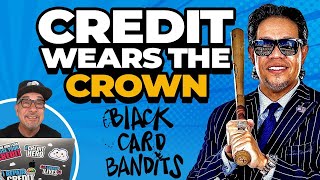
John Nuñez left Wall Street after 9/11 to start a credit repair business in Miami that's now run for 23 years. He built it through face-to-face networking with real estate and auto dealers, and credits his mother's early financial lessons and a commitment to client honesty for his success.
Questions this video answers
23 years
Over 3,000 active clients
Over 10,000 clients total over the years
Stratton Oakmont
November 7, 2023
Chapters
Hey, credit heroes. Today we're here with John Nunez. He's the founder and CEO of Black Card Bandits, and he's going to share his amazing story of how he retired from a life on Wall street and went on to help thousands of clients achieve their dreams, all while building a credit repair empire. So you better stick around. My name is Daniel Rosen, and welcome to Credit Repair Business Secrets. Our most successful credit heroes, the ones who make a great living and change a ton of lives. They all have a few things in common. They all understand the power of credit and its ability to help you achieve your dreams. John Nunez was first introduced to the power of credit by his mother, the credit queen. And after enjoying a successful career on Wall street, he retired from that life and he chose a new path as a credit repair professional. And now he has a very large credit repair business that he built from nothing. He has a path passion for educating and empowering others. He's building a lasting legacy. He's an inspiring guest and I know you're going to love this interview. So please welcome John Nunez. Hey, John. Welcome to the podcast.
Thank you, Daniel. Thank you for having me shout out to everybody in the credit repair world.
Well, I'm so excited you're here. I know you've been with us at Credit Repair Cloud for a long time.
Yeah, I'm celebrating my 23rd year in credit repair.
Wow, that is amazing. So I want to know everything, but first off, let's start with what was your life like before credit Repair?
Well, I'll tell you, Daniel. It was. I was very immature till an old age, you know, till I was much older. But my mother, you know, became a professional mother when she had us. She came to United States at 18 from Colombia, basically with a dollar and a dream. And she understood leverage. My mom, like I said, she became a professional mom, but she could have been the CEO of any Fortune 500 company. She had the. She had the ability to. To stretch a dollar. And when my parents got divorced, it was 14 years old. And the first lesson she gave us was credit. You know, she understood the concept of credit, of. Of empowering us as authorized users at an. At a young age would open up a lot of doors that we would have to grind away at an older age, let's say fresh out of college, starting out for the first time. So she was giving us this boot camp education at 14, 15, 16, we were already authorized users on her American Express Gold. Now, I remember this one lesson, and I'll never forget this when she gave it to us she said, look, betray me before you betray them. And she said, if you ever stole any money out of my purse to pay them, I wouldn't be upset. And she drilled that into our heads every day of our lives, in our adolescents lives, even today, even five minutes before this podcast. You know, she's, you know, amex, bill paid, asking already. You know, she's on top of it. You know, she taught me all the hacks what this woman did, you know, with minimal education. And she let us fall like she let us fall when pitfalls came. You know, when the bill came and you didn't pay it, the late fee, you know, the card getting cut off. And she's like, well, did you pay the bill? She let us fall in our faces. But then she dug us out of the hole.
Wow, that's amazing. So it sounds like she was maybe a big inspiration for this business of yours.
She. I owe it all to everything. Everything I see every day of my life. Ever since then, I owe it to her. And I tell her, to this day, this isn't mine. This is all, you know, your brainchild that just you manifest. I was the tip of her sword, you know.
Amazing, Just amazing. You have a quote on your website that I love. I really, really love it, but I want to know what it means to you. It's Ash may be king, but credit wears the crown.
Funny, funny story. My life on Wall Street. I. I have, I have the, I guess the uncanny distinction for my first place of employment, Stratton Oakmont, a home of the infamous Wolf of Wall Street. So Jordan Belfort was my first boss and my mentor. Brian and Julie was his, his number two. And he taught me that I liken my experience on Wall Street. I was just a naive kid. How I ended up there was. Was just a stroke of, of, of good luck in a way. And I had started my career in banking. I was in banking, I was a teller and I kind of climbed that ladder. And Jordan was a customer of our bank. So I used to see the guy flashy, the car, the look, everything, you know, the wolf, the Wolf of Wall Street. And I was just like, I need, I need to do that. I want to be a part of that and whatever it takes. During my first interview with Brian and Julie, you know, he's like, kid, you know, cash is trash and it's all about credit. And cash may be king, but you can't walk, you know, you can't walk into a dealership and spend 100 grand without raising some eyebrows. So you're Going to need some credit to get this done.
And it's funny that you mentioned Wolf of Wall Street. That's all I know about Wall street is that movie. What did you do on Wall Street?
I was, I was a stockbroker. I was a cub. I was a disciple of the wolf that life got a bad rap, but if it was so bad, there'd be millions of guys in jail. I mean, there were just, you know, some few, you know, him, Bernie Madoff, stuff like that. But, you know, we tried, we tried our best to make money for our clients. I did, you know, I did, I managed, I managed that at a young age. Over $20 million in assets in South America. That was my niche. And that was, that was a very exciting life, good and bad. You know, when the, when the stock market crashed and when the Internet bubble burst, you know, that was a baptism of fire. I mean, that, the likes of, you know, the crash in 1929, I didn't feel so bad because I wasn't the only one losing money. So it was a very tumultuous and exciting time and it prepared me for my life here. You know, this, the credit repair industry, compared to that, this is a cakewalk, cakewalk nowadays. So it's. But, but all my lessons that I learned there helped me to adapt and adjust to the new, the new monster. And it helped me prepare to deal with the pressure that comes with. When a client comes to you, you're the last hope for those guys. You need to have a great reputation. You have to have an established track record for them to give you peace of mind. It's tough because like I said, you know, our clients are desperate. And I also knew at very early in my career here, their desperation should motivate us to move because it's. The opportunity is there. Do it good, do it well, do it fast, and they'll come. I'm blessed. I'm blessed for, for having that experience to deal with high net individuals where I could take on, you know, I could scale without, without an issue. Some people become overwhelmed. You know, some people take, you know, they got one client and they drown in a glass of water. Sure. So, yeah, definitely. All those guys and all my mentors, all my mentors, I was a sponge and I learned the industry. Here we are, man. Here we are with you. Funny, I see, I see you on the Internet all the time now. I'm talking to you.
Yeah. So how did you actually start your business?
Cool story. I was working, I was still working on Wall street and you know, I had. I had a private office. After 9 11, things got a little uncomfortable. There was a whole restructuring of the quotation system. We used to live in inside a spread, you know, between the bid and the ask what. What the stock is going for and what it's selling for. And we used to live there, you know, and it could be the matter of eight, a half, a half, a point, three quarters of a point, and then that the capability to. To make a market that way was taken away from us. So the average guy, and I wasn't the average guy, but the average stock broker on Wall street would make $100,000. And after. After 9 11, that whole event signaled the end for us. And I was like, you know what? I don't know how long we could sustain this, especially, like, for myself, you know, consumer confidence is lost. You know, we just lost $20 million. I mean, we were trying to catch a falling sword again. I was just a kid, barely out of my 20s. There were guys 50 years in the game that couldn't explain what, you know, this tidal wave of selling that, you know, that came when the Internet bubble burst. So I was like, look, man, this credit thing, you know, I knew what it meant to me. It was. It was a resurrection from my life. You know, it made. I had just gotten married. You know, I had to get an apartment. You know, you start depending on credit. I'm relying on credit now. So to be able to fix my credit and get back to business, knowing what. What I had just gone through made me move forward and never again, not ever, take that for granted. The power of that. That an American Express has. The parting of the Red Sea, so to speak. When you walk into a room, if I'm like me, if I'm like this, my friends who don't have maybe the financial capabilities to keep up, I wonder how they're doing. If I'm, you know, and I. And I make a good living. I started guinea pigging on them. My brother and I, he got an account. I was his authorized user. I got an account, and we just started piggybacking each other and started building this Frankenstein monster. And then, you know, we coupled that with some business credit, and that became the feeder fund for us. And we were like, you know, we became our most important client. So I was working on Wall street out of my. Out of my office, you know, on Fifth Avenue. Supposed, you know, supposedly I'm trying to raise money to dig out. Dig my company out of this hole. And I got a fax machine under my desk And I'm plotting a mutiny. I mean, because I knew the stock brokers that were there, they weren't, I don't want to knock them. Let's just say they weren't million dollar producers, that, that they would have a heart. They were having a hard time surviving. So I was like, look guys, if I'm leaving, I, I, I've always said this to my, I said this back then and I said it now. When, when I asked for, for people to trust me, I say this, I said, listen, you ever see any of those bomb technicians, you know, with the suits? If you ever see one of those guys running, run, you know, but until then, if I'm wearing one of those and if I'm not running, don't run. That's how I kind of developed that trust with my, with my staff and my clients. I understand. I, there's nothing here, there's nothing here that can't be solved. You know, it's just going to take some time and just manage your expectations the right way. So I was operating at a fax machine under my desk and we were getting leads. Look, look at this. How you know, Internets, you know, when you guys complain about where leads come from. We were getting leads. Fact, fact, faxed in. I, I wouldn't get it into, you know, they were, I was taking, I was taking calls. I still have the sheets, like the intake sheets. We were keeping the books, we were keeping ledgers, which I still have, you know, just documenting deletion, you know. You know, it's, it's a ledger with, you know, 12, you know, 12 months. And we, that's the only way that we could keep track. And it was so primitive, we started to see. I said there's got to be a way. And I always wanted to, to participate in the development of that kind of software. I mean, I had flown to China. But the thing is, it's hard to develop and you know, I was a one man band because my staff took my lead. We were innovating and they were following my lead. So it was like, I'm still learning the business and how to operate and how to, how to pivot and scale and adapt to the new, my new world, you know, so it was hard to get the infrastructure going. But yeah, it started my office and I, my first set of clients, I had a friend, it was a mechanic at a Ford dealership, show my credit report before and after, the rest is history. You know, they saw that and let's say my first commissions I saw it was enough Money for. To sustain myself. It wasn't going to be any ipo, Wall street money anymore. But I wasn't. I was okay with that. I didn't. I was like, look, the stress isn't worth it as long as I could still make a lot of money doing this. You know, maybe, Maybe it's not $100,000 a month, but if I could, if I can make a quarter, a half of that, cool. And that's. And that's what happened. And, And I'll tell you, so I'm so grateful. I. I don't miss my career. I got a lot of offers to come back, and I dabble here. You know, I'm more like a freelance guy. I get called like, I'm. I'm like, you know, like a hitman. I was like, hey, we need some help on this. I'll. I'll come out of retirement. I just, I just came out of one that I burned out. I. I said, you know what? Lose my number. You know, you guys, unless. Unless credit repair heroes going public. You know, I've hung those, I've hung those headphones up on the, on that side.
Amazing. So now you've built up this huge business. How many active clients do you have today?
Over 3,000.
Wow, that is amazing.
And it's been over 10,000 over the years.
So starting from scratch and scaling up from nothing to thousands of clients, that's not easy. What was that like? And also, what's, what's your secret to attracting so many clients? Is it. Is it your marketing? Is it affiliates? What do you do?
I'm old school when it comes to that. I'm hands on, face to face. I network a lot. I could only imagine when I adopt and we're going there, we're going there this year, you know, the scale, even higher, you know, through. Through paid ad advertising. I've done that. I've had some experience on that. But I'm still, I'm still, you know, old habits die hard and I'm grinding. So I live in Miami, where with credit. Everyone's dependent on credit here, hobnobbing, networking around town. I've developed a reputation over the last 20 years. If you ask 10 people, who's the credit guy around here? You know, nine people will say, me. And I'm not being cocky or anything like that. I'm just ask around, you know, I haven't paid for lunch in this town in 10 years. And it's because of that. I've always been in front. They know me. I'm There, you know, I'm, like I said, I'm, I'm shoulder to shoulder with the community. I do right by one of them. You know, I got 10, 20 relatives. Like I said, always be honest with the, with the expectations. Make them understand, hey, man, you played a part in this as well. I'm gonna get you off the hook. You can't come at me with that same ferocity that your collectors did, you know. So, again, to answer your question, Daniel, just getting with my, my community and networking, you got to be able to, to cater to their needs, understand, sympathize with them, be empathetic to their situation. You know, like I said, we're the last resort. It's, it's us Then bankruptcy court, which I try. You know, I always advise against. I, I've had some high net worth individuals where that could have been an option, but I've still advised against it because I said there's, there's a way out of this without you having to blow yourself up like that for the next, you know, the next 10 years. And then us go back in and try to vacate that public record after the fact. So use the power of social media, but remember, there's a million other people doing that as well, you know, but there's not a million people out there in the street hustling credit repair. And in my community, they're not very Internet savvy. They need to see the whites of my eyes. That's been the secret to my success, being able to interact with them. I come down to their level and I bring them up to my level to make them understand. You know, they look at the picture this way and I expand it some more. I'm like, look, look at it this way. I tell them like, I'm like an economist and a therapist at the same time. I'm like, calm down. Everybody that comes to me has the worst credit in the world. I understand, I've sympathized with that. And I tell them, look, just calm down. I make the jokes. I make the jokes as a good and bad, you know, I'll say, hey, did O.J. get off? You know, it's like everything has a solution. Just be calm and trust the process.
And all this networking you're doing, are you also building relationships with businesses that send you clients?
Yes, yes. I, I work a big chunk of my business comes from the real estate community. I, I like to say we're like the Amazon accredit here. I, and that we, we, we cater to all facets of business. Car dealerships, anything credit driven. I, I've serviced from, from coast to coast. The main, bulk of the businesses are individuals that, that are right now, like I call them, like the COVID client. You know, back then, back before COVID there was maybe three kinds of like, prototypical client. There's the, the young guy, you know, that made the mistake, the young guy, young girl that made the mistake at a young age. Then there was the individual who made the mistake at an, at an older age, a divorce. And then the third kind of client, which was just the total irresponsible person. I'll just say it. I mean, for lack of a better term, the deadbeat, you know, the delinquent. And I used to categorize them like that. And I could box them in and I could talk to. I could look at a credit report today and tell you exactly who you are. I don't know if everybody could do that. That's my cheap parlor trick. You know, I could just. I could tell, I could tell you I don't need your name, I don't need to speak to you, and I know who you are. Throughout the pandemic, I had, I kind of created this new Johnny with the good job client. That's the guy who, you know, fell victim to the pandemic. And when the new norms came in, you know, let's say Johnny with the good job worked at Carnival Cruise line for 15 years and he had a great job. He had an Ivy League mortgage, a monster car payment. And then Carnival decides to, you know, downsize and actually do away with the department. You know, his job is now gone. So then, now this guy has to make a decision. Where do I pay the credit card bill or do my kids eat or do I keep the lights on or do I pay off this equity line? So now it's, you know, I see it in my old neighbor, in my own neighborhood. I could go, you know, during that time I saw people turning in the keys because they couldn't handle it. So then, so now that's that new demographic, so to speak, that Johnny with the good job that will do anything to get their credit back to where it needs to be, like, because it just. They can't. It's life or death for them.
Sure. Hey, for we got people of all levels listening for anyone new to the world of credit and credit repair. What are fundamental principles you think they should be aware of?
I think they should be honest and transparent again. Always manage the expectations. Make them understand that, hey, Rome wasn't built in a Day. You know, your credit wasn't ruined overnight, so don't. We will try to get through this as fast as possible. Give us the latitude because we're the only ones in your corner. We stay till the job is done. It's as long as it takes. It's American Express you're dealing with. You know that you guys owe a lot of money to understand that. They're going to come at you with guns blazing. There's a way around it, but it's going to get uglier before it gets better for all those rookies that are out there, understand that part that. Go with the flow, don't over promise anything. Before the pandemic, I mean, I was, I was Tom Brady. I would say I was Tom Brady from the one yard line, you know, throwing Hail Marys for touchdowns on every snap. But the new normal now, it kind of slowed it down. But now with this advent of, of AI, you know, some people may look at it as a disruption to our industry. I think it opens up the doors for a whole bunch of other possibilities, you know, to be able to scale 20,000 clients. And what could I say to those rookies out there? You guys are so lucky. You're so lucky to have credit Repair cloud. Not to sound like Ric Flair, but you're lucky to be speaking to me because I have combat experience. So don't get frustrated. Work on yourself, work on your appearance. Know your product more than anything. Know what you're talking about. Study this. Become obsessed with it. I look back now, 23 years later, this is a career. What did you do? Like I used to tell people, hey, I was a stock broker on Wall street. And that was my, let's say, my claim to fame for the last 23 years. I'm like, hey, I'm a credit guy. And they're like, what does that mean? And it's like, you know, Amazon, you know how you could get everything there? Well, I could get everything regarding credit done. And I tell people, stay the course. It could, it could change your life. I mean, it's been. Daniel, you know, what this industry has done, industry has done for you. And I'm not a paid actor. I'm the real thing. You know, I was there. I've been the ups and downs and, and to see this, this industry has given me, let's not talk about the money, because the money's there. The freedom, the freedom to do other things. When you came on the scene so many years ago, it really 10 xed my business. And even still, like now that we're still evolving, and I could only imagine where we're going now. You know, it's 3,000 people, and they more or less have the same problem. But now with artificial intelligence, a credit report could get dissected and. And reconciled at the blink of an eye. And imagine how many people we could help.
Just between you and me, we've got a bunch of cool AI things about to come out.
I can't wait. I can't wait. And Zapier, you know, you know that the whole. The email automation, that stuff, I feel that the new professionals, they have to take full advantage of that.
Sure, sure. Hey, could you share with us some of the most impactful stories that you've experienced? Success stories?
There was two clients, right? They were online at a Mercedes Benz dealership. Well, one was my client, one was not yet my client. So my client is talking to the. To the affiliate who put them in contact. She was thanking them, thanking them for referring them to me that they were able to obtain the vehicle. Everything was great. My, let's say the lead, the person was eavesdropping. She's like, oh, I'm sorry to eavesdrop, but do you mind if he would give me his number? So they gladly gave her the number. And my client, she. When she contacted me, she told me she needed my help because her credit was destroyed because she had cancer and she wanted to have a child. Well, the. The chemotherapy destroyed her reproductive system, so her only option was in vitro fertilization. So when. When that happened, the only way she could afford it is through financing it. But her credit being destroyed from the cancer, she was going to, you know, unless she got some help from a credit repair professional, there was no way that she. She had a shot at this, at this ivf. So I was. I took on the case. I had a hot hand at that time, so I knew I could help her and quick. And I said, look, it'll be about two weeks, you know, at that time. And I was realistic. I said, like I said, I had a hot hand, you know, and we fixed her credit, and her son's name is John.
Oh, wow, that's awesome.
Yeah, Yeah, I had. I had clients. I'm talking about buzzer beaters, you know, escrow monies. For all intents and purposes, life savings in escrow. That an unforeseen civil judgment pops up right at the finish line. They're gonna lose. It's Christmas time. I like it. I can't remember the date exactly. I know that I could say this I got the file anywhere between the 18th and 21st of December. I can't remember now, so long ago, but it was a judgment. The clients were desperate. The payday was amazing. You know, for a day's work, all I had to do was file a motion to vacate this judgment. And the client moved in. They closed and they moved in on Christmas Eve.
Wow.
They were living in my client's brother in law's garage because they rolled the dice. Everything they had was in escrow and they were counting on moving into that house. And then that judgment comes out of nowhere and, and just sucker punches them. I mean, it was, they were devastated. I'll be honest with you. I was already off the grid for the holidays. I'm not gonna lie. The money, again, the offer was great. But being able to help the client, you know, to put yourself, you know, to put the cape on and, and, and do what you do, it was so, you know, it was so. I, I, I've gotten job satisfaction from this, you know, the, Again, like I said, the money's always going to be there, you know, but to see that, that person get to the next level. That poor woman, you know, she had been through so much and to be able to, you know, every day for the rest of her life. I know that her son is here because of something that my mother taught me. Again. Yes. So many stories and, and some cool ones, you know, some, you know, the, you know how, how a client could get discouraged when they get embarrassed at a car dealership and then, you know, you're sitting with them and I, I've, I've gone. That's one of my favorite things to do is to go, to be there with my client when, at that moment when they pull the trigger, right? And so my clients, a lot of my clients, when they go buy a vehicle, a lot of times that's the purpose, why they hire me. And I'll go with them because I like to negotiate. I'm a fierce negotiator. I try to give them the best deal, but I go for the most. Call me petty, but I like to see the look on the guy's face who turned them down. It's like, who did that? How did you do that? Because that guy, selfishly in his hands, like, man, I need that guy's number. So that's how I've developed my reputation over the, and I've done this. I mean, I, I've, I'm so confident in what I do is that I've even gone to lengths making Outlandish challenges. I'm like, hey, I bet you 100 grand right now, I'll give you the money right now. I'm telling you, I could get this done. You sure you want to go down this road with me? I'm. Because I'm going to collect. And they're like, no, no, no, no, it's okay. I believe you. It's not bragging if you could back it up. And I've never backed down from a challenge ever. You know, even back then when it was primitive, I would say, hey, in a year, you know, in a year. In a year is like now. Back then, it's like saying, in a day. There's so many stories. I mean, you know, like. Like I told you, Daniel, I don't pay for food in this town. You know, during the pandemic, I pulled so many businesses out of the fire. Being able to help them, you know, reestablish their corporate infrastructure or establish one that they didn't have. I had some dark days in the beginning, too. You know, I've had a lot of pissed off clients. I'm not going to lie to you. You know, but we were going through growing pains. As long as I stood tall in front of them with my chest, I was like, look, I know this took a little bit longer than expected. I make them understand the longer that this takes, the less that I make. If this takes a year and you paid me $2,000, do the math. I'm here. I'm working for pennies on the dollar. So I'm doing my best to get you off my desk and onto the next evolution. So again, to the rookies. Welcome to this wonderful business. It'll change your life. It'll give you all the flexibility in the world. And one huge piece of advice, if I could give, because I don't give any, but I kind of like to like Yoda, you know, I'm like, look, your most important client is you. If you're not good for yourself, you cannot. How can you tell your client how to live if you're not. If you're living wrong?
I love that. That's great advice. Hey, we're running toward the end of our time here, so we're going to switch gears a little bit. I want to ask you some rapid fire questions. Answer with the first thing that pops into your head. Okay?
Okay.
Okay. What's your business? Superpower.
My ability to network.
What's your business? Kryptonite. The area that gives you the most trouble.
The amount of phone calls that I Receive. I try to have them go through the portal. I could have some rest and I could. I could answer their questions thoroughly if my kryptonite would be. Would be the, the. The constant phone calls.
What does business ownership mean to you?
Freedom.
What's your definition of success?
Not owning an alarm clock.
And if you could go back in time and give yourself one piece of advice, what would it be?
I would invested more money into the development of my business.
Okay, before we wrap up, can you tell our listeners where they can connect with you and learn more about Black Card Bandits?
Sure. Internet. I am here to help the more of us that know, the less of the less of us get pigeonholed. You could, you could reach me on. The best way to reach me on social media is on Instagram at the Blackcard Bandits. Just drop a question. I'm more than happy to help you guys. I was, I was in, in a. In a former life. I was an aspiring baseball player. I run my business the way I conducted myself on the field, in between the lines, you know, you. We're all a team. We're all in a community. I've learned there's millions of people in this world that need our help. I haven't put a dent in the universe yet. Hey, if I could help you get to the next level, if anybody, if they, if you need my help, you know, don't, don't try to do too much. Don't be afraid to ask for help. Black Car Bandits. I'm always, I'm always recruiting. Not like I said, I'm not here pitching myself. But if you need help from a, from a professional combat experience, I'm more than happy to help.
Well, I want to thank you so much for your time, John. This was a lot of fun.
Yes, thank you. Thank you for having me.
Success.
Thank you.
And, and for everyone out there listening, if you're finding value in the things that we share on this podcast, click below to subscribe and follow. Also, give me a five star review or share the show and help us to change more lives. If you'd like to read the show notes, they're posted on my blog. If you have a question or a comment, drop it down below because I read each and every one of them and I'll respond as soon as I can. And if you want to learn more secrets to growing a credit repair business, check out my episode, how to generate leads without Paid Ads. So take care, credit hero, and keep changing lives.









