How to Leverage Your Credit to Build Wealth w/ Rabieh Tayfour
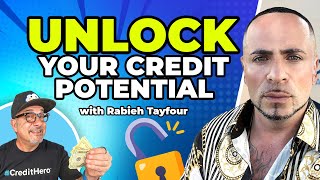
Daniel Rosen talks with Rabieh Tayfour about using credit strategically to build wealth. Tayfour shares how he built a successful credit repair business and explains practical strategies for managing and leveraging credit for growth.
Chapters
Hey, credit heroes want to know how to take basic knowledge about how to find and resolve credit discrepancies and turn that into a successful business. Well, today I'm joined by Robby Tafor. He's the author of Million Dollar Funding Hack, and he's also the founder of Fast Freedom Academy. And he's here today to share how he built his very successful credit repair business from nothing. And he now changes thousands of lives. So you better stick around. My name is Daniel Rosen, and welcome to Credit Repair Business Secrets. Our most successful credit heroes, the ones who make a great living and make a massive impact. They really care about helping people and changing lives. With an energy that is addictive and an honesty that radiates, Robby Tafor provides amazing advice to anyone who will listen. And he specializes in taking clients from zero to hero in as little as 30 to 45 days. So please welcome to the podcast the Oracle of Finance, Robby Tafor. Hey, Robby.
Hey, Daniel. How are you?
I'm doing awesome. How about you?
I'm doing great. Well, I'm doing fantabulous, actually.
I want to know everything about you, but let's start with your story. Where did you grow up? Where are you now? And what was your life like before credit Repair?
I was born in Hollywood, Florida, and I had a pretty rough life in the beginning. My brother was murdered when I was younger, and, you know, my life took a pretty crazy turn. I went to go see a psychiatrist. A psychiatrist put me on Xanax. From there, my life just went downhill for over 15 years. I was just strong and just, just, just mentally not there. I never had a dollar in my pocket. I didn't know anything about credit finances, not nothing. When I had my kids, that's what really changed everything. My actual kid's mother, she told my daughter, which is my first child, that daddy can't afford to buy you diapers. And that was when I stopped. And that's when my life took a full turn and fast forward. What I did is I got into a vacation timeshare. It was a vacation timeshare company. And this was before the pandemic. And we did great, by the way. So we. Once the pandemic began, think about it, Daniel. The first thing that went was travel. Like, that was immediately wiped out. Nobody could travel. Our timeshare company went bankrupt. And from there, that's where I found two mentors. The first one was charging too much. It was like 50,000. It was about $50,000. And then the second one, which you know by the grace of God Godwin happens to be his name. He had a way better rate and I chose him. And then from there, my life just went from zero to a hundred. Really fast and fast forward until today. I have two offices. One in Fort Lauderdale, one in Miami, this one here behind me, which I'll show you guys shortly. I have a Versace themed office down in Miami. I have like this really cool podcast room and I own five exotic cars. And my mom's taken care of. They pay no bills. My mom has a brand new Lexus, my dad has a brand new Tahoe. And life's just great now, man. Stressful, but it's great.
What drew you to credit repair? Did you have credit issues of your own?
Funny enough, I did. I had a 400 credit score like four years ago when my timeshare vacation company started sinking. We no lender would approve us for any traditional loans, right? With. With. With any good interest rates. The only lender, or supposedly they call themselves lenders, but they're really brokers that would approve Us are only MCAs. What? And what those are, are, those are actual merchant cash advances. They go by your. I forgot what it's called. But their interest rate is anywhere from 25 to 69%. And they take. They actually take their deposits out either, either on a daily basis or weekly. So those type of loans sync companies quick. And that's all that we were able to get from there. That's when I knew it was time and that this was the path that I needed to go on.
And how long did it take for you to fix your own credit?
I would say a total of four months. And I went from 400 to about a 790.
Wow.
This is what I call my billfold book. This is about 1.4 million in zero interest business cards.
Wow.
On the camera, these are all actual, like, business cards. We got like 10amex platinums. And this whole book's filled, by the way. So I actually teach people how to leverage and how to make money from their credit. A lot of things that we were taught is to basically do things their way, right? But they don't want us to know what the 1% know. So I'll give you an example. So let's say Daniel wants to buy a $20,000 Rolex. So the way that we were taught is Daniel's gonna bust his you know what, and he's gonna work hard, save up the money, and then from there, Daniel's gonna take that $20,000 cash and he's going to buy that Rolex, which is, and this is not towards you, stupid, right now what you're supposed to do, right, is you're supposed to use one of your business credit cards. Why? Because your personal is tied to your social. Business is tied to your actual, well, sorry, your business has a business social, which is your tax id ein number. And what's on your business credit card is separate than your personal credit, right? So you need to be below 9% on your personal credit cards in order for you to be at the max peak of your score. If you're above 9%, which by the way, they taught us to be at 30, which is BS, you need to be below 9%. And then your score tanks your, you pay a lot of interest. So if you use your business credit cards, not only does it not reflect to your personal credit, you get to buy cars, houses, get loans on your personal credit because you'll always be in the high sevens and eights, but your business cards, you get to take your time, you get to make investments and you'll be rewarded, right? So that same $20,000 that you would have spent on the Rolex when you put it on, for example, an Amex platinum card, now you're getting 4x points on every dollar. So that's 80,000 points. Daniel now is flying to Punta Cana twice free vacations, first class flight, and he's staying at a five star resort absolutely free. So your money's working for you like that. So that's what I like to teach people.
That's amazing. Now I see why they call you the Oracle of Finance. By the way, how did you get that cool nickname and what does it mean?
So I had this client, it was actually a family, they were in a bad situation and they found me through one of my other clients and they, I fixed their credit in about 30 days, maybe three and a half weeks actually. And they had a business and with that business I was able to, I was able to generate about $790,000 for them. The majority of it was zero interest. And I helped them bring their company out from failing and from, from that day they invited me out to dinner. And then the actual father said, you know what? You remind me of the Oracle. And then from there I just took the name and I ran with it.
And then back when you had the 400 credit score, how did you start to learn credit repair again?
Godwin, which was. Godwin is my mentor. He's just amazing, very patient guy. And he had a course, I actually took his course. But the thing with me is I have a killer mindset. Before I started credit, I used to manage one of the largest vacation telemarketing centers before I had my office and I was the actual general manager. So my mindset was always in. My actual work ethic, too, was always. I would be the first one in and last one to leave. Man, I used to bring them in a hundred thousand dollars a day, right? So with that mindset that I had, I mixed it in with what I was learning from Godwin. And I was also going through a divorce. Funny enough, at that time, I remember I was watching Instagram one this like, really big influencer guy, and he was like, you gotta lock yourself away and disappear. So that's exactly what I did. I went through my divorce. I just locked myself in my house, I went to work, came back home, put on my headset, and I studied for six months. Sure enough, fast forward, man. I passed everybody in my mentorship. And here we are today talking to Daniel.
Wow. How did you first start to turn credit repair into a business?
You have to have systems, so you can't do this on your own. This is not for the week. You're dealing with people's lives. And you know what? When you do credit repair, and I'm pretty sure a lot of the. A lot of the credit heroes can definitely attest to this, is when you sign up a client and you tell them, listen, you know, we have packages. One is 30 to 90 days, one is four to nine months. Right after you sign them up, about a week and a half later, they call you and say, okay, am I done? Did I get results? So, man, oh, man, oh, man, everybody wants things now. So. So I learned from my mentor that we got a set of systems. So not only did I have obviously the best CRM in the world, which is. And I'm not saying that because of you, it really is awesome. I could be driving in my car, I could be in the office, I could be on the beach. I could be wherever I want. I'll put it up on my cell phone, I'll pull it up on my iPad, on my computer. With credit repair cloud and with obviously, obviously systems that I have with ghl. And also my amazing vas shout out to my business partner, Lonnie, that is out in the Philippines. She's amazing, by the way. I made her a business partner here. Even opened up a business for here in the US I have amazing people here that actually partner with me to do sales. I also own a digital marketing company and Amazon Automation. So I do a lot of different things, which is another reason why they call me to Oracle.
Wow, that's incredible. So how did you find your first client? Did it come first from friends and family or did you just start marketing?
The first three clients I did free to obviously get to, like, prove and show results. My first, like, couple of results were out of this world, I believe. The first one, in 30 days, we got 195 deletions. The second one was like 280. Like, I didn't think that was possible, but this guy had a lot of derogatories, including inquiries, obviously. And then from there we started Facebook ads. And we started off at a low, at a very low price point, I believe. Our packages, we had a 199 package, which was like the whole Lexington Law model. But of course we like kill Lexington Law. And I'll be more than happy to say that on a podcast because they suck. And from there we have a 500. We had a $598 package. Now my package is more of a high ticket because there's a lot more value in what I provide. I just don't do. I just don't do credit repair. I also do funding. And with funding, I don't like to leave my clients to go ahead and sink in the water. I actually hook them up with different passive income opportunities within, within the real estate realm, within Amazon Automation, so that they don't fail.
Basically the very first iteration of our business was this little download called Credit Aid. And I would sell it for $20. It was a terrible business. In a good week, I could maybe make a hundred dollars. It was really, really bad. I financed living and manufacturing these and just trying to get a business up and running with my AMEX card. And so what I did when I didn't have the money to pay it, I would buy hundreds and hundreds of units of this software, or thousands, and I'd put it on my amex card and then I would get. That's how I was floating money. And they caught me. And then they told me, we're shutting down your card because you did this. You broke our rule. And I said, what about all those miles I've been accumulating? I was using them for like a honeymoon or something. They said, you've got 24 hours to use them. And that's how I got this chair that I'm sitting in. It's a pretty fancy chair I would have never bought, but they gave me a choice, a catalog of things. So I call it My loser prize, I got this chair and a George Foreman grill. And that's what I got with my points. They've since then, when I cleaned up my credit and got in a much better financial position, they reopened my cards and they're actually back dated to the 80s when I first opened them. Early 80s.
Credit is all about relationships, okay? So I'm going to teach everybody. Something that I've learned from a super big mentor actually is you need to be a credit, so you need to be a banking whore, okay? And what I mean by that is let's say you have a hundred thousand dollars sitting inside of a bank account. It's not smart to just leave it in the bank account. What you need to do is you go take 10,000, you open up a business checking account with bank of America, take another 10,000, go and open up business bank account on Wells Fargo, take another 10,000, you go put it in all these banks. And obviously this would apply only with a good credit score. And you let it season for about 30 days right now, as soon as it starts seasoning now, all these banks are going to give you, offer you products, business card, zero interest lines of credit loans because you just built a relationship, right? So that's, that is the first step. Second step is, is that if you defaulted with any of your credit cards and then the rule of thumb is only with the bigger banks, that's what I tell everybody. Like for example, Amex. So who cares? Like it doesn't matter if you messed up in the past. You could always call Amex and you could negotiate at like 50 to like pay back 50 of whatever you owed. They're going to accept because they would rather get something than nothing, right? And then now you can agree with them and say, listen, if I pay you 50% and I pay off my debt at 50%, I would like my relationship back. And nine times out of 10 they're going to give you the Amex back.
Okay, here's a question for you because this I've been wondering, I've been thinking about getting a card again, maybe for cash back and points for, you know, and lounge privileges at airports and things like that. Which card has the best perks?
And almost every airport in the US and probably around the world, they have the Amex lounge, okay? And then you have Delta Lounge. First of all, you shouldn't do it on your personal side because remember, it's, there's really no use because you got to pay it off by the end of the month and you got to be below 9%. You should always go into your business and if you need help, I will help you get higher limit business cards and you can leverage them and earn points, flights back, whatever you need. But the Amex biz, the Amex Business Platinum card, forex points on every dollar. I'm gonna remember some of the benefits. So it's a 750 annual fee that's charged on a first bill. However there's and, and I actually added it up. It's 2,500 dollars in value that you get back. You get free Uber, you get free clear pass at the airport. Now this is something that, that's that one of my business partners, Al, that said that's actually sitting next to me laughs at all the time. So when I pitch my clients on it I'm like, listen, the Amex Platinum card, you get access to the Amex Lounge. So there's the peasant area, then there's the Amex Lounge. You get to go to the Amex Lounge, you get free mimosas, gourmet food, you got like USB chargers and, and charger ports and showers. It's amazing in the Amex Lounge it's like you're being treated with like luxury like a king. And then let's say that the airport doesn't have an Amex lounge. Guess what? You got the Amex Delta card. It has to be the purple one because it doesn't work with the other Delta cards. It's the Delta Reserve. It's a purple metal card and you have a metal card, Daniel. So when you go out, they're going to treat you like royalty. Automatically you slam it on the table, goes bing, bing, bing. They like that. But the Delta Lounge is in a lot of other airports so those two are perfect for flights and points. Okay, you also have the Chase Inc. Unlimited, which is amazing points. That's Amex's competition or Amex is their competition because they are the best chases. And then you have the Chase Business Inc. Cash card. Those are two of the best in the industry.
I'm taking notes. Yeah, I flew in the other day. My girlfriend and I, we went on vacation to Japan. And then as we're going back down into customs and stuff, we could see this big window and I could see it was this, the Amex Lounge. It had the big century on and they had a, they had a frickin buffet when I want to be in there. How long ago did you start your business in CRC? It looks like you started in 2021, am I right?
I did. February 24th of 2021 is when I officially opened up Fast Freedom Academy.
That's amazing. And you've already processed thousands of clients. How did you grow your business so fast?
So I guess it's my reputation. So I think this should speak volumes. Since 2021, I've only had three chargebacks in my merchant, one of which I personally gave this guy back his money because he. I. Because I signed him up on a Friday, he called me on a Sunday, and he started, like, driving me crazy. So I was like, you know what, sir? I'm give you back your money. Thank you. And find another company. And then the other two just did me wrong. But other than that, my face in this industry is pretty golden. And a lot of people trust me with. With their finances, with their life. And plus, I come from sales, so everybody loves my energy, and they say it's very addicting.
Amazing. And have you always been entrepreneurial?
No, I just started in 20, 2019 when I started. When I started book estate. Once I began the whole telemarketing timeshare operation.
What were the biggest obstacles you faced when starting your credit repair business, and how did you overcome them?
One of the biggest obstacles was a partnership, which I don't really. Which. Which is what I'm not going to mention. But it's kind of hard these days, Daniel, for you to acquire any type of partnerships and judging it off of what I stated, that means that you have a lot of responsibility on your back. And that's one of the biggest obstacles is finding time for my personal enjoyment and also for my family, which now, thank God that I have teams and systems, I actually have it, which I get to enjoy something sometimes, and my new hobbies.
That's awesome. And. And you said you have a team of 15. When did you start to hire a team?
So a big thing is obviously hiring VAs. And I'm gonna tell you this, and I'm sorry to all the agencies out there. Do not hire an agency. Well, you could to, like, learn the ropes and learn, you know, the logistics of how it works. At the end of the day with the agency, they have, like, probably 20 other clients. So your company's really not gonna be their actual focus. So. So I. That's. Wow. So that answers another question that you asked me before is one of what is one of the obstacles. So that is an obstacle because I went through, like, seven agencies. Man, I would go up and down, up and down. But one thing for sure, I always made good money. And then I finally decided, you know, What? I'm going to do interviews and I'm going to train my own VAs and I built my own agency.
And now that you have all this help, what does a typical day look like for you?
I wake up and it's an automatic alarm clock at 3am, 4am My wife thinks I'm crazy. Never past 5. Maybe one day I wake up at 5, 6 or 7. But man, I'm up at 3am and I jump in my Corvette, which is pretty badass by the way, and I go to the gym or I come here to the office. And the reason why I do that is a. I learned from a lot of wealthy people is that they would wake up, meditate, have coffee, and then it's a great time to start your day. Why, in my personal opinion, Daniel is because the whole world's sleeping. So your phone's not going to ring, you're not going to get any text messages. So guess what's going to happen then? Daniel's going to get a lot of work done. So I typically get a lot of my work done. Like, man, I go crazy with processing things and with finishing things from 3:30 to like 7:30. After 7:30 the whole world begins to wake up. And then my phone drives me crazy. So that's when things slow down. And then from there I usually work till about. I used to work till six, now I work till three and then I go home. I enjoy my family, my monkey. And I usually sleep like an old man like around 9 o'. Clock.
You said monkey. You have a monkey?
Yes, I have a common marmoset finger monkey named Ace. And I'm about to purchase a female common marmoset and start a family with them and start breeding them actually too. I've always been fascinated by monkeys.
Me too. That's amazing.
Really?
Yeah.
You know my favorite one that I've always wanted that. You know, in the movie the Hangover, it's called the capuchin monkey. Oh man, them. Them things are awesome.
How do you balance the demands of your business with your personal life and well being?
That's kind of hard, I'm going to be honest, because there's just so much to do and so little time. And I always say that a lot to my family and a lot of my friends. Like I don't have time because there's so much growth in me. You know what? I will never forget what Godwin told me. He said, robbie credit repair is going to open up a lot of doors. And man, oh man, it has, man, it's opened up so many opportunities for me that it's just not enough time. But how do I balance? Well basically if I don't then, then my wife and my kids are going to kick my butt. So I'm forced to balance. So I just usually shut off the phone around 5:30, 6:00 clock clock.
Very cool. And I saw on one of your videos you had 75 hard in the background. So have you done the 75 hard challenge and what is it?
75 hard basically is a challenge to where for 75 days no alcohol. Somebody's on drugs, they can't do drugs. You have to eat clean, you cannot have any carbs, there's no cheat days. You have to read. I think it's 15 pages of a book and it's just all about mental strength, right. And I started it one and I just couldn't man. Like it's just too much. It's been, I don't have time. So that's a, that's one thing I'm figuring out now and I've started to implement but that's something that I am going to start. I've only had the book for like probably a month.
If you could go back and talk to your 20 year old self, what advice would you give him?
There's not a lot of good people in this world. There you go. To me everybody has an agenda. People on your life to a lot of people, not all, okay are in your life to see how you could benefit them. So my thing is to have, and I've learned this from a older gentleman is that you should be able to count your friends on one hand that you're, you're close circle sorry and just segregate yourself. Stop going to the block. Stop, stop, stop doing things. Stop going to the club. Stop doing things that's not going to benefit you. And if I would have did this, and I always say this to myself so it's crazy you asked that that if I had my knowledge I have now when I was 20, I promise you I would be a billionaire by now. Easy.
Amazing. Okay, let's get back on the topic of credit repair. What's the most important thing a credit repair specialist should do to expand their business?
Number one thing is credit repair cloud because every other system sucks. And the second thing is set up systems. You have to have some sort of a CRM that can become your actual ecosystem, right? So that you can do email marketing, text message marketing to store all your clients. And then the next step is building your team and Then from there, you need to, like, sharpen your knowledge, right? And then the last thing that I believe that I innovated would be the audit. Right? So you have to explain your product to the client. How are you gonna sell something the client doesn't even understand? How are you gonna show them? Like, you have to show them, what's the problem? You can't just say, okay, give me 5,000 or 2,000, and then I'm gonna fix your credit. Nobody's gonna believe you. So one of the most important things that I do is that you know how in your system, there is the actual credit audit report. So do you know the data points?
No, I was gonna ask you about data points.
So that's a 35, 30, 15, 1010 rule. I think this is the most important part of this. This is the most important part of this entire podcast. Okay? So this is something that, like, not a lot of people know and what they should be teaching to our kids in school and what they should be definitely implementing in every school, even for, like, adults. Right? Because this is what I call the circle of life. Because this whole country runs on credit. So there's something in the credit world called data points. This is the exact algorithm that they use to determine everybody's credit score. Okay? It's the 35, 30, 15, 1010 rule. Right? So 35% of what makes up your credit score is payment history, right? So that's the biggest and largest part of your credit score. Now, credit is built off of two factors. It's built off of revolving, which are your credit cards, and then your installments, which are loans. And I've yet to lose this actual debate. Loans and installments do not affect your score. Maybe it does for the first two weeks when it hits, because it's. It's like doing something to the algorithm that it's not used to. Then your score goes down. But I promise you this, Daniel, after a month, your score will be even higher than it was before. Okay? So only thing that an installment does is it affects your debt to income, dti. That's it. Right. What does affect it are revolving credit cards. Right? So that's where they lie to us. Now, the next part is the real pandemic in this country, okay? Which is 30%, which is credit card usage, credit card balances. Right? Because we've been taught the wrong way. They've said, keep our credit card balances at 30%. Yeah, great. Because the bank wants us to pay a lot of interest. That's why they told us that. Right. But the fact of the matter is it has to be below 9% by the end of the billing cycle in order for you to be at the max peak of your score. Right? Now the magic number is 2 to 7%. That's where your credit score will be at its highest peak. Now, this part's probably gonna, like, go over a lot of people's heads and probably blow your mind. You're not supposed to pay your credit cards off at 100%, like a zero balance. And I'm gonna prove to you that you're not supposed to. So if Daniel's a bank, what does, what does Daniel like? What does Daniel look for? Interest. Right? So if you pay your credit card off at 100%, then you're not paying the bank interest. How are you going to get rewarded by the bank if you're paying it off at 100%, right? So I always preach to keep a small balance as to where your interest is, pennies on a dollar, who cares? Because guess what? You're going to get credit line increases. You're going to get rewarded from the bank because you're giving the bank what they want, right? But now that leads to the next part, right? So another lie. If you don't pay your credit card on the billing due date, you're going to get a late payment. That's a lie. The most important day of the billing cycle is not the billing due date because all it is is just a warning sign letting you know that your statement closing dates come in. Now, your statement closing date is typically three to seven days after the billing due date. That is the most important day of the billing cycle. Why? Because wherever that statement closes on that statement closing date and wherever your credit card utilization is at on that day is exactly what they're going to close it out at and report to the credit bureaus the next week or two.
Got it? That's amazing.
So that's the problem with a lot of people in this country is that. And then I get this a lot, Robby. I don't have no collections or derogatories. Why am I in the 600s? And I'm like, well, when, when do you play? When do you pay your credit cards? Oh, on the billing due date. So I'm going to give you an example. Let's say that that's on the first, and then there's statement closing dates on the seven. Robbie pays his credit card on the billing due date on the first, then takes his, then takes his kids and wife out to eat on the third. Then pays his car insurance. On the fourth, Robbie just shot his foot off. Because guess what? On the seventh, that balance is going to be high. It's going to record it. And my credit scar and. And then my credit score tanks. So you got to make sure you pay it before the statement closing date. And you're not supposed to use the card until the statement closes and you next day to use it again. Then you have 30 days again to do the same thing. Okay? That's very important. All right, now the next one is going to be credit history, which is about 15. Then new credits, 10%. And then the last one I'm going to give you a quiz is the credit mix. So we've been taught not to have a lot of accounts. It's like having a lot of credit cards is bad. Having a lot of accounts is bad. It's bad for them to teach us something that's bad. And it's a lie. Because guess what? Let's say that you have. This is the quiz. You have person A and person B. Okay. Person a has a 710 credit score with 36 accounts. Person B has the 850 with 5 accounts. Person A and person B walk into the bank to get funded. Who do you think is going to get funded first? Person a with the 710 and 36 accounts? Or do you think person B with the 850 with 5 accounts?
Would it be person B with the higher score?
70% of America says so. But absolutely not. Think about it. I know a lot of clients that have an 800. I can't even get a credit card. They don't even qualify for loans. Think about it, Daniel. They don't have any accounts to prove to the bank that they're fundable. Person A has 36 accounts. They have installments. They have credit cards. Maybe his utilization is at 20%, maybe 25% because he's 7 10. But you know what? He still has a low balance. You can still get funded with a 30% balance on your credit card. You just can't be at 45 or 40 or above. But person A all day because he could prove to the bank he could handle auto loans, he could handle personal loans, he could handle his credit card debts low. He has all these accounts. They're going to approve him first before anybody with an 800 with five accounts.
That's amazing. What are some of the most common mistakes people make when trying to repair credit on their own?
That's a big mistake on its own. Because what happened in our industry is that A Lot of people found out a lot of hacks and taught it to a lot of people. And then the bureau's are not dumb. They pick up on things very fast. And then that's where it doesn't work anymore. You need to hire a credit repair company. You need to have somebody that's accountable, but a reputable credit repair company at that. Somebody that knows what they're doing and let them handle all the work. Unless you don't mind mailing out all these letters and doing all this crazy stuff and no one to respond to us, know when to respond with a validation letter and a verification letter. And then you got certain amount of days like people are not going to know that. And then how to freeze all the secondary bureaus. Another thing, people think that there's only three bureaus there. There's a total of 12. You got the three big bureaus and the nine secondary bureaus. Not a lot of people know that they need to freeze all the secondary bureaus. Like for example, LexisNexis. That has all your personal information, right? Public record. Sorry. Have you ever ordered your consumer report from LexisNexis?
No, never.
I challenge you to call them, right? Okay. You Google LexisNexis customer service number, call them and tell them that you want a paper copy of your consumer report. I guarantee that you'll get nauseous when you see what's in that book. They have everything on you, Daniel. They got every house you hung out at. They got your beeper numbers, your cell phone numbers. It's crazy what they have on us. Very crazy. But do it and you'll see.
And then at what point do you freeze it with Lexus?
I do it right away. Right away. Like as soon as we start the client, that's the first thing we do, is we freeze all their secondary bureaus automatically.
That's fascinating. I've never heard anyone say that. That's amazing. And that makes a big difference.
These secondary bureaus are the ones that store your information, right? Like for example, LexisNexis is your public records, right? Check systems and also clarity systems. That's for banking. So if you defaulted on bank accounts and you can't, like, haven't you wondered the people who are not allowed to open up bank accounts?
Yes.
And then. Because they're in check systems, right? So they need to go dispute check systems in order to delete that in order to open up a bank account or else they're going to be stuck with a prepaid card or like a cash app. Card. So that's from check systems, right? So every secondary bureau has a job or they have a storage and then they have certain parts of like the whole credit world. Like one is for banking, one is for bankruptcies, one is for mortgage, right? So you just have to know your systems and which ones to freeze and which ones to dispute. You could delete things from LexisNexis all day.
Okay, so you freeze LexisNexis. You do, you freeze check systems.
I freeze all of them. I freeze LexisNexis check system, clarity systems, I freeze Ars. And then there's two more that I can't think of at the top of my head that I freeze. It's a total of six actually out of the nine are the main ones that I freeze. Now let me ask you this question. So people who have bankruptcies, right? Did you know that reporting a bankruptcy is 100% illegal? And, and, and, and there's no such thing as a creditor when it comes to a bankruptcy. Did you ever think about that? Did you know that LexisNexis goes on to a government website which is not a creditor, it calls pacer.gov and they illegally obtain the information from pacer.gov they, they don't ask your permission, which legally per the Fair Credit Reporting act, they need your permission. You need to sign a letter saying that, okay, I give you permission to pull my record from pacer.govgov or any of these creditors, right? And they obtain it illegally. And what I usually do is I write a letter to whatever courthouse is in that city and I ask the courthouse, do they share information with the bureaus Every time. It never fails. The courthouse always writes back a letter and says they do not share information with any of the bureaus that they, that they get it from pacer.gov which is not a creditor, I love it.
And then you send the response back to the bureau.
Correct? I actually had a client, I swear to God I had a client that I explained this to him and I told him the call Experian, I promise you on everything. The next day his bankruptcy was deleted. Now it doesn't work all the time because the things with the bureau's when you call, it's more of a hit or miss because you might get somebody that like is having a bad day or somebody that's lazy, but then you might get that good rep that works at the bureau's that's going to help you. But if you get that good rep, man, then you'll get them to do what you want.
Now, we noticed that you're sending out special letters just about personal information before you do any disputes. Am I right?
Yes, absolutely.
Can we talk about that?
Yes. Because whenever it comes to personal information, right? So per the Fair Credit Reporting act, one of, one of the laws is, and this is something that stuck with me in the beginning is that everything on your credit report has to be a hundred percent accurate, right? From the address to the account number. There cannot be any digits off to the dates to the reporting dates. If there's one inaccuracy on that credit report, then it's an automatic deletion, right? So obviously we would make sure that we align like everything to match up with your personal information. A lot of times they don't even have the correct spelling of your name or they don't have your middle name, right? A lot of times, a lot of these lenders, they don't go by your middle name or they don't have your middle name. They have your first and last name. So when you put your middle name now just can't identify as you anymore. So it's an automatic deletion because obviously that is a mistake on its own. So we automatically update all the personal information, make sure everything matches accordingly, which, like, automatically just. Man. Within the first round, Daniel, like what I usually tell my clients is being the fact that I have a higher ticket. I say, listen, you can give me half down now, right? And then I won't even ask you for the second half until 30 days later when I blow your mind with the remaining results. And I close them all the time like that. And at the end of the 30 days, sure enough, I blow their mind with the results, always.
What's your strategy for dealing with repossessions, late payments or medical bills in credit reports?
As far as repossessions, right? Legally, they have to provide five forms. And this is per the. You guys can look this up. This is per the FCRA laws. Legally, when you send the validation letter, they have to provide five forms of documentation proving that that's your debt. So they have to have your original driver's license copy. They have to have the original contract. They have to have an itemized breakdown of all of your payments. They have to have the auction letter showing that it was sold in an auction. Guess what, Daniel? They probably only have one doc, right? So first of all, it's illegal for them to sell your collections because they sell it for pennies on a dollar. Okay? When they only have one doc to show and prove that it's your debt. It's an automatic deletion. We get. We get repos off in like a week to two weeks, literally, because of that one law, right? And then there's another law. It's 50, 15 US, like, 1cc, which I'll give to you guys as well. And then that basically explains that without your permission, they are not. They are not allowed to report things on your credit, which is absolutely true, by the way. People just don't know how to properly preach that on whether it's on letters or whether it is verbally, if you have to call the bureaus. But another great system that I use is AI man, oh man. That's some scary demonic stuff. Like, it knows a lot of things. You can go on AI and ask it the same thing and it'll type up the letter for you.
Amazing. What about late payments?
Late payments, believe it or not, we use. And it still works, by the way. So the 15 USCC one whatever, works as well. So that is for late payments. And then also, what's it called again, not the forgiveness letter, but, like, second chance letter. I forgot the name off the top of my head. It's not the forgiveness letter. It's like a second chance letter. There's a name for it. I'll put that on the actual YouTube as well.
Cool. Thank you very much. What about medical bills?
Okay, let me ask you a question, Daniel. So haven't you ever wondered how these hospitals are always. How they're operational, right? And how they're still running and how they have all these expensive doctors when nobody pays their actual medical bills? Haven't you ever wonder that? Yeah, it's because. It's because the US treasury pays all this, right? So there is this big account that automatically pays all these government facilities and hospitals and stuff like that. So I don't want to get into that side of the subject right now. But medical bills are the easiest things to remove from anybody's credit. Like, easy, because again, that goes to a collections company. They legally sell it for a couple dollars, and it automatically gets deleted. And I'm a prime example. Remember that? I had a bad pass. I had $1.7 million in, like, medical bills, and I never paid a dollar. I wiped them all off. And then they never call me. Since then, I never talked to any collections companies because it's a waste of time. All you're doing is you're admitting to the debt. Like, that's not the start. That's not the smartest thing to do.
What's a Common misconception people have about credit repair that you wish you could correct.
The common misconception, unfortunately, is kind of like the fault. So the people that, that, that, that don't take the time to, like, properly. To like, properly learn credit repair, to learn from a mentor that's actually doing the right thing is that it's a scam. Oh, my God. If I had a dollar for. I heard that, as a matter of fact. Al, can you pass me my iPad real quick? I'll show you guys something. There's a lot of people that say this. They say it's a scam. And I'm like, yeah, okay, so if it's a scam, then prove to me how this is possible. Right? And then I had a client the other day that when I told her that we can delete inquiries from Experian in 24 hours, she said it's impossible, though those were her. Those were her exact words. As a matter of fact, it's on my cell phone. Hold on. Those were her exact words. Then I told her, tomorrow morning when you wake up, open your eyes and look at your Experian and then call me and thank me and say, I told you so.
That's awesome.
And then you could look at the date so you guys can capture a screenshot. These are all recent results. So where is it? All right, here we go. So look, this was on April 28th of 2023. Hold on, let me get to the camera side. What does that say? Daniel, how many deletions?
185.
Whoa. 185 deletions. Yep. Hold on. So we can do this all day, by the way. Let me send this person a voicemail. All right, 116 deletions. We can do this. And. And this is your credit repair cloud system, right?
Yeah.
107, 10, 20. These are. This is all day results. All day results. Like, I can go all day. Like, I got a million of these. There was one. My record was 290, I believe. Wow. If I'm not mistaken. And then there's one man that I'm proud to show. Look at this. This is a 500. This is a 500 and like 20 something point boost within the first 30 days, by the way. I'm sorry.
Wow, that's amazing.
Yeah, that's 500 point boost in 30 days with the power of understanding the actual credit mix and how to add, you know, proper trade lines. Which, by the way, a good tip that I'll tell everybody is don't go with anybody who's Selling primaries, which are like any type of loans, because 9 times out of 10 is a scam because somebody with the illegal CPN ends up using them, and then they kill their system. Now it doesn't work anymore. You can do authorized user credit cards because there's a lot of reputable companies out there. But if you understand the whole entire credit mix system. So I usually have my clients that don't have any credit, so I have them sign up for Credit Strong. Credit Strong has a 25,000 installment loan and a 30,000 installment loan that literally reports within 30 days. So it's like 449amonth, but it reports a $25,000 installment. Right. So that's one thing that you need is an installment. And then I have them go on to trade line supplies and then get at least 2 to 3 authorized user trade lines, and then that automatically builds an actual credit mix. I don't know if you remember when you first signed up on Experian, there was four or five boxes that said that you need this many accounts in order to generate a FICO score. So that is your credit mix. So I have them open up and have, like, around four or five accounts. And then from there their score shoots up to the high sevens and eights.
And what's your advice for anyone wanting to start a credit repair business?
You know what? I preach this all the time. I think it's one of the better industries out there that's guaranteed income and guaranteed success. Because guess what, Daniel, Everybody in this country has a social. So everybody has credit. Everybody needs money, everybody needs funding. And then there's even, like, people that come to this country with an ITIN number. Right? So that's like a ITIN number. That's like a social. That's not really a social yet. And then even there's credit cards all over the world. So there's so many different branches of credit that you guys can learn how to, like, fund people out of the US you can learn how to fund with ITIN numbers. There's so many aspects, and just like Arwen said, there's so many doors that open when you begin credit. It's just a great industry.
Okay, I want to switch gears right now, and I want to ask you a few rapid questions. So answer with the first thing that pops in your head. Okay. What's your business? Superpower Me. What's your business? Kryptonite. The area that you've had to work the hardest to improve.
Systems. Systems.
What does business ownership mean to you?
Oh, my God. It means. It means dedication, compassion. It means long, long nights. It means waking up early. Mindset, work ethic. Oh, my God. That. That part means a lot. And then honesty and integrity.
What drives and motivates you?
Helping and changing lives. Helping people and changing lives. And when I get a thank you.
What'S your definition of success?
Taking care of your family, taking care of your mother, and honestly providing change. Right. So in my world, like, there's a lot of successful people that aren't happy. Right. So granted, sometimes I get stressed, but at the end of the day, I'm very happy because my kids are in private school, my mom and dad are taken care of, my family's happy, my wife's happy. That, in my opinion, is the definition of success.
Awesome. If you could go back in time and tell yourself one piece of advice, what would it be?
Leave everybody alone and focus on yourself, your mental health, and really buckle down and pay for a mentor. Oh, my God. That's. That's the best hack and trick that I've ever heard. And guys like I will prove that it works. I mean, think about it. If you have somebody that's extremely successful, that has, like a blueprint. Right. And has mentees that actually, like, are successful, then that means that it works. But then I learned something else, though. They say, and this is like actual statistics. So people who purchase and buy a mentorship, only 9% are successful because only 9% really focus and dedicate to that actual mentorship. Right. So that explains a lot. So it's all about, like, your mindset, too.
Yeah, I believe in all of that. We have mentors.
Nice.
And it's helped us a lot. That's how we've grown our business.
Very important.
Do you have any other advice for someone just starting out with a credit repair business?
Let God and let go. That's. That's another big step. There's a lot of negativity that's going to be around you. And man, actually, I think this is really important. So a lot of people that are closer to you are going to doubt you. A lot of people are going to say that you're going to fail. So, man, as a matter of fact, I think this is one of the best words of advice, is you got to spend money to make money. First one. Second one is, is with every reward out there, there was always a risk involved. Right. So you're never going to get anywhere if you don't like, if you don't take risks. Right. And one thing that I don't care what Anybody says everybody fails, right? Everybody. I failed so many times. My God, last year I lost $180,000, right? I didn't, like, granted, I was a little bit upset and stressed, but you know what? I didn't give up. I just brushed my shoulders off and I kept going. And guess what? Here I am. So that's, that's. Never give up, guys. That's like one of the biggest things. And you know, even my friend Al here, he does podcasts so you guys could look him up on. Not podcasts. He does production and like photo shoots and he's like a lot of content, right? And his actual name is Al Shatu. Right? When he first started working with me, like I told him, listen, you need to go focus on that. It's. And you need to just sacrifice and you need to just take risks. And here he is now. He works with a lot of famous people and, you know, I'm proud of him because he took a lot of risks. You need to take risks in order to succeed and you need to fail.
I believe in that. It's like Thomas Edison in the light bulb and the 10 or 20,000 tries.
Absolutely, man. You're always going to learn from your mistakes. Always.
But if you keep going, you'll find out exactly, exactly what's next for you. What's the next big goal?
Oh, my God. So my thing that I've always said for the past six months is I want to start public speaking. And, man, I've got invited onto. I got invited on to iHeartRadio and I want to start doing public speaking. And my main goal and dream is to pack out and rent out a stadium. Like, sell out a stadium, you know, like Grand Cordone or like one of these high level public speakers. That's. That's my end goal.
And tell me about your upcoming podcast.
So my upcoming podcast, guys, it's kind of like a unique podcast. It's called the Key, right? Everything set up, ready to go. My podcast room is out of this world. You guys are going to see it. And basically the key is generalized, right? So it's the keys to everything. It's the keys to success, the keys to, like, it's the keys to funding hacks, keys to real estate hacks, keys to fitness hacks. So I'm gonna have different high level speakers and different people that are in the industries that are doing big things. And we already collaborated and spoke about it. Like, a lot of people want to be on this actual. A lot of people want to be on this actual podcast. Because we believe that the synergy that's gonna, that, that that'll be shared is going to be something special.
Very cool. I can't wait to see you launch that. That's amazing.
I'm gonna have you on it, Daniel.
Cool. I can't wait.
Definitely.
And how can people find your products and reach out to you?
Multiple ways, actually. So a, you guys could come visit me in Sawgrass or down in Miami at one of my two locations. You can go on to my website, which is going to be www.fastfreedomacademy.com. you can go on to my Instagram, which is Robby R a B I e h underscore Tay 4t a y f O U R or the Oracle. Or you guys can. My God, I'm on TikTok as the Oracle financ. So you guys could definitely find me or even Google me. Oh my God. I've been on front pages of like so many different publications, different magazines. So I'm here to help guys. So don't be shy and feel free to reach out.
You've been amazing, Robbie. Thank you so much for your time today. This was a lot of fun. Did you have fun?
Oh, I had a lot of fun and I feel great about this podcast and I appreciate you guys having me. Thank you.
Well, we appreciate you too. And for everyone out there, if you're finding value in the things we share on this podcast, click below to subscribe and follow. Also, give me a five star review or share the show and help me to change more lives. If you have a question or a comment, drop it down below because I read each and every one of them. I'd love to hear from you and I'll respond as soon as I can. And if you want to learn six ways to get clients for free, check out my podcast about credit repair marketing. And if you'd like to improve your credit score and learn how to earn extra income repairing credit for others, check out our brand new Start Repairing Credit challenge. Doors are closing soon. And by the way, it's completely free. So sign up now@startrepairingcredit.com and keep changing lives.









