Return of the Business Credit King!
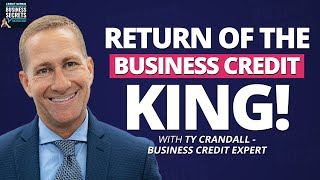
YouTube interview (Return of the Business Credit King!) with Daniel Rosen and Ty Crandall (CEO, Credit Suite). They discuss building and using business credit (EIN-linked profiles), fundability factors (NAICS, professional domain/email, virtual office vs. UPS, EIN, Secretary of State records), starter vendors that report (Uline, Grainger), DUNS registration, and three paths to funding (credibility/collateral, cash flow, credit). Ty stresses aligning entity setup (corporation preferred), ensuring data congruency across registrations, and monitoring commercial reports. He also describes pandemic effects on entrepreneurship, his personal bankruptcy and recovery (2008), and business growth strategies (podcasting, books, affiliate/partner programs).
Questions this video answers
June 7, 2022
Perfect Credit; Business Credit Decoded
Uline and Grainger
naics.com
Dun & Bradstreet DUNS (often free; takes ~1–4 weeks to process)
Chapters
Hey, Credit heroes. We have a very special treat today. The king of business credit is here. Our guest today is Ty Crandall. He is the CEO of Credit Suite. He is the authority in business credit building, business credit scoring, and business financing. And today, he's going to give you some amazing ways that you can build business credit and generate additional revenue and cash for your business. So you better stick around.
My name is Daniel Rosen, and welcome to Credit Repair Business Secrets.
Okay, before I dive in, if you are new to my podcast, be sure to click to subscribe and turn on notifications so you don't miss any of the secrets that I share each week here on the Credit Repair Business Secrets podcast. And by the way, this podcast is brought to you by the Credit Hero Challenge. If you want me to hold you by the hand as you launch your very own credit repair business, go to creditherochallenge.com and sign up now. Okay, let's get into this. Ty Crandall is an internationally known speaker, TV and radio personality, best selling author of Perfect Credit and Business Credit Decoded. He is an expert in business credit building, business credit scoring, and business financing. He is the CEO of Credit Suite. He's spoken at every single credit repair expo that we've ever had, and he's here with us today. So please welcome to the podcast, the king of business credit, Ty Crandall.
Daniel, that is the best introduction I've ever had anywhere. I love it.
It's showbiz here. Well, I'm so glad you're here.
I'm so glad to be back. It's great seeing you again.
Yeah, it's been a while. We talked like at the beginning of the pandemic. That's when we started our podcast and you were one of the first guests. And a whole lot has started. I mean, a whole lot has changed since then.
A lot has changed. I'd love to see you guys. The podcast is doing phenomenal. I follow it. It's so awesome. I love what you guys have done with it.
Well, thank you. And you've got one too now.
Yes, well, I've had one for quite some time. I think we just surpassed 500,000 downloads.
Oh, my gosh.
600 episodes now.
So you started that before the pandemic?
We started it way before. I think we've had that for. I don't even know. I'd have to look back. But over five years now. I think five, seven years. Somewhere in that range.
Oh, wow. Okay. Well, we've only been going a couple years. I think we Started it like a month before the pandemic hit. But anyways, a whole lot has changed with the pandemic. How did it affect your business?
We've done really well. I mean, when the economy shifts, we see two things happen with entrepreneurship. We see business owners, the amount of people that start businesses, skyrocket. And then we also see, of course, those that are already in business go to get capital as quickly as possible. So we saw hockey stick growth during it because we were really well prepared for educational content. The minute it hit, we started releasing educational content about recession, recessions, impending changes in the economy. And, you know, we had a vault of that stuff, Daniel. I think for hundreds of that. And so we were out there, we doubled up on our live streams, and we just. We did really well through it. I think we had a strategy that helped us navigate through it pretty well. How did you guys do?
Actually, it was kind of amazing for us. I think there were so many more people wanting to launch a business that they could run from home. And for us, it was like a hockey stick as well. And a whole lot of what people don't realize is time of turmoil is actually a time of opportunity. Right? I mean, now we're heading into a recession. People are afraid of that. But I see it as opportunity. How about you?
There's a lot of opportunity. I think that whenever the economy shifts, you have people that are in the wrong place, the wrong time. That was me owning a mortgage company, mortgage crisis. And then we see on the other side of it, the stories of all the people that took advantage of that were in the right place at the right time. So I think it's, you know, every. Every change in the economy, we know it's going to happen. Right? I mean, it's a cycle economy. We understand that. You've got peaks, you've got troughs. So being prepared for when times change, I think gives you the best positioning to be prepared to take advantage of opportunities. Because in every economic shift, there's opportunities.
Absolutely. Okay, well, let's get into business credit because we're always talking about consumer credit here. But for everyone listening, what exactly is business credit?
Well, everybody in your audience is very familiar with consumer credit, how it works. Business credit's really similar in a lot of different ways. It's just credit for a business that's linked to a business Zin. Unlike consumer credit that's linked to a consumer's Social Security number. So the idea is for a business to build its own credit profile, get accounts that report to the business credit Reporting agencies that establishes a credit profile for the business, a credit score for the business, and then the business has the ability to obtain a lot of credit without a personal guarantee, without a personal credit check. And then the building of the business credit just makes it easier for the business to be able to get all kinds of credit, credit lines, loans, basically just all kinds of financing and help the business owner get away from personal guarantees in a lot of cases as well.
That sounds awesome. Can any business get business credit?
Yeah, any business can. I mean, if you have a business in the United States, you can get business credit. So I kind of look business credit as the way for a business to fund itself. And in a lot of situations, you've got business owners that just can't get money. Like they, they have bad credit, they have, you know, no collateral, they're getting started, they don't have cash flow, but they need some money to be able to fuel the business. And what's nice is business credit is kind of like a catch all anybody can get it, you can get it. Even if you just starting your business today, you don't need collateral, it's unsecured. You, you don't need to have cash flow or verify any kind of cash flow. So even brand new businesses can get it, or businesses that don't have tax returns or bank statements or want to show those can get it as well. So because there's no cash flow credit or cash flow requirements, then it just makes it really easy for like any business owner to get it as long as the business owner owns a business here in the United States. Wow.
Okay. I want you to help me to settle a question that always comes up in our community. People fight about this. Okay. Your business is credit suite. My business is credit repair cloud. We both have the word credit in our business name. And there's this rumor going around that having the word credit in your business name will prevent you from getting business credit or funding. Is, is this true?
It's not prevention. So the way that lenders look at this, credit issuers look at this, is they really have two main categories of high risk. One is prohibited, meaning that there are lenders and credit issuers who just will not lend or issue money with a certain type of industry. And then there's other, which is restricted, which just means you face greater underwriter scrutiny. It's harder to be able to get approved. So both of our businesses, along with attorneys and accountants and real estate agents and mortgage brokers, we're all in financial services and financial services category as A whole is seen as high risk. It's seen as facing greater underwriter scrutiny. So we're not prohibited from getting financing. A lot of the people that are, are people like that are in porn or pawn shops that are high risk. They carry large amounts of, of cash on hand. So there's industries like that that are very difficult to get financing in. Marijuana, for example. Now there are funding sources that will fund in that area, but typically most lenders won't because it's still, you know, restricted on the federal level. So industries like that really fit into that restricted category. But we are more in the face grader underwriter scrutiny category, which means financial services, we can still get approved for credit, we can still get approved for financing. And it really is just a little bit harder for us. And sometimes we pay higher interest rates in shorter terms than what business owners that aren't in those categories are. Now here's what's interesting is that most any, most business owners I talk to don't even really know what their NAICS code is. So the NAICS code is an indicator that really tells people like the IRS and the sec, like what industry rent. And just a simple example is that you know, the IRS uses this for tax purposes. So if you're a trucking company, they know your NEICS says you're an over the road trucker. They look at the expenses you claim they look at that compared to others in the industry, they see things that are way out of line. It throws red flags. It's how audits are triggered. I'm not accountant, this isn't accounting advice. But that is an example of how NAICS codes work. So what I find is that most people don't. That's what it comes down to more important than a name. And most don't even know what their any ICS code is. So they'll come in and say something like they're in transportation if they're a trucker. But the problem is, is Daniel, there's 100 subcategories of transportation. 100. They'll say they're in real estate, but there's 30 subcategories of real estate. So when you tell lenders and credit issuers this, then they automatically kind of default and put you into high risk because you're not telling them exactly what industry you're in. So some of the best ways to overcome that is just to go to naics.com, go to search the top, right. 100% free to do, find out what industry you're in. And whenever you Apply for credit financing. Whenever you pull your business credit reports, whenever you file taxes, you should say, here's my exact industry, here's my naics. And before you do that, do a little research. You can just Google high risk, any ICS codes you and make sure that what you're choosing doesn't put you in a high risk category. Now, I don't want to get too deep down the rabbit hole, but the reason I mentioned this is looking at credit suite as an example. We could be an education company, we could be a software company, we could be financial services. We really have a choice that we could fit into. So we look at what gives us the greatest multiple but the lowest risk. And for us that's software. So by going and making ourselves a software company, well then we're not in a high risk category. And we also have the best multiple if we ever go to X and Z the business. So knowing that in the ICS is really important because if you do that, then you can overcome getting put in to a restricted industry just because you're gain.
Got it. Okay, let's say I have a credit repair business and it's Daniel's Credit Repair. Would I be more likely to get business funding if I called it Daniel's Financial Services?
Well, if you didn't say credit or financial services, you'd be more likely to get funding meaning that you're, you know, if you have any indicator in the name that indicates that you're in a high risk sector like financial services, it's just going to throw a little red flag, a little, you know, X, let's say. So if you think about an underwriter's computer, this isn't manually done. So an application goes through a computer and the computer's looking for all these different things. Your business address, your phone number, your email address, your website, how all this stuff is structured. And one of those things is the name of your business and the industry you're in. And so if it picks up that you're in a high risk category, it kind of puts like a red flag and X however it marks it. And then that just affects the overall risk that you may get when you go to get credit or financing.
Would you recommend that I have my main entity be called Daniel's Business, Daniel's Consulting, and then have a DBA as, as the credit repair fine line?
Because when you apply for credit financing, you'd really have to apply with a DBA name as well in order for them to recognize your business. One of the biggest reasons business owners get denied for credit financing. This is as crazy as it may sound. Like the number one reason we see people get denied is because they have an application with their info. The lender checks the info with places like Secretary of State and it's not an exact match. An example use Credit Suite vs. Credit Suite Inc. I apply under Credit Suite, they find Credit Suite Inc. Online Secretary of State. They can't validate for a hundred percent certainty. These are the same businesses. Application gets thrown out for potential fraud concerns. Believe it or not, as crazy it is, that's like one of the biggest reasons that people get denied. So I think that it really comes down to being able to make a decision. Do you either want to be very specific, like I wouldn't change my name. I don't know about you, but I want people to know what I do. And to me that's worth the risk of making it a little bit more difficult to get financing. And even if my name indicates that, but I've chosen my naics wisely, then that helps me overcome the issue. But other people would rather have no barriers and then give a more general name which isn't as specific to clients about what they do. I don't think there's a right or wrong there, just personal preference. We want to fight the fight and we'd rather have credit in our name and then, you know, tell people what we do and then fight the fight when it comes to getting credit financing by making sure that we have everything else online like NIC, etc. Which gives us a bunch of checks with that underwriting computer. So that one little red flag isn't going to be a deterrent with getting us credit financing.
Absolutely. And you bring up an interesting point. If you name the business what you do, you're probably going to get more traffic coming at you because people search.
Yeah. And that's why when we look at this as a whole, we call this fundability. We found there's 125 fundability factors that lenders and credit insurance computers are really looking for for. And this is just fundable foundation. So the other things you want to do is, you know, have a professional email address, don't have a Gmail, you know, have a professional domain hosted in your own site, have a your own physical location or get a virtual office, not an I postal or a UPS, a real virtual office like Regis Alliance, DaVinci type of place. Get a business license if you can. Here I can easily get one in my county for very cheap, you know, making sure that I have a Business bank account set up, making sure all my information is congruent online, that I have an ein number. These kind of things are very important. And if you build a really strong foundation, then if you don't have, if you have something like, you know, something in your name that indicates you might be high risk, but you're in EICs and all these other things are solid, you're just not going to have a hard time getting credit financing because of.
That One factor makes perfect sense. Okay, let's get back to the basics here. How does someone with a business start a business credit profile and score?
Well, we really started on that, went down that road already. It starts with foundation. What I see is entrepreneurs want to just jump ahead as fast as we can and they skip the basics. And so as a result of that, that's what gets more than half of all applications denied. It's basics. It's not your credit, it's not your income. You never even get that far. So all that stuff we just talked about, especially congruency, making sure all the steps congruent is important. And I see it's a pitfall for a lot of business owners because if we think about how we start businesses, we typically go, our name's available, the Secretary of State, we get it, we get the entity, then we end up getting an address, then we get a phone number to website and we just never even think about updating this stuff over here. We never even think about it. And so that's a problem. We've got to just make sure that we update everything. Everything is congruent. We, we get that fundability aligned. It's really step number one and most important step of any type of credit financing. Then the next thing you want to do along the line of fundability is get a DUNS number, go to credit or go to, you can go to creditsuite.com duns or just search free DUNS number, go to Dun and Bradstreet. Get your DUNS number a week to four weeks to usually get it 100% free, but 10, 15 minutes to fill out the application. That's the first step with getting set up with Dun and Bradstreet and, and with Equifax and Experian Commercial. The minute you get accounts that report to them, they'll then automatically create your numbers with them and create your credit profiles as well. So fundability is most important, including Dun and Bradstreet. That's really the very first step with getting any kind of financing and the first step with building Business credit as well.
Got it, got it. Now what if you're a brand new business owner, can you still get a loan to start your business?
Sure. So the way that we look at this is that when it comes to getting money, I like to simplify it by just calling them the three Cs, meaning there's three main points or things that lenders really want to see credibility, cash flow and credit. So if you have one of those strengths, you can get money. It used to be you needed all of them, right? We had to go through a bank, we had to go through SBA, 90% of funding went through them. We had to have a really well established business, years, you know, years in the making to be able to get approved. And then we really saw with Dodd Frank and a lot of changes after the 2008 mortgage crisis, now we see a complete shift. Now 90% of funding plus comes from alternative lenders, not from SBA. And they're looking at a strength instead of all strengths. So if you're in any kind of industry, in any kind of business, what you got to look at is what is, what is your strength. Do you have collateral? Do you have stocks, bonds, 401ks, IRAs? Do you have equipment, inventory? Do you want to purchase real estate? Use that as collateral. For example, do you have account receivables? Are you flipping homes and using that as collateral? Do you have an asset that has value that can serve as collateral? If so, you can get very low interest rate financing. Doesn't mean it doesn't matter if you're a startup. Ten years in business, doesn't matter. If your credit's 400 score, 800 credit score, you can get approved. Then that second C is cash flow. So if you have six months worth of cash flow, everybody wants to give you money from PayPal, square stripe kind of guys, all the way to what we call cash flow financing, merchant cash advances, all these lenders that lend on the fact that you have consistent cash flow. Then we have the third one, which is credit, you can get it. And by the way, when we talk about cash flow, that's the kind of financing startups just can't get. They don't have cash flow yet. They need six months worth it. So if you're just starting their business, they can't get that C, but if they have collateral, they could still get everything in that category. And then the third is credit. And that's kind of two subcategories. If you have good consumer credit, there's a program like Credit Line Hybrid where you can get credit lines up to $150,000 just based on you having good consumer credit or a guarantor, a partner, a family member, a friend, somebody that wants to be a signer for you, you or them have good credit. You can get credit lines for the grand 0% rates, report to business credit reporting agencies, or you build business credit and you get money based on business credit. So you just have to know what your strengths are. And if you're just launching a business, you don't have cash flow. The question is, do you have an asset that serves collateral? Most don't. That rules out that category. So now we look at either consumer or commercial credit, consumer credit from you or somebody else, or commercial credit. And that that formula works any which way. You only need one of the Cs. If you have one, you don't need the others. So if you want money, you just need to think about which one you have. If you have zero of them, think about you need to build business credit and let that help the business fund itself.
Got it? Okay, now over here we're an S corporation. Now many credit repair businesses are LLCs. Some starting out are sole proprietor. Does it matter what type of entity structure you have when you're starting to build business credit?
Sure, it absolutely does. When you're getting any kind of money it does. So when we look at entity types, corporations are the preferred entity type that a lender has. And for I just like to look at it like this, like you have a chance to paint the picture to the lender the way you want it to be painted. And when you're coming in and you're a sole proprietor and you're using a home address and a mobile phone and a Gmail, just think about the perception this gives a lender, right? Or you're giving them a UPS address which they know what it is. You're not even telling them where you operate out of. And then you expect them to give you money. But then the other side of it is you come in and you got your ducks in a row, right? Like you, you have a corporation set up, you have a real physical business address, even if it's a regis, then they don't, they don't know that you've got a business phone number, even if it's from a ring Central from 10 bucks a month. You know, you have a professional email addresses that matches your domain. Just clear difference between these two worlds. So you've just got to make sure that you come in and you've got to kind of set your business up the right way where it makes you look credible to lenders and credit issuers. And, and if you do that, one thing that kind of encompasses everything in fundability and goes a long way to helping you get approved.
Got it? Got it. Once you get things lined up, how fast can you build business credit?
Well, business credit never. You never stop building it. Like consumer credit, there's no end to the, to where you want to be, but you can start getting business credit accounts right away. So that means if you set up a business, you can come in and start applying for what we call starter vendors. And these are. Vendors are unique for two reasons. They're unique because they'll give you credit when you have none. You have no business credit reports, they'll still issue credit. And they report that credit to the reporting agencies. And that's really important for multiple reasons. First of all, over 90% of trade credit doesn't report anywhere. And this is what we deal with. We have, you know, 3 million, 2 million, $10 million. Business owners come in and say, oh my gosh, I just got denied for auto financing. I just got my credit line pulled. All these things happen. They say business credit's the culprit, what's going on? And they say, I pay A, B, C, D, E, F. But the problem is none of those people they're paying report the credit to the reporting agencies. So consumer credit, you just build it accidentally. Like you go to Target, they offer you a credit card for 20% off on your purchase. You take it. You know, it reports in your consumer credit reports. It's just not like that in the consumer world. Like, it's a nightmare to get reported to D and B Equifax Experience. I don't know why, but it is a nightmare to report data to them. It could take you years to ever get approved to report to them. So As a result, 90% of people that give you credit, they don't report it. So it's not showing anywhere. So you really got to get credit with starter vendors that do report the credit that they give you. Then the other thing is of the vendors that are out there that will, they want you to be established, they want to pull a business credit report. They want to see a Dun and Bradstreet score and all these things. If you don't have that, they're not going to approve you. So these starter vendors will give you credit when you have none. They rapport, then they give you those initial foundation, that initial credit profile, that initial credit Score, then you can build off of that profile and score, continue to get more and more tiers of credit as you continue to get more credit that reports.
Got it. What are some examples of these starter vendors?
Two of my favorite are Uline and Grainger. So I love Uline because they sell shipping supplies, all kinds of stuff that most of us use in our business anyways. I love Grainger because if you just give them a business license, they almost automatically give you a $2,500 credit line right off the bat. And I get batteries and first aid kits and all kinds of stuff from them. There's strategic network solutions. There's a lot of other ones out there, but those are two of my favorites to get started with. They report the reporting agencies. They're true starter vendors. They'll give you credit when you have none. And you can use those to create a basic foundation with the reporting agencies that you can then continue to build off of to get more and more tiers of credit.
Got it? Got it. Do business credit cards have any impact on your personal credit?
It depends. So if we look at a Capital One spark, it's funny because Capital One just sent me a letter stating they decrease my credit limit, which is something I talk about all the time. If you don't use credit, especially when economic shifts occur, what they do is they'll lower your limits because they need to free up credit to be able to lend to other people. This time I see it happening preemptively before the economy shifts. In the 2008 mortgage crisis, I don't know if you were affected, but they just did it when everything was going down. Like they lowered my limits on everything and everybody's limits or a lot of people I talked to down to about what they were actually using. Well, Capital One sparks is you're not using it, we're going to take it. I'm like, yeah, because you report to my consumer credit reporting agencies. So you're my emergency card and I never need my emergency credit card. Right. So you got to be careful because what you're going to find is that either credit cards don't report anywhere consumer or commercial, or they report to consumer or they report to commercial D and B Equifax experience, or they report to both consumer and commercial. So you really got to make sure that you focus on commercial reporting cards that don't report on consumer. Capital One is a horrible culprit for this of reporting to both. And the problem with that, as you know, is that 30% of your scores utilization on the consumer side and consumer credit cards weren't. They weren't designed to fund businesses. The limits are too small. So SBA says limits on commercial cards are 10 to 100 of what we see on consumer. They're big because they're designed to fund businesses. Consumer credit cards aren't. So a lot of business owners get themselves in trouble because they. They come in, they say, I'm going to use a consumer credit card to fund this thing. And then, as you know, it takes twice as long and, you know, to be able to get anything to work. And then it usually costs twice as much as what you anticipate it will cost. So then they max out these credit cards and they lower their consumer scores, and their ability to get personal business financing is all in jeopardy. It's why you want to build business credit to help prevent that.
Got it. Got it. Makes a lot of sense. Can you get cash from business credit cards?
Yeah. There's a lot of different ways you can do it. And nowadays, I think one of the most popular ones that we see is companies that will charge your credit card, charge you the fee, and then give you the cash back. So there's a lot of methodologies out there, but that's the most common that I see that companies do that service do. So they, you know, you have a merchant account, right? I have a merchant account. So in that case, those companies will use their merchant account. They'll charge you $5,000 in the merchant account like it's a transaction. Then they get your five grand, then they give it back to you with a fee. So that there's a lot of ways you can cash out without paying 20% on business credit cards. That's the most popular one that I see that outside sources are out there using today.
Got it. Do you think that all businesses should have business credit?
Well, I think that, yeah, I think it's really essential. It just depends on what you're going to do with the business. You know, I've got friends that have lifestyle businesses. They don't plan on doing anything with it. They make 100 grand a year, a million a year, whatever it may be. They chill, they make their money. They don't plan on growing it. They like to spend time with their families and those kind of businesses. They don't need funding. They may never need to fund the business. I just don't think it's a real big deal for them. But if you're going to grow and scale the business, then it really becomes essential. And what I mean by that Is that every one of the largest publicly owned company and privately owned companies in this country, every one of the biggest ones has it. All of them, you know, from Publix, is one of the biggest privately owned companies in the United States. They're right here in my backyard in Lakeland. Walmart to Amazon, I mean, doesn't matter. You could pull any of their business credit reports and see that they have business credit. They use it wisely to grow and be able to scale their business. So if you're going to get any kind of money to grow your business, you kind of have to do it. You have to have business credit established to get an SBA loan. You cannot qualify if you don't have business credit Established business credit was used to determine if you get approved how much money you'll get, the rates and terms you'll pay on almost any kind of credit card, credit line or financing. So can you get money without it? Yeah, you're just going to get shorter terms and higher interest rates and pay way more on the money and less money than what you, you could have gotten. So any, if you're have any intention of getting credit financing, then it's something you're going to want to have. And on top of that, it's publicly accessible information. You know, we're used to permissible purpose on the consumer side per the Fair Credit Reporting act, but there is no permissible purpose. There is no FCRA in the commercial world. So that means anybody that wants your business credit reports can get them. If I want to pull your credit reports right now, I can get them. As a matter of fact, if I go to D and B Equifax, Experian, and I tell them I want a credit report, the very first question they asked me is, do you want one for your business or somebody else's business? So they're typically used in more cases for other people to know more about you than you, to even get it, to look at your own history. And since they're publicly accessible, you're talking about prospects, clients, lenders, credit issuers, suppliers, banks, insurance companies. All these people can access it. So the way I look at it is like, why would you not want them to see that you have a solid history of borrowing and have a really good reputation because it is publicly accessible. So to me, I look at it as a credibility play. It's just your reputation. And I've seen On the profit, for example, with Marcus Lemonis, I remember one time he went in, he looked at a business, said, there's some Sketchy stuff here. He. He went home that night, he pulled their business credit report, then brought it in the next day, called the owner out, and decided not to invest in the business. I work behind the scenes and help a lot of people that are looking to buy businesses understand how to get reports and use the reports to make those decisions. So there's people looking to invest in your company out there. There's people looking to buy your company out there. They're all accessing this data. And I'm really big, Daniel, on anything these guys can access. You should get. You should control LexisNexis check systems. You know, your business credit ports, your consumer credit reports. You just. You might as well. I mean, by keeping up on that stuff, building and controlling it, it gives you the best chance of, like, living the life you want to live and getting the money you want to get at the best terms.
Wow. I wish I had known you when I was first starting Credit Repair Cloud. I have to grab a prop.
Hold on.
Before building Credit Repair Cloud, I was selling this little download for 25 credit aid.
I loved Credit Aid.
Yeah. And so in a good week, I could make about $40. So it was, like, not enough to. I had this vision of Credit Repair Cloud that I wanted to build, but I didn't have any money. I was completely broke. So, like, the little bit of money I would make from this, or I'd watch someone's cat, or I paint someone's wall, or I'd build a website for some. Whatever I could hustle kept going to programmers. But I needed more and more money. And I didn't know anything about business credit. I don't think I'd even heard of business credit. So here's what I would do. This was $20. I was my own best customer. I would buy thousands of dollars of this every month on my American Express card so that I could get the cash. And that's how I paid for stuff and paid to build. But American Express caught me.
They.
They cut off all my cards. But that's how I tried to finance the business at the start.
It's really interesting of how many of us go through and do so many creative things to do it. You know, it's a great. I read Sam Walton's book on founding a Walmart, and it's really interesting because if you look at it, what he did, he owned a Benjamin Franklin franchise. And then he would go. And then he broke free from their model. He'd go, like, across from Oklahoma to, like, Tennessee, buy stuff wholesale, bring it back and then he would sell it for a markup retail. And he was just obsessed with this practice. And he would tell stories in his book about how he would go to buy this stuff and these guys would go in the back room to run his Dun and Bradstreet credit profile. This was 60 years ago and this was what was still going down. And he used that credit to be able to build Walmart. I mean if you just look at the history of Walmart and what he did, if you look at Walmart's credit report, you see thousands of trade lines on there. Business credit accounts for more, more value in Walmart than all shareholder value combined. It's the biggest financial leverage the company has. And so even when they started, and I often go on stages and I tell the story about Sam and then, you know, reveal that it's Sam Walton and what he built completely built on business credit. So it's really astonishing if you look at the biggest companies that are out there and how they leverage this kind of credit, it's really interesting. And even Apple, you know, they sit on 100 billion in debt and 130 billion in cash. And to your average person they say, well that's simple equation, right? You take the 130 you got in cash, you pay off the 100. But they don't understand that that's not how the system works. They're wisely using opium, other people's money to grow the business, then they're saving that capital like Walmart does. Walmart uses business credit. 80% of what's on their shelves they used to buy with business credit. So you got to buy paper towels. They bought it on credit with Bounty. And then you give Walmart money, then they take your money, then they pay off the credit with Bounty. But this is how they expand. They save their cash for expansion, for retail, for stores. And Apple uses it for R and D to open more locations. So that's smart. And it's why these guys are the biggest ones in the world because they wisely use other people's money for the stuff. They easily can. They stockpile cash and they use cash for expansion, for acquisition, as you know, things like development, stuff like that, payroll. You can't just use credit cards for a lot of that stuff in a lot of cases. So you know, there's a lot of that stuff that you have to save the cash to be able to deploy. And then using other people's money is how these, these companies get as big as they are. It's really smart. When you see how they do it and you steal their strategies and use it in a small business level to scale as well.
Wow, that's really fascinating. Okay, so back to our listeners. What are some tips to to maintain really a good business profile and score? What do you need to do once you've got it?
You just never stop building it. So, so business credit, when you start with those starter vendors, that gives you a credit profile and score. And what I mean by vendors, a vendor is a Walmart of the world, an Amazon of the world, a Macy's, a Nordstrom. It's just a store that issues you a credit card to use in their location. Bp, Chevron, Sunoco, Sam's Club, any of them are vendors. So you just never stop. Now we for our clients put it into tiers to make it simple so they understand what credit they can get along the way. And it makes it easy for our partners that offer business credit to just sell a turnkey solution and then the customer has an easy path forward. But even if they're doing it on their own, they just want to continue to accumulate credit, continue to use that credit at least every six months, real rules every 12 months for it to count your score. I recommend every six months you're using that credit. So get more, use more. Don't get credit just to get it. Get credit you're really going to use to grow and scale the business. When you go to get credit lines, you go to get credit cards and loans. Ask where they report to. Do they report anywhere? You know, ask them where they report. If you have a choice between two and they're pretty similar, one reports to consumer, commercial or nowhere and one reports to commercial, go with that one. Just be conscientious of who is reporting on your business credit reports. Get them, monitor them, you know, make sure that you go to the bureaus and be able to dispute any inaccuracies. Just see to get that stuff cleaned up. Those kind of things all go a long way to being able to grow and maintain the credit once you've established.
It makes a lot of sense. Can a business owner build additional revenue by offering business credit services to their clients?
Oh, absolutely. I mean that's, that's what I did. You know, I owned a consumer credit repair company long time ago, decade plus ago. And as a result of that I found business credit. And, and what I reason I found this because so many people were asking me about it. And at that time, Daniel, there wasn't YouTube videos, there was nothing. You had to go page three, four five of Google to even find any in anything about business credit. And so when I discovered what it was, I was like wow, I gotta figure this out and educate and teach. Now I'm blessed to be surrounded by so many other people that are out there teaching and educating the space and helping entrepreneurs understand how business credit works. So as a result I had all my consumer credit repair customers say can you help me with commercial? Can you help me with commercial? Because look, the reality is if you're a credit expert, you should know credit. There's two sides to commercial. And you know you've got actual commercial and you got personal credit. So on that side if you know personal credit, you got to know commercial or at least be able to offer it because the best, the better you are at fixing personal credit. Which your guys software makes it really easy. Me back in the day, it was, I go over to my processor sauce, you just have paper everywhere. Wow. It was astonishing what it was like before, like you guys came around and provided like the solution to be able to do it. But you know when you're offering personal credit, you're good at it, you get results. Your customers or business owners are going to ask you about business credit and being able to have a solution. What I found is that I can make five to $700 lifetime value on a consumer credit customer and make three grand on a business credit customers. So when I combine these two, I was able to have consumer credit repair that gave me regular recurring income into the business. Then I added in these large one time payments with business credit, which is 100% legal to do. Then I was able to really balance the business. When I incorporated it within a year I had multiple offers to buy the business. I sold it. Probably one of the only guests on here that's actually built sold a consumer credit repair company successfully and that's it. Just the thing just blew up. So I think that outside of business credit there's a lot of services you should be offering. If you're in credit repair, you should be offering credit monitoring, you should be offering student loan loans, you should be anything that goes with your clientele you should be offering. And business credit's definitely one of those and one of the more lucrative services you can offer. I've also found that it's easier to attract customers. So the problem I have when I was in credit repair, I can't advertise in a lot of states, different states, but I could advertise business credit and then bring customers in that way. And then if I was able to offer credit repair in estate without being licensed or needing bonding or things like that. That was offer. I was able to offer them credit repair as well. I also found a lot of affiliates that I couldn't get in front of because of consumer credit repair. I could get in front of because of business credit. Then I was able to cross sell them over to consumer credit repair as well. There's no industry restrictions of business credit. So when I put the two together, it was just like a powerhouse. That was hockey stick growth in the company because all the things that I had that didn't work with consumer credit, business credit compensated for business credit problems, consumer credit compensated for. So when I put them together, it's just a powerful force that made it really easy to be able to make a lot more money and grow the business. And that's how we've helped thousands of partners a lot in credit repair to do so as well.
Amazing. You're amazing. You're one of the most successful people I've ever met in my life. So it's just so thrilling to have you on the show. I know, I know. Especially these days. The pandemic hit. I was terrified. I didn't see anybody for like the first year other than Keenan Kenan would come in here to the office. The rest of our company is remote. Did your life change during the pandemic?
So it's funny because when the whole thing went down, I'm an extrovert, so I have to be around people. And the first thing is, is that we had offices. We ended up shutting them down during the pandemic because it showed us we have a liability like our salesforce there. Like that thing, one guy goes down and affects the rest. 70% of my sales force is gone like that. So it ended up being a benefit in the long term. But it was interesting because I said two ways I could do from this. Hide, mask up or just go get it. I'm going to go get it. I'm going to fight the fight, you know, and get through the other side. At that point, they didn't know if you could get it again. These things were not known. And so I didn't hide from it. I quickly realized that where I was, St. Pete Beach, St. Petersburg, Florida wasn't too far away. They shut down all the public beaches. Nobody was there. The hotels that were open were vacant. So I was able to come in and get really cheap rooms. And every week I was at the beach, I literally went to the beach, got a really cheap room. It was crazy. I Mean, in the middle of spring break, I was walking St. Pete beach, which is usually packed full of people, and there was just scarcely people around there. It was really kind of cool because I met a lot of business owners, met a lot of local restaurants in those areas and hotels and people, businesses I was able to support frequent in my quest to like go get it and get it out of the way to move on. And the interesting thing is, is like to this day, I somehow managed to completely avoid it, even though my kids have had it and everybody else. So I'm not sure, I'm, I'm not sure how that works. But anyways, yeah, I, I, that's how it affected me personally is I just kind of went out there and said, I got to live my life. I can't just be tucked away at a house somewhere.
Yeah, yeah, yeah. I kind of got cabin fever. And we're kind of itching to do Credit Repair Expo again, but it's just so shaky out there. Will you come if we have it again, will you come speak?
I'd love to come speak. I can't believe you guys aren't doing this all the time. You guys, anything I can do to help you get it going again. I loved Credit Repair Expo. The way you had the format, the people that were there, the speakers, the people that were in the audience. It was just phenomenal, phenomenal experience. I just loved it. And I was so looking forward to the next one you were going to do, which was going to be off the charts, the biggest in the biggest of the industry had ever seen.
We were going to have a thousand people. It was going to be in Dallas and it was in March or okay, the pandemic hit in March of 2020 and our Expo was supposed to be in May. We had to refund everybody's money. It was terrible.
I thought about you during that time and I should have reached out and I apologize that I didn't because I thought about you a lot of realizing your event was about that time and then the nightmare that it had to. Of course I was under fire from everything, trying to figure it out in our business, but not as much as you guys were. That had to have been extremely costly from all the upfront that you have to put out for an event and then give all the people the money back. I can't even imagine that was.
Sure, no, it definitely was costly. But then our business grew because we're able to focus more on what we were doing with our business rather than focusing on an event. Although we're going to start having those events again as soon as everyone can feel safe. Some people feel one way, some people feel another. So we're sort of waiting it out, but it'll be soon.
I love that you're doing the challenge. I think that's the coolest thing. I've had a lot of success with challenges over the last two years. I think that's a phenomenal way to educate. I see more people now converting to a hybrid event format where it's online and it's in person, so gives people the option to do it either way. I think that's popular. But you and I both know that events are massive. Time sucks. I mean, they take tons of time and a lot of money to be able to put put together. So I've always given you guys, had the most respect for you guys doing.
So much fun to meet everybody and the energy in the room and it just. So I know we want to get back to it. Hey, I want to talk about your podcast some more. What is the name of your podcast? How can people find it?
So it's the business credit and financing show, and any of our social channels, they can go to creditsuite.com right there on the top, right? They can access our podcast. They're able to access all of our social channels as well. And, man, it's like you. It's so much fun. I learned so much on the podcast from all the guests I have on. It's really pretty cool.
Yeah, me too. Did you naturally gravitate towards podcasting?
So the funny thing is, is that I look at anything as distribution channels. So I think that we're in a world where you should deliver very valuable content. Like, if my goal is to help people build business credit, then I should teach them to do that for free. That's just my belief, because that's my mission. I was hurt by not having it. I want to help as many as I can. Some people can't pay for it, so give them a free path. Give them an actual paid path. Path. So I've always been big on producing content. And everything is a distribution channel, social channels, you know, podcasts, just a way to distribute content. So when we very first created the podcast, I'd listened to this lady named Jessica Rhodes who now has an agency where she helps book, book podcast guests. And I thought, that's a great idea. So we created one, and we took all of our webinars and dumped them on itunes. We just dumped them. Like, we didn't do anything. That was our Podcast. And then I remember, like, six months later, I go, oh, yeah, we dumped all that stuff, like, on itunes. I should look at that thing. And I looked at it, I was like, wow, there's a lot of downloads on this thing. Maybe we should take it more seriously. And then we. Then we grew into take our webinars and put them up every week format. Then we grew into part of that and then attracting guests, because so many bookers then tried to presenting guests to us to have on the show. So then we switched to that. Now I think we're three, four, five days a week we release a content because we just have so much of it on there. So I kind of just picked it up. But I'm an extrovert, so I like to talk to people. I like to be on stages. I do interviews and stuff like this. So just naturally worked for. For my personality. But even if it doesn't, I recommend somebody still do it because there's just so much value in it, in the customers you attract, the messaging you put out there. You have so many guests on there that you just like, wow, I didn't know that. Like, I learned a lot of cool stuff every day that I have somebody on my show that I just didn't know before. So it's really amazing experience.
Yeah, me too. Everyone should have a podcast. I mean, it's the natural progression. You start with no budget, talking on Facebook to friends and family, and then you're always searching for additional ways to generate leads.
And.
And a podcast seems to be a natural progression. And writing. And tell me again, how many books have you written?
I've written two, and I'll write more. But along the line of what you just mentioned, it's interesting because I had the blessing of having lunch one day with Steve Forbes, and a buddy of mine, Jason Pfeffer, was there. Jason's like the editor in chief of Entrepreneur magazine. So Jason and Steve are sitting there, the new media guy, the old media guy guy. And there's a couple things I picked up out of that. There are a lot of things, but two of the main things. One, we were there for three hours, and not one of them ever looked at their phone. And I thought that was such a valuable lesson to me because, you know how many of us sit at lunches and feel compelled to look at our phone? Like when these are two media moguls, and they don't in three hours. So I thought that was cool. But the other interesting thing is, is that the one thing that they said is, you know, they had a discussion about where things are going, and they all, all said audio. Both of them, they said, that is the future. You're going to see more audio. Then we saw Clubhouse come out. We see LinkedIn clubhouse version coming out. So I think audio is the future. And that's what these guys were talking about. And that's one of the big lessons I pulled away from that was. I think that's, like, part of where it's going. So, anyways, to speak to that point, definitely.
Who would be your dream podcast guest?
Oh, geez. Elon Musk. I got a main crush on that guy. He's like the coolest dude in the universe. I love that guy. I don't even know if he's from this planet. I don't care. He's awesome. He's going to bring a cell phone out that works on Mars. Who creates a cell phone that works on Mars. So I love Elon Musk. I'd love to spend some time with him. He's such a smart dude. I probably wouldn't be able to keep up with any of his answers, but, wow, what a brilliant guy.
Yeah, I think he is an alien.
He's an alien. I want to go to whatever planet he's from, though, if that's the case.
Hey. One of the most memorable moments during our credit repair expo was the moment where you talked about your lowest moment after the mortgage crisis, where you described watching a moving truck arrive and you felt like you had failed as a financial provider for your family. And despite everything you went through, you said you might not change anything because you learned so much since then. So I want to know what happened to that house. Do you still live there?
So it's funny because I ended up fighting my way back, got the house back and lived in the house. I just actually moved out of that house and sold it less than a year ago. Actually, no, excuse me. The house sold two months ago, and then I moved out of it a little bit before then. I didn't know I was like, moved in the middle of downtown. I didn't know if my kids were going to like that or not, but they ended up liking and it worked really well, so I ended up fighting my way back. It's interesting because I paid a bankruptcy attorney thousands of dollars, filled out all the paperwork. He has filed bankruptcy. It's nightmare. Like, the paperwork. I've never dealt with anything like that. And I owned a mortgage company, so, like, when mortgage brokers say that the paperwork sounds outrageous, it's outrageous. And then I Remember sitting in front of that bankruptcy attorney and just saying, I can't do this. I think I'm going to fight my way back. And he prayed with me and then we stepped out and I did. I fought my way back. It was a big battle to get back and fix the credit. And here's the lesson. Even when you think you fixed your credit, you got to fix LexisNexis. For all of your audience, they're doing a disservice to the people that they help if they're not fixing LexisNexis because. Because you can get judgments and bankruptcy. Well, I mean, that stuff's a lot of sign on the credit reports nowadays, but you can get a lot of stuff removed. But it's still on LexisNexis. It's still going to create problems unless you remove that. I learned that the hard way many years later. So, yeah, interesting experience and I appreciate you asking, but that house, I fought my way back and then less than a year ago, just moved down.
Amazing. What year was that?
What year was it?
That was the bankruptcy in the duluth.
Yeah, since 2008. Owned a mortgage company. Mortgage crisis occurs, right? So all my income goes away. I'm like, I'm gold. I got all these credit limits. I got this money in the bank. Bank debtors personally guaranteed got judgments, cleaned out my bank account. I mean, very few people I've talked to have really had this happen. But like money's in there. One day you write checks and you look and you're negative because all the checks cashed and they took the money. The money was gone, out of the account. And then business debts, consumer credit reports, consumer credit card companies, lower limits to what I owe. And you know what that does to your credit scores. At that point it was over. I couldn't get any more credit or financing. All my limits were gone. The money from my bank account was gone. It was crazy. I mean, I literally remember trying to pass bad checks to pay my electric bill and then ended up having to go to my father in law to be able to get the money to pay the electric. Just lowest times. But you know, that's why I fight the fight. I fight now because if I just, just would have understood business credit, like if I would have known this and been able to do it the right way that I teach now, like I could have avoided that whole thing. But like you said, I would never go, I would never change a thing even going through it. I said I would never change it because I needed to learn those lessons. So when I had kids, my kids weren't adversely affected by the next change of economy, and that's why we saw growth during it. We positioned ourselves perfectly to change and be able to navigate economic climate changes, which is what your listeners should be doing as well. They've got to know that it's going to happen and prepare themselves to navigate that. And now I feel a lot more secure when the economy changes. So very deep answer to a simple question.
Interesting. It's the same years that were so difficult for me. 2008, I had two houses that I had bought doing show business. And then I had my little download that I was selling and I had borrowed against those one house I was paying for with itself, you know, And I didn't realize that was going to end. And then I was on time with all my payments. But bank of America did something really tricky. They started putting my payments aside that were always on time. And when, next thing I know, from my point of view, I was never late. But from their point of view, suddenly I was late and they were waking me up every morning. All those years 2008 to 2012, really till 2013, I was woken up every morning by bill collectors trying whatever I could do to hang onto my house that they were trying to get. And it was the scariest, scariest time. But that fueled everything we're doing now, and sounds like that fueled everything you're doing now.
I just feel that's the way it is. That adversity is what fuels you. It's what makes you who you are. It's where you really find yourself. I did. I don't know about you, but. And I say this, and it does sound cliche, but it's where I really stopped doing business to make money and just legitimately started doing business to help people. Because, man, it was painful. I never felt that kind of pain before for. And then to know that I have the ability and power to be able to help other people avoid that pain, literally, my hands, my hair stands up on the side of my arms. Because it was just that trigger in my head of like, I gotta. Like, I gotta help as many people as I can. And then it's like, you know, the path opens up for you to success, but I just don't think you can get there unless you really have those good intentions. You just really have to be in it. Right reason. And when you find that, then, like, the sky's the limit. But so many people struggle with that. They're just in it for the wrong reasons. They Never understand why, whether God or how blessings or whatever you want to consider, like that path doesn't open up for them and it never will until you're righteous and you really are in it to help people.
I always say if you're, if you're just in it for the money, sure you'll make some money, but your business will only grow so far and you probably won't have a very fulfilling life. But if you have a passion for helping people, changing lives, helping people to not go through the hell we went through, having your heart in the right place, that's when you have the real success.
That's what I found. And I've seen so many people in life and I've seen that way that I just really think. And we see people short term get there, shady people become successful, like that's wrong. They're doing everything wrong and screwing these people over. But every time I've seen it comes back to them, at some point it catches up, they lose everything, they go to jail, they, whatever may happen, it always catches up to them. So sometimes we get distracted by seeing people that do it the wrong way succeed. But I've always seen that that success is short lived.
Absolutely. It might seem like it takes longer to do it the right way, but it always pays off.
Huge difference.
What does business ownership mean to you?
I think it is that. I mean to me business ownership is about helping people. It's about really deploying an army. I think that you can only do so much in life by yourself. But business ownership gives you the ability to build a team that stands behind one common purpose. And for me it's to help as many people as I can. So I can only help so many people by myself. But when I have a team of people in a business that I'm able to deploy that team to be able to help more people. So to me that's what it means.
Awesome.
I'm interested though from your perspective. What's your answer?
Business ownership, what does it mean? The same thing, helping people, it's just so gratifying and to see lives actually change, it's amazing. I don't think about money at all. What I think about is helping people in lives changing and helping someone to not go through the hell I went through. I mentioned earlier about how I financed part of credit repair cloud by buying my own software from. Buying my little download again and again from American Express. And they shut off all my cards. When they shut off all my cards, they. I said, hey, but I've had these, these cards for 20 years. I've got miles or points. You get points on these things. I was saving them for a honeymoon or something. I said, what about those points? They said, you have 24 hours to claim whatever you want. And they. They gave me a link to a catalog. And I picked out this chair. And this is my. I call it my loser chair because this was my prize for having my cards shut off. And so I always have this in my office to remember what that was like. And my girlfriend gets pissed when I call it my loser chair. But it helps me remember that place, that terrible, terrible place. And I want to keep people out of that place.
And it's so important that you do. And that's why I talk about it on stages in so many different places, because that puts you in a dark place. I mean, when your business, you know, in my world, my business fails, you got to lay off employees. And then, you know, on the personal side, you can't support your family. You lose your house, your cars, everything. It just puts you in a really, really dark place. And I think you have to go back there. And I oftentimes do, because that's what helps motivate me and fuel me to help more people. I just, you know, like you said, it's that helping anybody I can to avoid pain. And I oftentimes say, like, look, at least I want people to have a choice. Like, I didn't have a choice. I didn't know about business. I didn't know there was other solutions around my problem. But now if you know about it and you choose to not take action, I'm okay with that. Like, that's on your own accord, but you at least deserve the right to know these things. So I agree. I love that. I think that's so cool that you have that, that you sit on every day as a memory of that, that experience.
I think essentially I never talked about that before this went deep. Okay, to bring it back up, what's your advice to anyone just starting out with a business?
Wow. There's so many different pieces of advice I'd have. A lot I think I've already shared is you have to genuinely be in it for your own, for your own, or for good purposes. You need to know that things are going to cost twice as much and take twice as long as what you think. Nothing is going to work as planned. And if it really comes down to one piece of advice, the one thing I think that is, it defines success. It's just ambition. It's just drive. You just Push forward at all cost. And when you start a business, you've got these large failures. And I think that you kind of have to. You just have to be able to understand that. It's. It's peaks and troughs. It's peaks and troughs. And, you know, you're going to take all kinds of hits and hits and hits. And I kind of related to Rocky, right. If you ever watch Rocky, Rocky was a bad fighter. That guy was not good. He just got punched all the time. But then the opponent would just get tired of hitting him. And like, that's how I've always considered myself as an entrepreneur. It's like, you can knock me down. Oh, you will go ahead. Because I. You were going to get tired of hitting me before. I'm going to get tired of getting up. And that's what I think you have to have, really, to be able to succeed in business is you just have to be willing to kind of navigate through it and be able to come through and take the hits and keep moving forward. Just keep pressing forward at all costs.
Sure. And Rocky learned from his mistakes. And launching a business is about making mistakes again and again and again and again, but pivoting a little bit.
Yeah. You have to be obsessed, and you have to be obsessed about learning. You have to. And I always say that too, is I'm successful because I'm naive enough to think I can learn my way out of any situation. You know, I hire a B player, and then I spend all weekend reading about how to hire A players. And then you have to. And I always tell that my team, I'm like, you know, they'll apologize for making a mistake. And I'll say, never apologize for a mistake. I want you to make mistakes. We're not growing if you're not making mistakes because we have to try new things. And that encompasses failure. But where you'll see me frustrated is when you make the same mistake twice. That's not cool. It's not acceptable. You make a mistake, you learn from it. You apply what you learn and you get better. And if you can do that, I think you could just succeed in any business.
Absolutely. If you make the same mistake over and over again, expecting a different result, that's the definition of crazy. Ty, this has been so great talking with you.
Same Daniel, I love spending time with you. We need to spend time more together. And again, I wish I would have reached out to you more over the last year or two years. I think it's been crazy in both of our businesses, but hopefully you guys will have another event. I'll be able to see you there. And of course, you know, anything in my world I can ever do to help you, I graciously and happily will do.
Well, that sounds awesome. And speaking of which, how can people learn more about your world?
They can go to creditsuite.comein We've got a great guide that maps out everything to do with business credit. And if they ever want to talk to us about offering business credit financing as a service, what that looks like, we've got a free affiliate program, we've got a paid partner program. So we have a lot of options. Our phone number, our contact details, all that's on our main website, creditsuite.com and.
Again, that other link was creditsuite.comein that's it.
Great. Free step by step guide that maps out everything to do with building business credit.
Awesome. Thank you so much for being here. Ty.
Thanks for having me on. I had a blast.
Me too. And for everyone out there, if you are enjoying this podcast, be sure to click below to subscribe so you don't miss any of the secrets we share each week here on the Credit Repair Business Secrets podcast. And if you're feeling kind, do me a favor, rate me, review me, give me five stars, give me a thumbs up, ask a question or leave a comment. Because I read each and every one of them and I will see you on the next episode. And until then, be a Credit hero and keep changing lives.
Hey everybody, it's Daniel again and really quick. I'd like to invite you to join what I believe is the best thing we have ever created inside the Credit repair cloud community. And it is a challenge that we call the Credit Hero Challenge. If you're just planning out your your business or you're just getting it started and you dream of having a successful business of your own so you can quit your 9 to 5 and fire your boss and have financial freedom or so you can add another revenue stream to your existing business. If that's your dream, you need to get into this challenge. We created this challenge to help you to create and launch your very own credit repair business. To build a proper foundation for a really successful business. This challenge is going to help you to understand the strategy, the tactics and all the things you need to be successful at Credit Repair. It really is the greatest thing we have ever built and it will change your life. So I recommend you do it right now. Stop everything, pause this audio, go online and go to credithero check. That's creditherochallenge.com and join the next challenge. And there's a challenge that's starting in just a few days. So go get started right now@creditherochallenge.com.









