Ryan Helms Shares Proven Strategy to Generate Leads and Drive Revenue
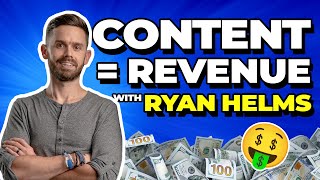
A YouTube interview (Dec 20, 2022) where Daniel Rosen interviews Ryan Helms — CEO of Legacy Podcasting and cofounder of Melville — about using content marketing (especially podcasts and repurposed video) to generate leads and revenue. Ryan defines content marketing, describes content funnels, gives tactical startup advice (cheap mic: ATR2100X; GarageBand/Audacity; use Zoom/Squadcast), illustrates use cases (local podcasts to build affiliate relationships; client grew to ~$4M revenue from organic YouTube), shares metrics to watch (average view duration, views), repurposing strategies, and previews Melville (AI-assisted summarization and clips).
Chapters
Hey, credit heroes. Today we have a very special guest. Ryan Helms is here. He's the co founder of the podcast copywriter app Melville, and he's also the CEO of Legacy Podcasting. Ryan is a content marketing expert and I'm going to ask him how you can create content that generates leads and drives revenue for your business. So you better stick around. My name is Daniel Rosen, and welcome to Credit Repair Business Secrets. Our most successful credit heroes, the ones who make millions of dollars. The one thing they all have in common is that they create a ton of content and that's how they build trust and get leads. And as you can see, I create a lot of content too. Hopefully I'm everywhere you look. And Ryan's company, Legacy Podcasting, helps us to produce our podcast, this podcast, and to get a ton of content out there as well. So basically, Ryan is in the business of creating content, but he's also a content creator, so he understands exactly how and why content marketing can drive revenue for your business no matter what size you're at. So I know you're going to love this interview. So welcome to the podcast, Ryan.
Thanks, Ben. Stoked to be here. Look forward to bringing as much value as possible today.
I'm excited you're here too, and I want to know everything, but let's start with what is content marketing?
Yeah, good question, because that's kind of the baseline foundation for all of this. So content marketing is simply put, like there, there's probably a hundred definitions for it, but I view it as creating content, whether it be audio, video, social media, with the goal of getting awareness for something. Could be a product, service, business, whatever it is. So create content, get awareness for. For something. To me, that's content marketing.
So how did you become an expert at content marketing? Did you go to school for this? A business school, film school, or you all self taught?
No, no, did not go to school for this. Kind of stumbled into it. I was working in the corporate world doing supply chain and logistics for a big chemical company. Started a podcast of my own in 2016 and from there the rest is history. I became a practitioner of creating content, eventually started the agency, and have been doing that for four years now.
What service does your company, Legacy Podcasting provide?
At its core, it's we do content marketing for businesses. One thing that we do a little bit different is we do something we call content funnels. It's a more strategic way to think about how you produce content. So it's not just, let's pump out as much content on the Internet as we can. And it's kind of like that's the shotgun approach. That's the like, let's just shoot as much as we can and hope that we hit something. Right. But we want to be more thoughtful and methodic about how we create content. We want to create content that we know people are searching for. And we also want to put content where we know our audience is. Maybe the audience is on LinkedIn, somebody else's, maybe it's Instagram. You have to evaluate where your market is and that's part of what we do. From a strategic standpoint. Outside of just producing content, what are.
Some of the companies you work with and what are the kinds of content that you help them to create?
People like you. We've got, you know, companies that are doing a billion plus in revenue annually that are massive companies. We've got small coaching clients that are like, once one person shops, you know, everything in between, you know, we work because if you do content marketing, right, it is agnostic to your industry or your niche. The same fundamentals apply to that billion dollar annual revenue company as they do that solo coach or creator. Same fundamentals apply. They're just different scales and different levels to the game.
And what results have you driven for other companies? And we could certainly talk about what you've done for us because you do all these things for me.
Yeah, you're everywhere.
I mean, I'm everywhere. And that's all thanks to you.
Yeah. So there's. When you think of results, there's really two ways to think about it from content marketing. And I think this is really important for anyone getting interested in starting to create content for their business. You have to understand why you're doing it. Like, oftentimes people think I want a million Instagram followers or I want like a hundred thousand YouTube subscribers. But I always say, is that what you really want is that specific thing? Is, is that what's going to move the needle the most? So there's really two goals. You have relationships. That, that's one typical goal. And then you have the metrics, right? The vanity, the million downloads, the, the, the a hundred thousand million subscribers. And you have to really ask yourself, what is that, that goal that you want? So we have some clients, the goal is pure relationships. We're helping them start conversations with people that would be great for their business. And we can kind of talk about this a little bit more as we get into this conversation. Like, how might someone in the credit repair business leverage content? So there's the relationships piece and there's a pure growth piece. I think you guys, when you started with this, if we, well, the podcast was brand new on YouTube. I think you guys were at like 2500 subscribers or something like that. Now maybe two years later, we're at like 35,000 or something like that. So in a pretty niche environment. So these are all things that are really important for somebody just starting out. Because if you say I have 35,000 YouTube subscribers, somebody might say, well, Mr. Beast has like a hundred million, like big deal, right? But you have to understand that if you, it's like, that's fantastic. But if you're a business and you're doing this to grow your business, you don't need a million subscribers for it to be very successful and impactful in your business. I don't know. I guess I would ask you, Daniel, do you think going from 2,500 subscribers on YouTube to 35,000 has been beneficial to your business?
Absolutely. It's bringing us lots of customers. It's been amazing.
Yeah, absolutely. And we've got another client. When we started working with them back in May, they had 30,000 subscribers on their YouTube channel. They do, they have a coaching business and an info product, of course, business. And they do no paid marketing at all. All YouTube, all organic. So they do long form YouTube and then YouTube shorts which are like the highlights, the 60 second clips. They do about 4 million or they're on pace to do about 4 million in revenue. A three person operation, all from organic YouTube. Literally creating a video on a topic, someone clicking the link in the description and buying the product or service. So like you don't need a million people to have a really impactful, both from the help you give people and also impactful on your bank account. You don't need a big audience for that to happen.
Sure, sure, sure. And besides getting customers, it's helped us in so many other ways. This podcast has become the resource for anyone wanting to learn how to grow or scale their credit repair business or how to remove this or that from a credit report. It's so cool to see in our community someone asks a question and someone else will say, just go listen to Daniel's podcast. So it's really helped with that, with education, with trust. It's helped with everything. It's been amazing. But since our listener here today are people who are starting or running a credit repair business, why should they consider a podcast and content creation as their marketing strategy to help me Best answer.
That, are these, are these businesses, are these credit repair Businesses are they, are their customers geographically constrained? Meaning are they servicing like a local population?
That's how they generally start.
Cool. So if I was servicing a specific region, so there's, there's different things you could do. So if you say I want to create content, okay, what does that mean? I can start a podcast. I, I could start a YouTube channel, I could start doing TikTok, I could write a blog, I could start a newsletter. There's a lot of things that I could do. The right question is what should I be doing right? Knowing that that is my criteria and honestly what I believe is the best in that situation, knowing that my goal is to grow my credit repair business, that is what I want to happen. I don't necessarily care if I get a million downloads or, or have a million followers. If that happens, awesome, fantastic. But, but the metric is, is my business growing as a result of me creating more content? And if that's what I'm looking to do, I would start a podcast. I wouldn't worry about it being the biggest podcast in the world. I would worry about sitting down with people in my community that could create a network, that could create relationships that could lead to more business and more clients for me. Because they say your network is your net worth in a. Starting a local based podcast is absolutely fantastic for that. It can work for credit repair business. It can work for any type of business. A great example, I'll give you one for a client that we're working on right now just to kind of illustrate how this can happen for a some somewhat obscure business. So we've got this client that we're starting out with. They do commercial lighting. So for like universities and like downtowns of cities and stuff like that, they come in and put in like lighting and all like all throughout the city and throughout the university. So they can change the colors and it's connected to the Internet and stuff like that. So when we sat down with them, the, the show that we're crafting for them says the, the guy was somewhat interested in education. The guy mean the CEO, the who will be the host. But we can't just like create something about like residential or commercial lighting because who wants to listen to that? That sounds boring. So then we said, who is your customer? Well, their biggest customer from a contract standpoint is universities. So the show that we're crafting for them is around the future of higher education. And he's actually going to interview deans and directors of operations within universities and use the podcast as a tool to initiate A conversation. He's not trying to pitch them or sell them like during an interview, but it opens that door and it starts that conversation with those people that would have been really hard for him to get in front of otherwise. So that's one example of how you can craft a show to serve a purpose that both provides interesting content and also serves your business as well.
So if our viewer is starting or running a credit repair business, their customers are people who are trying to reach a big goal like buy a house or a car. They're getting clients from affiliates that are referring clients to them. So they may be mortgage real estate, they're realtors, they could be dentists, people who install solar, anybody with a high ticket item that needs good credit to qualify that customer. They're turning away people all day, every day. So what would someone in that situation, would it be an interview show, perhaps with those affiliates?
Yeah, absolutely. Spot on. That's what I would do. I would create an interview based podcast where, where I target, let's say it's mortgage brokers, for example. Like I'd probably pick like a vertical within that just so we could create a theme for our show. So it seemed like there's an actual show here, right? Cause we're producing content and you don't want it to be like all over the place. We're talking to solar people and then mortgage people. And let's create some like a cohesive message here. We'll talk to mortgage brokers. You're going to create a show, it could be around, let's say you live in Atlanta, Georgia, right. Maybe you create a podcast that talks about the local real estate market in Atlanta, Georgia, right. So you've got some theme there. And you can talk to agents, you can talk to mortgage brokers, whoever else might make sense, I'm definitely not a real estate expert, but whoever else might make sense under that umbrella and those relationships become people that gonna refer more to you down the road. And this is a way for you, again, just to initiate that conversation, to have that, that relationship with them in a way that is going to get you to sit down with them for 30, 45 minutes, 60 minutes, and have just a good conversation. You're going to get to know them. Do you like that person? Do you even want to do business with that person? Right. They're going to get a feel for you and it could be the start of a great partnership. Let's get realistic. Let's say you spend 45 minutes finding the person and doing the outreach and getting them to say yes, and you spend another 45 minutes doing to do the show. So let's say. And then you hire someone on the side to produce it. So let's say you spend three hours a week producing this show. Right. You do one a week for a year. That's 52 conversations that you could have throughout that year that you probably would not have had otherwise, or you would not have had that in depth and got to build that trust as fast as you would have otherwise. So I think that could be a great use case for it.
Absolutely. And you'd be further building the relationship with those affiliates who are going to be sending you clients now. A lot of our most successful credit heroes also they're posting on TikTok and all those other Facebook and everything else, credit tips. And they do that at least three times a day. How would that fit in with this scenario?
I think you could continue to do that one. Here's the big advice that I give around this. You want to pick your platform, especially if you don't have a team. So, Daniel, you've got us, right? So you can be everywhere, right? But if you don't have a company like us or you don't have an internal team to do this for you, you don't want to overload yourself. Because what happens, and I've seen it a hundred times, if you try to do everything, you'll do everything for about two or three months and then you end up doing nothing because you get overloaded and burned out. Right? So I'm a huge fan of starting small and scaling up over. If you wanted to do this podcast, fantastic. Do that. And if you wanted to continue to post these tips, you can do that. But pick your platform. Is it Instagram? Is it TikTok? Is it Twitter? Is it LinkedIn? Is it your personal Facebook? And just commit to doing it on one platform.
Makes a lot of sense. What's your general advice for someone who doesn't have a team but wants to get started on a podcast? They're on a budget. What could you tell them?
Get on Amazon first, type in USB mic. I would get either. There's one called. I'll get really specific here. There's one called the ATR2100X. You can get it for like maybe 70 bucks or something like that. It'll have a USB C connection, which is like the newer style, and a USB A, which is the older style. So it'll work on any computer. Sounds really good. It'll come with a little stand. It'll Plug right into your computer. You don't need any other fancy equipment. Literally just plug it right in and you can literally start a podcast with just that. If you have a MacBook, laptop or computer, there's a program already on your laptop called GarageBand. So you probably don't know it's there, but search for it, it's probably there. If you have a Windows computer, you can download a program called Audacity A U D A C I T Y. You can record your interviews directly into that. You could use a tool like we're using right now called Squadcast, where you can record high quality audio and video and it gives you that vis feel that's paid. If you want to go the free route, use Zoom, right? You can get, give them a Zoom link, dial right in. But all you would need is that mic. The only thing you have to pay for is the mic. Or then just get a Zoom account. If you don't want to pay for anything else, but you want to see the person visually for like a video interview, send them the Zoom link. You're ready to rock and roll. Like, that's, that's base. That's no excuses. Like, if you got 80 bucks, you can start a podcast.
And what are some of the biggest mistakes people make when they're starting a podcast?
They judge themselves too quickly. That's one, right? I always tell people, do not even start critiquing yourself. Let's say you're doing an interview podcast till you've at least done 10. Like the first 10 are complete warm ups. Like, that's how I view it. So with that said, do not go for like a list type people. So if you're doing interviews and let's say you're going after your local market, we'll just use the Atlantic Atlanta market. Because I used that an example earlier. You wouldn't want to go after like the mayor of Atlanta or some celebrity in Atlanta for your first one of your first 10 interviews because you're, you're going to be rocky. It's going to be a bumpy road. You're not going to be polished. Like, go after, I always say, like some C list type people for, for your first batch, right? To get warmed up to, to get familiar with the medium. And then you can start to elevate and escalate the type of person that you're trying to bring on. So that's a big one. I always, and I tell this to clients as well when they approach us. If you're not willing to commit to Doing this for a year, like don't even start. Because content marketing, whereas it has a ton of great benefits, it is a long term play. Especially if anyone has ever ran like a Facebook ad or an Instagram ad or anything like that. You can run the ad and immediately get a result, right? It's like a one to one, right? It's that dopamine, it's like ran the ad, someone clicked it, they bought the thing, or at least you saw that they clicked. With content marketing, it's a longer term play. So you have to understand that going in that there's a long tail to this. But typically what happens is you have a long period, let's just say it's 10 months, right. You have a long period where you have slow, slow, slow, slow, slow. And then you have that little hockey stick that happens where some inflection point along the way and you never know when that's going to happen. Like we, we've got one video that we saw actually just this week on a client that, the video, it was a YouTube video and it had been published for 290 days. So like three quarters of a year. And it was slow, slow, slow, slow. And then something happened. Wasn't anything anyone did, it was just the algorithm. Like somebody stumbled across it and sent some good vibes to the algorithm and it just took off. It got about 20,000 views in the first 290 days and then it got an additional 80,000 views and in like two weeks. So you never know when that inflection point is going to come for you or a particular piece of content that you put out. You just have to keep posting content, make it about the habit and not the result. Like, your goal should be to post each week, not to get a million downloads. Because if you post each week, you'll get to your result eventually.
Anyway, I committed at the beginning and it was hard, but I committed. I'm going to record one every and release it every single Tuesday. And we've done that now for over two years.
Yep. And.
But it takes some days. You don't feel like it.
Yep.
But you just keep pushing through it. How can your agency help with this process?
Well, depending on the goal and who it is, I mean, we could help from A to Z. Like so everything from the editing of the content to the, the graphics to YouTube to scheduling to social media, to email. Like we have the capabilities to do everything from, from A to Z. Not everyone needs to start with an agency like us though. I say it like I would love for everyone that's listening to become a client. But I realize that a lot of people, especially if you're just starting out in your business, you have other expenses and you have other things that oftentimes are better uses of your money than working with a content marketing agency. Just to be fully transparent, you can still do most of the heavy lifting, but somebody can help pull a couple of the levers that are like posting and things like that. Be wise with how you use your. But if your business is doing well and you're ready to scale up and level up, maybe the production, the distribution, the look and the fill, that type of stuff, you know, we're here, we can help.
I read that There are over 500 hours of new video content being uploaded on YouTube every single minute. So how do people stand out when there's so much content out there?
Yeah, good question. I would be, I'd be surprised if it's actually not even more than that now that we have YouTube shorts that are being published as well. I think to stand out, there's really only one way to do it. If you're just starting out, you have to start with, with something that makes you unique. That could be your delivery, it could be your personality, it could be the type of episodes that you're recording. There has to be something unique about what you're doing. If you're just starting out, it also helps if you are in a niche for you guys, right? You're creating. You're not just teaching people how to start a business, you're teaching people how to start a credit repair business. So that is the niche within starting a business that your content is around. So figure out like what is that vertical that you're going to be helping people in? And there's verticals within starting a credit repair business. There's verticals within helping people with their credit. So like what, what are you helping them with their credit around? Figure out what you want to start content on. On YouTube, it's query based searches. So people are typing in a question, they're trying to solve a problem that doesn't necessarily happen within Apple Podcasts and Spotify. Like no one really goes in Spotify and types in a question. It just normally doesn't work like that. But on YouTube it happens every day, all the time, multiple times a second. What are all the questions that my clients ask me every day? Just go create videos. Literally the title of the video is that question. Because I can guarantee you somebody's typing in that same question into YouTube as well. So I would Just start there. Literally say, what is every question that clients or prospective clients are asking me? And just create like a five minute video on each of those. And that's how you can stand out, by solving very niche problems. And then as you start to get subscribers, you can start to broaden that message a little bit more as you get some critical mass. But just be unique and start small. Don't try to start playing in the big lead, so to speak, because you've got a lot of other people that have a lot more experience, you probably have better production, they understand content more, they have a lot more dollars to throw at it. So don't try to, don't try to compete there. Carve out your own vertical.
Good advice. And once they start creating content, how should people measure success and which areas to improve?
If you're on YouTube, I would look at a couple things. One is average view duration. So avd, average view duration, how, how much of a video or is someone watching of yours, you want them to watch as much as possible of that video. So always be looking for that percentage number to go up. If they watch from the beginning to the end, it would be 100%. If they watch half of it, that's going to be 50%. So just try to increase that number all the time. That's a fantastic metric to watch on YouTube. Also just views and subscribers. I wouldn't get too caught up on subscribers, but views are a great metric and this goes back to just not only YouTube, but podcast and social as well. Just because someone doesn't subscribe to your YouTube channel, like your social post, follow you on Instagram, subscribe to your podcast, does not mean they're not consuming it and it does not mean it is not serving the intended goal. I promise you, if people are consuming the content, it is serving its purpose. Even if they don't subscribe. You've generated awareness, you've started to build trust. And now the next time that person sees you, they're going to recognize you as someone that brought them value in the past and they're going to consume more of your content. If you're creating content, as long as you're getting some views, like it is working, if you're getting no views, step back, evaluate. You're doing something wrong. But if you're getting some views, don't worry if you're not getting subscribers yet, just know that people are watching it and it's doing its thing. Like I said, there's just a long tail to this. It takes time.
That's really good advice. What are some low cost ways to promote a podcast?
So if you're already posting your credit tips, align your credit tips with the content that you're putting out, right? So intertwine them, talk about the credit tips on your podcast, if that makes sense. Right? And then turn your podcast, the tips you talk about on your podcast, into the social post. Because one of the things we do in our business is we repurpose a lot of content. Meaning we take a long form piece of content, a podcast episode, break it up into a lot of little pieces to make it, you know, much more bang for your buck, so to, so to speak. Right? Especially from a time management standpoint of somebody running their own credit repair business. They don't have a big team. How. How can I do one thing and get like 10 results out of it? How can I record one piece of content and break that up into and get like 10 pieces of social content out of it? Maybe I record an episode on like 10 best credit tips for going into the holiday season. Okay? Each one of those can become a social post. And then not only did you get a podcast episode, if you record a video, you got a YouTube episode out of it. You might have got some content for Instagram reels. You got some just normal graphic posts that you can do in your stories and things like that, all from that one episode that you recorded on these 10 holiday credit tips. So think about that. How do you get the most bang for your buck? How do you get more from your time? I think is a good mindset to have when you're creating content.
Hey, can you tell me about a time when a business you work with completely nailed their content and saw amazing results and what made it so successful?
I could probably think of a lot of examples. This one is a guy who had never created content before in his life. And that's why I want to use this example, because a lot of people, especially probably your audience, they might have posted on social before, but they haven't done it in a, like, I have a goal to help this grow my business type of posting on the Internet content. This guy, he had been a freelancer on upwork. If your audience doesn't know what upwork is, it's like a marketplace where you can say, hey, I do this and then people hire you to do the thing, right? So he was a freelancer. He'd been on upwork for a while, had been pretty successful with that, but had never created content before. We helped him come up with a strategy on the Types of topics that he needed be talking on. We didn't do an audio podcast for him. We just did YouTube. He started with us last November. Now he has 55,000 subscribers on his channel. And he had never created one piece of content a day in his life before. He got a thousand subscribers in the first month, 10,000 in the first three months, and 55,000 in the first year. And what made that happen was looking at what other people we're posting about. I know you talk about this, Daniel, as well, right? From modeling what other people are doing. You don't need to reinvent the wheel. You can say, like, what are other people doing? And let me do that better. Right? Okay. They've proved the concept. Okay. Let me. Let me implement and improve on that. So we did the same thing first. We figured out what are the topics that we need to talk about. So if somebody wants to create content on credit repair, okay, just start typing in keywords on YouTube and see what other people are doing. Someone just gave you a script. All you have to do is make the script better. You can literally download the YouTube video, turn it into a transcript and tweak it and make it your own. Add to it, make it better, and you've got a great foundation. So what we did was we just looked at what other people were consuming, created a structure for those videos so they kind of linked together. You watch this video and the next one we had recorded was the next logical one in the sequence. So you kind of get down this little rabbit hole and it worked. Fantastic.
That's so cool. And what else is cool is you're not only the CEO of legacy podcasting, but you're also a tech founder. What is the Melville app and what does it do?
Yeah, so if, if you're on the Internet, you've probably in the past six months, there's always something happening in AI. Right now there's all these new tools and gadgets and things coming out that are leveraging AI, and it's happening at a very rapid pace. So we're creating a tool that leverages AI to essentially help with content marketing activities. So you upload a YouTube video, you upload a podcast episode into this tool called Melville, and essentially is going to summarize that content for you. So if you have a 45 minute podcast episode, it summarizes it down into like a human readable summary, Right? Think about it, like a 4, 8, 10 summary, something like that. It gives you episode titles, it pulls out quotes from the content, all this types of stuff to help make it easier for you to work as a individual business owner or content creator. So if you don't want to hire that, that VA or that assistant to write those show notes or that YouTube description for you, this tool can help do that.
That is so cool. I love that. And then what's next for you? What's the next goal?
Yeah, I'm not the best at setting goals, to be honest. That's a, it's a really good question. I, I, I want to continue to grow the agency. That's what, you know, quote unquote puts food on the table right now. The software just costs money. It's not making a bunch of money yet. I'm sure you can relate to that earlier in, you know, credit repair cloud days.
Sure.
But yeah, continue to grow the agency and really just I want to continue to keep my ear to the ground, so to speak, in the content world because things are constantly changing. I think in the next three years the, the content creation world is going to get flipped on its head by AI. I think AI is going to change the game for, for everything. There's already podcasts out there that are 100 AI. Like the people. Yeah, yeah, there's a, if anyone's interested, you can probably find it on YouTube. Type in Joe Rogan interviews. Steve, Steve Jobs. AI. It's 100% AI. The conversation never happened. And it's so not only did the script get written by AI, but the voices are AI generated as well. And it is, it is insane. And I think you're going to start seeing more of this. Hollywood is going to get disrupted. They said in less than 10 years we're going to have a full length feature film in the movie theater that was conceptualized by AI 100% rendered by AI that has no real person in it, but looks like real people. So I think that's going to be a crazy next 10 years.
Yeah, it does sound crazy. Okay, I want to switch gears right now. I'm going to ask you some rapid questions. Answer with the first thing that pops into your head. Okay?
Yep.
What's your business? Superpower operations. What's your business? Kryptonite. The area you had to work the hardest to improve?
Sales.
What does business ownership mean to you?
Freedom.
What drives and motivates you?
The scoreboard. Getting better every day.
Awesome. What's your definition of success?
Time, location and financial freedom.
Awesome. And last, if you could go back in time and tell yourself one piece of advice, what would it be?
Start.
Hmm. That's good. Well, thank you so much for your time today, Ryan. This was a lot of fun.
Yeah man, love it. I've enjoyed getting to know you over the last few years and but excited to come on here and hopefully your audience got some value from the topics we covered today.
Oh, I hope so. I know it. And for everyone out there, thanks for watching and listening and be sure to check out Ryan's YouTube channel at Ryan Helms and his Podcast Content Funnels on Apple Podcasts to learn more about content creation and how it can drive revenue for your business. And if you're finding value in the things that I share on this podcast, click below to subscribe and follow. Also, give me a five star review and share the show and help me to change more lives. And if you'd like to read the show notes, they're posted on my blog. And if you have a question or a comment, drop it down below because I read each and every one of them. I would love to hear from you and I'll respond as soon as I can. Until then, take care Credit Hero and I'll see you on the next episode and keep changing lives.









