Vance Dotson Reveals How to Make Debt Collectors Pay YOU!
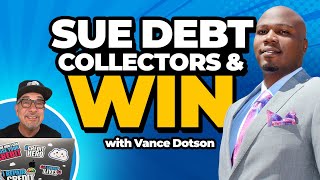
Interview (YouTube/podcast) with Vance Dotson about his non-attorney approach to fighting debt collectors and monetizing FDCPA/Regulation F violations. Covers practical tactics (recording calls, disputing account dates, responding to dunning letters), common collector violations, relevant cases (Ramirez, Hinkle v. Midland), and guidance for credit repair businesses and consumers (Bad Credit to Cash program).
Chapters
Hey, credit heroes. Van Stodson is back on the show. He has the most unique business I've ever heard of in credit repair. He is not an attorney, yet he makes millions of dollars suing debt collectors, banks, and credit bureaus. And he's back today to tell us more crazy stories, to explain a big update to the fdcpa, and to share important legal cases and new tactics for your credit repair business. So you better stick around. My name is Daniel Rosen, and welcome to Credit Repair Business Secrets. Vance Dodson is back on the show today, and like I said earlier, he taught himself how to win in court simply by reading endless case files and learning the FCRA from front to back. So if you have a credit repair business, you need to hear this. If you are being hounded by debt collectors, you need to hear this. So grab a pen and paper because you're going to want to take notes. But first, disclaimer here. Vance has a lot of knowledge to share, but I must remind you that Vance and I, we are not attorneys. So do not take any of this as legal advice. Federal law is different than state law, and every state is different. For legal advice, consult with an attorney. There, I said it. Okay, credit heroes, buckle up. This is going to be a good one. Please welcome back to the podcast, Vance Dotson.
Thank you. Thank you.
Hey, Vance.
Thank you. Thank you for having me.
I'm so glad you're here.
Thank you.
I want to know everything, but let's start with. For people who didn't hear your story last time, can you quickly recap how this all started for you? Like, like the one minute version. I know you started. You were, you had a car accident, right?
So I had an accident, going to work, went into the hospital, didn't pay the hospital bill. And, you know, I started getting the collection letters and the calls. And the same thing that I do today is record the call and just tell the debt collector I'm at work and it's not a good time to talk. I monetize that case and we've been rocking and rolling ever since.
Yeah. And from that, through that experience, you discovered that debt collectors do a lot of bad things and they break a lot of laws. And those mean money, right?
Yes, they, they break the law every day. And the numbers is just quite scary. If you analyze the data, you analyze the numbers, an FTC statistic that says over 79% of credit reports have errors. And so how, no matter how you slice it, you still have millions of people. So that's a well known fact. And so say for an example, I seen another statistic that said four out of five Americans will or has owed Midland Credit Management. And so them numbers is pretty scary because last year Midland has sued north of 750,000Americans. And so they, they're very aggressive with their lawsuit tactics and scare tactics and the reporting of the bad information.
So now, Vance, you've made a business out of suing debt collectors without being a lawyer. So how do you do this and what's, what makes it so special?
Well, how do I do it is basically mainly through a cell phone. So everybody got a cell phone and calling a debt collector. So you can review the information for free on your credit report through like credit karma or annualcreditreport.com People simply don't understand the basics of the FDCPA. Or people may think they understand what a dispute really is. And once you understand the foundation and the fundamentals of the fdcpa, the consumer has a lot of power. And so what I mean by that is the FDCPA is written up for the least sophisticated consumer. In the fdcpa, it does not define the word dispute. So the courts have went to the ordinary meaning of the word dispute. The Webster defines a dispute as call it into question or to cash doubt. So that's the standard for disputing. And if you can understand that, that's really low. So it was a big deal a couple years ago when the consumer reporting agencies collectively came together and said that, hey, we're going to delete these medical bills. So if you do the research on medical bills, that's the number two reason why people file for bankruptcy. And so say for an example, if it's on your credit report, all you got to do is call up the debt collector. So keep in mind you already got a screenshot from Credit Karma or you obtained your credit report somehow some way. And so you're just going to call the debt collector and record a call from your, from your phone and just, you know, just introduce yourself. It's real simple. Step two would be just to say your dispute, say your issue. And so let me point out to people that the date open, that's on medical bills, they reference that from the day that they got the medical bill, not the day you went to the hospital. So a consumer can just easily say, hey, I'm not familiar with this date, right? I don't recall going to the hospital on this day. That right there is a dispute. So you just say, hey, I don't recall going to the hospital on this day. And then so they're going to, like I just said, the representative may say, you know, hey, yeah, that's when we get the information and we report the information, something of that nature. And so all the consumer got to do next is just, you know, gradually get off the phone. Oh, okay. All right. Thank you. Have a nice day. Take it easy. Just real simple. And so usually 30 to 45 days after, that's when the violation occurs. When, when they update it.
Got it, got it. Yeah. By the way, a few people commented on the last interview when you were here last. They, they wrote similar things. They, they wrote, now that we know these strategies, the debt collectors are just going to change their tactics. And have you noticed debt collectors changing tactics?
No. You got to understand that the, the debt collection industry is pretty huge. A lot of the people who viewed the interview, no one done the information. No one did the steps or the method that I, you know, just previously said, wow, and you dropped a whole.
Lot of gold on that show.
Yeah. You can't say that information isn't out there. You can't say we don't have the information anymore. And so I'm willing to, you know, give out the information for free. But, you know, the person got to execute on their end, secure the evidence and then bring it back and let somebody finish the race. Sure, sure.
Now, as I recall, so you started with your own credit, then you start having people coming to you who were being hounded by debt collectors, and then you started buying their debt Right. From them. And then you were fighting the debt collectors.
This all over the United States. And so I'm not a lawyer, so the structure of it is the same as the debt collector. The structure, sure. Say, for an example, we're going to use Citibank. One doesn't exist without the other. The consumer doesn't exist without the company. So one doesn't exist without the other. Citibank can have all the credit that they want to lend in the world. Well, the consumer comes and say, hey, I want a credit card. So that exists. It doesn't become in existence until that exists. The consumer has just as much rights or equity in the credit application or whatever as the creditor. And so if the information goes bad, Citibank sells off their rights to a debt collector. Why can't the consumer sell their rights over to whoever?
Right. Yeah, I never thought of it that way.
Yeah. So that's, that's how I did it for years. Right. Because to be honest with you, consumers don't have, say, for example, thousands of dollars to pay for, for someone to, for the service. And so that was the birth of what I call the assignment of the claim. And so it's the same thing. So when a debt collector goes to state court, still to this day, they're going to say, we got an assignment of the claim. So what's the difference? The courts, the debt collection industry teamed up on me and I appealed the case, went up to the 10th Circuit. The 10th Circuit said, Nope, you can't do it. And I'm like, how can they do it? You know, this is the same exact thing. So it's totally unfair. So the thing about it now, that's why, you know, I'm teaching people themselves to obtain that violation. And then also still I have a program to show the credit repair businesses still how to monetize off of that same violation to help the consumers.
That's awesome. Yeah. A lot of people, they think that you can't fight a debt collector without a lawyer. So can you share a story about someone who, who thought this but managed to win anyways?
Well, after the interview, it was really several hundred thousand people that reached out of things of that nature about phone, email, social media. Everything kind of like blew up. There's a guy in North Carolina that, he called me and I said, hey, man. I told him what to do when a debt collector calls him. And so just like on the last interview, I just said, hey, record the call and just say, hey, you know, I'm at work and it's not a good time to talk. So he recorded two of them phone calls, and then he went to federal court. And I'm telling you, he has been knocking it out. And I'm like, oh, my God. So I look at the information that I give people as extra tools in a toolbox. I discussed disputing the last one. And then that same method about telling a debt collector that you're, you know, you're at work and you can't talk. So typically what that's going to do is that's going to put the debt collector on notice that it's an inconvenience for you, but this is the thing, they ignore it. So that's the violation on that second phone call and to keep the days and the time that they call and you can monetize off of that once you obtain the violation.
That's awesome. What should people tell themselves if they're scared to stand up to a debt collector because they've never done anything like that before?
For sure. Don't run. So let's say for an example, an example of standing up for yourself. So you know that the debt collector is texting you. And so all you have to do is say, I refuse to pay. Just simply text that back. And so once the debt collector calls you or they write you or they text you back or they email you, that's the violation. So you don't. It's real simple to fight back to the debt collector if you know the basics of, you know, what's going on within the fdcpa. And then also Regulation F. Yeah, that's right.
What, what are the key things businesses and consumers need to know about this new regulation in the fdcpa?
Okay, so Regulation F doesn't compete or replaces the fdcpa. It enhances it and it, it totally strengthens the fdcpa. So it's given more clarity to the fdcpa. A lot of things is in the law, when lawyers get involved in muddying up the water, things become unclear. Right. So what does this really mean? And so a lot of consumers just typically don't have the money and the means to hire a great lawyer to really fight on their side.
Sure.
So what the, what the Regulation F did was cleared up a lot of that and said, hey, this is what this means. And so say for an example, if a debt collector is writing the consumer, they, they send what's called that dunning letter, that initial letter that they send to consumers. And then consumers can literally write back, you know, addressing the letter that they just received in the mail from the debt collector, and just tell them, you know, hey, I'm disputing this debt. And the only convenient way to contact me is via email. And so, you know, you sign your name and leave your address and your email. And then if the debt collector sends you a letter in the mail, that's a violation of the fdcpa. So the consumer can control the medium on how they want to be contacted. And so Regulation F made that super clear. And so I found out that that section of the FDCPA also with Regulation F is violated heavily by Midland, is violated by Portfolio and LVMV often.
Wow. What's the most common violation you see? In fact, what are all the top violations you see from debt collectors?
So the top violations are not marketing information disputed. That by far is probably the biggest one. And then texting the consumer. So the consumer has told the debt collector, I refuse to pay. And so they're going to keep on emailing the consumer. And so that's what we're picking Up a lot email, too. The debt collector emails the consumer about the debt. The consumer text back and say, hey, you know, I refuse to pay. And next thing you know, they're still calling the consumer, they're still emailing the consumer, and they're still sending the consumer letters. That's the common violations that I'm seeing. And so a lot of the times, people, they're trying these tactics, you know, of disputing the regular, normal way. You know, they go for a house, and then the mortgage broker say, hey, we can give you this house, but you have to take this dispute remarks off of your credit report. So, and in that instance, what a consumer needs to do is contact TransUnion, Equifax, and Experian in writing. And they need to contact the debt collector in writing and send the communications and send the letters certified and just tell them that you're disputing the completeness and accuracy of the information and to remove the dispute remarks. And so, like I say, you're sending that letter to TransUnion, Equifax, and Experian and also the debt collector. And so once you get the reinvestigation results back from TransUnion, Equifax, Experian, and they don't remove their remark, that's a violation of dfdcpa.
Wow, you make it sound so simple. What's the biggest mistake people make when they receive a debt collection letter? And how can they avoid making this mistake?
The biggest mistake is not responding. And so as I, you know, as I said, so it's multiple ways to respond to them letters. I've met a guy from your interview, and he's in Utah, and he just simply addressed the letter to the debt collector and he says, I refuse to pay. He just only sends out that letter to debt collectors, and he's making a great living just. Just by saying that, just by responding to that.
What. How does that turn into a great living?
So statutorily, we're talking about a thousand dollars. Thousand dollars, okay? And so that violation is invasion of your privacy. And it's, it's called invasion of your privacy and intrusion on seclusion. If someone tells you, hey, Daniel, stop, knock it off, right? They're telling you to stop. And so if you look into the fdcpa, a lot of people is going to say, hey, cease and desist, right? But you don't have to do that. You just simply say, I refuse to pay.
Okay? So then they keep hounding you. You've asked them to stop calling, but they keep calling or Writing in ways that you said not to or texting you, and they continue to violate this. What are the next steps you take, especially when you have proof?
Yeah, so that's the biggest thing, Right. So you gather the evidence, and if someone reaches out to me, we can go to the next step. So I will hook up with an attorney that's in their area. I'm building currently a network of attorneys, and we. We go to federal court and we sue the debt collector for the violation.
That's amazing.
Yeah.
And pretty much every day you're helping.
Someone with this thing that I picked up was, I have to do something every single day, right? So if the day ends in why I have to do it, and so I just make it a habit or a daily routine to sue a debt collector. Sometimes I sue one, sometimes I do six, sometimes I do 10. It all just depends.
Amazing now. And you've beaten some major companies in court. And those legal battles, they must have some intense moments. Could you share a story of a big win that. That had a intense moments and a big impact?
It's not a typical pleasurable thing to be getting sued. And so a lot of the debt collectors, attorneys, they take it personal. I think it's borderline, like, offensive. So if I was to really pursue it in the law, I think I will prevail. Because there's the defense attorneys, they say, oh, he's practicing law. And I'm like, dude, that's defamation of character. And I'm really not practicing law, you know, and so I'll beat all of the companies that I've been against. We beat. So, like, you know, some of the top companies that collect debt is Midland and then Portfolio and then lvnv. And I find out that three companies just totally violates all the time. I. Someone called me from the. From the interview last, and I thought it was very unique. And so he's like, you know, hey, about setting up debt collectors. And it threw me back a little bit. And I said. I said, okay, hey, what's your name? He told me his name, right? And I was just like, my phone is kind of messed up. What's your number? He gave me his number, and I said, so. So what's your problem? Right? So what's your deal? And so he goes into his spill, and I said, hey, okay, cool. Did I set you up? And he says, no, you didn't. I said, that's the same exact thing that you go through with a debt collector. So. And I'm like, it's a conversation. You know, so people need to understand how these companies is manipulating consumers. And I don't stand for it at all.
It's just amazing how deep you've gone into all of this. What a difference from. You were working on oil rigs, right?
I was working on drilling rigs.
Drilling rigs. Wow. Unbelievable. From that to this. And you're so good at this. Hey, during your last visit, you highlighted some specific cases that credit repair businesses should study. You mentioned Hinkle vs. Midland and the Ramirez case. Are there any more important cases that credit heroes should look into?
Yeah. So to dive back into that Ramirez case is so important that people articulate themselves very well when they're going into, well, federal court specifically. So that's a federal thing. And so Ramirez says if you don't have actual damages, you just can't bring the lawsuit in federal court. Well, a lot of people that, you know, do these lawsuits on them by themselves, they still typically want to offer $1,000. And I'm like, no thanks to Ramirez. Because if you really understand the whole Ramirez thing, It was because TransUnion said they fought back and said, hey, this person isn't damaged, right? This person isn't damaged.
They can't do that.
And so it's a huge thing. Super huge thing. So the way that you tell the debt collector say, hey, look, and Ramirez, they said, you cannot bring just a statutory claim in federal court anymore and you have to pay my actual damages. So you have that thousand dollar mark. Right. And so if there is no actual damages within, I can't bring this claim. So now we have to assess the damages. So you got to pay a little bit more. And so at that case, if you analyze it and read it, you can use it against them. So it backfired on them, on just the people who really know how to use that case.
Wow. Incredible. Hey, last time you were here, you mentioned you wanted to build a team to start to scale your business. Have you made any progress on that? Have you assembled a team?
No, no, I have not.
Still a one man band.
One man band. Trying to figure it out. Pretty complicated.
Well, I'd say you're doing awesome. Are there any major plans or goals you're working towards?
Yeah, so I'm investing a lot into, I guess, information. And so going to the events. The first event or the event I met you at first, that was my first time going to any event.
Oh, wow.
So yeah, Mr. Mr. Brunson put on a great show, you know, so I drunk the juice.
Oh, good. By the way, if you're listening and wonder what event we're talking about. Funnel Hacking Live. It's where we've learned all of our marketing to grow crc. So have you been applying the things that you learn there?
Oh yeah. Oh yeah. So daily I go on a three mile walk every day and I'm always listening to dot com or expert secrets. I can't, I can't go a day without it. It's the bomb.
Well, that's awesome. What new tips or advice can you share for credit repair businesses and consumers?
As the consumer reporting agencies, they increase their technology to recognize disputes. So you have to come up with direct tactics that I use to further help the consumer. Because they're blocking the disputes, right? They're saying, hey, this come from a credit repair company under the fdcpa. That's not a thing under the fdcpa. So once the consumer and or the credit repair company gains the knowledge on how to dispute directly and effectively, and then you can get more results and hopefully more money from the debt collector to follow the law.
Well, if you get a stall letter from a credit bureau and it says, hey, we think a third party sent this letter on your behalf, it's a suspicious letter, is that a violation?
Yes, I would argue yes. And so we just filed a case like that a few months ago and then it settled. It was with experience. So the consumer got $4,000 from that letter. But this is the thing, Daniel. The credit repair company or the consumer has to know how to articulate that violation. And so if you don't know how to articulate it, it's pretty much gone. Because this is the thing. The consumer or the credit repair company, they're not requesting your credit card information like, hey, TransUnion or Experian or Equifax, we, we are requesting these credit card numbers. They're not doing that. So this is the thing, and this is where the people need to articulate themselves. They have prior knowledge of the information being disputed. That's the key thing. It's like, dude, we're not requesting information, we're disputing the information. And so this is the thing that's a violation of section EB and then also section I. So they have to reinvestigate the information once the information is disputed. And so if you know how to articulate that, you'll be victorious in winning that issue with the courts.
What do you think is the biggest opportunity right now for credit repair businesses to help consumers?
Well, as I pointed out once before, 79 of the credit reports have errors. So people just have to take the time to identify the errors. So we know that it's errors on the reports. And Daniel, that's not no joking matter. And seriously, that hurts me to the heart because if I was to ask you this question, Daniel, would. Would American airlines, Southwest Alliance, JetBlue, Delta, would they be satisfied if 1% of the planes went down when it went in the sky? 1%? Just 1%?
I would hope not.
Okay, so why is 79% of these reports acceptable when we know that? So it really, it really bugs me. It really, really, truly bugs me because this is the thing. Like, one error can cost somebody on the home purchasing. It can cost you literally hundreds of thousands of dollars. Sure, literally. And so that's why I hire expert witnesses and some of these cases, when these debt collectors be jerking around, and I say, okay, cool, look, we're at the point to where essentially you're playing around with this thousand dollar thing. And so let me hire an expert witness to really put some value to this. And then nine times out of 10, it comes back like, yeah, this is worth $10,000. So that's very important. So say for an example, I'm in the Midwest, in Oklahoma, where things just kind of spread it out so you have to get a car. And a lot of the times you have these car purchasing decisions. So say, for example, if the error is on that report, it's going to drop your score and it's going to cost you more to pay an interest. And so that's not acceptable to me. And so I'm going to really hone in on that issue and bring home to a lot of consumers so they can really understand. But they have to just tune in and understand what the errors is in a credit report.
Absolutely. I think it's so great that you're giving people all this information. Yeah, it's amazing. I want to switch gears for a minute and I want to ask you some rapid questions. So just answer with the first thing that pops into your head. Okay?
All right.
Okay. What's your favorite thing about being an entrepreneur?
Connecting with people.
What's the best advice you've ever received?
Give value first.
How do you recharge when you need more energy?
Disconnect from all social media platforms and turn your phone off.
And what are you most excited about right now?
My family.
Awesome. And last question. Where can our audience connect with you and learn more about your services?
So I'm on Facebook, I'm on Instagram, all the social media sites.
And tell us about bad credit to cash.
So bad credit to cash is a concept that I came up with so consumers and credit repair companies can monetize off the violations from debt collectors. And so I want to extend that to the consumers and people that listen to your platform. So I want to give them like a two week trial and see if they can come in, understand the information and also join a community and turn bad credit to cash once a week. What I do is I do a presentation and then give the people the offer to join the community.
Awesome. Awesome. Vance, this was so much fun. Again, thank you again for being here and I wish you continued success.
Thank you, thank you.
And for everyone out there watching and listening, if you're finding value in the things that we share on this podcast, click below to subscribe and follow. Also, give us a five star review or share the show and help us to change more lives. If you'd like to read the show notes, they're posted on my blog. If you have a question or a comment, drop it down below because I read each and every one of them and I'll respond as soon as I can. And if you want a beginner's guide to winning more credit repair disputes, check out my episode credit report 101. So take care credit Hero and keep changing lives.









