We Made a Million In Credit Repair With Dylan & Theano Shively
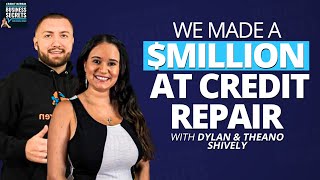
Dylan and Theano Shively built a credit repair business to $1M in 18 months by targeting real estate agents and loan officers with free seminars and affiliate commissions. They grew from manual processes to 3,120 clients, 434 affiliates, and 38 employees across 23 states.
Questions this video answers
July 2020.
Approximately 18 months.
About 3,120 clients.
About 434 affiliates.
38 team members.
Chapters
Hey, credit heroes. Today we're going to talk with brand new credit repair millionaires, Dylan and Theano Shively. They are a husband and wife team. They built their credit repair business up to $1 million in a very short time and in a very, very unique way. And today, they're going to share with us their secrets on exactly how they did this. So you better stick around.
My name is Daniel Rosen, and welcome to Credit Repair Business.
Okay, before I dive in, if you are new to my podcast, be sure to click to subscribe and turn on notifications so you don't miss any of the secrets that I share each week on the Credit Repair Business Secrets podcast. And if you want me to hold you by the hand as you launch your very own credit repair business, go to creditherochallenge.com okay, let's get into this. Dylan is a army veteran, a father, and a husband. He's been featured on Yahoo. Finance and published in Forbes magazine. Theano is his wife, mother of his children, and an amazing business partner. And working together to create and run their business, they have made it into the Millionaires club in just 18 months. And today they're going to share their secrets on exactly how. How they did this. So please welcome the podcast millionaires club members, Dylan and Theano Shively. Welcome.
Hey.
We are so excited to be here.
Thanks for having us again.
Thank you so much.
And congratulations on the Millionaires Club.
Thank you.
I know you just got it. So you haven't gotten your award yet, have you?
No, not yet. We're so excited, though.
Yes. We're waiting. We're checking the mail every day.
It's gonna look like this.
Yes.
But with your names.
Yes. Can't wait.
When you get it, be sure to take a picture.
Oh, we will.
We will for sure.
So how does it feel?
Unrealistic, right? It doesn't feel real. It feels. I don't. We did it, right?
Yeah, we did it. Yeah. It's like what we did was we just kept our nose to the ground and just kept going and going and going. And then we lifted our head one day and was like, wait a minute. Why are they asking us if we want to be a part of this? And then we shared everything and we were like, oh, my God. We actually really did it. Yeah.
I know how hard you've been working, because to do this in 18 months is amazing. Now we're going to get into all that, but I want to know first, where do you guys live?
San Antonio, Texas.
Oh, wow. We were just there well, we were near. We were in Austin just last week.
You were an hour away from us.
Oh, darn.
Well, we're going to be back in March, so maybe we can come and visit you.
Yes.
Hey, we can set that ride up.
Okay. Awesome. Is that where you both grew up?
No, actually, we're from Pennsylvania. So long story short, we came from Pennsylvania. We moved here July of 2020. And so we've been here. How long has it been? Just actually, almost about the 18 months. Almost 18 months. And we definitely have a story for it, but I'll let you.
Yeah. So I was born and raised in Reading, Pennsylvania, which is about 45 minutes on the outskirts of Philly. So I know that's like a big point in Pennsylvania. So I was born and raised there, and I met Dylan through work, pretty much. I don't know if you want to tell that story.
We have a whole story.
Yeah.
Yeah, I want to hear the story. What was the work?
Okay, go ahead.
So previous to this, I used to be a district manager and also a managing partner at a Verizon store. So I was running all their Pennsylvania locations. And when I had the opportunity to buy one of the stores, which was two hours away from where I used to live, I was deciding, do I sell one of my cars? I'm a huge car person. Do I sell one of my cars to get the money to put my investment into the store, or do I go to the bank and get a loan? And so my business mind was saying, let me go to the bank that's in the same parking lot as the store that I have, and maybe we can exchange business in the future if I use them. And she wind up being my loan officer with the loan.
Yeah.
Wow, that's so cool.
I was working in banking. I've been in banking for 12 years. So when he came in, he's like, hey, I'm gonna buy a store. I need a bank loan. Got it, did the deal, closed it, and then we ended up dating, and here we are.
Yeah.
That's amazing. So you're at the bank and Dylan, and you're very entrepreneurial.
Yes.
It sounds like you've had lots of businesses. What was your life like growing up?
So, for me, I'm very lucky. I have both my parents. My parents have been married forever. Um, so I have, like, a lot of. A lot of the benefits where I know some people have some struggles of, you know, single parents are rough. You know, growing up. I didn't have it rough growing up, but it also wasn't Easy. One of the things, financially speaking, like, we didn't talk about those things, but you can tell as you get older when some bills are missed and some things happen, and when what you get for Christmas is like a pair of socks for a couple of the years, but you're so still grateful for spending the time together, you know? So we had our ups and downs just like anybody. And so as I was getting older, I kind of got myself in a little bit of trouble. But the good thing about that is I was forced to enlist into the military when I was 17, and that's how I joined the Army. And they were the ones who definitely straightened me out and got me away from hanging around with the bad crew and doing the bad things. And so I do. I do owe a lot there. I have a. I have a real strong passion for that because I feel like without going through it, I would not be where I am today, and I would not be the person I am today.
Army. Wow. Thank you for your service.
Thank you.
How long were you in the Army?
Six years.
Six years?
Yeah.
And then what led from army to credit repair? What was that path?
So, in the shortest way I could say it, it went from when I got out. I got my first job in car sales, actually. And I was in car sales for about five and a half years. Then I transitioned out of car sales because the money was great. But I can't tell you how many birthdays, funerals, weddings get togethers that I've missed over the years. Like, it got to a point where my, like, my aunts and uncles and cousins, like, barely remember who I am just because I was never around. So then I transitioned into the store. So I started as a store manager for Verizon, and. And of course, worked my way up. And it was only 10 minutes from the house, so where my car sales job was over an hour away, so I was, like, closer to home, not driving as much. And, you know, it was huge benefits for me because the time spending with family then became more important than acquiring the money. That's where I started to learn that, yes, the money is necessary, but it's not important. It should not be the number one thing thing. So, yeah, so I switched over from car sales to Verizon. And throughout that time, I can't tell you how many people wanted to buy a car and couldn't get approved. Right? And sometimes the stories you hear of, here's this guy who was in a previous divorce, and now he has a new wife and maybe taking on some kids. And he's trying to buy a bigger vehicle that suits everybody. And we have to tell them, hey, you have to come up with a couple extra thousand dollars and the payment's going to be $800 a month. Even though you just got done telling me you can afford 300 because now you're feeding kids. And I never had a solution for it. And believe it or not, the same thing happened in Verizon where, you know, you finance phones now, they're a thousand to two thousand dollars. And so people would need phones for whatever reason, and when they would get denied and they had to go on a prepaid plan, it didn't make them feel good. And I feel like in like a sales position, whether it's cars or phones, your job is to make people feel good and excited about what they're getting. It's not supposed to be a dragged out thing. So I was doing the complete opposite. And then for myself, working on commission, I barely, like, I was having some good months, and then I barely started making it because I thought being young, commission's forever. Everybody's always buying everything and I'm always going to make money. And I found out that was not the case. So I wind up shopping for credit repair myself. And I'm sure you've heard plenty of these stories where I then, long story short, became my own customer after wasting a couple thousand dollars on another company that didn't do the things they were supposed to do.
Wow. And Theano, you probably also saw the same situations as a loan officer.
Oh, yes. I mean, every day I would have to tell people, I'm sorry, you know, your home equity loans declined, your credit card is declined, and same thing. You'd hear the stories and it would be sad. We had no solution. Yes, we had a secured credit card, but for the loan, we didn't have a solution at that time at the bank. So saying no to somebody and having no solution, it's like your hands are tied. It's sad. It's a hard job to say no to somebody. And when he presented it to me to say, hey, babe, like, listen, I think I'm going to start repairing credit full time now. And I'm like, oh, okay. You know, I mean, it's not a secret. Credit repair sometime has a stigma against it.
Sure.
All right, sure. Like, go ahead, I support you. And he started doing it and months and months of studying different programs, seeing what's best. I mean, for a while there, he was just writing things on a notebook. I'm like, what's This, I saw names. And he's like, oh, those are my credit repair clients. I'm like, oh, okay. And then he presented like one day out of nowhere. He's like, I am booked. I need help. And I'm like, okay, so what do you want me to do? And he's like, well, I need you to quit your job. And I was scared. I mean, I was a branch manager, I had a secure job, I had benefits, I 401k insurance, I had it all. And when you're a business owner, you don't get all that, you know, right away. So I was scared at first, but I trusted him. I googled things, we searched, and I was like, you know what? I guess I'm going to take a leap of faith and I'm going to quit my job after 12 years. And that's what I did. And we joined forces, and here we are today.
That is so cool. And so initially you were just doing everything manually. Spreadsheets, word processors.
Yeah, like literally everything. So wearing all the hats. And I'm not joking when I would say I had this lazy Boy next to our house in Pennsylvania. It was, it was my favorite chair ever. And I wouldn't leave it, you know, I would not leave it for 14, 15 hours a day doing consultation calls, posting on Facebook, doing all types of stuff to get it ramped up and going. And then as I got some results for people, I'm very driven, like social media wise. I love Facebook, I love Instagram, stuff like that. So I started posting results and then I made people believers that I can actually do it. And then it just blew up out of nowhere. And, and I begged her. What she's not telling you is I begged her for over four months to, to quit her job. And then I'd make her like, promise me, like, I'm going to go put in my two weeks at this time. And then I'd ask her about it. But I totally get it. She was, you know, a little nervous about it because you think about, well, what's the stability? Like, I don't know anything about this industry and when you Google things about it, it doesn't have the best reputation. So do I want to associate myself with that? And you know, coming from the whole corporate bank world, but what was absolutely amazing and that I'm super grateful for is she trusted me anyway to know that I was going to do the right thing and make it happen. Because we do have kids and, you know, it's not like we just have to feed our mouths. We Have a roof over our head. We have bills to pay. We have children who, you know, rely on us, you know, for food and clothes and shelter and heat and AC and everything. So I always say a ton, all the time, especially in our presentations and seminars, that honestly, without her, we wouldn't be where we are now.
That's amazing. You literally went all in.
Absolutely, yeah.
How long? That. That's frightening. That must be very frightening to leave that job and that security and the 401k and go all in.
And I'm like a super numbers person. So, like, when I quit the first month, I'm like, okay, we have to close this deals for me to pay my bills. Like, I would put it in writing. This is what I had to do. And I think by the second or third month, we were so busy I stopped counting. And we looked back and myself, I generated. It was like 21,000, I believe. Oh, 25. I don't even know the number. See, I generated myself 25,000 in the month. And I was so proud of myself. And I come from a background of my family's Greek, so a lot of Greeks own businesses, right? So my dad used to always own his business. He had a sandwich shop. So I grew up in that. Owning your own business, working hard, putting all in. And when I went to the corporate world, it was a huge change for me because I was used to just working at my dad's shop all the time. And then when I quit, it was a huge change for me because there wasn't rules. Like I was on my own boss, so I don't have to worry about dressing up or following. You know, you can say this, but you can't say that. And in banking, there's so much compliance involved. And it was a big change, but I'm happy I did it. And obviously he gave me all the support and my accountability partner, which is key in any business, I think.
Wow. So literally just a few months, you were able to make a living at this, and then a few months later, you were making far more than your salary at the bank.
Yes. It's funny you said that, because the four months that he was begging me, I kind of gave him a. I guess like a.
It was a deal break.
I don't know.
She was calling me out. That's what it was. She was saying in order for me to feel comfortable to know that this is going to work, you need to make X this month. And I said, okay. And so I hit it that month. And then she was like, okay, that's Great. I know I said this, but actually I meant for this month. Now you got to do this. And it kept going up and up, but go ahead.
Yeah. So then like, month four hits. And he goes, he says, all due respect, I just made your salary in like four months. And I was like, oh, okay, I think I'm gonna do this. And it was scary. It was scary to put my two weeks in. It was very scary because again, I was with the bank for 12 years. I was passionate about the bank. And the only thing that I would say we didn't have a solution for was credit repair and saying no again, to clients. It was tough. So we got into that, and I think we just soared from there. Having a solution for people, I think is key to any business, you know, and that's kind of where we grew. Plus the pandemic. I mean, that it helped us big time, helped us business wise. It was sad, the stories that we were hearing, but we were happy that we were able to help them.
And in those first months of launching the business and getting clients and starting to make revenue, was it expensive? Did it cost a lot to launch this business?
No, not at all. Honestly. I mean, the first, I guess, quote, unquote mistake that I made was, you know, you started getting all these ads for like, we'll get you more leads and we'll get you more leads, right? So, you know, I drank the Kool Aid and I didn't know any better. So I did that and I realized, okay, they're getting the quantity that they said, but the quality is not there. And then we started to realize, like, hey, this is the type of business that requires you to be relationship based. You genuinely have to care about the person on the other end of the phone and realize the sacrifice that they're making to open up the most sensitive thing about themselves to you and that they trust you with all of that and then compensate you in hopes that you're going to be the person to fix it. That cannot happen on a cold lead source. So that's where we switched everything, our entire model of how we were going to help families and realizing that it was so much more than just the basic transaction.
Yeah, it's got to be mission driven, which clearly you are. Am I right?
Oh, yeah, absolutely. We can tell you some stories.
Tell me some stories.
Well, I mean, I think in the beginning he was helping friends, family, and one of his friends said, hey, can you repair my credit? I want to buy a house. So I think, you know, that triggered something for us and said, well, let's really sit back and think about it. We don't want to buy leads. We just don't want to do it. That's not us. We are relationship based in the banking industry. I had to talk belly to belly, like, we always were in front of a client or customer. And so, Dylan, in the car industry at Verizon, it was a belly belly transaction. Right. So in today's world, we lose that, but we're like, how can we do that? How can we implement that in the business that we're in today? And that was really zoning in on affiliates or partners, which were real estate agents and loan officers. And we really started connecting with them so much that that's how we grew our affiliate based up to. I think it's like 434, something like that or so.
434 affiliates?
Yeah.
And we. We enroll about an additional one to two, if not every day. Almost every other day. It started to explode big time.
That's amazing. You guys are like superheroes. That's so impressive.
Sometimes we feel like it.
Yeah. You are y and credit heroes, for sure.
Exactly.
How many clients do you have today?
Just over 3100. It's like 3100 and something, actually. While you go ahead and do that, I'll look it up and tell you exactly.
Yeah. So we really started focusing more on the home buyers at one point. I was a single mom before I met Dylan. In my previous marriage, I had two kids and I bought my house by myself. It was. It was hard. And we started really looking at people who are paying rent and just wasting their money on rent. And we're like, okay, how can we help these people? Because their dream is to be a homeowner. So we started focusing on building our realtors, and we start focusing on the loan officers and the clients that we would talk to. It was just crazy, the situation that they were in. Like, it almost seemed like a movie. Single. I mean, I. I really take into consideration single moms. I mean, so much that one of our clients actually ended up. We gave them our apartment to stay in. So I was pregnant. Long story short, we were in a very nice luxury apartment, but a couple buildings down from us, it actually burned. There was a fire. The whole building burned down. I was scared, and I was like, I don't want to live here anymore. I. We just moved to San Antonio. I think we're only here for like, five months. And my great husband that he is, he's like, all right, I'll get You out of here. But our lease isn't up for, like, another six months. What are we going to do? And I'm like, I don't know. Figure it out. So I was like, you know what? I just had a conversation with a client who's living in an Airbnb. Her credit was so bad, she was living in an Airbnb with her two kids. And I talked to him about it. I said, what do you think if we let her stay in our apartment? And he's like, okay, do you trust her? I'm like, I don't know her. She's a client. But, like, she seems like a good person, and I want to help her. And we did. So we, her and her two kids moved in our apartment. We paid for, like, 75% of the rent. She only paid a third.
And the utilities.
Yeah, we paid utilities, and she stayed in our apartment. And then, you know, we ended up doing well for her, and she got a new car. She got what she needed to get. And we are passionate about our clients. Like, I don't know, sometimes he says, I'm too nice.
But, I mean, I totally get it, though. Like, once, once I met her and her family, like, it just. It made a lot of sense. And, you know, to the average person, to the average, you know, business owner or person running a business is not going to say, hey, you need a place to stay, go ahead and stay in my place, and we're going to pay for all of this stuff for you. Just because, like, she. She wasn't somebody that we knew. It wasn't like, hey, at least we've known her for some time. She was legit. Just a client. But to us, in that same breath, just a client. That phrase means so much more. And then just before I forget, I pulled it up on here just so you can see. There you go.
3,000, 3,120 clients. Wow, that's crazy and amazing. The story about your apartment and helping people in the way that you do that explains why you've got so many clients. Word gets around. When you do right by people.
That's 100% correct. It's if you do right by people, you know, word gets around. We don't look at this sale in front of us. We're not a transactional credit repair company. We're not like, okay, one done, another one done. It's like, hey, how can we take care of this person? Because guarantee that person's going to know another person who needs credit repair, and that person's going to know Someone else. We didn't have to pay for funnels, we didn't have to pay for leads. It all comes organically because we take care of that first person.
Yeah, this is all $0 spent. No ads, no funnels, no TV, no radio, no carrier pigeon, nothing. We don't pay for anything.
Marketing wise, it's really just organic word of mouth and affiliates.
Yeah, yeah. Credit education. So I don't know if you can see his sweatshirt. Credit education. So we're big on that. Dylan spends about, I don't know, 60 hours a week educating real estate agents and loan officers. He was just doing a presentation today. So that is how we technically, I guess, your lead generation, because he goes out, he presents to client or real estate agents. He presents the loan officers, the brokers. We built relationships with them. They let us use their rooms or conference rooms and we pack the house and every pretty much day we're doing a presentation.
I saw one of your videos. It looks like you put on an event, you do a seminar, you feed them what goes into one of what makes a successful event and where are you doing the event and who for.
So any event that we do, because I have multiple different types of classes and seminars that I'll do. So for example, I can do a credit 101 for real estate agents and then I'll also do a second class for agents that is how to build your real estate career through credit repair. Right. So it's understanding that our job is twofold. The first one is making sure that we're getting clients in homes. And then the second part, or the byproduct of doing that, means that's going to be more commissions for the agents that they would have never got if they didn't refer them over to us. So when we're hosting these classes, the purpose is to educate the agents to show them exactly how we do that. So of course, like before credit repair cloud, we didn't have this option, but now with it, I cannot tell you how often, I mean, well, you know, with how many affiliates we have, how often we use the portal. Right. So not just the client portal, but we call it like the partner portal. But I know it's the affiliate portal, we just put our own name on it, but we actually leverage that majorly. And it has been one of the most successful things that when I'm demoing that in a seminar or a class full of real estate agents, they love the idea that they have pretty much a free CRM that they can look at all of their credit Repair clients in one place without filtering anything. And then they can see how many signed up, how many did not sign up. And then they ask us, why didn't they sign up? And we'll give them all the details so they can know what's going on. So to make that class successful, all we have to do is make sure they know what they're showing up for. And of course, you feed them a little bit. Everybody likes free food, you know, but they don't come just for that. They come with the desire to be educated because nobody in our industry, in our area, is doing it at that level. Right. So we even went so far into it that, like, to be a real estate agent, you have to have, you know, you're licensed, and you have to have ce. You have to do continued education in order to maintain that license. Well, we. We got approved through trec, the Texas Real Estate Commission, to give actual CE credits to the agents to show up to our class. So we're actually contributing to them, maintaining and keeping their license and getting their hours while educating them and showing them how the business should be run morally and ethically and how to debunk those myths on what their thoughts are when they hear the term credit repair.
Wow, that is one of the most brilliant things I've ever heard. That you got accredited for that. That is really, really cool.
Thank you.
And then what's the impact this is having on their business?
Huge. One of the scenarios we give is this. If the average price of a home, and we know inflation and crazy prices and paying over asking, but let's say the average home is $300,000, and in that at a 3% commission. And of course, if you're an agent or anything that's watching this, I understand you have splits and things like that, but just for the math purpose, if you have a $300,000 home at a 3% commission, which most charge 3 to 6%, 3% is $9,000. Well, if you sent us five clients who couldn't qualify that month, and four to seven months later they become qualified, that's $45,000 as a commission to the agent right there. And that's assuming they're all at just the $300,000 price point, so it could.
Easily more than double their income.
Absolutely, absolutely.
And it has. It has. We have a lot of real estate agents and loan officers who will, you know, send us hundreds of clients. And they tell us all the time, thank you so much for the services that you provide, because not only does it make myself stand out from other agents that maybe aren't using credit repair. But now I can, you know, go on a trip with my family. Now I can get this new car, Now I can pay all my bills or whatever the case may be because we have tripled their income in a month because of it.
So you're changing your partner's lives and the clients lives. You're just changing lives all around. This is amazing.
It's a win win.
And it's changed your lives.
Oh yeah, absolutely.
The byproduct of doing the right thing and serving other people is eventually you wind up getting what you want. As long as you can put them first.
Exactly. I always say if you have a passion for helping people, that's the. If you focus on money, sure you'll make money, but it'll only grow so far. But that passion for helping people, you focus on that and the money comes. And you guys are living proof of it.
Yes, exactly.
It's amazing. Okay, I want to talk about marketing because I know you're not doing paid marketing.
Yeah.
But you're doing organic marketing on social media, on like Instagram and TikTok.
I have been doing more TikTok. Yes. I'm not the most popular in the world. I have I think 8,200 followers, something like that. So it's not huge, but it's getting there.
Yeah, I would say. Yeah. I'm pretty much the head of the marketing. I do the Instagram, the Facebook, our personal Facebook and I do credit education. So I don't want to hold back anything from clients because at the end of the day, can they fix their own credit? Absolutely. But they pay us because it's a peace of mind. And just like we don't want to change our own oil in the car, we pay someone to do it. Right, sure, same thing. And I don't like to just say, oh well, you can't do it or you know, it's a secret. Credit pair is a secret. It's not a secret. You can do it yourself. Absolutely. So I give a lot of credit education. I post a lot of tips and tricks and what they can do to fix their own credit. I post results. And that is how I kind of brand ourselves and say, hey, like we're not going to hold anything back. We're not here to scam anyone or whatever the case may be. Like, I'm giving you all the tools and the resources. But what do they do? They don't do it themselves. They don't have time. Life is busy. So they call Us, anyways. And, you know, we get just regular leads and that way through our website, we always put it on there and kind of build from there.
Yeah. It's crazy to think that other business owners that we've spoken to in the industry, because we actually teach other credit repair owners, like, how to get their business where it needs to go in that. It's so funny how often I hear, well, I don't want to tell them everything because then what do they need me for when it's the actual opposite? If you come off as the educator and you're genuine and you don't make a post, and every single post says, oh, hey, and go ahead and sign up for this and pay for this. If you actually just put the education out there and help people, what will happen is they then trust you because you're not trying to sell them. And. And at their convenience, when they're comfortable, they will reach out to you if they need more clarification on a post that you made at one point.
Absolutely. And it makes it all less mysterious. And yeah, I think that's so brilliant. I mean, sure, anyone can cut their own hair, anyone can do their own taxes, anyone can be their own plumber, but who has the time for that? And it's time for credit repair. So you're doing these videos on Instagram, on TikTok. Are you doing them on Facebook? Where all are you doing them? How long are they? How often do you post them?
So Facebook is at least once a day. And it's like, believe it or not, the primary source. Because what we like to mix in there also is, hey, we're human, right? This isn't a let me leverage my personal to gain more business. It's, hey, I'm Dylan. This is Theano. We have a family. I love cars. She loves hanging with the kids and having fun. Here's the places we go. And by the way, we are the subject matter experts when it comes to anything you need for credit. So Facebook winds up being the primary source. Just because I think, I mean, I don't want to speak for you, but I think that we can both agree that's where we get the most personal with people. You know, it gives us the opportunity to get the most personal. So in that way, people already trust us because they can investigate us and see who we are and what we're about.
Yeah, yeah, definitely Facebook. And when I do make credit education posts or I make any post, I look up what's in the news today. You know, for instance, collection agencies now can go on your social media and message you and try to collect debt, you know, so I'm always posting news about the industry, news about the mortgage industry, which attracts real estate agents, attracts, you know, the loan officers. And that's how we build our affiliates as well.
Wow, that is so smart. Okay, so once leads come to you, they see these ads or whatever, they come to you. If they don't sign up right away, what's your lead follow up strategy?
So to follow up with the leads, we actually have employees. So like actual legitimate, put on payroll employees. So of course we were wearing all of the hats in the beginning and I think that was part of the craziness of we didn't realize how many months went by just because we would live on the phone with it plugged in, call after call, text after text, trying to make it happen. But now we have 38 team members, so it's split in between our onboarding staff, our customer care staff, and then also our dispute team. So we have three. Well, technically we have four because affiliate relations. Oh, this is a tool. Hey, I guess we're already on here. I'll tell you guys, believe it or not, out of all of those, our affiliate relations team is amazing and probably one of the most secret weapons ever. Because as we grow in clients, you know, you need customer service reps to take care of them and make sure we're nurturing and not just signing them up and that's it. Well, the same thing goes for our affiliates and that is what a lot of people don't think of. That's why we have over 400 of them. Because we have staff that their job is once they sign up as a partner, they're checking in with them. How are things going? Do you still have access to the portal? Do you need a demo of anything? Do you want to know the status of any of your clients? And knowing the client side, it's the same thing. They talk to an onboarding member. Once they decide they want to sign up and all their questions were answered, they move on to a customer care rep and that customer care reps available to them five days a week by text, call or email, whatever that client's preference is. And they're there to be that customer advocate and make sure that they never feel like, I wonder when my updates are coming, why am I not seeing any progress? Is there anything I could be doing? So that's how it all works. Rather than paying ourselves a ton of the money, we took more than 90% of it, put it back into our business, hired staff members so we wouldn't drop the ball or let people slip through the cracks or whatever term is being used now. So in that way, we can instill confidence in clients and partners to say, hey, we're never going to get too big to the point where our customer service slacks or our ability to get results or sending letters out, we will never drop the ball. And because we will staff properly to make sure that you never lose confidence in our ability to serve and get you guys where you need to be.
That's brilliant. That's really brilliant. So many people who are working like, like a one man band, they're so afraid to hire. I think that's so brilliant that you made that shift because that's a hard shift to make. Yes, it's very, very hard.
What's.
And you have how many team members?
38.
38. That is huge. What are your tips for people listening who are just getting started with their business? What are your tips for growing a team?
Do you want me to go or do you want to?
Yeah, you can go ahead.
Okay. So I just want to make sure I don't overstep. So when it comes to building a team, first you have to know exactly what you want from them. Right. You have to know, what parts of my business am I missing? So, for example, you have to be able to poke holes in your own business and accept your criticism and realize this is a development standpoint. So I know maybe I have a couple onboarding reps and, you know, we're solid on that end. Well, what happens in the customer journey when they're already signed up? Well, hey, our customer service kind of slacks. Do I want to mentally tell myself, oh, I got this and I'll pick up and do better, or do I want to delegate somebody that's going to be able to fill that slot? Another thing with the team building is strategically placing them in the places that they're going to shine best. So, for example, we had somebody we brought on to our onboarding team. He was one of our first employees, and I would push and push and push. Because he was onboarding, he had to convert clients into signing up. Well, I found out that that was not his strong suit and I had to stop trying to push him into that. And as soon as I gave him the customer care role, not only did he crush it there, but he wind up we actually, customer service is one of our biggest departments. He manages the entire customer care team and they are phenomenal at his lead. So it's understanding Poke the holes in the business, find out where you could do better and find people to fill those holes. Because you as the business owner need to focus on your money making activities. So that's why, for example, for me, I'm the lead gen. I go out and I speak and do classes and seminars because that's what I'm good at. The things that I'm not good at, I'm not going to spend time trying to get better. I'll find somebody who can do it better than me and I'll gladly pay them because the time that I free up from not trying to learn it allows me to do my job even better, which is making sure I can keep our onboarding staff as busy as possible.
Got it. Okay, so now that you've delegated just about everything for both of you, what are your days like?
So for me, after we just had the baby, he's six months old, so I'm kind of more on the back end. I schedule his, I pack his schedule, this poor guy, sometimes back to back with classes and seminars. So I get with agents, I reach out to ellos and say, hey, do you want to hold a class? Do you want to do one for clients or for yourself? Because Los lenders, you know, real estate loan officers are always trying to pull in real estate agents. They want to work, they want to build their book of business too. So if we hold classes, not only does it benefit us because we're gaining agents, so does the loan officer. Same thing with the real estate agent. They want to hold classes because they want to bring maybe teams like for people to recruit to their team. So we're always doing stuff and I book that. I'm always booking things for him and then I do the marketing. So every day, certain times I'll post and then I kind of oversee the sales or onboarding team. I oversee kind of the customer service. I'm kind of like the overhead of that stuff. So that's pretty much my day to day.
Awesome. How about you, Dylan?
So for me, my schedule is completely packed with somebody who runs my schedule to assign me to all of the places I'm going for the day. And typically we're booked for just about five to seven days out where my sole purpose and job is to go out and educate any listening ears that are in the room. So whether it's a first time homebuyer seminar, if It's a credit 101 for agents or for loan officers, or like how to build your business, how to increase your pipeline, whatever it is any of the classes that we teach. I'm the main instructor and provider. And so I do a lot of the traveling, a lot of the speaking and the engagements. But then also at the same time, I focus on a lot of the poking the holes and then finding the solution to say, how can we improve and be better? You know, for example, we automate a couple things, but we don't rely just on automations because with every layer of automations, you lose the human touch. And then people feel less committed to you because they can tell the difference of an automation versus a person. So I'm always just looking at where are our flaws, how can we improve them? And then, oh, I got another seminar to go to. Let me go hop in the car and drive here and prepare for the that. Sure.
Wow, that sounds like a lot like our process. We look at the five parts of our business and what's. And we rate them and whatever is the lowest we focus on that in the next quarter. Yeah, it's very, very smart to keep poking holes at your business. That's why you guys have become monsters at this. It's amazing. What are you working on now for the future? What are your plans?
So right now what we want to do is we want to expand in more states. And we know in order to do that, we have to make sure that we don't focus on just scaling. It's actually becoming stable before you go to the next level. So in the past about 30 to 45 days, we've been really focusing on making sure that all of our systems are flawless. We're not overloading anything or there's no limits on anything. Making sure that our staff is trained and ready to go, auditing their conversations and making sure everything is going as planned and then really focusing on like the CE classes for the agents and the loan officers. Because what happens is when I do one of those classes and there's anywhere from 20 to 80 agents in the room, you're not talking about one or two people signing up. Right. You're talking about multiple agents that enroll and then wind up saying, hey, I have people. So it's making sure that we're not just going up and up and up. It's, you know, being stable. So then that way we launch big into 2022, because right now we're in 23 states and we want to grow to more. And you know, that was a huge deal for us as we started to expand out in different states and, you know, getting our licenses and expanding the bond and making sure. We're all compliant with all the states. So yeah, that's our main focus right now is we really want to take 2022 in 100x. What we did in 2021 by educating more people, empowering more people and making sure that our systems, our processes and our people are prepared to handle that workload.
Brilliant. Now, what's your advice? For anyone just starting out with a brand new credit repair business?
I would say this is like one of my favorite quotes, that doing 15 minutes of something is more productive than thinking about it for 15 hours. So going all in and hey, you may not get it perfect the first time. You don't have to be perfect in everything that you do and really humble yourself. So when I first started, I had my corporate hat on where I was like, super, like, I need to talk a certain way, I can't say certain things. And it got me nowhere. I had to humble myself and say, hey, human to human, what's going on with your credit? What's happening? So don't think that you need to have it all like picture perfect. Be a human. Talk to them like they are just another person and that you're going to help them. You don't have to have everything all squared away. Like, we didn't have 38 employees when we first started. It was just him and I, customer service. We didn't think about it. It was just, we're going to do it. So just go all in and as you go, continue to think of the future. You know, don't just get stuck at one spot. You know, think of the next goal and execute on it. Don't just talk about it.
That's really good advice.
I would say for me, this may get a little deep for a second, but I usually think that way. Always do the right thing. And if you want to stand out from anybody in your industry, because again, we're all in the same industry and there's so many people who do what we do, even local to where we live. But if you really want to stand out, just do what's right, not what's easy, right? Do the right thing. And if you can't tell the difference of, well, how do I know if I'm doing the right thing or not? Well, if that question comes up when you're thinking about implementing a process or doing something, that's your answer right there. If you have to question whether it's the right thing or the best option, that is the answer right there. And lastly, when you know your why, the how becomes easier Right. So the. The deeper the why, the why you got started, the why you chose this over anything else, the why you want to keep going, the you know why, to go big. You will figure it all out. The deeper you get with that why and the how just becomes so much easier. Don't get caught up so much in the how am I going to do it. Find your purpose, be intentional about it, be genuine about it. Do the right thing, Serve other people, put them before you. And the how just winds up coming very, very easy. And before you know it, you pick your nose up and you're like, oh, my God, I'm on the podcast and I'm a millionaire.
That is so cool. Well put. That's amazing. Hey, what's so that people know you're not perfect? Because no one's perfect.
Far from.
What's one of the big mistakes maybe you've made in the past in your business?
Oh, only one?
I mean, one was putting some. I mean, definitely, like hiring the wrong people. I can tell you in the beginning, we're just looking for butts to fill the seat, you know, and at that point we're like, wait, all right, we're losing that relationship. Because they're just. We don't. We hired somebody. I can tell you a story. We hired somebody. Their resume was like so long. They were the best of the best. They managed these million dollar companies and they were sales, blah, blah, blah. So we hired him. We thought, oh, my God, he's going to be amazing. Look at his resume. He lasted maybe two days. Because we actually can keep track of, you know, conversations. We audit that. Like, we really. Even though we're kind of outside of the everyday client base talking, we still focus on that. We don't hold our nose too high that we can't be in that conversation. We need to audit our conversations. We need to do that. So thankfully we did, because the person that we put in that seat did not work out. So that was a huge mistake in the beginning that we were just hiring just to hire. And we got to the point where now our interviews are like hours long because they have to be. We have to put people in the right seats. We have to get to know you as a person. I don't care how many sales you closed in the past. That's not our business. We're not here just to close deals. We're here to make an impact and we're here to change lives and improve their quality of life. So we need to make sure that your mindset, that you're thinking the same way. You're not just trying to close a deal to get paid or commission.
Wow. Same here. Same here. They have to be a fit for the culture.
Absolutely.
They have to believe in the mission.
Yep. And you have to put that before the desired results that they can tell you that they're going to give. Because when you align with the culture and everybody's on the same page, the results wind up coming. You don't put those first. I would say another one of the mistakes that we made is in our onboarding process. We had training, but it wasn't as good as it should have been. But again, you need to have mistakes happen in order to know how to course correct and compare what is good and what is bad. You got to experience bad to know what good is. So we would onboard some, you know, pretty good people. And there has been times where we have dropped the ball and being as consistent as we should have been. That's where I got introduced to Loom and that made my life so much easier because rather than sitting down, you know, like say for example, now if I'm sitting down and training somebody and then I forgot that I have a class to start, I don't want to cut short and cut the quality of our conversation to train them, you know, because I forgot and, you know, have to do this class now. So Loom is my best friend and it helps tremendously. And now we have built an entire onboarding process to where all of the documents like our non disclosures and our non competes and all of that, they get signed all in the beginning and they have their own hub. Each employee has their own hub where they have to watch the training videos and then they take their little quiz to make sure that they know what's going on before they can even start the position. So they have consistency, they have a path and they have an end goal. And now they have a clearer way on how to get there. Where we were definitely bumpy. There were some potholes and that is 100% on us. We should have, could have and would have done way better. But now we've been able to fix it. Cool.
For people who don't know, can you describe what Loom is?
Yes. So Loom is pretty much like a screen recording platform where. And you could do it from your phone too. I actually do this. Here's a tip for you guys. I use Loom when I have one of our partners that say, hey, Dylan, I just want to know what's going on with this client's profile. Or even when I would have a client that would say, I want to know why my scores aren't going up or anything like that, what I would do is I would open up their credit monitoring and then I would open up Loom and I would start recording so it shows the entire screen and then I walk through the entire report with them. So for example, I'm saying like, hey, here's this deletion and this deletion and this deletion, as you can see, it came off the credit report. One of the limiting factors for you to get into the 7 hundreds or to get a better score, to see a bigger jump. It looks like you don't have any open active accounts. And here are the links that you want to use and this is how you apply. And what I'm doing is I have all of that in Loom. And then if I do have links that they do need to sign up for, like a secured card or self lender, anything that they can build their positive payment history up, I'll attach the links in the email and then I'll attach the Loom video. So then they can see here is everything in detail. And then, oh, the links are here too. I don't even have to search for them. I can click it and I can sign up right now and. And I know exactly how to do it.
Brilliant. And the best part about Loom is it's free.
Yes.
Yeah. I don't know how they make money. It's amazing.
Once they let you do five videos and. But what you can do is you can delete some and then make new ones, but five is the limit. And then after that I forget what I pay monthly. It's not a lot. Also, that's another thing. Don't worry about if you have to invest in your business. These are all small things. Don't look at what the cost is because one, you can write it off as a business expense and two, it's a small investment for a significantly higher return because if you take the time to do that Loom video and take the time to give detailed explanations, what winds up happening is you blow the mind of that person because nobody's doing it. And then they tell their friends and their family about you because you're doing the right thing and you went above and beyond even when you weren't called to do so.
Awesome. Hey, what would you do differently if you started your business from scratch today?
Again, I think employees, Dylan and I spent the first, I don't know, seven, six or seven months doing Everything, ourselves. And I can tell you, being a mom and I was pregnant at the time, it was horrible. It was tough. There are days I cried and I wanted to quit, and I thank God I didn't quit, but it was tough. And the reason why is I was more worried, like, oh, my God, we have kids. We need to set up a future. We got to set up accounts. We need. We need the money. We need the money. And my mindset wasn't correct at that time. And when we figured out, like, okay, the money is great, but, like, we're losing it, we need to do something.
Like our sanity.
Yeah, we're losing our sanity. And I'm like, okay, what do we do? What do we do? We need to hire people. I wish we had done that sooner because I think we would have grown faster, we would have scaled faster. There's so much we could do faster. We were just too worried. I think a lot of business owners are like that, especially small business owners. They think of the right now sale and you don't know until you go through it. So don't be afraid to invest in your business. Don't be afraid if you don't get a paycheck that first month because you're putting the money back into your business. I think that's the only way to really scale and grow your business. You know, if you're cool, if all you're doing is paying yourself every month and not doing anything else with it, you'll get money. Like you said, you get so far. But to really scale, you can't focus on that. You have to focus on how. What am I going to do to really grow and it's okay to put money back into your business. That was my big thing, I think. How about you?
Brilliant. How about you, Dylan?
How do I follow that up? No, I mean, I agree 100%. But just another thing that I have is not just the employees, but also the systems, right? So technically speaking, I've been dibbling and dabbling, if that's the word, I think, in the credit repair space since early 2017. But again, like she said, it was the notepad and the paper and trying to write down and remember everything. And I mean, I was even taking payments on like Cash app and Venmo and stuff. Like, I didn't know. I didn't know any different. You know what I'm going to say in compliment of that I would have invested into a course sooner rather than later from somebody who was in the position that I wanted to be, because without I Would have never known about credit repair cloud if I didn't start searching things up. And then, honestly I saw the ad pop up and then I started watching the YouTube videos. And when I heard that you get 30 days for free, the like entrepreneur in me was, how many deals can I close to prepay for this in so many months in advance? And I wish I would have known about it sooner. So I was like dibbling and dabbling in 2017 and you know, a little money here and there, but it wasn't, you know, organized. It wasn't a business. May of 2020 is when we finally got CRC and that is when we just went big. And I mean, I have like people for personal development and in my circle of influence of people that are outside of the industry. But I think finding somebody who has been in the place that you want to be and becoming their shadow and allowing them to walk you through would have been a significant help for us. Where maybe this would have been. Oops, sorry. This would have been recorded in like 2018. Right? We, you know, those. I wish I would have known and it would have been sooner. It's one of those. The, the systems, the process and having the person to follow that is in the shoes that I want to wear.
Brilliant, brilliant, brilliant. Okay, we're running out of time. I got to say, this has been amazing getting to know you guys. This is, I think this is my favorite interview we've done. We've done 104 episodes. Yeah. This is so great. Okay, so we're going to switch gears right now. We're going to go into a rapid fire round of questions where you answer whatever pops into your head real fast. The first thing that you think of. Okay, okay, here we go now. Okay, what's the most important lesson you've learned as a business owner?
Either one of you do the right thing.
Is there a book that's changed your lives?
That one that I just read. I'm really bad with the chapters. I do a lot of podcasts. How about can it be a podcast?
Yes.
Okay, so I have to do the abbreviation because then I'd be cursing. So it's. So it's called MF CEO Project by Andy Frisella.
Awesome.
That podcast has absolutely changed our life. 100.
Cool. What does business ownership mean to you?
Being responsible for other people and again, doing the right thing and finding a solution for others.
What drives and motivates you?
Helping others.
Absolutely. So I have two parts. The results at the end of when we've done our job Correctly. And then also my wife and kids, because they depend on me and I want to set the right example. And honestly, I want to. Again, this gets deep for a second, but the whole reason that I've done this and I go through it even on the hard times is because when my kids grow up, I want them to be proud of who their dad was and what he did and who their mom is and what she did and what we did together. I want them to be able to talk about us in a sense of pride. Like, these are who my parents are, and this is what they did.
Leave a legacy for them.
Legacy. I love that. What's your definition of success?
Hmm. So, I mean, I'll go first.
It doesn't matter.
You can go first.
I know. It's like that, seeing other people win.
Love it. Love it. Okay, most important question. Actually, I have two more questions.
Sure.
First, most important for me, will you guys come and speak at the next credit repair expo?
Absolutely.
When is that going to be?
Yes.
I don't know. Because of COVID It's kind of scary. It was supposed to be in Dallas and then we had to cancel it for Covid. But we're looking at hopefully mid next year. We're. We're. We got some meetings coming up to decide.
Yeah.
Okay, good. Because that's how Dallas is. Not too far from you. Right.
It's a 45 minute flight from where we are.
And it's funny because we were actually scrolling through your YouTube channel and we saw the promo for the last one and we're like, we have to be there. We want to be there, so to speak. Absolutely.
Now you'll be on stage. And last question. You mentioned that you're helping other credit repair business owners. How can people listening, how can they learn more about that?
So all they have to do, and I'm probably going to regret saying this, but all they have to do is if they find us on Facebook, they can send us a message directly and we can go ahead and talk with them and find out what it is that they need help with. And because, believe it or not, it's not for everybody. I want to make sure that nobody ever wastes any of their money because they thought they were going to get one thing and they wind up getting another. So I would love to have the conversation with people to find out what it is that they need in order to grow their business and make sure that we're a good fit. I don't see any reason why we would not be, because if we have Somebody who is genuinely looking to help people and to serve people and to actually change lives, then they're going to be a good fit for us.
And actually, One of our 20, 22 goals is to actually have a course put together right now. I can tell you there's nights where Dylan will sit on loom. I don't. Or zoom Zoom. Yeah, till like midnight helping another credit repair company or. Or a phone call, whatever it may be. So I think so far you had 70 students.
73.
73 students that he has helped grow and scale their business. So we're like, hey, like, we did it. Why not help others get to success? And we really want to put something together for that. And especially as a husband and wife, because, like I said, doing this together has changed our lives, but also made our relationship stronger. You know, as a husband and wife, what I'm strong in, he may lack in. We just kind of work as a team, and we want to show other families or moms and dads that they can do it too. We're not. We're no one special. We're just normal people. And we want to share that with others that, hey, if you want to change your life, you want to change others, you want to be a part of your community, you can do it too. And we're here to help you.
Awesome. And you're teaching them how to do it the right way.
The right way.
Moral and ethical way.
Right. Morals and ethics typically are not in the dictionary next to credit repair. Right. In that mental dictionary we have. So we want to be able to show people, if you want to operate a moral and ethical business that is scalable, that actually helps people, we are a good fit. If you want to just collect a bunch of money, we are not a good fit. If you don't want to change lives other than your own, we are not a good fit. However, if you come from a servant heart and you do want to deliver and help other people, we are the perfect fit. And we will do all that we can to get you where you need to be. With the understanding of knowing we're not doing all the work. We're going to show you how to get the work done.
Awesome. Awesome. Well, I want to thank you both so much for your time today. You are so amazing, and congratulations again on the Millionaires Club and all of your success. And thank you for being here. I really, really appreciate it.
Thanks for having us.
Thanks for having us.
Yeah, of course. So happy. When we're happy to have found crc, it's literally saved our lives with notebook and paper.
We're so much more organized and yeah.
We'Re happy to be part of.
I'm happy you're a part of our family and I'm happy to have gotten to know you today. This has been great. Please send a picture of the of the holding the award when you get it. Good, good, good. And to everyone out there, if you are enjoying this podcast, click below to subscribe so you don't miss any of the secrets we share each week here on the Credit Repair Business Secrets podcast. If you're feeling kind, do me a favor, rate me and review me so we can move up the charts, leave a comment or ask a question. Cause I read each and every one of them and I will see you on the next episode. And until then, be a credit hero and keep changing lives.
Hey everybody, it's Daniel again, and really quick. I'd like to invite you to join what I believe is the best thing we have ever created inside the credit repair cloud community. And it is a challenge that we call the Credit Hero Challenge. If you're just planning out your business or you're just getting it started and and you dream of having a successful business of your own so you can quit your 9 to 5 and fire your boss and have financial freedom, or so you can add another revenue stream to your existing business, if that's your dream, you need to get into this challenge. We created this challenge to help you to create and launch your very own credit repair business to build a proper foundation for a really successful business. This challenge is going to help you to understand the strategy, the tactics, and all the things you need to be successful at Credit Repair. It really is the greatest thing we have ever built and it will change your life. So I recommend you do it right now. Stop everything. Pause this audio, go online and go to creditherochallenge.com that's Credith Hero challenge challenge.com and join the next challenge. And there's a challenge that's starting in just a few days. So go get started right now@creditherochallenge.com.









