How to Launch Your Business Faster (Stop Waiting Until It's Perfect) | Daniel Innovaté
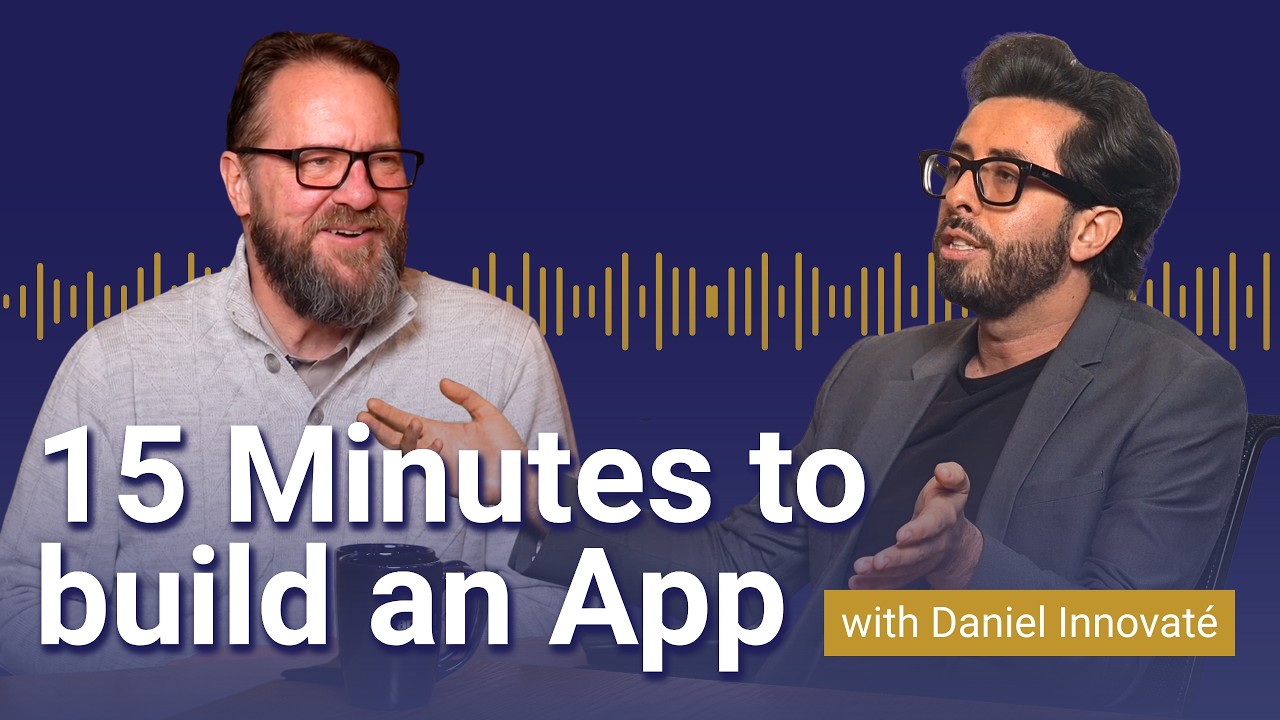
Daniel Innovaté, a Soviet immigrant running multiple ventures, explains how to launch businesses fast by stopping the perfectionism. He builds micro-apps in 15 minutes, uses AI as a co-creator, and scores projects by success probability rather than waiting for the ideal moment.
Chapters
I've seen you present a landing page, a dashboard of 20, 30 different revenue-generating or creative expressions of entire businesses. How do you decide what problems to solve and how do you decide what questions to ask?
I'm actually building a tool to help me prioritize this thing. I'm building a tool that knows all my projects. Calculates the probability of their success and organizes them for me. I think we're living in a time where we can start creating tools and businesses on the fly based on our needs that will replace existing solutions that maybe have become too unaffordable or too bloated. Like so many of the companies like Loom, You know, no offense, but, you know, you used to be a simple screen recording program and now you're everything. And now you're owned by a giant conglomerate that doesn't really care about its users, that increases the price constantly. And, you know, and so you're seeing this in so many different applications and technologies. And the solution to that is just build it yourself.
Welcome to The Parallel Entrepreneur, where we explore how founders, creators, and visionaries bring multiple ventures and parts of themselves In season 2, we're keeping the conversations real and wide-ranging about alignment, creativity, and the messy, beautiful art of building in parallel. It's not about doing more. It's about letting our ideas work together. This is The Parallel Entrepreneur. I'm excited to record this session at Chase Studios in the Nashville Entrepreneur Center. And introduce Daniel Innovate. Daniel has been known to me and had an impact on my life for quite some time, but one of those amazingly talented young minds that defies an introduction and really deserves to go straight to the conversation. And that was really the reason that I asked you to join me on the podcast. And you can Um, roll with me on this, but I'm, I'm excited to feature and highlight parallel entrepreneurship. Um, not with the individuals that have been around and doing it for a long time and are on their 6th company or 7th company, but with somebody that might be on his 15th and is half my age and is just impressive with so many skill sets. He's a musician. He's a photographer, he's an AI developer, he's a brand creator and a good friend. Daniel, I want to slip back into the moment we first met, which you were the official photographer of the Miami Economic Club's annual meeting, which I attended. And I met you doing work while you were at work, uh, capturing images of all the dignitaries and attendees. Uh, and, and, uh, we hit it off. And I, I would like to— I'd like to hear from your words why.
Well, it's, it's funny you say that because I actually remember exactly almost where we were. We were standing, um, in, uh, that, that, that, um, big lobby. Uh, there was like a circular table in front of us. Uh, I was having an alcoholic drink on the job. Sue me. And yeah, me and you actually were waiting for the bar to open because they weren't serving drinks yet. So we were kind of just like, you know, shooting the shit and getting to know each other. And, you know, I feel like we instantly had a connection. You started telling me about a little bit of what you do. I started sharing about what I was doing there. And, and yeah, we've been friends ever since.
It's been a terrific ride. I've learned so much from you. I've had the opportunity to sit with you in Parallel Entrepreneur Network meetings. And some of the things that astound me are not the LinkedIn profile of what you've accomplished, but how you got there and how you view business. For our listeners, you are— you've got a tremendous story of your parents and yourself leaving Russia to come to the United States. And every once in a while you'll whip out a little Russian and I'll pretend like I can speak because of the trip that I spent, the time that I spent in Russia was not aided by my language skills. But yeah, give us your background.
Sure, so I'm a first-generation Soviet immigrant. Shout out America, thank you for taking us in around 1991. During the fall of the Berlin Wall and the fall of the USSR, my family came here as political refugees. It was me, my brother, my parents. Basically, someone came to our dacha, which is, for people who don't know, kind of like a summer house, and they were basically like, hey, we own this now and you guys got to go. And so at that point, my parents were like, all right, well, I think it's time, you know, to find somewhere else to go. And, and so we already had some family in Philadelphia. And so basically they sold what they could, they took what they could. And we came here with like, you know, maybe a few hundred bucks, a couple of kids, a couple of bags. You know, I had like one little stuffed animal that my mom still has. And yeah, I mostly grew up in Philadelphia and it's kind of been, you know, a crazy journey ever since.
Yeah. And the journey to citizenship, the journey to entrepreneurship. These are things that form you. I was in Soviet Union at the time on the day that Latvia, Estonia, and Lithuania were separating. That was really the official moment of the breakup of the Soviet Union, and I was there in Moscow that day. We had some great conversations about it. You have a podcast. We'll put that link in the notes. But you also developed a a series of coping skills and some flexibility that I just find occurs throughout all my observations in the work that you do. I believe that the younger you are, the more likely you are to be right now a parallel entrepreneur as opposed to a serial entrepreneur. And what is the— from your perspective, what is the most important skill set that you developed that you, that you rely on, uh, that makes you a parallel entrepreneur today. And let's, let's share with the audience how, uh, how it is expressed in the different types of businesses that you're involved in and, and what you— what your journey brought you to this moment, um, to, to appreciate as a superpower.
Yeah, so when we first met, I remember being at that circular table with you waiting for the bar to open, and you started telling me about parallel, paralleling, and You know, being a parallel entrepreneur, and I never—you know—I instantly got it, but I never happened to use that vocabulary prior to that. And so I was like, you know what? I think he's onto something. I think that is—that is—you know—something that's going on. And now, more than ever, now the technology is changing so quickly. It's so important to try to find parallels in life. And you know, there's that famous. Saying, jack of all trades, master of none. However, most people don't know the second part of that saying that's been kind of lost in translation over the years is, but better than being a master of one. And I think that really resonates with like being a parallel entrepreneur is because you have to almost be a generalist these days because since things are moving so quickly, you have to be able to adapt and be flexible and kind of roll with the punches and find solutions to problems that you maybe you know, weren't expecting.
Yeah, flexibility, speed, reacting, reaction time. In a lot of our conversations, we'll talk about AI. You approached AI as an artist first and a coder as well. What, what is it that you're finding most interesting about how the intersection of art and technology is manifesting right now?
So the thing that I was most surprised about is if you asked me 5 years ago what AI would be affecting first, I would have hands down, I would have jumped up and down and said, you know, creativity would be the last thing that AI would be able to do. And I think most people were in agreement with that for quite some time up until maybe just a couple of years ago. And then when I, I think I really had, I started seeing it first, I think with images. Midjourney started coming out with very creative text-to-image models. And then I started looking at video. Runway started doing very interesting image generation and then image-to-video model. And then music started evolving and Suno came out. And I remember the first time I generated a song with Suno, it was like something stupid. I think it was like for someone's birthday. I was like, can it make me a birthday song? And I typed it in and it made the coolest birth— I think it was actually for my own birthday. Like, it was the coolest birthday song ever. It was like, you know, I'll play it. I'll maybe throw it in the track. Break the dawn. Happy birthday, Daniel. Let the music go on. But it was so good. And at that moment I was like, wow, like creativity is the first thing that AI has touched. Um, in the, you know, general, um, kind of like consensus. So, um, so you—
I know you to be really hopeful and positive as a thinker, but at the same time realistic. Uh, if, if you're a, you're a masterful pianist, uh, spectacular technologist, and you're telling me that creativity might be the first thing that AI really, really, uh, controls. We're in Music City, and I say controls— what is AI doing? Is it co-creating with you? Is it collaborating with you? Is it leading you to places that you wouldn't go otherwise? How does it express itself in your relationship with AI?
Yeah, I think I'm probably one of the most, um, adapt— adaptive creatives where I wasn't threatened with it per se. Maybe I was at first originally because I was like, wow, like if this plays piano better than me, what's the point of me playing piano? And then I kind of thought about it for a little bit and I realized, if anything, maybe I can take my music and my creativity and augment it using the AI. And that's exactly what happened. And I ended up creating a model of my piano, my own piano that I've been tuning and voicing for 10 years. It's my baby grand that's in my living room. And now I have that in a profile. And anytime I want to create music using my sound that I have, you know, curated over the years, I just press a couple buttons. I maybe upload a reference track or, you know, start from scratch. And now I'm using my distinct sound with a layer of AI on top of it. And so that was something I was really excited about.
I'll never forget the dinner we had in Miami where I was meeting a lot of the people that you hang with who were talking about a really much more advanced approach to responsibility and accountability and possibility and threats related to technology and how fast it's going. Talk to me about some of the most innovative things that you have seen happening lately, and what should we all be paying attention to?
Well, just the sheer velocity in so many mediums happening all at the same time and kind of converging in one place is something that I'm still even— it's hard for me to keep up. Like, I could only imagine, you know, like normal people who are not in this industry who, you know, may have criticisms of AI. I think they're going to be, you know, there's one possibility is they're going to be very surprised on how many things, how much things change over the years. And on the other hand, you know, maybe I'm wrong. Maybe things won't change as much as I think they will. But on the former note, I think it's probably more probable because I've already seen in just the last year alone, like the quality that it's producing and the The rate, like I think ChatGPT 5.2 just came out recently. Its IQ is like 150, 160 in certain benchmarks. And so people are often talking about, oh, when is AGI going to happen? And my kind of my response to that is it already did. It happened. It's happening right now. ChatGPT alone is expert PhD level in math, science, physics, you know, pretty much any field. And so if that's not general intelligence already, I don't know what is.
I've seen you present a landing page, a dashboard of 20, 30 different revenue-generating or creative expressions of entire businesses. And this is the thing I want to dig into. They— many, if not all of them, have their own independent revenue streams. Uh, they were developed in a short period of time. And how do you decide what problems to solve, and how do you decide what questions to ask?
I don't even know these days. I ask myself that all the— I'm actually building a tool to help me prioritize this thing. Um, I'm building a tool that It knows all my projects and ranks them from 1 to 10, you know, calculates the probability of their success and organizes them for me. And so, I think that— I think we're living in a time where we can start creating tools and businesses on the fly based on our needs that will replace existing solutions. That maybe have become too unaffordable or too bloated. Like so many of the companies like Loom, you know, no offense, but, you know, you used to be a simple screen recording program and now you're everything. And now you're owned by a giant conglomerate that doesn't really care about its users, that increases the price constantly. And, you know, and so you're seeing this in so many different applications and technologies. And the solution to that is just build it yourself because now you could literally speak things into existence without knowing any code, with knowing, I would say it helps to be a designer, but you don't need to know design. I will say it's very helpful to know the basics of design when you're building these things. But we're just living in such more of like a spontaneous time where I guess my question to you, my answer to your question is like, I just build things as I need them. And so, you know, as I get an idea, instead of kind of putting it in a notebook and forgetting about it, I actually just bring that idea into something like Replit. Shout out Replit. Maybe I'll drop a promo code in here for some credits.
Perfect.
But there's nothing better than seeing your idea like literally evolve in front of you in minutes. And there's a certain kind of magic in that that I think is like right now the closest thing to magic that we have.
Describe, if you would, Daniel, what are some of these examples of applications that you've produced in 30 minutes and what are they doing for people? What need did you try to solve?
So my most recent app is a little app for my doggy. My dog Sophie, shout out Sophie the Pomsky, is being taken care of by my friends and they kept asking me a bunch of questions about Sophie. What does she need? How many times a day does she— So I just went into the app on the plane on my phone and I was like, make me an app about Sophie the Pomsky. My friends are taking care of her. She needs 5 meals a day, 1 cup frozen food. She needs, you know, 3 walks, ABCD. And I literally just made them an app in 15 minutes. I sent it to them. It has a little tracker where they could like keep track of everything. And, you know, it even has a little button where you could play some music for her to like for bedtime. And so You know, a year or two ago, a developer would have tried to charge like $50,000 for something like that. And, you know, here I made it in 15 minutes, sent it over to them. They loved it. They have everything they need. There's even an FAQ section there where it goes through, you know, everything you need to know about, you know, 2-year-old Pomsky. And yeah, so that's just a trivial example. But there are more like serious things that I'm working on that are ideas that maybe I've had for a really long time but have never had the ability to or the finance to. to build are now reachable because now that the technology is so distributed and so affordable, I truly believe that we could have, you know, even greater ambitions and bring ideas to life that were recently, you know, unattainable.
What is the definition of a parallel entrepreneur for you?
For me, it is the ability to have many tracks, you know, I think that someone who's a parallel entrepreneur has a direction that they're headed. Maybe they're not working at one company for a long time or one project, but they are headed— there's a vector that they're headed towards. And so, you know, each time you kind of spin out a new company or a new idea, it may not be perfectly parallel. You know, it may— there may be some convergence of those things, but they're all headed in the same direction. And so that would be my best definition.
And the people in your generation, uh, who are living and experiencing these revolutions real time, are they embracing it and more flexible? Are they fearful about AI's impact in the next 2 years? Are they, are they buried in lots of projects like you are? What is, what is your perspective in the Miami community and as you travel around? What is your perspective on How people in your generation are embracing this moment in time?
I think a good baseline to think about just any creation, there's a bell curve. So for example, you know, only 5% of the population are creating for the 95% of the population that are consuming. And so you could see this in many different domains from music to art to even more practical things. And so I like to just have some baseline principles that I think about because not everyone is an entrepreneur. Not everybody should be an entrepreneur. Not everybody wants to be an entrepreneur. Not everybody wants to be an artist or not everybody can be an artist. And so I think that maybe instead of 5%, maybe as these tools become more easier to create, that more people will become developers, that more people will be writing code. But But for the last 50 years, I would say probably only 1 or 2% of the population, you know, has been writing the code that controls the whole world. And so, in some cases, that's become very dangerous as well. To the people who are scared of it, I found a pattern that if you're an expert in your domain, you will be within that domain. If you're a professional pianist, you're probably going to hate Suno. If you're a professional writer, you're probably going to hate ChatGPT. If you're an artist, you're not going to like Midjourney too much. You know, if you're a liberal arts person, you know, like, I think that it's almost the reaction is a bit like you're trying to preserve yourself and your skills and your value. But at the same time, I think it's naive to be completely blocking out the progression that's happening right in front of our eyes.
Do you start a new company every time you do this, or do you— when do you decide that the project's graduated into something that deserves its own identity?
Great question for all the entrepreneurs out there. Do not start a new company for every idea. You will go bankrupt faster than your idea will. My solution to that has always been have one parent company. Like I have one parent company that's established and then I have multiple brands and they all, you know, operate under that company. If a company starts to break out and shows a lot of value, you know, maybe it generates X amount of revenue, then maybe you should start formalizing a new company or a new brand and start creating a little bit of a protective layer around that new idea. But I think for most practical reasons, I highly recommend people to just keep it super simple, have one company, and if you really get there and start to, you know, take off, you could figure that out later.
What do you find inspiring when you're creating? What inspires your creation and what is inspiring about that?
I see inspiration everywhere. I'm really inspired by design. You know, if something is— it's almost funny because when something is designed poorly, I'm inspired by it because I hate it so much that I'm like, how did you ever design this? Like, how did a group of people ever think that this was the right way to go about it? And so that always like kind of puts a little fire, you know, underneath me and helps me to kind of maybe— Maybe there's a better solution that's just so much better exponentially than what's currently like available out there that can create value. And so, you know, oftentimes I'll be in bed and I'll have an idea and I'll just throw it into, like, let's say, shout out Replit again. And then I'll run it, I'll go to sleep, and in the morning I'll review the work and see what it's done. And I'll kind of like, you know, put a pause on it, but at least the idea has like gotten some kind of life around it rather than just— being an idea in my mind that never has materialized.
You professionally today are involved in a company that has found a way to characterize products online and update their attributes and keep systems current. Why don't you describe that? This is another right brain, left brain kind of experience that you bring to the table. What are you discovering there? What's the value? What's the problem that you're solving?
Yeah, I think ecom.ai, E-K-O-M dot A-I, I think is a great example of how AI will free humans from monotonous tasks that nobody wants to do, that humans are spending hundreds, if not thousands or 10,000 hours a year all over the world. So for example, in the United States alone, there's about probably, I'm just ballpark estimate, like let's just say 2 billion SKUs. So a SKU for someone who doesn't know, is usually it's a number in a database that is attached to a product that is— it has like— usually there's about 5, 6 main fields. You have the title. You have the description. You have the price. You have the attributes, maybe the weight. You have alt text, which is the data behind the image that that says to the search engines what that image is, or maybe people who have vision impairments, it will read to them the alt text so they know what the image is. And so these are all hidden fields that we— when we look at a product on like a sneaker, all of those fields are coming from a database. And actually almost everything that you see online is coming from a spreadsheet. All of Facebook was originally a spreadsheet, like your profile picture, your name, you know, every time you click something, a new column is created that says, hey, Daniel has just done this action. And so what technology has done really well over the years is created an interface around it. And so ecom.ai, it can free teams, e-commerce teams all over the world from doing these monotonous tasks. at scale. So here's an example. Let's say you have a product catalog that has 1,000 items. Let's say you even have 6 fields within those items. That's 6,000 fields that a human needs to come in, read it, understand it, comprehend it, making sure it's right, getting compliance to go and confirm that it's okay. And, you know, and then you have to do that at least a few times a year, like, you know, maybe once a quarter. To make sure it's compliant, to make sure it's you know up to date, to make sure there's no errors. And so what AI, what ecom does is it automatically does that. You sync your catalog whether using Shopify or you have your own custom catalog. You could just sync it with our system and it will go in there and it creates a dashboard and shows you everything that's going on. And you can either use our automated system to update those things in real time automatically, or you can. Do that and kind of save it as a draft for humans to review and confirm a little bit later. So I'll say right now it's about, you know, about 80/20. It's like 80% automated and then 20%, depending on what level the store is at, if they're enterprise level or not, they're going to need to come in there and confirm that, you know, that there's no hallucinations, that there's nothing wrong with the text. And to take it a step further, what's also happening is ecom can search what is the sentiment going on right now? What are people searching for? What keywords are happening that you can almost reverse engineer and bring back into your catalog so you can match what people are searching for, what their intent is in real time? And so that's something I'm really excited about. I would say probably 95% of the 2 billion SKUs in the US alone are being controlled by humans. And that's just work that nobody wants to do.
And it's not necessarily accurate either. It's like, um, in this case you're creating access to information and matching the search and dynamically presenting product, managing a Shopify interface, right? So this seems like, you know, this in this universe where everybody says, well, I don't wanna do that and I don't wanna do this and I don't wanna do that. Or it's not efficient. Machines, just about anything you can touch with a computer can be automated. Um, I, I'm looking, I'm looking into the future with you and I'm thinking, all right, what are we doing? I've had this question posed, what are we all going to do with our time? And then it comes back to, well, we would all be more creative. I mean, is that how you view it?
Not only more creative, but more efficient. We could get more, more things done. We could affect more people, create more value. And that all leads to having more freedom to do things that we enjoy doing, which is not looking at spreadsheets and not updating catalogs and maybe not practicing scales, you know, or you know, um, not writing code. Um, I don't think anyone who writes code absolutely loves writing every single code and every single character. It's just we've evolved past the point where it's practical. Um, so a good example on the code side of things, 2014— 2024, I probably wrote maybe a couple, maybe 1,000 lines of code. Okay. 2025, I have written over a quarter million lines of code using Replit. Now, just because I've written, you know, just because the AI has helped me write that volume of code doesn't mean that the code is super valuable or whatever. You know, you can make an argument that like less is more. And I agree with that. But the fact that I'm able to, even get it to that volume is extremely impressive. And I think it's just a testament to where this technology is allowing us to head to the future.
When I've introduced you to other people that are in my professional circles, a big reason that I do that is that I think the way that you think about problem solving has been so completely reshaped. And the way that this executive, myself included, might think about problem solving is still stuck in how much time it used to take to write code and, and how much effort it would be from design. You have a design eye, design training. Photography is an area of expertise for you, for example. But you have an informed eye, an informed perspective on photography. You have an informed eye on AI and What I've noticed is that these conversations tend to go really fast, really quickly. We are solving a lot of problems that have been just unaddressed. And I think I'm wondering, just from my own perspective, that has got to be a part of my former life, my governing system. I couldn't really have expectations that were expressed this way for speed and turnaround time and results. Because people couldn't get— could not move that fast. So therefore, our questions and our problem solving and our identifying of what the need really is is even more important. I don't know, I'm sitting with this trying to think about it, not really in the form of a question, but as an observation. How does that resonate with you?
It resonates deeply. I sometimes even have to slow down my work And, and hold back my ideas with certain teams and with certain clients because they're not ready. They're not ready to embrace the new technology. They're not ready to embrace the speed at which it's done. However, I will say quality is a big factor. Just because you're fast doesn't mean the quality is good. But if you put perfectionism aside for a second, I think it really helps to use speed as a tool to bring ideas to life and to develop concepts and to develop brands.
Um, and, and you're in the process, you're getting other people to participate in the, uh, the brainstorming part of it, uh, bringing something to life. I think requires more than one person's perspective. And so now collaboration becomes a superpower.
Yeah, and the AI is also helping with the collaboration too because it's coming up with new ideas. Like, it doesn't have to be a domain expert in your field or my field. Like, it knows enough, a little bit about everything, to write a hero copy that you wouldn't have thought of, or create a section in a website that you may have never considered, or to create an SEO strategy that would've taken an SEO team a year to do, um, now you can do in 15 minutes. That's a really big difference. And I think, yeah, it definitely is shocking, uh, to some people at first. Um, but I will think it will likely become the norm over the next like 3 to 5 years.
You talked earlier about companies, small, numbers of people that control the world. And I think you're speaking about that from a technology perspective. Uh, information is so important. Uh, it, it strikes me, what, what next? Like, we're creating more systems and more, more data and more ideas. And so now what? Who can— how do you monetize that? How do you— Do you keep some part of the value that you create?
But the trend that I'm seeing is kind of like almost anti-globalization, where for a long time it's only been a certain amount of companies and large players that controlled so many of these things, from social medias to dating apps to, you know, different applications and tools. And now I feel like we have the power to, in this time of age, like we have the power and the ability to bring that back a little bit to the community. Like content's a great example. Like news has been so centralized for so many years and it's been controlled by just a handful of people. But now there's the ability for small networks to create their own content, curate their own content, curate their own news, create their own communities, create technology that connects them without having to be owned by YouTube and CNN or Facebook or, you know, any of these large conglomerates. So that's something that I'm really hopeful about.
My friend Brandon shared a piece of advice recently: dress so that if someone dressed up as you for a costume party, everyone would know it was you. Now, that's not entirely about clothing. That's about identity, about showing up fully. My wife Jenny and I are leaning in on this concept both in our personal lives and now in a little startup we call Happy Overall. We're making overalls. Each one is made to order as a wearable canvas for art. Overalls that are comfortable, durable, and expressive. We're sourcing soft 100% cotton. We're partnering with designers and with local seamstresses who love the artistry of a well-crafted piece of clothing. We're launching in summer of '26, so check out happyoverall.com to see pics and see if anything resonates with you. Fully you, and it'll happen every time you reach for them. If you want to be part of the first run, join our waitlist at happyoverall.com. It seems to me like the new currency The— is a return to something that was at one time very highly valued, which is trust, authenticity, and relationships. People getting together and experiencing one another and being there for each other. How, how in your experience is, is this current Up and coming generation of parallel entrepreneurs and leaders, people who are trying to make a difference today and tomorrow. How are they approaching relationships differently?
Well, I'll be honest with you, man. Right now, it's a total shit show. It's so bad. I really hold the dating apps responsible for this. You know, Spencer Raskoff, if you're listening, the CEO of Match.com. Here's an example. Match.com owns like the top, you know, dating app ever. You know, they own Hinge, they own Tinder, they own A, they own B, they own C, they own them all. And, and so what has happened is they've almost monopolized dating. And instead of encouraging people to go out to the bar and buy a girl a drink and actually have a real conversation, You're spending, you know, $40, $50, $100 a month swiping left and right, staying at home and not interacting with anyone, not building any social skills. And on one hand, that's harmful because it's harmful for relationships. On the other hand, it's harmful for the communities because that $5 or $10 or $50 that you would have spent down the street at your local coffee shop are now being sucked in by these large conglomerates. And I really think that they've taken things way too far. I think that dating right now and meeting new people has become incredibly difficult. I am sorry. I feel really bad for, you know, people who are single right now, people who feel like they're lonely. Loneliness is at an all-time high and is also like one of the greatest killers. You know, if you compare it to like even You know, smoking cigarettes and cancer and stuff. Being lonely will kill you faster than, you know, your nicotine habit. My advice would just be, you know, stop the doom scrolling. Don't have your phone in your bedroom. Try to read a book here and there. And these are all things that I have to constantly remind myself because I'm not like some holy person that's like never on my phone. Like, I'm actually trying to be. I'm about I'm like this close to buying a flip phone. So, so if you don't see my blue check mark anymore or whatever, my, my iMessage, uh, you'll know why. Um, but yeah, I, I would really recommend people to like— what is the opposite of technology? What would you say?
I think the opposite of technology is, um, pace. You're in control of your own pace where It feels like technology is constantly driving a faster pace. So I think you can slow down in an environment that isn't centrally focused on technology. Discovery, you know, your self-discovery, yourself, your opportunity to learn and explore and inquire with others what the definition of A word might be, or the interpretation that they might take away from a plotline in a book that they read, or poetry. It just feels to me like the antithesis of what's happening is, uh, we have to learn how to slow down and be with ourselves and practice and experience what some people call boredom. Um, and maybe, uh, in that moment we get to discover ourselves.
Excellent. Yeah, I, um, I think you're, you're really on, on point with that. Um, I would say the only thing I would add to that is, um, I truly believe that nature is the opposite of technology.
Yeah. And well, isn't technology always trying to duplicate something found in nature? A system, a chemical, uh, some Example of diversity.
Yeah, yeah. Technology transmutes nature into itself. You know, we mine natural resources to create technology. And so I guess my, you know, my answer to your last question would be find a little bit more of nature. Try to get out there. You know, go hug a tree.
You know, man after my own heart. Yeah. Certified tree hugger here.
Dude, seriously, go hug a tree.
It's really great. Like, one of your companies is a peer-to-peer microlending.
What's the thesis? Yeah. So Folio Capital, it's a peer-to-peer working capital company that's still in its early phases. We've only done a small number of loans. However, I am in the process of kind of ramping that up. And it's basically like, you know, why are the credit card companies making 25%, 30% off of the majority of millennials in perpetuity forever? You know, like some of these people will never be able to escape the revolving debt. And even if you're making like minimum payments or more, you're barely paying, you know, the interest. You know, you're paying like 50% interest on it. You know, and 50% principal. By the time that next month comes around, like you know, you'll never escape. And so that's also why I am a very big fan of Max Levchin from Affirm, former PayPal founder, who has a different model. It's it's still it's private credit, and the private credit industry is growing very rapidly right now. It's still kind of almost ironically it has. you know, attracted institutional investors. And it's, you know, almost become, you know, a bad thing in some cases or too concentrated. And so what, what Folio does is allows people to lend and borrow money to each other without an intermediary to create in 3 steps the rules of that loan and to automatically pay it back when the borrower receives a deposit. So when the borrower receives a deposit, he has maybe agreed with the lender that, hey, I'll pay you back 10%. If I make $1,000, you'll get $100 of it automatically. So you don't have to wait for me to pay. It doesn't have to be on a schedule. And so like, if you believe in me and you believe in why I'm borrowing this money, you could, you know, put this credit line aside for me. And as I grow and as my revenue grows, it will pay back this and it will pay you, you know, the interest that we've agreed upon in a way that is automatic, in a way that Doesn't is ethical in a way that won't really truly hurt you because because like if you you know if you lose ten percent on your money you know and you have a little bit of runway to work with um you don't really feel it that much um however if you're making a five hundred dollar you know payment to your credit card and you're ten twenty thousand dollars in debt and you're barely touching the you know the the principal on it you're never gonna get out of that. And so I truly believe that Folio Capital has the opportunity to create a new financial instrument that allows people to take power back from the credit card companies and from the big, you know, money merchant cash advance companies who are charging an arm and a leg and allow people to Um, create trust with one another.
And you also have a company that takes digital images and turns it into a movie, and that I found that was super, a super impressive example. What, what's behind that, and how fast is that company evolving for you?
Sure, so, um, that's render.realestate. Um, that was, uh, so when I first, probably about a couple years ago, I started seeing, uh, the advances of image-to-video models technologies like Luma, Runway, Midjourney, you know, and it's funny that I was actually doing image-to-video, you know, not like the core, because, you know, we're all buying it from one another. Like, we're all kind of borrowing the models and, you know, say what you will about like wrappers and things like AI wrappers and things like that, but it's still very valuable to like niche it out and create an interface and experience that is very particular to an industry. And so since I was a real estate photographer and videographer for so many years, I had that domain expertise. And then I used the AI tools to take that domain expertise and turn it into a product. Um, and so, um, yeah, so, you know, we've completed, you know, hundreds, if not like over 1,000 orders. Um, and we were doing it manually for a while, which is also something I encourage builders to do. Like, do the manual thing first until you get it to a place where you can kind of automate it and create the system for people to do it yourselves, you know, have a self-service model. But yeah, we just launched a V2 of Render and I'm also looking at other industries to niche it out to. Maybe this will be really good for e-commerce 'cause, you know, how expensive is it for a catalog to create videos for 1,000 products? You know, compare that to using, you know, something like the technology that we're building to automate that process, deliver that content to the marketing teams and to the sales teams, and allowing them to use that material to promote their products that they're selling. And so these are, again, like really good examples of how an entrepreneur can take what they know and create a product out of it that really creates value in, in the economy.
How do you get feedback from anywhere? Where do you get your feedback on products and ideas that you're developing if it's so difficult to protect. Like, patents don't make sense anymore as a rule. Copyrights are, are important, but it seems to me like trade secrets are the only way to go. And, uh, you know, bouncing ideas off— like, I want to ask you what's the most interesting business you're about to start, and then if I were you, I wouldn't want to say anything because You know, stealth and, and you mentioned, you know, people are borrowing models back and forth. Where, where does your feedback loop come into play?
So I think there are multiple ways to kind of protect an idea, but it's not in the traditional sense. Like, for example, I think like a strong offense is a good defense. So for example, if you have a really good brand that is You know, understandable and high quality, and you know, like that almost protects you because yes, anybody could take your idea. And you know, for example, the render real estate idea—I was probably the first to market on that concept for real estate in the entire world. Okay, maybe I was like second or third, but like you know, from an ads perspective, like being on market and actually doing the service, I was probably like one of the first people to do it. Now there's like I see ads for them every single day. There's like ten of them. Okay. And I've used a lot of them, maybe like 1 or 2 are like decently good and like have like really like good people behind it. But the majority of them are low quality, not very good, made by people who don't have the domain expertise that I do. And so I think it'd be really rare for somebody like for somebody to copy one of my ideas. They would have to have the same domain expertise that I do in that idea to even compete with me at all. Not only that, but they need to come with a very strong brand and they need to come with like more capital than I have, which is like not like a crazy amount right now. But you know, they they need to come with you know more capital to compete with me in you know the advertising networks. With regards to your answer about feedback on any of my applications that I build, I build a feedback loop into them. So I have a little question mark that's in the nav bar in any of my concepts. A user could click on it. They could submit a ticket. They could talk to the agent. The agent knows everything about the product, and they could escalate that. And then in my admin dashboard that I build for any of these applications, I myself and my team field those comments, and we act accordingly based on that feedback.
Do you have advisors? Is anything formal with people that aren't customers? Yeah.
I do. I would say the most formal thing that I'm working on now is e-com. Shout out to John Ricketts, absolutely amazing entrepreneur. He's here in Nashville. I actually definitely want to introduce him to you. I think you guys would chat. Maybe he could do the parallel thing with us here and there. He's a great example of a parallel entrepreneur as well. So yeah, I would say e-com is like the most formalized company that and brand that I've worked with before. We did just raise our Series Seed. I won't go into the details, but we have a certain amount of runway now that we could, that we have a very good chance of solving this problem for product catalogs. And so, but yeah, I mean, I love talking to people. I love sharing ideas. I love giving out ideas and helping people with their products, and, and in response, I'm learning and I'm growing. And, and so most of like the mentorship that I've done and advising, it's been fairly informal. Um, but yeah, maybe one day I'll make an app for that, make it a little bit more formal.
I'm studying reverse mentorship. Uh, the idea that— the traditional idea might be that you would seek somebody out in your corporate structure or in your organization, you'd get advice from somebody that says, go attach yourself to someone, find a great mentor. And then those mentors might be encouraged to really help shepherd and facilitate growth in somebody's career. And I'm finding, you know, the modern experience for me compared to that is that I'm learning as much or more from the people that I work with and I get to tackle problems with, the generosity of the upward mentorship is— and I say upward mostly in reference to age or maybe position in the company in this sort of traditional hierarchical thing that we've done to ourselves in corporate America. But this two-way street I find it more compelling to spend my time mentoring because I feel like I leave that conversation having been mentored. What is it like from your perspective? You said that you are a mentor and you do some mentoring. How do you navigate those relationships?
I try not to take it too seriously. I also have to be careful because in some cases my mentorship has went too far and actually like backfired in my face. I'm not sure if that's ever happened to you, but it's actually quite interesting. Um, it's almost like a bit paradoxical. Um, in, in what way?
Like you're trying to help somebody understand something and, and they just, I don't need this. You're, you're moving too fast, junior. And you say, okay, boomer. And you know what?
No, a little bit different than that. I feel like, like I've helped people like establish certain businesses or maybe I've brought them into some of my businesses. And they ended up—it's kind of like a no good deed goes unpunished type of thing, where they ended up maybe. I'm still trying to understand why exactly, but you know I have some theories about it. But basically what turned out is, you know, they they they do things that actually harm the company, and and they do things in their best interest. Even though I have established such a great foundation for them and created a lot of value for them, both directly and indirectly. And so, you know, it's happened a couple of times. I'm a little bit more careful of how far my mentorship goes and how deep it goes with certain people because I almost am forced to like protect myself a little bit more because at the end of the day, you know, you're Your value and your creativity and your energy is not infinite, and it comes in ebbs and flows. And so, you know, talking about like, what is value really? It's like that energy. Like, at the end of the day, I think, you know, that energy is value, and you have to, in some cases, protect it. And so you have to be careful sometimes.
I'm glad that you had a safe flight from Miami, and I'm I'm looking forward to hearing that you got home safe.
Thank you so much. It's great to be here. It was an honor to meet you and keep this going. So thank you so much. And, you know, I'll see you on the next episode.
Hey, thanks for listening to The Parallel Entrepreneur. And thank you to our sponsors, partners, and the amazing team behind the scenes who help make these conversations possible. If today's episode sparked something for you, Be sure to follow, subscribe, and please share it. Learn about our growing community at parallelentrepreneur.com, including details on our mastermind and companion programs designed to help you align, grow, and thrive across multiple ventures. And of course, gratitude to every visionary guest who trusts us to share their story. Until next time, keep building in parallel.