#257 Can You Use AI-Driven Pricing Ethically? | Jose Mendoza, Academic Director & Professor at NYU
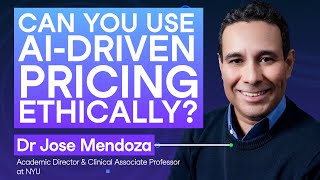
In this interview, NYU professor and academic director Jose Mendoza explains the evolution from traditional algorithmic pricing to AI‑driven dynamic pricing, outlining how modern machine‑learning models can automate price adjustments across many sectors such as hotels, airlines, ride‑hailing, e‑commerce, theme parks, restaurants, and emerging physical‑store implementations. He highlights the technical benefits (real‑time data integration, capacity optimization) and the major challenges: model explainability, black‑box risk, and the need for ethical guardrails. Mendoza discusses what pricing practices are perceived as fair (age‑based discounts, early‑bird offers) versus those that trigger consumer backlash (price hikes for protected groups, surge pricing during emergencies). He reviews the data inputs that feed pricing models (capacity, demand, weather, events, competitor prices) and advises a pragmatic rollout—start with a few key SKUs, keep models simple, and experiment iteratively. The conversation covers the rise of “pricing‑as‑a‑service” platforms, the importance of explainable AI to audit decisions, and the growing regulatory environment (price‑gouging laws, anti‑discrimination rules, EU AI regulations). Mendoza stresses the privacy paradox: personalization requires data, yet consumers demand transparency and consent. He recommends clear communication, trust‑building, and guardrails (price caps, monitoring) to avoid reputational damage. Finally, he shares future directions, including explainable AI, bias mitigation, and research on intelligent retailing in physical stores, especially through a planned NYU course in Shanghai.
Chapters
There's something that's called the privacy paradox where we want personalization, but at the same time we are concerned about privacy and an invasion of privacy and they use our data. But the thing is that in order to create and deliver personalization, I need data about you.
Hi Jose, thank you for joining me on the show.
Hi, how are you? Thank you for having me today. Vici.
Yeah, great to have you here. So to begin with, I'd like to know a bit about what is AI driven pricing and why would retailers want to use it.
The technical names algorithm driven pricing. So since many years ago, dynamic pricing have been driven by different algorithms. I would probably say that the main differences is that now there are artificial intelligence models that made the process different easier to process. Giving some challenges as well. Because one of the caveats of artificial intelligence explainability trying to explain what the result that you're getting the idea that these artificial intelligence models work like a black box, sometimes not that useful. But algorithmic pricing or algorithm driven pricing has been venues from a while from the perspective of pricing optimization, profit maximization and so forth.
Okay, so I guess it should be obvious the goal is to make more money, maximize your profits. Maybe we can make this more concrete then. Do you have any examples of companies where you think they use dynamic pricing or algorithmic pricing very well?
I mean there are many different cases. Hotels for example. Hotel hotels use different models in this case, capacity based pricing. As you know, the hotel have a hotel have a definite number of rooms that it has to sell in a given day. After that day is over, the price of that room is not. You can't resell it because the day is gone. So then you have to maximize the occupation and trying to maximize the profit for a given capacity. So that's when you probably see different price tiers of you know, for hotel rooms, that's where you see price changes by the day, sometimes by the hours. In the hotels there are many different variables into play, like for example the occupancy, the demand for a particular day. In some cases there are weather or external events that are taken into an account. Like for example a concert or a conference or a convention or something that is happening at this particular day that will influence the price. All these parameters are what are driving the algorithm and setting the price for the hotel. Another example will be airlines. The airline pricing is another type of pricing dynamic as well, where the prices of seats change by the day, by the hour, sometimes every few minutes they refresh their prices based on a number of variables like capacity Again, contextual variables such as the environment, such as, you know, events that are happening across the routes across different locations. So that's another example. We are probably familiar with Uber and Lyft Transportation. So that's another example of NAMI pricing, where in this case the technical name of that price is called search pricing, where pricing prices change depending on the availability of drivers and riders. And they're being fixed also by the location and also by events that are happening during that particular time. For example, if there is traffic, if there is a weather event, if there is something happening like increasing demand and the prices will change according to these variables, then you have online pricing. Amazon still is very great example of how prices are being adjusted every 10 minutes based on different variables. It could be based on competition, it could be based on demand, it could be based on many different factors that could affect the price that you're looking into it. And now one of the latest things that's been happening is dynamic pricing in physical stores, which is a challenging thing to do. So imagine a grocery store, a store where prices change based on different variables. There are many isolated events of stores doing this, like for example, ice cream prices during hot or very cold weather where they can be changed a few times a day, the price of produce for example, as well, but nothing at the major scale. I think this is one of the holy grails trying to find out how you can implement dynamic pricing in physical stores in a way that it will benefit both consumers and retailers. I don't know, you probably heard about the case of Wendy's and the introduction of dynamic pricing, which didn't go well. This actually was bad up to the point that had to be pulled back from the launch. And one of the reason was because, in my opinion, one of the reason was because it was not very well communicated to consumers when this dynamic pricing approach was more about reducing the price based on different variables. But consumers understood that they will increase the price based on different variables, you know what I mean? And there is a difference between just increasing and decreasing prices in terms of perception, of course, from the consumer point of view. Now you have dynamic pricing of theme parks, for example. Disney is applying that with a. It was a program called Genie that now has a different name where Genie Pass is kind of a fast path where you can just get into your ride quicker and you can also plan where to go to your writes but that have an extra cost and the price of the write for these past passes changes depending on the demand, depending on many different factors. Lately there is an approach where some restaurants are trying to implement dynamic products in the restaurant too. Meaning the price of the dishes will change based on different variables throughout the day.
A lot of these examples seem to be around. You've got some sort of fixed capacities. You mentioned hotels with rooms and airlines with like a limited number of seats. And I guess the ride shares with I guess a limited number of cars. And so a lot of it's around helping the company do capacity planning and sort of optimizing the amount of money on fixed capacity. Because I said that from a consumer point of view, sometimes it feels unfair. So I guess if the prices drop and I get some kind of bargain, then it feels like a really, really good idea to have dynamic pricing. If I'm the one paying lots of money, then it feels less fair. So yeah, can you talk me through, are there any cases where it is acceptable or unacceptable to consumers to use dynamic pricing?
Yeah, but you know, we have to go back into what ethical pricing is first and foremost. You know, the concept has been around for many years. Actually been one of the earliest writings about dynamic pricing. Conference and Thomas Aquina in the medieval ages will say that just price surprises are good for both the seller and the buyer. You know, and that still stands today when it comes to ethical pricing. When you have a price that is good, good. But for the seller antibody, we're talking about a price that is just. That is okay. That is correct. But now we have perceptions coming into play and perceptual price is a very big topic. So there are some instances where discriminating around pricing is good. And I will give you an example. Having a children's discount in a restaurant, you're giving discount based on age, but that's okay, that's acceptable. A senior discount, that's also acceptable. You're discounting to a population that is vulnerable. Let's use a time sensitive example, having an early bird discount, that's another good example of price discrimination. A membership discount, you paid a membership, you're a member of a group of a particular group, you meet certain criteria and then you receive a discount. Now as you can see, I'm talking about discounting, that's good. When talking about increases, that's not good. Like for example, if you say I'm increasing prices to you because you are a senior citizen, that's bad. That's a really bad perception. Or you live in a place where, you know there are no stores that are competitive, competitive or competitors, then I will increase the prices because you have nowhere else to go. That's perceived bad, you know, so it's a matter of perception, how you communicate what you're doing. So if your customers understand that you are right increasing prices, then it's bad. It's a misperceived bad. But these consumers understand that you're actually discounting, giving them offers throughout the day and the magnitude of the offer will change based on different variables. Then now we're talking about into a different discussion that if communicating well might be well perceived.
Okay, yeah, that's really interesting. I can certainly see how saying okay, 10% discount per se is great, but if you phrase it the other way, it's like, well, there's a standard price and then it's like 10% extra price. If you're not a senior, then that's going to go down very badly with your consumers.
Yes. Or it could be not just that you don't. Maybe you forget how to frame it. And this is one of the things I see that happening very often, that you don't communicate well what you're doing and then consumers perceive it in the wrong way. And I think that was the case when this with dynamic pricing, that consumers didn't understood that dynamic pricing was applied only to certain items in the menu as a way for them to promote during certain hours, product that typically won't sell, you know, product that you want to offer to promote. Not that they were changing the price of your regular combo, the combo that you typically get, because that gets very sensitive, especially after all the inflation that is happening, all the price increases that have been happening. So consumers are kind of very on edge every time that you talk about price increases. So it's about communicating. But what I mean, communicating is about talking to consumers and making sure they understand what you're doing in a very positive way.
What sort of inputs are going to go into these dynamic prices. So you mentioned capacity is one common thing. What else might go into the model in order to determine the price?
Well, it depends very much, and that's kind of an open question because it depends very much on the type of implementation that you're doing and the number of variables that you can control. Like for example, competitive pricing could be one variable, but it will all depend on whether you can actually get competitive pricing in real time or near real time in a way that you can use it for dynamic pricing. External variables are also very important. So people think about the weather, for example, weather patterns, because, you know, the weather influence consumption. We know about, you know, things that are happening or external events like concert I mean, depending on the industry you're working on as well. But you know, could be concert, it could be conferences, event, political value, political event that might influence consumption. You might actually use that you find that data actually does, actually influences consumer behavior or purchasing behavior. I always say that it's difficult to have a one size fits all for the implementation of pricing because it depends very much on the industry and as well on the capacities that you have about the capabilities that you have of managing all that information and accounting for that information in your models. One of the things I believe is that it's not a good idea to just change pricing for the sake of changing prices. I think that adjusting pricing has to be done in a mindful way with a goal in mind. And the goal is not to alienate customer. The goal is not just to increase profit. Because that's actually the wrong reading. We're in the business of creating long lasting, profitable relationships with customers. We don't want a one time deal with customers and I don't want to squeeze your money in one go and then alienate you for the rest of our relationship. I want to create a long lasting, profitable relationship and what it means that I have to be mindful of what I do. And that's why I think it's very important to make sure that you change prices in a mindful way and not just for the sake of changing it.
Okay. So yeah, there has to be some reason why you're putting stuff into a model. I suppose that's true of most machine learning really is you want a good reason for things to be in the model rather than just putting them in for the sake of it. But it sounds like these can potentially get quite complex then. So once you start thinking about, well, there's different customer segments, you mentioned things like seniors or children and then you've got demand for like what events are happening nearby and then maybe the weather's a factor and all these sort of things that go into demand. So talk me through how complicated can these things get?
They can get very, very complicated. You know, not just the amount of technology, computer power that you need, but also the amount of people and team that you have to have in order to make sure that the way that your pricing is the right way. So but you don't have to go that complicated. You kind of start in, in a nimble way, in an easy way, just picking a few, a few variables that you can use for that can be mindful and significant for your price changes. And I say, I prefer to say Price changes that price increases because people typically associate dynamic pricing with price increases. But it could actually be the other way around. Price can be decreasing. You want to increase demand because maybe you have an extra capacity, maybe you have a definite time where you don't sell your product. Your product. Let's talk about produce. The product can expire, can spoil. In the case of a concert or an event, the concert is tomorrow, but I need to sell the tickets today, not the day after tomorrow. So when there is a time constraint, I would probably have to adjust my prices. The price can also go down. That's a good thing about. That's why the communication is very important to let the customers know that it can actually be a benefit, actually could be a deal because prices are going up and down in a way that's going to be beneficial for both the seller and the buyer. And it's important that both parties understand that.
Okay, yeah, that certainly seems incredibly important that both, both the buyer and the seller agrees on the price and thinks it's a good thing. Otherwise you're not going to get a sale or certainly a repeat sal. Okay, so you said these things can get very complicated.
Where do you begin?
Like, what's a good first step? Like, which products would you pick for trial with dynamic pricing? And what would like your first sort of dynamic price algorithm be?
Yeah, that's a great. That's another good question. There are different approaches. So some retailers might want to focus on key value categories, which are the most important categories only, or maybe your key value product of the few products that actually are important or where you have enough information to offer dynamic pricing. What it means is that, it doesn't mean that the fact that you're going to offer the name pricing has to be dynamic pricing everywhere. For every product that you have or every service that you have, you can actually select which ones you're going to apply into it. And then you're reducing the complexity by doing so. Maybe you just focus on one category and a key value category. Maybe you, you, you're, you're making the process simpler. You're focusing a few key value products. Then it's simpler because you're just focusing on very few products, not on everything else, not on everything that you're offering. And that's a good way to start just focusing on a few products, a few categories and, and start that way and also managing, you know, simple variables like, for example, inventory will be one, or demand or velocity sales velocity will be another one that you can use. And then you just go from there, depending on whether you can actually find that a more value will improve your end goal. That is to develop a long lasting, profitable relationship with your customers. That would be your end goal.
Okay, I like that. Just pick a few key products and then start with a simple algorithm. Oh, categories.
Okay.
And then you can get more complicated from there. I was just like, I don't know how much this is saying about me, but the example that sort of springs to mind is like any bars, like a lot of them do a happy hour and you say, okay, well, you can have like a few basic drinks at a limited amount of time. And it's like a. It's a very simple dynamic pricing system.
Okay.
And then hopefully, I guess the idea from that is to try and upsell people on the more expensive drinks that aren't on offer. So is that a standard business tactic, using dynamic pricing discounts in order to try and cross sell or upsell into other products?
Actually, it's been done. I mean, the thing is that the term dynamic pricing implies that I'm using data, I'm using computers, I'm using analytics. But as you pointed out with example of happy hour, it's been done manually for many times. I remember an example many years ago ago, somebody who was doing pricing for a car rental company in Europe, and they were using a very manual process, but was technically dynamic pricing. They were changing the price of the product or the cars a few times a day, a few times in the morning, a few times in the afternoon. So it made the definition of dynamic pricing. The thing is that they were not using computers. They were doing that manually. Now what I want to do now is I want to take into an account an amount of data that will require me to use technology, to use computers. If I don't, I don't have a big business. I mean, if I'm a restaurant or a bar owner, maybe I don't need dynamic pricing or artificial intelligence to change the prices. You know what I mean? We're talking about having a minimum amount of data to justify the expense, because there is a cost associated to this implementation. There is a technology cost, there is a human cost, there is a training of. There are many things that comes into play. So dynamic pricing is not necessarily cheap. But with any investment that I do in marketing, I need to look at the return investment that I'm getting with this particular investment. So in some cases it might not make sense. Might make sense just to do it in a more traditional way with our artificial intelligence and with all this new technologies. But in other cases, you know, I might be able to, to justify. Now one of the things that are popping up now in the industry are these companies that offering pricing as a service, not just, not just dynamic pricing, but prices as a service that you p, you pay a monthly fee, you play, pay an annual fee and then they help you out with your prices. You know, it's sort of a, sort of a subscription based pricing, you know, their services. I believe that Shopify for example offers a similar service through third party providers where you have an online store. You can quickly incorporate dynamic pricing for a few, for investment a few dollars a month. The challenge of that is that, and that's one of my concerns with these implementations is that when these approaches are a black box approach that you can't explain, it may be actually not a good idea because you know what you're getting, you know, you're kind of throwing things into a black box and getting some results back and you know exactly how these results are, you know, coming into play. So explainable AI, which is about understanding why you're getting these answers from the artificial intelligence model is becoming more and more important.
In some sense that does seem like a genius business idea to charge people to tell them how much to sell their products on your storefront for. So yeah, I guess that's kind of clever by Spotify, but Shopify, but also, yeah, I can certainly see how you want to understand what is driving the demand for your product. So the other business who's selling you their pricing service might not know your customers as well as you do.
But also, you know, if you are an Amazon seller, for example, and you use Amazon for, for your pricing for inventory. So when you sell your prices in Amazon, you set a range of prices, a minimum and a high and a high price, a low and a high price. And then Amazon trying to move your pricing across is particular band. So that's an example of dynamic pricer. You don't know how it works, but you trust the Amazon know how it works because they are running a very successful, you know, business by doing so. You know, now my, my concern is when you go, for example, for a company that you know, you never heard of and then suddenly you're going to implement their algorithm that they're not able to explain how it works and then they will just explain, then that's when it gets a little bit more concerned because you know exactly how are you pricing your product. You're doing that in a very efficient way or not. There is a lot of trial and Error that is going on in the industry. People is learning how to best manage this. But pricing as a service is, you know, becoming very, very common nowadays. More and more common.
You mentioned that it's quite often that you don't know exactly what prices you need or what kind of pricing algorithm you need. So it sounds like some sort of experimentation is needed. What kind of experiments might you do in order to test that pricing?
Yes, indeed. Yeah. Like I will argue that almost everything that we do involving artificial intelligence nowadays is experimentation. You know, we have had discussions about where are you getting out of your investment in artificial intelligence? And there are, there is evidence that some marketers say, well, I have no idea, you know, how much what I'm getting. I know, I know it's cool, I know it's really, you know, advanced. Fascinating how it works. But I don't know what is every investment I'm getting, you know, and that's one of the things that we also need to address because you talk about pricing, like are you really getting what you're looking for to get or you just implementing dynamic pricing because it sound cool and it sounds like something new to do.
Okay, I guess, yeah, that's often good advice. Just don't do something just because it's cooler than you do it because it has some kind of business value.
Yeah, you're running a business. You have to make sure that, you know, you know, you have your business goals plan out and you are changing the way that you are going to be selling your prices because you have a. There is a plan behind it. Is it something you want to accomplish? And now you need to use artificial intelligence because the amount of data or the complexity is very difficult to do without artificial intelligence. So that's why you're going to be using it. But not because it's cool or something, because my competitor is using it or anything like that or something like that.
I'd like to talk a bit about regulations. It seems that in some industries there are things that you can't put into your pricing models. I know a lot of insurance. There are rules at least in the eu, I'm not sure about worldwide, but there are a lot of rules around what you can and can't include in your pricing models. Can you just talk us through what those regulations are like and what the limitations are?
Regulations are very in place and there are more regulations coming. One of the things is that sometimes it looks like the regulators don't know exactly what they're regulating. And that's one of the challenges that might be happening because we're moving like the technology is moving things really, really far away. And many regulators in many places just pay and catch up with what they have. And we're talking about legislators that they don't know exactly how the technology works. So then how are you going to regulate that? You know how it works. But yeah, so we have their laws about price gouging. For example, I just remembered last week there was a case about a supermarket chain in Australia where they actually got a fine. And there's a big deal going around these price changes. There's an argument that they were increasing the prices so they could then discount them later, which is a common practice in many industries, especially in the apparel industry, when it's called a high low pricing strategy, they increase the prices and then they discount it. So the sort of pricing trick that were so successful in the past, they might not be successful anymore because customers are smarter, they have more information than in the past. But there are cases where there are rules and regulation has to be aware, sharing the information. Price discrimination is a big thing. Bias and price discrimination is a big thing, not just from the regulation point of view or regulatory point of view, but also because of the consumer backlash that it can create. I did some work on the area of detecting and mitigating bias and price discrimination in online pricing. And so it's fascinating to know how you can actually do incurring biases without knowing that you are doing it. And there are examples in the industry from office supply store that used to give a discount, a 10% discount to online shopper who has a competitive store within a 10 mile rail of the store and the full price of it. Why? It means that consumers that were in some neighborhood, especially poor neighborhood, that had no competitive store nearby, were not receiving the discount. Or a famous travel online travel agency that used to increase the prices based on the device that you are using to browse. Because there is an assumption that you are using an iPhone or a Mac computer, you are less price sensitive that you were using an Android or a Windows computer. Therefore you can, you know, have different prices. So this an example from the industry. And so the thing is that, you know, now it's very difficult to hide, you know, information consumers might know. Social media is cruel when it comes to disseminating this sort of information. And you might receive consumer backlash, which is another thing. So regulation one thing, but consumer backlash is also another thing that you have to be really careful how you implement your prices. So there are techniques for detecting price discrimination and there are techniques for mitigating price discrimination. There are frameworks. Big companies are working on it that they have frameworks for it like Google, IBM, Amazon, they have Microsoft. They have frameworks and tools and techniques that help people detect mediate bias in their pricing algorithm. But people need to know that there is that possibility and you have to be aware of that. And then we have to keep watching about the regulatory environment. So what kind of new laws are coming into play? Europe is ahead when it comes to having a regulatory framework around AI, but other countries are catching up. In the US they are catching up. They're too far away from, from, you know, in terms of, you know, regulation. But, you know, regulations are coming. You have to be careful.
Okay. Yeah. So I can certainly see how poor people being charged more for prices in the store compared to rich people is a bad thing. That is considered discrimination. But then I suppose some of the things we talked about earlier, which were good examples are also discrimination in some sense. So you mentioned like things like giving discounts to seniors or discounts to students or things like that. So that seems like a good idea. Is there like a heuristic for when like bonuses to or, or different prices to some groups is, is a good idea and when it becomes a bad discrimination kind of thing, do you just have to think, think through things carefully or are there some good heuristics to help you?
Yeah, yeah. Especially around protected categories. There are protected categories, you know, at least in the US that you have to be mindful, you know, having, you know, different prices based on race, for example, that's a problem based on sexual orientation or gender identity, is another thing that you have to be really careful based on disability factors. That's another thing that you have to be careful. I mean, you have to check that your prices are not impacting a protected group, because that's quite important. But then on top of that, you have to make sure that, you know, the prices are not creating a disparity among different groups. You know, that's another thing that you need to look for. But their method, I'm happy to go and eventually, maybe in a different podcast, go about the different method that are for, number one, detecting and number two, mitigating. And look like I say mitigate, I don't say eliminate because it's very difficult. It's not impossible to eliminate biases from pricing, but you can just mitigate up to the point that it's not that harmful to a protected group. And this is all coming from work done around, for example, credit approvals. Or credit cards approval, where there are example of companies that were giving loans using this system that were harming protected groups, like giving preference to certain group based on demographics based on certain things. And so there was a lot of work doing on that. And hopefully, I mean, fortunately this word can be applied to pricing as well, that you, you can check that you discount your price increases or, or price changes are not affecting in, in a disproportionate way a protected group. So you, you can actually extrapolate that. And, but now in the case of artificial intelligence, it's coming a little bit more into, into question because now there is a point of, when you, when in the case of the loan example, when you decline a loan or reject the loan. So you need to know how, you need to know how you come up with that decision. You know, because your customer might come back and say, well, you declined this because you're discriminated towards my say my race, my age, my. So you have to come back and say, well this is a criteria being used by AI for the client and that's what is called explainable AI. So by making sure that you can explain your results, especially with pricing, you can, you can come back, you know, you have that situation, say well, am I just in the pricing? Not because this group is this or this group is that, but because this is valuable for taking into an account.
Okay, yeah. So I guess the key there is that if the differences in price are going to cause harm to some group, particularly groups with protected characteristics like race or gender, whatever, that, that's when the problem occurs. So in terms of explainable AI, you said that being able to explain how the price was generated is going to be very helpful, particularly if there's a problem you've got. Someone starts questioning what you're doing here. Are you causing discrimination? So do you want to talk through some of the explainable AI techniques that you might want to use?
There are different techniques, there are frameworks that actually help you with spreading over AI. But one of the techniques about creating rules, rules, tables where you can just go and say, well this is the criteria being used. Like for example, your income was 20% of the decision, your location was 15% of the decision, your past behavior, history of purchases, for example, making that up could be an X percent of the decision. Then you come up and say this is how the decision be taken and you can actually replicate the result. So if I input your income, if I should be able to come with the same, with the same decision, you know, that's what explainable AI is about. And that's a very important part. That's what I'm afraid you're not getting with seven of these price pricing as a service, you know, companies that offer you dynamic pricing for, you know, 29 with $99 a month, you're not getting the explainable part. So you know exactly how your prices are changing. And that's one of the things that concerning and it's happening maybe perhaps because this is all new, we're all learning. Customer need to, in my opinion, need to be able to come back to their providers, technology providers, and say, yeah, I need you to explain me. I know that the idea is a black box, but I also know there is a way where you can explain how AI is making these particular decisions. If not, then it's too risky for me because I don't know how I'm pricing my customers. Okay. Yeah.
And certainly I can see that if you're a business and you're buying services regularly and the price is changing constantly, then you want to be able to predict how much you're going to spend. And so having it as a black box where you're not quite sure what the costs are going to be in the future, that's going to be a big problem. Okay, all right. So while we're grumbling about things, I'd also like to talk about some of the privacy risks here because it seems like there are going to be some trade offs between collecting data on individuals in order to fill fits into the pricing models and customer privacy. Can you just talk me through what those trade offs are?
Yeah, well, you know, there is something that's called the privacy paradox where we want personalization, but at the same time we are concerned about privacy and innovation of privacy and they use our data. But the thing is that in order to create and deliver personalization, any data about you. So that's what is called the privacy paradox. And again, communication is really key. So customers need to consent the use of their data. But retailers need to be careful about how they're using the data and they need to communicate and tell the customer and assure the customer that how the data is going to be used and only collect what is important and not try to collect everything. Unfortunately, there have been bad practices in the industry, especially with marketers reselling customer data or customer data getting to the wrong hands. So this sort of thing are actually bad and need to be addressed. But yeah, that's one of the things I think communication is key. Customers, customer want personalization, customer want Hyper personalization. But they're cautious, they're skeptical about giving data because they don't know how it's going to be used. So transparency is important. And again, communication is also very important. And there is a trust relationship that you're developing with your customers. When your customer give you access to their purchasing data, their preferences, their wish list, the shopping list, they're thinking that you use that in a covert way. One of the things I think, I believe is concerning is that we don't know what data has been collected from us in the first place. And that creates some sort of distrust because I didn't, I didn't know, for example, that you're getting all my behavior, my purchasing behavior, not just through your website, but through other sites and so forth. I didn't know that you, for example, I don't know you were collecting all that. And now when I know kind of why you never called me before, you know what I mean? So I think that be transparent is important because in order to, for this to work well, I need to make sure that it's a trust relationship and customer will only give you that information. They would consent to give you that information, and they see that there is a benefit for them. So why do you want to know all my browsing history? You know, what is in there for me? I can see what is in there for you, but what is in there for me? That's one of the things that we need to be upfront with customers. And I think that clear communication is very important. Important. I also think that, you know, communicating with customers in a, in a clear way and developing this translation, that can be a competitive advantage nowadays, you know, if company have this sense of transparency, the companies are, you know, are forthcoming with customers, then that could be a competitive advantage, you know, in the long term. Absolutely. Yeah.
So there's certain types of data where I'm happy to share if I'm, if I know it's like, okay, well, you're gonna use like my previous purchase history in order to like, recommend new products to me, then fine. If you're just gonna, yeah. Do something shady with my data, then I'm probably not gonna give it to you.
Yeah. One of the things that, you know, we don't know what's been taken or what has been used from us. And that's one of the problems, you know, if you tell me ahead of time, like, you know, Jose, I want to track your shopping behavior, you know, in this situation, and maybe you give me access to the information that you have. About me so I can check that it's the right information that will create a really powerful trust connection between us, you know, between the seller and the buyer. And I might be more accepted of the, of the prices that you're giving me because I know that there's a, there's a mutual benefit. But, but you know, sometimes I will give you a personal anecdote. When I, when I shop for airline tickets I always go incognito and I change my proxy because I know that is the airlines know where I'm shopping from. If they know my shopping behavior, they're going to increase the prices, you know, and that's not what I want. I want a good deal. So that's why I go incognito. I try a couple of different browsers and I get the apps and lowest price and that's when I buy the ticket, you know, because I don't, I don't believe that, that that implementation is going in my favor. I know it's going in the, in the airline favor. It's not in my favor. So there should be a way where we both get a benefit. And having said that, that's, that's what I think that one of the best implementation dynamic pricing is the AMSO implementation. Yeah, no wonder there's number one online retailer in the world because it's a very customer centric, not the most consumer centric company that you can find. And that's a something about how this can be implemented. I can give you a ton of example of implementation that went bad because there is this damage to the trust relationship and you know exactly what you're getting and, and you have the idea that all this is a gimmick that is working in the retailer's favor is not working in your favor. So we can be marketing like in the past. We need to remember that now we're marketing to new generations. There is technology, things have changed, you know, especially since COVID and customers are more, are more informed form customers are more demand and there is a lot of knowledge around. So I need to be mindful of gimmicks, you know, things like that. And you know, customers are aware and they know.
Okay, that actually seems like a very useful tip to browse for airline fares in incognito mode and JC proxy make sure that those prices come trace back to you. Okay. So yeah, you mentioned you have some stories about things going wrong. I do love a good disaster story. So yeah. Can you share some examples?
Well, you have the example of Uber for example with the Shooting in Australia, in Sydney, Australia, where the search pricing algorithm immediately detected there was an increase in demand, not enough offer and just increase the prices to a really high price. And then it was a backlash because customer felt that it was an emergency, there was a shooting that they need to get out of the that particular location and they were charged in a really unfair way. There was another example, a huge weekend in Miami, Florida where because of the huge customer were trying to leave, you know, the, the, the city and the airline prices went as high as $2,000 for a domestic ticket one way just to get out of the, out of the city. And that was a bad example because someone would say, well, now that I need you, look what you're doing to me, you know, you're really pocketing out of my tragedy. And that's not good. On the flip side, a great example in the case of a hurricane in Miami was JetBlue. JetBlue come up and say, we're not increasing our prices in hurricane. Our prices are going to be $99 flat. The only constraint is the occupancy, the capacity of the plane. That's the only constraint. And you could book $99 flat rate to leave this the area, no question asked. That's a great example. So the perception of the company went so high versus the other ones that were like, come on, you know, I'm a frequent flyer and all, but do what you're doing to me in the case of an emergency. So that's an example when things can go bad. So you need to, you need to have some guardrails when you do this sort of implementation, it can go really bad if you don't, you're not careful and have a backlash.
Okay, yeah, I can certainly see how those emergency situations, when you get it as a consumer, if you're having to pay a lot more because of the emergency, then yeah, you're not going to be happy. So, yeah, you mentioned the idea of guardrails. And for any data scientists who are building out these models or companies in general, what sort of processes do you need to put in place to make sure that you are doing fair, ethical, dynamic pricing?
Yeah, well, the use of guardrail is also quite important, you know, to limit the pricing, to limit the price changes. I would probably say increases or decreases to a number that is manageable and reasonable. So I don't, I don't think that you need to be changing prices by the second, by the minute, depending on the industry. Unless you are like Uber, you know, adjusting the prices based on so many different factors. But just make sure that the changes are mindful and when you know exactly how they're being changed and controlled. So you need to put these guardrails very often or fences as well, so you don't go out of the fences with some implementations, but that require really understanding what you're doing. That's why I'm saying that I keep saying that the black box approach is not a good approach. You need to know exactly what you're doing. You need to, you need to know exactly how my prices are changing. Because you only want to control is your business. You know, you need, you, you need to be in control of your business. And depending on the more variable that you put into your dynamic pricing model, the more complicated it's going to be to set guardrails. Hence I suggest to start nimble. So start small and then expand as long as you get, you know, you know what you're doing and you're getting the, you feel that you need to add more because you see a benefit by adding more, but just because you're, you're adding, you know, variables for the sake of adding variables. So sometimes somehow you feel that yo, you know, change the price of my product based on the weather might be a good idea, but it is really a good idea. So you need to build it, think about it, you know.
Okay, yeah, I like the idea that just be mindful about what things you're putting into your model and you have to understand what the effect is going to be in each case. All right, so just to wrap up, are there any innovations in dynamic pricing that you're excited about at the moment?
Yeah, I would say explainable AI is a big thing that's coming to play. Also accounting for bias and discrimination is another thing that's coming. There is an evolution that is coming here, you know, where, you know, as you probably know, I'm a professor at NYU. We have a course planned in summer 2025 in Shanghai in China. And it's about, it's called reimagine, the retail Reimagine, Intelligent retailing in China. So we want to understand a little bit more about their implementation, dynamic pricing and how this can be, how they can be or will be implemented in other place in other areas of the world. So that's the course that we're doing in China, trying to understand what is new when it comes to dynamic pricing and pricing in general, especially in the context of intelligent stores. One of the holy grails of these, I would say I'm using The word holy grail in a very literal way. But I would say one of the successes here or the things that are interesting many people, how can you do dynamic pricing in the physical store, in the physical retail store? That's one of the challenges. How are you going to change the pricing? How are consumers being. How are going to. Consumers will perceive these changes. So their implementation, Amazon Fresh, for example, is doing that as we speak in some categories, not in all the categories. There are retailers trying to understand how can you do that but still work in progress. Okay.
Yeah, certainly in a physical store, I can imagine that's going to be very interesting when you're walking down the aisle and the prices change in front of your eyes.
This is called dynamic pricing in non traditional context, which is not airlines, not hotels, not transportation or E commerce. Be non traditional like restaurants, theme parks, it could be transportation, you know, mass transportation, like trains, for example. It could be, you know, grocery stores, you know, cafes and so forth. You know, non traditional industries. That's where there is an interest in understanding if the land pressing could be a good idea. Okay.
Yeah. So it seems like it's coming to more and more places around the world then even like beyond just online retail. Okay, so just to finally. Have you got any last words for organizations wanting to adopt dynamic pricing?
Yeah, I think is that remember the goal, the long term goal, which is about developing long lasting, profitable relationship with your customers. And if a retailer believe that by implementing, by using all this amazing technology will help them, by all means start small. And as soon as you learn how it works, then start expanding. And make sure that you don't get into the idea of buying a black box model. But make sure to ask for explanation. You need to understand how your prices are being changed. You need to understand your model and explain all. AI is a very important thing. Also be mindful of the ethical concerns that are around dynamic pricing and communications. Key communication is crucial. You need to be upfront with your customers and your customers need to know that there is something there for them too in your dynamic pricing implementation.
Okay. So build it up gradually. Make sure that your customers understand how it works and make sure you know how it works as well. These all seemed like great ideas. So yeah. Thank you so much for your time, Jose.
Anytime. Thank you Miji for the invitation. Of course. See you again, Sam.
More from Richie

#359 My Best Friend is AI with Valerie Tiberius, Professor of Philosophy at University of Minnesota







How AI Agents Will Work While You Sleep | Ruslan Salakhutdinov, Professor at Carnegie Mellon

#358 How AI Agents Will Work While You Sleep | Ruslan Salakhutdinov, Professor at Carnegie Mellon

