#299 From Panic to Profit, Via Data with Bill Canady, CEO at Arrowhead Engineered Products
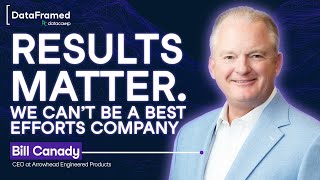
Bill Canady, CEO of Arrowhead Engineered Products, walks through a 100-day turnaround process for failing industrial companies. He grew a Toyota account from $40 million to $250 million by using Pareto analysis to identify top customers and products, then automates repetitive work with AI and RPA to cut turnover and improve safety.
Chapters
Welcome to Data Framed. This is Richie. Today we're looking at what to do when your business is failing and you urgently need to turn it around. Our guest is Bill Kennedy, CEO at Arrowhead Engineered Products. He was brought into this role as the company was having a tough time. And he's written a book about his experiences called From Panic to Profit. The book discusses his framework for how to turn around a company that's struggling. And that's what we're basing this episode on. He's pulled off this turnaround twice, having previously been CEO at OTC Industrial Technologies in a similar situation. Bill CEO roles capped 30 years of experience as a global business executive in industrial and consumer products. So let's hear what he has to say about turning around companies.
You have less than 20% of the information. You're just probably guessing if you have more than 80% of the information, you probably waited so long to get that much that everyone else has passed you. You got to be willing to live in that ambiguity, live in the gray between those numbers because it's always changing. Results matter. We will not be a best efforts company. We actually have to have success. It doesn't matter how hard we try. We're in the game that we have to win some.
Hi, Bill, welcome to the show.
Hi, Richie. Thanks so much for having me. It's great to see you.
Yeah, great to see you. So I guess your book is all about being hired as the CEO of a failing company. Talk me through. What's that experience like? You're walking into a company where everything's falling apart.
Just what happens, you know, it's so interesting. So first of all, it's kind of interesting. It's, it's rare that they change leadership when things are going really well, you know, so it's not always that you come in and the house is on fire, but, but if you have kind of this range of the ship is sinking and is on fire and everyone's abandoning all the way to the companies performing really well. Typically things are going, going poorly. And interesting enough, the worse things are, generally the more receptive people are to help and to try different things. It's when you come in and the sun is shining and the birds are chirping, they really don't want to hear anything. So you show up. First thing you want to do is get your team together and give them a confidence that it's going to be all right. And there's sometimes a bit of panic when you get there. So bringing a calming presence really makes a big Difference.
Okay, that does sound like a sensible idea as you try and calm people down because obviously you don't want everyone to be panicking all at once. So do you have like a process for this or some sort of framework for what you do in order to get things, well, from disaster to being turned around.
Yeah, from, from panic to profit. Right. So yeah, you know, yeah, actually I do. And you know, the interesting piece of it is, is, is, is I have a process. I, I call it 100 day process. And actually the speed that you go through it depends on just how severe things are. You know, if you, if you're worried about making payroll and you know, keeping the side of your bank covenants, things like that, you're going to go really fast. If, if you have more time, of course you'll take a little time. But it's a four step process. The first step is you get your team together, typically off site, and you start with whatever the goal is. Now that goal is set by the CEO or yourself, which is generally tied to whatever you've committed to your board or your investors. Your first step of that is to get everyone understanding what the commitment is and what it looks like. You'll go away and come back in 30 to 45 days. And, and in that second meeting is the strategy. So, so we know our goal, we know what we've committed. Let's just say our goal is to get to 100, 100% of whatever it is on that second meeting. It's what is our strategy to get there that is typically owned by the people who are actually running the business, the Presidents or the VPs, the people who are the daily operators of the business. It's important they own it because if they don't, then they're not going to believe in it. And the third step after that, once you, you get aligned around the strategy of what you're going to go do is, is the, the, the reorganization or the organization you need in order to go accomplish it. So, so if you, if your goal is to get to 100 and we're going to do that by, by getting better at what we do, let's say it's taking care of industrial customers or something, and we know what those customers are, then how do we have to be organized to go take care of that? And then the final meeting, which is generally right about the 100 day mark, is, is the action. So you get aligned around, these are the steps you're going to go do. So it's people setting in new chairs, new skills Getting developed, whatever it is. So it's a, it's a very straightforward process laid out over 100 days that you can thoughtfully get people to. It feels fast when you're going through it, but not as, not as fast as it generally needs to go given, given the situation.
All right, you make it sound so simple. So what was that? So find a team and a goal, figure out your strategy, reorganize the company and then figure out what the next actions are going to be. Yeah, it sounds easy. I'm sure it's not. Okay, so I'd love to introduce data into this because obviously audience cares about that. So talk me through, like what data do you need in order to be able to assess, I guess the state of the company, because that seems like your first sort of step.
Absolutely. So when you show up on day one, your first step you're going to do is you have, you have three goals or, or, or, or situations you really want to address. So the first is everyone's aligned around what good looks like, right? That, that, that's your goal. The second piece is you have to get the data so you can make a data driven decision. Things that are happening, you know, you can argue about a lot of things, but you can't argue about the facts. Right. You may think the facts are good or bad or somewhere in between. And then the third and final piece is you're generally looking for any things you can do to help the company survive. Right. You're looking for, for cash opportunities, raising prices, reducing expenses, anything like that, to kind of help stabilize the business. So in the data piece, the two main sets of data you want is you want to know about your customers and you want them ranked from the best to the, to the, to the smallest. You would the biggest to the smallest. And that's generally by profitability. We'll look at things around just, you know, their gross margin or, or things like that. And then you want to look at your products. What products am I making a lot of money on? What products am I not making a lot of money on? There's some other data that if you can get it quickly, you really want it like people and you know, what are, what are my personnel calls? How many people do I have? You want to look at, you know, where your money is being spent and, and just think, think things like that. But, but you really need to know around your, your, your, your, your products and your customers. But, but sales, material, cost, direct labor, overhead, volume, and it kind of goes on and on from there.
Okay, so A lot of these things, they sound obvious when you say, like you need to know what are your most important products, who are your most important customers, things like that. Is it really the case that when your business is failing, people aren't aware of this sort of stuff or is this just, you're coming into a business fresh. This is stuff you need to understand.
A little bit of both. You'll be surprised about how little the team will actually have a grasp of it. They'll, they'll understand their business, they're running day to day, but clearly something's not going right. And, and typically what we find is when a business is struggling, they're trying to do too much. So they're treating all customers as if they're, they're great. Some customers we lose money on, right? They're treating all products as if the products are the most important. Some of those products we are not very good at making and we can't make money at them. But there is a set of customers and there is a set of products that we make all the money on it. And if you, if you think about those, we put them, we rank them, so we identify what the customers are. In our top quartile. Those are our A customers, right? That's where all the money comes, represents generally about 80% of all the money we're actually making. And it's about 20% of the customers. Now those are just rules of thumb, but you'll find that that holds true. And the bottom piece, the remaining customers, the remaining 80% only produce 20% of the money that we're making. And we'll lay those out. We do the same thing for the products and we start looking at our best customers and what are the best products that they buy. These are good customers and we know they're good because they buy a lot and they pay their bills. And these are really good products. And we know they're good because we make money on them and we sell a lot of them. We want to really focus on taking care of that, make sure those customers are happy and those products are available for them. On the ones that, that aren't doing so great, you know, maybe they just buy an item every once in a while and maybe we don't charge them enough things like that. We have to go and figure that out. And in order to do it, we have to know the data. You'll be surprised. Most people have no idea if they're making money or not on a customer. They just have a feeling about, I like the customer. The Customer is difficult to deal with. They're somewhere in the middle.
You mentioned 80 20. So this 8020 rule, the Pareto principle, I know you're a big fan of that. It crops up a lot in your book. Can you talk me through what you do about it then? So once you figured out who your best customers are, what your best products are, how do you make use of this Pareto principle to then help your own business?
Yeah, that's a really, really great question. So we all grew up hearing about Pareto's principle. You study in school and things like this. And it's basically is just you make the majority of your money, in this case, 80% of your money from 20% of the things you do. Whether it's our clothing that we wear or the shoes that we wear or where we go, we spend most of our time on things that are just a very small subset of everything that we could be doing. And what we find in a business that's lost its way is generally they just have too much of everything, too much inventory, too many customers are not making money, and as we said, too many products with it. So once we have those identified, though, what we'll do is we'll put those in what we call quads and quartile. So we'll put them on a very simple spreadsheet that lays it out and say, these are our best customers, our A customers, and these are our customers that we don't make so much in. Right. These are our B customers. Same things on the products, A's and B's. We'll put our A products with our A customers and. And then we'll just like our best customers, they also buy products we don't really want to sell. They don't just buy all the ones we like to sell. That's an A customer with a B product. Then we'll take our B customers, customers who don't buy a whole lot, but they buy products we really do like to sell. So that's a B customer with an A product. And then we have our B customers, customers that don't buy a lot, buying products that we're not good at, selling B. So it's bb. So aa, ab, BA and bb, Very simple, just laid out. And then there's specific action that we will go and take around each one of those. So a customer that doesn't buy a whole lot, you know, that buys a product that we don't make any money on, we're probably going to raise the price on that pretty quickly because even if we lose that business, even if we lose that business, it's okay because of we're losing money, but by stopping, we actually make more money in our pocket. Right. Then if you look at our best customers buying our best price, we're going to be much more thoughtful about it. The last thing we want to do is lose a great customer that we make a lot of money in. So we lay that out in each one of these and things like that. Let's say it's a B customer, but they're buying a good product, but the customer isn't as valuable. We may do things like we want you to place the order only online or maybe instead of having a salesperson come and calling you go to a website, things like that. Maybe we don't want to actually extend them. Credit. You'll pay, but you'll pay with a credit card. You know, all these actions to really reduce the cost of serving to them.
Okay, yeah, that's really interesting that if you've got a product where there's not many people buy it, but those, those people who do buy it, you know, they're good customers, you're probably going to still need to carry on making that. Whereas if it's a niche product that, you know, not, not many people are spending a lot of money on, then that's something you can get rid of.
Absolutely.
Okay. Actually, do you want to put this into concrete examples if you've got like a real business where you've seen this in effect?
Yeah, 100%. So, you know, we've, we've done through the years of. So if you look at my couple companies, I'm, I'm over now on one of them. We have 40 operating companies in. Right. The other one, bigger, bigger companies. There's about nine operating companies in this. So this is something we look at each and every day and just a couple of examples. So we went out and looked at one, one set of customers we had, and what we found was the vast majority of our business was made out of 20 customers. Right. So we had over, over 10,000 customers. 20. 20 customers. 20 customers made just about all the money for the business. And so we started asking ourselves, like, when we look at those, how do we take. And we, we go. And how do we get more of that? So we needed to grow the business. Our number one customer in this case was Toyota. Right. And when we were looking at it, we were doing about $40 million a year in Toyota, which is a lot of money to be doing in any particular customer. In order for us to really save the business and get it turned around. Our overall number that we needed to go get was $100 million, which sounds. Sounds like a lot. We had 20,000 customers they can go with. We had these core customers, and we looked at. We said, let's just start with the very first customer. What would happen if we sold everything to them that we could sell to them in areas we're already doing now? What does that mean? So we were selling to them only in the US in certain states. So we weren't selling anything overseas. And we were selling them things like pumps and motors and all sorts of products, but we weren't selling them like fenders or tires or anything like that. So had to be the core products in the areas we went through. And we did an analysis, and we recognized that if we had all their business, all their business that we could get, it wasn't a $40 million customer. It was a $250 million customer. For us, just in the number one, the first one in the top of the list, we only needed 100 million for the whole company. In customer number one, it was two and a half times more than what we needed. And when we went through our entire list of these top 10 customers, we found ourselves looking at, candidly, you know, a big multiple of them. And that starts making you think differently. And so we started looking. We looked all the way down at the end, and our average customer on the end of this, these 20,000 customer, their final 5,000 customers were buying less than $1,000 a year for us. But we had a salesman calling on them. We had accounts that were calling them all. All of our past dues were all in this, this section here. So we made a decision. We said, well, on these smaller customers, you're only going to be able to place your orders online and you're going to have to pay for it up front. So we had a website for them. We'd send there. We set them up with their products, and they had to take and pay. We gave them no terms at all. All of a sudden, our accounts payable, that we had to take or, excuse me, accounts receivable, our A. AR I didn't need someone trying to collect those anymore. Those people could be. Could be deployed into an area where. Where it made more sense. We took our salespeople who were out calling on these accounts that were worth nothing to us, and we move them over. And we wound up putting an entire team around the Toyota business. And within about 18 months, we had almost doubled our Toyota business by getting focused on it. And you know what, Toyota loved it. Right. We were able to put more inventory in. We put people actually in their factories. We, we started expanding our services with it and it went on and on from there. That's just one really simple example where understanding where you're making money and then partnering with those customers make all the difference for you. The data shows you that really quickly.
Yeah, that just seemed like again, it sort of seems obvious when you say it out loud that you should put most of your sales effort into your high value customers. It's kind of interesting, but it seems that there's also an angle for automation there. So for the customers who you maybe want to keep, but you don't want to spend a lot of effort on because they don't give you much money. Can you talk me through like how you go about automating these sort of interactions with lower value customers?
Yeah, it's key to us, right. We're using a lot of AI today. AI is a buzzword that's really kind of come come huge over the last few years, but it's been around forever. You had used to call them, you know, RPAs or process automation things. And we put something, we call it around dirty, dangerous and dull jobs. Right. So go back. We talked earlier about accounts receivable, accounts payable. If you look at an accounts receivable team, they'll have literally thousands of emails coming in and out of those on a weekly basis. People are going, hey, you've cut my account off, I need help with it. This bill is wrong. Do something here. I need a credit. And it goes on and on. And typically these teams are understaffed and overwork. It's an administrative function and the turnover in those types of things are just astronomical. People generally don't like the job because you get a lot of people yelling at you. Either you're trying to collect money from someone or some money, someone's trying to collect money for you from you. And it's just a really tough job. Right. It's a very important job. And so with using AI today and these automated processes, you can set it up so when an email comes in, it first goes through a filtering system, right. A tool or an algorithm that, that looks at it and said, okay, this is what they're looking for is can this be handled automatically like simply someone they've gone, they've extended, they've bought more than what their credit limit will let them do. They can take and pull their credit, they can look at our history with them and then either increase the credit automatically or deny the credit and say you have to pay this with a credit card or some other type thing. All that can be handled automatically, right? Second thing that comes in, people get, you know, logged out of their account, get, get stuck from their account. We do it every day. Your password doesn't work. You can have a human being that has to do that or you can make that automated, right? So you go on and on through these things. All of a sudden you're starting to free people up. So in our APAR group, our turnover, when I first took the company over, it was over 300%. People just hated the job and would leave them because of just the way that they're treated with a lot of the, the external information coming in. When we took and put in all the AI systems and this was not easy, it took us a year to get through it. First, you had to figure out what was wrong. Second, you have to fix your system. And third, you have to get a process in that you can automate it. You know, today our turnover in that team is less than 10%. People love the job. They're working on what it needs, a human being. The rest of it's just automatically done with it, right? So you'll find this. These are those kind of dull jobs that wear people out. Same thing in dangerous jobs. If you look at some of the machinery we have, you get too close to it, all of a sudden things like can grab you and do a lot of damage to you. So we think have things on there now like with cameras looking at the machine, light fences, if someone sticks their hand in there, the machine automatically stops down. The camera can take a picture of whatever we're manufacturing and make sure that it's within inspection. You no longer have to physically go in and touch a lot of these things. If you're putting bolts and nuts and things like that in a packet, you can have it. So every time you take your, the, the, the parts and pieces that are coming in and you put them into a bag, that camera can actually take a picture of that AI can look at and say, yes, everything is here. It's a private and accounted for and the light goes from red to green. That means you can move on. So you're seeing this day in and day out. Now what it does is it makes the jobs more satisfactory. Our customers are happy because they're getting what they need. But most importantly, it's freeing people up to go to higher value type jobs. Jobs where it's not A machine to do it. And consequently you get people who are better trained, you get people who are happier with their job, they make more money, long run. And then turnover stays where you want it to be and the company grows. So it's really an exciting time to be seeing all these tools coming out.
I love that story because so often the narrative around AI is always coming to take people's jobs and it's like in competition with humans. But here you're saying like with the accounting example things, the job is so boring, they had like a 300% turnover rate of staff and it dropped to 10% because once people got the best, the better tools, the job became more fun and. Yeah. And people stuck around. So I really love that story. Okay. It does sound though like once you've freed up a lot of these people from these sort of dull or dangerous areas, then you're gonna have to retrain people. Can you talk me through how that works?
Yeah, it just depends, right? Sometimes it's not so much a retrain where people are leaving the job, it's just you're taking a part of the job that they didn't really want to be doing anyway. And now you can get more throughput that's coming through. So instead of having to sort and count and have someone else come back and verify, the machine does it. Now, now the person is looking at it, maybe they're actually assembling the part or maybe they're taking that part and putting it into something else. So it allows them to do something that's higher value. And typically things that are higher value, you make more money doing it. Right. So it's the versus putting the lug nut on a car versus actually wiring the harness that goes into it. Right. So what we have is we look at training around what we call the 70, 2010. So 10% is formal training. It's through. We have what we call the Gibbs process, the Jinstar industrial business system that we have with all of our companies. And we have formal online training where they would go in and, and learn how to do a lean activity like a Kaizen or how to apply and deploy 8020 or. And it goes on and on. We have a vast library of training. So that's the 10%. We expect them to do that on their own. So they're setting out a computer, learning they can do it at home if they have access to the Internet, they can do it during their job, whatever works. The 20% then is some type of classroom and mentorship. Right. Where maybe you and I are working together and you run this machine. I come over, you show me how to run the machine learning or you show me how to key in the code for the, for the computer, whatever, that's the 20% and that's where they're working with another person who is more experienced at whatever they're doing. And then the final One is the OJT, that's the 70%. That's really what we learned. It's like, first time you did this podcast, right, you're saying you got stuff in front of you, probably did a little YouTube search, see some videos, tell you how to hook up your microphone. Next thing you know, maybe you talk to a couple of people. Then finally you got to press the button and start recording. Right. Same thing. In our world, we try to capture that, put it online so they can see examples, do case studies. But a lot of it's just moving them through that process. So if you were, will use the accounting clerk before, before you were really just answering emails and being overwhelmed by it. Now all of a sudden you don't have to do that anymore. You can do the job. You can get deeper into what it takes to become an accountant or a bookkeeper or as whatever it is that you want to do. And there's classes you can take from us, classes you can go where else that's gonna help you in your career progression, your overall happiness, which typically results in more money for folks. Okay.
I think you've got a mix then of people taking courses and then there's like the social aspect with people training each other and then somebody's just, well, you know, you do the job and you find out what you don't know and you figure out how to, how to do your job at some point. Cause you need to. Yeah. Okay, that's interesting. Do you find there's a difference between this sort of reskilling where people, their jobs have changed and they have to like then move into a new area versus the just doing the sort of day to day, I'm trying to get better at my job to get promoted or whatever. That's upskilling.
Yeah, yeah. It's complete variety. Some jobs go away. Right. We don't. The old joke is we don't make buggy whips anymore. Right. So the we, we now have cars and so there's still probably a small market out there that, that people need, need them, but it's not big enough to sustain a lot. So from time to time you will see that the biggest issue I've seen with people as time go by is the technology aspect is you're, you're, you know how to do it manually and then, you know, that goes away or a new way comes in. Now there's something electronic comes, you know, comes out. Now before we were, you know, doing. You do sign papers and then next thing you know you got an email. You had to print it and sign it. Well, Today you've got DocuSign and you've got all these different tools that you have to learn how to click through it on that. The technology curve I see is a bigger struggle for a lot of people than the actual doing doing of the job. That, that time savings. Like I remember the first house I ever bought, so it was my wife and I, and it just happened to be that we were going on a trip at the same time and you know, and so we had to sign some documents and things like that and we went out west. We were out in South Dakota, out at Mount, Mount Rushmore's little vacation. They had the overnight or FedEx the package to us, right, to get it. And I remember we were sitting in a, in like a Denny's restaurant, reading through the paper to sign him and put it all back in. And that was pretty cutting edge at the time, right? I mean, it's like, oh my God, you could get the document today, that same document, I'll get it on my iPhone, I'll open it and then it'll accept my signature. And it's a legally binding document. You have to, as an individual, be, be willing and capable of making that transition from what they call a wet ink signature all the way up to a digital, digital signal signature. And it's tough. Some people are really comfortable doing it, some people are not. I have yet to find anyone who's not capable of doing it, who's been doing the job before. If you could do the job before, you can do the job today. It's just there's generally a technology that's getting between you and what it was. It's like sweeping a foil. One point you probably used a broom, then you get a machine to sweep it and now you got a vacuum cleaner. You, you got to be willing to learn it. Some people really will struggle with that. Those who are going to struggle with that, they're probably going to take and change careers, right? They're going to be looking for something else. You see all sorts of programs out there from companies saying, hey, would you be able to open to this? To going and doing something else, getting retraining A lot of the, our community college system is probably the best I've seen of where you can come in and get retrained to. Maybe you were a clerk and doing something in office. Now you're going to go work a machine and be a machinist. So wonderful jobs, lots of way to go do it, but at the end of the day, the person's gonna have some ownership of it too and be willing to put themselves through it.
Absolutely. So it sounds like one of the big skills you're looking for is like, is that mindset of I'm gonna be able to keep learning new skills. Yeah. Do you wanna talk me through? Like.
Yeah.
What do you look for in your staff when you're taking over this new company?
Well, you know, when you first come in and you're the CEO, you're looking for people who have that continuous learning mindset, right? Who, who, who say, okay, we got to do something different. And I'm going to go with, I have to go. Be willing to try. It's not always easy. And you'll find, depending on the role, a lot of times they'll, they'll blame themselves or they'll say, well, look, I was just doing what I was told to do. Or, you know, you don't understand we were doing. And that's true. Right. There's nothing wrong with it. But now we have to change for whatever reason, and we've got to decide where to go. It's, it can be a challenge to take people from the journey of this is what I was doing to this is what I need to go do, because it may be, it may be considerably different. Right? You, you, you wouldn't be getting a new leadership team, a new CEO if things were going great. So since, since we got to get a change, you know, that means we have to do things differently. And everything from maybe we don't spend the same money in the same way we did before, maybe how we were conducting our business thing, it has to, has to, has to be different. So that willingness and openness to embrace it, that agility and flexibility to go from where you were to where you need to be. Some people naturally thrive in that space. I mean, they love it. They just love the change and the excitement it brings. Other ones feel attacked and they feel unsafe. And when you start creating an environment, people do not feel safe and you start losing people. Right? And you don't want that. But, you know, generally there is some turnover. The best thing you can do for people who don't want to do it or can't do it for whatever reason is help them go and do something else. Right. If they, if they cannot see themselves doing it, then they probably are not going to do it. So whatever they believe is probably going to be the outcome. And then our job is to be a thoughtful human being that helps them, you know, do whatever that next stage is. Either get learned deeper, get that training or go do a new job, wherever that may be. Okay.
Yeah. So certainly I can see how if you don't want to change, then that's not going to be a great situation for the company if you're trying to turn things around. And it occurs to me that, I mean, we talk a lot about data driven decision making on the show. If you are trying to turn around a failing company, then you're going to have to make a lot of tough decisions. So talk about, does data driven decision making, does that hold up in these sort of tough situations? Can you use it to make tough decisions?
Yes. The only way you can really make tough decisions because you got to move it from the emotional to the data driven. So you come in. So things are so look at it from both sides, right? So I'm coming in. It's not going well. We've got to go fix it. Right. And so we identify what we think we need to do based off the data. Now you're the person who's already here and here comes this, this guy and, and he's saying we got to do things differently. A lot of times the staff doesn't know that the company's in trouble. Right. You can look around and see things aren't going well for whatever reason, but you just don't understand how challenging it could be. So many times it'll be a shock. Right? Oh, my goodness. And your first instinct with all of us is, all right, what does this impact on me? Am I still going to have a job? Is this company going to make. I've dedicated a substantial, important and important part of my life to this. Is this even going to make it then? Do I even want to be part of this? Right? Do I like this person? Do I believe in what we're doing? So there's a range of emotion that everyone goes through. So, so you try to get through that. Then the next piece is a lot of the things that that person might be hearing. They'll say, well, we've already tried this, or this is. You've seen this before, right? And now that may be true, but nonetheless, as the leader coming in, you got to get the facts in front of you. You got to understand what it is, and you got to start making decisions based on the facts. And the facts that we live with is data right now. It's not black and white. The data may be black and white, but there's always a lot that goes into it, right? There's timing. And what was that? This was during a pandemic. This was not during a pandemic. Well, this person was here, and they made it miserable or they're gone now, right? So there's so much in there, and you have to be able to cut through all that, right? And you got to form this partnership with them, this kind of give and take, that. That, that. Whereas, you know, it's about progress, not perfection. It's. It's that people have the belief that if they do the right things, not being perfect, but if they do the right things, then they're going to be okay. And you have to create that space for them and show that. So it's important to get some wins. It's important to get people focused as quickly as possible, because the clock is ticking. And then at the same time, you have all the outside influences. So there's you as the leader. There's that employee who has all this coming out, and they're like, well, this wasn't my fault. Then you've got your customers who may not want to stick around, because if they don't buy, then we're for sure in trouble. Your competitors, your suppliers, your investors, all these have a stake in getting this right. So as the leader, the number one thing you're looking for is someone who can. Right. Is able and will. They want to. Right? So it's someone, you know, they come and say, hey, we are where we are. We're going to. Let's get through this together. You're like, oh, my God, thank you. Right? Because you don't have the magic eight ball that you can shake. And it says, oh, just. Just do this. It's. It's people working together to try to solve a common problem that's going to protect everyone and allow this company to grow. And as the CEO, you always have competing thoughts in your head that, that you can go too hard one way or the other. On one side. As a CEO, you're responsible for the success of this business. And there are, in some cases, thousands of people depending on it. There's the employee, their family, there's the suppliers and. And their employees and their families. And it goes on and on. So you got to do what's right for the company. And on the other side you got the individual who's living this every day who needs a job, they got to pay their mortgage and they have children in school and things like. And you want to make sure they're taken care of and they need a raise because heck, they probably haven't had a raise in a while. And somehow you have to get those two to bridge and go together. And you do it just by trying to be a thoughtful human being to where you, you, you weave your way through it. So you've got the data, which is unknown. And it's one of the few things that you can know. I know this customer likes us because they are buying. Now they may hate us, right. But they like us enough that they still are buying from us and paying the bills. And I know these products are producing. So you have these facts. So you start from what is known and then you build around it, but you go fast.
Okay, that's interesting. So all the stuff you talked about there, it sounds like you start with the data, but then the real key to getting to good decisions is through empathy.
Then empathy is the key of it. You know, it's so funny if it's like if you ever scrambled eggs, right? So you take the egg and you, you mix it up. If you beat that egg just a little bit, you get one consistency. If you really blend it a lot, you get a very different outcome in the egg. And how it tastes as a scrambled egg will be vastly different. The same thing here. It's not just the facts of this is what it is, but it's the facts under certain circumstances. And you have to recognize you can have a massive impact on it. That's going to make it some, sometimes a light and fluffy omelette and other times a very dense, you know, kind of a mess.
Okay, I like that analogy. Yeah, I can certainly make a lot of mess with eggs if you do it wrong, for sure. Cool. So just going back to some of the data aspect of things. So you talked about one of the first steps you need is a goal. I'm curious as to what sort of like business metrics are you going to track? Like what are the most important things to track in order to judge is this business still going to be viable?
That is the magic trick. Right? And you know, it's interesting, it starts with really whoever the owner of the business is. Right, Whoever the owner is. And so what I mean by that, if you are a private company, you're owned by an individual or a family. Let's just say as the example, then whatever the goal is, it is the goal or the values of the owner that may be taking care of the community, it may be giving back to the employees. It could be they just want a bigger boat, right? A lot of times what most families value at the core is the dividend. This is how they live, this is the income to family experiences, right? They want to protect that generally, in most cases, not always, but generally because if that goes away, there's no business. So as the leader, you need to understand what motivates them, what it gets them excited, what's working, what do they have to protect. A private equity company generally is wanting to triple the value of their equity investment in five years or less. Three to five years could be more, could be less, they could make one a bigger return. But an industry standard, a good one is 3x in 3 to 5 years. That one's really easy because you know it's about making more money. The only way you can triple the value is make more earnings, right? More ebitda, a public company is by far the hardest one to do because they're a combination of values and mission. The mission is to grow the value of the stock. Three times would be fantastic. The horizon may or may not be the same, but they also are driven by these values that are everything from giving back and, and, and DEI and, and you name it, right? All the different acronyms that are out there today could or maybe will have an effect on it. And generally because they run on a quarterly basis, it starts out at beginning of the quarter. A lot of times around socially giving back, making sure people would look after. And then at the end they know if they miss their earnings, their stock is going to tank. So they have this up and down focus that lasts about 90 days. A private owner, his horizon could be 50 years. And a private equity owner, a sponsor is generally about five years or so. So. So it's knowing, it's knowing who you're working for, understanding what they value, then taking that and getting down to a very simple goal. This is what I have to go grow. The fuzzier it is, it's harder for people to know that. It's harder for them to execute successfully on multiple priorities. The simpler, the more straightforward is the higher probability you have of getting it. So that's the job of the CEO, is understand that translate that into something quantifiable, some type of data, some type of number that everyone can rally around.
Okay, so these all seem like sort of fairly standard business Metrics. But I guess the important thing is just knowing what a sensible goal is for whoever's paying you or being in.
Charge of you, then, okay, it is pretty straightforward. There's nothing magic in what we do. The real issue is if all the companies I've came in and been CEO been president of, all that I have. Yet when I. I go in that first meeting and I sit down with my leadership team, I say, what is our goal? What does success look like? I have yet to have one group that knew it. Never. It's never happened. Right. They'll say, I got to sell more. Well, how much more? Whatever my budget is, I. I've got to do this. It's all. You'll be surprised. They will not know it. Even though, particularly in private equity, we all sign the same contracts that say, implicitly, this is what our goal is. It tells you in the contract. I've yet to have anyone who knew it.
Interesting. Yeah. Okay. So that certainly seems like it's an important job of the CEO to get at least all the management team on board with what their goals should be for the company.
Think about this, Richie. If tonight, when your wife gets home, or maybe she's home right now, you get done with this, you go in and you ask her, you say, honey, what does success look like for us? And quantify it. Not just a happy life and all that. Quantify. You think you and her would have the same answer?
Yeah, absolutely not. I could even quantify it for myself right outside.
I say what? She goes like, first of all, leave me alone, right? And second of all, why are you bothering? Right? But. But it's interesting. We were with these people every day. We typically spend more time with the people we work with than anyone else, and we are not all working after the same goal. Wow.
Okay, so that seems like we need to talk about, like, how do you form this plan then? Is it just a case of CEO says this, or like, yeah, how do you get everyone on the same page?
You start from day one? Again, sounds easy. And everything's easy to the person who doesn't have to do it, right? So for me, I put in a very. Not rigid process, but a process with dates and times and. And this is how we're going to decide. So in private equity, I know what the goal is before I even get here. It is the goal of the private equity owners, right? And they have determined, based on industry norms, numbers, what they expect they're going to get that in order to get the return they seek. This is what it looks like. And it's just a number. You're at 50 today. Your job is to get it to 100. Okay? Says it right in the contract. The only way I get paid is to go to 100. I know that everybody on my team has that same contract, right? You start with that. And then this is where the magic happens, Richie. You say, how. How do we go from 50 to 100? How do we do it? How do we do it? I like to use military analogies because we've all read about and seen and on the news things in wars and all that. So the general says. So the president says, success is winning the war. The general says, all right, to win the war, we got to go to this country, right? We're going to go to this country, we're going to take the capital, whatever. It's obvious. We know that is what winning. Everyone will agree on that. The general gets his. His. His. His colonels and his. His staff together and says we have to figure out how to get to the enemy's capital. Everyone agrees on it. Now the question is, Richie, do you think the general should figure out how to get to the enemy's capital or should it be his staff?
Oh, man. Yeah. So that's gonna be tricky. Like, you can have a lot of staff with a lot of different opinions. And so I guess the staff have to come up with the ideas, and the general has to sort of pick one.
Well, that's almost for sure. That's exactly right. So the staff will say, well, we can go by boat, we can go by air, we can go by land. I'm taking this analogy way too far, but you get my point. So they all come back with their thing, and it's typically tied to whatever their specialty is. I'm operations, I'm sales, I'm finance. And then you all get together in the room and you have to pick and. And each person has to do theirs. So the salesperson has to go sell more. The operation has to run better, but it has to be aligned to the goal of taking. Taking the flag of the enemy. Right? Go capture the flag. It has to be aligned around that. And so since you've picked the flag, you know where it's at. Everybody knows where the flag is and what it looks like. They have to do their part. If you tell them how to get there, they almost will for sure fail, right? Because they'll say, well, you know, Richie, you told me that you got. I want you to go by boat. Well, you know, I'm not a Boat person. I'm a plane person. Right. Instead, you have to say, look, you're going to go. You got to go capture the flag. You tell me how you're going to go get there, and then you hold them accountable. You have to look at it. You have to look at their data that says they can do it. They have to lay out plans that tell you, this is what it looks like. This is where we are going to muster our troops. This is the equipment we need. This is our plan, our strategy, everything. They have to put that together. If you do it, they will not believe you, they will fail, and they will blame you for at the first signs, because they'll go, not my plan, not how I would have done it. So the general will pick the target. The staff tells you how they're going to get there. That's the strategy.
All right. I love the idea of empowering workers to make their own decisions about how they go about doing their work. I feel like we have maybe taken the analogy too far. I think there's going to be a lot of listeners beginning, like, I'm going to go and invade my. My. My competition. Yeah, I want to go out and take over Coursera now myself.
Yeah, yeah, I agree with you. But this is the same way in any business or anything else. You got to pick what the goal is. You have to set the goal as a leader, and then the team has to say, this is my strategy of getting there. Right. This is the strategy of getting there. You have to agree to it. And a lot of times it's around, we're going to sell more, and we're going to do it at a cheaper basis. They have to be the ones that own it, because they're the ones that are going to go out there and figure out. Because every, you know, Mike Tyson made the faith. Everyone's got a plan till they get punched in the mouth. It's the same thing. We have a plan of getting more customers and things like that. But as soon as we make a move, our competitors can make a move, our customers can make a move and all that, and they have to be willing to be flexible and make the changes. And you do that simply through data. Right. You look at it and you say, given my team and what I'm strong with and weak, and given this data, how do I best organize myself?
Absolutely. And it seems like the trick then is monitoring what's going on. So I think it's a topic dear to the heart. Many data people. How do you got about monitoring stuff? So Once you've picked your targets, you've got decided, how are you going to go about doing it? How do you make sure you're on track?
There's a lot of ways to monitor it. They're probably all good. We use, if you go back to the. This is using lean terminology called policy deployment. We have a tool that we use based off of policy deployment that we call the strategy management process. But it's basically taking what we agree on and then we lay it out in Excel or whatever tool we want to, and then we'll have monthly meetings. Where are we on track? Are we behind or ahead or wherever we are? And given whatever is happening, what are we going to do about it? Right, so we have a series of monthly meetings, quarterly, monthly, weekly meetings that a team gets together and say, where are we versus where we thought we would be. And it's all monitored really just through the, through data. So in terms that we use, if you're familiar with policy deployment or any of your teams are things like the X matrix and bowler charts and a threes, all that. So if anyone has done any of that stuff that, that will resonate with them. But the important piece is you just have to write down what your goal is and measure where you are to it. And you need to look at that as a whole team at least once a month. The team that's doing it needs to look at it every week. And then the individual is probably looking at it daily and it stacks itself all the way up. And you constantly are evaluating where you are and given that result, what should you do? Should you do more? So stop, start or go, you know, or, or continue. So should you do more, should you do less or should you modify?
Okay, I do like the idea of the stop, start, continue tool. Just say, well, are we doing stupid stuff or not? Or are we doing good things? Which one should we continue with? All right, wonderful. So before we wrap up, I think we need another happy story. Do you have any more success stories you can tell us about of businesses that have been turned around?
Yeah, absolutely. So, you know, recent one that we did, we came in the business was about $700 million top line, about 70 on the bottom line, and was worth about, about $700 million in 18 months. We were able to get ourselves together, take it from 9% EBITDA to almost 18% EBITDA. And that was really through just deploying the model. And in that time, so the business group was 700 million to over a billion dollars and almost $200 million on the bottom line. And it was really nothing more than just doing the basics. Right? And the basics, no matter what toolset you use, are always the same. Get aligned around something, use data to do it. Once you get aligned around it, make sure you empower the people to go out and make sure they've got a good plan, and then hold them accountable to go do it and do regular reviews, the monitoring that are coming in and out with that, and you know what happens with that. You start seeing things like investments go back into the companies, the company grows and jobs get better and people make more and more money, morale goes up. It's a huge difference that it. That you make in people's lives by coming in and just focusing on the critical few things, making sure your people are trained for it, and then giving them the power that they can make those decisions, creating a safe zone where they're comfortable failing. Right, because if you're afraid to fail that, you know, one failure now people, they can't handle it. It's too much pressure. You got to have these steps and places that people can come in, try, see what works, and then, you know, keep getting better day in, day out. So it made a huge difference for that one business. And we, we have dozens of those stories.
That's pretty. I love that. Just doing the basics and, well, using data to figure out what are the basics you should be doing. That's the difference between having a viable business and not having a viable business. So it just seemed incredibly important as a very nice story. Now I have to say I'm very impressed that we've got through this whole podcast all about panicking in businesses and not talking about the Hitchhiker's Guide to the Galaxy, which famously has Don't Panic on its cover. So I think we've done very well.
Well, the one thing they taught us, what's the most important thing in the. In the universe? Oh, you remember the number?
Oh, 42.
Of course, 42. There you go. That's all we're looking for right there. So I love that book. I remember the first time I read it, but geez, I was. It's probably 30 years ago or so. It's been around forever. And I thought I discovered some magic manual to the universe. You know that. But there's. There is a lot of wisdom in, in that book about, you know, being open to ideas, trying things, and trying to figure out the secret to the universe. And I think that, you know, we each have our. Our own secret, and it's about treating people with dignity, respect, get. Creating a safe environment where, where, where they, where they can excel. I, I have these four things I call the four commandments that I believe you can run any business with. Right. And these are in no particular order. So. So the first one is be data driven. You and I have talked about it. You know, if you have less than 20% of the information, you're just probably guessing. If you have more than 80% of the information, you probably waited so long to get that much that everyone else has passed you. You got to be willing to live in that ambiguity, live in the gray between those numbers. So because it's always changing. The second one is be on pace, don't be too fast, don't leave everyone behind. Don't be too slow, don't be a bottleneck with. There's a right pace you have to go to keep everyone together and get successful with it. Be or no surprises. No one likes surprises. Right. Because they're generally bad. So bad news, relatives and fish all stink after three days. So make sure people know what's happening. Don't kill the messenger. Make it a place where people can come and tell you so you can do something about while you have time. And then the final one I actually think is the most important and that is results matter. We will not be a best efforts company. We actually have to have success if we're going to keep in the game. Because it doesn't matter how hard we try, we're in the game that we have to win some. And so this is an exciting place to be. These are exciting things to do. If you take those four principles, you can lead any company out there because people will understand what your intent is. We're trying to do better for everyone.
Magnificent. Alvin. Four principles all sounds like good advice. Yeah, I do like that joke, but yeah, bad news, relatives and fish all sticking up for three days. Very funny. Nice. Okay, thank you so much for your time. Bill, it's great chatting with you.
Thank you, Rich. It's great. Thanks for having me on there. Have a great day now. Sam.
More from Richie

#359 My Best Friend is AI with Valerie Tiberius, Professor of Philosophy at University of Minnesota







How AI Agents Will Work While You Sleep | Ruslan Salakhutdinov, Professor at Carnegie Mellon

#358 How AI Agents Will Work While You Sleep | Ruslan Salakhutdinov, Professor at Carnegie Mellon

