#314 How to Have a Career in Data Science in 2025 | Dawn Choo, Co-Founder of Interview Master
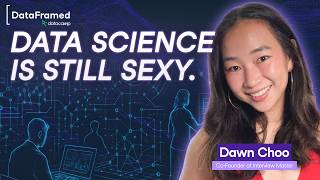
Dawn Choo, former data scientist at Instagram, Amazon, and Meta, explains how AI is reshaping the field. She uses Cursor and Claude for rapid code generation and research, stresses SQL and window functions as core skills, and advises early-career candidates to build portfolios while senior ones should quantify strategic impact.
Chapters
I think a lot of people have been worried about AI replacing data science jobs or just tech jobs in general. I seen the opposite, I think, with data science roles where there's an increase in demand for data science roles because of AI. So, yeah, I think still a pretty sexy career if you ask me. When the AI wave first started, I was so scared of what was going to happen and how much was going to change. It, like, almost made me hate AI right away. But then I realized like, okay, that's like a wave that we gotta just go head first into. So you gotta recognize that like this change is happening, you have to adapt to it.
Welcome to Data Framed. This is Richie. Almost every technical job is undergoing an upheaval right now, and that includes the data scientist role. Today we're going to discuss how being a data scientist is changing what technical skills and soft skills you need to succeed and, and how to get hired or promoted. Our guest is Dawn Chew, one of the top data science career advisors. She's been a data scientist at Instagram, Amazon, bank of America and Meta. These days she runs Interview Master, a data science interview preparation platform. Let's hear what dawn has to say. Hi, dawn, welcome to the show.
Hey, Richie, thanks for having me.
So, to begin with, back in 2012, there was this article that went viral about how data science is the sexiest job of the 21st century. Now, I always feel like there's a big misunderstanding about what sexiest means, but is data science still cool?
Well, you're asking a data scientist, so I am a little bit biased, but I must say yes, still the sexiest job of the 21st century. I'm not really sure how they define sexy, but to me, as someone who is in the industry and working with data, I define sexy as are we able to add value into the industry and is there still demand for data scientists? And both of those are still true. I'm guessing we're talking kind of in the age of AI, right? I think a lot of people have been worried about AI replacing data science jobs or just tech jobs in general. I seen the opposite, I think with data science roles, where there's an increase in demand for data science roles because of AI. So yeah, I think still a pretty sexy career if you ask me.
Okay, that's good news. Like if I go to a party, it's still okay to say I'm a data scientist. I mean, sometimes every time I work in AI and that actually goes down quite well. But in general, talk me through. Since generative AI has been kind of like the biggest hype thing over the last couple of years. How has generative AI affected the data science role or data scientist role?
Yeah, I think it's affected in a few ways. Um, the first is obviously in the day to day workflows. Right? There is a requirement almost or yeah, I would say a requirement for every data scientist to be able to incorporate AI into their workflows one way or another. You don't have to. So it's not like a hard requirement. Right. No one's going to tell you, hey, use AI, but if you don't, you end up falling behind. So that's kind of like the unwritten rule of how gen AI fits into the data science world. Right now everyone in their day to day jobs are using AI to make themselves more efficient. The other way gen is impacting the data science role is that we're starting to see a lot more roles open up in the AI space like the traditional data science role, but in the AI space. Right. So you could be a product data scientist. So that's kind of what I did at Meta in the past. You could be a product data scientist, but the product you work on is AI itself or an AI application. So maybe you work at OpenAI or Anthropic or you work at a company trying to incorporate those AI products into their own product. And then the third piece is of course these like AI ML engineering roles. We've kind of seen that evolve a lot over the years. For a long time it was very ML heavy. You're the person who's building the ML models and putting them to production and then now we're just seeing that shift over into the AI space. So learning how to implement AI models, train AI models for your company's use case. So I would say that's probably the three ways I see it impacting the data science job. It obviously changes a lot month to month, even week to week. So who knows what it'll be like in a year.
That's pretty cool. So I like that. So you can either use AI to make yourself go faster or you use data science in an, in an AI application context or you can just like I guess the machine learning stuff where it's like I was just writing Scikit learn code, now I'm doing something with, with fancier AI models. Maybe we'll, we'll take that first one first then. So talk me through. What are the ways you can use generative AI to make yourself go faster as a data scientist?
Well, okay, so the ways I use It I'm sure there are even more ways. I feel like every, every few months I, you know, there's a paradigm shift in the way we work right now. I use it a lot, right? Basic code. So stuff that like used to take me a long time to write, I can get AI to do it for me. So I'm a huge fan of cursor. I've been doing all my Python analyses in cursor now, even though it's a little bit clunky. But one of my favorite things is to tell it to write me Python code for generating charts because I never figured out charts, right? Charts to me is like it's never worth the effort. I just take the data I copy and paste into Excel or Google Sheets and it make my charts there because I know I can make it pretty then. But now with AI, I just say to Cloud's probably my favorite. Sonnet's probably my favorite model right now. So I'll say like to Cloud Sonnet, hey, make me this chart. I want it in a two by two matrix. Chart one looks like this. Chart two looks like this. Chart three looks like this. Chart four looks like this. I specify the colors, I specify the titles, the formatting, everything, and I just click generate. I go grab a sip of water and within a few seconds I have code. Um, so that's the first use case for me, coding especially for things that I've never really enjoyed doing. The second piece is around the communication. A lot of times a data science, a data scientist spends a lot of time writing documentation, right? So there's like documenting what you've done and then also writing out the implications of what your work means for the business. That takes a ton of time and it still does, honestly with AI because that's the value add you have as a data scientist. So you still keep doing that work. But I found I can give it a bunch of gibberish, almost like a stream of consciousness writing. And I just say, clean this up for me. That's a good use case, I think for ChatGPT. So I would just say I literally would just like close my eyes and type as fast as I can. Anything I'm like, that comes to mind. And then I copy and paste that into ChatGPT and say, here's a gibberish of my thoughts. Clean it up for me. Keeping my sentence structure, keeping the thoughts as they are, just polish it up. And she does a really, really good job with that. That has made me a lot more efficient because I don't have to like polish. As I'm writing, I just dump my thoughts and then have ChatGPT basically clean it up for me. And then there's also obviously a lot more like context gathering that you can do with AI, especially with the Deep Research functionality that like, can't remember who started Deep Research.
I mean, there's a few of them around now.
Yeah, yeah. But every company has one now, so using Deep Research has been really, really interesting. Right. So in the past, if I wanted to know, like, what is the benchmark for open rates for a marketing email for an E commerce company, I used to have to go, you know, Google it and then read a few articles, decide which ones I trust, and then compile like a range. Now I can go to ChatGPT or Claude or Grok or whatever and say, here's my question, think on it. This usually takes a little bit more time, but you know, let them think on it and they come back with like an 18 page document that you can read with everything summarized or the sources cited. And so it really saves a lot of time there too.
Okay, nice. I mean, all great use cases there. Certainly like you mentioned like writing code and like there are definitely some bits of code I enjoy writing, but other bits you're like, well, it's kind of tedious. And being able to outsource that to technology also like, is very, very useful just, just for your mental health, even if you don't care about the productivity gains. I also like the idea of cleaning up gibberish thoughts. So I mean, as a podcaster I have plenty of gibberish thoughts. Try and convert them into something sensible then. Yeah, that seems incredibly useful as well.
You know what has been. Can I give you some a tip that has been really nice for me too. I started using Super Whisper. Have you used it?
I don't know. Super Whisper, tell me about it.
Okay. I think it's also some kind of AI company, but what they do is they basically take your voice and they transcribe it for you and they do it with quite good accuracy. So kind of like text to speech on an iPhone or something. I basically have the same thing on a computer, which makes like dumping out thoughts even easier. So now I don't even have to type. I just like speak my thoughts so it saves even one more step.
Okay, I like that. So not even bothering typing, just I ramble a bit and then suddenly that's going to turn into some kind of coherent transcription and hopefully a nice report. Okay, that seems like a useful, fairly simple workflow improvement. Then that you can use technology for. Do you want to talk me through the second thing you mentioned before about how data scientists are now taking part in like creating data products or AI products and things like that? Yeah, talk me through what's that involve.
So I personally haven't worked in this space, but I have a few clients and friends, ex coworkers who kind of moved out from like a traditional product space. So let me just define what traditional product space is. So let's say I used to work at Instagram and I worked on stories. I didn't, but this is an example. Instagram stories would be like a more traditional. Maybe consumer phrasing product would be a better way to think about it. A lot of people have now moved over to companies like OpenAI Anthropic Perplexity, and now the product that they're working with is not Instagram Stories. It could be like Perplexity Search, for example. So you're using the same techniques and the same way of solving business problems, but now you're applying it to an AI space. Some examples of companies, they're not like AI companies, but are tech companies implementing AI, I think have done it really well. Notion is one. Zapier is another. Companies that like have integrated AI into their space and then of course they have product data scientists or just product analysts, data scientists, etcetera, Working on those products to make it better.
Okay, yeah. So if you're, if you're building like a product, whether it's software or something else, then you really are going to need data scientists to say, well, you know, which features should we have and you know, which one should we not and what works and what doesn't?
Yeah, yeah. A lot of just like, are we doing well? Is this really what we should be doing? What should we do next? Those kind of strategic business problems.
Okay, yeah. So I guess like the stuff we were talking about before, like competitive advantages like using AI to make you go faster. This is about like making sure that you are doing the right thing, so going in the right direction as well. I'd like to talk a bit about SQL because you are, at least from your social feed, you are one of the most enthusiastic people about SQL that I think I've come across.
Oh, I'll take that.
Okay, so tell me, what's your favorite bit of SQL syntax? Is there something that you think more people should know about?
I like window functions a lot. The reason I say that, a few things. A few reasons from my past. One, I used to switch between SQL and Python Because I would be able to do a lot more complex processing in Python and then I'd switch it back to like Excel or Google Sheets or something else. Like I kind of just move my data between the different tools based on what is most effective for what I need. And then when I found window functions, I realized a lot of the processing, the more complex processing that I'm doing in Python, maybe I'm doing a loop instead of having to do a loop in Python. I can do that directly in SQL with a window function, which makes it really efficient because SQL is very good for hitting large databases and processing large amounts of data. So I can take a lot of that processing, I'll do downstream in Python and move it upstream into SQL, do that with window functions. So that's my first window functions story or reason why I love SQL. And the second was I had this interview at Google, I want to say like 20, 22, 23. Sometime around then I had a SQL interview for my first round app. point I was pretty cocky about how well I knew SQL. I don't think I maybe practice for that interview. I went in there, got a question about window functions, could not do it. I actually got lucky because the interviewer let me switch to Python. So I just did it in Python because I could do it in Python. But then it made me realize like, hey, I think I'm missing out a big section of what SQL could do if I understood window functions. And so I've kind of gone a lot deeper into window functions and it really does make a huge difference in terms of like how many lines your query ends up being, for example, how many times you switch between Python and SQL. Window functions, I think is one of the more powerful things you can do within SQL.
Absolutely. So yeah, it's one of those really important things that not many people know about, I have to say. It's one of those things I only use occasionally. And I do have to look up the syntax every time because it's a remarkably complex syntax compared to it in Python. Okay, yeah. So window functions, horrible syntax, but very, very much worth knowing about. Okay, cool. So SQL's been around a while. So I mean, last year we had Don Chamberlain on the show, so talking about like 50 years since, since he created SQL. But is anything changing? Like maybe not so much on the SQL syntax front, but other like things happening at the database level but worth knowing about?
Yeah, I don't think SQL has changed very much, but I will watch the episode of the creator SQL. I missed his name, but I will, I'll watch that so I can, I can get his perspective. What's changed in SQL? I think there are a lot more tools that have been built that are wrapped around SQL. Maybe wrapped is not the right word, but tools like DBT Airflow, basically these products that help you build out a database and your data pipelines really easily. A lot of these have been gaining a lot of popularity. I'm sure they've been around for a long time, but gaining a lot of popularity in the last five to 10 years. And so some of the data science job has kind of shifted over to being able to do more ETL type work because now it's a lot easier for anyone to do it. Right. So as a data scientist in the past, maybe you're only a consumer of data. Now there is an expectation because of these tools and how it's allowed us to make SQL and ETL pipelining a lot easier. A lot of the data science job has kind of shifted further upstream into the data pipeline database creation piece.
Oh, so this is interesting. So I think when the data scientist role sort of first started out, it was just like we actually need to hire like six different people with different skills like statistics, programming and all the rest, but we can only afford one person. It's a very general role and it seems like it's becoming slightly more specialized in different areas then. So can you talk me through the flow then? Because you've got like data engineers, you've got analytics engineers, you've got like data analysts and business intelligence analysts and all that as well as the data scientist role. So you. Yeah, talk me through how all these roles differ.
Oh, I'm scratching my head a little bit because I feel like they are different, but they're also the same in a lot of ways. As one data professional you should be able to do. If you think about a funnel, which we'll talk about in a second, the expectations of data professional is you should be able to do your job one step above the funnel and one step below the funnel. Obviously that differs depending on what company you're at, what industry you're at, or even like where you are in your career. But generally the way I think about it is at the very most fundamental layer, we have your data platform engineers or data engineers. I think a lot of times they use interchangeably. These are the people who are writing the code that builds out your data ecosystem. Then we one step up from that. So people who built on that data engineering work. We have your analytics engineers. Analytics engineering. I Think it's a very, very new role. I've only really started seeing pop, seeing it pop up the last like two to three years. But they would, I would say they're like data engineers but with product and business knowledge. So the, what they do is they're very familiar with the databases and the data pipelining, but they also incorporate the business logic to basically make the data that you have more easily accessible and more easily usable. So I'll give you a specific example because I think that was kind of vague. Maybe we have in our pipeline something like every single login attempt that a person has ever made ever on let's say Amazon, okay, so we're going to go Amazon. So now your analytics engineer might say, okay, that's going to give us billions of rows that is not going to be accessible to an analyst or data scientist to do their analysis. And so let's take that data and aggregate it into forms that a data scientist or data analyst might be able to use. So instead they might create these aggregation layers which are say for this user ID on this day they attempted to log in 5 times or 0 times or 1 time. So now you can imagine the table goes from like billions of rows down to something like a few million, which then becomes a lot more usable. So they are very much the creators of the analytics layer of your data. So from an analytics engineer one layer down for that, I think it roughly branches into like three roles. So these are now you're starting to look at consumers of data, right? So you have your machine learning engineers, they're taking the aggregated data, some level of aggregation of the data, and they're building UML models and putting those in production. You have your data scientists, in this case, maybe like a product data scientist who is making sense of the data, all your consumer behavior data, your historicals, and coming up with strategic recommendations for the business. So in this example that I gave, for example, they might say something like, users who log in more than five times or attempt to log in more than five times are probably a bot. We might want to consider removing them from the system or blocking them. And then the third layer would be your data analyst, your business analysts, these folks. Honestly, again, I feel like the data scientist, data analyst roles can sometimes merge together and seem very similar. But your data analysts might be more focused on say building out reports or building out dashboards so your stakeholders, your non tech and your tech stakeholders can easily access the data without having to write any queries. But yeah, roughly that's how I think about the, the system of data flow across the different roles.
Okay, yeah, that's interesting. So you got like the, I'm taking data from absolutely anywhere data engineer and sort of shoving it into your data warehouse and then the analytics engineer is next, providing some kind of semantics on top of that. Then data analyst or data scientist goes and analyzes it and then you got some sort of business person consuming the result. That sounds about right. So I'd love to talk about like what I. The hiring process. So if you are a hiring manager or if you're looking for a job as a data scientist, jump me through. First of all, like what sort of qualifications are generally desired for this?
So there is tech experience and then there's like soft skills experience. The way I generally would think about them. On the technical side, we have your coding languages, the most common, SQL and Python. Python and R kind of used interchangeably. To be honest, I see Python used way more in the industry than R. My recommendation, if you're going to learn Python or R, just pick one and pick Python.
I have to say no. This makes me very sad because I came from the R community. It's like, yeah, it's just sort of dying out when it's Python's taking over everything. So I'm okay with Python though. Python's a nice language. Sorry, carry on.
Okay, it's easy to switch between R and Python, so if that makes you feel better. Okay, so text field swipes, we have Python and we have SQL. Then we have your foundational understanding of statistics. Right, so that's understanding everything from probability to basic machine learning models. Of course, if you choose to specialize in machine learning engineering, you got to go past the basics. But for most data science roles, I think basic machine learning is good enough. Regression, clustering and decision trees. Those three, I would say are the ones that you need to know. Then there's experimentation. So a B testing, uh, how does that work in the real world? Right, so we all know you do A, you run the testing control groups, you do a T test, you look at the P values. But understanding the nuances and how actually an A B test works in the real world, I would say those are the three buckets of tech skills that you need. Then on the soft skill side, the product sense and the business sense piece is probably going to be the most important. Right. To your point earlier, we are building all of this data and doing all of these analyses so that someone on the business side can use it and consume it. So being able to see things from the perspective of say, a product manager or a business owner, a marketing manager, a sales lead is really, really important so you can make sure you're doing the right thing for your stakeholders and for the business. And then the other very important skill on the soft skill side is communication. I think people don't always recognize this, but communication is explicitly a criteria that you're graded on. So being able to communicate well is as important as being able to write good SQL. And if you fail at communication, you are probably not going to get the job. So communication and product sense, I would say, is the two big soft skill pieces that they look for. And then of course, you know, be a good person. Everyone wants to work with a nice person.
I like that. I think the last one is something that is often forgotten about is like, be a good person.
Yeah, you forget how much people like you when you're nice.
Yeah, definitely an underrated skill there. Wonderful. All right, so suppose you have all these skills. How do you demonstrate them to the hiring manager? Like what kind of qualifications you need or like what do you need to do to show that you have these skills?
Yeah, it really depends on where you are in your career. Right. When you're. Let's just break it down, let's simplify it to being early career and then mid and beyond career in your early career. So let's say you're transitioning into your first data science role or. Or you are just out of school and looking for your first data science role. Typically you want to be able to demonstrate the soft skills in projects or past professional experience, having done those things in your projects and past experiences. Right. So being able to communicate well, it could be you did a casting project for school and here is your final deliverable. Or if you are working in a business, maybe you might not have been a technical person. Let's say you're a salesperson. Right. Being able to show, hey, I was able to understand the business and drive business impact, even if it wasn't like a data skill. For the tech skill side, this is where your portfolio becomes really important. Your portfolio basically would be a repository of all your projects presented really nicely, demonstrating what you did, what your recommendations are and if any, why was the impact. So what could go into your portfolio? Assuming again, this is your early career person, it would be maybe your school projects that you have done and any extra projects you've done inside hackathons or just like, you know, you find a data set on Kaggle and you start doing it, all of those would go into your portfolio. So for early career people, finding as much experience as you can within your school experience, your current professional experience and building out a portfolio for mid to late career folks, you don't need a portfolio. Your entire portfolio is your professional experience. So what you want to be able to do is demonstrate you're able to drive impact or you have driven impact in your past experiences. Impact, I think about it in three categories and this is how we did it at Meta. There is strategic impact. So can you convince your business partners to change direction of the business, invest in a new area, put something new on the roadmap? There's operational impact. So can you convince again your business partners to run an experiment or remove a feature that is broken or something kind of like smaller and shorter term than a strategic impact piece? And then you have your data infrastructure impact. So how do you take the data literacy and the data availability for the company and raise that? So that's things like building out an experimentation platform or improving the experimentation platform, building out new metrics, building out new alerts, basically everything kind of what you imagine data engineer would do or analytics engineer would do, kind of contributing towards that further up funnel pieces that we talked about earlier. But yeah, if you're in your late career knowing your portfolio, the key is to really be able to draw out the impact of what you've done, make it quantifiable to a business impact, and then being able to communicate that through your resume and your interviews. Interesting.
Okay, so I love the idea of like really focusing on the portfolio, particularly the early career stage, and saying, hey look, here's some proof, I can actually write this code. I can like crunch the numbers. I can get to like that business insight. It sounds like later stage career. It's actually slightly harder to demonstrate then because I guess a lot of the stuff, well, I had an impact that's very difficult to like prove in a public way rather than just like, oh well, I have these conversations and you can sort of see in the numbers and you're going to have to trust me a bit. Is there a way to demonstrate this.
For real, for impact for mid to late career people? I feel like it's actually easier because you have more opportunity to actually drive impact and then measure the outcomes. Right. I would say the outcome measurement doesn't have to be so precise. You don't have to be like, I increase revenue by 13.47% with a P value of 0.02. It doesn't have to be so specific. It can be more an estimation of what you're able to do, um, when I think about impact for min. Well actually anyone really. Okay. This is, can be used for anyone. So when you think about impact, I think there are two ways to do it. The first, which is my preferred way which is to measure impact on business outcomes. So business outcomes would be like revenue increase revenue, decrease cost, increased conversion rates, increased increased click through rates. Basically any kind of business outcome that the business cares about. The second option, which is less desirable but also a good option if you cannot quantify impact, it's to quantify scope. So right, instead of doing an output quantification, you do an input quantification. So that is things like I helped manage analytics for a $10 billion, that's a lot $10 million business. Or I worked with 135 data sources and aggregated it. Right. So like being able to quantify how much work you did versus like how much impact you drove. But the further you are in your career, the more important it is to focus on option one, which is the actual business outcomes.
So actually these things sound like they're useful not just for hiring, but also for things like your annual performance review. Even like just anytime you speak to like your boss or another manager, you're like, oh, hey, this is the stuff I've been doing. This is the stuff we've been working on. This is how I've had an impact and that seems like it's going to go down pretty well.
That's actually very good advice. So yes, I would say the whenever you're working, have a list and I always have a doc. I call it like Dawn's Wins. And I just like throw in every single thing that I have done, every compliment I've gotten, I will take screenshots of those and like every measurable outcome that I've driven in that doc. Because every six months or a year, whenever you have to do your performance reviews, that is going to be all the evidence of the work you have done. And to your point, that also can then go into your resume when you're ready to look for your next job. And also if you ever feel sad or down or imposter syndrome, you can just go back to that doc and just remind yourself, okay, I'm pretty good.
I do love the idea of just like keeping a list of like all the cool things you've done and all the sort of compliments you've received. I wish you'd had this conversation a few weeks ago. I was doing my self reflection. I was like, I don't know, I think I'm quite good. I must have done something in the last six months, but so yeah, that seems like a useful thing to do. Write stuff down rather than trying to remember what you did six months previously. We were talking before about the hiring, getting hired or hiring people for data science roles. Talk me through. What does the hiring process typically involve?
Oh yes, very, very involved process for data science roles generally. So typically it starts with a recruiter round. So you talk to a real, let's start even further up, funnel. So it starts with applying for the job. At this stage I recommend trying to get a referral if you can. So if y' all not familiar referrals. Referrals are pretty, pretty much someone at the company will vouch for you and send your resume directly to the hiring manager or to a recruiter. Right. So at the application stage you should try and get referrals. If not, I would just apply directly on LinkedIn. So once you get past that, I honestly don't know what goes on behind the scenes. But my understanding is there is some kind of automated system that reviews your resume and then a shorter list goes to a recruiter and a hiring manager. They decide who they want to talk to. Then this is where your first interview round starts. You talk typically to a recruiter first. So these calls, very low pressure, usually a high level overview of what you have done in your past, why you're interested in this role. The recruiter wants to make sure that you're a good fit before they pass your resume over to a hiring manager. At that point your hiring manager or the hiring manager would say, okay, I want to talk to them. They're a good fit, they're interesting. Then you go into typically a tax screen round. Sometimes these are automated through platforms like HackerRank, I think do them like almost like a test, a SQL test, a Python test. I've actually never done those in my career. I don't know how. I've interviewed probably at 40 to 50 companies in my career. I've never had a test. But the first round typically would be some kind of tech screen. So for most companies it would be a combination of SQL, Python and product or business case study. So the most important skills to have, sometimes they'll throw in a little bit behavioral, sometimes they won't. Then after the tech screen round, they typically will move you on to like a hiring manager or an on site round. So this is the full loop of the most stressful interviews you ever had in your life. No, I'm just kidding. It's not always so stressful. But typically it'll be like four to six rounds of just different types of interviews. This is what you have, your behavioral interview, a coding interview, SQL Python, typically. And then you have a few case studies and then sometimes you'll have a product partnership behavioral interview. So let's say I'm working on a private. I'm working for a sales data science role. Then I might talk to a sales lead, for example, on that round. Sometimes they have take home assignments. Right. So they give you a very intensive case study. They say you're 24 to some two hours to finish it and it's your turn, your time to basically show off everything you can do. It's typically a case study that you do on the job. You want to show basically your entire process without having to talk through it. So very good documentation. Okay, so that was the take home. Then you go on the full loop. And then now what I've seen more and more commonly are these culture fit rounds. I don't know how I feel about them, but I've done a lot of them. But they're basically rounds where you interview with very senior people at a company or people you would never work with. What they want to do is evaluate whether or not you are a good culture fit, which I don't like those interviews because I feel like culture fit is such a vague term and I cannot prepare for it. It's hard, I think, to protect against biases in the hiring process when it is so nebulous. But you would just talk to a person and they'll ask you some random questions that like, you're like, why does this have anything to do with my role? I kept trying to think about what some of the questions I've gotten. Someone was like, what is something you've learned recently not related to data?
And I was like, oh, those questions are difficult. I'm like, I'm sure I learned something. I probably listened to a podcast. They were saying some things. I'm not sure. Yeah, those questions are hard. So probably best to prepare for that sort of thing in advance. I guess there's probably a way to get like list of culture fit questions and go through at least preparing some answers for those.
Yeah. And I think it's okay to also just be like, okay, I can't think of anything. Give me a minute. And then use like some silent time to just rack your brains. I can't remember what I came up with, but I'm pretty sure it was something ridiculous.
Uh, yeah, I'm sure. Just like trying to recall some factoids recently. Uh, I don't know whether that's gonna help you get the job or not. Uh, yeah, probably don't listen to that advice. Uh, so that's interesting. Um, so it sounds like you've been in places where you have pretty intense processes. Like there were a lot of interviews listed there. I think it did vary quite a lot from company to. But certainly there's going to be some kind of like screening interview and then a technical interview and maybe a take home case study as well. So yeah, there's going to be a few rounds like that.
Okay.
And suppose you get the job, how is the sort of, how you, how is your performance measured over the first few weeks in a role as a data scientist? Like how do you know whether you're doing a good job off the bat?
Well, the best way to know if you're doing a good job is to ask, I would say just be very explicit asking for feedback. So what I have seen in the companies that have the best onboarding process is you have a 30, 60 and 90 day checkpoint that would say like by 30 days you would have delivered this analysis and talked to decentralized stakeholders. By 90 days, for example, you are delivering on your first analysis, then we're not going to tell you what it is. At this point you should be independent enough to figure out where you, you can drive the most impact. I would say if you go into a new job, if you don't have one of those 30, 60, 90 day plans, get 30 minutes with your manager or 60 minutes to your manager, sit down and write those plans out because you want to have a very clear focus, your first 30, 60, 90 days. And then in terms of how would you know if you're doing well? You have to ask and this is so important, getting feedback. If feedback's not automatically provided to you, which any good manager should know to give you feedback whether or not you want it. But if your manager is not doing that, ask for it. And in fact just ask all the people who you work with very closely. So you have an onboarding buddy, like maybe another data scientist who is helping you onboard. You can get feedback from them. You have a product designer, product manager that you work with closely, get feedback from them too. And you can be like, it doesn't have to be high pressure, you don't have to write anything down. I just want to talk to you, just see where I'm at, see how I can be more impactful. I think it's helpful to anchor on getting some Growth feedback. Because I think a lot of people tend to be very positive, right? So you can, they'll tell you all the good things you're doing but you're like, that's not what I want. I want, how can I be better? But yeah, just ask for the feedback. If you're working for a bigger company, a lot of times too they have written out guidelines on how you should be performing at different levels. So if you're a junior data scientist versus a mid level versus a senior versus a staff versus a principal, you know, here are all the things that you need to be doing for each of those levels. I would go in and be self critical or even have the conversation with your manager with that rubric and say, tell me how I'm doing against each of these things. Or if you're very ambitious, say tell me how I'm doing against each of these things at the next level. Because I want to get promoted. So if I'm already senior, like how am I doing against these staff requirements? Because I, you know, I want to get there really.
The secret is communication. And we know you have the communication skills because that was one of the things you said you had when you were getting hired and obviously you got hired so you must have them. Okay, so yeah, talk to your boss and that's probably a very useful thing to do. I'd like to talk a bit about keeping your skills up to date. Obviously, particularly in the last couple of years like the AI tech stack's been changing like every couple of weeks. Data science stack is moving slightly slow but still changing. How do you keep your skills up to date?
Okay, so I think there are two pieces to this. The first is the foundational skills haven't actually changed. So make sure you're keeping your foundational skills strong. What are foundational skills? Your basic coding language, right? SQL and Python, those haven't changed. And then statistics, so basic probability, basic machine learning models, those haven't changed. Like you need to know those foundations because, huh, who knows where the world is going. But at least for now the AI wave hasn't changed those foundations and those are still extremely important to landing a job and then being successful at your job. In terms of upskilling with all the new tools and everything coming your way, I would say one, you cannot shy away from them. I think sometimes I do this when they're, especially when the AI wave first started, I was so scared of what was going to happen and how much was going to change it like almost made me hate AI right away. But then I realized like, okay, that's like a wave that we gotta just go headfirst into. So you gotta recognize that like this change is happening, you have to adapt to it. Then pick one tool or one part of this wave that you're most interested in and go deep into learning about it. So for me, I've personally looked into building AI products. I've actually gone so far into it, I quit my full time job to go build AI products full time. Pick one thing that you're really excited about and go deep into figuring out what it is. It could be computer vision, it could be application of AI in consumer products. Right. It could be really anything that you find interesting. Pick one thing, stay focused and go and do it. The other thing I would try to do, I think a lot of companies had good intention to do this. I don't know how well it's executed, but a lot of companies try to say 10 to 20% of your time, your actual day job should be about learning. Pick one of the new skills or tools that are out there and use that for you. 10 to 20% of the time. Make it part of your workflow, make it part of your work goals. And so it's kind of like forces you to really get in there and learn them. But I'd say like the world's changing so fast. Just stay adaptable, stay up to date with the news and recognize that whatever you're learning now could be obsolete in a year. And that's, that's fine.
Okay. Yeah, certainly, I think as good advice that you can't possibly keep up to date with every single new tool that's coming out. But just spend 10 to 20% of your work week or whatever. At least spend a few hours each week trying to keep your skills up to date and then just pick something interesting that's going to help you in the job at some point. Except that sometimes, you know, maybe it doesn't work out just to finish up. What are you most excited about in the world of data and AI?
Oh, what am I most excited about?
I know there's a lot to choose from.
Okay, I, I, I'll give my two thoughts. The first thing I'm really excited about is I'm starting to see some tech companies really implement AI very well into their products in a way that makes life a lot easier. So I just started using notions AI and I, my mind is blown. Like they figure out how to search basically across Google Drive, Gmail, Slack and all of your notion docs and can do Research across all of that and summarize it into something helpful. And I just love seeing companies be able to implement AI in a way that is truly useful. I think a lot of companies want to implement AI, but they work backwards from doing AI for the sake of doing it versus like an actual user problem. But I'm starting to see a few companies really come up and do very interesting things with AI. And I'm very excited to be a consumer in this case. I can give you the example I did yesterday. So I do a lot of mock interviews with clients basically to help them get jobs. And yesterday, just out of curiosity, I was like, hey, look through all my mock interview feedback because I use notion and tell me what are the 10 most common mistakes that people make in interviews? And it just went through. And I was like, oh, this is so good. This is the feedback that I write to almost every client that I talk to. And it was just like summarized so nicely and eloquently from me. So that's it. First thing I'm really excited about, the second piece is there are certain things because now I'm building my own business and my own product primarily through AI. There are some parts of it that have been really challenging. As someone who's like trying to bootstrap the whole thing, I'm not paying for a designer. Right. I'm just going to do it all myself. I'm very interested in a world where we can automate design to AI or like outsource design to AI and what that would look like, because I think some companies are doing that pretty well. V0.dev has been pretty good. And just Claude in their regular, like Claude AI interface has been pretty good. I'm very interested to see where that, that goes.
Okay.
Yeah.
So I love it when AI just sort of works and you have this little magic moment and it's actually helpful. There are definitely some products where it's like someone stuffed some AI in there and it's more of a hindrance than a help. So I like it when it does work.
Same. I'm like, sometimes you're like, why? Why did you did this need to be AI? This could have been. It could be a deterministic scorecard. Not even a model, just. It could just be deterministic.
Absolutely. But yeah, the notion examples are particularly interesting because it sounds like you weren't even quite sure what the thing was you wanted to automate. It was like, well, what am I doing doing? Or what's the feedback I give most commonly? So it was like the AI helped you find out what the thing was you needed to automate, like which bits of feedback you need to automate. So that seems pretty cool. Finally, I always want recommendations for people to follow. So whose work are you most excited about at the moment?
Wait. Okay, I have another one for the last question. Can I go back and say one more thing?
Tell me one more thing.
Okay, the third thing, which I just thought about and I don't know, I don't, I don't know enough to really talk about this in detail. I am very curious about a world where you can train your own AI models for cheap. Right. Right now it costs a lot. Not right now, like let's say a few months ago, even a year ago it costs tens of thousands of dollars, even more than that to train your own AI model. But there are recent projects I've seen that has taken it down to a few hundred dollars, even like a couple thousand dollars for a small scale trained AI model. Small scale model, trained on your own data. And I think that's very interesting and a lot of use cases for it. So that's another thing I'll be. I need to learn a lot more, but we'll definitely be keeping my eye.
Definitely. So while the sort of cutting edge foundation models are out of the price range of most individuals, like you don't have billions of dollars to spend. The idea of having just a small model that is tailored to your specific use case, that's very useful for a lot of businesses and possibly even individuals in the future. So yeah, that's something cool to look forward to. So yeah, finally, just to wrap up, I always want more people to follow. So whose work are you most excited.
About at the moment on the AI space? I'm very curious or interested. So the design automation, design plus AI automation thing. I think his name is Peter Scarano. Maybe I. I might be Pietro. Okay, I'll send you the actual name after this. I think he's building something. I'm very curious to see what comes up there. And then do you want to hear about creators or like products?
Cool. Anyone saying cool things?
Anyone's. Everyone's. A lot of people are saying cool things. I don't know, I, I have a hard time with this because I feel like I try to get news directly from the company's sources rather than through other people. The reason I say that is because I feel like every time a new model drops, you have 100 content creators. I'm a content creator myself, so I've probably been guilty of this, but like a hundred people who are just like, this is the best model ever. Deep Sea just changed the game, blah, blah, blah, blah, blah. And then you go in and you play the model. You go read the press releases like it's, it's, it's not, it's not as exciting as people make it out to be, but I think a lot of people are incentivized for clickbait, which again, I'm a content creator myself. I get it. So I think in terms of news, I probably go straight to the sources, but I would say I'm following a lot of the big AI companies just to see what this little, you know, battle plays out to be.
Is anyone else talking about careers in data science at the moment?
Lots of folks. Um, okay. People I love. For careers in data science, I love sai. I would have to give. Oh, gosh. His name's Long Venkata Psy Basani. I will give you his LinkedIn profile. He talks about data analytics, data science. I find him really interesting, very helpful advice, and a lot of times he writes nice, heartfelt things that kind of reminds you, like, at the end of the day, you know, we're just humans trying to do our best. I also like Mary, who does more like AI engineering type career stuff. So if you're like trying to get into AI engineering, she's a good person to follow.
This is Mary Nova.
Mary Nova, yeah.
Previous Data Frame guest as well. Yes.
Oh, nice. Yeah, she's great. Who else? Oh, my gosh. I'm sure if I go onto my LinkedIn, I'm gonna see like a bunch of people. I'm just blanking. Karun, I think, is a good one too. Tang Kachan, he does something which I stay away from doing, which is he takes the most complex AI topics on ML topics and he's like, I'm just going to explain this. I don't care if no one likes it. He's like, willing to take on the difficult topics. I think he's a good person to follow.
Okay. Yeah, certainly learning about difficult topics, very useful. And people who can explain those things in simple terms, it's wonderful for the rest of us. Excellent. All right, thank you so much for your time, Dawn. That was brilliant.
Yeah, thank you. Thanks, Richie. It was so fun being here. I love this. Sam.
More from Richie

#359 My Best Friend is AI with Valerie Tiberius, Professor of Philosophy at University of Minnesota







How AI Agents Will Work While You Sleep | Ruslan Salakhutdinov, Professor at Carnegie Mellon

#358 How AI Agents Will Work While You Sleep | Ruslan Salakhutdinov, Professor at Carnegie Mellon

