#347 Let's Get Physical with AI with Ivan Poupyrev, CEO at Archetype AI
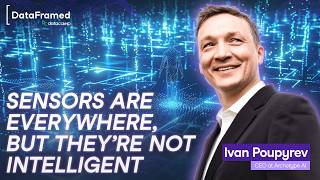
Ivan Poupyrev, CEO of Archetype AI, explains physical AI: embedding foundation models into sensors and devices to interpret data streams and automate actions. He describes three functional layers (insights, recommendations, automation), transformer-based models that run on edge devices, and real-world applications from wind turbines to smart factories.
Chapters
The physical world around us runs on software already anyway. There's a sensors everywhere. Everything right now is sort of not particularly intelligent. It's just an automotive. There's incredible opportunity to deploy foundation model artificial intelligence into everything basically around you. So it's much bigger than robots. Robotics is the first step, but it's going to get bigger than that. Having just like a very intelligent washing machine and very intelligent car and very intelligent H vac system in the home and electrical grid. Connecting all together is one story. But then when they start talking to each other and actually optimize the overall system to achieve better performance, safety, money saving, reliability, detect events which need to be prevented to really kind of taking care of you as a whole system that's sort of like we often think about as like that'll be physical superintelligence.
Welcome to Data Framed. This is Richie. The current AI revolution has been focused on generating text, images, audio and video. The next big AI revolution will be physical AI that is embedding AI in physical objects. Everything from sensors to robots. This requires a whole new class of models and different ways of using them. Our guest is Ivan Pupirev. He's the CEO and founder of physical AI company Archetype AI. His company has built a physical AI foundation model that's been used everywhere from factories to city infrastructure. Previously, Ivan was a director in Google's Advanced Technology and Projects group. He also did tech research at Disney and Sony. So in the words of Olivia Newton John, let's get physical. Hi Ivan, welcome to the show.
Hi Richard, thank you for invitation.
Great to have you here. Now I have a question. Is physical AI just a new fancy word for robotics?
I think physically is much bigger than robotics. Robotics is about having artificial intelligence deployed on robots and self driving cars. When we think about physical AI is the user artificial intelligence for a broader range of tasks in the physical world. The physical world around us runs in software already anyway. There's a sensors everywhere. Your washing machine has probably dozens of sensors and software running that. But everything right now is sort of not particularly intelligent. It's just an automotive. Right. So there's incredible opportunity to deploy foundation model artificial intelligence into everything basically around you. Everything can become a robot for that reason or intelligent machine. So it's much bigger than robots. Robotics is the first step, but it's going to get bigger than that.
Okay, that's good news. It's a pretty broad topic. So from what it sounds like, I mean you mentioned the idea of doing things with sensors and making them a bit smarter. I mean I guess there's been talk like in Internet of things and smart sensors for a while. Is it an extension of that then?
So I think this is like if you think about it historically, the idea of making the world sort of the intelligent and enhanced with computation and bringing this sort of incredible computational capabilities into the physical world. It's a very old idea and it came through many iterations sort of in the history of bringing intelligence into the physical world. And IoT was one of the early stages. What the did RIT did is able to connect all the. A lot of physical devices, get them connected to the Internet, building the pipeline. So until now, like my first sky I was driving, had zero sensors, right? And was not connected to the Internet. There's nothing to. You couldn't update it over WI Fi or over wireless connection because there's nothing to update. It was mechanical, mechanical beast which used to drive around. But with IoT all this infrastructure start getting connected to the Internet, right? And this whole direction of the big data and IoT combined together be able to take the data from the physical world and store it in the cloud. Then use this data to understand how the physical infrastructure behaves, improve your behavior and so on so forth. That was IOT so side of things. Sometimes people talk about oh it didn't believe to its promise. I actually think it actually exceeded the promise because if you think about like everything around us right now, particularly industrial world, everything is connected to the cloud, everything's connected to Internet. The data is completely available for, for all the new machinery has all connect connectivity there. So it was extremely successful in connecting our physical world, digitizing it connected to, to the Internet. Where it's got stuck is like if you think about, talk about some of the partners who took in the industry. If you take a piece of corpuscle machinery, an oil rig for example, it would have thousands and thousands of sensors and thousands of thousands streams of data. And it all goes into some storage and some data lake on the Amazon or some other provider. And then there is just no capability to understand what this data means because data by itself does not have any meaning. It's capturing a certain slice of state of environment and time. But people need the meaning. And where it starts struggling is converting that data into the meaning. And that's where the model techniques for artificial intelligence going to and foundation model is going to change that equation and convert that data into the, into the actual meaning and insight which is actionable and can be used for something to improve the performance and so on so forth.
Okay, I love that idea of building in analytics and getting through to that, well, okay, we've got something actionable just within the software rather than it having to be like, okay, well we've got this connected device and now we've got to hand it over to a data analyst and then they've got to figure something out and then you go back to like whoever's running the device. And I guess that's a much slower process to have things work automatically. And I guess in a lot of cases, I mean certainly you would not have to do that with a self driving car. It'd be way too long to send it off to an analyst to say should we turn left or not? So yeah, talk me through what are the big use cases then of physical AI? Like what are the coolest things you've seen?
If you think about the ultimate goal of course is if you think about the data and data connected to the, you know, coming from the physical world, we often talk to but three sort of levels of physical AI, physical AI and physical intelligence. The first one is insights, right? So getting the data and you know, in most common use cases, for example for the personal user, if you think about it, all the data is being collected by the smartwatch and you know, it measures how many step you took or measures how many, you know, times you walked around, how to connect that to actual insight. So insight is first step, it tells you what's, what is it, it means, right? And there's a lot of use cases just to understand, you know, utilization of your machinery or equipment, understand if there's any failures, known or unknown failures, is there something wrong with that and so on, so forth, right. This insight generation, turning data into the knowledge is one of the use cases. Second use cases is converting this knowledge and data into, into the recommendations. It's not just enough to know that something's happening, but can we use a foundation model and this incredible capability to compress human knowledge to actually explain you what you need to be doing. And you know, when your car is broken, when your complex machinery, a piece of machinery is not performing really well, how can you improve the performance of that equipment? And we have know, multiple customers coming for different problems. You know, a lot of use cases is to discover things you don't know about. I feel like the element of the discovery is really important, right? Because machine learning, classic machine learning can detect things, you know, but you cannot know what it though it doesn't know. With this foundation models and physically I, you can start indicating things which I will not necessarily been Trained for this can be something unusual is happening and provide some recommendations how to deal with this. And the ultimate goal L3 of applications is automation. We often talk about robots as, you know, independent as we started this conversation. So it's robots walking around. But what does it mean to have robotic factory? What does it mean to have robotic cities or robotic office buildings? What it means if your home is automated? What it means when the end. When you start talking about in this level this whole idea of sort of super intelligence changes direction, right? Because having just like a very intelligent washing machine and very intelligent car and very intelligent H vac system in the home and electrical grid connecting all together is one story. But then when they start talking to each other and actually optimize the overall system to achieve better performance, safety, money saving, reliability, detective bands which need to be prevented really kind of taking care of you as a whole system that's sort of like we often think about as like that will be physical superintelligence which actually connect all these things together and achieve this sort of level of automation. So there's three layers in size recommendation automations. We see this how physically I will progress.
Well, I mean that's pretty incredible the scale. I think in my mind I was thinking about these sort of kind of slightly smarter smart appliances. You know like you talked about the washing machine example or the self driving car example. But actually once you start collecting these together like the idea of having a completely smart factory or completely smart city that I mean that's really big scale stuff. So I guess how close are we to this sort of thing happening?
I think it's actually. I think we're pretty close. I mean of course obviously somebody who's working physically, we tend to be over optimistic. But I do believe that the core challenges, as we mentioned with IoT we solve the core challenges. One of the core challenges was getting the data out of the physical world where we can apply these techniques. So building this infrastructure took 20 to 30 years for this IoT the big data movement, right. So the basic, basic infra is lie down. So right now we can start building on top of that. And while I think this maybe creating an all encompassing, you know, foundational model which runs your cd, maybe it's kind of further down the road. But in local use cases where you create a, you know, physical intelligence for, I don't know for the industrial process, physical intelligence for a particular industrial piece of equipment which would consist of multiple, multiple pieces together or distribution center or logistics like supply chain in home use cases in more Kind of consumer use cases like smart home to the degree. Right. So it's all these pieces where your car can talk to your garage. Why doesn't happen right now. Right. You know, everything's unsiled. Right. So like one bringing them together and creating this kind of fully automated workflows around your house. I think it's pretty close. I would, it's, it's, it's just a question of building it.
Okay. I like the idea of like, you know, the future's almost here and I guess, yeah, certainly having agents talk to each other, that's been a big story on the sort of generative AI side in this last year. And so, yeah, I guess having machines talk to each other, that's maybe the next thing coming soon.
Yeah, 100%.
Okay. So you mentioned the idea of a foundation model for physical AI. Now the big story of AI in the last few years it's been large language models. So how, how is a physical AI foundation model is, is it related to the idea of a foundation model for text?
So I think the foundational piece is transformers. Right. It's a piece of neural network design which is, which allows you basically train models on much larger body of data and yet be efficient during the inference time so you can actually build useful applications. Right. So this kind of architecture is broadly used to build these new classes of foundation models. And the biggest difference, one of the key clear difference between LLMs and physical world Physical AI is the structure of the data. Large language models, mostly text, maybe 80% images, 10% or so, and then everything else has much smaller percentage of the data being used. When you go to physical AI, the structure is very different at the inference side, at the use cases side, majority of the data, about 50% give and take is measurements. So if you have the oil rig, there is, you know, gigabytes and gigabytes of oil of data being generated every minute. Right. So there is some data being shown, I think 20 petabytes of measurements being generated in a physical world every, every day or something like that. It's incredible. Incredible amount of data is being generated, mostly measurement, 50%. Then the next most popular data stream in the physical world is video. So about 20% is video and then text is less than 5%. So physical world talks in the language of sensors on the measurement will happen in the physical world. So training the model on sensor data requires different architecture to build those models because he would like to have a sensor, a physical AI models which can capture the behaviors in the physical world based on measurements. So you're using with time series data using as the pixel, you don't use necessarily text. So that's biggest difference in terms of training between LLMs and physical world data. If you want to get performance and the performance in physical AI models is a multiple benchmarks and benchmark at this foundational model is remains is a bigger challenge. As we know, there's lots of benchmarks for LLMs, but in physical AI, the performance of the model have to be physically accurate. Right. Like if you're generating a video of the bear on a cycle, on a bicycle, you know, jabbling ice creams in a circus, you know, physical accuracy probably not important, but if you're generating control signals for nuclear power station to prevent, you know, emergency shutdown, you know, or in changing instrumental, you kind of want to be physically accurate. Right. So these are very different types of accuracy in this different type of relation you're looking for. So the models cannot just rely on text data for training. It has to be grounded in the physical world, grounded in the physical measurement so that it can do accurate, accurate controls and accurate insights and recommendations.
Absolutely. I mean, certainly to go back to your nuclear power station example, you really don't want hallucinations happening there, like it's invented a problem with the station or worse us it's missed it. So I can certainly see how accuracy is important there. You mentioned that a lot of the data is time series data. I assume this is like sensors taking measurements over time. You want to see how things change. Now we've had time series analysis for, I mean, decades now. It's a fairly mature field. So how are these models different than to traditional time series analysis?
I think the world time series itself requires a little bit of qualifications. Timeseed is a format, right? This is how you store data. So you're basically array of the data. Just like images are stored in JPEG or gif, GIF images. And when we talk about analyzing visual data, we usually mean analyzing the content of the GIF or concept of content of a JPEG file, not necessarily JPEG file itself. Right. Or format. So time, similarly, time series data, a lot of time series data analysis is, is basically grounded in financial world data. That's where a lot of techniques went there. And they work, you know, sufficiently well for financial world data. Right. But again, so time series is just a format if it's filled with the actual measurement. For physical world, we found that the classic techniques, statistically based techniques and other techniques, they don't necessarily work as well for physical, physical sensor data. And in Particular where it fails, it fails on generalizing on measurements, for example, across different physical conditions or across different types of sensors or different types of events. Right. So in the physical world, literally the same kinds of sensors, say measuring temperature produced by different types of suppliers would have different data coming out. How can you make sure that the model, you don't have to build individual model for every type of sensor, temperature sensor which made by every supplier, or if you take the same sensor and slightly move it in your device in locations, the whole measurement changes. So how you can make sure that the models can generalize and remain reliable across kinds of sensors and across a specific deployment of the sensors without having to retrain those models over and over and over again. Right. So the biggest people will building, of course people build building models. We ourselves, our team with API, we've been building models for sensor data for a long time. You know, I, I, I, I was, I started my career back at Sony and we were building, you know, like the sensor systems for you know, PlayStation portables and you know, all the devices. We're all very familiar. The problem there is that they very fragile, brittle and they very have to be, they have to be trained specifically for this sensor for specific device which is extremely expensive. Everything is like handmade and everything's kind of boutiquely trained with these devices. The beauty about these models is that can they generalize. The one model can read any sensor in final conditions, any sensor in any locations. And what we discovered with our model with Newton, which we're building, it can even generalize to different physical phenomena it hasn't been trained on. So we have that where we have a demo like an office where you have a mechanical pendulum measured by the accelerometer. And the model is capable to predict behavior of this accelerometer. Even it's never seen this accelerometer before. Not only accelerometer, but also pendulum. So it's completely capability to generalize in physical behaviors which never seen before. Because these models, they're not just simply predicting or simply trying to find the peaks and valleys in the temporary signals. What they're trying to do is to build a world model of the measurement of the physical world. It's a, that's a difference, it's a representation of physical world and not just a analysis of particular measurements and going up and going down and what's going to happen next. And what is particularly important, I think what happens is that when you have this kind of a model, a single model, which can take all these multiple sensors in A single representation that then trees them together is that now you can approach such problems like sensor fusion. So classic techniques have really always had trouble and struggle with fusing multiple types of sensors. And what we work on now in our use case and applications, we're working with our customers. A typical challenge is that you have a piece of machinery or equipment or process which measured by hundreds of sensors and they would like to detect conditions where neither one of the sensors can detect it. It's only by fusion either because the effects are so small. So the sensors individual sensor cannot capture those conditions. A failure, for example, or surgeon's power or some sort of very light oscillations, which are very important because it could be predictable to some failure in the future or unusual behavior. So a single measurement cannot capture them. It's combination of all of them. We can capture those conditions. We have a, we have just a simple example. We have a customer who was, who was, who was building control software for the windmills, you know, for electrical windmills. And they collect maybe like 65 measurements in real time for every windmill. And it's really, really important to keep this windmill running because if it shuts down, windmill shuts down, then they have to buy the electricity on the secondary market, which is at spot market and sells at much higher prices back to the customers. And the whole idea of the windmill, you have a green energy, if you go and buy energy now from fossil fuels, kind of defeat the whole purpose of the green energy. So for them, measuring and completely predicting any potential failure is very important. And one of the conditions they have, for example, which our model was able to detect is even with the speed of, of the windmill of the generator is increasing, because the wind is increasing, but the power dips individually. Nothing wrong with this. Like if you have a power, if you, if you know this, this electrical machine rotates faster, you get obviously increasing speed. But the combination of the two is very unusual, right? Like why, why, why would the speed increase or the power would be dipping. Clearly there's something wrong. And model would be able to detect those kind of inconsistencies in behaviors because it has a world model of behavior that we move. Would be able to detect it directly and without training or without prompting, without instructions. So that's very exciting.
That's very cool. The ability to sort of generalize and be able to make predictions about, I guess about sensors it's not seen before and all that kind of stuff that seems to be, I guess the secret source here. So I know with things like computer vision, a Lot of the models, they kind of work okay out of the box. But then if you want like an industrial use case, you then got to fine tune it and like show a video of like your own product or whatever. Is that the same thing with these physical AI use cases or does it just kind of work straight out the box?
Yeah, I would like to talk about, we talk about our models, right? There is a physical AI is expanding and there is multiple types of different variations. In our case we really focused on the. We also work with cameras. Obviously the fusion between measurements and cameras is very important. So when it comes to vision, fine tuning is important indeed because particularly in industrial equipment, in industrial use cases you just don't have a data set to represent some of the piece of equipment people dealing with there. Right? So you have to teach the model. The model may understand basics of human behavior. For example, you take piece A and piece two, connect them together and screw them together. But you won't be able to tell what kind of part is that. So something's important when it comes to physical actually measurement models. The model which bill is kind of temporal world model for the measurements of equipment. We see that our Model 0 shot generalized really, really well. And again, so exact evaluation of what it doesn't mean we work in this right now. It's all early work. Not that early, but it's a rapidly developing field. But what do we see that out of the box? The model is capable to analyze data across the sensors, multiple sensors. It hasn't been trained on. And in recent examples when I've talked to customers, customers give us arrays of data. We don't even know what the data is. You know, it's like we don't even ask what sensors they are or what they measure. We're looking at that the data is, you know, the structure of the data is correct. This is formatted correctly. And then the more. And then we provide a couple of examples of a data of use case of where the data was broken. Okay, this measurement represents like failure one, this represents failure two. And the model can go and without any retraining, zero should be able to find those failures across sample data they will provide, right? So no training, no understanding what sensors are, and dude in many cases doing better than specialized models which being built by hand. So this capability of generalization is really, really exciting. So philosophically you argue, you can ask yourself, does that mean that the model understands physics? And what does it mean to understand physics? You know, then we often get in this sort of philosophical debate, but practically it Works out of the box. Now, you know, it's there is a customer. When things work out of the box, customers come with us for like really hard use cases. Something which is really, really, really difficult, a lot of noise or the subtle, really subtle changes or data is missing, you know, like, can you solve those use cases? Because that's where like, and in this case usually a small amount of fine tuning actually can solve a lot of those use cases. So this sort of outlines how it kind of works.
Okay, all right. So it seems like you can get some kind of value straight away. And if it's a difficult problem, then maybe you need to put in extra work. So actually on that note, I remember when large language models sort of first hit the scene, it was like it was not often clear what was going to work well and what wasn't. So you'd have some use cases where you think, oh, maybe this is kind of tricky. And then it just work simple prompted. Then other cases you think, oh, this can be easy and it gets stupid answers. So I'm curious what the equivalent is with physical AI. Are there some classes of problems where it works really well now and others where like what doesn't work yet?
Yeah. So the class of physical AI models we are building is built is not like for robots, Right. So we could look at a broader field of use cases. And so I think the biggest challenge in terms of research, right, what we're trying to understand is the explainability, right? So the model, I mean as exactly you mentioned, is like one of the challenges, right? So as you mentioned is that the model works quite well out of the box. But how can we be able to anticipate in which use case is going to work better and which case is going to worse, Right. So be able to kind of be able to predict how well the model use particular kinds of data, particular kind of processes is interesting directions we explore right now. It's just like with OLMs, a lot of. That's a little bit of a. This includes certain amount of trial and error. Right. So explainability and observability of the model. Understanding why works this way is something we are really deeply investing right now. And it's actually quite, quite. Yeah, it's very interesting, very interesting direction because you know, we have a lot of interesting multidimensional mathematics and basically you convert it, if you look at this high level direction, you convert a time series measurement signal of measurements, you combine them together and map into the multidimensional generic space. And now you treat measurement as a geometric Problem. So a lot of interesting work there for one of the example is explainability of results of the model.
Absolutely. I mean I think as models got more complicated to explain, virtual has been like this ongoing challenge. Like you get things like, well, logistic regression, decision trees, super easy to explain. And then suddenly you start getting into neural networks and things like self quite out there. Yeah, absolutely.
But I think, I think we're finding, finding everything. There's a lot of work which done for example on visualization of embedding space. Right. So you have basically you, you map all data in embedding space and then you can visualize how your data flows through embedding space. And you know, but in many spaces much bigger. It's like a multi dimensional, like you know, in our cases I think it's 800 dimensions. So like how you can take the 800 dimensional data points, moving a high dimensional space and map it into something you can see. So this is all very interesting efforts because you kind of discovering how this math works actually.
Okay, so he's mentioned like 800 dimensions for the embedding space. I think a lot of the sort of text models use a similar sort of size of embedding space.
So I guess, yeah, text model is much bigger, like you know, tens of thousands of dimensions like physical, like in our case physics model which we build, which kind of like quote unquote understand physics. It's actually surprisingly compact. What we discovered is that if you capture measure, if you measure the physical world through the measurement and you try to encode it into the, into this embedding space neural network, the representation is quite compact. It actually can run in our cases, our models can like, you know, run on things like Raspberry PI for example, not very efficiently, not very fast, but can run on Raspberry PI. So this is actually very important, very important requirement for physical AI is that it does have to run on the embedded hardware or like on the prem. On the physical hardware like LLMs run on the cloud, you know, you can send it, you can build a cluster and data center somewhere in any way you like. Right. So and then you can run this massive load on these data centers. But when you go to physical AI, if you have a goal how to work with the quote equipment it has to run on that asset. Right. So we fundamentally we, and when we started the company we kind of look like thinking like well, you know, if you run everything in the cloud, everything becomes so easy for everybody who's going to do this stuff? And fundamentally like with most of Our customers right now it must run on the asset. So your model, you train your model and you kind of evaluate your model performance on the cloud. But deployment has to happen on the, on the physical asset. And the physical assets can be anything from a private data center to a small one single like GPU standing next to machine to laptop to a small embedded devices. This is a range of devices you have to be able to run your model on. Right. So it's more than just build the model and you know, does results well. How you deploy it is a. In a physical world is one of
the key challenges that's very interesting. I think at least in the generative AI space, the model has been getting kind of bigger and bigger and bigger and using more and more compute. So the fact that you've got these constraints on the physical AI space is very interesting. Okay, so I'd love to talk about how you get started. So maybe let's go with like what happens with individuals first and we can talk about companies afterwards. But if you're an individual who is interested in physical AI, like how do you like what you need to learn? What skills do you need to make use of it?
There's two directions you can go from, right? One direction is like a lot of people who broken physically are coming from the hardware world, right? So people who build hardware. So like we ourselves, you know my, my, my personal path started by working in consumer electronic industry. My first job was at Sony in Japan actually being consumer training devices. So here you have a physical piece of hardware and a sensor and you need to use that sensor to figure out what's happening around this device. So that device has to react appropriately like you know, whether it's interaction or temperature changes or whatever, like environmental data you need to do to control the device. So like you know, thousands of devices like that, you know, particularly Sony tv, it's like a lot of work is happening there. So a lot of the starting point for a lot of people like hardware could be interesting. A good starting point from that like you know, getting a simple hardware kit, collecting the data from sensor data and then using a online physical physic physics model to analyze it and try it out. Right. So this is, this is, this is probably one of the, one of the easy steps for like for the actual where it's supposed to live. Right. So because you're building hardware and you're using app for the hardware. But overall I think the physical AI, I don't think right now there is a clear path like except so a lot of hackathons, for example in San Francisco, they're based on building hardware with the sensors and trying to apply the models to those sensors. The other approach is a classic data analytics. Right. So you run the data on the cloud and using a existing models to analyze them. A lot of people trying to use ChatGPT and Chat and large language models to analysis or the starting point. There's a lot of really interesting result you can get. But again the physical accuracy of result is not necessarily guaranteed. It can do maybe basic descriptions of the signals, but making sure that they're physically accurate. Sometimes it's difficult to dig at this.
I do like the idea of just like building something small and fun yourself with some sensors in it and then going away and encouraging some numbers and I guess, yeah, you can start with like traditional time series analysis, then you can move to the physical AI models or maybe even the other way around. I guess just dive straight in with your physical foundation model. Okay. And then for organizations who are interested in this, are there any sort of. I guess it's mostly going to be either industrial organizations or, or perhaps if you're running a city or something like that, then yeah, what's a good first project? Like how do you get started with this?
I think the best point to start for any organization is to actually talk to physical AI companies. Right. Because if you look at the physical companies which work on physical AI, most of the models right now are not necessarily either open source or you can't really access them right now in easy way. So talking to conducting physical AI company like ours for example is the most straightforward way to do that. And you know, we have, we work with multiple companies going, you know, ranging from manufacturing to energy to communication companies who all come in very similar problems that have a large amount of data, whether a combination between measurement and video usually and some sort of language and they would like to put them together to explain, recommend and automate some sort of environment. Right. So starting with, working with us is the, is the fastest way to get going with physical AI. Okay.
And is there a sort of hello World equivalent project for physical AI with companies like what's a good sort of easy place to start?
So for us, hello World is probably just running your data through the model and figuring out if the model can zero shot find things you are looking for. Like if you have a failure data and you want to see if the model can find the simulated failure data without you training the model, that's probably the first step. That's you know, take the data, take A sample of things you want to discover, say and see if the model can find those things without you having to update or fine tune your trained model. Because again, so the biggest point of this physical AI models is capability to generalize. So in theory, just like ChatGPT, you can ask pretty much any questions in any language and it can provide an answer. You may not look the answer, you might lose a better answer, but it will answer. So I think certain physical AI models should be able to answer almost any question about your physical world situation without any just out of the box. So that's probably the first step.
Okay. And I suppose every business has sensors somewhere, even if it's like in your building heating system or something like that. I'm sure there's going to be some data sets around that anyone can find.
Well, yeah, I mean, of course, but your phone produces so much sensor data, you know, the easiest one is like basically stream accelerometer on the out of the phone. Right. So every physical object they have like every physical, physical device has a bunch of sensors.
Okay. Actually that sounds like quite a fun thing is just seeing what's my accelerometer doing on my phone. I have no idea how to access that data though. Is there an easy way to get
the streamed here this open API success? Very, very easy. Particularly today with the wipe coding. You know, writing applications to get data out of the phone is relatively simple. They have accelerometer, they have all the APIs to access accelerometer data. But more than that, cameras and temperature sensors and phone is full of sensor data like barometers and you know, and everything is there. So you can, you can get a lot of data of the phone and which can tell, you know, for you, for example, you know, like I don't know, like how, how much you're working it can be or how active you are or, or if you're doing something unusual today. So there's a lot of work being done early in, in, in, in my early career we've done a lot of work like health and wellness data from the phone to detect it straight up of the phone.
Okay, yeah, certainly I'm not sure I necessarily want to know the answer to that question sometimes, but it still sounds like a fun project. So I'm curious as to what the next thing is. It seems like physical AI is sort of on the verge of going mainstream. So I guess how close are we to that happening and what are the consequences of that?
It's a very good question. So it's we only can kind of like predict what's going to try to predict what's going to happen. I think this physical AI will get much more accessible once various companies start making their models accessible to everybody in easy way to access basis. Right. So that's where I think where everybody can go either download the model on their laptop or access it online. So I'm sure every single physical AI company, including ours, like working really hard to make it as accessible as possible as quickly as possible. And at that stage it's going to be people will be able to start analyzing data which they were never able to able to analyze, they don't even know they exist to be able then to connect all their devices and truly bring intelligence into their either industrial solutions or personal solutions. There's multiple vectors where this can go, right? But one of the vectors is that today our chatgpts and alums of the world, you can ask them almost about anything which happens in the past. Right. But you will not be able to ask what's happening now here I cannot ask ChatGPT, you know what I'm doing right now because the mobile is not connected. It doesn't know what I'm doing, it doesn't know what I'm doing yesterday. It can recommend me what to do next. One of the visions of the physical AI is to build a real physical assistance, right? Assistance in a simple use case, real physical assistance and agents which can be deployed in a physical world. And real physical assistant helping you because it will be connected to your senses, to the world, have some sort of knowledge about what's happening in your environment, then be able to again either explain to you and tell you what happens or recommend what happens and then start automating. So basically I think this robotic, robotic life and robotic homes, robotic devices is much closer than we think and potentially it could be done by individual customers.
I mean there's a fascinating vision of the future where you've got AI that has context about like your surroundings and your and just knows what's going on in your life because of the sensor data and then can make additional recommendations on you.
Yeah. So combination of the power of the power of knowledge provided by all lamps, combination with your current situations, combine the two the language semantic understanding of the physical world and actual physical accurate measurements. Combined it together will give you kind of AI situated with you in physical world and be able to truly be like a real assistant which can help you and predict and anticipate your needs before you actually even know they have them. So and that's sort of like a lot of, a lot of vision if you think about AI is kind of based around that being helpful in the physical world. The real next thing.
Okay. Yeah, certainly it's a very compelling vision of what could come next. Although actually I wonder are there any sort of privacy concerns around that? Like if the AI has got sort of awareness of I guess what's going on in your life in that sort of more intimate way with, with the sensors. Are there any problems from that?
I think the privacy concerns there's a, I mean we on a very short answer. Physically I'll be running probably on local devices. So the data don't necessarily need to leave your environment and you should be able to completely control. Control your data. Right. So the, that sort of I think the most privacy secure way. So like that's why I was saying before is that physical AI models have to be local. They have to run at the end on the on the edge devices because the data have to stay with you. This is what we discovered talking to. That's exactly the reason I mentioned before is that when we start talking to our customers did not want the data leave the premises of their, their industry. So I wouldn't talk maybe like less about privacy. I will talk about the data sovereignty and the data sovereignty is probably the way to look at that because the data, you physical data which you do is kind of a core describing who you are and what happened to you. Right. So you have to have a complete sovereign control of that data and you decide whether it goes somewhere and which way it goes and how it goes. But the basic starting point is sovereign control of your data. And that's sort of the way we build our model to build our in case of our physical AI foundation model and the whole platform to run the model and provide the data is very strongly based on concept of sovereign control over there by the people who run run the user model.
Absolutely. And it seems like sovereign AI has been sort of taken off as this thing about like which countries your data center in. But actually there's a lot of deeper sort of thinking needed around.
Yeah, exactly. So people think about the level of the countries, you know. But I would say like it should be on the, on the level of individual. So every you are sovereign control, have a sovereign control around your data and AI is, is yours. Right. This runs on your devices and runs on your hardware. And if you don't want to share with anybody, you don't have to share with anybody. And then I think the way you build that goes back to Conversation before is that difference between LLMs and physical AI. LLMs based on basically kind of vacuum all the data from the Internet. Right. And everybody contributing their data in kind of believe that by giving data to the LLMs everybody's benefits. Right. So this sort of approach. But in case of physical AI this model kind of doesn't work, doesn't start falling apart because if the data, you don't necessarily want to share your personal data with everybody else. And the way you build the platform to deploy the models has to take this in account. So you cannot simply build everything in the cloud and then say hey, download all the physical data there and we'll tell you what's happening. Probably it's not going to happen. It's not working right now for us for sure. Even with industrial use cases everybody wants to keep data on their own side and not to share it at all. So I think the way you build, and that's why I think like the way we build the platform and the way we build the corner, the product which provides access to physical AI has to allow to build on the cloud but deploy the end result on the edge and so that customer can keep the data on the edge.
Okay. I do think that's incredibly important particularly when it comes to things like you mentioned like a healthcare sort of tracker data. So if you've got like medical data, you don't want to be sharing that with everyone.
Yeah, on a personal level, completely understand that. But if you come, if you talk to the AIM industrial company would, would, would be hard pressed. We would not ever share the industrial data outside of their prems. So you have to run on the infrastructure.
Okay, all right. I like the privacy is, is being thought of like front and center there. Wonderful. All right, so just to wrap up, I always want more people to learn from so can you tell me whose work are you most interested in right now?
Actually we're very interested in going back to basics. I'm rereading the Cole Shannon information theory right now because you're kind of looking through the, all these new models, you kind of like looking at them, kind of like relooking them again from the old perspective. Like how information theory applies to that. Like how can I apply all these techniques, foundations to this new tools. So it's more like revisiting from now for me for now and looking. Okay, well everything how I apply to
this new world of AI like Claude is one of those popular sort of AI LLM models at the moment. So yeah. All right, super, thank you so much. For your time, Ivan.
Thank you. Appreciate it, Sam.
More from Richie

#359 My Best Friend is AI with Valerie Tiberius, Professor of Philosophy at University of Minnesota







How AI Agents Will Work While You Sleep | Ruslan Salakhutdinov, Professor at Carnegie Mellon

#358 How AI Agents Will Work While You Sleep | Ruslan Salakhutdinov, Professor at Carnegie Mellon

