A children's sermon about Ittai, a biblical figure who stayed loyal to King David even when David's own son rebelled against him. The speaker uses stories about a goose and a man rescuing a drowning scorpion to show that real heroism means faithful, humble following, not seeking fame.
Chapters
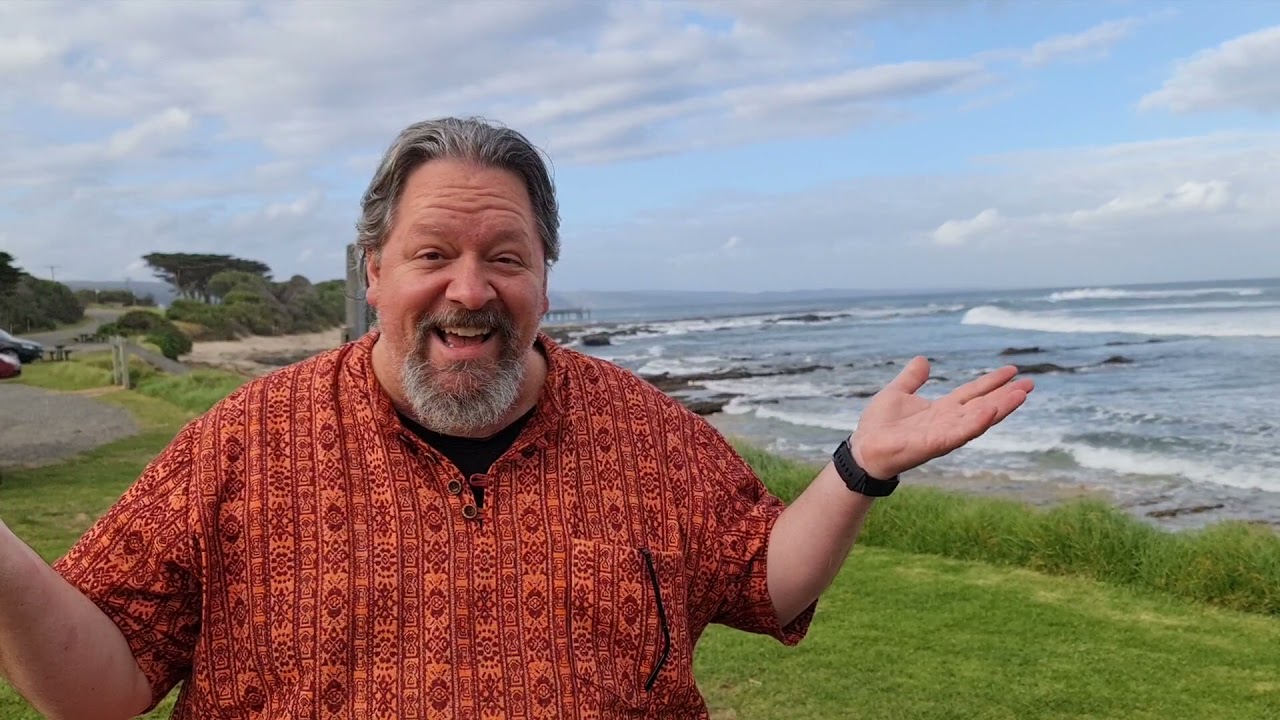
Hello, my unsung heroes! Here we are at Camp 2021 online. Well, it doesn't look like I'm at camp, does it? I'm actually in Lorne with my wife, and we're camping so we can film these little shots of our stories for this week. Our theme, Unsung Heroes, is all about people in the Bible that we don't know much about because they were heroes, but they were only a short part of the Bible, just one little story. In today's story, we're going to look at somebody who is faithful and followed faithfully even though there was nothing, no reason to other than just being faithful to what he believed in. When I was a little boy, there was a competition at school. We were having an animal parade, and what you do in an animal parade is everyone brings their favorite animal that they think does the coolest thing, like One of the cool things was the cutest animal, and one of the cool things was the fastest animal, and they had all kinds of different prizes and ribbons you could win for animals doing the most unique things. And so when we were about to go the day before, I was planning what I was going to do, and my mom said, "You should take Goose Goose." Goose Goose was our goose, and her name was Goose Goose because when she sat on my mom's lap and my mom patted her neck, she would say—
the goose would go, "Goose, goose, goose, goose, goose, goose," and said, "Goose, goose." So my mom named her Goose Goose when we were little kids.
And Goose Goose had this amazing love relationship with my Little Red Wagon. And my Little Red Wagon was my favorite toy. I'd fill it up with dirt and pull it around. I'd put my sister in it and pull it around. I'd fill it up with dirt to put on my sister and pull it around. And didn't matter where that thing was going or what was in it, Goose Goose— if she saw the red wagon move, she would run across the yard. She didn't fly because she was just a lazy goose. She'd just run across it. She'd say "goose goose goose goose goose" until she caught all the way up with it, and then she would follow that red wagon anywhere it went. She would follow it. So my mom said you should take Goose Goose to the animal parade. And I said but what prize would I win? And she said you would win— I don't know maybe most obedient pet, maybe cutest pet because it's really cute. Who knows what you would win? And so I said, okay, I'll do it. And so the morning came, we put Goose Goose in her crate and we put her in the car. We put the red wagon in the van next to the crate, and then we drove to school. And when the animal parade started, everyone was bringing their animals out and putting them on the oval, getting ready for the walk in front of the judges. There was a whole panel of judges that were looking. The teachers were stroking their chins, looking at the animals. Some parents were stroking their chins and looking at them. What prize should we give this animal? And there were amazing things. There were people with ponies, and there were people with dogs that could walk on their hind legs and hop. And there were people with rabbits that would— you could call the rabbit and it would come. There were people that had cats that would walk on a leash. And then there I was with a goose. And I'm thinking, I don't know, does a goose even qualify as a pet? We're supposed to bring our favorite pet. So when the time came to do the march, everyone took their animals in front of the judges, told them what their animal did well, and when I came in front of them, I didn't have to tell them what Goose Goose did well because I was just a little boy pulling his red wagon. And there was a big rule: animals are not to be left alone, not to be left unattended or off a leash. They have to be on a lead.
Goose Goose wasn't on a lead.
She was just following my little red wagon going goose goose goose goose goose goose, and I walked right in front of the judges and I stopped and I said, "Goose Goose follows my wagon," and then I kept walking and I walked off to the other side and went back to my mom where she was sitting in the grass talking to her friends. When they started announcing all the prizes, they gave Goose Goose the prize for the show stealer, because everyone thought Goose Goose was so cute, and all the kids wanted to pat Goose Goose, and all the moms said, "How did you teach that thing to follow that wagon?" My mom said, "We never taught that goose a thing. It just loves that red wagon." So Goose Goose loved following, just like our hero that we're going to look at in the next few seconds loved to follow as well. Our unsung hero for today is a man named Ittai, I-T-T-A-I. I bet you've never heard of him. Ittai lived in the time when King David was king. We know lots about the story of David's life. We know right from when he was a little boy and he was a shepherd and he could throw a stone into a knothole and he could scare bears and wolves away. And we know that he killed the giant Goliath. And then we know that he became a warrior who protected people's homes, and then we know that he was hunted by King Saul, and then we know that he became the king himself. But then he got old, and he lived as the king for many, many years, and he had sons and he had daughters. And as his sons and daughters got old, they were kind of waiting till, "Who's gonna be the next king? I wonder who's gonna be the king after David? I guess it'll be whichever son is still alive." And David's sons were dying before David was dying. He was still alive and he was getting very old. And one of his sons' names was Absalom. And Absalom was getting so tired waiting for his dad to not be king anymore that he decided he would start trying to get people to make him king, even though his dad was still king. And so what Absalom did is he sat next to the entrance to the city of Jerusalem And he talked to people as they came in. He said, "Oh, I can see you've come from a long ways. My name is Absalom. I'm the king's son. Who are you?" And they would say, "Oh, my name is..." And they would tell him their name. And then they would say, he'd say, "And what have you come to Jerusalem for today?" "Oh, we've come because we want to get married. My girlfriend and I, we want to get married and have a big wedding." And Absalom would say, "Oh, I remember when the king used to love weddings, but he's old now and he doesn't love weddings anymore." 'Oh, if he was young, you would have an amazing wedding and he would throw it himself. You know, I'm young, and if I was the king, I would throw a wedding like young King David would have. Too bad I'm not the king.' And then he would let them go on their way. Then the next people would come in and he'd say, 'Hey, well, I'm Absalom. Who are you?' And they would say their name, and he'd say, 'Why are you coming to Jerusalem?' 'Oh, we have some land we're trying to sell, but we're not sure how much of it we actually own, and we know the records are in the temple there— I mean, in the palace.' We just need to come and look at the records. Oh well, if only there was someone in the palace who cared about records. You know, King David's getting old and he doesn't care about records anymore. And if I was king, I would know right where those records were and I would help you to make sure you got the most land out of anyone. It's raining! It's raining in Lorne! And that's kind of what it became like for David in his kingdom. It was like bad stuff was happening. It was like it was raining. And David started noticing that his son was being mean to him, that he was saying mean things about him. And one day Absalom got all of the people together who wanted him to be king, and they made— they put on armor, and they drew their swords, and they took their shields, and they marched towards the palace. They marched towards King David. Absalom marched towards his own dad as if he was going to fight him to be the king. And when David saw what was happening, he came out and he said, "Whoa, whoa, whoa! I am not gonna fight you, Absalom. If you want to be king and if you think you're gonna take it by force, I will give it to you willingly. I will not try to kill you so that I can maintain my kingship." And so David packed up and all the people who were his servants and who were loyal to him, they marched out of Jerusalem together, and Absalom and his men The men marched in and they filled the palace up with Absalom's people. As David was walking to nowhere, he was just walking to somewhere where he could be safe and be away from being the king, there was a man walking the other way with his family. And the man stopped and he bowed down low as King David came close and he said, "The Lord bless the king." And David said, "I am no longer the king." He said, "But you're the king forever because you've been anointed. You're the king until the day you die." And David said, "No, I've given the throne to my son Absalom. So if you want to follow the king, keep marching, keep walking, go into Jerusalem, and Absalom will have something for you to do." And Ittai paused for a moment, and he got the idea of what had actually happened because he'd heard about Absalom, and he'd heard about what he'd been saying. And Ittai said, "O king, King David, the anointed king of Israel, I will follow you everywhere. I will follow you anywhere, be ye the king or not." And Ittai followed King David. David said, "Fine, you can join our group," and he joined them, and he followed faithfully as David marched out of the city. And he followed, as far as we know, for the rest of his life, he followed King David. Because that's the only thing we know about Absalom's story, from Absalom's story about this man named Ittai. But Ittai was an unsung hero in the Bible because he followed faithfully. A long time ago, like thousands of years ago, in the country of India, there's a story told of an old man who used to sit next to a river under a tree near a bridge. And this man would sit there, and that was such a clear reference point, the old man under the tree near the bridge next to the river, that people knew where he was and they knew that he was wise. And so they would come to him and they would ask him questions. There was a young man who really wanted to ask this old man a very important question. And so he walked a long, long, long ways until he got to the old man. But he was across the river from the old man and he saw the old man crawling out on a root system at the base of the tree into the river, above the river, and reaching down into the water and picking something up and then throwing it back in the water going, And then again, reaching further down the stream and reaching in and picking it up. And then finally he saw the man reach in and cupped his hands over both, and he wiggled his way all the way back up to the shore, and he threw whatever it was on the ground, and then he sat back down under the tree and started rubbing his hands. The young man knew what he had done because he knew what would happen if something stuck you like that in your hand.
He picked up something dangerous, something poisonous.
And so the young man, as he was walking across the bridge, he was was thinking, maybe this old man's not so wise.
Maybe he's— why would he pick up something dangerous like that? Why would he save it? Why would he throw it in the grass?
And so as he got to the old man, he said to him, I've come to ask you a very important question, but first I want to ask you, what did you pick up in the water?
Oh, it was a scorpion.
It was swimming by, was drowning in the water, and it would have died. And the young man said, yes, it would have died, but now you've saved the scorpion, you put it in the field. Where children play and where people walk. And who knows, it could sting someone, it could hurt someone just like it hurt you so bad.
Didn't you know that the scorpion would hurt you and sting you in the hands? Yes, yes, I knew that.
But didn't you know that it might hurt someone else?
Yes, yes, I knew that.
And he said, well then, why did you save the— it's the scorpion's nature to sting.
Why did you save it?
And the old man said, young man, when you're as old as me, you have decided how to live your life and what ways you will follow. And I have to tell you that knowing that the scorpion has the nature to sting does not change my nature to save. Do you see how important that lesson is for us kids today as we think about following the ways that Jesus has taught us? Following like little Goose Goose followed that wagon, following like Ittai followed David even though he wasn't the king anymore. When God says that a way is the way to be and follow me, when Jesus calls like he did to the disciples, "Follow me." It's not about who you are anymore. It's about the way. It's about following. It's about Jesus. It's about following the way that God has asked us to because God's unsung heroes are followers, faithful followers.
Let's bow our heads and pray together.
Dear Lord, we thank you so much for this beautiful day. We thank you for the time we've had to explore your word and explore stories about being faithful followers.
Help us to be your heroes too.
Not to be a hero because we want to say, "I'm a hero," but to be unsung heroes. Heroes that might only have a short little mention in a really amazing story like "Hitot" in the story of David. But we're still the kind of people you've called us to be because we follow faithfully.
In your name, amen.
More from Dave

Thor is four months old and already mastering AI! #thor #puppy #jackrussell #cat #mythology #war


Better to have gloved and lost... #puppy #jackrussellterrier #thor #doglife #dog #gloves #wrestling




