A pastor argues that sharing the full gospel story, from creation to new earth, changes how we live and witness. He uses his children's lives and the Prayer-Care-Share framework to show how believers become God's reconcilers, healing and restoring what was broken.
Chapters
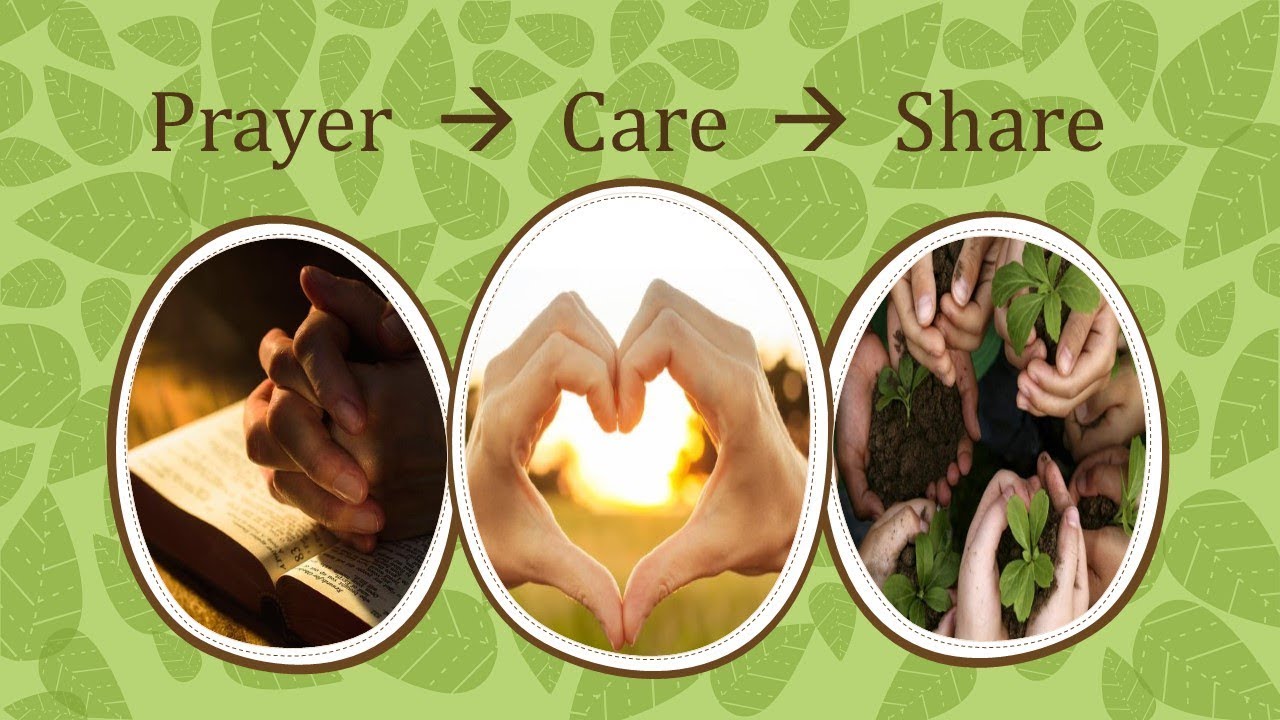
I just saw something today that I saw a couple weeks ago, which was different though last time because I was standing here to do the prayer where Ron was standing. And when I looked up to do the prayer, my two boys were standing in front of me. I don't know if either of you— those were them standing there again today— if any of you remember what I said, but I was a bit tongue-tied because that's what every parent wants, is to see their children standing at the front of church with an offering for the Lord. And I just said, my boys. And sorry. I started crying at some meetings earlier this week too, talking about my mom. I think maybe I'm getting older. I don't know what's happening. I said, my boys. And it was a prayer, really a prayer of gratitude and a prayer of praise. You know, there they are. They're standing right there. And sometimes I wonder— not sometimes, often I wonder, how did we get here? How did these 3 teenagers that we have end up loving the Lord, love being involved in church, and actually love each other? What's going on? Or maybe a better question, what's gone on to get us here? And as I've been reflecting on this and thinking about it, it's certainly not that we're perfect parents. We are parents in process. And I'm not a perfect father or a perfect husband. In fact, I'm a long ways from it. So what happened? A year or two ago, I was driving with Cyrus. Some of the best moments in life happen— best conversations, anyway, happen when I'm driving with just one of my kids. And I was in a particularly low place emotionally, and I apologized to him for for my failings. I don't know what I'd done that day, but I just felt low. And Cyrus, who's usually a very thoughtful person and very careful communicator, he didn't even pause to reflect before he said, "I respect you more because of your failings, Dad." And I was stunned. I said, "Really?" He said, "Well, not because of them, but because of how you deal with them. You fix things. You say sorry." You ask forgiveness, you and mom both. And he's definitely right about his mom. She's my living example of what Jesus did for us on the cross. You both are, he said back to me. You're both examples of what Jesus did for us on the cross. To all of us, we watch you and mom. We really see you really loving each other. Love— this is Cyrus talking— love is Forgiveness. That's what you taught us, Dad. And I believe it because I believe you. It's real. We see it. I'm not telling you this story— in fact, I wrote it down because every story, especially family stories, they go way back there and they go way forward that way. And to tell a story right in the middle, I thought I better write this down so I actually say what it is I'm thinking. Because the story we tell in life— and this is one of the premises of the sermon. Can we have the sermon up on the the PowerPoint. The premises of the sermon is that the story we share about Jesus is the story that we know about Jesus. And where we start our story and where we finish our story controls the story we tell. And so in telling this story about— a couple stories about my kids this morning, I've written it down so that I kind of pigeonhole it right. I'm not telling you this story to brag. I haven't got it all figured out. When it comes to sin and forgiveness, I am not a one-shot wonder. The devil hit me with a shotgun. I'm full of holes. And being open and honest about those holes makes me and my faith real in the eyes of my children. They see us plugging holes as we discover them. They see us asking each other for forgiveness and asking God for help. They experience us working together as a family. On our failings. Not to earn salvation or to become perfect, but to be healed once again, reconciled with each other, made right and healthy and whole as a family. The joy of salvation is that you experience God's grace repeatedly. Healing is wonderful. Health is a blessing. Healthy relationships, healthy hearts, healthy minds, healthy bodies. We all break down, and God is in the business of healing. Then he gives us that work, the work of healing, healing lives, relationships, hearts, minds, and bodies. Paul called us God's reconcilers. We are God's work project, but we're also his workers, not because we've got it all figured out, but because we are all healing. And as we heal and lead others to healing, we reveal God's love. Rachel has had some big questions over the past couple of weeks. Kind of glad she's not here this morning because she would probably give me a kick up the backside after I tell the story. I asked her permission, but she's still like, "I'm glad I'm going with Mom." The reason why there's no choir is because Jenny's actually leading a choir. She's singing in the big band performance at Lillydale today, first and second service, and Rachel's reading the scriptures. So in the last couple weeks, Rachel has asked some big questions, or particularly one big question that led to a lot of detail work for me. Rachel, for those of you don't know her, she's our 16-year-old daughter, and most of Rachel's schooling has been in secular schools. She did prep at an Adventist school and then 9 years in state schools, or secular schools anyway. And then last year, in the middle of year 10, she asked if she could move to an Adventist school. For 10 years, her faith at school was about the way she lives her faith at school. She did— now her school is telling her about her faith, and she's not so sure. She's got questions, and I love it. One morning last week, Rachel asked if I could take her out for a hot drink before school and we could talk. We joined the drive-through at Macca's, and then two hot drinks between us, we headed to a quiet place near her school. With 30 minutes to go, she asked, "Why is this school so focused on rules? It seems every time they start to talk about Jesus or God or faith, it isn't long and they're talking about rules. Why do they think being a Christian is all about rules?" I was so happy I nearly spilled my coffee. Rachel, you have no idea how much it excites me to hear you ask that question. Question. Her experience of faith at home didn't gel with her— the knowledge of faith that she was hearing. The external Christian teaching of rules and regulations was in conflict with the internal practice of confession and forgiveness that she experiences at home. I gave her a short answer and then went into my day thinking about the question. A couple of days later, I picked her up from school and she asked to go to Lilydale Lake to sit and talk. Having had time to think it through, I had a deeper answer for her. And it's going to take me the rest of this sermon to give you that answer, so let's get going. It starts with a question. The question is the subtitle for the sermon: How big is your story? If we're going to be sharing Jesus, we need to know the story we're sharing. Where does your gospel start, and where does your gospel end? Finish. Where you start and finish your story, the telling of your gospel or the gospel, controls the way you tell it and the way you live it. Many Christians start at Genesis 3, which is where the fall happens. The beginning of the, the story is the problem, sin. And they finish at heaven, which is where sin is eradicated, where it's all things are made right. But the Bible starts and finishes with a bigger story, a story that frames sin, but isn't controlled by it. The Bible starts in the garden and finishes in the new earth. Both are places of sinless beauty which are empowered— or we are empowered to serve as stewards of all that is good. If we start our story in Genesis 1, where the Bible starts, and finish in Revelation 22, where the Bible finishes, we will be living that story now— a story of purpose, a story of discipleship, and a story of relationships. We will live a story of building God's kingdom rather than a story that tells people how to live in this one. Let's have a look at comparing the two stories. Jenny looked at my notes this morning, she said, "Oh, do you really want to say the Great Controversy there? It makes it sound like the Great Controversy is a bad thing." And I said, "No, I don't mean it that way." She said, "But it's one of our books, it's one of our core books, the Great Controversy." I said, "I'm not talking about the book, I'm talking about the story of the Great Controversy. Sin, Satan, salvation, second coming. If that's the whole story, then we've got a problem because there's a great creation on the outsides of that Great Controversy story. And if we focus on the Great Controversy story and say the most important thing is to talk to people, we gotta focus in on sin and tell them that they need to get rid of sin in their life, that they need to have a Savior who saves them from sin. All true, but not the whole story. The great creation story is that we're stewards. And the problem with the short story is it's about lost humanity, where the long story is about the lost image of God. We were created in the image of God. And when we have that as our story starter, you can say to somebody, "You were created in the image of God. How far have we fallen?" And then they see a bigger picture rather than just you saying, "You're full of sin." and you've gotta pull yourself out of it, or you've gotta— and it focuses in on the negative. The call is, in the short story, is to escape or to be rescued. Either you get out of there or somebody takes you out of there. Where the great creation call is to re-creation, to reconcile, to make all things right. It's not to stop once you're saved, it's to reach out to others and to continue that pattern of bringing people back into living in the image of God. The message of the short story is the product, the law. And you give that message over and over and over. We have to do this, this, and this. We can't do this, this, and this. It's what Rachel experienced at school, because it's easier to teach. We learn, uh, by relationship. We learn by discipleship. We learn by process, which is the great creation side of the story. But it's easier to teach facts. It's easier to teach from a set of rules. And so it's easier to fall into the trap, even if we do have the bigger story, of teaching and kind of not really going too deep into the other story because, yeah, yeah, yeah, that's exciting, God created the earth and it was good, but then it failed. And so now we're here. And one day God will create it, that's good, but now we're here. And so let's focus on what we need to do here. And we spend our time showing people the problem and the product to solve the problem rather than the process of being a disciple, which is what Jesus came and showed us. In Sabbath school this morning, Cyrus actually said that following Jesus, or being a disciple, is about recognizing that you're learning things all the time, and you don't know everything at any one point. And so you should always be continuing the process. The method in The Great Controversy, or the short story, is proclamation. You yell it at them. You can wear a sandwich board and scream at them from across the road that they're lost in sin. When I lived in Hawaii, there was actually a hippie that wore a board, and he stood on the beach side of the road in Lahaina in Maui, and he screamed at the people in the shops, "Come out of her, my people! Babylon, how you have fallen! Come out!" And nobody came out. Well, maybe just to look at him, and then they went their way. And one time I actually went and I stood and I just listened to him, and I noticed that he was quoting Bible scripture the whole time. And I asked him a question, and other people that had stopped asked him questions. Every question he answered, he would flip through his Bible, he would find a direct quote, and he would read it to them. And he never said anything that were his own words. He only read from the Bible to people. But the whole time I lived there— was only 3 months— but the whole time I lived there, I never saw anyone walk away with him. They always walked away from him. It was a proclamation. He was shouting his gospel at them rather than forming relationships, which is what we're doing here, which is what Ron mentioned in the prayer, that there's so many people here that are bonding together. Our numbers are growing not because we're doing anything right other than because we're loving each other and we're making this a safe place to love each other. And it's becoming— well, it is the kingdom of God, but it's becoming more like God's God as we grow in his image. The short story, the battle is our work. We have, you know, Paul says, "We fight not against flesh and blood, but against principalities, against spiritual powers." And it's true, but it's not the whole story because God's story, the great creation story, is actually a story of gardening. God creates a garden, he puts us in it, and he says, "Now go and grow." things. Grow plants, grow relationships, grow a family. Go and grow. And that's our mission in the great creation story as God's people, is to say to people, come to Christ and then grow in God for the rest of your life. You know, Ellen White says we're approaching the character of Christ forever. We never reach it. We become more and more like him because we're constantly growing. We are being tended as a garden as we're tending others in the garden. And finally, God's work in the short story is a moment in time. It's the cross. And we as Adventists have done pretty good at not making this our central thing where every sermon has to be about the cross. But every sermon does need to be about Jesus. And what we see in Jesus is, as Aaron said— is Aaron here? In the Sabbath school lesson, Aaron had the Sabbath school lesson, and he said, um, just this brilliant thing where he said, all of the stuff that people say about the Old Testament, where they say the Old Testament God is angry and he's violent and whatever, if they would just see Jesus, if we could just say to them, Jesus is the same God that was in the Old Testament. Let's look at Jesus and then we'll understand God. Jesus is about building the kingdom. He's about the movement. And Adventism is called a movement. We try not to be an institution, but to be a movement that's building the kingdom of God. So these two stories, Genesis 3 to 20, it's true. If you took it out of the Bible, all you'd have left is a pamphlet. You'd have four chapters: Genesis 1 and 2 and Revelation 21 and 22. It'd be a pretty awesome pamphlet because it shows what the kingdom of God starts like and what it's meant to finish like. It goes from being a garden with a couple trees in it to being a kingdom with golden walls and, and pearly gates and streets of gold, and it's just absolutely beautiful where God is there and he's the light. And there's— read Genesis— I mean, read Revelation 21 for some fun this afternoon and see this picture of what God's garden was meant to grow into as we tended it. Because as he puts the kingdom back on earth at the end of Revelation, we see that God's great creation story is one of his glory. So here we have, in the beginning, God. And this, let's look at Genesis and see how it started. This is the great creation story. In the beginning, God created the heavens and the earth. Genesis 1:1. And God saw that it was good. And it just goes through day by day. And God saw that it was good. And God saw that it was good. Every creation moment that he has, he sees that it's good. He says it, it says it over and over and over in Genesis. And God saw that it was good, good, good, good, good, good, good. God saw all that he had made and it was very good. Thus the heavens and the earth were completed. This is, this is, if you wanted to say, the covers of the story. This is, this is the introduction of the great creation story, that God in the beginning creates good, and he continues creating good, and he creates good and more good and more good and more good and more good until the heavens and the earth were completed. Now What would our gospel look like if we saw our work as continuing the gardening theme of God, continuing the in the beginning, good, good, good, completed model of the Bible? We would see exactly what James just read to us in the scripture. Paul says it like this. I thank my God every time I remember you. In all my prayers for all of you, I always pray with joy because of your partnership in the gospel from the first day until now, being confident of this, that he who began a good work in you will carry it on to completion until the day of Christ Jesus. In the beginning it was good, and the heavens and the earth were completed. And Paul says we're part of that. In the middle of the story, God begins good work in all of the people that follow him, and he's carrying it on to completion at the Second Coming. This is the story that we're in the middle of. It's not a story that starts at Genesis 3, but a story that starts at Genesis 1, that God wants to continue making a good work, and that we are his work people to help him do that. The sin and salvation story is the current story we live in, but it's not the whole story. It's the juicy bit, but it's not the joyful bit. And when we focus on the short story instead of the long story, We focus on conflict rather than the Creator. So, how can we do this in our lives? Now that we understand this, this greater story, there's a simple model of being a Christian, of reaching out. First you reach to God in prayer, then you reach out to those around you in care, and then you share your faith. And this is a model that's been taught for a long, long time in many different places. And it's easy to apply in your life. Basically, the prayer phase looks like this: God, who should I pray for? Who do I know that you know, that you have on your heart? Could you put them on my heart? And then God will put someone on your heart that you're the right person to talk to, or to pray for at least. Sometimes it's just to pray for. Sometimes God sets us up and says, this person needs prayer, and lots of it, until a time that's coming. When their life is gonna be really tough and they're going to need you to be their prayer warrior then. So I need you to get ready now. Other times God says, "I want you to pray for this person because they have a need, and I need you to go care for that need very soon." But as we pray for people, it heightens our awareness of them. It heightens our awareness of their lives. It heightens our awareness and the questions we ask. How are you doing? How's your family? What's going on? Is there anything— I've been praying for you. Is there anything I can pray for? What do you need prayer for? And then as we ask that question, they may say a need that's something we can actually meet. Maybe we can actually do it. Like they could say, well, I'm hungry, and you can give them a meal. Or it might be something where they say, well, I can't afford to pay my rent, and the landlord's gonna kick me out. And you say, I know some people who can help you. And you can help them in whatever way that God puts on your heart. It might be financial management. A church that can actually donate the money. It might— there's— could be ADRA. There's all different ways that we can care, but the key is to be connected to God on their behalf, and then the care will be coming through you from God. And then finally is the sharing process. And I use this picture of, of children's hands holding tiny plants because that's how someone in the creation story shares their faith. You're not throwing it at them. You're not shooting them with it. You're not screaming it at them. You have to be so gentle with little plants. And you have to gently put them into the ground. You have to have prepared the hole. You have to have the right soil and all the right— everything balanced. And then gently water it and care for it for a little bit. And then in time— I'm not a gardener, but I've watched my wife and she plants flowers, and it looks like that is going to go really bad. And then she plants them carefully, and she tends to them for a couple weeks, and then suddenly it's like, "Wow, don't hit them with the lawn mower, they're massive." Because by caring for them well, they've become— they've flourished. And this is how it goes with our faith sharing as well, is that as we pray for someone, as we care for them, then when we begin to share our faith gently with them, it grows in them. God is trying already to restore his image in them. And so when we start to plant these ideas and plant these carefully said things, and I'm praying for you, is there anything I can do for you? Then at some point our faith, it can be as simple as them just asking a question, why? Why are you doing this for me? And then you can say, because way back when I just asked God to put on my heart somebody who was on his heart, and guess what? He loves you. Because he chose you and he asked me to pray for you. And the reason why I'm here today is because he put me here today. So quickly, if you look at prayer, prayer basically looks like this: What's on your heart, Lord? How can I help? So in this phase, we talk, we talk about God to everyone and everything, and it's a constant play. Paul says, pray without ceasing. Once you start, don't stop. You don't have to open or close your eyes. Just pray. And he's— Paul says it this way in Timothy. He says, I urge then, first of all, that petitions, prayers, intercession, and thanksgiving be made for all people, for kings, and for those in authority, that we may live in peace and quiet lives in the godliness and holiness. This is good and pleases God our Savior, who wants all people to be saved and to come to know the knowledge of the truth. So we start with prayer. To focus your heart where God wants it focused, first read his word. God speaks to us through the Bible every time we read it. Then ask God, who is on your heart, Lord? How can I help them? He may just want you to pray for them. Prayer puts us in a brighten— in a heightened sense of awareness to the people we're praying for. God may need you in a holding pattern of attentive praying and readiness. Something could be coming in their life where they'll need prayer and care. Then God will encourage you to move into care mode. Don't think that prayer alone is pointless. You are accessing the King of the universe on behalf of someone on earth. Prayer is a great and mighty work. Pray for everyone God puts on your heart and for the opportunity to love them, care for them, and share the gospel with them. Then we move to care, which is to show them God's love through your actions. And in this phase, we plant love, we nurture hearts, we serve people. The way that Jesus said this to us, to his disciples, he said, "You are the light of the world. A town built on a hill can't be hidden. Neither do people light a lamp and put it under a bowl. Instead, they put it on a stand and it gives light light to everyone in the house. In the same way, let your light shine before others, then they may see your good deeds, or that they may see your good deeds and glorify your Father in heaven. Do you see what happens with good deeds when you're connected to God through the great recreation gardening project? It's not about you saying, I've done the right thing. It's about you showing the light of the world, showing the light of God to the world and sharing Jesus with people in a way that glorifies God the Father. Like Paul says in Philippians, "In humility value others above yourself, not looking to your own interest, but each of you to the interest of others. In your relationship with one another, have the same mindset as Christ Jesus." Humility, sacrifice, all the glory goes to to God the Father. Prayer Care Share is not an approach where in one week we pray for someone, week two we do something nice for them, and week three we dump the gospel on them. It's a lifestyle. Some people take much longer than others to be ready for the gospel. We have to be sensitive to the Holy Spirit as we care, as we pray that God will prepare their hearts. Finally, we come to the share phase, which is the great recreation commission. If you look at the Great Commission from this idea of recreating what God has already been making, have a look at this. Then the 11 disciples went to Galilee, to the mountain where Jesus had told them to go. When they saw him, they worshiped him, but some doubted. Process. They haven't— they're not finished products, are they? They have been with Jesus. They have seen him raise the dead. They've seen him die and come back to life. And one, at least, of the 11 is going, "Not sure. Just not sure." Some of them doubted. Then Jesus came to them and said, "All authority in heaven and on earth has been given to me. Therefore, I give it to you. Go and make disciples of all nations, baptizing them in the name of the Father and the Son and the Holy Spirit, and teaching them to obey everything I've commanded you. And surely I am with you always." to the very end of the age. I think that last bit, he put that on there because some of them still doubted. He said, don't forget, you're not alone. I'm still with you. What you share is coming from God through me, through you, out to the people. Continue that flow. Don't ever say, I guess I'm not right for God because I keep doubting. The disciples doubted right before Jesus went back to heaven. The short story gospel tells people, "You are a wretched sinner. You are a sinful abomination abhorrent to a perfect God. Confess your sin or die in hell." Now, most people will say, "No thank you," and if they're still there, they've probably already run away in a cold sweat. But the long story gospel, the great creation story, says, "I'm so glad we found you." God is preparing a place in his kingdom for you and has a purpose for you right now. Your mission, should you choose to accept it, is ready. You were created with a purpose in mind. God made you in his image, and that image has been lost in the muck and mire of this world. Come, let God bring his image to the surface in your life. Come and discover your true purpose. I can't imagine one person who would run away screaming from that invitation. You belong. You are wanted. You have a purpose. You are beautiful in God's eyes. The Great Recreation Commission leads us to a new understanding of this verse. If you think of this now as, as your mission statement of connecting people to the Creator God: I thank my God every time I remember you. In all my prayers for all of you, I always pray with joy because of your purpose partnership in the gospel from the first day until now, being confident of this, that he who began a good work in you will carry it on to completion until the day of Christ Jesus. The other day Cyrus and I were in the car and we're driving along, and I said to him, if you got a job in another city— he's studying computer science— what do you think you'd do about church? Cyrus said, well, I guess after I settled in, I'd "Find the local Adventist church. It's important to be with people that share your faith." And I said, "What if there was no Adventist church in your town?" Cyrus said, "I guess I would find another church to attend while I was there. I wanna be involved in a faith community." "You have no idea," I said, "how happy it makes me to hear you say that." Cyrus said, "Well, Dad, it's important to be with people who believe in God, to be part of a community. None of us, no two people believe exactly the same thing anyway, right, Dad? And then, well, I didn't say this to him, but I'll say it now. Where is he at? There he is. I like the good work that God is doing in you, Cyrus. It's a big generous faith that reveals a big generous God. And I'm excited to see where God takes you next. So, in finishing, let's look at an amazing story called A Prophet's Wisdom. Or I've called it that. This man Naaman, who's got the spots in the middle, we know this story. Many of us know this story very well, because it's a great story that leads right through baptism, confession, repentance, confession, baptism, humility, then to baptism, then to going back to say thank you. And when he gets back to the prophet Elisha to say thank you, he's got bucketloads of gold. He's got wagons of gold, and clothes, and all kinds of stuff. And he says, "Take it. It's for you." And Elisha says, "I don't know what you're talking about. I didn't heal you." You did. You went and baptized. You were in the water. God healed you. Give your praise to God. And Elisha— I mean, Naaman struggles with this. Well, how am I supposed to do that? I guess I need to worship your God. So Naaman asks for something really weird until you think about the fact that he wants to worship Elisha's God. He says, can I take some dirt from your front yard? And the answer of Elisha is, you can take as much dirt as your donkeys can carry. And so he does. He fills up his donkeys with dirt, and he takes these two huge donkey loads of dirt back to his house, and he builds a mound of Israel in his front yard. And he builds an Israelite altar on top of it, and he goes out there every day to worship the one true God, Yahweh. And that's his plan as he's filling up, and as he's digging, you know, and as you're digging and you're working hard in the garden, you start thinking about things in life, and he starts He's starting to process, "Wow, my life's changed. There's so much that's going to be different when I get home. I'm going to have this altar. I'm going to be able to tell my friends and my neighbors." And then he remembers his job. His job is that he works for the king, and he helps the king. The king's a very old man. And he says, he goes back to Elisha and he says, "I need to ask you something. I hope you can forgive me. Your God can forgive me. I work for the king of Aram." He says, "Yes." He said, "Well, every morning when I go to the king of Aram to start my services for him, he goes to the temple of—" I always forget the name— "of his god, basically." "Rimmon." "Rimmon." "He goes to the temple of Rimmon and he bows down. And when he bows down, he's old, he's got bad knees, he's got bad hips, and he's holding onto my arm." So I go down with him, and then when he rises, I rise up. And can I be forgiven for this? I want to worship Yahweh, but I will be bowing to Rimmon. Now we know exactly what the prophet should say, right? Of course you can't bow anymore to a false god. You've given your life to God. You have to change your ways. You have to— this is— you're a new person. You're a new creation. There's no more of that. Amazingly, Elisha understands that Naaman is in a process. He's growing closer to God moment by moment, day by day. And we don't know the rest of the story, but every day he's going to be bowing in his heart and in his actions for real to Yahweh. And then when he goes with the king, he's going to be honoring his king, strengthening that relationship, but not honoring Rimon. And the Prophet's answer is just 3 words: Go in peace. Go in peace. As you reach out to others, as you pray for them, as you care for them, as you share your faith story with them, allow them to go in peace, knowing that your Creator God has begun a good work within them and will be with them until the day of completion. May you offer forgiveness as you receive. May you bring healing as you are healed. May you grow in your faith in God as you grow in your love for others. May you pray for the healing of hearts. May you care for the poor in spirit. May you share love as you share Jesus. And may you always go in peace.
More from Dave

Thor is four months old and already mastering AI! #thor #puppy #jackrussell #cat #mythology #war


Better to have gloved and lost... #puppy #jackrussellterrier #thor #doglife #dog #gloves #wrestling




