Are You a Financial Bluffer? The DeLorean Story
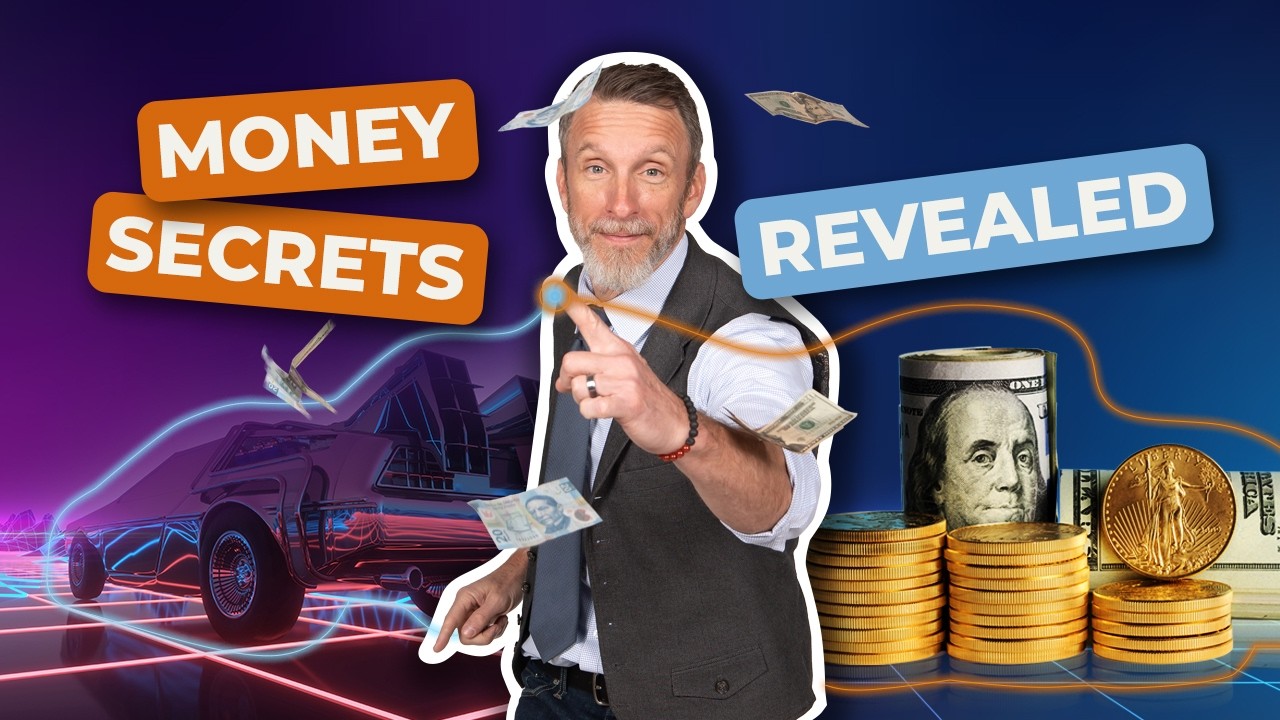
Mike Michalowicz and Amy use John DeLorean's financial collapse to explore why entrepreneurs bluff about money and how wealth amplifies spending habits. They share practical fixes: put all subscriptions on one card to see what you're spending, use cash to feel the pain, and build anticipation for rewards instead of impulse buying.
Chapters
Entrepreneurship is hard, but the process can be simplified. You can achieve success faster, sooner, and easier. I'm Mike Michalowicz, and I'm on a mission to eradicate entrepreneurial poverty. My goal for this episode and every episode is to serve you on your journey. Let's start right now on Entrepreneurship Simplified. Welcome to episode 18 of Entrepreneurship Simplified. I got my haircut, Amy.
You did?
Yeah. You can tell, right?
I can. It actually looks very nice. It's super short. Do you do your beard when you get your haircut?
Um, no, I don't have the barber do it.
I do it myself. Oh, okay, you do it yourself.
I— yeah, I'm trying to keep it shorter.
Yeah, I think it—
Better, right?
I do. I, I say that to Christopher too. He wears— I like it shorter.
Yeah, I went to the barber as I was heading over, and, uh, Chris just said, Mike, let's go as short as you can. Because the bald spot I got, when it's longer and my hair is dark, it's just like I'm like a monk. Like a, like a—
No, no.
A lanky monk.
No, no.
Without the Without the meditation. So I went to the bar, Mike.
Without the peace, without the inner peace.
Without the inner peace, right, right. So I went to the— he's like, just, we're just gonna go super short, as short as we can. I'm like, go. The problem is I also have a long head.
I got a long— I have a long pinhead too. Maybe that's why we're friends. Oh, I do. I totally do.
That's why you're so amazing.
That's why we're friends, Mike. That's what bonded us in freshman year.
I saw David Gilmour, uh, the guitarist.
Yes. Oh, how was it?
It was amazing.
I forgot to ask you about that.
It was amazing.
It's not on your calendar.
He ended with Comfortably Numb.
Oh. And he did this epic Solo.
I mean, just epic. But, uh, I went with my brother-in-law, who apparently has a larger head than me because he was wearing his— he's— he was in the military. He loves his military hats. He's wearing it. He wanted to take a sweater off, sweatshirt off.
Yeah.
So he takes his hat off, he throws on my head, and it just comes down. Yeah, it goes right over my eyes. It was like I had a—
Like your father's hat on.
A mixing bowl over my head.
That's hysterical.
Am I that much of a pinhead?
I'm a pinhead, and I—
You don't look pinhead.
I am a I am a big woman. I am 5'10. I'm a big woman. And when I put on hats, it's always like size small.
It's like, really?
Yeah, I'm so disproportionate. I'm so disproportionate.
What are we talking about today?
Today, Mike? Yeah, today let's talk about personal finance.
Oh, I love it. Yeah, yeah, I'm excited. How have you and Chris done on personal finance over the years? Did you have to learn it together? Did you both come in Strong and healthy fiscally?
Yes, I will say we came in strong and healthy fiscally because Christopher is a hustler and he's literally been working since he was 8 years old. He started with, um, his brother franchised part of his paper route to him and he like started with that. He wasn't even allowed to work yet, but he did and he saved money. So we were just talking about this. So my son is 25. He's nowhere near buying his own home yet. But we had our own, we bought our first home at 25 years old because Christopher, it was just We have never made a ton of money at that point, but he just knew how to save. But now he knows how to save, not just hustle and save money. He knows how to invest, he knows how to trade.
Oh, I see, I see.
That's the difference.
Does he, if you're willing to share, does he ever go to too much of an extreme with saving?
In my opinion? I'm like, yeah, let's take— no, he's pretty well-balanced. He is, he just, he watches everything very carefully. He's very, very regimented, I would say. He's very regimented with his saving.
There was this really interesting interview I did with a woman named Tiffany Aliche. She wrote a book, Get Good with Money. And what she shared is that people's natural tendency toward money gets amplified over time. And she says usually they actually reverse their natural tendency. So a frugal person, Who's grown up very frugally and I gotta save, when they have access to more money, get actually more intense about saving.
Saving it. That makes sense.
Conversely, she said spenders will actually, as they get more money, spend more. And so this becomes this constant trap. I gotta make more to spend more. You're that person?
I am that person. I am not good financially. If I have money in my pocket, I am the most generous person in the world. I'm gonna buy you lunch. Like, I just don't— I'm not good at it.
So let me say you're not— I don't know if the word's not good. I think what you are is you're leaning into your natural tendency. And I I would argue the, the, the person who's frugal goes more frugal is just as not good. I don't think it's— what we have to learn is the ultra— the balance discipline to get toward the middle.
Yeah.
So I thought it was interesting as, as we get in a situation, uh, we become more diverse. The frugal get more frugal, the spenders become more spendy.
Yeah.
And how do we navigate that? Chris and I were talking, uh, too about you and Chris. I know, about our kids. And, um, It's interesting that the different behaviors. We believe most of our kids are very persistent savers, but they don't have the same aspirational goals necessarily as we did. And they, they seem to be moving at a different pace. So we got married at 24, we already had a son.
Right.
We had our first house probably around 27, around when you guys had it. We had a full family, 3 children by 29. Yeah, you guys, I got a 32-year-old who's living in an apartment, so— and he's married but doesn't have kids. And so the judgment that I have is, well, that's not how I lived my life. Your life is incongruent with it. What's your problem?
Right, right. And they have very— they have a very different situation than we had growing up.
Totally. And my parents— my life is different than my parents'. So I'm like, why is not everyone like me? Don't they— does not everyone get it? So the point is, How we observe others is so biased in how we see ourselves. And it's this natural tendency to say, well, I'm okay, I'm correct. Because if we don't feel that way, then we have this, this dissidence inside ourselves and we can't have that.
Right.
So then we place the judgment on others. It's just an interesting phenomenon.
It really is. It really is.
Yeah.
Do you know anything about John DeLorean?
I've seen the cars around.
Yeah.
I think there's someone in Boonton that had one for a while.
Really? Yeah. I mean, for a while back in the day, you'd see it. Back in the day.
putter around. But I don't know his story, so lay it on me.
I want to tell you about him because he's an interesting case study here on personal finance mixed with the business finances. John DeLorean was a respected figure in the auto industry and envisioned a revolutionary car with gull-wing doors, a stainless steel body, and eco-friendly features. His ambition captured global attention and government support. The UK government invested heavily with both Labour and Conservative support, providing £85 million to establish a factory in West Belfast, Hoping to stimulate the economy and reduce sectarian tensions. Operational struggles, though. Despite initial enthusiasm, the DeLorean Motor Company struggled with production issues, financial mismanagement, and a car design that was considered underpowered and prone to fingerprints. That's interesting. Leading to continuous requests for additional funding. And then scandal and financial collapse. DeLorean's arrest in 1981 for cocaine trafficking— he was later acquitted due to entrapment— and allegations of missing funds hastened the company's downfall, with only 8,500 cars produced before the company went bankrupt. Although initially a failure, the DeLorean DMC-12 became a cult icon, especially after its role in Back to the Future. The car is now a coveted collectible, with well-maintained models selling up to £35,000.
Probably selling for even more than that now. A couple of things about the business itself. Prone to fingerprints? It's a stainless steel car. The new version of it is the Cybertruck. Interesting how what was old becomes new again.
Yeah.
Also, if I remember it, it was very angularly cut, right? Not like the Cybertruck.
Not like the Cybertruck, but—
But, but very angular. So there's some interesting things there. The, um, the— oh, the 8,500 cars produced before the company went bankrupt. I wonder if that's part of the appeal. It's the scarcity effect. Yeah. So the less available something is, the more desirous it becomes. I'll tell you the best way to increase the value of wine is to break all the bottles that you have so you have less bottles. I'm not saying at your home, but like if a vintner makes 10,000 bottles, it's, it's harder to sell those at a premium than if they had 5 bottles, right?
Right.
Because when you have less, you can say now it's coveted, it's, you know, so forth. We got to talk about the cocaine thing. I don't know what's going on there.
I don't know either.
I knew he was like kind of like a, a playboy type of character.
Well, that, that's the thing. So this is how it, it sort of ties together. It We gotta go back and look at his personal life. After his success at General Motors, DeLorean embraced a Hollywood lifestyle, dating celebrities like Ursula Andress and Tina Sinatra. He moved to LA where he mingled with movie stars and wore trendy clothes, distancing himself from the traditional corporate image. He married 4 times, with his 2nd and 3rd marriages involving models much younger than himself, reflecting his desire to maintain a youthful, high-society image. His 3rd wife, model Christine Ferrare, was prominently featured in his social life and publicity efforts for the DeLorean brand.
So let's just stop here for a second. There's an interesting phenomenon I see with someone who owns a business, and I'm not sure this is in DeLorean's case, but I want to emphasize this, is that irrespective of the fiscal health of a business, if the person that owns the business is financially struggling individually, they will leech off the business. And the reverse is true too. If they are Fine financially, historically, but struggling in the business, it leeches off the other. So we have to have balance in both. That's actually why I started working on this new book. This realization that when entrepreneurs nail it at the office, they're not necessarily nailing it at home fiscally or financially.
Financially.
There's another thing I want to share and it's the poker conundrum. There's a thing in poker. If you and I were playing poker, you ever play poker?
I never play poker. Okay.
You probably know bluffing is part of poker.
Yes.
So you basically have a hand and you have to have a better hand based on rankings than other participants in the table. And everyone is making bets throughout the process on winning the hand or not. But one technique is to fake that you have a good hand because people can't see your cards. And if you can scare people enough, you can scare them off the table and you collect the pot. So here's an interesting phenomenon. When someone has a weak hand, but they're invested, they want to win that pot, they're going to start bluffing, posturing and stuff like that. And there's ways to do it. You kind of act big. Ironically, when someone has a good hand, they're going to win. They actually don't try to scare you out because they want you to stay in and keep contributing to the pot. So they usually play a more meek position. Now you gotta be careful because people know bluffs are coming.
Right.
But it does indicate human nature. I find that people who are less, less or not financially secure are the biggest bluffers. They have the nicest car. They, they, they have the big house.
They have the most to show.
The most to show. The most to show and feel compelled to show it. So people that are compelled to show their success often don't have it. The most successful people, hey, I don't need to prove myself. I drive a Ford Ranger. I don't got to show I got a Lamborghini or something.
It's Whatever.
Judge me how you want because I have internal confidence.
Right.
So I feel I have a good hand. I'm confident in my hand and therefore I no longer bluff. So you'll see that there's this concept called the millionaire next door. These people are like, they're just regular folks. They are multimillionaires. Here's— there's kind of a middle ground. I found people who are very successful don't have a compulsion to show it, but they have an appreciation for the finer thing, whatever that may be. And that is cool. It's just when you see this compulsion That is the lead indicator. As you're telling the DeLorean story, multiple wives, you've got to show things like, uh-oh, this guy's in trouble.
Yep. His spending habits and financial mismanagement were well-documented, with millions of dollars in company funds reportedly unaccounted for, and personal loans secured against the company without a clear benefit to investors. His attempts to raise money by taking the company public were rejected by the UK government when it found the plan primarily benefited DeLorean personally. Despite the company's financial troubles, DeLorean maintained an opulent He bought a Cadillac franchise in Florida as a gift, owned a luxury estate in New Jersey, and indulged in costly ventures including a watch line, which often drained his finances without yielding returns.
You and I need to take a trip down to his estate in Jersey. I don't know when there were this—
I don't know. I wonder where it is too. But it was in the late 1990s where all of his financial problems came to a head. He declared bankruptcy, sold— it's 43 acres, whatever property we're looking for, Mike, it's a 43-acre New Jersey estate, which he sold to Donald Trump. So that's where we start.
Donald Trump's properties.
And he lived modestly until his death in 2005, illustrating a stark decline from his previous luxurious lifestyle.
He lived modestly. I don't know what that meant.
I know, for him, what does that mean?
I also wonder if— I shouldn't say if— how he can recover. People can recover from that. I lived a life, I don't want to say of opulence, but of the necessity to demonstrate Success.
Mm-hmm.
And didn't realize when I was going through that, that I was— felt this compulsion. I would find a way to bring up a conversation. Well, I do have a, a lot of 3.
Yeah.
I do have this. I do— I would find ways to bring it up.
Right.
Um, and I'm embarrassed about that now, but there was a transition, you know, with my daughter's piggy bank, whole story when I lost everything, that there was a big awakening. A, no one gives a crap. Like, no one really cares.
Mm-hmm.
No one cares what you have. They just care about you. There's a saying that people who care don't matter, and people who matter don't care.
I don't care.
Yes.
Yeah.
People who care don't matter, and people who matter don't care. And I found that to be true.
Yeah.
Interestingly, I would say almost all my friends didn't care, so therefore they mattered. They said, yeah, I don't care what you have or not, you're Mike.
Right.
Um, and I want— I hope for John DeLorean that, that, that correction he went through Living within his means. I assume that means modestly. I wonder if he found a happiness in that, too.
A little peace there.
A little relief. I don't have to put on the show anymore.
Right, because I'm imagining that's exhausting.
Must be exhausting.
Absolutely exhausting. Anyway, it's a great example of how personal financial mismanagement is entangled with business financial mismanagement. And so I have some questions for you.
Let's do it!
OK, so your next book is about personal financial management utilizing the Profit First method. This is a departure from your other books in that it's not necessarily It's not necessarily just for small business owners. You've spoken about how this book is necessary because personal finances are interconnected to the business finances, just as you just said. Can you tell us a little bit more about why you're writing this book?
Yeah. The new book, I'm going to do the big reveal here. The title, the working title at least, is Made for Money. The reason I named the book Made for Money is I believe you, myself, every human being is actually wired for the accumulation of things that's necessary for our survival. inherently good at money. We just add a complexity that's unnecessary and it confuses us. So I wrote this book because there is a correlation between financial security and happiness. It's funny, there are studies saying that, you know, money does not have influence over happiness. And I don't know if that's true. And maybe it's anecdotal because it's my own experience.
Mm-hmm.
When I had no money, there is an absolute stress.
Yeah.
Because your survival needs aren't addressed.
Right.
I do acknowledge once your core survival needs are addressed, like, you know, having a car, for example, is necessary for survival to get to work and transfer around. But having a nicer car doesn't necessarily bring the same correlation in an amplitude of happiness, maybe in a moment.
Right.
But I find that money And the ability to do what you want when you want does bring happiness. It brings an accessibility and an ease to things.
Yeah. Options.
Options and fluidity.
Yeah.
So I do correlate money to happiness with the caveat of the proper control and understanding of money. So that's why I wrote this book, is to give people authority and control over money. I don't know if people want to get rich as much as people want to have Financial independence, and that richness may be an outcome. I think, though, some people are misguided saying, I want to be rich, without the understanding of financial control, financial discipline, and therefore the wealth just goes in one hand and goes out the other.
Yeah.
And panic ensues. I really think people want that authority, control.
Control.
Discipline.
Yeah.
Sense of security.
Security.
Security.
It's huge.
And then, by all means, amplify it. And so that, the book does it in those 2 stages is, how do we get that authority and control? And you can get it. Literally overnight. I'm not saying you're gonna get rich overnight. You'll start asserting control overnight. With Profit First, and again, who's counting? 1.2 million readers. We see, we have voluminous amounts of data indicating that people get a sense of economic control within minutes of deploying this because you have clarity in what you see.
Yeah.
Doesn't mean it fixes your finance. At least you now have understanding.
Right.
Then the next level is you start putting constraints, controls around it that are easy to implement. Automatic— automation is the new form of discipline. So you don't have to force yourself to do things. You automate things. And it drives you toward the outcome you want. And as I'm doing Made for Money, I'm already coaching and working with many individuals on this, entrepreneurs, but also employees of businesses and stuff. We're seeing the exact same result. Instant sense of authority.
Yeah.
Understanding, clarity, which then brings about security, then brings about accumulation of wealth if that's what you want. But also, The use of wealth, deployment of it. You can get that nicer car. You can get that thing if you work within the confines of the system. And then it can lead to richness too, if that's what you so desire.
Right. What's the big difference between Profit First and Made for Money?
The biggest difference is in Profit First, I had to address dynamic income. Entrepreneurs have very volatile income. Like you can have a great year. And you can have a devastating year and you just don't know what next year is holding or next week's holding. It's up and down for folks. Employees, an advantage of being an employee is there's some predictability. You know pretty much what your paycheck is going to be.
Sure.
If you work more hours, you can get a little more. If you work less, you know, but you know, it's pretty predictable. And you also know if your employment ends here, the business goes under, you're employable.
Right.
So there's a predictable stream. So what had to change was from unpredictability in income With these high highs and these low lows to a more predictable income. What happens with someone that may— has a salary, they don't have those spiked highs necessarily. It's a lot less frequent, but you also don't have the lows.
Right.
So how do you work within a relatively fixed degree of income and predictable income?
Gotcha.
So that's how I adjusted the system to work for that.
Now, if you have a— if you are a person reading Made for Money and you are an entrepreneur, Profit First, how are they going to sync or how do you How do you sync those two?
Yeah. So then what we do is the business has this volatility. So we're going to capture profit in a way that addresses and it kind of levels out that extremes of volatility. And we're going to bring a steady income to yourself. So me as an owner, but also an employee of our company here, I have a predictable salary. I think one of the challenges that entrepreneurs have is they say, well, if there's no money to take, I'm not going to take it. But when there is money, I'm going to grab it. that same volatility home.
Gotcha.
And with that lack of predictability, their home is volatile. So, we have a system of navigating that. Now, the interesting thing too is you may have volatile income. Maybe you're on a commission and you get a commission check and you nail that big sale on average once every 3 or 4 months. But that's when the big check comes and then it's less. There is a way to control that. Humans thrive under systems and repeatability and predictability. When we know what's coming, we know how to respond. Could you imagine every time you cook a meal that like the same recipe comes out a different way? It would, it would drive us nuts. And yet that's how we live our lifestyle. It's the same ingredients, it's the same amount of money coming in, but it comes out differently every single time. It drives us crazy and we say we suck with money. So what we do is we bring a predictability and a repeatability, and then you can master it when you repeat.
Very cool. I know you're doing interviews for Made for Money. Are there any stories that are particularly interesting to you?
Yeah, my favorite stories. I hope it makes it into a book. I won't say the person.
You mean it might not?
It might not. Really?
Yeah.
You know, I've been—
Not everything is, is really applicable.
No, no, it's all applicable. Applicable. It's all applicable. But there's just too many stories sometimes.
Gotcha.
And maybe there's a better story that fits.
Yeah.
So one of my favorite stories is a woman. I won't mention her name yet. It may be in the book. Is she was, she was my outlet for using money. She goes, I love to eat out. She goes, I just love it. And she goes, I spend so much money. And she goes, I kick myself after. So because I'll go out to eat, I'll be all excited I'm going out. And then the bill will come and I'll say, I cannot afford this. And I'll kick myself and I'll be angry. And she goes, it ruins the whole meal. She goes, but I noticed in this, because you do an analysis, I noticed I'm going out every week and it's more than I can afford. And that's why I'm kicking myself. So we said, well, based upon the system, what can you afford? She goes, if I went out one time a month, I would be accumulating some serious wealth for myself on the side.
Hmm.
And we're like, okay. The traditional discipline is like, well, then just do that. But that forces discipline. And humans, we're really bad at it.
Yeah. We're really bad at it.
Hello. Yeah. You're human too.
Yeah.
Those Twizzlers out there are killing me, Amy. Every time I see them, I'm like—
Damn it, Amy.
There's a whole conversation. I shouldn't eat those Twizzlers, but I love how they taste in the moment. But I'm going to regret it afterwards. And it's really not good. It's a whole conversation.
Yeah.
So what's the best way to have discipline? Well, no Twizzlers there. So how do we do with her? Depriving ourselves fully of something also is not effective. Then we start building resentment toward ourselves. And then finally cave in and say, I'm, you know, I deserve this or I'm not worthy and I suck anyway. So we said is we're going to do a building anticipation. We said, if you go out once a month and we'll say there's 4 weeks in a month, sometimes there's 4 and a half or maybe on average, we say week 1 is going to be evaluating which restaurants you can go to. So you're going to, you're going to pick 3 new restaurants that you can go to and start doing evaluation. Um, week 2 is you're gonna do drive-bys, and we're gonna observe the restaurant from the outside. We're gonna make some notes and stuff, but basically building our own blog, maybe even write about it. Week 3 is we're gonna go. So now we're gonna actually go to the restaurant and experience it. And then week 4 is gonna be a debrief. You're gonna write an article on the one you went to and why you chose it and what your opinion is. And the next 2, you're gonna decide, do they continue on for consideration of next month? You're basically become a blogger. You're gonna be your own Zagat-rated person.
Hmm.
And she's like, I love it. And so she started doing this. She's like, this is actually a fun process. And that's the key, is that we need to give ourselves reward throughout. But you can give yourself reward without that big spend. And so it was building anticipation, giving relief, building anticipation, giving relief.
I love that.
Profit First uses the same method. Profit First is not about taking a profit every single week. Then it becomes routine, predictable. What we do is we build toward it and we start saying, well, the money's coming and I can see it saving and what am I going to do with it? And we have some planning and it comes out. We release profit in a business every 90 days because there's a long enough period where there's anticipation, but there's a soon enough period that you actually experience it. We don't say you got to wait a full year and it's like, God, I need the money, or I could be doing something. So don't deny because you will defy when you deny. But also don't make it routine or habitual because then you'll harm yourself. So that's the way to stay staggered too.
So smart. So smart. Are you noticing any significant patterns or commonalities as you work with individuals and speak to folks on the book?
Yeah, one of the favorite things is we talk about how to overcome subscriptions. This is the modern, um, arsenic for finances. You don't even notice you're consuming it, and it can really harm you. It can kill you. So, uh, I had a subscription to this thing called Hydrow, which is like an exercise rowing machine.
Okay.
I loved it. Um, And then I had a subscription to Netflix and Apple+ and YouTube TV and— but they were all over the place.
Right.
There's a simple way, a real simple way to consolidate it. And then you get smacked in the face by the spend. It's like, my God, I don't, I don't need to have this hydro subscription for $40 a month. That's $500 a year. I'm going to change it to just this thing called— it's called JustRow. It's the same system.
Right.
You just row.
Okay.
You don't need the subscription. It goes away. I'm like, gosh, I get the same exercise and I don't have the weight of this cost. That's been a big hit, a way to— a really simple way to channel and control subscriptions. And I'll give you the hack right now so you can do it.
Thank you.
So here's how you do it. Get a credit card and put all your subscriptions on one credit card.
Okay.
That's the key. Then every week you get that statement or every month you get that statement. Let me do this again. Let me do it again. I want to say it concisely. Get one credit card, write the word subscriptions on it. Secondly is move all your subscriptions to it.
Okay.
And if you don't know where your subscriptions are on your other credit cards or debit cards, Cancel the credit card and get a new one issued with a new number. And those subscriptions will come up and they'll notify you. Give them your new subscription card. So now they're all moved to one spot. Now you see how much you're getting whacked. I was getting whacked almost $1,000 a month in subscriptions.
Wow.
But when they're spread out, it's like, well, it's only $20.
Exactly.
Yeah. No, it's $1,000. It's painful.
Right.
And I'm like, I don't need this. Don't use this. Don't, don't need that. I don't use YouTube after the football season's over. So I'm thinking about canceling that. And it's amazing how we realign just by making those adjustments. So put it on one card and it brings acute awareness and you can make better decisions.
That's awesome. I know Christopher would love that one.
Yeah, use that. There's other ones too that they're resonating with. I'm a big fan of using debit cards too.
You are?
Yeah.
Now, I understood they were really unsafe to use. Is that—
Oh, there could be security issues because it links right to your bank account.
Yes.
A credit card has a barrier is that you get a statement, then you have to issue. So there's a risk. For sure.
Okay.
There's better security measures by banks. Be smart with your PIN. Don't do 1, 2, 3, 4. And change your PIN up. Don't use that same PIN across all your cards. There's ways to do it.
Okay.
For security. But the nice thing is the pain associated with the spend happens immediately.
Yeah.
The best mechanism is cash. Because when you pay cash for something, you feel it in the moment.
Yeah.
If you pay debit, you'll feel it in the next day or so.
Gotcha.
You pay credit, you don't feel it for the longest time. And that's why credit cards are so Addictive because they remove the pain associated with the purchase. You get the win without the pain.
Gotcha.
So we actually want the pain.
Ah, yeah. Wise words, Mike. Wise words.
Yeah, I hope.
Okay, we have a new story. Okay. Um, and, um, it's— I don't know if you know, are you familiar with this word? It's, uh, jantelagen.
Yeah.
And it's, um—
I am familiar with it.
But you are familiar with it?
Yeah. I want to say I saw this in— I know you're talking about a story in Sweden. I think I— I know it was in Amsterdam, and I saw someone saying— and I don't know if it's the exact same word, but Similar. So explain me, give me the deets.
Okay. So Jämtelagen is a deep-rooted cultural belief that it is not okay to talk about your money. It's not okay to talk about your wealth. You definitely don't talk about money in a braggadocio sense at all. So a high income is a badge of success in many countries, but in Sweden, a deep-rooted cultural code called Jämtelagen stops many people from talking about it. And it means you shouldn't think you are better than anyone else, and you shouldn't talk about money because it's snobby. Try to keep people feeling very comfortable and homogeneous. They're more comfortable talking about sex and bodily functions than talking about money.
Isn't that funny?
And in an increasingly digital and global world, some are rejecting this notion. 25% of Swedes have foreign background and bring different ideologies, including wanting to celebrate success.
Yes, it's funny, as an American, it's like, what's their problem? Not talking about money is not so important. But in America, talking about sex and bodily function is— that's the taboo. Yeah, that's the taboo subject. So it's interesting, the puritanical culture.
And yeah, I feel like growing up in my particular household in the '70s, um, it was sort of our— also our, um, our thing that we did not talk about We didn't talk about money. We didn't talk about what people made. Even my father didn't mention his salary to us.
My father never, never. That was considered confidential.
Yeah.
Um, yeah, they— when it came to finances, like, oh, we're fine.
Yeah.
Um, it's funny, my mom shared when I went to school, uh, my parents sat down and said, can we afford to send Mike? And they had a hard conversation about it, not sure they could. Now, the perception I had is No problem. You pick a school, we got it, no problem.
Right.
And they said there was one installment due that they didn't know how they were gonna do. Yeah, and they had to pull from some savings and they were able to pull it off. And my dad happened to get a raise a few months later, so it quote-unquote worked out.
Right.
But I had no clue.
And yeah, they would never let on that that was a conversation that was happening at home.
Never. You know, they called them the greatest generation. We were talking about this offline. It's the silent generation is probably the better term. And I wonder if that was helpful or damaging, not having that awareness.
Yeah, I think there's some peace that comes from being able to talk about your finances openly.
For sure.
Yeah, I mean, I think even as a family dynamic, knowing that your parents are going through financial stresses and not all being on board together, that's probably got to be pretty hard for mom and dad. I think so. Also, if you're aware that your parents are stressed, but you're not sure why they're stressed, that's scary too. So maybe it's better to have a conversation about what's happening money-wise.
We here at our office have open books. Every, I think we call it Monday metrics. We go over it and you see the numbers are coming in. And I asked in front of a group, remember we were being interviewed by a group of entrepreneurs about our culture here, 7 or 8 of us. And I asked the group without judgment, I said, just, we do open books. Does anyone know how much revenue we have, how much profit? And everyone in the room said no. And I think people felt hesitancy, like, but Mike, you tell us, I feel guilty. I should know these things. No, the idea behind open books is that there's just an open conversation what's going on. You guys do know we went through a financial struggle about a year ago.
Sure.
You know, and so, you know, the, the ups and downs.
Sure.
But I think there's also a confidence is that we're simply having a conversation about it and it's available to dig in when it's appropriate or desired by my team.
Right.
And same thing with Personal finances is I think just being open about it triggers the opportunity for conversation, but doesn't necessitate that the conversation has to happen. So Janta Logan or Janta Logan, Janta something. I was in Amsterdam with Femke Hagema, and we were walking, and she pointed at a building, and I think it said Janta Logan or something like that in Dutch. And she goes. She goes, that says don't talk about money. Literally, they have it on buildings, don't talk about money. And she goes, so there's this tall poppy syndrome. If you're the person that's successful and letting the world know about it, people are going to cut you down fast.
Yeah. Well, I mean, you kind of get that. Nobody likes the braggadocio person.
No one likes the braggadocio person, but it's a shame that people who are successful can't say, I have a pathway That someone else could follow.
Right.
It's that squashed.
That's where the goodness of it is, I guess, is in the ability to share something that could help somebody else.
Yeah, elevate everyone.
Elevate everybody.
Yeah. As a global society, we are at the wealthiest stage we've ever been globally. I mean, we live in the Northeast United States, so this is the extreme example. But look at the homes and stuff that people live in here. Everyone lives in absolute comfort compared to 200 years ago.
Right.
You know, and prior to that. So, we have this wealth and abundance that we've never experienced before. And I think we should be sharing that to empower as many people to experience that as possible. It isn't that if one person is successful, another person must struggle. If one person is having a a life of comfort, can they, can they make that accessible to others? It'll elevate everyone even more.
Right.
And so, yeah, it's a real, real challenge. And, and last thing is I've been traveling the country and the globe in the last couple of months talking with so many business owners about money, um, from Australia throughout Europe, US, and so forth. And every culture has some form of resistance, cultural, and it's different in the US than it is in parts of Europe. London is different than Amsterdam. And as in Melbourne, Australia, that's different than it is here in New York. So everyone has their own kind of style, but it restricts us.
Yeah.
Interestingly, and I won't go into each one, but interestingly, the way through it was people simply sharing their stories of success and sharing their struggles and how they got to where they are.
Right.
If anyone and everyone simply shares where they are and how they got there in support of another person, It heals all the cultural resistance.
Yeah, well said. All right, I got one more story for you.
Lay it on me.
Oh gosh, this one's no good.
Oh geez.
Kate Isaacs, an anti-porn campaigner, found her face deepfaked onto a porn video shared on Twitter made using footage from her public appearances. Can you imagine how horrific that is?
It's just, you know what's a shame? A little part of me is like, I mean, it's kind of ironic and funny in a very demonic, sad way. But then I'm like, what the perversion of people is like, oh, so these are people, I assume, behind the scenes, they, you know, they're, they're, they're cowards, right? Uh, and they, they go on an attack of someone. It's just a really sad state of affair.
It really is.
These cowardly attacks.
Really, really cowardly.
Um, yeah, it's, it's weird, but I also feel like it's a little bit of, uh, I don't know, just this— the, the— when you first said that, that she's anti-porn and then she's on a porn video, like, like, it's almost like kind of funny in a horrific way.
Yeah, I'm sure, uh, they knew what they were doing. Um, deepfake pornography like revenge porn falls under image-based sexual abuse. Now this was interesting. While non-consensual sharing is illegal in Scotland— and I'm assuming this takes place in there— laws in other parts of the UK require proof of intent to distress, allowing many creators to avoid consequences. That's That's crazy. You have to create proof of intent to distress?
Revenge porn. So I made this porn, but not an intent to distress someone.
Oh my gosh. This is some twisted stuff. Following the video, Kate faced abuse, threats of violence, and doxxing, creating intense fear for her safety and her family's.
What's doxxing mean?
I think doxxing is when somebody threatens to put your stuff out in public, basically.
Like your home address or something?
Yeah, I think that kind of thing.
It's crazy that they face You know, when, when people strike out with anger, anger is a, is a fear. It's an extreme fear. I wonder if these people— this is my assumption, a consideration— do these people feel threatened because they may be, uh, exposed?
Mm-hmm.
You know, so I used to be in, you know, this computer crime investigation. We did it for about 4 years.
Yeah.
Um, we worked with a lot of people who were accused of criminal behavior, and pornography, extreme pornography, was part of it. And it is really horrific. Um, and some of these people have such an extraordinary addiction to it, but villainous addiction to it.
Yeah.
The stuff they did and the abuse of others. And I wonder if almost as a retaliation to protect themselves, they go on the attack.
Yeah, I assume that's correct. I assume that's probably the motivation. Well, Kate criticized the UK's delayed online safety bill, featuring it won't address deepfake technology rapid evolution or protect victims effectively. And it led Kate to briefly step back from her activism, but she ultimately recommitted to fighting against non-consensual pornography and urging tech companies to implement safeguards. Kate's campaign offers guidance on collecting evidence, reporting deepfakes, and seeking support to help those affected by image-based abuse.
Kudos for her doubling down.
Yeah, because honestly, something like that could really put you away for forever in terms of your intent to step out again and try to—
Yeah, and that some people come after you with such vindictive and angry— Those people, are they— do they think she's out with— she has bad malintent, she's out to harm people, or does she have good intent? I'm wondering how they're justifying.
Yeah, what are they saying? How are they justifying what they're doing?
It's just sickening how quickly some individuals revert to violence. I will kill you, I will destroy you, I will harm you. Yeah, uh, because I don't— because you believe in something, and your family—
something that I don't believe—
because you believe in something I don't I don't believe it, and therefore you must pay with your life.
Yeah, it's, it's, it speaks to the level of fear that they're living with. To be that reactive, it's got to be like a very highly triggered person.
Totally.
Yeah, totally.
What's so hard for me to discern is, is, are more and more people living in such fear and reacting this way? And we have a, a massive fear in our hand, and there, there are indications of greater depression than ever and all these different things.
Yeah.
So maybe that's all related. Or is it, um, media of all forms that just give us more exposure to this? So we see—
We're seeing it more.
We're seeing it more. And maybe it's, it's not as epidemic, as much of an epidemic as it seems to me.
Yeah.
And it's just all these different media outlets, uh, when I say media, like social media, television, all this, are just exposing the worst of us.
Right.
I will tell you this, and so maybe this This is one, one shining rainbow in the distance. I was on a show on one of the networks and I went out there and I was about to go on to talk about Profit First or something. And I'm seconds from going out into the studio. So live broadcast, the broadcaster's out there and the producer grabs me and says, oh, you're not going on. They said, we don't need you today. I'm like, oh, what happened? They said, uh, someone got shot, someone got killed, whatever. And I'm like, what's, what's going on? They said that, that takes priority. If it bleeds, it leads. And that wasn't the exact word they used, but that's the word in the industry.
Wow.
The, the goal of television, social media, all these things is to capture attention. And humanity, we are drawn to— we rubberneck at train wrecks or in car accidents. We can't look away. We don't look away. And we complain that why is everyone looking away? And then we drive by, we're rubbernecking Right. Worse than anyone else. And these shows know it. To keep viewers, keep them appalled.
Yeah.
Keep them threatened. Keep them in fear. Keep them at the lowest level of Maslow's hierarchy.
Yeah.
And they will stay engaged.
Yeah.
So, Mike, sorry. Maybe next time.
It's—
Crazy. Yeah.
Crazy.
All right. There you go. Uh, I was gonna say a tough discussion, maybe an interesting discussion.
Interesting discussion.
On this episode of Entrepreneurship Elevated. Thank you for joining We'd love for you to rate and review the show so you can spread the word, um, and would love for you to subscribe so you don't miss a single episode. More good things to come. Amy, thanks for doing this with me.
Thank you, Mike.
Bye.
Bye.










