Leadership: Build Teams That Thrive
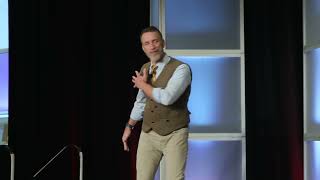
A leader shares FASO, a four-part model for building thriving teams: Fit (match people to tasks, not titles), Ability (hire for curiosity and potential), Safety (relational and financial, not just physical), and Ownership (let people personalize their work). He draws on stories from his forensic-services startup and examples like the Container Store to show how collective vision beats top-down commands.
Chapters
Leadership. Now admittedly I've been a meh leader at best my entire life and I aspire to be much better. And we're going to share with you today is my journey, what I've discovered. And perhaps it's some things that you haven't experienced. Maybe contrarian to what you think now I want to share with you a little story. When I had that forensics business, I had the great idea of sharing our corporate vision after we land the Enron trial. I was like, oh my gosh, if we simply do X, Y and Z, we can achieve $10 million in revenue. And to give context, this is my second year of business. I was bootstrapping the company the first year. We miraculously did about 1.5 on a bootstrap business. And I'm like, if we simply do X, Y and Z, we're going to crush it. So I decided to do a big announcement. We had a brick and mortar back in the day. I called 30 colleagues at the time. So I called everyone into our huddle room, you know, and, and I decide that I'm going to do the big announcement of our vision. $10 million in revenue and we're going to take down our biggest competitor, which was a company called Krul. And what I did was I grabbed a sticky note kind of like this and I put behind it, you know, one of these big post it note things, 10 million. But I hit it for great flair and effect. And this is a reenactment if you don't know what I'm doing. So I put it like this. I call my team together and I'm like, this is the big announcement. I'm going to set the corporate vision. Like that's what we've all been to said to do is set the corporate vision. So I call in everybody and my assistant at the time, her name was Patty. I said, Patty, I really want to get the hype train going here. So we're going to put on and you know what song this is? The song that gets everyone fired up. It's Eye of the Tiger by Survivor. We all know that. So she puts on the little pedestal, she sit next to a cassette player. So back in the day, you know the one where if you accidentally push play and record, you ruin the whole tape. And I'm like, Patty, I want you to turn that up to 11. You know, just crank it. I said, you know, wait for this. This is the signal by, this is always the signal to play Eye of the Tiger. So I call my colleagues in together And I make the grand speech. I said, this is the year that's been destined for us. You know, we have a vision that's going to transform the industry of computer forensics forevermore. Our biggest competitor, Crawl, is going to go down. And that's when I did the move. Thanks for. Did you spit on me? I just got. She went kind of like one of my colleagues. Because then Patty pushed down the play button for I the tiger. And I told her, slowly roll it up so I get the sound. And so you hear. I'm like, yeah. She cranks up. You hear like the distortion because it's a cassette player after all. It's like. And I'm like, this is the year that we achieved $10 million in revenue. And that was the response of my team. Thank you. Apparently you were there. Thanks for the audience participation. It was the resounding sound of silence echoed through the room. And I said, did I not do this right? We're going to achieve $10 million in revenue. And that was the response with the one spitter in the front row spitting on that was the response. And I'm like, what? What's going on? We have a corporate vision. My team said, oh, all right, Michael, I'll have to tell it. And they shuffled back to the room. Patty, a trusted colleague, a confident. A friend came to me and said, mike, she goes, if we achieve $10 million in revenue, you get the bigger house, you get the new car. What about what we want for us? And that became this realization that the corporate vision is the vision of the owner or owners or leadership team. It's something. Something for my ego. It means something for me that I've accomplished. I've proved everyone wrong. I could do it. But our team has a vision too. You know, we've been told to set the kind of the X on the map, right? This is the model. Where are we going? Where are we going to hit? That's the corporate vision. What I want to share with you is there is something different. It's called the collective vision. Most leaders had a corporate vision. We need to set a collective vision. What does everyone on our team want to achieve? I realized that afternoon that we had a colleague also Mark's story. I started to missed up because I have a colleague who's now a decade free of cancer. But in that day, she said, I want to be cancer free. That was her dream. We know the person that wanted to learn to play guitar, someone that wanted to travel the world, someone wanted to buy their first house. You see, everyone that works with us is looking to achieve a vision for themselves. And great leaders learn what it is and support them on that journey. Now, I'm not saying that this is a make a wish foundation. You're not going to buy someone a house or give them guitar lessons, but you can block and tackle. But most importantly, you can keep that vision in front of them by saying, how's it going? And then the law of reciprocity kicks in. Because when you care for your colleagues at the highest degree, of course they're going to care for the vision of your organization at the highest degree. Back in 2022, there was an interesting news article that broke about a museum in Russia. It's in a city called Yakteckenberg. It's outside of Moscow, and it is a museum dedicated to Boris Yeltsin, a former president of Russia. And similar to the US you set up an institution, a library, a museum, to honor a past president. And in the museum, they have a piece of artwork called three figures. Now, I'm not an artist, but here we go. The art is roughly like this. It's. It's three faceless figures, but it is worth millions and millions. It is the Mona Lisa of, of Russia. And they hired a guard. His name was Alexander Basiliev. And they told Alexander to do his job. It was to stand guard in front of the art for 8 or 12 hour shift. I can't remember what it was. Do not take a break. Do not go to the restroom. Do not move. Your job is to guard this. His guard. His job was to make sure it didn't get vandalized. The next morning, the curators came in the museum and someone had drawn true story drawn eyes on the three figures. The guilty party was Alexander Vasilyev. He said he was bored and he thought he could improve the art. That's a true quote from he could improve the art. Serious note. Alexander, ironically, coincidentally, fell outside of a 13 story window to his death the next morning. No, that's. That's. That's a totally joke. That's dark humor. That's. He actually was poisoned to death. Okay? So I hope there's no Russians in the room. But you get it. I'm of Russian descent, so I can say that I'm allowed to. On the same month or during the same month, in Baltimore, there's a museum called the Baltimore Museum of Art. The curators came in and they went to their security guards. What they noticed is that the turnout to museums was meh. And they went to the guards and asked a Question. They said, what can we do, in your opinion, to improve turnout? Now, if you understand, if you're a guard, Michael York was one of the guards there. If you're a guard at the Baltimore Museum, your primary job is you're a director of bathroom benefits. Because people come to you constantly say, where's the restroom? You're a glorified directionalist. I don't even know what the term is. And Michael York said, so basically, I sit here, I tell people where to use the restroom. But he goes, also, I overhear what people talk about. I know more about people's opinion of this art than probably anyone else in the museum, including the curators. He says, I suggest we change the layout of the museum for better flow. And he said, oh, my God, that's an amazing idea. They said, what if we ask the other question? They actually got 17 guards together and made them temporary curators. The Baltimore Museum of art back in 2022 had a exhibit called the Guarding of the Art. It was the biggest turnout they've ever had in the history of the museum. The lesson here is that most leaders tell our team what to do. Great leaders ask our team what to do. I was telling Nicole. Where's Nicole from? San Diego. I told you to do it. There you are, Nicole. So, Nicole, I was in San Diego. I actually have family on the island of Coronado. If you're not familiar with Coronado, first of all, it's not an island. But you think it is because there's a bridge going to it, and it's where it's the home of the famous Navy seals, the great elite military organization. And I was there visiting our family in Coronado. And I decided, this is about 10 years ago. I was in my 40s at the time. I was like, my gosh, I better get out there for a run. I decided to really have a great workout that day. So I hit the weight room and stuff, and I was just. I was feeling it that day. So I go for a run. There's a beach. There's this famous hotel called Hotel Del. I'm out there. I'm like, oh, my God, take this shirt off, dude. You're feeling it, you know? So thanks. Thanks for laughing. I say, take my shirt off, and you go into hysterical laughter. This is. This is real. Okay? So I'm running, which you can tell not really a runner, and I'm running, and all of a sudden, it's a true story, Spitter. All of a sudden, all the women and some of the guys start, like, staring at me. And I'm like, I got this run going. So I'm running and some of the women, like, their jaws drop. I'm like, my God, these workouts are paying off. And all of a sudden I hear behind me a huh? And I'm like, what was that? And I hear. And then I hear behind me are the Navy seals. If you don't know who the Navy seals are, they are Odonis and all of his twin brothers. And all the women were looking not at me, they were looking through me. It's like a lot of people don't know what it's like to experience the Navy SEALs and running with them like I did. It's kind of like a military parade. Had a love child with the iconic event of Las Vegas, Thunder Down Under. And these guys come shirtless, barefoot, carrying a boat. And they race by me and I spin. I'm like, geez. And I'm sitting there like this. I'm like, what the hell just happened? And all of the faces just went with the Navy SEALs. And so did mine. I don't know if you know this. They have boat races that they do as part of the training of being a Navy seal. It's actually documented in a famous book called Extreme Ownership by Jocko Williams. His co author, Leif. I can't remember his last name at the moment. And what they do is they take these boats and they race out into the water, Ocean crashing waves, go around a buoy and come back. And to do it one time is exhausting. Navy Seals do it 25 times in a row. Well, in this one case, what they noticed is that this one particular boat was winning over and over and over again. What they decided to do, the captain of the Navy seals said, we're going to switch the leaders of the winning boat and assign you to the losing boat. There was about five boats in this race, and the losing boat, captain, you're going to go to the winning boat. And then the next race began. And on the next race, the former winning boat won again, but not by the way. It dominated before. And the losing boat, yeah, it lost again, but not as badly. The next race, it was a dead heat. And by the third or fourth race, they'd swap positions. The worst boat became the winning boat, and the winning boat formally became the losing boat. And the only shift was the leader. And what happened was the losing boat was. Which was formerly the winning boat was now having infighting. And the winning boat, which was formally the losing boat, had a congruency, a connectivity the performance of our team is absolutely influenced by the leader and it's determined by the care the leader has for the team. There was actually a study in the Journal of Applied Scientists identifying there's a direct correlation between team performance and team connectivity. When I was at dinner last night, Steve shared an amazing story. So actually went around the room talking about every person in the room. Last night there was about 15 of us. Mark did the same show under the same. And you can tell that this community here you have, has that connection. In fact, I sit with Jennifer and Fred. We're, we're sitting together and I said, oh, what's it like to be in this membership organization? And this is not Jennifer's exact words, but she was. It's not really a membership organization. It's a family. We're a family. Yeah. And that's why the performance from your organization and the Navy SEALS is so elite. There's a movie called the the Boys in the Boat. Did you all see the movie? Okay, you saw it. So Boys in the Boat is about the 1936 Olympics, I think it was in Berlin. And the dominant teams were the Italians and the Germans. When it came to rowing, I mean they were the Adonis's of the day and they were the obvious predetermined gold victors of the Olympics. When it came to rowing. The US assembled a team, a random selection of guys, I think from Wisconsin or something that were. When they walked on, you can see footage of this. You see the Germans and Italians walking, then you see the gangly Americans walking in. It's like, oh my gosh, we don't have a shot. Fast forward. Not to ruin the movie, but it is fact. The Americans went on to win the race and they were physically weaker. They didn't have the training. So the question is, how could they win such an elite race? Well, what they achieved is called swing state. There's a certain state in rowing that if all the oars move at the exact same time, there's an amplitude of force that launches that boat forward. It actually lifts out of the water, reducing friction and the speed amplifies significantly. It doesn't matter how strong you are and it's how synchronized you are that drives you forward. We're going to go into this model of this collective. Where did I put that marker? Did I throw it away? Oh, here it is. We're going to go into this model that explains the three, actually four elements of what we want to do or need to do to elevate ourselves to great leadership again. This is what I've researched, and I'm applying myself. I don't consider myself a great leader, but, gosh, I aspire to be. It's. I pronounce it Faso. F. Rhymes with lasso. F, A, S, O. It's a acronym for the four stages of great leadership. The first, F stands for fit. What we need to do as leaders of our organizations is to create great fits. Do you know that the traditional organizational structure is called a pyramid, or as I like to say, a pyramid scheme? Tell me if your organization followed what I like to do for structure my organization. When you do the org chart, what I would do is I put a box up here at the top, the org chart. I put the word me in here. Then I would draw a line, a long line. A long, long, long line. Long. And then here is, you know, the C suite or whatever it may be. And then they have their colleagues and so forth. Norg chart could look something like this. What this is is called a command control structure. Command goes down, do this. Control. This is what we're doing. Comes back up. It's proven to be very ineffective. Oh, geez. Holy cow. So it's been a pleasure speaking with you this afternoon. Ineffective, ineffective structure. Seems like as long as there's no profanity, I'm like, no problem. I don't swear. So it's a very ineffective structure. It's monolithic. It requires the phone chain game of communication. This is what I want. This is what I think you want to hear. Oh, good, Then do more of that. It's not working, but don't tell them. And that's the loop we have going around. In fact, I can guarantee that's happening at your office right now. Who here has employees? Just raise your hand if you have. Okay, almost everybody in the room. Okay, I'll tell you what's going on at the office right now. I can guarantee it. Are you ready, Spitter? Okay, just cover that mouth. I just know it's coming because this is happening. Yeah, you just did it. It's going to happen in your office. It's going to happen in your office. Awkward laugher. And here's what it is. Here's what it is. They're sitting there right now going, oh, my God, the Atticus event's going on. You know, it's going to come on Monday morning, the hurricane. And we're not talking about. We're not talking about the Orlando hurricanes, what's going through Florida. We're talking about the boss hurricane. Right? You come back. Oh, My God, Atticus was amazing. It was life changing. I learned so much stuff. That first speaker, he was good. That's called subliminal, subliminal messaging. And you're like, oh, my God, here's what we got to do. We got to change our leadership. We're ditching the pyramid. We're going to do this, we're going to do that. We're deploying AI everywhere. That's what's coming back. They know it. And here's what they're saying. When the bossy boss comes back, just go, yes, boss, of course we're going to do that. Genius, boss. And then they say, just like a hurricane, the storm will pass. It's just like a hurricane, right? Sort of. That first disaster and panic. And then the eye hits, like where the boss is like, oh my God, do my work. And there's quiet. And then the storm comes back. What am I doing? Look at all the notes I took. We got to do this. They go, it's like two or three days of this stuff. After it's done, everything will return to how it was. Just don't worry about it. That's what they're talking about right now. You're welcome. We need to change this model. I want to introduce you to the new model. The old model follows a pyramid structure. Monolithic, large, massive, immovable. Do you know there's another natural structure that exists that is arguably pound for pound, stronger than a pyramid and more flexible. It's a natural structure. It's a spider web. A spider web. Pound for pound, that magical silk is stronger than stone itself and has this extreme flexibility, but it's structured differently. What this old model requires is that we identify talent that can serve titles. It's kind of getting a little clunky here, but in this structure, you have to match talent to title. That's what most leaders do. Here's what great leaders do. We don't match talent to titles. We match. Match talent to tasks. Don't match talent to titles. Match talent to tasks. Let me show you what I mean. Look at all the things that you do for. For work. Perhaps you do litigations. Perhaps you do contracts and agreements. Perhaps you're doing administration. Perhaps you're checking email. Perhaps you're the rainmaker for your organization. Perhaps you're doing all of those things. That is a list of tasks that you do and isn't necessarily has to be associated with the owner of the organization. In my forensic business I was telling you about, I had 30 people and one of my employees was Our receptionist, her name was Petra. And the role of receptionist was to, you know, answer the phones, to care for customers, but, you know, we didn't have tons of walk ins. This is back when you still did have walk ins, but was also to do some administrative stuff, invoicing and so forth. Petra was amazing at customer relationships, at communication. I'd never met anyone as good as her. Conversely, her invoicing and accuracy with numbers was questionable. Paul was our rainmaker for our organization. He had that killer instinct. And when, when there was an opportunity presenting itself, he would leap on it and call the attorneys at the right time, at the right place and say, we're the ones to help this situation out. He could close deals left and right. He was not good at relationships, though, maintaining them. He wasn't a farmer, as they say. He in the sales industry. If I looked at the traditional titles, Petra doesn't qualify to be our receptionist. Unfortunately, we're not a fit for her. And she, she's got to go. And Paul wasn't really a fit for our organization. We needed to keep these relationships going until I heard this concept of stop matching talent to titles. Match talent to task. So what we did is I said, oh, Petra, you're great at building relationships. Would you be interested in calling upon and having dialogues with our active attorneys, the ones we're supporting? She goes, my gosh, that's a dream come true. And by the way, you can stop invoicing. She's like, oh, my God, this is amazing. I said to Paul, I said, paul, I said, you're great at closing these opportunities. And the reason you're so good at it was he would crunch numbers. He was like a mathematician. He'd track numbers and say, this is the right time to make the call. It's the right time to do this. I said, would you be interested in getting more intimate with our numbers so you know exactly what's going on? Maybe to our invoicing, he's like, are you serious? This is a dream come true. What we did is we had Petra fill the roles that she was naturally talented at the tasks and Paul to fill the tasks that he was naturally talented at. And they both excelled. I don't know if you know this. Petra is Greek for Peter. I literally took from Peter and gave to Paul. I didn't even know it. Thank you very much. It's the one joke that lands without a swear word, apparently. What we need to do is identify all of the different tasks you have within your organization. You may have 10 titles, you may Have a hundred tasks and it is important to get to that level of detail. We're all the different things you do, then what is the talent you have on your team? Then match the talent with the tasks that they are good at and what you'll see is you build a web like structure. In fact, our office, my current office, I sold the forensics business. We don't have titles anymore. You know the word title? Inherent to the word title, and you're going to relate to this in a second, is the word entitled. Right, Entitled. For my forensics business, when we're just getting started that first year, before we had the 30 folks, we had five or six folks we hired during our first year. And I thought to look the part, we need to have the titles that look the part. So I'm the CEO, Chief Enthusiasm Officer. When people laughed. Don't use that. The people who did not laugh do use that term. I get it, I get it. I decided, my God, we need to have a whole C suite. I need to hire a cfo. Now listen, when you're doing one and a half million, you don't need a cfo. You need a bookkeeper in house maybe. So we hired a guy and we said, guy, you're going to be our cfo. And I said, what you got to do is accounts payables, accounts receivable, bookkeeping work. He said, it's amazing. And we paid him an appropriate salary for the work he was doing. It was at the time about $50,000 annually, which was fair to fair high for the role he was doing. Six months later, guy comes back to me, goes, hey Mike, I've been looking at ads about CFOs because this is going to shock you. Do you know the average CFO makes $1.5 million annually? I laughed him, I said, yeah, yeah, Ken. Oops. I said, ken, you're not a cfo, you're our cfo. He goes, well, what do you mean? I mean you're not like a big corporate cfo. You do bookkeeping and so forth. He's like, no, no, I'm the CFO here. And the two divides would never meet. I'm not saying Ken felt entitled, but I gave him a title that caused entitlement and Ken left. And Ken was excellent, by the way. I had an excellent colleague who decided to leave to pursue an opportunity as a cfo. I don't know how it landed and I hope it landed well, but the loss was mine. What an idiot I was. My current company, we don't have Titles for anybody. I challenge you if you have titles. Now, stripping titles away is really, really hard. Let's not try that. But don't use titles. I may own the business, but when someone introduces me within the organization, like, oh, Mike's our speaker guy. Thingy. Thank you. Thingy. Thingy. I don't know what that's added on for, but thingy. Well, we have Andrea, who handles our marketing. She's not our marketing director, marketing lead. She handles our marketing. And what's so interesting about being titleless is the dynamic of saying, oh, we just got a new thing going down, a new program. We're introducing a new partnership we're forming. Who's the person most talented at that? And we move them to it. People don't live in their fiefdoms anymore. They that they'll take anything that complements their natural talent. And that's why we've gone title less. So lesson number one in our organizations is we gotta start focusing on fit. And it's by stripping away the old monolithic structure that we have. The next part of our model was the A stood for ability. I remember meeting a guy named Kip Tindall. You may not know that name, but he was the founder of the Container Store. Has anyone ever heard of the Container Store? Okay, so I've been to the Container Store. Okay, if you haven't been to the Container Store, shockingly, they sell containers. I know, I know. You know, their competitors are the big box stores. Walmart, Target, they compete against those folks. And if you've been to the Container Store, did it blow your mind away of how good it was? You're selling plastic boxes like, oh, my God, they're amazing. They love me here. It's true, right? You've been there. It's absolutely true. The Container Store is amazing. Your problem, whatever it is, storage is their problem. Go to a Walmart and say, hey, I have a problem. That employee will say, I do too. I work at Walmart. I just. Yeah, I can say, I used to work at a Walmart. Okay, I can make Russian jokes and I can make Walmart jokes. I'm allowed to. The Container Store is remarkable. And if you haven't experienced one, I invite you to go in to understand what an extraordinary community is like, what a bonded group, a team is like. It's excellent. And they do with less people. When you went to the Container Store, it wasn't like, there's hundreds of employees stocking stuff. There's. They're a lean, mean, amazing machine. So Kip the founder I had the privilege of meeting, he's speaking at a conference. And then I went to a lunch table afterwards, and the guy sat with me. He was like, wow. I said, kip, how do you do this? How do you recruit and have such extraordinary people? He says, oh, it's real simple. I have a formula. And this is the little formula he drew on the old cocktail napkin. He says, I want you to know that 1A equals 3B and 1B equals 3C. Now, this is the label we use for performance of individuals. A players, B players, C players. I'm not a fan of that. I actually believe all of humanity are A players. If we give people the right fit, everyone can excel. If they're matched up with where their talent relies, we just hire A players. I said, okay, now let's just get on the same page as defining what an A player is. An A player is someone who is the rock star for your organization. And the reason there's a rock star is because they see their job as their identity. So A's see their job as a definition of who they are as a character. B's lower performers, they get the job done, but they're not really have an affinity toward a company, see the job as a responsibility. So A see it as our identity. B, see it as, this is my job, I gotta do it. Cs see it as a necessity, an evil necessity. I gotta work. I gotta work for someone. They all suck. And if they work for you, you're the king of suck. That's the C. You know what they are. Also, ironically, they're cancerous to the organization. Often he says, we just hire A players. Let me ask you a question and just shout it out if you know it, because there's been studies on this. What percentage of population are A players? Anyone know 1%? You have 5, 10. 10. Yeah. So I'm here. 1, 2, 5, 10. Let me ask you another question. And no bashfulness here. Be totally honest. Who in this room is an A player? Raise your hand. Right. No, don't be bashful. I like the little alligator clubs. I haven't really yet. That's not my hand. Yeah, yeah. Listen, listen here. You feigning ego. Non ego. You're all A players, right? I bet you you perform like rock stars for your organization. And even if the. The only A players in here raise their hand, which was like 70% of the room. We just said 5% of the population A players. Yet in Atticus, it's 70% or 100%. Which one's right. The reality is the second, the latter is everyone is an A player. When in the right role, everyone's an A player. I'm not saying everyone's a perfect fit for your organization, particularly a small organization. There's 7 billion rock stars out on our planet, or 8 billion, whatever it is. Now, you don't have 8 billion roles in your organization. If you did, you got fit for everybody. We may have five or 10 or 20. So we got to find the right fit. And what he says is, we just hire eight players. I said, well, how do you 40 got to pay eight players more? He's like, absolutely, because they are the top performers. They see this as our identity. It's important to compensate them accordingly. Now, this is back in the day, he said, we pay people $20 an hour. I don't know what they pay a Container Store now anymore. He goes, b players. We don't hire B players. They get about $15 an hour. And C players, back then, minimum wage was $10 an hour or thereabouts. So I looked at the math. I said, my guy, how can a little Container store afford this? $20 an hour. That's double what Walmart is paying. He says, I don't know how Walmart affords it. I'm like, it doesn't compute. He pulled out his abacus and said, one A equals three B, meaning they need three people at $15 an hour, which is four, $45 an hour to perform at $20 an hour. And three times three is nine. You need $90 an hour of C players to perform the level one players. Like, I don't know how they're affording it. It's unbelievable how lean your organization can go if you have A players. So of course the question is, how do you get A players? He says, I just simply find people whose identity is in alignment with his job. So give me some examples. He says, I don't hire people that want to work at retail stores or need to work at retail stores because I hire actors. And I say, hey, I know you're an aspiring actor. This is the ultimate opportunity to be a thespian. You know, just act like a great customer service person. He hires retirees and says, hey, you want to socialize more? You want to get to know the community? We'd love to have you Container Store be our social interface for the company. He hires people that use the job as a platform, as expression of themselves. That's the definition of identity. So A players are really easy to find once you understand how People can express themselves through the job that they're doing for you. Now, the question, of course, is how do you. How do you find these people through the. The interviewing process? Like, what's the way to recruit them? And I want to introduce you something. Scott Anderson was in the back. Me and Steve were talking in the back, and Scott came by. And Scott, I think he said you went through 160 resumes. I think. I don't know where Scott is. But to recently play somebody and it's like, oh my God. That's kind of the norm. I want to give you the ultimate hack to recruiting, something that perhaps you've never considered. Now, first we got to understand where talent rely or exists in people. I'm going to do a little chart here that identifies the three expressions of ability that people have. The foundation of people's ability. This is the ability chart. You want someone with the most ability that match your identity to your position. Person with them will express their ability through a thing called experiential ability. This is what most businesses consider. It makes up about 10% of a person's actual ability. Experiential ability is what's on your resume. If you've done it in the past, you're probably good at it in the future. Now you've probably hired people that you know. A resume is beautiful. My God, what a rock star. They're proficient at word. Is that still a big thing? Okay, that's a lawyer joke. Experience. And then they come on board and like, holy cow. They're. They're. They're not proficient at word or they're not proficient in the way you expected. Some people with experience, you have to unexperience them and then show them your way. It's a wait. And with what Steve was talking about with AI, you know, maybe you don't know this. People are taking job ads from. Indeed. Or wherever you place it, plopping it in the AI system. ChatGPT and saying, Write the perfect resume for this. With my credentials, they're game in the system. And yet this is where I go, come on in for an interview. Well, tell me about your experience. Word. Wow. Wow, you speak Spanish? Duolingo. Wow. I think it's Channing Kramer from Seinfeld. The next level of experience called innate experience. Very few organizations look at this. Nate. Experience is what the disc profiles, Myers Brig Predictive index, strengths finder, Enneagram. All those things identify. It's the natural wiring of someone. It's a great indicator of cultural fit and behavior energy where they Gain energy and lose energy. But again it's only 10% of the makeup. What we need to identify is the key part of ability which makes up the 80%. It's potential. What is potential? Potential is if someone was put in the right role, doing the right thing, would they excel? We want to hire people based upon potential. Which begs the question, how do you know if someone has potential? And that's what we're going to solve. You know, there is a one trillion dollar industry that doesn't look at resumes. You don't have to do the Myers Briggs, they just evaluate you on potential. 1 trillion. In fact their recruiting of employees is by far superior to anyone else. They have about a 90% success success rate in finding perfect fit. So the, the industry is the sports industry. You, you, you don't show up to the soccer team, the football team, where the the sport is and say, they don't say hey, you know, can you show me your resume? You, you good at word? No. They say get in the field, demonstrate it, show it. I interviewed a woman named Jewel Casera. She was the hiring director at University of Chicago, the medical department back in the late 90s. And they tried an extraordinary experiment. Instead of hiring on experience and these evaluations, they did a potential analysis. What they did is they brought candidates through to do the administrative work was what they were hiring for. So check ins at a hospital and so forth. They brought 50 candidates through and what they did is an extraordinary experiment is they followed their traditional process. They had a former or active, I should say hiring director who said I just have this really uncanny ability of getting a vibe for someone I meet someone I can just feel if they're going to be a fit or not. And the success rate was about 10%. People were a players. They tried this experiment. They brought in these 50 candidates who went through the standard evaluation interviews and so forth. That hiring director sorted them out based upon her ranking criteria and said here's who's the best down to here's who's the least fit. Then they did an experiment. They set up six stations with different things that you'll be doing on the job. One station was check in, another one was checking someone's vitals and they had each person go to each station. The number one interview candidate was very strong, very confident, really spoke deliberately, intellectually, confidently. The lowest ranked potential candidate who went through the workstations was that same candidate when she went to the check in line. The person working the station, which was Jewel, the person who came with the structure she was working that station. She emulated having cerebral palsy. Her roommate at the time had cerebral palsy. So she knew that fine motor skills, articulation, gesticulation, was very difficult. So when she was asked to take out your license and show identification, she took a full minute to take the license out. Now, some candidates would say, oh, please, take the time necessary, whatever time you need. Other candidates said, if I may, I can assist you in getting your license and stuff for you. But the rock star interviewee said, give me the license now. What's your problem? An instant reject. What's so interesting is someone that has that dominating personality is a great interviewer. They can sell themselves. But when it came to demonstrating the skills, not a great interviewer, they didn't hire her. It's a little bit ironic, actually. I asked Jewel, I said, what do you think about interviewing? She says, interviewing is good if the person's job is going to be a job of interviewing. Otherwise, you've got to assess their skills, set up workstations, experiments. But I want to show you another way to do this. Imagine you and I, we decide we're going to start a rock band, of course. 80s hair band, Survivor. We're all into it, I get it. And we, we need a great guitarist. Greatest guitarist of the 80s. Sadly, he's passed, but it was Eddie Van Halen hands down. Imagine we call Eddie Van Halen and say, hey, we're going to start a band. We need a guy that can whale on guitar. Are you interested? He would laugh us out of the room. Are you kidding me? I've already got a band. I'm okay financially. Don't need you. How would you get a rock star like Eddie Van Halen? And I'll tell you, Eddie Van Halen for our band would have been very easy to land. Here's how we've done it. We would have done what the sports industry does. We would start putting on camps. That's the ultimate recruiting mechanism. We put on a workshop for aspiring guitarists. If you're 10 to 12 years old, we have a guitar camp. Come to our camp and we'll teach you how to play guitar. That's when Eddie discovered the guitar. I think he was 11 years old. And he would have perhaps come to our workshop. And then we look for the criteria that shows potential. If you want to identify a candidate with potential, it always reveals itself in the same three stages. First is curiosity. What we do is you run a workshop, an educational event. You want to hire a paralegal, run a workshop for paralegals hey, we're teaching interest in becoming paralegal. We'll teach you how to be a paralegal already Paralegal. We'll tell you how to advance your skills. Come to our workshop. Charge for it. By the way. Curiosity is always distinguished by an effort. There's an exchange of currency. So, yes, you can educate your prospects by having them pay you. Then curiosity yields to desire. If Eddie. If we did this workshop, Eddie may have shown up. We look for desire. Desire is where they ask a lot of questions, where they participate more. They come early, stay later. Desire identifies itself through behavior. And the highest level of potential is thirst. Thirst is where I can't quit this thing. Edwin Halen famously plays guitar 15 or 16 hours a day. Fingers bleeding constantly. Couldn't put it down. He called it his best friend. We can do this exact same thing. You can recruit people. Not by putting ads out there, by putting opportunities out there. Because a players want to learn more about what they want. Educate. Has anyone here been to a Home Depot Build a Birdhouse workshop? Anyone? Okay, okay. Okay, good. You go to Container Stores. You go to Home Depot. You're really working it. Yeah. Crazy weekends at your house. So here's what the Build a Birdhouse workshop does. They invite down folks. Maybe brought a child with you. You know, they say, they bring down folks and they say, hey, you're going to build a birdhouse. Now here's the guys, the staging. You're like, oh, I'm going to learn how to build a birdhouse. And maybe they're going to try to ingratiate me with the store. I'm, yeah, go Home Depot. I'm going to buy supplies here. Do you know that's a recruiting platform Home Depot has usually. Was there two people working there at the time? One teaching, one. There's two people typically working. There's one teacher, one observer. The teacher gives instructions. Here's how you build a birdhouse. Here's how you do it. The observer is looking for potential candidates. They don't say that. They sit there and say, that person has a lot of questions. They're helping other parents out. There's that weirdo that's come to the Home Depot three times in a row for this. They go to you. I'm sorry, I don't know. That was. That was like subconscious. I swear subconsciously. And I point subconsciously. They, they. It's a recruiting platform. They will go to the candidates there who have the most desired thirst and say, wow, you're really into this. Have you ever Considered applying for a job here. You're exactly who we're looking for. Can you get an app? Have you guys application? No. You've never got an application? All right, okay. No. Yeah. No application. She bought a kitchen instead. There you go. If you haven't received an application, you didn't pass the test. And here's the beautiful thing you don't care about. You're like, whatever. I learned how to build a birdhouse. It's a win, win, win. Run educational events and cherry pick the candidates you want. Last little story. I was an athlete in high school. And I got to put the adjective in front of that. I was a marginal athlete in high school. I played lacrosse. Has anyone ever heard of that sport? Lacrosse. Okay. My. My parents, I said, I want to play more lacrosse. They said, we're going to send you to a camp. They were kind. They funded it for me. I went to a camp in New York State called Hobart. It's an elite school for lacrosse, ironically. And I went there with 500 other athletes. And what the coaches did is they would have us and they were teaching us skills. And I learned skills and learning stuff. And they would tap certain athletes on the shoulder and say, hey, you're really good at this. We'd like to take you to another field. And you'd learn more advanced skills and compete with higher level athletes. And they would tap some of those kids on the shoulder and you go to yet another field, which is the elite of the elite. It was. I had no idea. I was just getting better learning. But the elite students were ultimately recruited. They picked three athletes to play Hobart. I was not the guy. I was not the guy, but they picked three guys. But I did play collegiate lacrosse. I did play collegiate lacrosse. And I attribute it to what I learned at Hobart. Everyone came out winning. By educating you will elevate everybody to a higher level and be able to cherry pick the perfect candidates for yourself. So we talked about fit. That's the F. We talked about A, which is ability potential. Now you know how to recruit. Run workshops, not interviews. Now let's talk about the S, which stands for safety. There was the creation of osha, the Occupational Safety and Hazard association came about because of a horrific incident back in the 1920s or 1910s. A story called the Ghost Girls. You can Google this at some future point. There was a company in World War I who was making glow in the dark watch dots. You probably seen those watches where the watch has dots on it and when it goes dark, you can see it. That was made Originally for the military, it uses a material called radium. Radium is radioactive. And what you do is you pop it on there and it absorbs light and then radiates it back out. They hired factory workers, which were all women at the time, because the men were off fighting the war, and said, you got to put these dots on it. Now, the procedure to put a dot on a watch face was you take your brush, you dip it in radium, you put the dot on, you purse your lips, you point, you point the brush, you dip it again and repeat the procedure. Within. Within months, some of these women truly started to glow. That's why they're called the Ghost Girls. When in dark lights, they would glow. It was at first kind of odd and almost a joke. They'd smile and their teeth were bright green. And then the women started asking, but is this dangerous? And the owners said, no, even though it was radioactive material, and even though they knew back in 1910, and then months later, people started to get horrific tumors and so forth. And it killed in a very painful way. Many months women. And OSHA was created because of that safety. When it comes to our organization, there are multiple levels of safety. And yes, there are still physical safety concerns at organizations, and we as leaders need to address it. But there's also relational safety. Do I feel comfortable being myself? There's financial safety. So let's hit all three. My own office, I ran a survey and I invite you to do the same thing, totally Anonymous. We have 20 people as we're a tiny officer office. And I said to the folks, hey, filled out this, this form. Is there any physical safety concerns? Assuming, you know, we're a office, what safety concerns can there be physically? And it came back with a definitive heck yes. Outside of our building, we have a historic building in New Jersey, and there is an alleyway that goes from our building down to the parking lot. It's, it's a good hundred yards or so and, and it's pitch black. And this time of year, the sun sets pretty early. You know, five o', clock, it's, it's pretty darn dark. And my colleagues were sharing me with me. Around noon, I started thinking, oh, I have to go to the car down the pitch black alleyway. And from noon till 5 o', clock, there was more focus, I think, worrying about the walk than there was the work. And I was like, oh my God. And the solution was real simple. We just put string lights in there and it's illuminated and you can see far ahead of you all the way to your car and it's safe. But what's interesting is if we don't address these things that seem innocuous, you don't even think about it compromises our ability to perform and lean into our A player talent. There's also financial safety. We. I was afraid to do open books until I realized the power of open books. I've been doing it now for about 15 years. My colleagues can see all the numbers for organizations. We don't disclose salaries. We bunch that together. Just saying, here's the entire compensation package. But here's what's interesting about it. I thought financial security safety was by giving people more and more money, and it's not. That does not bring about financial safety. You may have experienced it too, the more money you make. Some of us are very good at spending more. That doesn't bring about security. It's actually knowledge and awareness that comes about with open books. My colleagues started to learn their own finances a little bit better. But here's what's really interesting. They learned about our company finances, and they had comfort in their future. When they knew how we stood fiscally, they said, oh, I don't have to worry about my job when we have these closed books. Our colleagues don't know when we come in, we have that bad month, and we come the office and say, oh, things aren't good. It's hitting them out of out of the blue. So financial open books have allowed an open communication in the organization. It's a great form of safety. But the last piece of safety I want to talk about, where I think there's a great hack for you is in belonging, a sense of community. We have to feel comfortable with each other. Have you noticed that the number one celebrated day for an employee is the day they leave? It's usually the retirement. Well, sometimes you're grateful. It's like, oh, see, good luck in life. But. But sometimes it's the retirement party. Thanks for your years of service. You've been amazing for us. Let's have a big party. Here's that huge cake. Why are we celebrating the day they leave? Why are we celebrating the day they arrive? The first day is like, oh, fill out this paperwork. Sit in your corner. We're gonna go out to lunch without you. Like, that's the first day we're ignored. And you know the number one biggest question our colleagues get asked on their first day at home by someone that loves them, A friend, a family member. How was your first day? It's the number one. I guarantee any person you hire, the number one question they will be asked was, how was your first day? And you know what they say? I put in a corner. I did lots of paperwork. I had to scan the front of my license and the back of my life. Like, my God, what do you think of people? I don't know. I didn't even meet anybody. You got a boss? Boss didn't show. We got to celebrate the first day. I want to set a little picture of how you do this. This at our office, the paperwork, when someone comes on board, it is necessary. I get it. But we don't do it in the first day. We preemptively do it when we can. Or we say, you know what? There's some paperwork that needs to be filled out and reviewed, but we ain't doing it today. We can wait a few days. First day is a celebration. You come, there is a business card waiting for you. I realize business cards are no longer important. We will not exchange business cards. Business cards are very important for the individual that possesses it. So everyone comes on board. Day one. There are business cards printed and ready to rock and roll. Additionally, in the business card, we have one that's in a frame, their business card. And every employee at the office signs it, says, can't wait to work with you. Welcome to the team. Here's your business cards. By the way, business cards have no titles. You know. You know that story about our organization, and everyone gets, I don't know, 100 business cards. Usually they. When they leave employment five or 10 years later, they have 99 business cards. They don't hand them out, but that stack is important to them, just like my card is important to me. There's a celebration basket. Welcome on board. Not like, here's the tchotchkes from the office. Here's the logos. Check out our great logos. There's stuff important to them. We hired Corday. She's our most recent hire. And it says, the world's greatest colleague, Corday. Her last name is Reed Cordae Reed, and that's on her mug. Stuff like that. We personalize it. But there's one thing that even if you've done those things, that is the most most important thing that perhaps you've never done. And this is the game changer. When we were interviewing Corday, we said, hey, tell us about anyone that's influencing your decision to work for a company like ours. You know, why are you looking for a job? And is anyone supporting in this? He goes, yeah, my husband, Brian. He's really excited that I'M looking for a new job and. And he's cheering me along. Here we go. Tell us about Brian. Brian, he likes to do this and that. He's a bourbon collector and make some notes. First day on board, Cordae arrives. Her business cards are there, her office is set up, the logins, all that stuff is done. You're just part of the team. We're greeting her. And next to the basket is a box. And it's wrapped in paper, gift paper. And on there is a card. It says, to Brian, now here's the thing. I told you the number one question that your colleagues will be asked when she goes home. How's your first day? I know that's going to happen. So Corday goes home. Brian goes, hey, Cordae, how was that first day? She's like, I got this basket and it was an amazing, warm experience. They actually celebrated me. There was actually cake. We do that too on the first day for me. Said, happy day one. There was one candle in there. And she goes. And the weirdest thing happened. I got this box for you. And she hands it to me, goes, what do you mean? I don't know. And he opens it and says, dear Brian, we know the decision to work for a company is never made alone. We are so appreciative of you for supporting Cordae and decision to work for us. We have a rock star, and you're a rock star, too, by the way. We hope you enjoy your favorite bourbon. He opens it up and there's his bourbon. That's not the miracle moment. The miracle Moment happened at 4am the next morning because Cordae told me her husband, Brian, is shaking her, going, wake up. You work for the best company ever. I love them. I love them. Go to work. Crush it. She has at work three hours early. She's at work at 5am we don't open till 8. Are you winning? The most important person in your relationship is the person at home. Are you winning them over? Are you ignoring them? The opportunity for belonging is engaging the entire community. The spouse, the parent, the child. It's their family that's the most important to them. And therefore, as leaders, it's most important to us. The last phase, we talked about fit. We talked about ability. We talked about safety. I want to talk about ownership. One of the most common questions I hear is, I wish my employees would act like owners. Maybe you feel that way too. You know, there's a way to do it. It's not by giving ownership. It's by giving what's called psychological ownership. I don't know. I'm sure you've rented a car before, right? I rented recently. I was just in Texas. I rented from Hertz, which by the way, is the perfect name for the organization. It just hurts. I. You got to give your license. Do you have insurance? Will I sell you insurance I can put on my credit card? Do you sure going to do that? Because what if you get scratched? It's like, oh my. The assault you get. Finally you get paperwork, you're interviewed, you go in the back room, they pat you down, they say, okay, here's your key for your car. It's out there in slot A1. I'm like, okay, front row A1 at Hertz is the very back of a lot. So you're walking, you're dragging your butt. I'm like, oh my God, where am I going? I finally get to my car, turn it on. And that's just when the hurts begins. Because then you pull up to the DMZ zone, you know, with the lights flashing spikes there. There's a guard that comes out with guns. He's like, what are you doing? I'm like, I actually don't know. I'm trying to rent a car. He's like, you sure you're gonna take this car? Give me your license, give me your id. Give me this and that. Finally, with enough approval and another pat down, the spikes go down, sirens off, things open up, and I pull out in my Prius. And my God, I don't know if you're like me. I cannot wait for that first traffic light because when that mother ever turns green, I am going to floor it and see what this Prius can do, which I don't know if you know, this or front wheel drive, they start hopping is what they do. Yeah, like all these cars, like go in front of me. There's like a bike list passes by and I'm like hopping, yeah, rock on, man. And you know, I do donuts in the parking lot. I surely don't wash the car. Now, here's the thing about a rental car. I bet you don't care for it like you do the car that you own. I own a little pickup truck and I care for it. In fact, recently I had to to do a long drive. My daughter moved from New Jersey to Tennessee, Chattanooga specifically. And my wife and I drove with furniture and our truck all the way down there, which is like a 14 hour drive or something. And at the end of the drive, I padded the dashboard of my truck and said, good girl, good girl. Who does this? Well, it's because I own the truck. But here's the irony. I don't own the truck. The bank owns it. I'm making payments. I don't have legal tender. I have what's called psychological ownership. If you want your team to have ownership in your organization and they must feel the psychology of ownership, not legal tender. I own stock in Ford, too. I have a Ford truck. I own stock and Ford. I buy Ford factories ago. Hey, Ford we own. That's us. Let's go. No, I'm like, where's my money? Legal ownership triggers a sense of entitlement. Where's my dues? But psychological ownership sense builds a sense of identity, affiliation. Here's how you do it. There's three ways to do it. First of all is you do personalization. My truck, I can put bumper stickers on it. I can put mirror stuff on. I can put little things hanging from the side. I can program the radio station any way I want. All hair metal bands. And the. The rental car. Do you program the radio station? Do you put a bumper sticker on? Of course you don't personalize it. Personalization allows people to take ownership over something. How are your colleagues personalizing their roles? Our inventory room is Kelsey's inventory room. What can you do to personalize it? The second thing is control. Control means the ability to give direction. With a rental car Hertz shared with me. Can't drive outside the country. Can't do more than X miles a day. Can't, can't, can't. When we're forced to comply, we seek to defy. Remember that story shared in the very beginning about the guy working in the Russian museum? He was forced to. To comply in human nature is you seek to get elbow room back at the boss. And that's what the rental car company does. My company. I have control. I can drive as far as I want. I can take out the country. I can do whatever I want. I can park it where I want. I have access to it when I want. The more control we have, the more we sense that belongs to us. And the last part is intimate knowledge. The more we know about something, the more we feel connected with it. When I. When I bought my little Ford pickup truck in the middle of the winter in the freezing cold, I opened up the glove box, pulled out the manual, the ownership manual, and read through a page by page for two hours. Oh, what's this button do? What's that do? So does a rental car even have, like, a car manual in there? I Don't open the glove box. So the more knowledge we have, the more we're connected with it. Here's the golden rule. When your colleagues say, this is your law firm, this is your business, they don't have a set of. Of psychological ownership. When they say, it's our law firm, my job, they're indicating psychological ownership. The last little tip here is the word our is the most powerful, because if it's my, it can build a fiefdom. I have so much knowledge, so much control, so much authority. I'm going to reverse the golden handcuffs and put it on you. This is mine, and no one's getting in. So how do you give people collective ownership where they work collectively on personalization, intimate knowledge and control? My. Here's the deal. I'm about to sell a sad story. I am a coat crier. So here's the deal. If anyone in this room starts crying, I'm gonna start crying. Then you'll start crying more. And then I'll start, like, dry heaving, and then I'll vomit. There will be a vomit fest here. So I'm just asking, hang tight with me. We can get through this together. And if you gotta look down, don't look at me, because I will start crying. And here I go. My father passed away two years ago yesterday. And this is his tie. Someone said, oh, nice tie. This is tie. And he lived a long, great life. He was the greatest man I've ever known. He died when he was 94. And I'm embarrassed to say this, when he was dying, he died at his home. My mother was there. I lived miles down the road. My mom said, I need you here. And that's the call I didn't want to go to. Not because my dad was dying. I didn't have the courage to go. I was terrified. I've never been there when someone's passed. I went. And in retrospect, it is the greatest thing I've ever had a privilege to experience. So I go there. My dad had lost the ability to speak, but he could mutter a few letters or a few words. And I asked him a question on his final day. I said, this is crazy. I said, dad, who's been the most important person in your life? And he starts muttering out these letters. I thought he's gonna say, my mom or someone in the family. My dad goes, h, E, L, L. We're right. Actually write it down. He spells out the name Helen Fuller. I've never heard of this person in my life. And after he passed, I started to do some research. Helen Fuller worked for an organization called the Community Service center in New York City. My father grew up in the tenements. He was part of the greatest generation, born in the 1920s. My father fought in World War II, and tenements were a horrific place. My father grew up literally dirt, dirt, dirt poor. And my father's father, my grandfather, was horrible. He beat my father horrible. This woman, Helen Fuller, worked for the Community Service Center. They worked with impoverished families and children. And she select my father, among others, and said, we got to get you out of here. And physically got him out of the tenements on B Street in New York City, Manhattan, and got him up to a thing called Camp Snug in the woods in Maine. And he spent one week there, which he. The greatest generation is really the silent generation. He never talked about anything except for Camp Snug in the Woods. Now I know where that came from. Helen Fuller mentored him for the years of service to the css. But when the CSS no longer supported the children, Helen decided to still work with my father. She helped him get into college. He had no money, so he joined the military to get the GI Bill. He went on to be an engineer. She worked with him until her. Her final day. I called the css. I said, I got to learn about Helen Fuller. She. The only thing I know, she passed away in 1950 or 51. There's no record of her. But here's the thing. She transformed my life and my sisters. My father never touched us. My father was the guy who broke that pattern. And I don't know the horrors that your family's experienced, but someone has the right, the ability to stand up and do it. But, God, you need someone to lead you through that process. I'm so blessed of the privileged life I've led. And it's because of Helen Fuller. Helen Fuller to me, is the definition of the greatest leader of all time for my life. And the thing is, she never knew I existed because I wasn't around when she was. And I just want you to realize you are the Helen Fuller of your organization. And the greatest privilege you're going to have is not actually serving your colleagues, employees. What you learn now, it could be someone in their family, or it could be someone a generation or two from now. But great leadership has this cascading effect and will make the world a better place. So thank you for stepping up and being a great leader.










