In this conversational interview, Dave Kashen and Coach B explore why certain choices feel like weighty decisions while most daily actions pass unnoticed. They argue that all decisions are fundamentally emotional, with rational analysis serving only as a post‑hoc justification. The dialogue emphasizes the trap of believing one must know the right answer in advance, which fuels fear and a compulsive need to control the future. Through a vivid metaphor of a sand‑filled water bottle, Coach B illustrates how shaking up uncertainty only makes it murkier, whereas allowing the mind to become still lets insights surface—much like moments of clarity that arise in the shower. They discuss practical examples, from hedge‑fund traders feeling terror despite strong analytical cases, to clients who followed an intuitive, seemingly irrational path that later proved prescient (e.g., missing the AI wave). The conversation underscores the importance of accepting not‑knowing, tuning into bodily sensations, heart, and gut intuition, and using intellect as a servant rather than a master. Ultimately, they suggest that recognizing the emotional core of decisions and embracing stillness can lead to clearer, more authentic choices.
Chapters
Can you talk a little bit about, even like case studies, like what are some examples of client situations or things where the person's stewing on it? They were like, you said, hey, you don't know, it's okay not to know, just be with that. And then ultimately that led to
clarity,
something.
Sure. First, let's, let's do this in real time. Can you accept yourself for not knowing? Yes.
I think I can.
Yeah, what do you notice when you do?
Um, my body gets a little bit more relaxed. I'm like, I'm like, yeah, I don't— I don't know.
Yeah, it feels lighter. Another way I ask that question, just for folks listening, if you want to ask yourself, is, can I let go of the story that I should know? Can you let go of thinking you should know something that you don't know? Which, I'll come back to your question in a second. There's a metaphor I've often used of Imagine you have like a plastic bottle of water, clear plastic, and it's filled with sand, and so it's very murky.
Right.
And you're like, I want it to be clear! And so you're shaking the bottle because you're frustrated that it's not clear. And like, of course you're making it even more murky. Whereas it's obvious in that case, what you need to do is just set it down and let it get still. And I remember reading somewhere that what creates insights is like when you connect— when your brain connects weak signals, but your brain can only hear signals above the level of noise.
Right.
So there's just something I find powerful about get still, get quiet, right? Get present. And it's not get still and be like, okay, what's the answer? What's the answer? What's the answer? I gotta figure it out, right? Right. Ironically, it's more like Just, this is why so many people have clarity in the shower, right? There's, when you're not thinking about it and your mind is more quiet, often some insight emerges or some clarity emerges. So I think there's something to just get still, get quiet, allow clarity to emerge. Your question was?
So just to recap, so you, we started by talking, you said all decisions are emotional, and then you put rationality on the back end. We talked about a couple of the traps when you think you should know the answer, you either are like saying, or you're mad you don't know the answer. And then we were talking a little bit about not knowing. I want to come back to something in a second, but yeah, let's talk about not knowing.
Okay. I guess we also, for the recap, we also talked about if you're making decisions to try to control what you feel, you're probably going to make suboptimal decisions. So learning to be with Your feelings and welcome them and not need to control them frees you up to make like more clear decisions around what do I really want to do? And we talked a little bit about
that. Yeah, actually, let's— I want to stay with that because I was like, I make up Peter Thiel. I don't know Peter Thiel, but I make up he's this like chess player and he thinks 4 steps ahead of everyone. He's super rational, blah, blah, blah. So I'm just— he's a caricature. I don't know him actually. Right. But, but if, but that there's a group of people who go like, no, like I'm a rationalist, Dave. I am just going to think through all like the potential future machinations of this. I'm a chess player. I'm getting ahead of the steps. How would you counter that argument with what you're saying, which is, no, dude, there's no such thing as a non-emotional decision?
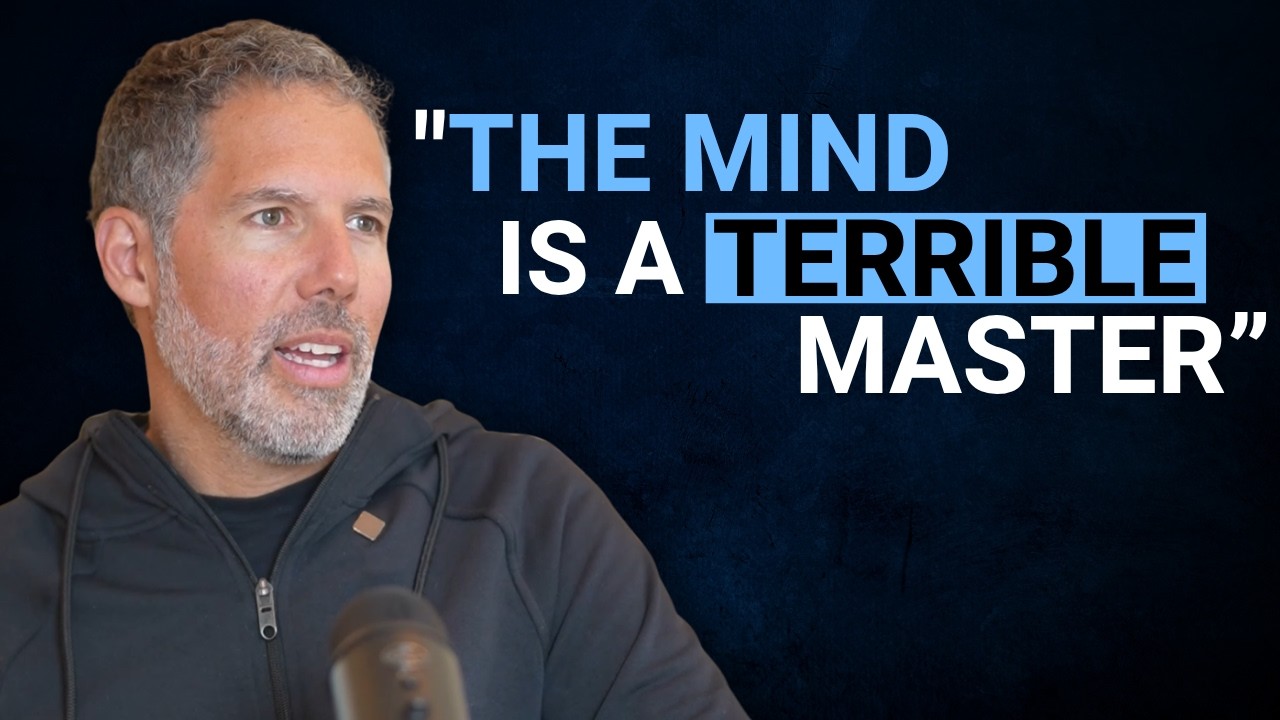
I think what comes to my mind is one is the idea that the mind is a wonderful servant, but a terrible master. So it's not that we don't use our intellect and our intelligence to make— to inform our choices. Like, I don't— I wouldn't want to devalue or ignore any part of us. I just think most people way overly rely on that part. And to me, like, the recognition that we actually make emotional decisions is further support for why we ought not to just rely. It's kind of a fool's errand, like you said. to pretend that it's an entirely intellectual and emotional process.
Right.
But, I don't want to deny our intelligence and the power of our intellect to consider options. And so, it informs, but I think what most people do is they over-rely on the intellect and they ignore, for example, the heart, their feelings, and the gut, the intuition. So,
It's almost like they lie to themselves that it's not— like, if you're a hedge fund trader and you're like, I've run the analysis and I'm going to go long on this stock, that involves a lot of intelligence and intellect, obviously. But at some level, it has to involve your feelings, your belief, your emotions, or maybe, again, you don't want to be wrong. And to your point, if you're not super conscious of it, You just don't want to be wrong and you don't want to feel wrong, so you're going to make a consensus bet or— Yeah.
You can justify it either way in the end, right? And I think to that example, if you did all the analysis but you actually felt terrified when you considered making the investment, you probably wouldn't make it even though all of your analysis showed that it's a great bet, the financial forecast, like everything made sense. But if in your body you felt terrified, you probably wouldn't do it, and then you would find some way to rationalize it.
Right.
And there's— I think there's pretty good research and studies around how people post, you know, rationalize all kinds of decisions. The other thing I just wanted to name, because you kind of mentioned, oh, it starts to feel lighter. One of the things that I learned from Joe Hudson that really resonated was we actually make choices all day long. Without thinking much about them, right? Like, we get dressed and we have food and we have meetings and we talk to people and we say words and like everything is at some level a decision, right? Right. Am I choosing every word I'm gonna say? I guess in a certain sense I am. What differentiates the things that feel like, oh, this is a decision I have to make, from just all the other choices we make, it's just fear. So I think that's a real— and you were kind of tuning into this with your, okay, is it a holdco or is it a fund? There's some fear you have around making the wrong choice that suddenly has you stop and be like, oh, I need to really consider this one. And what you're really trying to do is just control life, control the future to manage that fear.
Yeah, that resonates. Yeah, I'm trying to control some future that doesn't exist yet.
And maybe also approval, like you said.
People's impression of me. Yeah,
avoid looking bad.
Yeah,
and they're very related, right? Because the reason we want to be right in our decisions is because we want to control the future,
right?
Right. So when I'm in threat, I'm like, I feel scared, I need to control the future, and now I need to be right in order to control the future because I'm right that this is the right future. And what I think is most tricky about this conversation is, you know, we'll invoke Andrew or founders listening, like, but isn't my job to make great decisions, is to make the right calls? Right. Like, isn't that my job? And, um, to some extent, the answer is yes. Like, I think your job is to make the best decisions you can. The question is, how do you actually do that?
Yep.
And does, like, all the intellectual trying to figure out the right answer lead to better outcomes, better decisions than using— letting your intellect inform you, but also tuning into your heart, tuning into your intuition, you know, tapping into, okay, what is it I— what do I really want to do here? And, what's wild to me is I have seen many times clients follow some authentic want that didn't really seem rational, maybe even counter-rational. And then, only in hindsight, it had become clear like, oh, my gosh, if you had done the rational thing, you wouldn't have known AI was about to emerge and blah, blah, blah. Right, right, right. But, because you're here now, like, Oh my God, you're perfectly positioned. So it's, you know, maybe that— maybe one way of saying it is let's stop pretending we can predict the future.
Right.
Right? Like, that's in some way, that's really what we're doing when we're like, I should know the right answer. I should be able to know in advance what decision to make and be able to accurately predict the future. And, and for a long time, and to some extent still, I would just or at least my mind would beat me up over investment decisions.