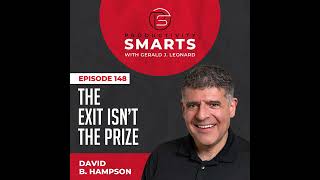
Episode 148 - Rainbow Gold: Building a Business That's Both the Journey and the Destination
David Hampson, an aviation-insurance entrepreneur, discusses his book Rainbow Gold and the PRIMER framework for sustainable business. He critiques the VC exit mentality, emphasizing long-term cash flow and culture, and explains how aviation practices like checklists and redundancy apply to running a business.
Chapters
Are you ready to unlock your full potential and maximize your productivity? Look no further than Productivity Smart, the ultimate audio podcast hosted by renowned productivity expert Gerald J. Leonard. In every episode, Gerald shares captivating stories, invaluable tips, and cutting-edge strategies that will transform the way you approach productivity. Whether you're looking to reduce stress, overcome overwhelm, or simply get more done in less time, Productivity Smarts has got you covered. But that's not all. You'll also gain inspiration from real-life success stories of individuals who have achieved greatness through productivity. Plus, you'll learn the latest tools, techniques, and habits that will help you achieve a new level of happiness and fulfillment in your personal and professional life. So why wait? Join us every week as we delve into the exciting world of productivity and help you unleash your full potential. Get ready to take your productivity to the next level with Productivity Smarts! As a productivity expert and host of the Productivity Smarts podcast, Gerald J. Leonard has been a proud supporter of Kiva since 2011. Kiva is a nonprofit organization that helps entrepreneurs in third-world countries access the capital they need to start or grow their businesses. By making a small loan through Kiva, you can help these entrepreneurs achieve their dreams, support their families, and contribute to their local economies. And with a repayment rate of over 96%, your loan can be relent to another entrepreneur once it's repaid, creating a ripple effect of positive change. So if you're looking for a meaningful way to make a difference in the world, consider making a loan through Kiva. With loans as small as $25, Anyone can be a microlender and help change lives. Visit kiva.org to learn more and start lending today.
Well, today I am speaking to David B. Hampson. He is an acquisition entrepreneur, aviation insurance leader, and award-winning author who reshapes how we think about success. In Rainbow Goal, he shares hard-earned lessons on purpose-driven business, resilience, and sustainable leadership, challenging the rush for quick exit and inspiring listeners to build companies that they never want to sell. David, how are you?
I'm doing well. Thanks very much, Gerald, for having me today.
Excellent. Listen, I, as I was saying before we got started here, your book, Rainbow Goal, I had a chance to go through it and it was like going through a mini MBA. Honestly, it was really, really good. There are a lot of tips. I'm thinking that's a book I wanna go back to and highlight and maybe make a checklist for myself.
I appreciate that. That's, that was actually what I was aiming for. So, and I wanted to make it so it was like, you know, told in a storytelling fashion. Hopefully by the time you got to the end, you learned a lot more than you even realized that you did while you're reading it.
So yeah, those are the, those are the best ones where you, you know, you have tons of stories and adventures and things that you guys went through, even starting out with, I think it was like a really bad accident at the restaurant and you had to really round out, but this was like in South Africa and you know, your journey went from there to then back to America and, and the whole story. But before we get into the depths of your book, I always ask a couple of questions, and that is, what is your favorite style of music?
That's a really tough question because I like lots of different genres, but okay. I, I would say that if I had to choose one though, it would be soft rock.
Okay. Okay.
Excellent.
And here's the thing, you don't have to choose one. If what your favorite style of music is all types of music, then that's your favorite style.
It truly is. Like sometimes my wife makes fun of me cuz I'll have like a mixed you know, list of music and it'll be like something that just came out, you know what I mean? And then it'll be like, you know, some sort of country song and then it'll be like soft rock song and oldies, like all mixed together and, and classic musical music. Like I like it all. Like I like the variety. Like, you know, if it's a tune I like, it just—
what, what mood am I trying to get into? You know, keep changing the mood up on me. But yeah.
Yeah. Yeah. But it could just resonate like different songs and it can resonate with you from different genres, at least for me. And, you know, and it's not about the type of music, it's about whether it resonates with you for some reason.
Exactly, exactly. I always tell people this in my second book, uh, Workplace Jazz, and I wrote about that. I talk about the definition of the word music. It comes from the word the muse, you know, where the guy was tied to the ship and the muses are singing to him. It puts them in a trance. And that's what music does. And that's why, like you said, it's not about the exact style, it's like, hey, if I hear a song that puts me in a certain feel or mood that I'm enjoying, then that's my jam, that's my song, right? And that's kind of what you're saying.
That's it, that's it, that's spot on.
Yeah, excellent. Do you have a favorite artist at all, or is it still kind of not so much all over the board but just it depends?
And that's the same thing, it, it depends, you know. I like Elton, I like Elton John a lot. I like U2. I like Coldplay. Like, those are a couple, but But yeah, it depends.
Excellent.
Excellent.
Well, listen, let's jump into your book, Rainbow Gold. I'm being very honest. I was very impressed with your honesty, your storytelling, and your willingness to share your journey as an entrepreneur. And it's not a straight line. It's not what you see on what we now see on Facebook. On Facebook or LinkedIn or something like that, or Instagram where it's like, oh, I started this and I got like quadrillions of dollars and look how successful I am. And I just kind of thought about it and manifested it and it happened. No, yours is about hard work, struggles, some tragedy with, you know, folks that work for you, the community coming together, learning from your parents, joining network events, mentoring, Talking it out with your wife and you guys getting on the same page. So it's a real journey. And so, you know, it's, so I really, I really do appreciate it cuz he, cuz in the book you leave a lot of, um, I would say breadcrumbs for entrepreneurs who are looking to run their business or grow or even think about the way they should do things. Even as, even as they grow, you leave breadcrumbs of things you should be thinking about. And that's what it did for me. So let me ask you, In your book, you talk about this whole idea of the fast exit mentality that people have, right? Especially with VCs. And your focus is on building a sustainable practice. Why did you choose that route and what inspired you to write the book?
Well, you know, the reason I chose that route is that I always, when I thought about, you know, owning a business, wanting a business, I wanted something that I enjoyed doing. If you go through you know, all the hardship of building a business, you take on that risk. Yeah. You want something you're enjoying while you're doing it as opposed to like just trying to look, oh, am I going to be able to get to that exit? Hopefully you will. You know, it's kind of more of a gamble. And I will say that like I've never— my, my investment philosophy has never been big on sort of the gambling, flipping sort of mentality. Same thing when I have some properties. I've always liked ones that were like, you know, long-term cash-flowing properties as opposed to ones that were like you're trying to flip. Yeah. You know, I've never been— even with stocks, like, I'm not a big stock person. When I've owned stocks, it's always been ones that are to hold for the long term as opposed to buying and hoping they appreciate in the short term.
Right.
So it's a little bit different philosophy. So maybe not everyone has that same philosophy, but that's always worked well for me. So that kind of transfers into the idea of building a sustainable business. But that's very much a counter-narrative to what the media sensationalizes these days, where everyone talks about like, oh, you need to get a funding round quickly and scale up and exit in 5 years and get, you know, get your exit. You know, that's, that's what seems to be sensationalized to such an extent that it's almost seen as the only way to do it. And that's not the only way. So, you know, that's why I embraced that because I wanted, I, I, that, that sustainable way felt more a better fit for me and my personality. But what decide— what made me write the book was that about a year and a half ago over the holidays, the staff at both of the insurance agencies that own and operate purchased very personal holiday gifts for me. And they talked to— they mentioned, had comments about how much they like working for our company and working with me. It made me realize that we created something really special, that we created a really nice culture, not only that I enjoyed working in, that our people really enjoyed being part of too. And they also enjoyed having a career there, career there in it as well. And I just thought that was such a special thing that it, you know, it's a message that could be shared with others and to hopefully show people that there is more than one way to do this. And you can create something that can be for the long term that can become a legacy and that it's okay. That's, that's also a way to be successful in business and entrepreneurship.
Right, right. And I love the way in the book, As you're going through your career from college and getting into a program in science athletics down in South Africa to getting into business down there, that you kept pinging your dad, right? You kept pinging your father and then you pinged other leaders or people that you got advice from. And as the business grew and you started looking for different directions to go in, you leaned on him a little bit more. And, you know, that's how you got into the insurance business. And I never thought about, you know, when it comes to insurance, aviation insurance. That's a neat business to be in where they have to be insured, but you know, you have also the pleasure of being able to fly and insure people who— and the kind of risk and things that they have to go through. And so you tell all those stories and it really shows your depth. But also, I think one of the reasons that the people that work for you see it as family is because, at least what I got from the book, was that's kind of how you seen the business, is that it was always a family affair. And so I think you just passed that on to your employees as your clients and saw them as an extension of your family.
Absolutely. And we, we definitely do see it that way. Like when someone joins us, we see them as joining the family and, and that, yeah, that, that sort of culture starts at the top, right? And I think that's definitely, definitely why it is. And it is a family business. You know, my, my parents are still involved in the business. My dad has been a great mentor in a lot of different ways. You know, even though he wasn't, an aviation person, he had his entire career in insurance. He's one of the very few people that actually did a degree in insurance in college and his master's program. Like most people fall into it from something else. He actually very early on, he wanted to do it. So it was intentional. And that's because his dad was also in insurance. He was, his dad was a high school dropout that didn't finish high school, but he worked on the railroad and someone told him, hey, you know, you can make more money selling some insurance on the side. Why are you doing this railroad thing? And so he got his license and started selling some insurance and it, you know, became so successful. He quit the railroad job and, and built an agency. And, and, you know, so it's, it's kind of in the, runs in the family and in the blood. And, you know, when I was younger, I used to tell my dad, I never want to be in insurance. It's so boring. And now I love it. But sometimes, you know, your perspective changes as you get older and, you know, and I learned over time, I realized what he was saying was true about what a wonderful business it is. I also realized that I could take an area I was interested in, I was passionate about, and then combine that with insurance and, and, and go in that specific area, you know, and, and specialize in it and do something that I love, you know? And, and, and so that's, that's worked out really, really well. And that's where my dad's really helped direct me and guide me towards this path that I'm on now. And, and I'm so thankful that I had, I had his guidance because otherwise I, I can't think of a better business than the one I have now.
Now, let me ask you this. That's a great point. And combining a surefire way of making money, you know, through insurance, but also you then added the component of aviation, which I know, you know, based on your book, you're a licensed pilot and, you know, you're able to— so you can really speak the language. Because you, you know, you fly yourself, so you can really relate to your customers from that perspective. But one of the things I noticed was that through the book, there is a thread of productivity that you displayed, whether it was things were going well or things were going good or things were going bad or things, difficult things happened. What was it for you that was that through line from the beginning of your career, going to South Africa to where you are now and growing the business and making investments and all the things that you're doing. What was that through line for you that kept you focused? And even though all the things are changing, you stayed very steady. And I really appreciated that about you in the book and your story. You don't really come out and say that in the book, but by reading through the book, you pick that up. So what was that for you? How did you— how were you able to accomplish that?
Well, a couple reasons. One is that the first business that I, that I had was not the business I ended up staying in long term in South Africa. My first experience was a restaurant franchise. I learned, it was a, it was like an MBA for me. I learned a lot about business. I never studied business at all before that. All my courses were science in college, but it was a learning experience, but I was able to appreciate it for what it was and able to say, hey, this was not something that was gonna work long term, but I can take a lot of lessons I learned from that and realize that even when times were tough and when there was failures, and there certainly were, that those could be learning experiences and they could be growth opportunities. And I think that having a, what they call grit or having a growth mindset is what really helped with that because you can either have a difficult experience and you can kind of say, "Woe is me." And, you know, "Why did this happen to me?" And, or, "I was a failure, this is terrible. Or you can say, you know what, gosh, I kind of messed up here, but let me think about what I can learn from this and use it to help catapult me or pivot me to something better. And I think that having that mindset and something that I think was instilled in me with my parents at a young age, that allows you to have that perspective that you can just keep going and have that consistency and keep that productivity even when you face a difficult time or even something that might, you might perceive as being a failure. You can pick yourself back up, keep going at that same level, 'cause you know that, you know, that, that failure's just taught you something that's gonna make you better later on. Yeah.
Yeah. You mentioned something in there. You kind of slid the word in and you used the word grit.
Yes.
Yeah.
I love that. I love that term. Yeah.
Yeah. Angela Duckworth talks about when they looked at students who were failing and, but they eventually became successful, they, they looked and said, well, what is it about them? And It was defined as grit. When you think of the word grit, being gritty, uh, because it definitely stands out that you were, you know, as you went through your career that you had this, uh, gritty part of your personality to go through the tough times. What was it about that that allowed you to become grittier as you went through it? I know it was learning from the failures and so on, but sometimes that's, that's something you feel in your gut.
Yeah. Well, I, I think that I always felt like I had enough confidence that I knew that that, you know, if I stuck with it long enough, I could be successful. I had confidence in my abilities to take what I learned. My, you know, I felt like I was, you know, I had fairly high-level intelligence and I could, you know, use that to my advantage if I kept going. I didn't necessarily have to be, you know, something I was born with knowing, for example. I think, I mean, it goes all the way back, I think, to when I was younger, as I mentioned, my parents, you know, influenced in that. And when I was much younger, there were a couple, I think, key moments where when I was in school and like I wanted to pursue something. I remember one time I didn't get into a pre-algebra class and I really wanted to. I was kind of like when it was a nerdy group of friends and we kind of competed with each other for how well we were doing. I know it sounds funny, but like we did. And I, they did a placement test and I didn't get in. And I told my parents, my friends did. I told my parents, I want to do it. And they were like, you know, they said, are you sure? You're like, you know, Maybe it'd be better to stay, you know, at the classroom. And I said, no, I definitely want to do it. And then they went to the school and they supported me and they said, well, if that's, then we'll support you. We're going to, we're going to tell them. And the school pushed back. They said, no, David didn't get the score you needed. And I kept pushing, pushing. My parents insisted. My dad called the principal. I got in. I had to get caught up. I was like 6 weeks behind at that point. I ended up with the highest grade in the class at the end of that first term. And even though they didn't want to let me in. And like that, that was one I just remember as being like a critical moment that made me realize like, you know, if you put your mind to it and you think you can do it, even if someone tells you you can't, or if, if you know there's a barrier put up, you can do it if you put your mind to it. I think that was like those lessons when I was younger taught me that. So even later in life when I was an adult and I came up with similar challenges, people telling me, oh no, you can't do, you didn't go to business school, you can't be an entrepreneur, you didn't, you can't do this. Like it made me realize, no, I don't think that's true. You know, I know that I've had other situations before where someone told me no. And, but through my termination, I did it anyways. So I can do it even now.
Exactly. Exactly. That makes a lot of sense. 'Cause you didn't tell that story in your book, but that makes a lot of sense about your personality, having gone through a lesson of, you know, not passing a test, but still wanting to be a part of the program and then finding a way to not accept the word no, that I can't, you can't be a part of it, but that you figured out a way to make it work. And then you worked it, right? 'Cause you had to do the work, right? You had to roll up your sleeves.
You had to study.
Yeah. You had to, you had to study. And so that gave, gave you kind of like a foundation. In the book, you talk about this concept of the butterfly effect of small decisions. Can you talk about that a little bit more?
Yes. And that's a concept that kind of interwoven throughout the book. And, and I love, I love the butterfly effect concept and that, yeah, that's something that originates in, in science and chaos theory to be specific. And that's something, that's something that the concept that something as small as the flap of a butterfly's wings could theoretically set off a tornado or hurricane on the other side of the world. And it's a scientific principle. I don't know if that's ever actually happened, but theoretically it could. But I can definitely assure you that it's a very powerful force in all of our lives. Yeah. You think about any little small decisions you've made in your life. Just think about if you just made the other decision, how it could change everything differently. You know, the cascade effect of that. And once you think about that really carefully, I think you, a lot of people change the way you interact with everyone around you, realizing that you can be a butterfly effect moment for good or for bad, for positive and, or for negative in other people's lives as well. And, you know, just think about that when you, when you're acting with people. And, you know, I certainly in my life, like if I hadn't made the decision to go to South Africa, I wouldn't have met my wife. I wouldn't have had probably the first business experience that I did. That led me to the business experience I have now, my entire life would be different. And I can think of many other things too, but that's just one, one good example. And the same thing is in business as well. You know, whether you make little decisions that you make in terms of how you treat your employees or even investment decisions you make, that, that can have a trickle effect. It can be amplified over time. So I think it's important for people to think about that because Not acting when you have the opportunity to act on something that could be a good opportunity could end up making you miss out on something really great.
Yeah.
Yeah.
It makes, it makes a lot of sense. So let me ask you another question here. What are the biggest productivity traps that you see for startup, in the startup culture, and how can leaders avoid them? So basically, you know, everyone focuses on trying to be productive, right? But many times they tend to burn the candle at both ends. Yeah. And that always, the majority of time, that doesn't work because neurologically, physiologically, we can't live by having the candles burned at both ends. We have to rest, we have to do this, we have to do that, we have to take care of ourselves. Doesn't make sense to go after wealth and then lose your health, and then you spend all your wealth trying to get your health back. So what lessons or insights do you have around just this kind of startup culture and what leaders should try to avoid?
Yeah, that's, that's definitely something that's a problem in startup culture where they keep burning the candle at both ends. I think that a lot of times in start— startups, they're trying to scale so fast, they don't take the time to build the infrastructure around their growth. And they end up, you know, having to wear too many hats. You know, they're not building up, you know, their— the depth of their bench strength of their employees or developing people within their company. And they're just taking on way too many things and then just trying to— just chasing growth, you know what I mean? As opposed to like building the foundation that they need to be able to accomplish, to be able to handle all that. And part of that's because they're thinking of that exit. They're thinking, oh, I just need to get to this growth amount. It doesn't matter if the foundation is shaky or solid. As long as I get to this top line number and get this exit, it'll be someone else's problem. And I think that's where, that's where that comes from is like, I'm just trying to scale up as quickly as possible. It doesn't really matter whether the foundation is solid, whether the bones are, are structurally sound, and you don't spend time on that. And as a result, you end up compromising your own health because you're burning a candle at both ends, as, as you mentioned. And, and that's the problem. And I think you can avoid that if you You know, take some time to really think about, even if you want to sell your company and get to that point where you're going to have a fairly fast exit, you're not going to keep it long-term. I mean, that's some, for some people that's, that's okay. And there's some industries where frankly, that's typically the way you do it. Technology is one, of course, where that's pretty common, but, and sometimes you just need the capital. So you're going to have to have an exit, but, but even if you do that, you're ultimately going to have a much better result if you take some time to build the infrastructure. That's gonna make your company more valuable to someone else. Probably if you sell your company, you're probably gonna be required to stay on for a period of time, or some sort of transition, at least some sort of earnout. And it's gonna be much better for you in terms of your final result if you take time to create, to create that foundation and spend some time there. Don't just chase growth at all costs. And that's the mistake I think a lot of people make.
Yeah. Yeah. That makes a lot of sense. Now, you are also a licensed pilot. Correct?
Yes.
Correct. What inspired you to get your pilot license?
Well, I've always loved aviation since I was very young. We had family in Florida on both sides of my family, my mom and dad, and we'd go visit them a couple times a year. It would just, we'd just fly commercial airlines, but I always just loved sitting in the window seat and looking at everything out the window. I just thought it was amazing and it was fascinating to me. So I always wanted to fly since I was younger. I never had the opportunity to take flying lessons, but my wife, Buddy, she knew I loved to fly. And on one of my birthdays, I was in my 30s, she got me a gift certificate for 3 flying lessons. And I took those 3 lessons and, you know, and I was hooked. So she thought I was just going to be like, oh, get out of my system and do this, I'll be done. And I just kept going. I'm still flying today. So we always laugh about that. But, but, you know, that was, it was such a great gift that she got me and And you know, and I, and I realized like this is something I really, really love and I want to, I want to get into this more and more. And you know, that's what ultimately led me to combine the insurance, which I was already in doing insurance at that point with aviation. And yeah, and I'm able to, I have my own airplane. It's a, it's a small single-engine 5-seater called the Cirrus SR22. And I fly sort of up and down the East Coast visiting clients and I use it some personally too. But that's just been awesome to be able to— I have to pinch myself because I feel like I'm so lucky I get to fly my own plane around.
I know that. I was like, okay, you're going to see a client and it's like, so how are you getting there? When is your flight? Well, it's when I want it to be.
Exactly. That's right. That's awesome to be able to do that.
Do you have to worry about TSA?
No, don't have to worry about TSA. No TSA.
That's pretty amazing. Now let me ask you this, and that was a setup question for this next question, and that is, because you have that aviation in your background, how do you use that thinking model? Because in aviation it's all about accountability, right? Because, you know, can't make mistakes. It's all about checklists. You have your preflight checklist, your flight checklist, your landing checklist. How do you turn that and use those principles in your business?
Yeah, that's— there's a lot of parallels that could be really helpful in business, you know, from the aviation industry. You know, aviation is all about, like you mentioned, having checklists. We have a checklist, you know, before we, before we take off, we do, we do a number of items we look at and go through to make sure everything's working properly. That's something you should do in business as well, is think about before you make a decision or you act on something, you know, you know, go through a checklist of items you need to look at. Or before you hire someone, for example, do you have a checklist of what you look at before you make a new hire? There's so many things in business where that's valuable. And the other thing is having redundancies, right? Where, you know, if something, if some one thing fails, there's a backup system that's gonna, gonna, gonna come into play to help, help with that, you know, prevent it, prevent a catastrophe. And, you know, in business that's important too. Do you have backups within your company? You know, if one person has to be out unexpectedly, is there other people? Do other people know what to do? Is it, do you have a system in place? Is it, is the institutional knowledge just in your head or is it there with policies and procedures written down so someone else can pick it up? you know, and take over the reins. There's a parallel there. And then also in aviation, pilots are taught, taught risk management. And, you know, aviation entails a certain degree of risk, right? Like it's, it's, it can be very, very safe, but there's a level of risk to it. But it's about managing that risk. Fortunately, like I see a lot of claims and accidents in my industry, but one thing I've learned is that the vast majority of those are due to poor decision-making and pilot error. There's very few that are just purely acts of God and mechanical failures. There are some, but that's very few. So if you as a pilot can exercise better risk mitigation, you can eliminate most of the catastrophes. The same is true in business. Business entails a certain degree of risk, of course, but if you have a smart decision-making process and you have a process in place to evaluate a risk, you can make good decisions and feel confident about taking on a risk that's manageable based on your risk tolerance and what you've— what the parameters that you've set. So that's important to think, have a decision tree where you look at something, you think, okay, this is risk, but it's tolerable level, like it meets my criteria. So I'm going to take that risk. I'm going to say yes, we're going to do it. We can do this deal. Good deal. Act on it quickly because it meets— it meets the criteria of the deal that you set up for risk. And you can say, I can just act on it and you don't miss an opportunity.
So yeah. Gotcha. Gotcha. That's pretty good. I really like that. So let me ask you last question here before I ask about where people can learn more about you and things along that line. As you were writing the book, uh, The Rainbow Gold, what mindset shift did you go through as you were kind of writing out this journey that you've been on that has been most transformative in your life?
Well, you know, One of the things that, well, mindset shift that I realized as I was writing it is that, you know, as it kind of evolved over time, I realized that my entire journey had been educational experience. And I realized that I had learned and synthesized even more than I even realized from, you know, early, early stages of my career that, that informed some of the decision-making and some of what I do today. I mentioned that because you know, you may not realize that something you're doing now, even if it's not what you ultimately end up doing as your, as the pinnacle of your career, you're gonna take something from it. Every experience, every job you have, every business that you start, even if it's not a successful one that ends up being through most of your career, it's something that's gonna inform you later on. So, you know, realize that any experience you have can have value. And that's the one thing I realized through my book is that is that the whole body of work that I've done over the course of my career, each step of has been very valuable and there's been learning experiences to take from it.
Gotcha. Gotcha. Really, really good. Again, David, I totally enjoyed reading the book. There's so many lessons. I mean, there's, again, there's a plethora of, of things that you share and insights. And then as you get further into the book where your business is beginning to grow and, you know, you're being profitable, there are moves that you make, there are conversations that you have, there's ways that you look at deals, there's ways that you are navigating the growth trajectory of your business. That was really informative to me as a business owner and seeing how you were thinking. And it's like, hey, you know, have I considered that? And so on. So it's a really good book whether you're just starting out in business, you're looking for a really great storyline to encourage you that no matter what goes on in your life, you know, and you fail at something, you can still get into the class and, and make it work. So where can people learn about you, David, and find out about your book and anything else that you want to share?
Yeah, no, thank you. And, and, you know, just in terms of starting with anything else I want to share, I'll, one, one final sort of word of wisdom that I'll mention is that, you know, that although you don't need to go to business school, I think that it's really important you realize that you do need to learn import, some important concepts. And those are, you need to know, I have an acronym actually I came up with called PRIMER. This is after I wrote the book, I came up with this. This actually came reflecting on the book, but it's, passion is important. As I mentioned, it's really important to have passion for what, for what you're doing. It's not the only thing, but it's important. R for risk management. We talked about that already, but you know, having a risk management mindset. I is for interpersonal relationships. That's so important in business and in life. You know, relationships are so critical. M is money sense. You need to know accounting principles. You need to know how to sell. You need to know tax strategy as your business grows. You need to spend time learning that if you don't have, if you don't have a knowledge on that. The E is for environment. You need to have a good culture, positive culture in your company. Purge toxicity if you have toxicity there. And then the R is resilience. And we talked about that too. The risk, having a growth mindset. So that, those are my, my concepts for like success. I think if you can master those principles, You know, you'll be successful and sounds like another book. Yeah. Well, you know, I thought about, it's funny you mentioned that cause I thought about like this book was more like aspirational and there's a lot to be learned from it, but it was more like my journey. I thought that like the next book could maybe be, if I decide to write it, would be Rainbow Gold, How to Build a Business, Both the Journey and the Destination. It'd be a little bit more of a how-to guide with some of that, this, this stuff. But yeah, use the PRIMER, PRIMER acronym. But with regards to my book, book. Today, you can find more information about me and my book on my website, which is www.myrainbowgold.com. And my email address is easy. It's david@plaininsurance.com. Okay. And, uh, and my book can also be found, of course, on Amazon and, and Barnes Noble.
Excellent. Excellent. Well, David, again, thank you for being a guest on the Productivity Smarts Podcast. Enjoyed your book. Also, thank you for sharing your insights, your journey, and your wisdom, because in doing that, you know, someone's gonna pick it up and they're going to learn from everything that you've gone through and really use those nuggets of wisdom that you provided in the book. 'Cause again, I found it to be very enlightening and a really great read and a really cool story, and it kept me engaged throughout the whole time. So well done.
And thank you, Gerald. I really appreciate it. And Thank you for having me on today.
If you're enjoying the content and finding it valuable, we would appreciate it if you could take a moment and leave us a review. Your feedback is important to us and helps us reach a wider audience. If you leave us a 5-star review, it would mean the world to us. Not only does it help us improve the podcast, but it also helps us attract more sponsors and grow our community. Thank you again for for your support and for listening to the Productivity Smarts Podcast.
Thank you for tuning in to Productivity Smarts, where we help you achieve your goals and live your best life. We hope you've gained valuable insights and actionable strategies to boost your productivity and increase your happiness and fulfillment. Remember to apply what you've learned and keep striving towards your goals. And if If you haven't already, be sure to subscribe to our podcast for more inspiring episodes and expert advice from our host, Gerald J. Leonard. Until next time, keep pushing forward and unleashing your productivity smarts!