Full Q&A Session With Dr. Joyner - Executive Director of the OMSCS!!
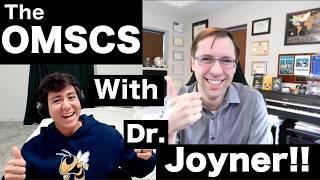
Dr. David Joyner, Executive Director of Georgia Tech's OMSCS program, discusses how the online master's degree scaled to serve thousands of students affordably. He covers curriculum updates, research opportunities, and the program's future plans.
Foreigner. Thank you so much for joining the channel.
Yeah.
Okay. The guy who needs no intro, right? The executive director of the OMS at Georgia Tech. So happy to have you. Thank you so much for joining. First question is, how did you get your start at Georgia Tech?
Yeah, absolutely. So my start at Georgia Tech goes way back. So I did my undergrad at Georgia Tech. I was. I did. I was a student in Georgia in high school, and I took a computer science in high school and decided I really liked computer science and decided I wanted to study that and wanted to stay in State. So Georgia Tech was by far the best place to do that. I'd be lying if I didn't admit I also had a girlfriend here at the time, which kind of influenced my decision to stay at Georgia Tech. So I. I came to Georgia Tech, studied computer science. I stuck around for my Master's, and then during my master's, I took a class with Brian McGurko. And while I was a student, I was kind of working my way through as a tutor as well. So I was tutoring on the weekends. And while I was taking this class called Educational Applications of New media with Brian McGurko, and I found out about this field called Intelligent Tutoring Systems, which was basically creating AI agents that can act as tutors. And I thought, if anyone's going to replace me with an AI agent, it should be me. So I decided I wanted to study, that I wanted to do more in that area. So I applied to the PhD program and got in, and my PhD advisor, Goyal, reached out to me and said, hey, I just got this grant to build an intelligent tutoring system. You say you want to work on intelligent tutoring systems. Do you want to come work in my lab? I said, yes. Yes, I would. So I did. So I worked in his lab for six years as a PhD student. Then during the last year of my PhD was when Udacity and Georgia Tech decided to do this MESS program. And Udacity basically told ashok, we can either give you a course developer, or you can tell us who you'd like us to hire to be your course developer. And he came to me and said.
Hey, you're Enter Dr. Joel.
Yeah. Do you want to come be my course developer? I was like, yeah, I'd love to do something that is a bit more lucrative for the last year. And I figured I'd do this course, work with him for the last year, and then move on to something else. Yeah. And what I discovered was I just really loved teaching in this program. I've always loved teaching, but I've never loved the performance art component of it.
Of getting in front of a class.
And having to be compelling for 50 minutes just isn't my style. And teaching online was not that it was. You know, you got to take that lecture component, that live component, and really treat it as a development process, like a movie production process, where you had to iterate over it and script it and refine it and only do it or only release it once you were comfortable with what you created. And then during the semester, all of our time ended up being spent working with individual students, answering questions, getting feedback on assignments, which was the stuff I actually liked to do. So it was really everything I liked about teaching and not the stuff that I didn't or the stuff that I didn't like as much about teaching. It created a way of doing it that I did like because it was curated and carefully constructed. It was really more teaching as software development because we build it, we iterate over it, but we only release it when we're comfortable with what we've built, which is different from kind of the performance art component of, you know, whether you're ready or not. Class starts at 9 o'. Clock. So I stuck around and yeah, I'm still here.
Awesome. No, yeah. And it's. First of all, I really do enjoy your teaching style. Like the classes I took at Georgia Tech, my favorites were the joiner classes. I would always look to fill those requirements with joiner classes because I just thought they were so well, like, structured and well run. So, yeah, thank you for your answer. All right, so how many students would you say are currently enrolled in the OMS?
In OMS as a whole, it's about 15,000. It was just over 15,000 when registration closed for fall. And then there's always a smattering of people who get dropped because of bursary issues, and then some of them come back because they meant to pay and the check just got delayed or anything like that, and some just forgot to pay. So I think we ended up just shy of 15,000. I think it ended up being like 14,996 or something like that.
So that's awesome. Yeah, I love the program that it's, like, so inclusive. I mean, you have so many people from all over the world that can do it, and it feels like it scales well.
I mean, I mean, that's been a fascinating thing is we. We've grown by about 35% in the past 18 months. From spring 2022 to fall 2024. We went from 11,300 students to just shy of 15,000. Wow. And the reason for that growth is something we're kind of still trying to wrap our heads around. But I think the most fascinating thing about it is that it really hasn't changed fundamentally what we do. So I think you're right about it's scaled pretty well because the model we used to scale persisted even when we had this kind of sudden rapid growth that we weren't anticipating.
Yeah. Did you see a rapid growth during COVID We did.
So we saw about a 15% spike in applications during COVID which was actually a little bit smaller than I anticipated. I was a little worried about it because our application deadline for fall 2020 was March 15th. So the application deadline for fall 2020 was, like, right before it became clear this is going to be a thing that impacts all of us. And so for spring 2021, I was anticipating a big spike because we already know that when there's economic downturn or anything like that, many people go back to graduate school to retool to upskill, to fill up gaps in their resume. You know, there's various reasons, but you see college enrollment rise during recessions for many of those reasons. And when it's due to a global pandemic, you tend to go for the. I think you tend to go for the program that is affordable and. Yeah, already online, because they're all going to be online. You may as well go for the one that was designed to be online, not the ones trying to figure out how the heck do we do this online. So I. I actually, I was anticipating a bigger spike during COVID but we had about 15% spike. We were pretty stable for about two years after that. So for a couple years after Covid, we were stable between 11 and 12,000 students. And it's only the past 18 months that we've seen it dramatically uptick.
That's a big change. Yeah. From like 11k to 15k. That's a ton of new people.
Wow. We actually did a little bit of cursory research to try and understand, like, is there something that we're not anticipating that's causing this spike? Because we. One of the theories we had was that maybe, you know, tech layoffs have been in the news. Maybe we're getting a bunch of people who've been laid off. But we found that a very small fraction of our applicants for the fall 2024 class reported that they'd been laid off recently. It was like 5%. And so it didn't seem to be that the biggest drivers seem to be something that people are still learning about us, which is surprising to me just because I feel like everyone already knows about us, but there's still plenty of people still finding out about us. There's been some more attention based on ChatGPT and large language models and that has captured some public attention. So I think it's driven some people to want to study more computer science because it's clear that it's relevant. And the fascinating one is also we're getting more and more students who are recent undergraduates. Historically, most of our students have been mid career professionals and still that's the majority of our students are still kind of mid career professionals, but we're getting more early undergraduates. And I talked to one who shared basically when he was deciding on his undergrad, he was deciding between engineering and computer science. And he said he chose engineering because he knew OMS exists. It's affordable, it's accessible, so if he decides later he wants to switch, he.
Can do it easier.
Yeah, he's got OMSCS here, but there's no OMS for engineering. So this was always. And so I think we're just now seeing, we're just now reaching a point where we've been around long enough that people believe we're still going to be here in the future and they can plan based on, you know, five years. It's kind of like that's a new experiment. I don't want to rely on it now it's pretty clear we're sticking around. Yeah, we're actually informing people's undergrad decisions, which is interesting. I think we'll dictate some changes to how we do some things. But yeah, because we've always given the advice of start with one class. And the advice of starting with one class is really targeted at our initial body of students being, you know, mid-30s, been out of college for 15 years, probably went to college before modern learning management systems were a thing, et cetera. Now we're getting students who, you know, they may have done their undergraduate during COVID So not only do they know about campus, about, you know, tools, they know, you know, they're used to being online students, so.
Right, yeah, no, that's to me as well. Like I did my undergrad in person and then I did Georgia Tech's program really because of like two big things. One was affordability, which I have a question for you soon about that. And the other one was that is completely online already like you mentioned. So I didn't have to worry about if I move or something, I have to go back and go finish my classes or transfer or something. Just got a more headache. Yeah. So how do you keep the oms so affordable?
So the decisions about the price of it predate me. So I know they did a lot of kind of analysis of what it costs to run something like this, but honestly, it's. I don't know. I think we benefit a lot from the fact that we build on a very strong infrastructure already. So Georgia Tech is a strong brand, strong infrastructure. The faculty are already here, mechanisms already here. And so we iteratively scale with certain things, like we hire more advisors as more students join and things like that. But you're not setting up everything from scratch in the same kind of way. We're benefiting from many of the structures already being there. So it's partially that. It's also, I think that at scale, it's the usual economics of scale, that at scale, almost all of your costs become those variable costs. So we have some fixed costs, but when you're operating at scale, you know, we say it takes about $100,000 to develop a new course, which is just kind of a back of the envelope calculation that is used by a lot of places that work in this area. But when you're talking about a course being taken by 1,000 students a year for three years, then the upfront cost of development are amortized really, really, really quickly. So it really just becomes, how do you set the formula so that you ensure the individual tuition paid by additional student covers the costs incurred by that student? And that ends up being, I think, an easier formula to kind of figure out.
Because.
We know what they have to be, right?
Yeah, there's no. You don't have to worry about, like, housing, like development of places, upkeep, maintenance, kind of. It's more like fees, like online fees of hosting, et cetera. I'm not sure exactly how the classes work, but yeah, that's really cool.
Definitely.
One of my selling points on my YouTube channel is the affordability of the OMS. Like, I weighed four or five different master's programs that were online slash kind of hybrid and like OMs, like, blew them all out of the water in terms of affordable.
They're still the most affordable that I know of. I know UT Austin has their programs that are in the same kind of, kind of areas. Us, it is interesting.
We.
We did some research early on, actually. I guess it went early on. It was a few years ago, trying to find out, because online Education isn't actually that new. You know, it's been around for years. And what we found was that there are a lot of programs that existed before omics that were more expensive, but they weren't dramatically more expensive. There were a lot of programs in the 10 to $20,000 range for total tuition. And so we asked the question, you know, what, what made our program catch people's eye? Is that price difference, that big thing? And I think a lot of it just is. It's that focus on scale. It's that idea of, you know, are. It's being built from the beginning to be a scalable, accessible program. And so it gets more people's kind of attention.
Yeah. And speaking of attention, the U.S. news & World Report has ranked Georgia Tech graduate engineering at number four in the nation. What do you have to say about that, Dr. Joyner?
It's nice to see our little brothers over in engineering making for them. So I kid Georgia Tech is an engineering school, it always has been. So I know our, our dean, our previous dean, Charles Isbell, was very proud of when we finally reached the point where more undergraduates are. Are CS majors than any other major.
The one true major, cs.
It is interesting too. It's a big part of that, is that computer science is a much bigger, more monolithic major, I think, than many others like engineering. You've got aerospace, you got electrical, you got computer, you've got industrial systems, got, you know, fragmented. A lot of fragmentation there. And honestly, I think if we were creating, or if I was creating at least a computer science program today, you wouldn't major in computer science, you'd major in AI, you'd major in software engineering, you'd major in hci. We'd go ahead and do that because I think engineering, you know, back in the 1800s, same kind of thing, you majored in engineering, you didn't major in a specific one.
That's interesting.
I think computer science has matured to the point where we could do that. We could actually splice things out in separate tracks. It's that that transition is just kind of a hard thing to do. Right?
Yeah. Yeah, that's a good point. That now computer science is more specialized than it used to be. And that's what I've noticed is the OMSCS has been adding on specializations, like lately it's been hci, I believe, by accident. Oh, really?
Yeah, it was. So one of the. I think one of the things that really defines the OMSCS program a lot of people don't understand is that it is the same programs on campus. We always know that it's the same program on campus. We're very public about that. Not everyone understands all the implications of that. One of the implications of that is that when a curriculum change is approved for the on campus MSCS program, it's automatically approved for the online program. The way HCI was added was not. We went out and developed to add hci. A curriculum change was made on campus and as a result of that curriculum change, a class. We already offered an OMSCS unlocked UCI as an OMS specialization. So.
Yeah, that's pretty cool. Yeah. Yeah, like you mentioned, you know, when you have a change in your in person curriculum, it's reflected in the online curriculum. And that's honestly one really cool thing for those watching at home. Yes. When you get your degree, I can verify this. It does not say online anywhere. It's a normal degree, just kind of like any other. And neither does your transcript, which I think was like another really big selling point for me was hey, this feels like, you know, very legit, I guess you could say. I mean, sure, online learning is, is the new norm. I know people are getting used to that still. But regardless, you don't even have to worry about that. It's just like, here's your degree and it says Georgia Tech. Which I think is like so nice.
It's interesting it being the new norm too because I feel like it's. The new norm has come a lot out of COVID and that driving, you know, there's a lot of growing pains early in Covid and we're always very careful to disentangle emergency remote instruction from online teaching because they're different. But at the same time I feel like it did show a lot of people the potential of things like wow, I have a lot more time to learn if I don't spend, you know, if I, if I have a 60 minute class. Yeah, but I spend 30 minutes walking there and 30 minutes walking back.
Exactly.
It's two hours on that and a lot of time is not spent on that. So I think it open some of the potential.
Yeah, no, definitely. And now I'm going to go to some questions from the viewers. So some people are wondering if there are any plans of like A, O, B, S, C s, like a bachelor's or something. I mean that's like very innovative, very forward thinking. But I don't know. What are your thoughts on that?
Yeah, no, I think that we get these questions for bachelors and for PhD. Those two questions are you know, this was a good place to start. What about the other two ends? And they both present their own unique challenges. I think a big part of it is that a bachelor's education is in part about a life experience transition as well. In addition to just the content, it's about moving out, being on your own, things like that. For traditional schools and Georgia Tech for its undergrad audience is still pretty traditional. I'm of the opinion that it's not right that we take that transition as a prerequisite to that education. Because I completely agree. For those people who are, you know, traditional student, finished high school, going off to college, that's a really important process. I don't want to write a passage kind of, yeah, like I want to create something where instead of moving off to college and learning to be independent, you spend four more years home taking classes online. But there are lots of people who are non traditional students. In fact, there was some study. I'll try and find the specific reference to put in notes. If you have notes for this video. If you treat certain categories as making a student a non traditional student, like being a bit older or having kids at home or maybe being a commuter student. I don't remember what the exact categories are, but there's a reasonable list of categories that if you consider all of them, to define someone as non traditional, something like 75% of undergraduates in the country are non traditional students. And so there's this huge audience of people who, you know, maybe they, you know, for whatever reason, they didn't follow the traditional path to college right after, but they'd like, like to, you know, go back and there are, there are plenty of options out there. But I do think something like, you know, a place like Georgia Tech could create something really nice. I think there's a lot of questions around, how do you avoid, you know, cannibalization? Again, our online master's program didn't cannibalize our on campus program. In fact, our on campus program has tripled in size almost since the online program launched. A number of applications have gone up like six or seven fold. But that's a unique situation. There are unique reasons why the on campus program does not draw from the same student body. And there's a lot of worry that if we, you know, if we did the same kind of thing for, for bachelor's, you know, you'd suddenly have students choosing the online who would have come to campus otherwise, which is not, not what we'd, we'd like. So, okay, pedagogically, I Think a lot of the things actually are already relatively well, actually. So we, for those who don't know, we do have three online undergraduate classes. They're designed more to give students on campus the flexibility of not having to figure something else out in their schedule and things like that, as well as to resolve some, some capacity constraints. So pedagogically we've done at the master's level and we've done it at the intro level. In fact, I, so I teach the introduction, the introductory class for on campus undergraduates. So it's CS 1301. It's the first CS class that.
Oh, nice.
It's designed to be the first CS class the CS majors take. The reality is most CS majors test out of it, but the purpose of it. Oh wow. But we, we launched in the dual enrollment program a few years ago. I've got 400 high school students in that class.
No way.
And so, so pedagogically I think we, we know. I'm of the strong opinion that anything we can teach in person, we can teach online. Yeah. So it's not a pedagogical thing. It's, it's other things around the culture, the business model.
Yeah, that would, that makes more sense. Like the culture kind of related to undergrad. Okay, yeah. And you touched upon this already with mentioning like the PhD option. You know, like I know people online that have, are interested in the OMSCs and are kind of wondering or like asking like how easy is it, slash difficult to like transition to maybe a PhD either at Georgia Tech or elsewhere? I mean, what are your thoughts on that?
Yeah, no, we're actually doing some research on it right now. We've got a project that three OMSCS students are working on. We know that about 170 OMSCS graduates have gone on to start PhD studies. The reason why we know that is that there exists so enrollment data at United States institutions is actually public record. And so there's a clearinghouse that actually you can pay to have them pull records and things like that. And so we did that and we got records of every OMSCS alum who's gone on to a PhD program in the United States. And then we followed that up with a survey to find out people who've done ones or started ones overseas because we, that include that data and got about, I think 30 or 40 more. So it's actually maybe it's just shy of 200 OMSCs alums have gone on to PhD programs. So we know it's, it's clearly possible.
It's possible, yeah.
Now, granted, it's 200. We've got 12,000 graduates right now. Granted.
Also of those, how many are interested in a PhD in the beginning?
And also our graduations have been rising over time. So we've got, you know, 2,000 graduates, but I think 2,000 of them are in the last calendar year, maybe just shy of that. I can pull up the numbers, but. So it's also that kind of. There's a recency bias there. But no. So we know it's possible. We know something that a lot of people are doing and that's just PhD programs. That's not Doctor of Engineering programs, it's not EDD programs. It's not things. So it is, it's possible. We're doing some research right now actually, to find out. As soon as they asked the question, was OMSCs like, how important was doing OMSCs to that pathway? Did it, you know, get them interested and it made them want to. Was it a relevant factor to their admissions or was it a detour? It may be that for many of these folks, they did OMSCs and you know, decided completely separately that, you know, you know, someone might have decided, you know, OMSCs didn't do what I wanted it to do and was really a PhD that I wanted all along. So it might be that. So be interesting to find out if it's. Was it a important part for that pathway to a PhD or was it a detour? Or was it, you know, was it about qualifying? Was it, you know, for many it's a, you know, if you've been out of academia for a while, it's a way of demonstrating that you're committed to, you know, doing the work. Because PhD is such a different kind of program that it's much more apprenticeship based and things like that. So advisors are looking for a demonstration of commitment. It could be that saying, you know, doing a prestigious challenging online master's program while working full time clearly shows you're qualified and so.
Right. No, I'd say it does. Like it's a whole different animal, I would imagine. I've never done a PhD. I can't say. But definitely when you're doing your PhD, I mean, you definitely would know like you are managing your life anyways. Like you have your personal life, you have your, you're trying to maybe make money or whatever like you were doing with your udacity course instructor job at the end. So yeah, I would say maybe the OMS is a good like introduction to that if you're working on full time, you can take classes, see what it's like, try and balance your academic life, try and balance your work life, maybe squeeze in some personal life. Maybe just a little.
You'll sleep when you graduate.
Yeah. When you're done. Yeah, exactly. Let's see. Another question was about. Okay, we talked about some research. Oh yeah. I mean now there's like some research options, right, in the omscs. Do you mind explaining a little bit about just kind of introducing to maybe people who don't know much. I don't know much about it, to be honest. Like those options now for students.
Yeah, the options have actually already been there. That's another thing that flows out of the. The fact that it's the exact same program as on campus is that anything on campus students can do, online students can do as well. So actually online students have always been able to do research. We phrased it as a coursework master's degree. And the major difference is that we're committed to making the courses necessary to graduate available. So if you enroll in the program, you're guaranteed to be able to do it in the coursework pathway. There exists two other pathways. They're pretty similar. It's the master's project pathway and the master's thesis pathway that students are allowed to do or we don't guarantee everyone will be able to do it. It's a matter of if you find a faculty member who's willing to advise a project, who's willing to sign off on it, everything like that, then you get to do it. So we're careful not to over promise and make it clear. We don't want it to seem like.
Everyone can just come in and say.
I'd like to do the research option. Please find your.
It's like, sign up, sign up. It's like.
But if you can find it, then you're allowed to because it's the same program. So whatever on campus students are allowed to do, you're allowed to do also. So the three major options are, we call them 8903, 6999 and 7000. 8903 is three credit hours. 6999 is nine, usually spread out over three semesters, and 7000 is 12, usually spread out over four semesters. And that last one is usually writing and defending a thesis. And so those options are available, they count as free electives. And so we've only had a couple students do the thesis option in part because if you do the thesis option. That's basically all your free electives. So one of our. In fact, I only know of two people who've done the thesis on it and one of them was a guy named Carmen Gajda who's now professor of a Pace because he was one of the people who went on to a PhD. So he's a professor at Pace University. He also wrote many of the tools that we still use today. While he was in the program, he wrote Peer survey. So anyone taking one of my classes that uses.
Oh really, I've taken.
Yeah, I took. Yeah, he's the one who wrote peer survey.
Dang.
He wrote the original script that we use for batch import upgrades and a few other things. We switched from T square to Canvas. This has been around for a long time. Canvas was an improvement in every possible way, but there were a couple little features it didn't have natively. And Carmine was the one who went off and figured out, oh hey, yeah, that's actually easy to do. Here's a Python script that does it.
Oh, sick.
Thesis. The more common one is the project because it gives a little flexibility and really, in my opinion, the, the focus of it should be on getting a peer reviewed publication. So people think of a thesis and think a thesis is very prestigious and it is. But a peer reviewed publication at a good venue is more, in my, my opinion, more impactful because it means you've gotten the endorsement and approval of the real people working in the community who didn't know you were a master's student. They weren't, you know, evaluating, they weren't grading out a career or anything like that. They were just evalu contribution for its value. As opposed to professors who are very diligent, but they're evaluating whether or not you've done enough to graduate. And so those are just kind of different bars. Especially knowing that you opted into the thesis track so it's something that you chose to do. Whereas peer reviewed publication, they're operating on different standards.
Yeah, I didn't even know that. I actually didn't know that until you told me that the thesis was an option for online students. It's just that like you mentioned, it.
Takes up all your free electives. Right?
So you kind of have to like be all in when you, when you decide to do it, like from the beginning, basically. No, that, that's cool. I'll link in the description below for anyone interested because I have gotten that question a lot. Like, was there going to be a thesis option? Like, is there a thesis and I guess there is. Right. So it's just. Now for the people interested. Yeah. Go check out that link and get started on that. Cool.
I will say you are on your own in finding your own advisor trying to do more right now. So Nick Lytle, our director of research, a big part of his goal is just to create more research opportunities for students. So we want to do more of this partially for y', all, because y' all want. I say. Now I'm addressing the audience, but, you know, partially for y'.
All.
Y' all want more research opportunities. We know that. And honestly, you know, that's great. And I care about that. What I care more about is the fact that we have a lot of projects here at Georgia Tech that would benefit from Yalls expertise. And so it's really more of a matching problem we have.
Yeah, Matchmaking.
Yeah. Y' all are so well qualified, so experienced. You know, we have people, especially outside the college of computing. So I'm thinking like, someone who does like. So we've got a great city planning department. So you imagine someone doing, like, a traffic modeling project where they need machine learning expertise, but they're not in the college computing. They have trouble hiring someone to do that kind of. That with that kind of expertise because they're not here with the CS students. Y' all are qualified, able, and looking to do it for. For other reasons and for course credit rather than for. For funding. And so it's. I think it's a. It's a really powerful opportunity we have to improve the research endeavor of Georgia Tech as a whole by opening the floodgates and letting y' all collaborate more with. With other faculty. It's more just a matter of finding those. It's the right part. Like pairs, right?
Like connections. Okay, gotcha. Oh, real quick, Dr. Joiner, while I figure out it, do you mind if we take a little thumbnail, like.
Yeah. Dr. Joiner.
YouTube antics aside. Real quick. So. Oh, yeah. One. One question I have is for classes coming up, because, you know, that's a really exciting topic for students. I love the catalog. They get so many options to choose from. It's like a cool version of shopping, but of knowledge. You just get to choose what you want to learn about. So any cool classes coming up in the works for oms that we should know about?
Yeah, absolutely. So I'm usually very cagey about this because for those who are interested in a little bit of Georgia Tech lore, or OMCS lore, if you ever hear certain students refer to computational journalism, Computational journalism was a Class that was announced to be under development and then just never launched because it was just stuck in development kind of obstacles. And then the professor got promotion and it never ended happening, but people were expecting it for a long time. And it taught us that people are going to plan their schedule. People are going to plan their schedule based on the classes we say are coming. And so if we say class is coming and it doesn't come, it's like Portal 3. It's just a matter of, like, you know, game being canceled. It's like, well, I plan to do that class for my last three electives. So now I have to do this. If I'd known that I wasn't going to come out. So the point of all this is that we're more reluctant to announce a class until we're positive it's gonna launch.
Okay.
Yeah, very close.
Now I say that it's like caveat. Okay?
That's my attitude. Given. Given that, yeah, very often our faculty will go out and say it, and once our faculty say it publicly, you know, it's perfectly fine. So when Mark Rydell, Undeveloped Natural Language Processing, he mentioned that, you know, on his Twitter. And so I was literally back when I say, hey, Natural Language Processing. So we've got a couple classes that the professors have actually already said publicly that they're building. So someone's building a computer graphics course.
Graphics.
It'll be fantastic. And if all goes according to plan, would unlock that specialization as well. Now, that one's been under development for a long time, so it's kind of in that same position of it's been under development for a long time. I'm pretty confident we'll see it soon. And the professor himself has said it's coming. There was actually a Reddit thread a couple days ago where the professor for the new Databases course also posted, noting, hey, this course is coming. We're looking for feedback on it, which is amazing to see when, you know, a big, kind of a big part of the learning curve of working in this program and just learning that the community is so. So strong and powerful and vocal that, you know, on campus, you don't have anything like that on campus. I have nowhere that I can go and say, hey, we're launching this new project, you know, this new class next semester.
Yeah, spreadsheet on a bolted board, like a little felt board.
Half of us are gonna be graduated by then, and the other half, you know, we don't care. Whereas online, you know, I think because it's so persistent and because it's so available to everybody because the audience is so large, it just gets a different kind of attention. And so, you know, it's awesome to see when our faculty kind of embrace that as well. So that class is clearly coming as well. There are other classes under development. There's another class in the quantum area.
Oh, cool. Under development.
Another databases class that's under development.
Okay.
Ideally another one of the kind of T graphics area is under development. We're getting a couple actually. Yeah. And then there's a. There's an advanced software class that hopefully will. Will resume development soon. There's a robotics class that hopefully will start development soon. There's a lot of things in the works. So it is the case that we were usually reluctant to announce until it's right.
Official. Official, yeah.
Which is registration semester. I'll say. Just for everyone's knowledge. Our goal is usually four classes per year, which does include big revamps. So the class goes through a full RE record from scratch where it's the same course number, but it's all new content. Like computer networking went through that.
Oh really?
Years or a few years ago. Yeah. Health informatics went through the same kind of thing. So when we say 40 classes a year, we include the idea of a new class might just be a new version of an existing course number. There's a couple courses that are looking to do that in the near future as well. They really want to reboot everything and start over.
Yeah, that makes sense. Things change. Technology changes. So I'm glad you guys actually like go back and like curate, you know, your collection. That's really nice to know as a student. Are there any classes on the chopping block that I don't know for any reason? I guess.
Yeah, it's. No, I mean, it's one of the things it sounds weird to say proud of, but one of the things I brag about this program also is there's only ever been one normal class launched and ever taken away. Every other class that we've ever launched continues to be available at least once per year. And the only course that got taken away was computability, complexity and algorithms. The old 6505 course. And it was only taken away because it was replaced by 6515 both online and on campus. So that wasn't an online thing. Both the on campus curriculum and the online curriculum switched out 6505 or 6515 for reasons that kind of predate me. Actually that was pretty early in my. I was working with Udacity at the time. Gotcha. So other than that, there's no courses that have ever been taken away. And it's one of the things I like about the model also is that there's. Yeah, there's usually not strong reasons to take course away.
It's not gonna. It's not like a topic's just like, completely irrelevant now. It's like, we don't do that anymore.
It's like. And it's not taking up. Like, it's not taking room space because, like.
Exactly. Yeah, that's online. Yeah, it's just like you can throw in. You'd have space, essentially. You don't have to worry about, like, staffing. I mean, probably staffing, but. Yeah, you don't have to worry about, like the physical rooms being occupied and the scheduling stuff. Like, that's so awesome.
I think about it. And even staffing is easier. You know, more than half of our teaching assistants are actually alumni of the program. And so whereas on campus, they're kind of constrained to hiring TAs and people who are currently on campus who will probably be only on campus for a year and a half, two years.
You're constantly just so much turnover.
Yeah, it's. Honestly, it's one of the big things that. It's a conversation I've had over and over about why the program works, because we still encounter skeptics. My biggest class this semester is 1800 students. I tell people I have a class with 1800 students, and they're actually.
I get.
Sometimes there's no way you can effectively teach 1800 students. And I say, well, yeah, but I've got a teaching staff of 45 teaching assistants in that class this semester. Well, yeah, teaching assistants, but you have to monitor them and train them and really keep careful track of what they're doing. Like. Well, of my 45 teaching assistants, I think 42 have been with me for more than three years.
Whoa, that's so. Yeah, it's like.
It's calling for.
It's like a company that's like a longevity. Like, you got people, the expertise is there already. You don't need to spend time teaching all the, like, the mechanics of taing. Exactly.
And so if we were doing this in person, really, we wouldn't call it a class of 1800 people. We'd call it, you know, 36 sections of 50 people, each with their own individual instructor, a TA for the class for three years. Your role is like, beyond that.
Yeah.
So.
So, Dr. Turner, I am not. I'm not into gotcha journalism. Okay. I really don't like that. I'm not trying to like, bring up any sort of subjects. It's just a popular topic and definitely you can, you could say like, no, no comment. I don't mind it. So, you know, I took Grad Algos and that's a hard class. Like, admittedly. And I probably went into it a little bit too naive. Like I thought to myself, you know, hey, I've taken hard classes. I've done the. Fine, you know, what's, what's one more hard class? No, this one kicked my butt. Like I switched specializations and it was very humbling. Honestly, I've. I've learned so much from that. I really do acknowledge, like the, you know, it's. It's meant to be hard and. Okay. So recently I've heard that they're adding in more like programming into the course, which I think is great. I guess. I guess for me that's kind of my strong suit. Maybe I was leaning too much on that. But I'm really glad that now there's like some more programming assignments. Are there any changes upcoming as well for like Grad Algos or your thoughts in general?
No, I'd say that, you know, it's. It's always been. It's funny, it's always been kind of considered the final boss of omscs.
Yes.
Which I don't actually like that. That perception. I shouldn't say I don't like that perception. I don't like that. That is the reality. I see. I see specializations. It is the reality because it is the fact that you can't get into like. I will say it's actually gotten a lot better. Sorry, I'm going to digress for a second, but this is just something that you. Most things you can see in our systems. This is something you can't actually see in our systems. People always talk about how hard it is to get into graduate algorithms. And you can actually go back in my Reddit common history and find an explanation for why that is. But it's essentially that you can have students with very different registration priority, who, one of which someone with much earlier priority is not going to graduate that next semester, or someone with much later priority actually is technically graduating. Because if you're currently enrolled in three classes and you're planning to do three classes next semester and you've already done four, then you're a degree candidate even though you only have four completed classes. You can also complete classes and not be a degree candidate if you're only planning to take one class the next semester. And so we, we artificially keep the cap low to allow us to prioritize those people who clearly from their application to graduate their other class registrations, clearly they are going to be ready. And if we don't let them take it that next semester, they would not graduate when they could have otherwise. So that's the reason why the cap is kept low initially. Just let us go in and say, okay, you who are taking three classes right now and are going to take three classes next semester, you get a permit in the grad algorithms. Whereas you who are only going to take one class next semester, even though you have eight, you'll probably be able to take it anyway. But you're a slightly lower priority because you're not trying to graduate next semester. You could take one class and then do graduate algorithms the following semester. Point being of all this, that's the reason why we keep that cap artificially low to begin with. It's actually the case it's not nearly as hard to get into as it looks. This semester we had first term students get into grad algorithms from the wait list. So you always hear people talk about, oh wow, that's actually impressive. But we even had first term students get in from the waitlist.
Yeah.
And part of that is a churn. And part of that is a lot of, a lot of things go into that, but it's not as hard to get into as people think it is. I do think it's the case that it's also gotten. Because it's got that reputation for being. A lot of people don't even try to get in until later because they can't. So they don't try. So I say this to say, you know, join the waitlist. You know, once you have your schedule otherwise set, join the waitlist for. And just see what happens if you're trying to take it earlier. Yeah, yeah. So I think it's the final part of it that I like. I don't think it's a great class to take first, which is true. Just because it is such a different kind of knowledge. I say that others disagree. There are plenty of people who think it's actually a perfect class to take first because it equips you with some algorithm.
You just get like your, you just get the hardest part done like first kind of.
Yeah. And just like the content, it's like it equips you for, you know, the skills you learn in it are useful in other classes as well. Okay. I think it's a case of. And I'm still building from that perspective of for many people they're coming back to school after five or 10 or 15 years away. You probably want to start with a class where the workload is very predictable. I often recommend HCI and KBAI as first term classes.
In my class, kbai, that was my first class. I really liked it. Yeah.
So part of it is that. Part of it though is I just, I think it's good to start with a class where, you know, the workload is going to be pretty consistent week to week and I can pretty well gauge how long it's going to take me to do certain things. HCI is probably an even better example of that just because it's so writing heavy and you kind of know how long it takes you to write an essay. Now it might take some people more than others, but you kind of know there's not a lot of problems in that class where it's an unknown amount of time. Yeah, you're just like fresh.
I'd never seen this before.
Yeah. Or some project based classes. It's like you look at the description, you think, oh, that's good. Machine learning for trading. We see this a lot of people who look at project one and two and like, oh, I did that in a couple hours.
So yeah, the night before.
And then they get to Project 3 and they're like, oh, I should start.
Yeah, no, that's a good point.
So. So I don't think it's, it's not necessarily great to start that way just because it is kind of unpredictable in workload. Yeah, things like that. But I do wish, you know, students could take it more, you know, earlier. Partially because I think of what you said about changing. It's not just that it's hard, it's also a different kind of knowledge and it's a different kind of information. The same way that HCI isn't for everyone. Grant Algorithms isn't for everyone.
Yeah.
And so I like when people get to take it earlier so that you can make early on of. Okay, is this.
You totally can depend your other classes on that instead of scrambling at the last. Luckily I had all the electives for Interact Intelligence, so I just had to take one. But for those who are still kind of curious or wondering, taking that first is probably better. Or not first early on.
Yeah. Yeah. If you're really going to decide based on that. That said, there's, there's still plenty of ways to kind of optimize your schedule and figure out and leave your options open. It's just it's always nice to be able to decide early.
So.
Now granted, it might be the case that, that if word gets out that it's not as hard to get into anymore, it might get harder to get into again because people.
That's funny. Yeah. It's like a stock or something. It's like, how does this, what determines what people want out of it? Okay.
I think it's such a different kind of knowledge. It is the case. Same with HCI and same with. Actually, those are two way. I guess actually in some ways those are two nice ends of the spectrum of. There are plenty of students again in hci, which is kind of. You're a great candidate for an mscs. This probably isn't why you're here. You're here for the algorithms, you're here for the software development, you're here for a particular view of it. And you should focus on the classes that have that and plenty of other people. It's, you know, you're here for, to build solutions for people. You're here to, you know, work on design teams, work on products. They're going to intersect with real people. And HCI is really important. I think HCI is something that everyone should take because I think, I think it was, honestly.
Really?
Yeah.
Because that's what I face at my job. So much coding, so much programming. But like, why, you know, you're like, what's the end goal?
Keep that human in mind. Exactly.
You say so much time.
There's a fantastic book also. It's called the Prisoners Are Running the Asylum. I'm sorry, The Inmates are running the Asylum.
I have put that on my to read list, but I still need to read it.
And it's all about just how more engineers need more HCI expertise because, you know, you can have the design person on your team and things like that, but it informs so many really low level decisions that you make. Otherwise, you need to have that in mind. So content wise, I think it's a class that I think everyone should take because I think no matter what you're going to do in cs, it's going to be relevant.
So relevant.
Yeah. It may be the case that for what you want to learn, it might not be the right class. Yeah, some students.
But you can spare one credit, you can spare three credits, you know what I mean? And that's a really good investment, I would say, for those at home trying to decide what class to take, try HCI once. Honestly, it's, it's a good class and it's a doctor jointed class, so double them.
It's also the case that, you know, we, we get plenty. We have plenty of students who ask, you know, can I take classes after graduation? And things like that. So yeah, 10 classes are required to graduate, but you don't have to. And so it's also the case that, you know, if you are, are trying to optimize curriculum and things like that, you know, taking a couple extra courses is a very common thing for people either or before graduation. So we have some people do it because they have to to fulfill requirements, but we have plenty of people who just do it because they have a couple more classes they want to take and so they don't graduate.
So yeah, there's no rush really, sometimes depending on situation. So. Okay. Well, doctor, thank you so much for answering all these questions. Really appreciate it. So impressed by you, honestly, that you are like so friendly, outgoing for the students sake. That shows me that you really care and that like, that reflects in the oms. Yes, I would say so. Definitely. Those at home watching, like, try it out, go apply. It's such a good program. And now, Dr. Joyner, I want to present to you a gift that I will send this to you. Okay. After this. But I would like to present you as the official goat of the mscs. Okay.
That's fantastic.
Exactly.
This is.
You are the goat. Okay. Thank you so much for all your hard work at the omscs. And thank you. I'll stop recording now.
I appreciate that.
Yeah.
More from David
BoulderTalks Dr. David Joyner: The Evolving Roles of ChatGPT & Generative AI in Education
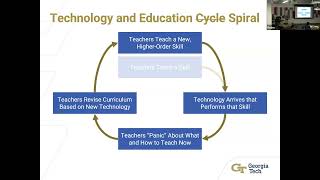
EETI Fall 2023 Distinguished Speaker Forum with Dr. David Joyner: The Roles of ChatGPT in Education