David Trainer argues the value vs. growth split is misleading. What actually matters: return on invested capital, economic earnings, and free cash flow. He critiques how analysts use common metrics and shows New Constructs tools for forensic accounting.
Chapters
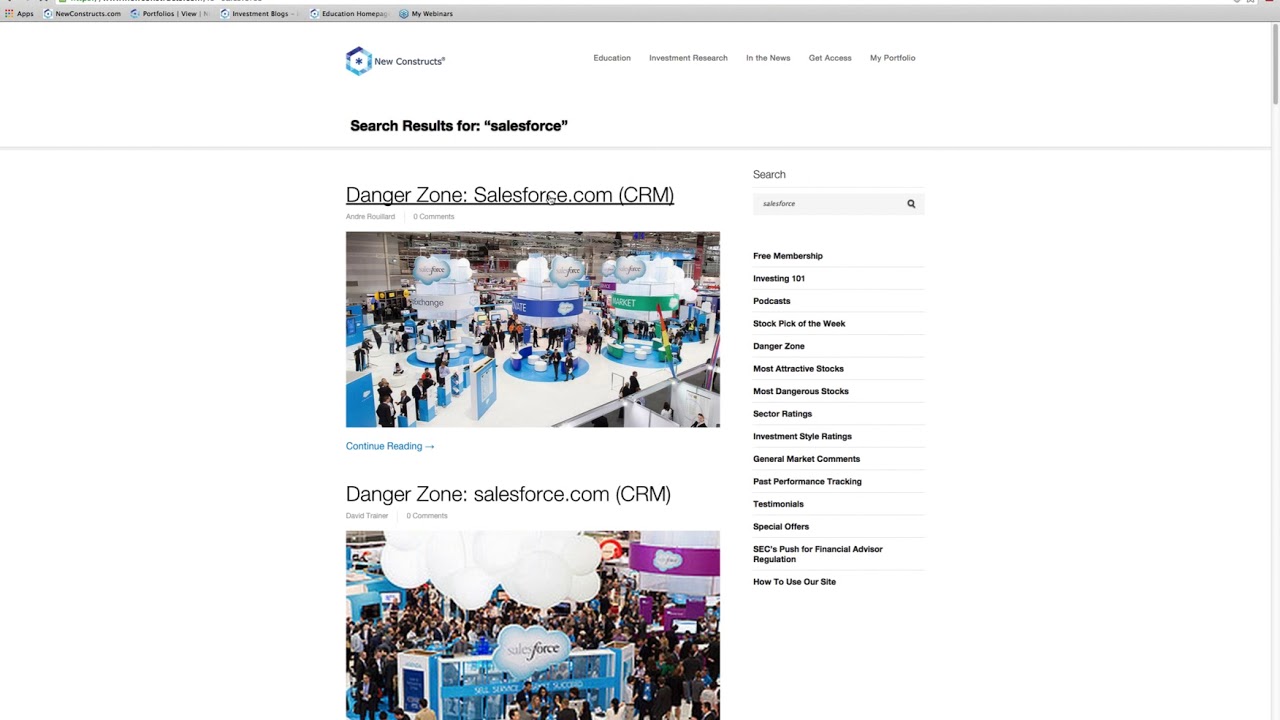
Hello everybody. Thanks so much for coming to our weekly webinar. I apologize for being a couple minutes late here. I was looking for one of my favorite charts. It's a chart that explains exactly why the distinction between growth and value is actually irrelevant. And I'll tell you, when I started on Wall Street, I was sort of blown away because I came from the accounting profession and I came from sort of this purist Warren Buffett approach that focused on ROIC and Ben Graham approach, you know, the cigarette butts, the really cheap companies where value sort of really meant something. And growth meant something special too. And it meant that, you know, that, you know, their value stocks in the traditional approach were, yeah, they were really cheap, but, you know, they just were never going to grow. It was like an industrial business, something that wasn't very sexy. And so it was called value. Now, growth stocks weren't necessarily as cheap, but they had higher growth potential. But they were still cheap, right? Like, there's, there's like no— there's no way to kind of violate the sacred law of, hey, there's a difference between a good company and a good stock, you know, which means, hey, I, I can, I can buy this— I can buy this stock only if it's cheap enough. There's no such thing as a level of growth that means I'm suddenly now disconnected from making intelligent investment decisions because I'm going to buy growth stocks. That's where we are. That's where we are now. Value investing has gone away. I've got a bunch of good blog posts here that talk about that. If you just search the blog for ROICs drive value, you're going to find a lot of good stuff. Talk about a few of these articles. I mean, my favorite one here is the distinctions between growth and value being irrelevant. And my picture here is missing for some reason. I don't know. We'll get it fixed. Come back and check it out. But it is a proven fact that return on invested capital is the driver of value and PE is not. And what this chart will show you is that the PE ratio can go up and be positive Right, even when earnings are declining. So earnings effectively are not a determinant of value, and neither is PE. And we'll get this chart back up, but it's really an awesome chart. In fact, I'm a little bit embarrassed that it's not showing today because it is kind of the key chart. I'm wondering if maybe we can find it otherwise on the, on the web. If we just search for— let's try PEs. Let's try this search because I'm not the only person who's, who's done this kind of work before. Ignore the P, mind the ROIC. Let's see what these guys say. I got this chart. I've recreated it. Oh, advertisement. It came out of actually the valuation book from McKinsey, and it's a very simple discounted cash flow model analysis that Shows that the driver of value is return on invested capital because that's where the cash flows are and not PE. All right, well, I'm going to stop wasting your time talking about that. But so let's get into some specifics here. Let's talk about specific companies that show up as good value stocks and good growth stocks and those that are bad value stocks and bad— Bad growth stocks. Here's what I really want to focus on down here in this quadrant. These are stocks that, that the publishing team put together. Whoa, that doesn't help us. These are the stocks the publishing team put together that highlight where the market sees things a little bit differently than we do. All right, so let's look at Zacks calls Compass Holdings a good value stock. Let's see where they say this. Let's look up this article. Why Compass Diversified Holdings Could Be a Top Value Stock Pick. Okay, so that's what Zacks says. Let's see what our system says. That's not value. All right, I want to be really clear here. Value means you got to have real profitability. Sorry, guys. Sorry, so I typed in the ticker. I'm sorry. So we looked it up in Zacks, and we see that they named Compass here in March top value pick, okay? Then I went and entered it in our system, and we see it's actually— this is a very dangerous stock. All right, there's nothing value about a company with a bottom quintile return on invested capital. There's nothing value about a company with a -20% free cash flow yield. There's nothing value about a company with a price-to-economic book value of 2.8. Nothing value-related about a company with a market implied growth appreciation period of 10 years. All right, the issue here is is that Zacks is focused on the wrong number. They're looking at $5.38, and all of a sudden the price-to-that ratio, oh, it looks pretty good. But the problem is that $5.38 is just not a real number. It's not a real number at all. You know, we show that the GAAP net income, $264 million, well, a bunch of non-operating items knock that number way down. We actually show NOPAT, which is oftentimes higher than GAAP net income. At just $50 million. So there's a big disconnect there. In addition, you got huge growth in the balance sheet. Look at this, $1 billion to $1.5 billion in total assets, probably an acquisition, right? And at the end of the day, the actual invested capital is significant. So they did the acquisition probably late in the year, right? So our average invested capital is $1 billion, not that different from the total assets here. Right, because we're averaging in that invested capital only in the portion of the year where it applied. So anyway, the takeaway is though that the return on invested capital for this business is bad because you've really only got profits of $50 million on top of an invested capital, average invested capital of $1 billion. This is not a value stock. All right. And that means that starts with understanding the true economics of the business. 42 cents of minus economic earning— negative economic earnings per share versus reported GAAP earnings of $5.38. Duh! Big difference. And then 5% return on invested capital. Everything you want to think about value, you have to throw out the window when you don't understand the underlying economics of the business. That's why it's so important to read the footnotes and really understand the truth. All right, let's see what else. Andre cooked up for us here. That was a good one. All right, um, let's see what— see what they got to say about— the Street has to say about ExxonMobil, which is a stock candidate we've liked a lot in the past. So let's look it up here. All right, March 3rd, value-priced high-quality dividend stocks you can't afford to miss. ExxonMobil is on the list. All right, well, let's see what we show about ExxonMobil. Again, pretty poor return on invested capital, not good economic earnings, and the valuation is cheap. So when you don't understand the business model— all right, let me say this again. When you don't understand the business model and the real profitability of the business, Right? $7.60 in earnings versus negative $2.30. When you don't understand the business model, you cannot understand valuation. When you do not understand the profitability of the business, or when you have bad numbers on the profitability of the business, you cannot. I'm not saying you will not, you should not. I'm saying you cannot understand valuation. I'm not saying you might not understand technicals. I'm not saying you might not understand momentum. I'm saying you cannot understand valuation in the true sense of the word, right? And so Exxon stock price has seen a big dip here. It's come back a little bit, but this is not a value stock. So let's, let's talk about some of the growth stocks. Let's take a look at Andrei Sheetz here again. All right, so bad growth stock, Twitter. All right, people love this stock because it's, you know, it's growing. Let's say— let's look at salesforce.com because we got a good link for this. Wall Street Journal, salesforce.com, growth stock. All right, we got to scroll to the large cap section. Salesforce.com, large cap listed here. Uh, I guess this is the— this is the Large Cap Growth Index. All right, here we are, Salesforce.com on the large best performers large cap Growth Index for the Dow Jones, considered a growth stock. All right, now this is to me probably where the biggest distinction is here. Let's go see what we say about CRM, salesforce.com. Growth stock. All right, so yeah, maybe they are growing revenue top line. We've written a lot of good articles on CRM. We've talked about this a lot. You can search that On our site. I'll show you here where we will go through this in detail. Danger Zone, salesforce.com. We put it in the Danger Zone a couple of times. Unprofitable acquisitions prop up revenue growth. Deceptive cash flow. Revenue's going up, free cash flow going down. A lot of acquisitions, making revenue and earnings look good. People say, it's growing, it's growing. But you know what? They don't understand the business model, right? The accounting earnings are actually negative, right? Economic earnings are even worse. Here's the big thing though, -1% return on invested capital. If you don't understand the business model, you can't understand valuation. And this business model is not good, all right? Yeah, they're growing like crazy, but they're not growing profitably. So the hopes for this stock to continue to go up, you know, are just— it's unrealistic. I don't really know how to say. Somebody lob in a question here that makes it easy for me to, uh, or helps me explain this a little bit better, because right now I do not— I really can't think of how to explain this. You know, any differently. Kind of just my mind kind of breaks. Like, all right, they want to call this a good— a growth stock, which means it's good, right? And that's because they're growing revenue. What— since when do investors care about revenue if it does not translate into cash flow? Is anyone— is that clear to everybody? Like, There's a difference here between revenue growth and cash flow growth. Letting that sink in. Growing the top line does not help you, Mr. Investor, because before that revenue number, that revenue value, before any of that cash shows up to you, it's spent. Oftentimes, especially these companies that focus on acquisitions, And revenue growth, most of that money is spent long before it even gets to the taxman. They're paying their executives because executives are often incentivized to grow the top line or grow EBITDA. Both of those numbers, by the way, tend to be measured— well, revenue for sure, but even the EBITDA number measured before taking into account compensation, executive compensation. Wouldn't we all like to be measured based on performance that didn't include our pay? That'd be great, right? Pay myself all I want, the business still looks great. I could overpay myself ridiculously, profits still look great, keep paying me ridiculously. We don't need to worry about that number, that's just going in my pocket. Look the other direction. So, anyway, hopefully I've made this very clear. When we look at CRM, you know, the breakdown here is not so much on the income statement side. It's really on the balance sheet. You know, they've got a huge amount of capital on the balance sheet. You're talking about average invested capital of nearly $6 billion, $1.8 billion in off-balance sheet debt. More than cancels out the excess cash they have, right? It's just a— pardon me— a business model that does not work. $3.3 billion in debt. They got another almost $1 billion or $800 million in option liabilities, right? So these are all senior claims, you know, total amount of claims senior to you as an equity investor after taking into account cash, all right, $2 point— almost $2.2 billion. So that's part of what, you know, that's part of why you got to go through the footnotes. You got to understand where all the claims are, what the business model looks like. You know, this to me is fundamental to what it means to truly be a value investor. And just to say, oh, it's growing well, well, you can't have good growth without value. You want to just chase growth, play musical chairs. Or if you want to gamble, play the lottery, but don't call it investing. All right, here's another one, Twitter, TWTR, high revenue growth. Good earnings per share. That's what the sort of common dialogue is on Twitter. That's what most people focus on. -10% return on invested capital. Oh, whoops. We called this one right, it looks like. Was it early May? Pretty big drop in stock price there. We've been talking about this for a while. I don't think that the drop is over. Again, misunderstanding the business model. They're showing they're not losing as much money as they actually are losing. They have a -10% return on invested capital, bad free cash flow. It's all negative. It's not looking good here. And again, a lot of this is a balance sheet deal, free cash flow deal. But then there's some big claims. You've got $2.4 billion in debt, $660 million and another $660 million in Option liabilities, and overall $3 billion in claims here. So, you know, before you start thinking, oh, it's a good growth stock, remember somebody on Wall Street has been in this ahead of you probably and made a lot of money. And make sure that you really are getting value before you just go for growth. Blindly chasing growth. Is blindly investing. It's not smart. It's not smart. Here's a good question. Is there a way to highlight good growth or good value stocks in new constructs? Yes, there are, right? So, um, we pointed out a couple on this page. Good value stocks: Cisco, Walmart. We like these. And a couple good growth stocks: Intelliquent and National. So let's, let's take a look at some of those. Let's build a quick portfolio looking at some of these. Let's call it the Good Growth Portfolio. Close that. Let's go to good growth. Let's add, see, IQNT and NOV. And you can copy and paste if you want. So very attractive and attractive. Why do we like these guys? They've seen a lot of growth, high revenue growth for Intelliquent. And guess what? Look at this, high return on invested capital. You got strong— sorry, high return on invested capital, strong free cash flow, good cheap valuation, right? Remember everybody, it's all about risk-reward. Don't go out chasing something because the price is moving or the top line is moving. You want to chase stocks where the cash flow is moving in the right direction. Don't fall for the hubbub. Don't fall for the pundits talking about how it's a great stock. They are playing you. That's the point. They want you to trade because the dumber you trade, the more money they make. The smarter you are, the more money you make. That's what we're trying to help you out here with the new constructs. All right. In this situation, NOPAT is greater than net income. And look at the balance sheets here. We're talking about unadjusted assets at just $170 million with $46 million in after-tax cash flow. Average invested capital, $162 million, right? That's why you've got a 20%, 28% return on invested capital. That's what you want to see. We want to see companies that don't require a lot of investment. You have to put a ton of money in them, and yet they're generating a lot of cash flow. That's good. And then you want to make sure it's cheap, right? With a price-to-economic book value of 1.1, those who've watched my prior webinars know that all that means is that to justify the current stock price, of just $18.55, all the company— all Intelliquent has to do is grow its profits by 10% for the remainder of its life. NOPAT only has to be 10% higher from where it is today for the remainder of its life. Right? If we go to the model, we can look at— we can look— we can kind of, you know, we can see NOPAT growing pretty fast here in the last few years. What, you got like 11 or 12% growth, like almost a 50% growth in the last couple years? The last couple years you got like 15, 20% growth plus in NOPAT, and it's saying in the last couple of years, and the stock price is saying it's gonna grow no more than 10% over the remainder of its corporate life. Right. So when the price-to-economic book value is 1.0, one of our customers put in a great comment here, and he's put this in some comments on the webinar. And by the way, there's going to be a quick survey after the webinar. We close this. Please take the time to fill that out because we want to make these good for you. But I think a really important point to make that one of our customers is reminding us of is that when the price-to-economic book value is 1.0, That means you're paying for no growth. That means the current stock price is saying the company's profits will never grow. So you're getting the stock without having to pay for any growth whatsoever. And what I'm showing you here is that with Intelliquent, you're paying for relatively little growth. All right, let's go back to our good growth portfolio. National Oilwell Varco, a bigger company. All right, we don't have great returns on invested capital, 10%, but that's still pretty good, right? So we come down here and we'll see You know, NOPAT $2.7 billion on capital, average invested capital $26.8 billion. So it's 10%. That's decent. That's a whole lot better than some of those other growth stocks we looked at. But what we really like here, price-to-book value 0.7. Right. What does that mean? That means the current stock price, you're not only playing for no growth, You're paying for— well, the current— let me put it to you this way. 0.7 price-to-economic-book value means the market is forecasting or predicting that National Oilwell Varco's profits will permanently decline by 30%. They will permanently decline by 30%. That's what the stock market's saying. So if the company's profits just stay the same, if the company's profits just stay the same, you've got at least 30% appreciation to a 1.0 price-to-earnings book value. That's a good growth stock. That's a good growth stock. All right, let's talk about some good value stocks. Cisco, Travelers, GM. Walmart. I kind of like talking about Walmart. So let's create a good value stocks portfolio. You hit the edit button, the edit/create button. Good value. Close that. Go to good value. Let's type in CSCO. Let's type in TRV. GM. Walmart, attractive. We've written a lot on Walmart, partly because, you know, the returns on invested capital, while not super amazing, have been consistently high over time. It's actually one of my favorite stocks to talk about because There was a long time when it was a perfect example of a good company, but not a good stock, because it's always been a very profitable business. But for a while, it was really expensive, and we couldn't get into it. This is going back 5 or 6 years ago. We've since made a lot of money in our hedge fund on this stock. And now it's nice and cheap, and we love it. And in fact, it's on the list of stocks that our hedge fund is going to be probably getting into here. Uh, shortly. Um, as full disclosure, we were just reviewing our holdings earlier today in a meeting, and Walmart came up as a screaming buy on our list, mainly because you're able to buy Walmart right now at a price that implies permanent decline of 20% in profits. This is Walmart we're talking about. All right. We've, we've really almost never seen much of a significant decline sustained at all in Walmart. Over the last 5 years, you can just see in our model, we've definitely seen growth in Notepad over that time frame. There was growth from 2011 to 2012, then to 2013, a little bit of drop in 2014, but nowhere near the 20% implied by the stock price. This is an impressive business. There's really sort of no two ways around it. And it's been that way for a long time. This is a good value stock, everybody. This is a really good value stock. The PE 16, people think— might think, ah, not such a good PE, not super cheap. It's super cheap, everybody. Walmart's super cheap. You know, this is where understanding return on invested capital, free cash flow can help your portfolio. This is where forensic accounting helps you make more money. Forensic Accounting a lot of times is focused on protecting wealth because at the end of the day, let's face it, your long-term success as an investor is going to be more about how bad you hit the bad shots or how not bad you hit the bad shots because we're going to all make mistakes. We're all going to make mistakes, just mitigating that. And so that's our big focus, right? Because we don't want to pretend like we're, you know, the best stock pickers in the world because nobody is. But we do want to make it clear that we can help you protect your wealth. And we think that we provide a really incredible level of diligence for an extremely attractive price. Some other good value stocks. GM, first time this has shown up on our screens in a long time in our ratings. I think this is, you know, May 15th last time, you know, May 15th this year. Last time was, I don't know, 10, 12 years ago. Interesting story about GM. You know, we were the first to break the story about their pension. We gave the story to Forbes and Forbes did a lot of stuff with us. Gosh, this was in early 2000s. And so my friend at Forbes called me and said, hey, the people at GM are really upset about what you're saying. And I said, well— She said, are you sure about your numbers? I said, yeah, check page 287 of the annual report. It's right there. The pension liabilities, the net funded status is huge. We can't get our DCF model to show a positive value. This was a long time ago, right? This was 2004, 2005 or something. And she said, well, they're complaining about this. Will you talk to them? And I said, sure, but I don't think I need to. Just send them over the 10-K with that piece highlighted. She said, well, all right. So I'm in New York. I'm in between meetings. I get a call. I'm in Midtown and I'm looking over at the I'm actually looking at the GM building and the phone call I get is from the VP of Finance and somebody in Investor Relations. In a very, very paternalistic, patronizing tone, they asked me what I think I'm doing. I said, well, guys, you know, I'm just looking at the 10-K with the net funded pension status. And they basically kind of insinuated they would like, you know, take action or something. And I don't know what they really meant, but they were definitely trying to intimidate me. I said, gentlemen, I really don't know what's going on here, but I'm just looking at the numbers. And if you can explain the numbers, then explain them, please. But all I'm talking about is the number that you reported, so I don't really understand why you're upset. And so I immediately called my contact at Fortune or Forbes, and she said, okay, great. That sounds great. Yeah, this is a good story. We think we should do it. A few weeks later, a few months later, I'm like, what's happened to the story? No comment. Guess how much advertising money that GM spends with Forbes or Fortune? I'm sorry, I don't remember if it was Forbes or Fortune. Actually, I think it was Forbes. Sorry. A lot. So I'll just leave it at that. I don't want to insinuate too much, but that's another one of my many great war stories. So any questions? Any more questions about how to To understand the difference between growth and value, please let me know, right? Like our screeners, you want to find good growth, good value stocks, all you got to do is this: attractive and very attractive. You're looking by industry, right? That's how you do it. And again, I don't believe in good growth stocks. I only believe in good value stocks. So This distinction between growth and value makes no sense. Be sure to come back and check out our blog post on the distinction between growth and value to get a really academic and strong article on exactly why this is the case. And that's it. Now make sure to stick around to fill out the survey, and if you have any questions, hit us up on Twitter, email me at david.trainer@newconstructs.com, publishing@newconstructs.com. We want to hear your questions. Thank you very much. Thank you.
More from David




Earnings Recap: Decoding Signals from SpaceX, Palantir, Merck, AMD, Caterpillar, McDonald’s, & More

Watch Our Earnings Recap: Market Heavyweights Apple, Microsoft, Amazon, Meta, Visa, and More



Earnings Recap: Top Insights from JPMorgan, Bank of America, Taiwan Semiconductor, Netflix, and More


The IPO Melt Up: How Smart Investors Use AI to Find Abnormal Investment Opportunities